How Do Robot Vacuums Map Your Home?
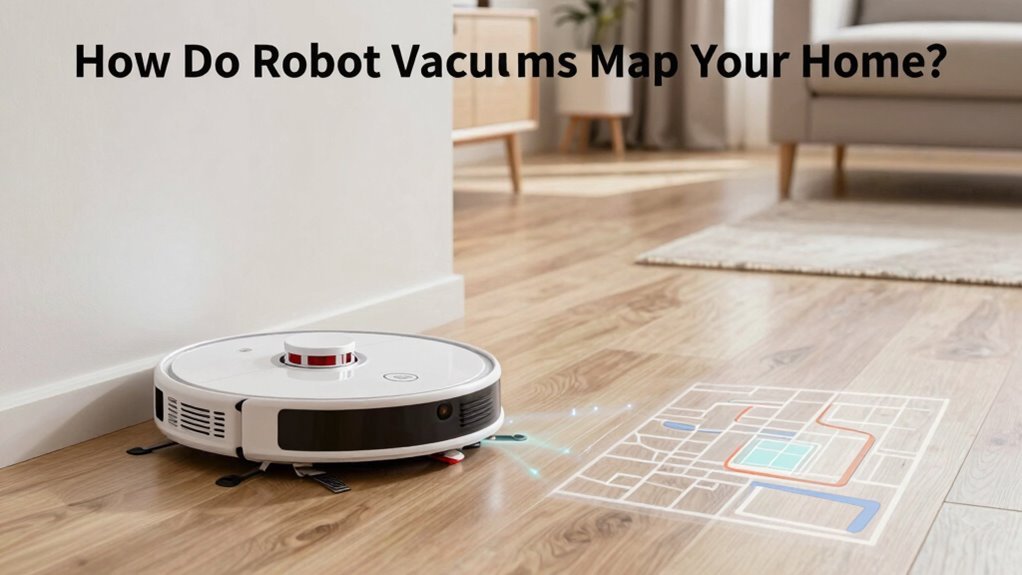
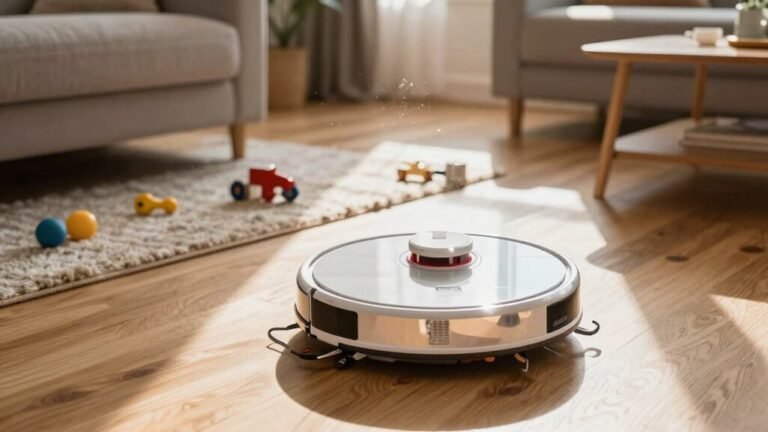
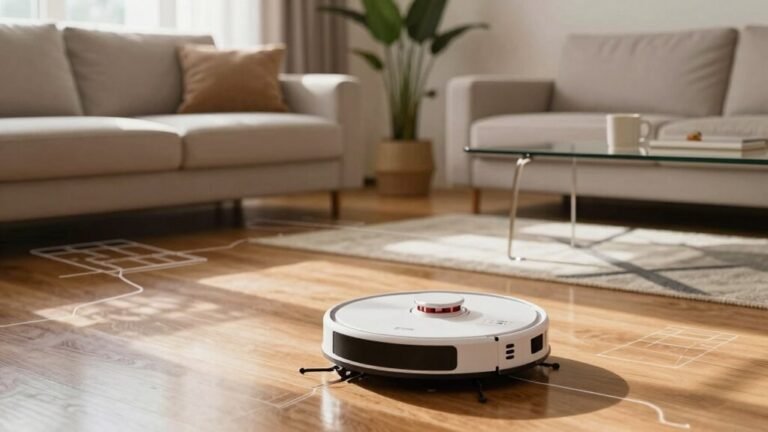
Your robot vacuum maps your home using smart sensors like LiDAR or cameras to scan walls, dodge furniture, and avoid socks—because yes, it judges your laundry habits. It builds a layout on the fly using SLAM technology, which allows it to understand its surroundings in real time.
The vacuum remembers room layouts and can even handle multiple floors, creating separate maps for each level. Think of it as a tiny, tidy ninja with a built-in GPS, efficiently navigating your home.
Want to know how your robot vacuum keeps your data—and secrets—safe? There’s more where that came from.
How Do Robot Vacuums See Your Home?
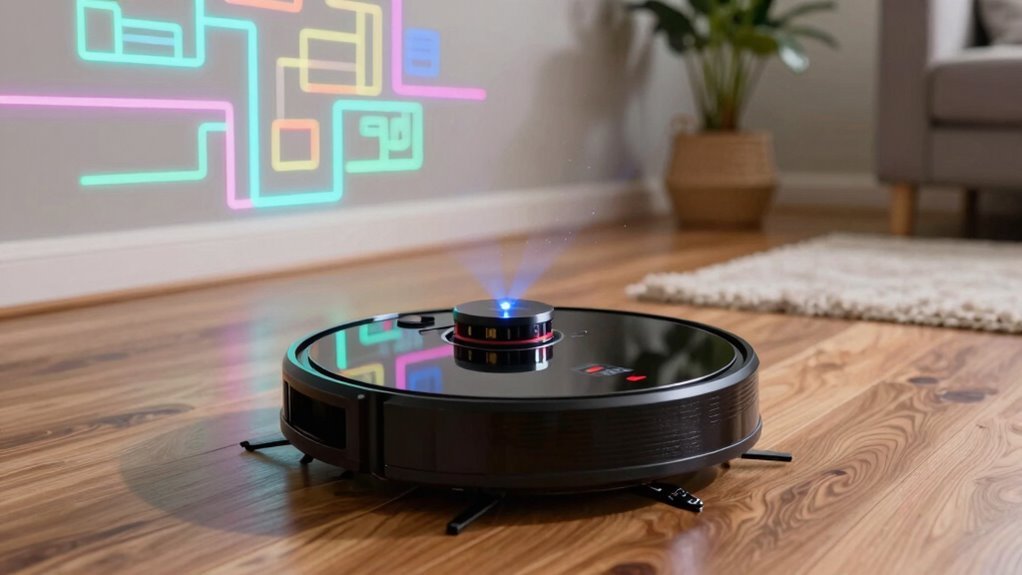
Ever wonder how your robot vacuum “sees” your couch, coffee table, or that stray sock on the floor?
It’s not magic—your little robo-helper uses smart tech to map every nook and cranny.
Cameras capture real-time images, helping it recognize walls and furniture through Visual SLAM, so it knows exactly where it is.
Infrared sensors buzz out invisible light to measure distances and catch obstacles—hello, pet toys!
Some models even use LiDAR, spinning lasers to draw super-precise 2D maps, even in the dark.
When these systems team up, through multi-sensor fusion, your vacuum builds a detailed home map on the fly.
It updates constantly, dodging new messes and missed spots with glee.
And don’t worry—it won’t forget where your favorite rug lives.
All this clever sensing means no more random spinning into walls.
Pretty smart for something that fits under your couch, right?
This advanced navigation allows for systematic, area-based cleaning, boosting efficiency and coverage.
Lidar vs Camera Mapping: What’s the Difference?
How does your robot vacuum tell the difference between a sleek coffee table and a shadowy corner?
With LiDAR, it zaps invisible lasers around the room, measuring distances like a tiny ninja with a flashlight.
It spins those beams 360 degrees, building a sharp map—even in total darkness.
No light? No problem.
Cameras, though, rely on what they can see, using familiar visuals like your rug or lamp to map the space, but they struggle in dim rooms, kind of like you squinting at a menu in a dark restaurant.
LiDAR gives precision, dodging obstacles like a pro, while cameras add smarts by recognizing objects—when the lights are on.
LiDAR’s bulkier and uses more battery, but it maps faster and works anywhere.
Cameras are slimmer and smarter in the light but can get confused.
Pick LiDAR for accuracy, cameras for recognition, or a hybrid for the best of both worlds—genius meets vision.
This precision comes from 360-degree environmental mapping, a core strength of LiDAR that ensures thorough navigation and cleaning across various spaces.
How Does SLAM Help Robots Map Rooms?
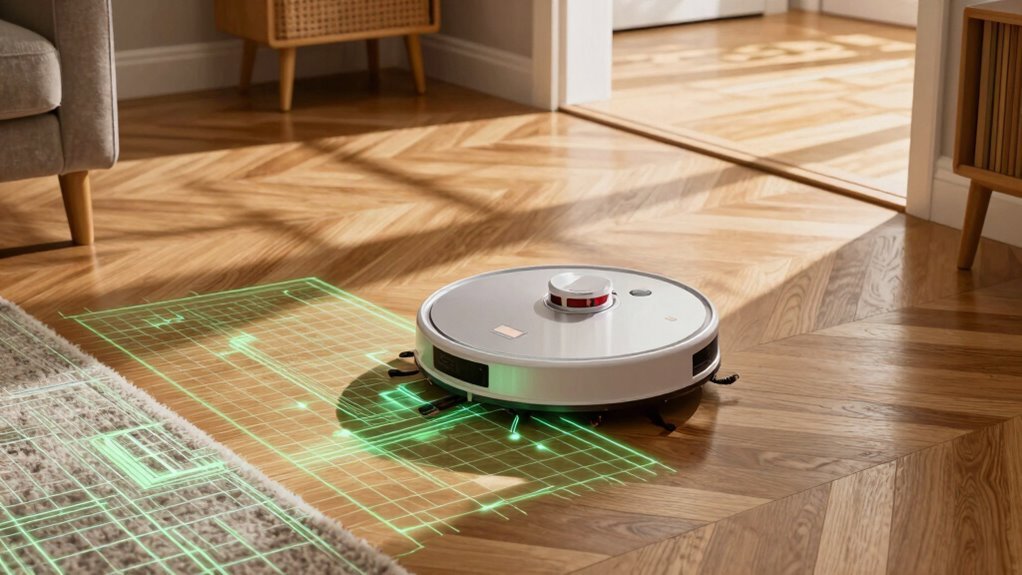
What’s the secret behind your robot vacuum’s uncanny ability to zip through your living room without getting lost or stuck? SLAM—Simultaneous Localization and Mapping—lets your robot build a map of your home while figuring out exactly where it’s inside that map.
As you send it rolling, it uses sensors like LiDAR, cameras, and wheel trackers to scan the room, spot furniture, and avoid your cat’s water bowl.
It constantly updates its position, making smart guesses using clever math to correct mistakes on the fly.
Every pass refines the map, letting it clean systematically instead of bouncing around like a pinball.
With SLAM, your vacuum doesn’t just wander—it thinks, adapts, and masters your space, all while dodging your favorite socks.
It’s like giving your robot a brain and a GPS, minus the tantrums when it’s low on battery.
Do Robot Vacuums Remember Your Floor Plan?
Think your robot vacuum forgets where it’s been?
Nope—it’s actually a bit of a homebody with a great memory!
After its first clean, it saves your floor plan in its internal memory, so it doesn’t get lost or start from scratch every time.
Fancy models like the Narwal Freo Z Ultra store up to four maps, perfect for multi-floor homes.
Thanks to vSLAM and gyroscopic sensors, your bot remembers every nook, even after charging.
Apps like ECOVACS Home let you peek at the map, tweak no-go zones, or schedule cleanings based on the layout.
The best part? It learns over time, adapting to changes without full remapping.
How Do They Handle Furniture and Obstacles?
| Sensor Type | What It Does |
|---|---|
| Optical/IR | Spots small clutter like LEGO bricks |
| Structured Light | Sees in the dark under your bed |
| Cliff Sensor | Stops falls near stairs or ledges |
| VertiBeam | Glides past legs without pausing |
With AI smarts and weekly wipe-downs, your bot zips under tables, adapts to tight spots, and keeps your floors clean—without the drama.
Can Robot Vacuums Manage Multiple Floors?
Ever wonder how your robot vacuum keeps up when your home spreads across multiple floors?
Good news: it’s smarter than it looks.
Most advanced models store 3–5 unique maps, so your basement, main floor, and attic each get their own custom cleaning plan.
Using LiDAR and smart sensors, your bot creates crisp 3D maps and even recognizes which floor it’s on—no guessing games.
Just carry it up the stairs (sorry, no Stairmaster mode yet), and it instantly recalls the right map.
Lightweight builds make hauling it easy, and with Wi-Fi on each level, everything stays synced.
You can schedule cleanings per floor right from the app, and some models even support recharge-and-resume to tackle large spaces.
While it can’t climb stairs solo—wouldn’t that be something?—it handles the rest like a pro.
Is Robot Vacuum Mapping a Privacy Risk?
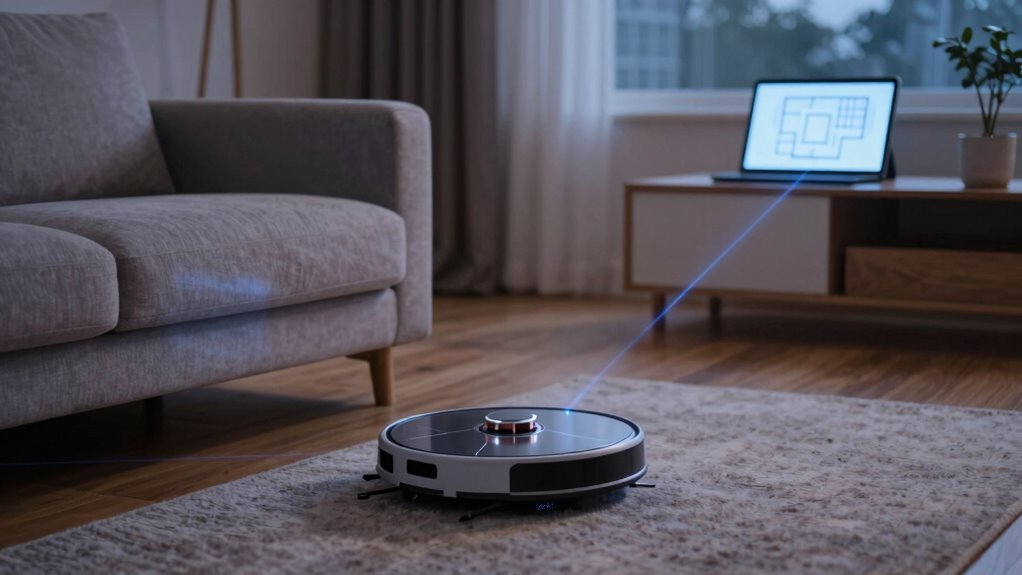
Could your trusty robot vacuum be telling secrets about your home?
Yeah, it’s possible.
While it’s busy zipping around, it’s also mapping your layout, tracking your habits, and even spotting your favorite messy corner.
Scary part? Hackers have used Lidar vibrations to “hear” conversations—even without a mic.
Yikes!
Cameras on some models can stream live video, and if they’re not secure, say hello to uninvited digital guests.
Companies like iRobot collect floor plans and schedules, and with Amazon in the mix, who knows where that data ends up?
Ads for bathroom organizers, anyone?
The good news? You’re not defenseless.
Turn off cameras, set no-go zones, and skip data sharing.
Keep it out of the bedroom (weird, right?).
A little caution goes a long way.
Your robot’s smart—but you’re smarter.
How Can You Improve Your Robot’s Map Accuracy?
You’ve got your privacy locked down—no digital peeping toms in your living room—so now let’s make sure your robot vacuum actually knows where it’s going.
Clean those sensors weekly, or it’ll wander like it’s lost—dirt and hair on brushes mess with its smarts.
Kick off with a full-home clean so it maps everything right, then lock it in.
If things look off, hit “re-map” in the app and let it rescan.
Start from different spots if it keeps missing corners.
Use LiDAR or VSLAM for sharp turns and tight spaces—those sensors don’t play around.
Tweak the map manually, draw room borders, and rotate it if your robot thinks your couch is a mountain.
Set no-go zones for tangled cords or fluffy rugs.
And hey, tell it which way to sweep the hardwood—nobody likes wobbly stripes.
A little love goes a long way in keeping your robo-helper on track.
Frequently Asked Questions
Can Robot Vacuums Work in the Dark?
Yeah, robot vacuums totally work in the dark—no nightlight needed!
They use smart LiDAR and lasers to map rooms, even in pitch black.
Sensors dodge obstacles, while dToF tech measures distances with laser precision.
Some models even clean under your bed at 2 AM without bumping into socks.
It’s like giving your vacuum night vision goggles—only cooler.
Rest easy, your robot’s got the dark covered.
Do They Map Closets and Small Spaces?
Yeah, they totally map closets and small spaces—no hiding dust bunnies anymore!
With slim bodies, they sneak into tight spots, while LiDAR or hybrid tech maps dark closets like pros, light or not.
Infrared sensors help dodge shoe piles, and virtual walls keep them out of places you’d rather they skip.
They’ll even remember your closet layout, so every crumb gets a personal invitation to the vacuum party!
How Often Do They Update Their Maps?
You’re not living in ancient history—your robot vacuum doesn’t wait months to update its map!
It’s practically obsessed, checking and tweaking its map every single cleaning run.
Think of it like a mini detective with a selfie stick, snapping pics and adjusting routes in real time.
Some even refresh mid-clean if something’s moved—because yes, that sock you left on the floor matters.
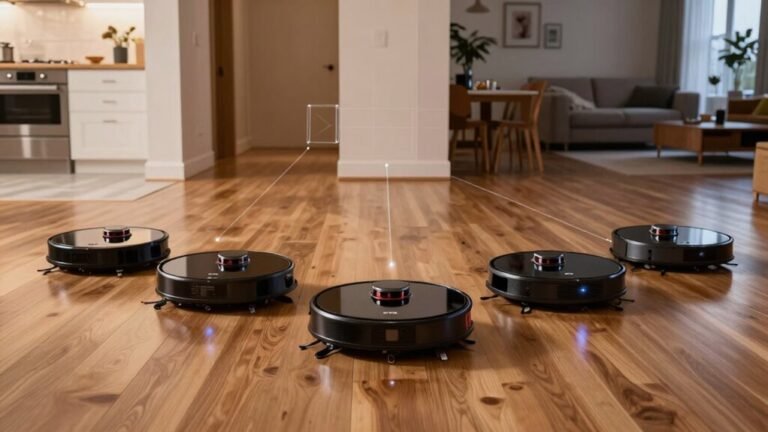
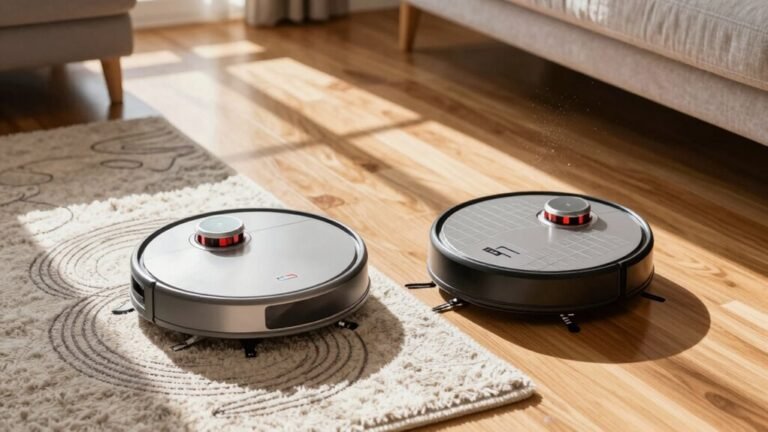
Can Multiple Robots Share the Same Map?
Nope, your robot buddies can’t share maps—each one scouts and saves its own maze like a solo explorer.
You’ve got to let every vacuum roam on its own adventure, even if they’re twins!
Brands keep maps locked down per device, so no sneaky shortcuts.
It’s a bit like giving each pet its own treasure map—fun, but no teamwork.
Maybe someday they’ll throw a robot party and compare notes!
Do They Map Outdoors or Just Indoors?
They map indoors, not outdoors—no sunny-side-up patios for these guys!
You’ll see them zipping around your living room, using lasers and smarts to chart every nook.
Outdoors? Nope. Rain, glare, or open spaces confuse them fast.
Plus, no GPS magic here! Stick to indoor floors, where walls and furniture give them the clues they need.
Your robot’s happy inside, where it belongs—keeping your home tidy, not trekking through the wild!
Conclusion
You’re not just cleaning—you’re helping your robot learn! Did you know some bots map your whole home in under three runs, zipping around like they’re playing tag with the furniture? With smart sensors and a pinch of robot smarts, they remember every sofa and corner. It’s like having a tiny, hyper-organized friend who *actually* puts things in their place—all while dodging your slippers with style.
References
- https://us.3itech.com/blogs/news/how-does-robot-vacuum-mapping-work
- https://us.narwal.com/blogs/robot-vacuum/mapping-vs-no-mapping
- https://www.ecovacs.com/us/robot-vacuums/robot-vacuums-with-mapping
- https://www.target.com/c/robotic-vacuums-floor-care-home-appliances/smart-mapping/-/N-4y73oZ1rvvyyspic6
- https://maticrobots.com
- https://www.sharkninja.com/vacuums-air-care/vacuum-cleaners/robot-vacuums
- https://www.eufy.com/blogs/robovac/how-do-robot-vacuum-maps
- https://www.neuvition.com/lidar-robot-vacuum-neuvition/
- https://us.3itech.com/blogs/news/lds-vs-dtof-lidar-navigation-in-robot-vacuums
- https://www.ecovacs.com/us/blog/lidar-vs-vslam-navigation-what-are-the-differences