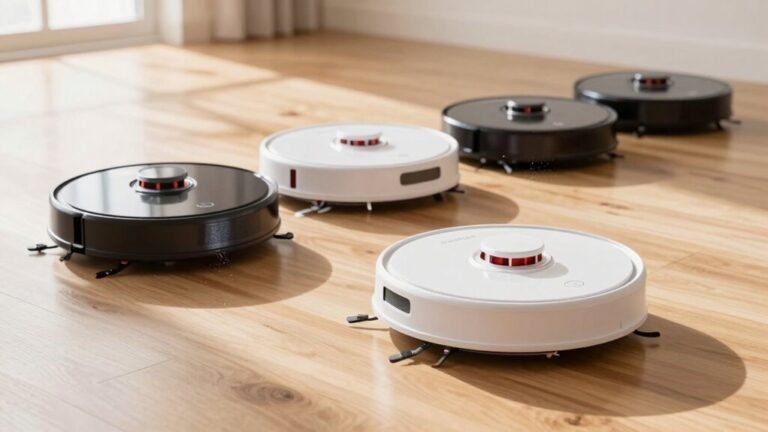
Why Do Some Robot Vacuums Clean Randomly?
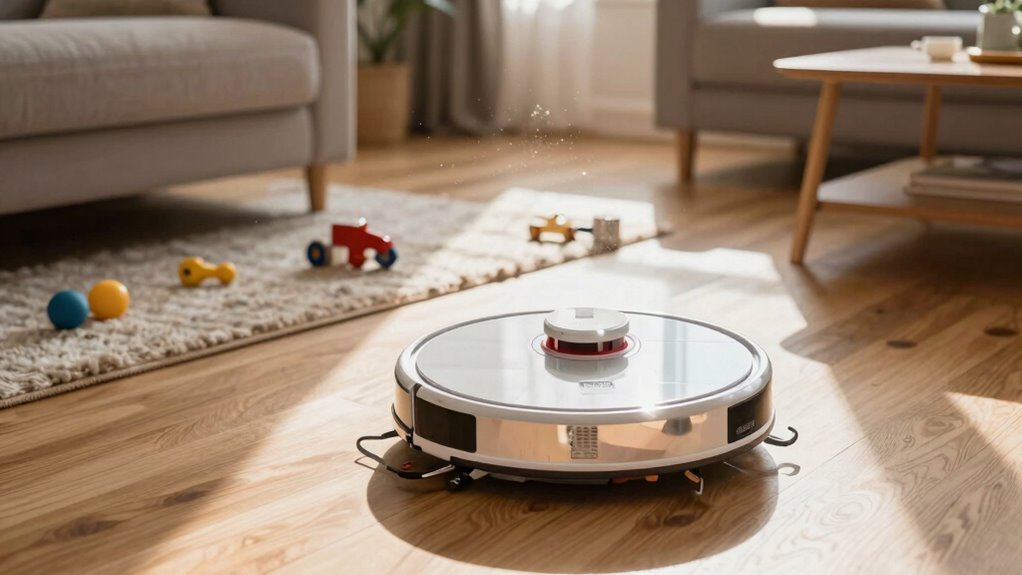
Your robot vacuum zips around like a hyper puppy because it doesn’t map the room—it bounces off furniture, stumbles over dust bunnies, and guesses its way across the floor. This random cleaning pattern happens because the device lacks advanced navigation technology.
Without fancy lasers or smart brains, it relies on basic sensors and luck to clean. These budget-friendly models use simple algorithms to move, which often results in a seemingly chaotic path.
But hey, it’s cheap and still gets the job done—mostly. Turns out, chaos can be kind of clean when it comes to robot vacuums. And wouldn’t you know, there’s more to this messy dance than meets the eye.
Why Your Robot Vacuum Seems To Move At Random
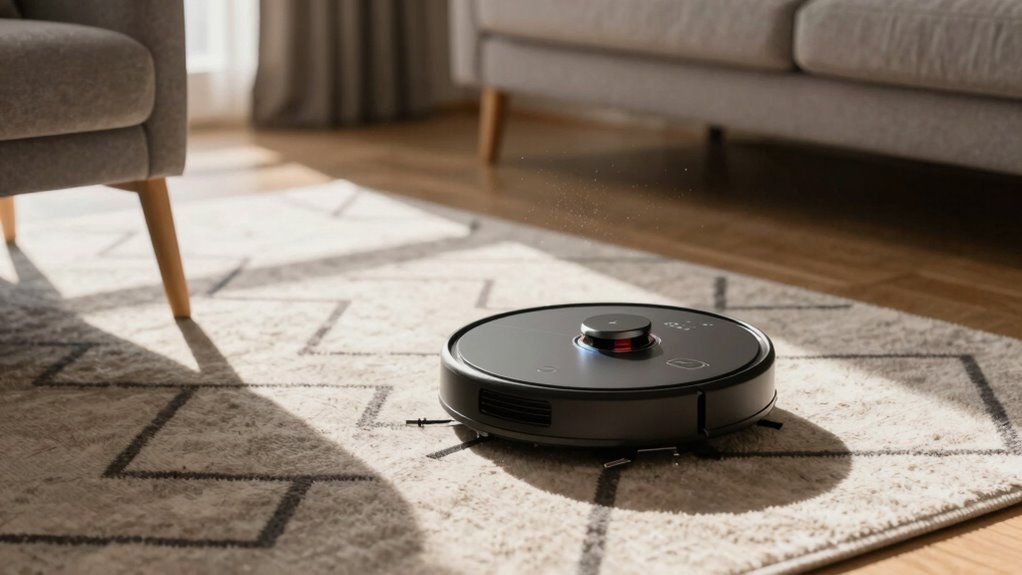
Ever wonder why your robot vacuum zigzags across the room like it’s dancing to a tune only it can hear?
Well, it’s probably not broken—many basic models, like the Klinsmann KRV305, clean randomly by design.
Without fancy mapping tech, they bounce around, hitting spots at random, kind of like a pinball with dreams.
It’s not elegant, but hey, it gets the job done—especially for everyday dust and crumbs.
These no-frills bots save you money and still cover the floor, more or less.
If yours *used* to be smart but now acts confused, though, something might’ve gone sideways—like a broken sensor or a lazy motor.
But if it’s always been a chaotic dancer, congrats!
You’ve got a classic model that cleans hard and party’s harder.
Just clear the clutter, and let the little guy do its funky, unpredictable shuffle.
This random movement happens because the model lacks smart navigation.
How Bump And Infrared Sensors Cause Chaos
Why does your robot vacuum suddenly veer off course like it’s dodging invisible ghosts? Blame its bump and infrared sensors acting up! When dust clogs the bump sensors or debris jams the bumper, your bot can’t tell real walls from false alarms. Infrared sensors get confused by dark furniture or glass—those signals vanish like whispers in the wind. Combine that with scratched lenses or tangled hair, and your vacuum’s “cleaning path” turns into a chaotic ballet of bumps and spins. Regular maintenance helps prevent these issues, and wiping the sensors weekly with a microfibre cloth can make a noticeable difference in navigation accuracy (Sensor Obstructions and Dirt Build-Up).
| Issue | Sensor Involved | What Goes Wrong |
|---|---|---|
| Stuck bumper | Bump | Robot bounces randomly |
| Dirty lens | Infrared | Misses walls, crashes hard |
| Dark sofa | Infrared | Thinks it’s invisible |
| Hair tangled | Bump | Won’t rebound properly |
| Glossy table | Infrared | No reflection = surprise hit |
Why Cheap Robot Vacuums Skip Maps And LiDAR
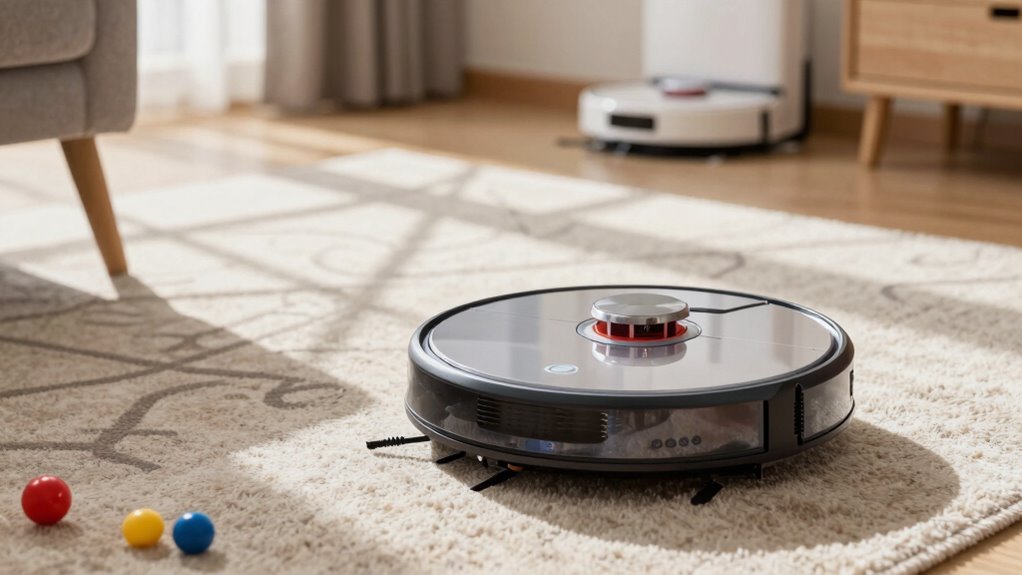
While you’re sipping your morning coffee, your budget robot vacuum is out there doing its best to clean without a map or LiDAR—because those high-tech extras would blow its tiny budget!
You see, real LiDAR needs fancy lasers and spinning parts that cost way more to make, so cheap models skip them fast. They’d rather save you cash than map every corner.
No LiDAR means no smart planning—just bump sensors and guesswork. Plus, adding LiDAR needs stronger brains (a.k.a. pricier chips) and smarter software, which budget bots just don’t have.
Dust and hair can gum up LiDAR’s moving bits too, causing errors or tantrums like “LiDAR blocked!”
And let’s be honest—cleaning that sensor? Most of us forget.
How Smart Navigation Beats Random Cleaning
How does your robot vacuum go from clueless bumper car to cleaning ninja?
With smart navigation, it stops guessing and starts knowing.
Instead of bouncing around like a pinball, LiDAR lasers scan your home thousands of times per second, building a precise map—even in the dark.
You’re not just watching it wander; you’re seeing it plan.
It zips through open spaces and tight corners, never missing spots or cleaning the same area twice.
Thanks to SLAM, it knows exactly where it’s and where it’s been.
It resumes right where it left off, even after recharging.
No more chaos, no more guesswork—just methodical, efficient cleaning that actually works.
Your floors get cleaner, faster, and you get your time back.
Who knew a little robot could be this smart—and this cool?
What Advanced Robots Do Differently
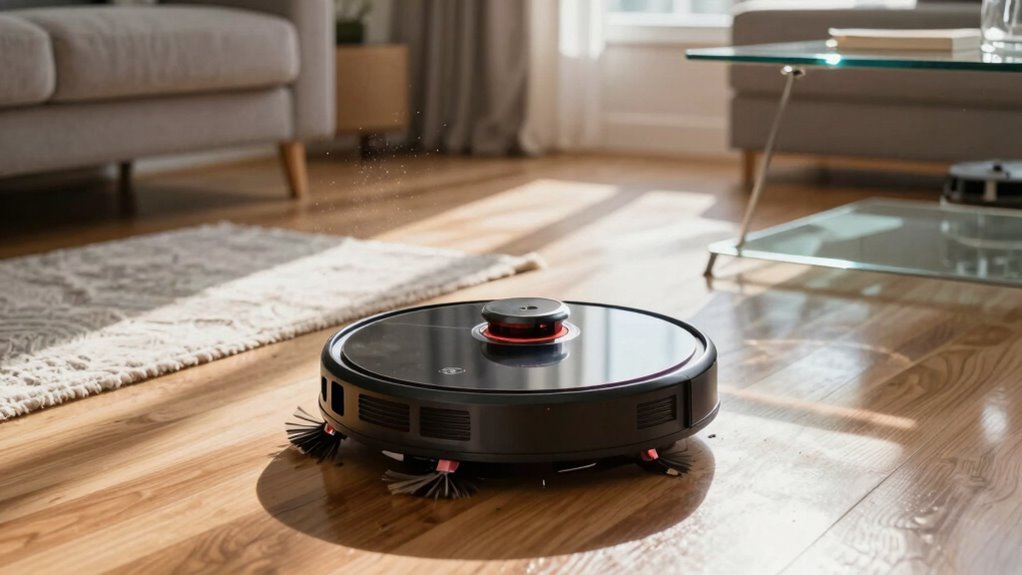
Your robot vacuum isn’t just cleaning smarter—it’s leveling up in ways you’d expect from a sci-fi sidekick,
not a gadget under your couch.
- It zaps the room with LiDAR, mapping every couch leg and corner like a tiny laser ninja, even in total darkness.
- Instead of bumping around cluelessly, it uses camera smarts and AI to spot your kid’s LEGO collection—or your dog’s water bowl—before face-planting into it.
- Fancy models blend lasers, cameras, and ultrasonic sensors to navigate like a self-driving car with a PhD in floor dirt.
- With dToF tech, it stays sleek enough to duck under your sofa like a ninja, not a robot that’s given up on life.
It doesn’t just clean—it plans, dodges, and conquers crumbs like a boss.
When Random Paths Still Clean Well
Even if your robot vacuum doesn’t plot every move like a master strategist, it’s still got tricks up its wheel well to keep your floors tidy.
It bounces around with purpose, using sensors to dodge furniture and detect dirt, while its smarts track movement to avoid cleaning the same spot ten times—well, maybe nine.
In smaller or simpler rooms, it zips around with surprising efficiency, hugging walls and zigzagging with joyful chaos.
Thanks to long battery life, it keeps going until every corner’s covered, even if it takes a few extra laps.
Think of it like a dog chasing a squirrel—seems random, but it *will* find it eventually.
Repeated passes might feel excessive, but hey, no dust stands a chance.
Can You Improve A Robot Vacuum’s Random Cleaning?
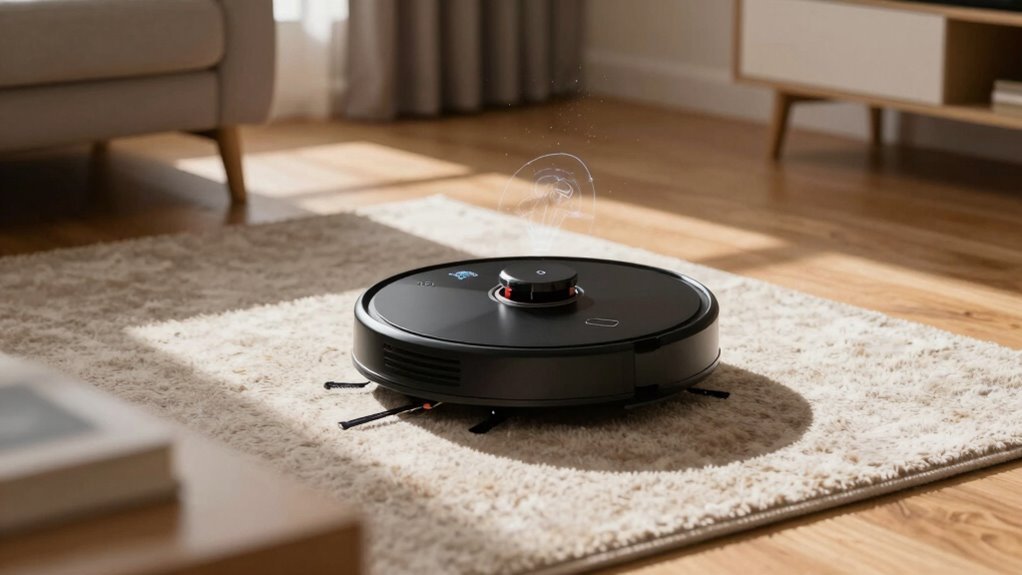
- Swap random bounces for zigzag or snake patterns, slashing cleaning time and travel by over 85%
- Use LiDAR or vision sensors so it “sees” walls like a pro, hugging edges without constant bumping
- Rely on boundary recognition and side brushes to grab grime hiding within 5mm of baseboards
- Let adaptive algorithms plan smarter paths in real time, dodging obstacles like it’s playing defense
You’re not stuck with chaos—modern tweaks turn that clumsy dancer into a cleaning ninja.
With the right tech, your vacuum doesn’t just wander; it works
And hey, who knew robots could learn rhythm?
Do You Need To Upgrade From A Non-Map Robot?
If you’re still letting your robot vacuum bounce around like it’s stuck in a pinball machine, it might be time to contemplate a smarter way to clean.
You’ll save time with a mapping model—no more endless loops or missed corners.
It zips through rooms in neat lines, while your current one probably wastes battery circling the same spot.
Fancy skipping the cat bowl zone or cleaning only the kitchen?
Mapping bots let you set boundaries and choose rooms.
Yours just plows ahead, chaos included.
If you’ve got a big or cluttered home, upgrading makes a huge difference.
Sure, non-mapping vacuums are cheaper and fine for tiny spaces, but why settle?
Modern mapping picks smarter paths, lasts longer, and actually remembers where it’s been.
Sounds like a grown-up version of your current tumbler, doesn’t it?
Upgrade and finally get cleaning done right—without the robot getting lost in the process.
Robot Vacuum Navigation: From Bumping To Mapping
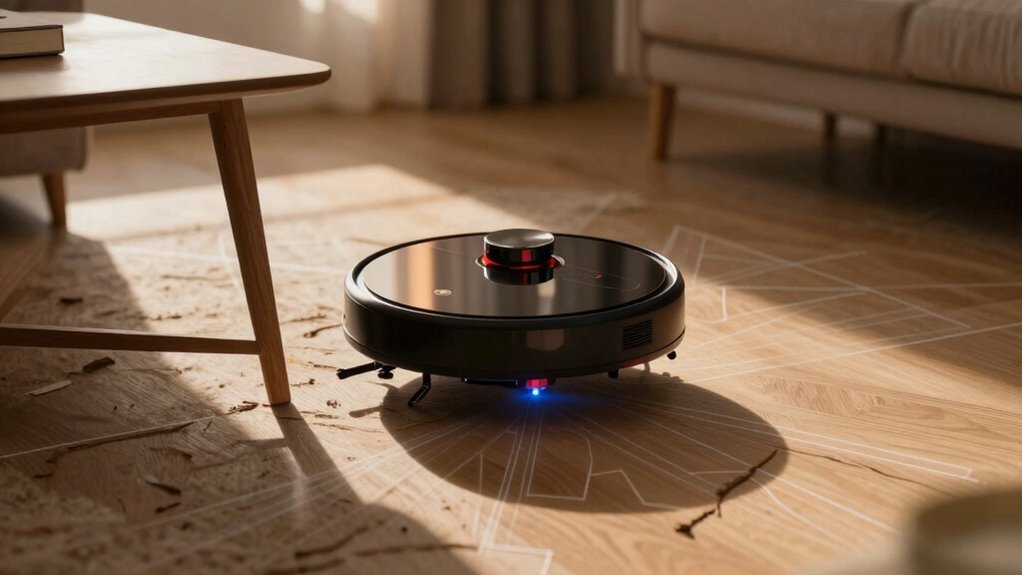
You’ve probably seen your old robot vacuum stumble into the same chair leg over and over, like it’s in a slapstick comedy it just can’t quit.
But navigation’s come a long way since those clumsy days!
- Bumping bots relied on hits to change direction, leaving spots missed and time wasted.
- Sensor-based models use wheel tracking and ultrasonic beams to guess position—smarter, but still kinda random.
- Gyroscopes and IMUs keep robots steady and straight, even on rugs or after a bump.
- vSLAM and LiDAR map your home like a pro, with lasers or cameras building blueprints for clean, efficient passes.
Today’s robots don’t just wander—they plan.
From chaos to calm, your floor’s now in smart hands.
You’ll barely notice they’re there—except for how *clean* everything looks.
Frequently Asked Questions
How Often Should I Replace My Robot Vacuum’s Brushes?
You should replace your robot vacuum’s main brush every 6 months, or sooner if it’s frayed or tangled—check those flaps against the “Max Wear Line.”
Swap out side brushes every 3 to 6 months since they wear faster and love to party at the edges.
If you’ve got pets or carpets, expect to replace them more often.
Clean them weekly, and they’ll thank you by lasting longer—no retirement party needed!
Can Robot Vacuums Work in the Dark Without Lidar?
Yeah, robot vacuums can totally work in the dark without LiDAR!
You’ve got options—some use gyroscopes and wheel sensors to map movement, while others rely on bump sensors or infrared tech.
They mightn’t be as precise, but they’ll still hustle around your room like little nocturnal ninjas.
Sure, they won’t win a nav award, but hey, they won’t faceplant either.
Dark floors? No problem!
Do Robot Vacuums Use Wi-Fi to Map My Home?
Yes, they do use Wi-Fi to map your home—if they’re smart models!
You’ll need it to set up the app, save floor plans, and tweak cleaning zones.
Once mapped, some bots remember your layout even offline.
But without Wi-Fi, you can’t start mapping or control them remotely.
Think of Wi-Fi as their GPS planner—no signal, no smart routes.
Just don’t ask them to DJ your next party. 🎵
Are Robot Vacuums Safe Around Pet Food and Water Bowls?
You bet they’re safe—*if* you set them up right!
You’ve seen the chaos: vacuums charging into bowls, sending kibble flying like a snack tornado.
Avoid messes by using wall-mounted or elevated bowls so your bot can glide cleanly underneath.
Pop in virtual walls or move bowls to blocked zones.
Clear the area first, and boom—clean floors *and* calm pets.
Who knew robot-proofing could be this easy?
Can I Schedule Cleanings on Multiple Floors Automatically?
Yes, you can absolutely schedule cleanings on multiple floors automatically!
Just set it up in the app, pick which floor to clean and when, and your robot handles the rest.
It remembers each floor’s map, knows where it is, and even resumes cleaning after recharging.
Want the kitchen done Tuesdays and the bedroom on Fridays?
Easy.
You’re basically the robot’s boss—and who doesn’t love that gig?
Conclusion
You’re not hallucinating—your robot vacuum really does clean like it’s lost in a maze from the 1990s. But hey, even old-school robo-carpoolers zigzagging across your living room get the job done eventually. With better maps and brains (a.k.a. smart sensors), today’s models clean smarter, not harder. Still, if your floor’s tidy and you’ve still got socks intact, who cares if it dances like nobody’s watching?
References
- https://robotklinsmann.com/why-do-robot-vacuums-move-randomly/
- https://www.therobotreport.com/sensor-breakdown-how-robot-vacuums-navigate-and-clean/
- https://www.dreametech.com/blogs/blog/robot-vacuum-map-moved-or-broken-fix
- https://www.youtube.com/watch?v=i08J7O73saA
- https://forums.wyze.com/t/my-wyze-robot-vacuum-is-officially-a-lemon/169048
- https://www.eufy.com/blogs/robovac/robot-vacuum-troubleshooting
- https://techsalesonline.com.au/blogs/articles/dealing-with-robot-vacuum-navigation-issues-obstacles-and-solutions
- https://support.dreametech.com/hc/en-us/articles/10385328194447-How-to-Fix-That-Naughty-Bump-Sensor-on-Your-Robot-Vacuum
- https://service.eufy.com/article-description/What-if-My-RoboVac-always-bumps-into-walls-furniture
- https://support.irobot.ca/s/article/10211