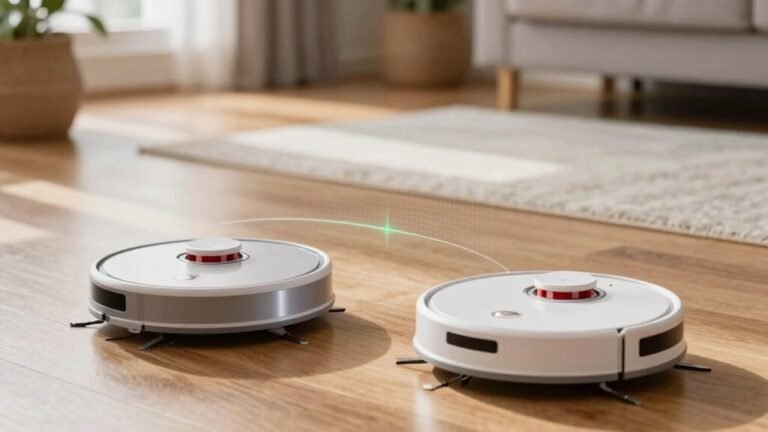
Obstacle Avoidance Tech: Do You Need It?
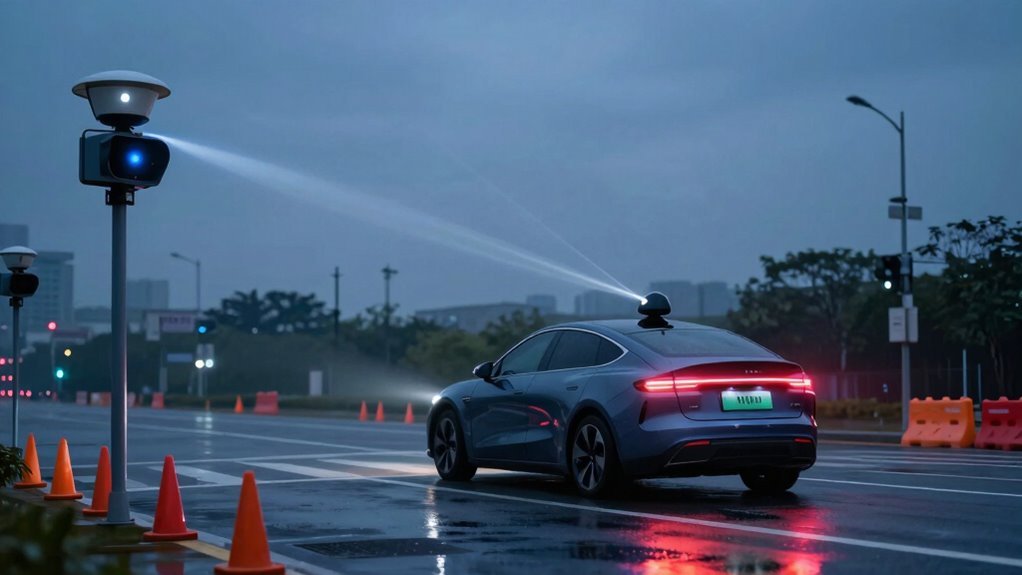
You’re already dodging disasters without even trying—your car beeps, your vacuum sidesteps socks, and drones zip through trees like acrobats. Obstacle avoidance uses smart sensors to see, think, and act fast, keeping things safe and smooth.
It’s not just cool tech fluff—obstacle avoidance is a must-have for busy spaces, tight turns, and surprise pet appearances. This intelligent system works behind the scenes, ensuring seamless navigation in dynamic environments.
What Obstacle Avoidance Really Does (And Where It Matters)
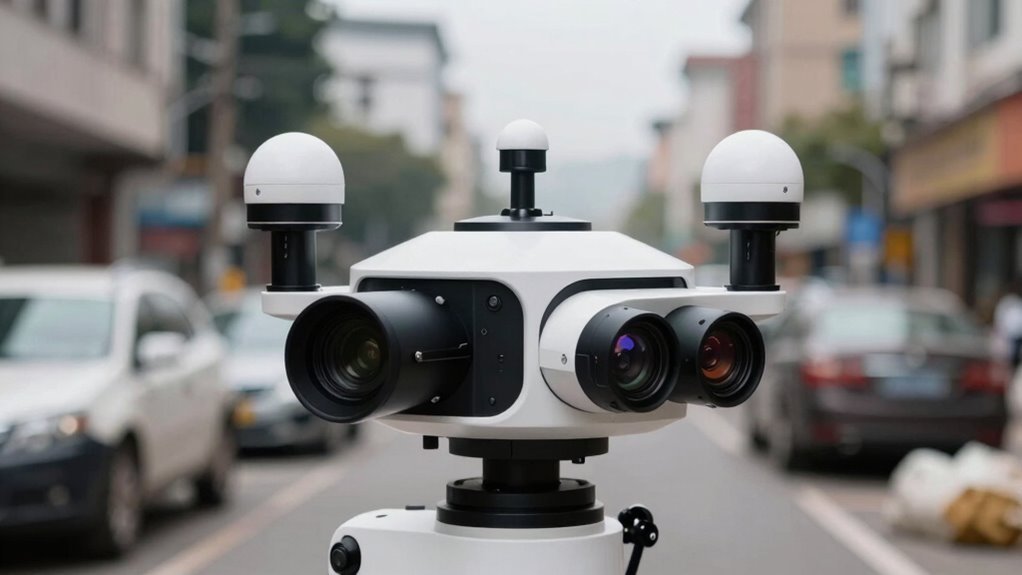
Ever wonder how robots manage to dodge obstacles without face-planting into a wall—or worse, a coworker?
You’re not alone!
These smart machines use obstacle avoidance to spot objects while moving, then brake or steer clear automatically—no panic needed.
They recognize people, pallets, or forklifts using clever tech like YOLO and stereo vision, adjusting paths in real time.
Whether it’s a sudden pedestrian in a warehouse aisle or a cluttered workspace, they keep a safer distance than basic systems, thanks to Neuro-Fuzzy logic and real-time smarts.
Sensor fusion combines data from multiple sources like LIDAR, cameras, and ultrasonic sensors to improve detection accuracy.
You’ll see them thriving in busy factories, zipping around humans safely, or maneuvering tight 4×4 indoor zones without a scratch.
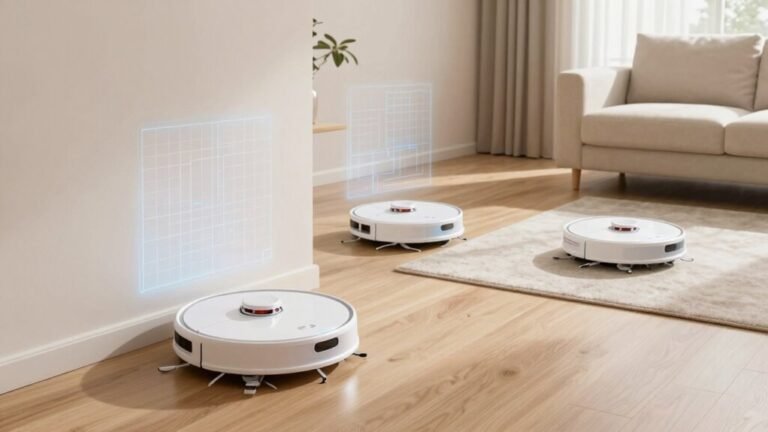
In multi-robot hubs like automated warehouses or smart cities with 5G, they boost productivity and cut downtime.
They don’t just avoid crashes—they work smarter, alongside you, making collaboration seamless, safe, and surprisingly graceful.
How Obstacle Avoidance Works: Sensors and Smarts
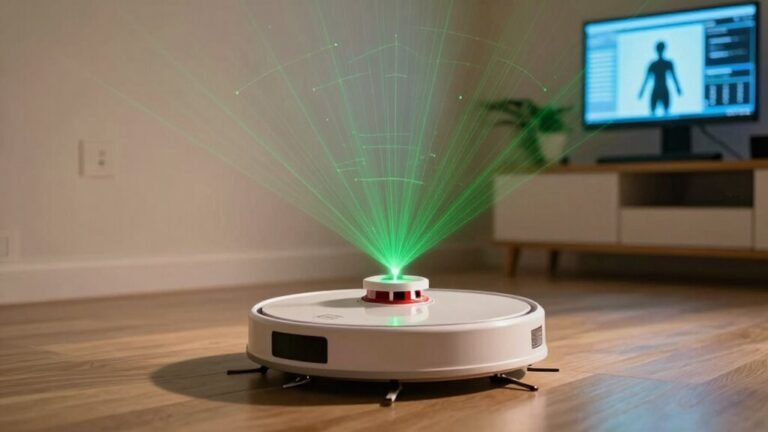
How do robots pull off those smooth moves without bumping into everything? You can thank smart sensors and clever brains working together. They use tools like ultrasonic beams, infrared pulses, and laser maps to “see” obstacles fast. Then, quick-thinking algorithms say, “Whoa, wall ahead!” and steer clear—like a ninja dodging traps! This entire process follows a 3-step process: sense, think, act that ensures robots react quickly and safely in dynamic environments.
Here’s a peek at your robot’s senses:
| Sensor Type | What It Does | Cool Perk |
|---|---|---|
| Ultrasonic | Listens for sound echoes | Works in dust, dark, or smoke |
| Infrared | Feels nearby heat and light | Great for short-range cozy spaces |
| LiDAR | Spins lasers to map 3D space | Sees up to 40 meters—super snooper! |
| Time-of-Flight | Times light speed for depth checks | Teams up with cameras for smart vision |
Sensors gather info, brains crunch it, and—boom—you’ve got graceful, crash-free motion!
Where Obstacle Avoidance Works Best: Drones, Vacuums, Cars
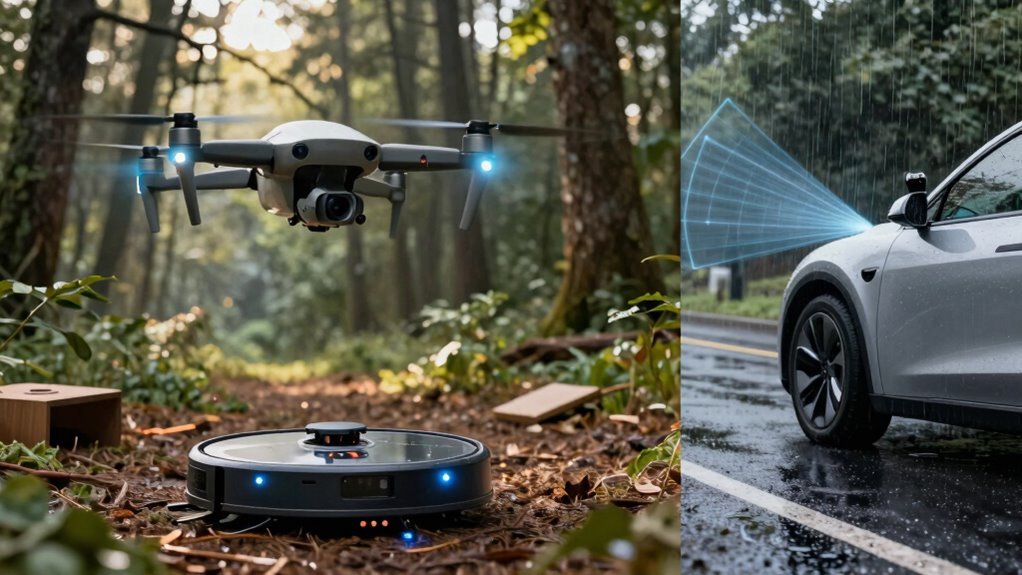
Where do you find obstacle avoidance tech stealing the spotlight? Right in the air, on your floor, and on the road.
Drones use it to zip through forests, dodge debris in search and rescue missions, and nail perfect cinematic shots without smacking into trees.
You’d be amazed how they swarm safely, keeping cool even at high speeds—thanks to smart sensors and quick reflexes.
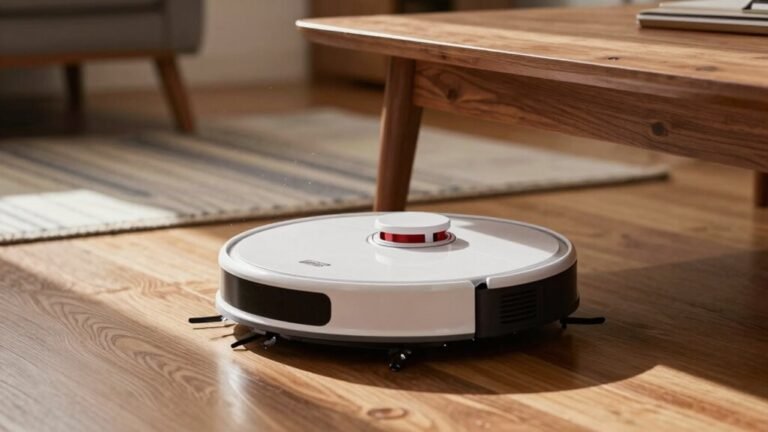
Meanwhile, your robot vacuum isn’t just rolling blind; it maps corners, sidesteps socks, and avoids staircase face-plants like a tiny, determined explorer.
And in self-driving cars, this tech helps you cruise confidently, spotting obstacles fast so you don’t have to.
Whether soaring, scooting, or driving, obstacle avoidance makes machines smarter, safer, and way more fun—no crash landing (or vacuum-induced panic) required!
When Obstacle Avoidance Fails: Blind Spots and False Triggers
While your car’s obstacle avoidance tech might feel like a superhero most days, it’s not flawless—sometimes it misses things it really shouldn’t. Sensors can’t see everything, and no system’s perfect. You might think you’re covered, but blind spots and false alarms happen more than you’d expect.
| Issue | Real-World Example |
|---|---|
| Blind spots | SUVs miss 23 feet behind—kids or pets can vanish there |
| Sensor gaps | Ultrasonic sensors struggle with fast-moving objects |
| False triggers | Rear AEB links to higher MedPay claims—too many alerts |
| Driver delay | You don’t brake fast enough when surprised |
| Over-reliance | You trust the tech, then drive like you don’t need to look |
Tech helps, sure—but it’s not magic. Stay sharp, double-check, and remember: your eyes are still the best sensors around. Don’t let a beep lull you into a false sense of security!
Do You Need Obstacle Avoidance? By Use Case
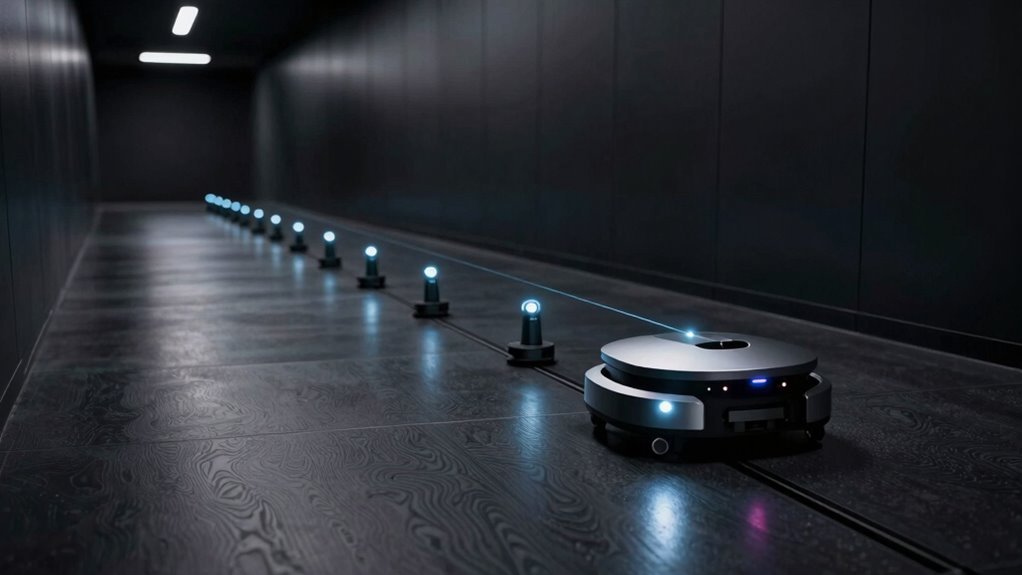
You’ve seen the tech stumble—blind spots, false beeps, that awkward moment when your car slams on the brakes for a shadow—but don’t toss it out with the old oil just yet.
If you’re flying drones near construction sites or crops, obstacle avoidance isn’t just handy—it’s a lifeline.
For military bots dodging static barriers or industrial vehicles maneuvering mines, it’s mission-critical.
In cities packed with pedestrians, self-driving cars rely on it to react in a heartbeat.
Even your parking assist uses it to glide neatly into tight spots.
Sure, it’s not perfect, but with AI, LiDAR, and smarter sensors evolving fast, what was once a quirky add-on is now a must-have.
From farms to factories, the tech’s turning heads—and saving skins.
So yeah, do you need it?
Depends—if your robot’s got wheels, wings, or a job to do, the answer’s a solid yes.
Frequently Asked Questions
Can Obstacle Avoidance Work in Complete Darkness?
Yeah, obstacle avoidance can work in complete darkness—you’ve got some cool tech on your side!
Drones like the Skydio X10 use NightSense with infrared and AI to zip around in total blackness, while LiDAR on the Mavic 4 Pro pings invisible light to map obstacles.
HAD/AR even senses heat signatures, so it sees you like a warm fuzzy blob.
Just don’t try backflips in a cave… safety first!
Does It Drain Battery Life Significantly?
You’re worried it’ll drain your battery?
Irony is, the tech meant to save your drone from crashes actually saves power too!
You’re not lugging around a power-hungry beast—modern LiDAR sips energy, especially ToF sensors.
You’ll keep flying, dodging trees like a pro, without constantly recharging.
So go ahead, let it work its magic; your battery won’t throw a tantrum.
It’s smart, it’s efficient—it’s basically the eco-warrior of obstacle avoidance!
Is It Possible to Turn It off Manually?
Yeah, you can totally turn obstacle avoidance off manually—it’s your drone, your rules!
Just head into the app settings, find the safety or sensors menu, and toggle it off.
DJI, Autel, Parrot, they’ve all got easy switches, sometimes right on the screen.
Just remember, without it, you’re flying blindfolded near trees—thrilling, but risky!
How Much Does It Increase Device Cost?
It adds $1,200 to $3,500 to your device’s price—yeah, it stings a bit!
But think of it like a superhero sidekick for your drone, car, or plane, keeping you out of trouble.
Fancy sensors and AI do the heavy lifting, and while top-tier systems cost more, prices are dropping fast.
So, you’re paying for smart tech that dodges disasters—pretty cool, right?
Worth every penny if you ask me.
Do Pets Confuse Obstacle Avoidance Systems?
Yeah, pets can trip up obstacle avoidance systems—imagine a squirrel’s joyride under a self-driving car’s nose!
These furry little curveballs move unpredictably, and while sensors try their best, they don’t always catch Fluffy darting across the street.
Think of it like autopilot doing interpretive dance around a bouncing ball.
Engineers are tweaking things, but right now?
Pets keep systems on their toes—and sometimes, that’s not enough.
Conclusion
You’re cruising with tech that dodges disasters—pretty cool, right? Here’s a fun fact: 70% of robot vacuums without obstacle avoidance bump into things *every single use*. Yikes! But with smart sensors, your gadgets glide smoothly, like dodgeball pros. Whether you’re flying drones, cleaning floors, or driving cars, it’s like giving your machines eyes. Sure, they’re not perfect—no cape, no superpowers—but close! Skip it? Maybe in an empty field. In your living room? Don’t risk it.
References
- https://pmc.ncbi.nlm.nih.gov/articles/PMC12031456/
- https://thinkrobotics.com/blogs/learn/robot-obstacle-avoidance-techniques-challenges-and-future-trends
- https://projectcage.com/courses/obstacle-avoidance-robot/
- https://irispublishers.com/ijasc/fulltext/the-several-uses-for-obstacle-avoidance-robots.ID.000503.php
- https://www.reemanrobot.com/news/what-is-the-principle-of-obstacle-avoidance-ro-72755592.html
- https://mrdvs.com/comprehensive-guide-to-obstacle-avoidance-sensors/
- https://www.dronesplusrobotics.com/glossary/obstacle-avoidance
- https://en.wikipedia.org/wiki/Obstacle_avoidance
- https://www.zenatech.com/how-drones-detect-and-avoid-obstacles/
- https://www.unmannedsystemstechnology.com/expo/collision-obstacle-avoidance/