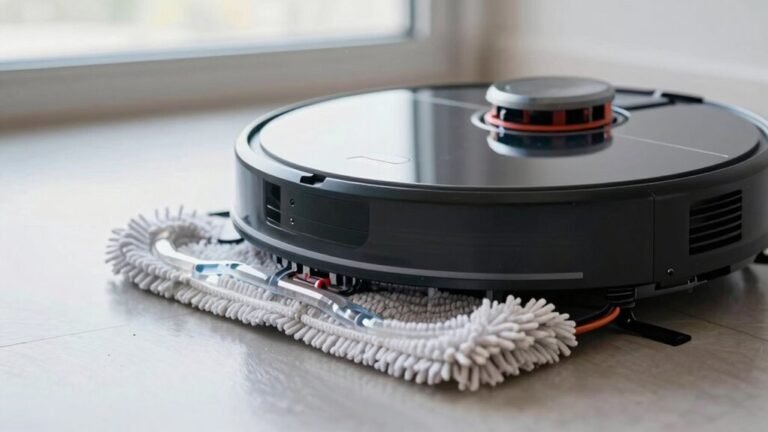
Can Robot Vacuum Mops Clean Grout Lines?
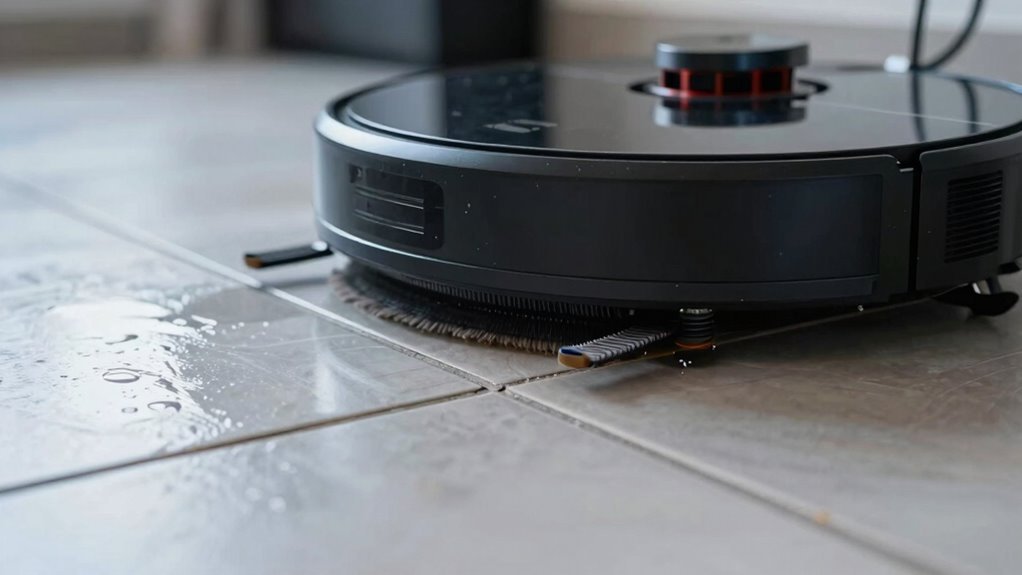
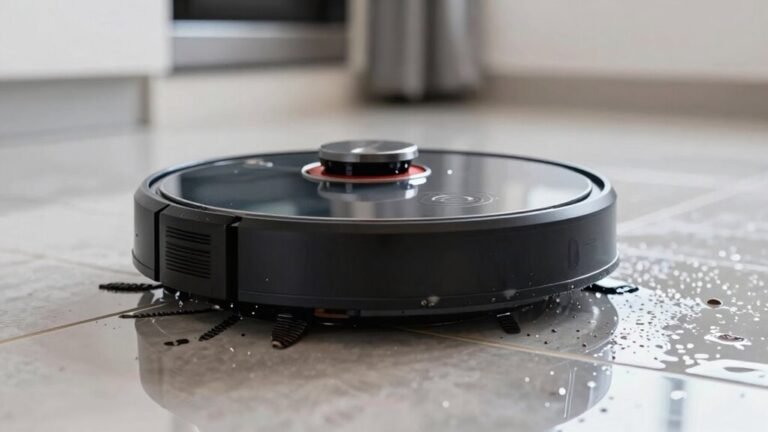
Yes, robot vacuum mops can clean grout lines to some extent. They’re effective at removing surface dirt and keeping tile floors looking fresh between deeper cleaning sessions.
However, most robot mops struggle to reach deep into grout lines where grime and stains accumulate over time. They often glide over the grooves, missing the stubborn debris hidden beneath the surface.
Models with vibrating pads or stronger scrubbing action do a better job at agitating dirt in grout lines. Still, they can’t fully replace manual scrubbing with a brush or deep-cleaning solution.
Think of your robot vacuum mop as a helpful sidekick, not a superhero. For truly clean grout, periodic hand cleaning is still necessary.
Do Robot Mops Really Clean Grout?
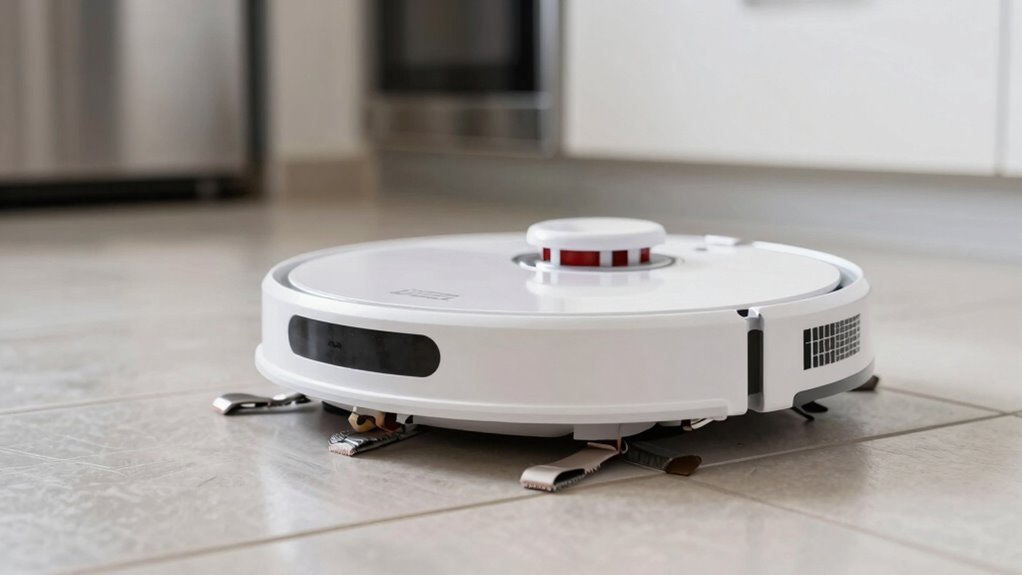
So, do robot mops actually clean grout—or are they just giving your tiles a spa day while ignoring the messy stuff in between?
Let’s be real: they *help*, but don’t expect miracles.
Most robot mops lightly clean grout, removing surface dust and slowing discoloration, but they rarely deep-clean it.
Tests show high-end models zap stains from tiles but leave grout lines still stained—like coffee hiding in tiny trenches.
Even top performers like the Narwal T10 and Ecovacs T8 clean tiles great but skip the grout grind.
Users love how shiny their floors look, yet often say, “Clean floor, dirty grout!”
You’ll still need to scrub by hand every few weeks.
Think of your robot as a sidekick, not the grout-cleaning hero.
It’s a helper, not a magic eraser—keeping things fresh, not fixing years of buildup.
High-suction vacuums pull dirt from grout lines effectively, though mopping bots typically lack this level of targeted suction power.
Why Robot Mops Struggle With Grout
Ever wonder why your robot mop zips across the floor like it’s on a joyride but skips the grout like it’s hot lava?
That’s because grout sits lower than your tiles, and your robot’s flat, fluffy pad just glides over the top without dipping into the grooves.
It’s like trying to wash between your fingers with a dish sponge—it brushes the knuckles but misses the cracks.
The pad barely touches the grout, so dirt, grime, and yesterday’s spills stay locked in.
Plus, those cute little sensors often think dark grout lines are cliff edges, so your bot plays it safe and steers clear.
And let’s be real—those gentle swipes don’t stand a chance against packed-in gunk or sticky residues.
With low pressure, light scrubbing, and minimal water, your robot’s doing its best, but grout? Grout demands a bolder touch.
Dark grout lines can confuse infrared sensors, making navigation even harder on tile-heavy floors.
What Features Actually Clean Grout?
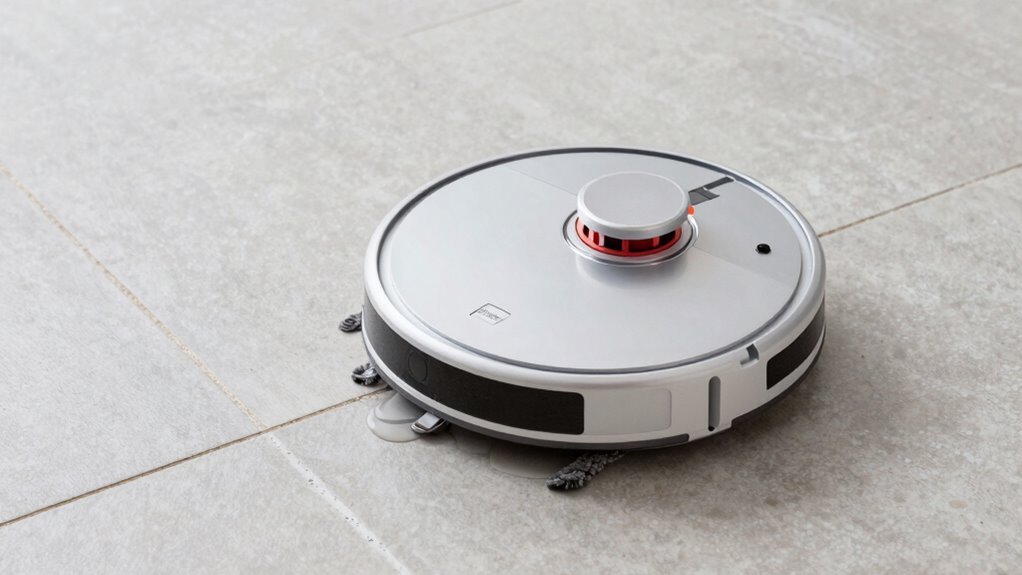
How do you get a robot mop to *really* clean grout—those sneaky lines that collect everything from dirt to mystery spills?
You need smart features working together.
Look for vibrating or scrubbing pads that dig into grout with real friction, plus enough downward pressure to nudge out gunk without scratching tiles.
Stiff side brushes flick debris out, while strong suction grabs it fast—especially in tight grout lines.
Smart water control keeps things damp, not soggy, so grout stays safe but clean.
Use a mild cleaner and grippy microfiber pads to lift stains, not smear them.
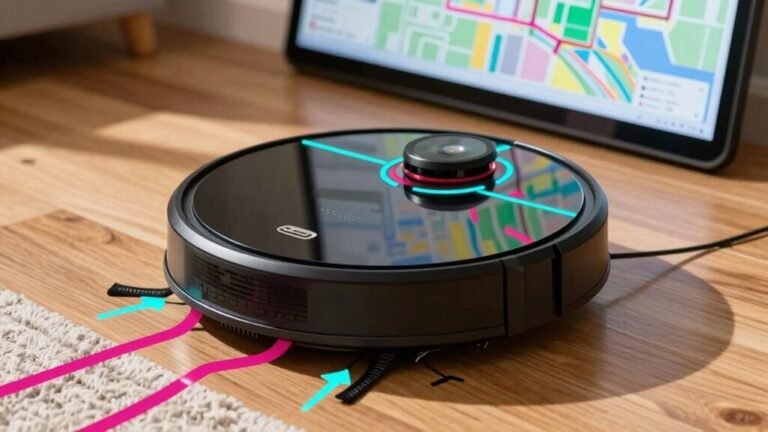
And with precise navigation, your robot hits every line—no skipping corners!
It’s not magic, it’s good design: scrubbing, suction, smarts, and just the right amount of sass.
Are Scrubbing Robot Mops Better for Grout?
Why do your tile floors look clean but your grout still look like it’s been through a mud fight?
Well, even scrubbing robot mops struggle to reach deep into those narrow grout lines.
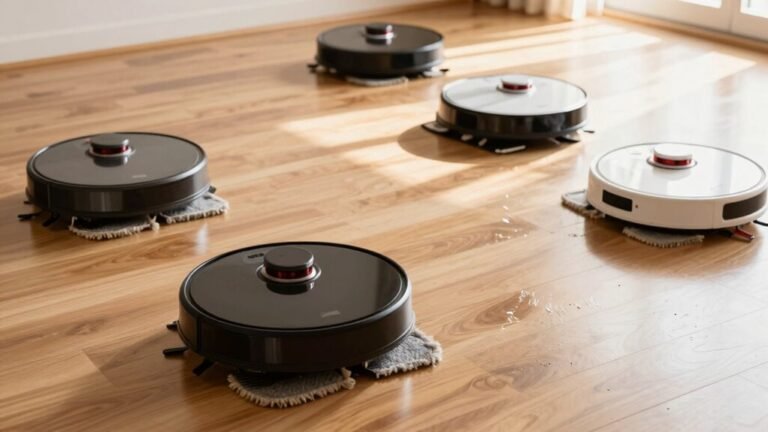
Sure, they’re better than basic models—vibrating pads and spinning brushes tackle surface goop and sticky spills near the grout, which helps.
But here’s the kicker: their flat pads glide over the tile and “bridge” the grout channels, missing the grime hiding in the cracks.
Real cleaning needs bristles digging in, like a manual brush does.
Robots can’t press hard enough without risking damage, so they just can’t match that elbow-grease power.
On newer, lightly soiled grout, frequent robot runs can slow darkening—think of it as maintenance, not miracles.
But if your grout’s already grubby or stained? Don’t expect wonders.
They’ll keep things tidy, but for deep grime, you’ll still need good old hand scrubbing.
Which Robot Mops Clean Grout Best?
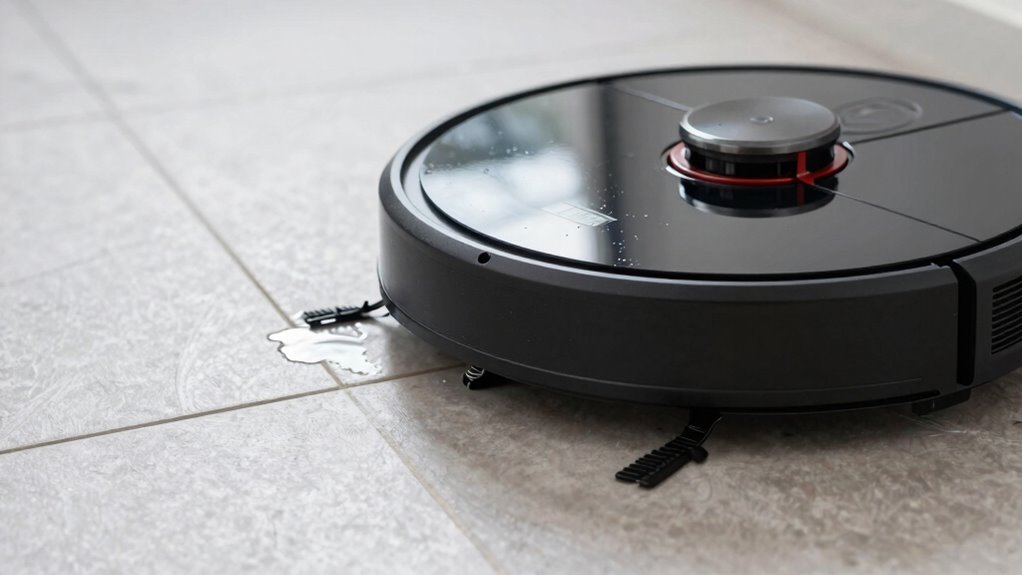
So, which robot mops actually stand a chance against stubborn grout gunk?
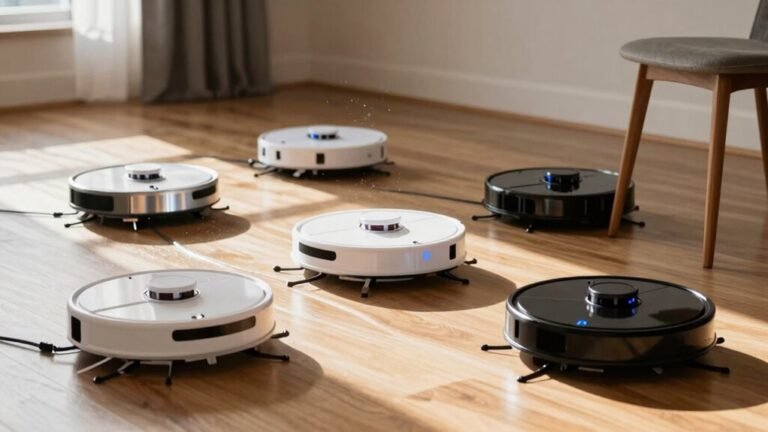
The Roborock Q Revo and Saros 10R smash it with dual rotating pads that scrub deep into grout lines like tiny power brushes.
Their vibrating mopping and strong suction grab gunk before it even thinks about hiding.
Ecovacs’ X8 Pro OMNI and X11 OMNI Cyclone? Total grout ninjas—roller pads plunge into corners, while 19,500 Pa suction wipes out debris like it’s their job (oh wait, it is).
The Dreame X50 Ultra and Mova Z60 Ultra bring serious A-game too, with multi-pass mopping that won’t skip a beat—or a tile.
These bots don’t just glide; they *attack* grime with edge-to-edge reach and relentless focus.
You’ll swear they’ve got grout on their minds.
If sparkling seams are your thing, these models are your new cleaning crew—no scrubbing required.
How Can You Improve Grout Cleaning With a Robot Mop?
What if your robot mop could go from basic cleaner to grout ninja with just a few tweaks?
Start by sweeping or vacuuming first—don’t let gunk get shoved deeper!
Pre-spray dirty grout with a mild cleaner so the robot lifts grime instead of just pushing it around.
Spot-scrub tough stains by hand; think of it as giving your robot a head start.
Use warm water and a pH-neutral detergent in the tank, never bleach—it’s harsh and can damage grout over time.
Crank up the water level and turn on multi-pass mode for better scrubbing power near grout lines.
Choose high-friction microfiber pads and swap them mid-clean when things get grimy.
Set no-go zones so your robot focuses on tiles, not rugs.
And remember: your robot’s a maintenance buddy, not a miracle worker—schedule deep cleans regularly to keep grout looking fresh and fierce!
Frequently Asked Questions
How Often Should I Replace the Mop Pad?
You should replace your mop pad every 2 to 4 months, depending on how dirty your floors get and how often you clean.
If you’ve got pets or kids, go for the 2-month mark—they turn floors into mudtracks!
Check for frayed edges, weird smells, or if your floors look streaky.
Worn pads won’t scrub grout well, so fresh ones keep your tiles gleaming like new dollar bills!
Can Robot Mops Damage Grout Over Time?
Yes, you can damage grout over time if you’re not careful.
Pressing too hard, using harsh cleaners, or running rough pads across joints wears them down like sandpaper on soft stone.
Grit gets ground in, moisture lingers, and pretty soon your grout’s groaning.
But relax—stick to gentle jabs, mild soap, and regular pad swaps, and your grout stays grand, not grainy.
Do I Need to Pre-Treat Moldy Grout?
Yeah, you absolutely need to pre-treat moldy grout—your robot mop won’t handle that funk on its own.
Hit those lines with a mix of vinegar and baking soda, or a dash of bleach solution, then scrub with an old toothbrush.
It’s like sending your grout to spa day before the robot does its glide-by.
Trust me, a little prep makes your bot way more effective—and way less grossed out.
Are Robot Mops Safe for Colored Grout?
Yes, robot mops won’t attack your colored grout like tiny, angry janitors—so relax!
They’re gentle, water-based, and generally safe.
But let’s be real, they’re more “surface fluffers” than grout warriors.
You won’t lose your grout’s hue, but don’t expect miracles either.
Keep it sealed, skip harsh chemicals, and maybe give it a wink before mopping.
Fun, light, and fuss-free—that’s the vibe.
Can I Use Vinegar With My Robot Mop?
You shouldn’t use vinegar in your robot mop—seriously, it’s a no-go.
It can wreck seals, clog lines, and even void your warranty.
Plus, it might dull your floors over time.
Stick to water or a gentle, approved cleaner instead.
Your robot will stay happy, your floors will shine, and you’ll skip the stink of a vinegar-soaked house.
Win-win!
Think of it like giving your mop a spa day, not a science experiment.
Conclusion
You’ve seen how tough grout can be, but robot mops? They’re not magicians—though some come *crazy* close! With the right scrubbing power and smart navigation, they’ll tackle dirt like a champ. Sure, they won’t replace elbow grease entirely, but hey, they’ll save you more time than a superhero with a mop. Keep ‘em clean, use good settings, and your floors will shine brighter than your future. Grout game strong!
References
- https://us.narwal.com/blogs/robot-vacuum/robot-vacuum-work-on-tile
- https://www.youtube.com/watch?v=WVC6pZ9F5f4
- https://northerncoloradocarpets.com/how-well-do-robot-vacuums-work-on-different-floor-types/
- https://www.thesmarthomehookup.com/most-robotic-mops-are-bad-these-arent/
- https://us.forum.dreametech.com/forum.php?mod=viewthread&tid=8924
- https://www.carpetzonellc.com/blogs/robot-vacuums-mops-which-flooring-types-play-best-with-your-cleaning-bots
- https://us.narwal.com/blogs/product/robot-vacuum-floor-compatibility
- https://us.mova.tech/pages/robot-vacuum-mop-combo
- https://www.ecovacs.com/uk/blog/how-to-clean-tile-joints-with-a-robot-vacuum-cleaner
- http://www.thesmarthomehookup.com/ultimate-robot-vacuum-and-mop-comparison-2025/