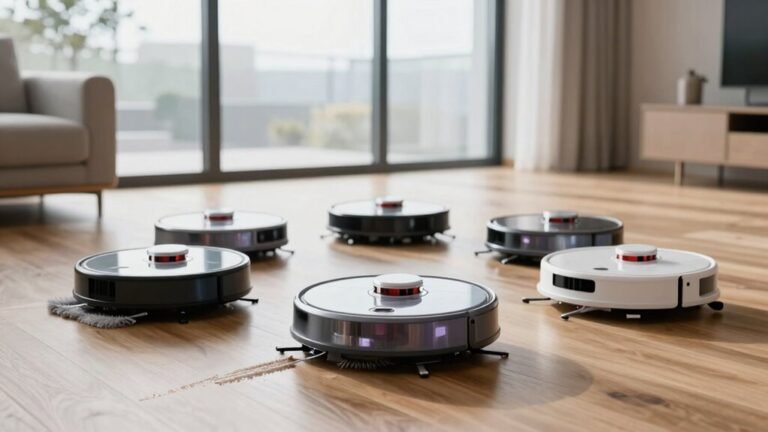
5 Best Robot Vacuums with Carpet Detection for a Smarter Clean
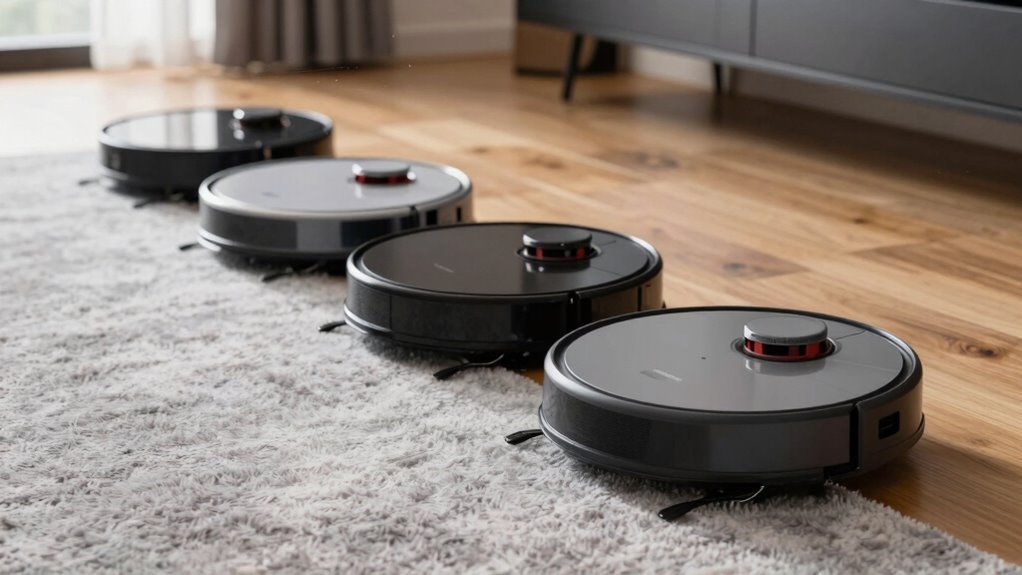
You’re probably tired of your robot vacuum stalling on thick carpets or skipping spots because it can’t tell tile from shag. The best robot vacuums with carpet detection solve this by automatically adjusting suction power when they sense carpeted areas.
What if your vacuum could boost to 5,000 Pa the second it hits a rug? Some models now map your home down to the millimeter and even empty themselves for weeks.
But which one actually balances smart carpet detection with real-world reliability—without costing a small fortune?
| Tikom Robot Vacuum and Mop (L8000 Plus) | Best Overall | Suction Power: 6000Pa | Self-Emptying: Yes | Mop Function: Yes | VIEW LATEST PRICE | Read Our Analysis | |
| Tikom Robot Vacuum and Mop Combo (G8000 Max) | Budget-Friendly Pick | Suction Power: 5000Pa | Self-Emptying: No | Mop Function: Yes | VIEW LATEST PRICE | Read Our Analysis | |
| eufy C10 Robot Vacuum Self-Emptying | Editor’s Choice | Suction Power: 4000Pa | Self-Emptying: Yes | Mop Function: No | VIEW LATEST PRICE | Read Our Analysis | |
| ILIFE A30 Pro Self-Emptying Robot Vacuum | Best Value | Suction Power: 5000Pa | Self-Emptying: Yes | Mop Function: Yes | VIEW LATEST PRICE | Read Our Analysis | |
| Shark Robot Vacuum & Mop Combo (AV2610WA) | High-Performance Pick | Suction Power: Not explicitly stated (ultra-powerful) | Self-Emptying: Yes | Mop Function: Yes | VIEW LATEST PRICE | Read Our Analysis |
More Details on Our Top Picks
Tikom Robot Vacuum and Mop (L8000 Plus)
If you’re done wrestling with separate cleaning gadgets, the Tikom Robot Vacuum and Mop (L8000 Plus) might be your most practical ally—especially if you want carpet detection that doesn’t just guess where your rugs begin. It ramps suction to 6000Pa on carpets, auto-boosting when it senses debris (or pet hair your dog insists on shedding).
You get 150 minutes of runtime, and it self-empties into a 3L bag that lasts—seriously—about 90 days. That means fewer trips to empty the dustbin and more consistent, hands-off cleaning.
With LiDAR mapping, it learns your layout and saves up to five floor plans, navigating your home like a pro. It avoids obstacles with precision and adapts to complex environments without constant supervision.
Want mopping? It does, but you’ll need to remove the mop pad—or set no-mop zones—since it won’t skip carpet automatically. For hybrid cleaning, a little setup goes a long way.
- Suction Power:6000Pa
- Self-Emptying:Yes
- Mop Function:Yes
- Navigation Type:360° LiDAR
- App Control:Yes
- Run Time:Up to 150 minutes
- Additional Feature:90-day hands-free cleaning
- Additional Feature:Auto-increase suction on carpet
- Additional Feature:5 saved multi-floor maps
Tikom Robot Vacuum and Mop Combo (G8000 Max)
You’re going to appreciate the Tikom G8000 Max if you’ve got a mix of hard floors and medium-pile carpets. Its 5000 Pa suction doesn’t just nudge debris around but actually lifts pet hair and fine dust, even as it adapts seamlessly between surfaces.
Thanks to smart carpet detection, the robot adjusts its cleaning mode when transitioning between floor types. You’ll love how it vacuums and mops simultaneously with a 450 ml dustbin and 300 ml water tank.
Still, would you trust it on thick rugs? Its 2.99-inch slim profile and large wheels tackle thresholds like a pro, while anti-fall and anti-collision sensors keep it from face-planting down stairs.
With app, voice, remote, or button control, you’re never stuck using one method. Flexibility in operation makes it easy to fit into your routine.
- Suction Power:5000Pa
- Self-Emptying:No
- Mop Function:Yes
- Navigation Type:Anti-collision sensors
- App Control:Yes
- Run Time:Up to 150 minutes
- Additional Feature:Ultra-slim 2.99-inch design
- Additional Feature:Climbs thresholds between surfaces
- Additional Feature:4 cleaning modes including zig-zag
eufy C10 Robot Vacuum Self-Emptying
The eufy C10 Robot Vacuum Self-Emptying is especially well-suited for pet owners and busy households needing reliable, hands-off cleaning—thanks to its 4,000 Pa suction power and CornerRover Arm that actually reaches pet hair tucked into baseboard gaps.
You’ll appreciate the self-emptying station, which automatically empties the bin into a 3L bag—meaning you only swap it every ~60 days, assuming daily cleans. Its slim 2.85-inch profile slips under beds and desks, reducing the need for manual cleanup.
LaserNav 2.0 plots efficient paths across floors, adjusting for dust levels and room layout. Sure, it only connects to 2.4 GHz WiFi (so no 5 GHz support), and you’ve got to clear cords and toys first—because, let’s be honest, does any robot really handle stray socks well?
Still, with scheduled cleanings and app control, it’s a solid “set and forget” pick that balances power, convenience, and smart design without overpromising.
- Suction Power:4000Pa
- Self-Emptying:Yes
- Mop Function:No
- Navigation Type:Laser Navigation
- App Control:Yes
- Run Time:Not explicitly stated
- Additional Feature:2.85-inch slim profile
- Additional Feature:CornerRover extendable side brush
- Additional Feature:60-day dust bag life
ILIFE A30 Pro Self-Emptying Robot Vacuum
Smart home adopters who hate lugging out dustbins every week—especially those with thick carpets and shedding pets—will get real mileage out of the ILIFE A30 Pro. Its 5000Pa suction digs deep into carpets while the LiDAR navigation maps your space with precision, adjusting routes for full coverage—so you’re not left wondering if it missed spots.
You’ll love the self-emptying base: five 2.5L bags hold up to 40 weeks (280 days) of debris—now, how often do you actually remember to empty the bin weekly? The 200ml dustbin and tank enable 3-in-1 cleaning (sweep, vacuum, mop), cutting cleaning time by 30%, though the mop isn’t for deep scrubbing.
- Suction Power:5000Pa
- Self-Emptying:Yes
- Mop Function:Yes
- Navigation Type:Precision LiDAR
- App Control:Yes
- Run Time:Not explicitly stated
- Additional Feature:5 self-empty bags included
- Additional Feature:3-in-1 sweep, vacuum, mop
- Additional Feature:8-week bag lifespan each
Shark Robot Vacuum & Mop Combo (AV2610WA)
Homes with a mix of plush carpets and stubborn pet messes just found their new best ally in the Shark Matrix Plus 2-in-1 Robot Vacuum & Mop (AV2610WA)—especially if you’re tired of choosing between powerful suction and smart mopping. You get 30% better carpet cleaning than the RV2610WD, thanks to Matrix Clean’s multi-pass precision grid.
The self-cleaning brushroll fights pet hair with anti-wrap tech—because who actually remembers to clean the roller weekly? With 110 minutes of runtime and LiDAR navigation, it maps your space like a pro.
App-controlled no-go zones let you define restricted areas with ease. The robot mops stains 50% better using sonic vibration for deeper cleaning.
And let’s be real: the XL self-empty base (hello, 60-day capacity) means less trash talk from your roommate. It’s designed to take the hassle out of daily maintenance.
- Suction Power:Not explicitly stated (ultra-powerful)
- Self-Emptying:Yes
- Mop Function:Yes
- Navigation Type:360° LiDAR
- App Control:Yes
- Run Time:110 minutes
- Additional Feature:Sonic mopping technology
- Additional Feature:CleanEdge air blast system
- Additional Feature:Matrix Clean spot detection
Factors to Consider When Choosing Robot Vacuums With Carpet Detection
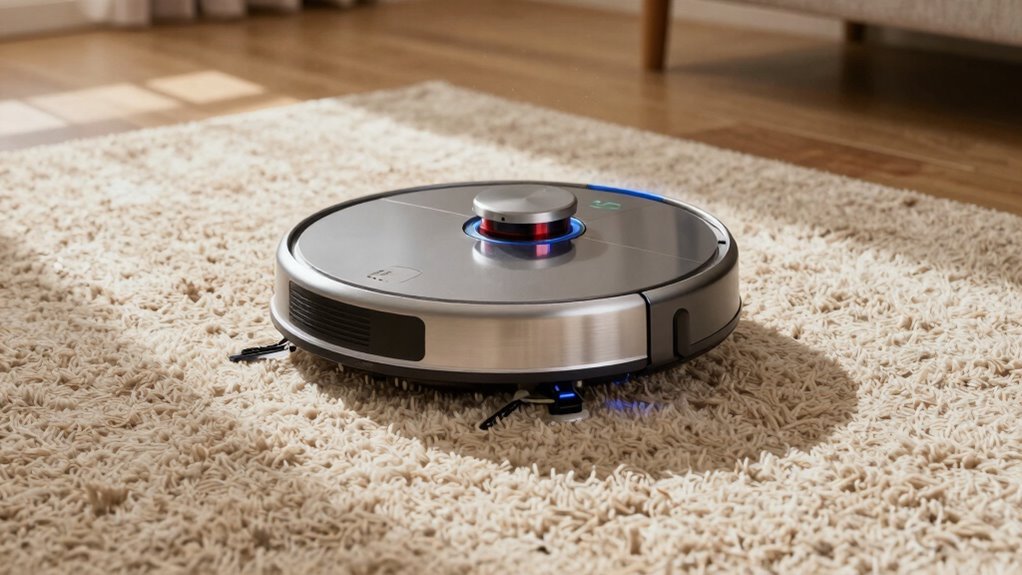
You’ll want to check how well the robot detects carpets—some use basic brushes, while advanced models (like those with LiDAR or structured light) adjust suction automatically, saving battery and boosting cleaning efficiency. Can it really tell tile from thick pile, or are you paying for smarts that barely work? Look for strong suction shifts (say, 2,000 Pa on carpet vs. 1,000 Pa on hardwood), accurate mapping that remembers room layouts, and floor recognition that doesn’t get confused near changes—all while lasting at least 90 minutes per charge.
Carpet Detection Technology
Ever wonder how your robot vacuum knows the difference between a plush shag衒
Suction Power Adjustment
Boost suction where it matters most—your robot vacuum’s brain doesn’t just spot carpets, it cranks up the power the moment it rolls from tile onto shag, often jumping to 5000+ Pa for deep-pile assault (some go as high as 6000 Pa, if you’re battling pet hair tangles). You’ve got four suction modes on most models, so why not let the bot pick the right one automatically?
When sensors detect thick carpet, they trigger max suction to pull out what’s woven deep, while dialing back on hardwood to save battery—smart, right? And honestly, who’s got time to tweak settings room by room?
The best units blend detection with suction logic so seamlessly, you’d forget it’s not human—well, almost. Auto-adjustment uses real-time feedback to match pile density, so plush rugs get the grunt they need without wasting energy on linoleum.
If your model mops or empties itself, this all syncs behind the scenes, making carpet cleaning feel less like chore management and more like quiet, rolling triumph.
Mapping And Navigation
Your robot vacuum knows where the hallway ends and the plush living room rug begins by using 360° LiDAR navigation. This system scans the room, avoids obstacles, and builds a consistent map as it moves—like a tiny rotating lighthouse detecting walls, furniture, and doorways.
Laser-based SLAM technology enables the robot to create highly precise floor maps, accurate within 1–2 cm. It uses these maps to plot efficient cleaning paths, minimizing missed spots and redundant passes.
For multi-story homes, multi-floor mapping stores separate layouts—up to 10 in some models—and automatically switches between them when you call the robot to a different floor via the app. This ensures seamless navigation across various levels without re-mapping.
Real-time sensors detect drops, edges, and collisions, helping the robot transition smoothly between different floor types. These sensors enhance navigation safety and adaptability on varied surfaces.
Customizable no-go zones, virtual walls, and boundary settings let you control where the robot can and cannot go. They’re ideal for keeping it off delicate rugs or out from under tables where pet bowls tend to collect crumbs.
Floor Type Recognition
Why does your robot vacuum suddenly struggle when crossing from tile to shag? Because without solid floor-type recognition, it can’t adjust—suction stays low on carpet, and mopping continues on hardwood, risking damage.
But here’s the fix: advanced models use LiDAR, cliff sensors, and contact detection to tell surfaces apart and adapt in real time. You’ll see them boost suction up to 2,000 Pa on carpets while cutting water flow on tile—keeping floors dry and dirt-free.
These systems toggle between sweeping and mopping modes automatically, so you don’t have to babysit shifts. And while no sensor’s perfect (especially on dark rugs or textured floors), pairing accurate mapping with room-by-room calibration improves reliability.
Battery Life Efficiency
Ever wonder how long your robot vacuum can really keep up once it hits the carpet? You’ll want one that delivers up to 150 minutes per charge—especially since carpet detection triggers higher suction, which drains power faster.
Most models drop to around 110 minutes in standard mode, depending on how much carpet they tackle. The good news? Auto-recharge and resume mean your vacuum powers back on, finishes the job, and doesn’t leave your rugs half-done.
You can also tweak things: using quiet or eco mode extends runtime by dialing down suction—perfect for light debris, but less ideal for embedded dirt. Think of it like switching from sprint to jog: you trade intensity for endurance.
Just remember, every time your robot boosts suction to lift carpet grime, it’s using more juice. Smart battery management—paired with efficient navigation—keeps cleaning consistent without constant babysitting.
Mopping Capability Integration
Mopping while moving seamlessly from hardwood to carpet means your robot must know where to mop—and where to stop. You’ll want a model that uses smart carpet detection to pause or reduce mopping on rugs, especially thick or absorbﺑر ones that could get soaked.
Many 2-in-1 robots handle this by either lifting the mop pad automatically—some don’t, forcing you to remove it manually—or deactivating mopping in preset no-mop zones. Water flow usually adjusts across three levels, or sometimes automatically, based on floor type, preventing over-saturation.
Tanks typically hold 200–300 ml, enough for about 1,000 sq ft, but remember: that’s shared space with the dust bin. Does it really make sense to mop low-pile transitions but skip plush bedroom carpets? Probably—especially if your robot lets you fine-tune zone behavior.
App Control Features
How much control do you really want over your robot vacuum’s carpet detection—enough to tell it *exactly* when, where, and how to clean, or just a “set it and forget it bleeding deal?
If you lean toward precision, app control lets you schedule cleanings down to the minute—say, 9:15 a.m. on Tuesdays—so your vacuum runs while you’re out, 100% hands-free.
You can draw no-go zones to block off delicate rugs or pet areas, or target specific rooms (like the living room, 320 sq ft) with zone cleaning, all from your phone.
Most models work over 2.4 GHz Wi-Fi (some add 5 GHz for faster response), and many sync with Alexa or Google Assistant—because “Hey, vacuum the kitchen” just sounds cool.
It’s not magic, but it’s close—just don’t expect it to fetch coffee.
Self Emptying Functionality
You’ve mapped your home, set schedules down to the minute, and told your robot vacuum exactly where not to go—so why stop at letting it clean on its own terms? Self-emptying functionality takes automation further by automatically dumping debris into a larger base station after each run.
This means you’re not fiddling with full dustbins weekly. Some models use a 3L bag that handles multiple cleaning cycles, while others offer multi-bag stations—like five 2.5L bags—to stretch maintenance out to several weeks.
You’ll still need to swap bags eventually, sure—but that’s a small trade-off for near hands-free operation. The system activates post-clean, so your robot empties itself and resumes duty if needed.
Just keep an eye on dust capacity; bigger bags mean fewer interventions, especially in homes with carpeted zones that collect more grit. It’s not magic, but close—just smarter chores.
Frequently Asked Questions
How Long Do Robot Vacuum Batteries Last on Average?
Your robot vacuum’s battery lasts about 60 to 120 minutes per charge, depending on the model and power settings. You’ll get around 2 to 5 years of daily use before needing a replacement, so charge it after each run to maintain its lifespan.
Can Robot Vacuums Detect Dark or Black Carpets Accurately?
You’ve seen lights trip sensors, yet dark carpets confuse some robot vacuums—contrast tricks them. But newer models? They adapt, using advanced sensors to see beyond color, cleaning black rugs reliably, proving tech evolves where older bots once failed.
Do Carpet Detection Sensors Work on All Carpet Types?
Yes, you can rely on carpet detection sensors across most carpet types, but they might struggle with very thick or shaggy piles. They usually adapt well to low- to mid-pile, flat-weave, and dark rugs without issues.
Are Robot Vacuums With Carpet Detection Quieter on Carpets?
Yes, they’re quieter on carpets—like a hush falling over a bustling street when snow starts to fall. You’ll hear less grind as the motor eases, adapting softly beneath your feet with smarter, gentler sweeps.
Can I Schedule Cleanings Only for Carpeted Areas?
You can’t schedule cleanings for just carpeted areas only, but you can set zones or rooms to clean on certain days. Some models let you adjust suction for carpets automatically during those runs.
Conclusion
You’ve got smart options—literally—when it comes to carpet detection, and these five robot vacuums don’t just crawl, they think (well, as much as a 3.5-inch-tall machine can). From the L8000 Plus’s 3L self-empty base to the Shark AV2610WA’s Matrix Clean boosting suction by 20% on rugs, they juggle mopping, mapping, and debris duty like a circus act—without dropping the ball (or your socks).