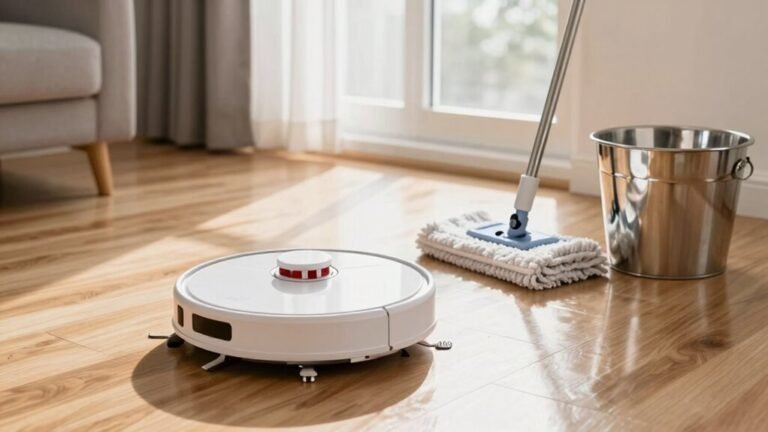
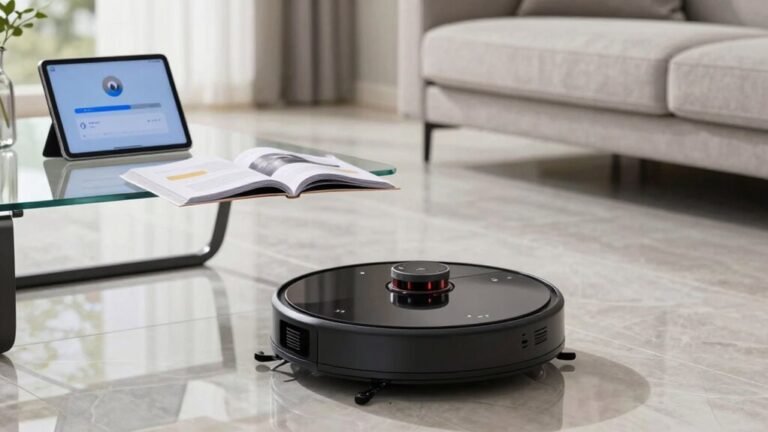
The Evolution of Robot Mop Technology
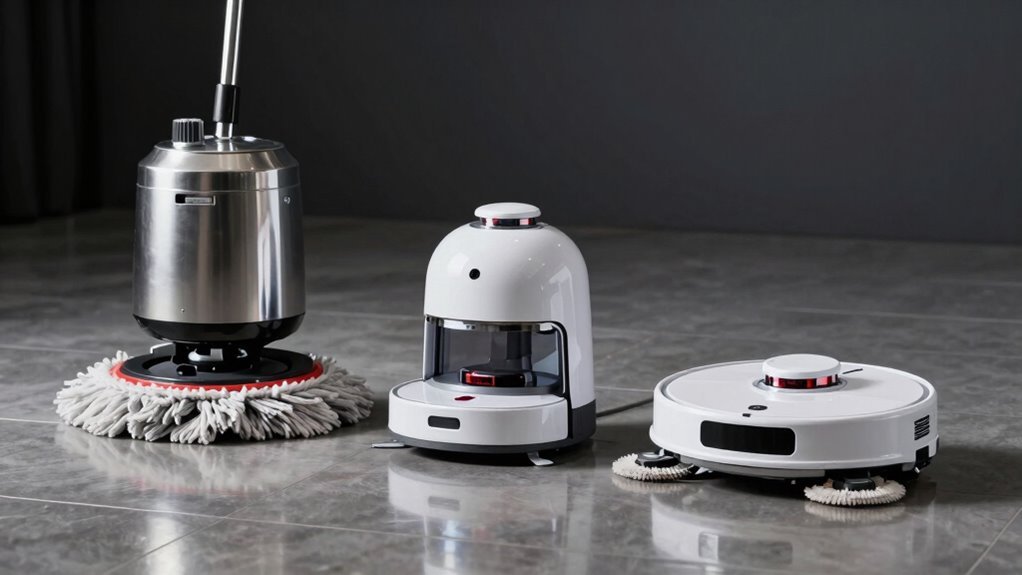
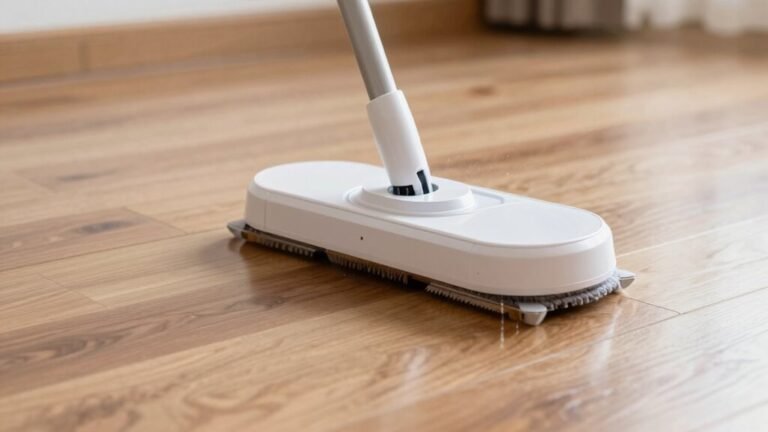
You’ve come a long way from wringing out rags by hand. Now, robot mop technology has transformed floor cleaning into a seamless, intelligent routine.
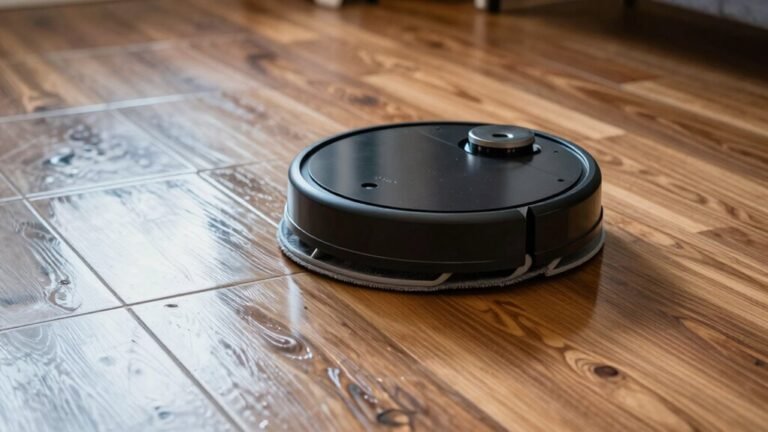
Today’s robot mops operate at 220 RPM, vibrate thousands of times per minute, and use hot water with UV light to eliminate germs. This advanced robot mop technology ensures a deeper, more hygienic clean with minimal effort.
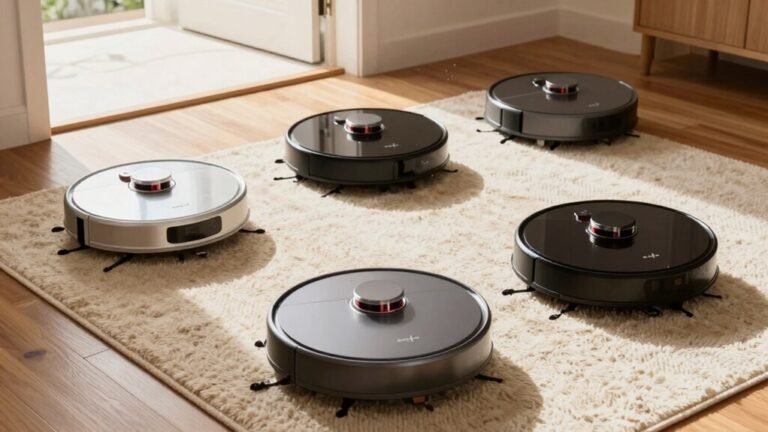
It effortlessly dodges socks, lifts its mop when transitioning to carpets, and maps your entire home like a tiny, detail-oriented cartographer. With voice commands, you can start a cleaning session at 3 a.m. using Alexa.
And the best part? Robot mop technology is still evolving, promising even smarter, more intuitive cleaning in the near future.
How Robot Mops Work Today
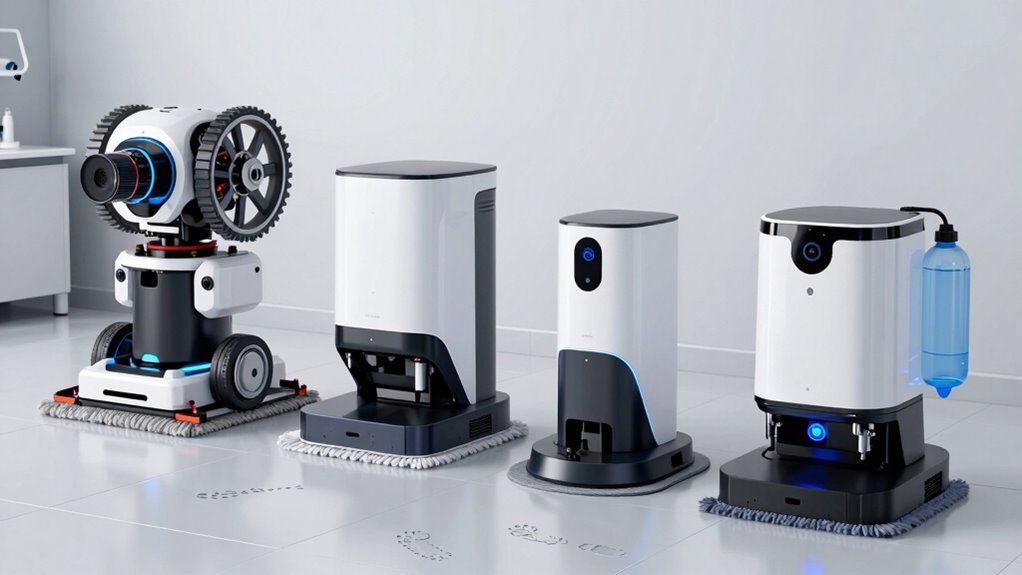
Meet your new cleaning sidekick—the robot mop, smarter and harder-working than ever.
It tackles grime with rotating mop pads that spin up to 220 RPM, or dual pads pressing down at 1 kg for serious scrubbing power.
Some even vibrate 4,000 times a minute to zap edge dirt you’d miss by hand—talk about overachievers!
Paired with SmartScrub™ tech, they adjust effort on the fly to crush dried-on messes.
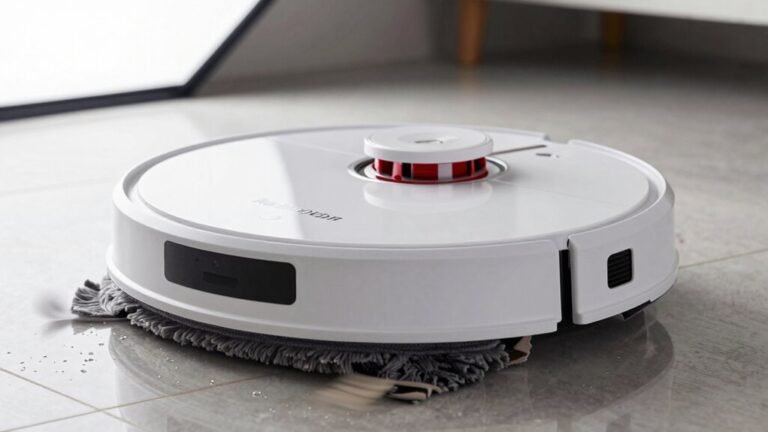
They’ve got brains *and* brawn: dual pads swap automatically, while hot-water washing at up to 212°F keeps things fresh.
Silver ions fight bacteria, and self-drying stations zap moisture with warm air—no musty smells, we promise.
Oh, and they tidy themselves—no more yucky mop buckets.
With detergent dispensing and water recycling, they’re basically the grown-up version of “set it and forget it.”
LiDAR-based maps enable precise navigation, ensuring complete coverage without missing spots or bumping into furniture.
Robot mops don’t just clean—they *own* the floor.
From Manual Mopping to Automation
Ever wonder how we went from kneeling with a rag to commanding a robot that mops like it’s on a mission?
You’ve come a long way—from twigs and moss in ancient times to cotton string mops your grandma probably wrung by hand.
Back then, mops were just rags on sticks, but then came genius upgrades: self-wringing handles, sponge heads, and microfiber that actually grabs dirt instead of pushing it around.
You dodged wet hands and heavy buckets thanks to clever 19th-century patents and mid-century spin designs.
By the 1950s, synthetic sponge mops and liquid cleaners made cleaning quicker and cleaner.
Then, boom—electricity empowered motorized scrubbers, and eventually, robots rolled in.
Now, you kick back while a little machine glides across your floor, scrubbing without begging for mercy.
Who knew mopping could go from back-breaking chore to something that feels like magic?
These robotic mops are the latest step in a long journey that began with broom-like tools in ancient civilizations.
Smart Sensors That Avoid Obstacles
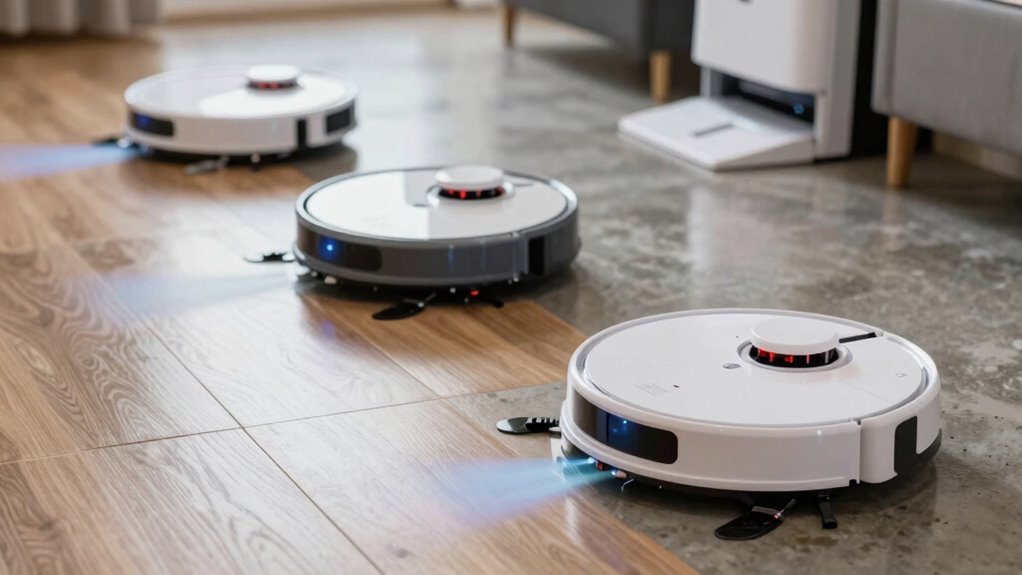
Think of your robot mop as a tiny, tireless explorer, zipping around your home with a high-tech sixth sense.
It’s not just dodging furniture—it’s sidestepping socks, avoiding pet toys, and even leaping over cables like a ninja.
Using infrared, ultrasonic, and LiDAR sensors, it scans your space dozens of times per second, spotting obstacles before you even notice them.
With smart tech like AIVI 3D and dual-chip AI, it recognizes over 120 object types, from slippers to power cords.
When it spots a tricky spot, it slows, pivots, or stops—no crashes, no mess.
Thanks to millimeter-level precision, it glides within 5mm of walls and lifts its mop to skip carpets.
No more wet rugs or stuck bots!
These sensors don’t just protect your floors—they save your robot from becoming a paperweight.
It’s like giving your mop glasses, reflexes, and a little brain, all so you can kick back while it fearlessly conquers clutter.
AI Navigation: Mapping Your Home
Wandering through your home like a robo-explorer with a photographic memory, your robot mop doesn’t just clean—it learns, remembers, and plans.
With dual cameras and LiDAR, it maps every corner in HD, spotting furniture, walls, and even your favorite slippers.
AI chips help it adapt on the fly, dodging obstacles and hugging edges like a pro.
Whether it’s the Narwal Freo Z Ultra plotting real-time routes or your Roomba Combo i5 saving floorplans, it’s like having a tiny cartographer at work.
You can label rooms, set no-go zones, or tell it to skip the cat’s litter zone—because nobody wants a mop meltdown.
Apps let you tweak, schedule, or zone in on messes, all from your couch.
It’s not magic, but it’s close—your floors stay spotless while you do, well, absolutely nothing.
Smart? Absolutely.
Lazy? Maybe.
Effective? Every.
Single. Time.
Voice Control for Robot Mops
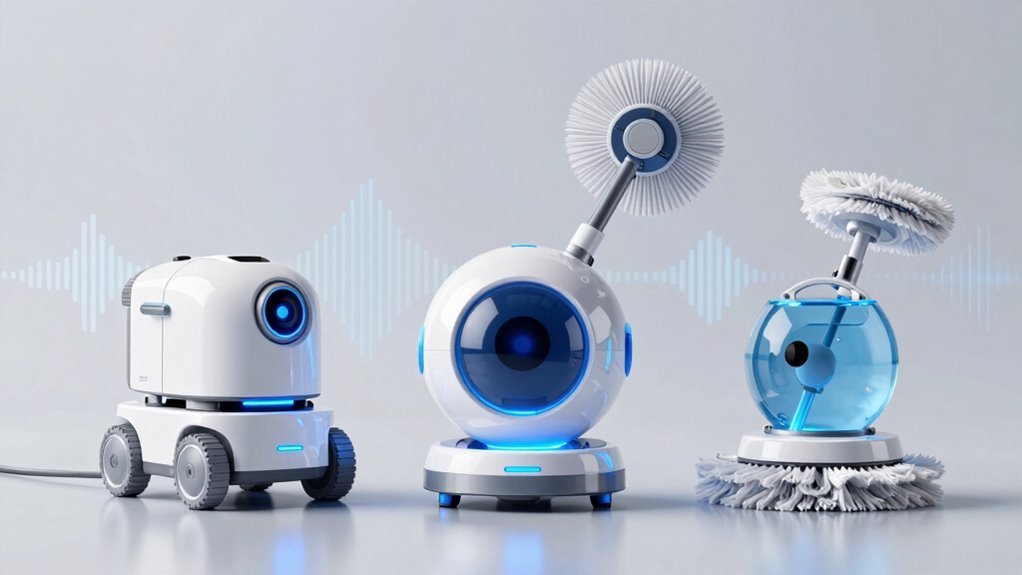
Your robot mop isn’t just smart—it’s ready to chat and take orders like a tiny, helpful roommate. Just say, “Hey Google, start mopping,” and it’s already rolling.
No more digging through apps or tapping buttons—your voice does the work. Thanks to Alexa, Siri, and Google Assistant, you can kick back, relax, and boss around your floor cleaner like a pro.
By the 2020s, brands like Roborock, ECOVACS, and Narwal built mops that listen, respond, and even give quick cleaning updates. You can set schedules, switch modes, or ask if it’s done—all without lifting a finger.
Imagine telling your mop to avoid the dog’s toy zone, and it actually listens! With AI smarts and strong smart home links, voice control’s now a top feature. It’s not magic—it’s just tech finally getting polite.
Self-Cleaning Mops: Less Maintenance
Ditching the chore of scrubbing your robot mop by hand just went from dream to reality. Now, you can kick back while your robot washes, dries, and even empties itself—no soggy mop drama.
Fancy 80°C hot water blasting grime away and UV light zapping bacteria? Yup, it’s a thing.
Models like Narwal Flow and Dreame do the dirty work for you, storing dust for up to 120 days. The mops spin clean, get blasted with warm air, and stay fresh—no mold, no stink, no weird science experiment vibes.
You’ll laugh when you realize you haven’t touched a mop in months. With self-lifting pads, automatic water exchange, and hands-free drying, your robot’s basically a lazy person’s dream come true.
And hey, if your floors sparkled more than your motivation, that’s a win. Welcome to clean floors without the fuss—because life’s too short to wash a robot.
How Robot Mops Adapt to Floor Types
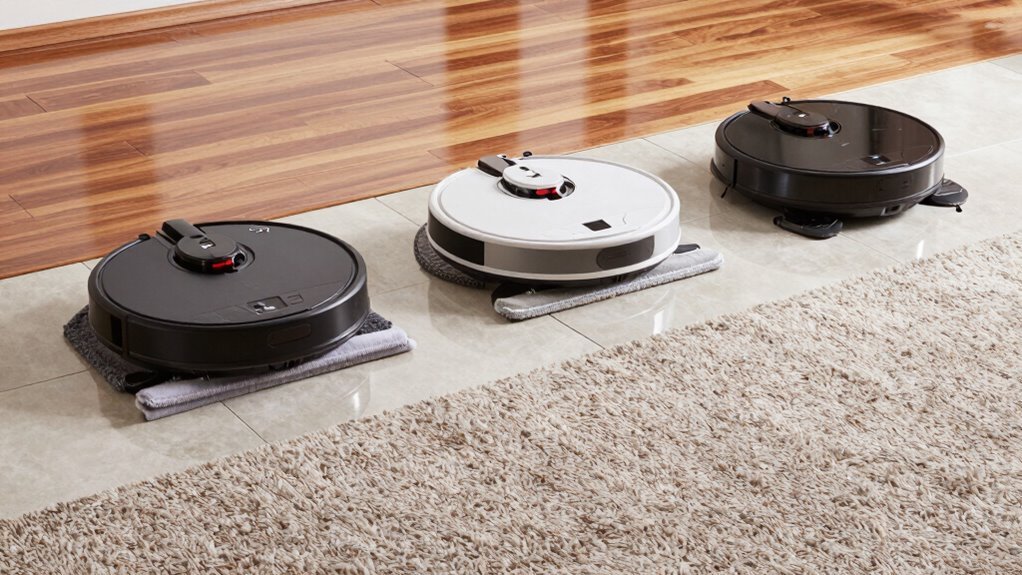
How does your robot mop know when it’s gliding over hardwood, trundling across tile, or approaching a plush carpet?
Thanks to smart sensors and learning smarts, it figures it out on the fly!
Here’s how it feels like magic under your feet:
- It *senses* the floor change, like switching from dance floor to shag rug—then adjusts suction and mop height instantly.
- The mop lifts over carpet, so you don’t end up with a soggy welcome mat.
- Tiny rubber brushes and wheels tiptoe on hardwood, avoiding scratches like a ninja.
- On tile, it targets grout lines with precision, leaving them shiny—no scrubbing required.
It learns your home’s quirks, dodges stairs, and even remembers where the high-pile carpet lives. Your robot doesn’t just clean—it adapts, one smart glide at a time.
Longer Battery Life for Full-Home Cleaning
While you’re busy sipping your morning coffee or scrolling through memes, your robot mop’s battery is quietly working miracles behind the scenes.
With up to 240 minutes of runtime, models like the Narwal Flow let you clean your entire home without begging for a recharge.
That’s almost four hours of nonstop mopping—enough to tackle even the messiest kitchens or dusty basements.
Newer lithium-ion batteries last 2–3 years, and some, like Narwal’s, stretch to 4, outliving older NiMH types by miles.
Smart tech means less downtime, fewer charges, and more cleaning done right.
Advanced models even save power by sensing dirt levels and adjusting effort automatically.
And let’s be real—nothing beats starting your day knowing your floors are fresh, and you didn’t lift a finger.
It’s like having a tiny, super-efficient roommate who actually cleans up after themselves.
Now *that’s* progress.
Scheduling Robot Mops With Your Phone
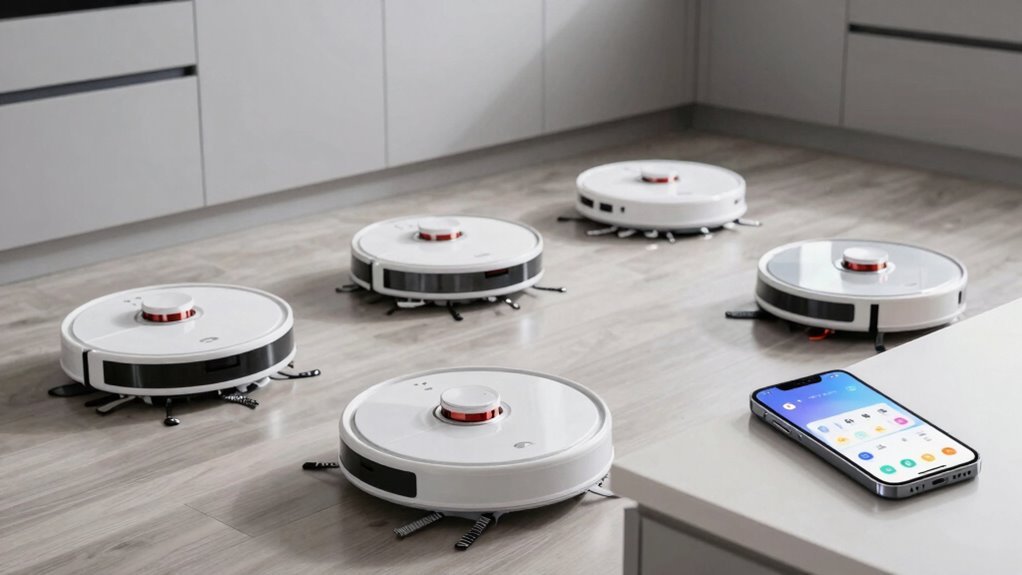
Ever wonder how your robot mop knows exactly when to spring into action?
You’re in control—right from your phone.
With a few taps, you schedule cleanings while lounging on the couch or halfway across the world.
Here’s how it feels like magic:
- Set it to start at 9:15 a.m. every Monday, Wednesday, and Friday—right when the house is empty and quiet.
- Tell it to skip the bedroom but mop the kitchen twice a week using zone-specific scheduling.
- Choose *edge cleaning* for baseboards or *spot mode* for that ever-messy corner by the fridge.
- Watch live on your app as it zips around the living room, showing exactly where it’s been—like a tiny, diligent GPS-guided janitor.
You can even laugh when Alexa says, “Cleaning has begun.” Your dog watches it pass by, unimpressed.
What’s Next: Upcoming Robot Mop Innovations
What if your robot mop could tackle spills before you even notice them?
Soon, it will.
With AI that spots messes and learns your home, models like the Ecovacs X12 and Eufy Omni S2 won’t just clean—they’ll predict.
Expect mops like the Roborock Saros 20 Sonic, with 4,000 vibrations per minute, scrubbing hard while gliding under furniture thanks to its low profile.
The Saros Rover might even climb stairs on extendable legs—yes, really.
MOVA’s Z70 Ultra leaps over thresholds like a tiny superhero, while Samsung’s Bespoke jet-boosts steam hot enough to kill bacteria.
Mop rollers are getting longer, smarter, and self-cleaning, like Qrevo’s SpiraFlow™.
High suction? 40,000Pa is coming.
Soon, your mop won’t just follow orders—it’ll outthink dirt.
Robot mopping isn’t just evolving.
It’s leveling up.
Frequently Asked Questions
Can Robot Mops Clean Grout and Tight Corners Effectively?
You know what?
Robot mops can tidy up your tile surfaces like a champ, but grout lines?
Not so much—they’re like tiny dirt bunkers!
Most can’t scrub deep into grout, no matter how hard they try.
Corners?
Some do okay with edge brushes, but tight spots still need your trusty old toothbrush.
Think of robot mops as helpful teammates, not the whole cleaning squad!
Do They Work on Dark-Colored or Matte Tile Floors?
Yes, they totally work on dark and matte tile floors—no worries!
Using smart sensors and laser mapping, your robot mops confidently glide around, even in dim light.
They don’t get spooked by dark surfaces or mistake matte finishes for messes.
Advanced tech means they see the floor for what it is, not a midnight maze.
Plus, they clean well, avoid grout confusion, and still find their way back to dock.
Smart, huh?
Are Robot Mops Safe Around Pets and Small Children?
Yeah, your robot mop won’t turn into a tiny vacuum gremlin and kidnap the cat—promise.
It’s built to dodge pets and toddlers with sensors sharper than your aunt at a family reunion.
Soft edges, quiet moves, and smart navigation keep everyone safe.
You can even set no-go zones so it skips the playroom.
Just skip harsh cleaners, and you’re golden.
Parent- and pet-approved, basically.
How Often Should I Replace the Mop Pads?
You should replace mop pads every 3 to 6 months, depending on how often you use your robot.
If you’ve got pets or track in lots of dirt, swap them out sooner—maybe every 3 months.
For light cleaning, you might stretch it to 6.
Reusable pads? Wash them weekly and ditch them when they smell funky or fray.
Disposable ones? Toss after one go—no second dates!
Keep things fresh, and your floors will stay sparkling.
Can They Detect and Avoid Wet Spills on the Floor?
Yeah, they can spot and dodge wet spills—about 80% of high-end models do it right!
You’ll love how your robot slows down, checks the mess with smart sensors, and steers clear like it’s dodging landmines in a comedy movie.
Some even shout, “Nope, not today!” by switching to mop mode or rerouting.
It’s like having a tiny, overthinking janitor who hates puddles.
Pretty cool, huh?
Conclusion
You’re not just buying a robot mop—you’re inviting a tiny, tireless dance partner into your home, gliding through spills and dust bunnies alike. It zips around furniture, chats when you call, and even knows when the tile ends and carpet begins. With smart brains, long-lasting juice, and a knack for timing, it’s like having a cleaning wizard that actually listens. Tomorrow’s mops? Even smarter, sillier, and ready to throw a cleaner party—minivan not included.
References
- https://us.3itech.com/blogs/news/best-vacuum-mop-robot
- https://www.youtube.com/watch?v=pnI-MOW-Mmw
- https://vacuumwars.com/ces-2026-vacuum-wars-coverage/
- https://www.youtube.com/watch?v=tOGmBLMPx6o
- https://newsroom.roborock.com/gl/news/ces-2026-roborock-releases-the-world-s-first-robotic-vacuum-with-wheel-leg-architecture-as-it-joins-hands-with-real-madrid-football-club-
- https://www.ecovacs.com/global/campaign/ces-deebot
- https://www.sharkninja.com/vacuums-air-care/vacuum-cleaners/robot-vacuums
- https://nikcatcher.com/blogs/news/how-mops-evolved-a-history-of-cleaning-tools
- https://motioncm.co.uk/the-evolution-of-cleaning-machines-from-traditional-to-high-tech/
- https://www.themissionmaids.com/random/history-of-the-mop-in-house-cleaning/