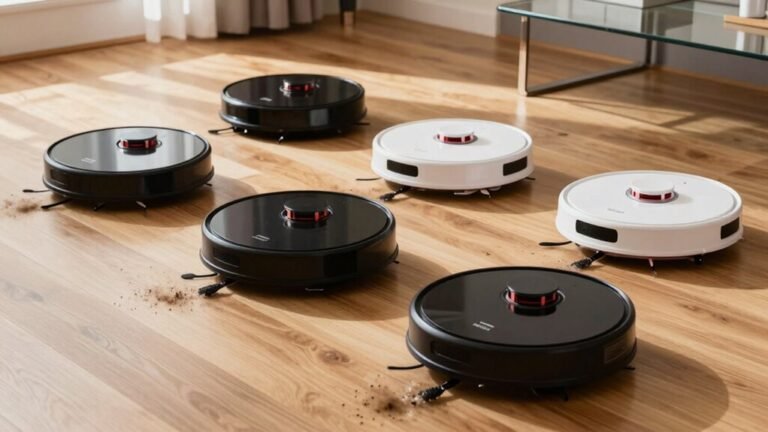
Which Robot Vacuum Has the Best Navigation?
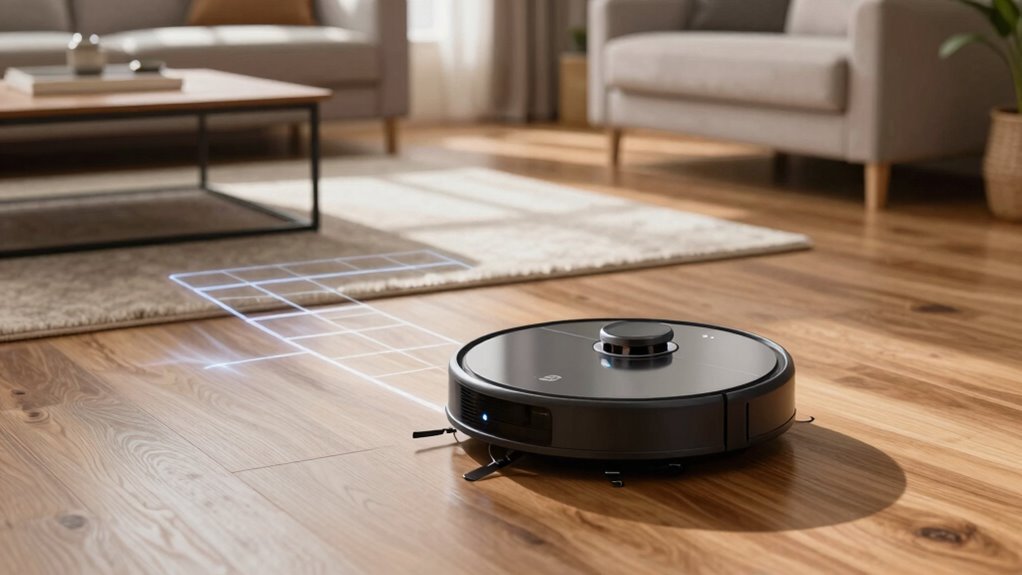
Which robot vacuum has the best navigation? The Narwal Freo Z Ultra stands out with advanced LiDAR and camera vision technology that maps every inch of your home accurately.
It detects over 200 object types and navigates within 1 cm of edges, ensuring thorough cleaning along walls and around furniture. Its AI learns your home’s layout, adapts to changes, and handles tricky surfaces like dark floors without issues.
This smart navigation system remembers multiple floor plans and easily avoids common obstacles like toys and cords. When it comes to handling clutter, stairs, and unexpected redecorating, few models match its precision and reliability.
Why Navigation Is the Key to Smarter Robot Vacuums?
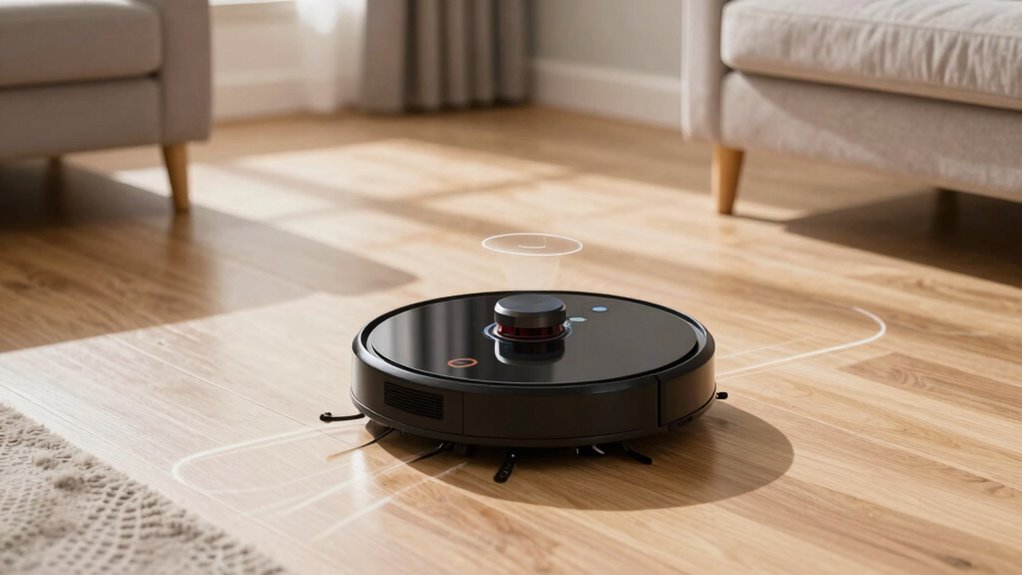
While your old vacuum might’ve bounced around like a pinball on caffeine, today’s robot vacuums actually know where they’re going—thanks to smart navigation.
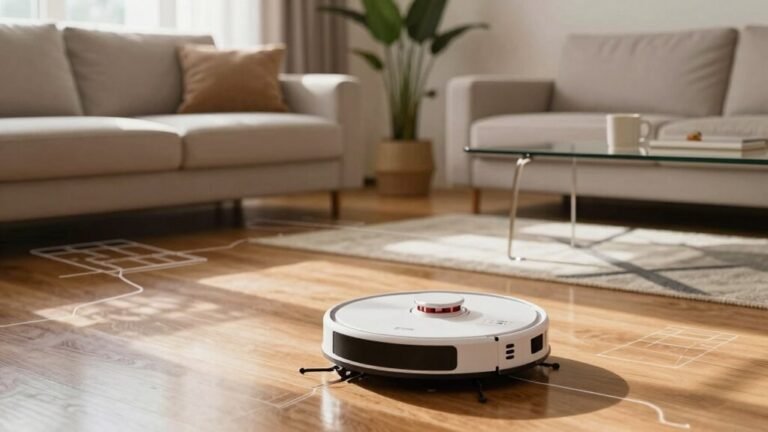
You’re not just getting random zigzags anymore; these robots map your home and clean in neat, efficient lines.
Using sensors and clever tech like SLAM, they remember rooms, avoid toys (and pets), and even handle multi-floor homes without breaking a sweat.
Gyros keep them on track, while ultrasonic and ToF sensors detect obstacles with spooky precision—no matter the lighting.
You’d be surprised how well they dodge that rogue Lego.
No more cleaning in chaos.
With smart navigation, your robot doesn’t just move—it thinks.
Well, almost.
It still can’t find the remote, but hey, nobody’s perfect.
This isn’t just convenience; it’s peace of mind, delivered quietly from room to room.
Some models even use LiDAR navigation to create precise home maps in the dark.
How LiDAR Lets Robot Vacuums Map Rooms Accurately
Meet the secret sauce behind your robot vacuum’s uncanny ability to navigate like a pro: LiDAR.
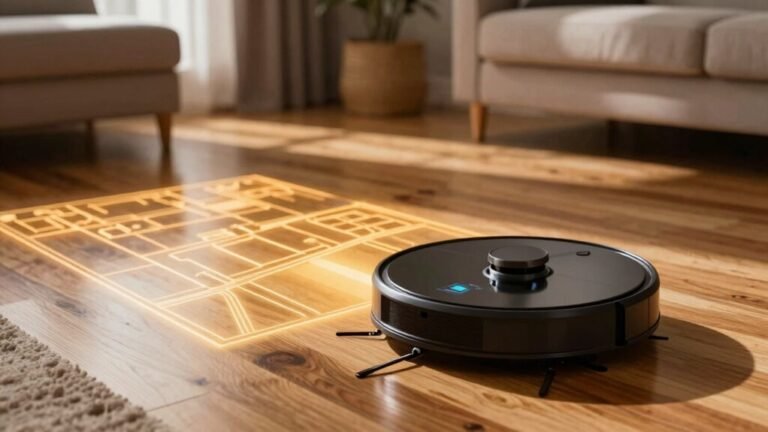
You’ll love how it maps your whole home with laser precision, even in the dark—no squinting at dim corners for this tech!
- Spins like a disco ball, shooting lasers in every direction to scan rooms in 360 degrees
- Measures bounce-back time to calculate distances, building a real-time map as it zips around
- Works flawlessly in the dark, because unlike camera-based systems, it doesn’t need light to “see”
It dodges toys, sofas, and surprise socks with ease, plotting the smartest path like a vacuum ninja.
Sure, it might blink at glass doors now and then, but overall? LiDAR turns your robot from a lost pup into a mapping mastermind—no GPS required!
Some models now use dToF LiDAR, which measures the exact time a laser pulse takes to return, enabling higher accuracy and longer range detection.
Why vSLAM Is Great for Homes Without LiDAR?
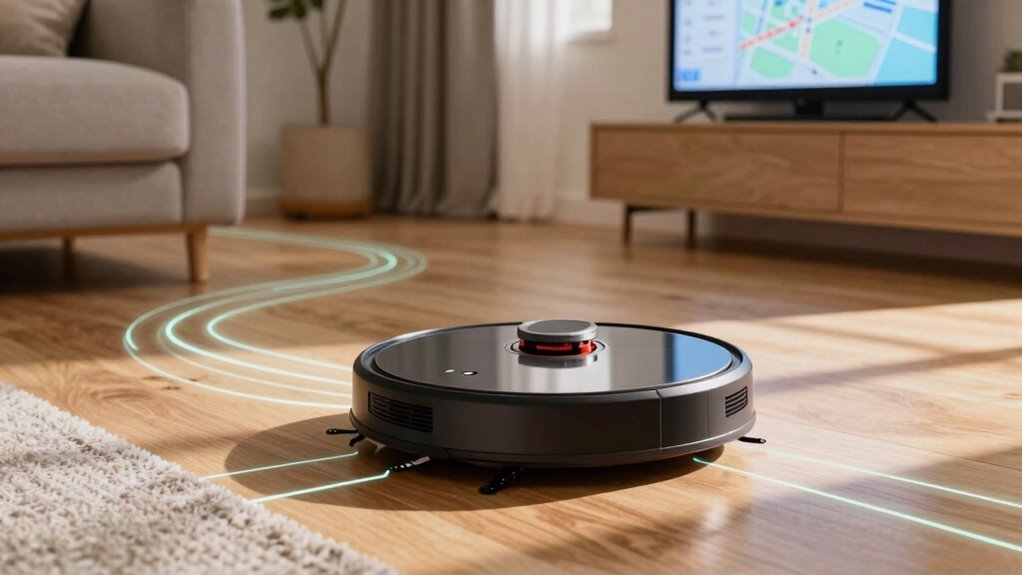
How does your robot vacuum keep up without the high-tech flash of LiDAR? You don’t need lasers to clean smart—vSLAM uses your home’s visuals like a pro. It watches for shoes, pet toys, and that rogue charging cord, dodging them with flair. No bulky puck means it slips under the bed where dust bunnies hide. And guess what? It’s kinder to your wallet, too.
| Feature | Why You’ll Love It | Real-Life Win |
|---|---|---|
| No LiDAR needed | Slimmer bot, lower price | Fits under the couch—finally! |
| Sees with cameras | Spots tiny messes | Avoids stepping on LEGO (again) |
| Maps as it goes | Never misses a spot | Cleans faster, leaves earlier |
You get brains without the bulk—now that’s home savvy.
How AI Makes Robot Vacuums Adapt in Real Time
What if your robot vacuum could think on its feet—like a buddy who learns your home’s quirks and never trips over the dog’s chew toy?
It’s not magic—it’s AI adapting in real time.
Your robot uses cameras, sensors, and smart algorithms to see, learn, and react instantly.
It dodges cables, slows for darting pets, and reroutes on the fly.
Over time, it gets smarter, recognizing your coffee table, your kid’s toys, and even where the crumbs pile up.
You’re watching a tiny brain at work, processing up to 4 trillion calculations per second. And it remembers—so it doesn’t keep bumping into the same chair.
- Senses everything with LiDAR, cameras, and ultrasonic detection
- Thinks fast using A*, D*, and deep learning for split-second decisions
- Learns your life by adapting routes and spotting dirty spots over time
Top Robot Vacuums With the Best Navigation Systems
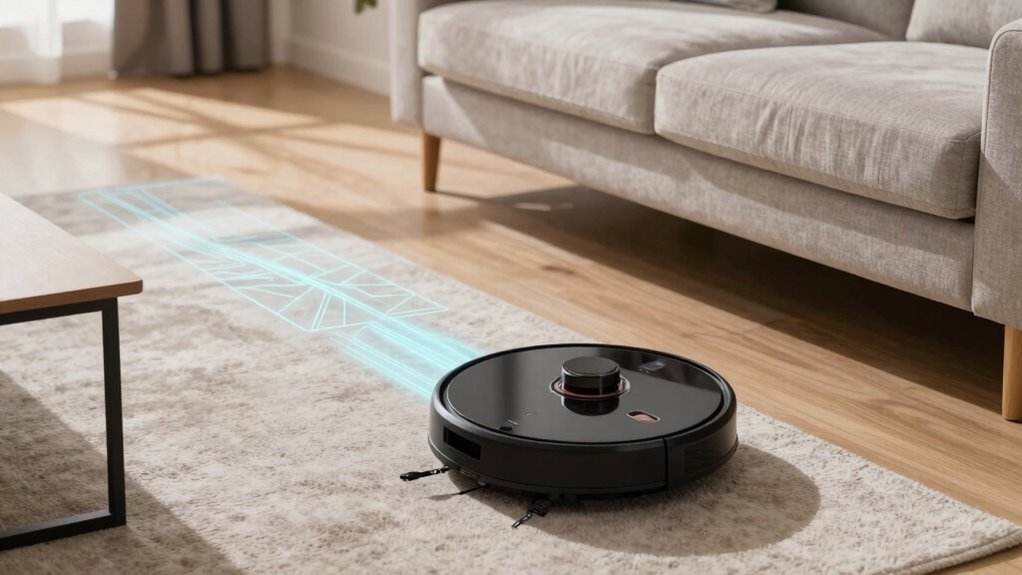
While you’re sipping your morning coffee, your robot vacuum could already be zipping through the living room like a tiny, no-nonsense chauffeur—dodging dog toys, gliding under the sofa, and remembering where last night’s crumb trail began.
The Roborock Saros 10R nails it with sleek LIDAR and a slim 3.14-inch frame, avoiding obstacles flawlessly—seriously, it scored a perfect 5.0.
But if your floors have high thresholds, the Dreame X50 Ultra powers over them like a champ.
The MOVA P10 Pro Ultra? It’s like the X50’s smarter cousin, acing navigation out of the box.
Prefer sharp 3D mapping in dim light?
Narwal Freo Z Ultra blends LiDAR and camera vision like a robot detective.
And the Freo Z10 Ultra?
With LiDAR 4.0 and AI brainpower, it spots over 200 objects and rules larger homes with pets.
These vacuums don’t just clean—they navigate like pros.
How Multi-Room Navigation Works Without Getting Lost
Ever wonder how your robot vacuum zips from the kitchen to the bedroom without bumbling into walls or getting spooked by the shadow of the coffee table? It’s not magic—it’s smart tech working hard while you kick back.
Your robot uses laser-precise LiDAR, eagle-eyed cameras, and a brain full of sensors to map every nook and remember where it’s been. Once it knows the layout, it’s golden.
- Smart mapping builds and saves floor plans so it never starts from scratch
- Multi-sensor fusion blends data from cameras, lasers, and motion trackers to stay on course
- Room-by-room navigation lets it clean the living room today and tackle the hallway tomorrow—no confusion
It even avoids stairs like a pro and finds its way back to the charger like it’s got GPS in its veins.
Who knew cleaning could be this clever?
Can Robot Vacuums Handle Dark Floors and Clutter?
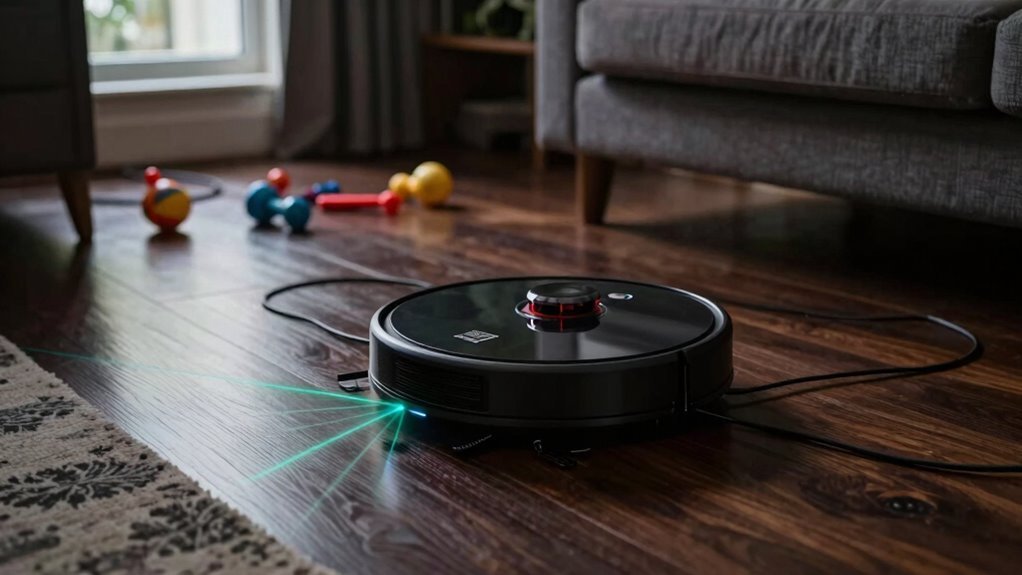
How do your robot vacuum’s eyes adjust when the lights go down and socks scatter like landmines across the floor?
Don’t worry—it’s got this.
Using LiDAR, infrared, or clever AI cameras, models like the Narwal Freo X Plus and Dreame X50 Ultra “see” just fine in the dark.
No, they don’t need night-vision goggles.
LiDAR maps your space with laser precision, while infrared sensors detect obstacles on black tile or hardwood like pros.
The Dreame X50 Ultra even lights up the scene with LEDs and identifies clutter—wires, toys, that lone banana peel—with AI smarts.
Tri-Laser Navigation and SLAM tech help it adapt on the fly, dodging disaster in dim, messy rooms.
Some robots even squat down to squeeze under furniture without face-planting.
Sure, extreme darkness or a minefield of cords can trip them up, but most handle chaos smoothly.
With the right model, your floors stay clean—even when the lights are off and the clutter’s on high alert.
Why Edge Detection Matters for Complete Cleaning
You just avoided the sock apocalypse and kept your robot from eating a charging cable—nice job!
But what about those dusty baseboards and grimy corners?
That’s where edge detection swoops in like a cleaning superhero.
Without it, your bot might skip the spots dirt loves to hide.
- Infrared sensors and LiDAR team up to spot walls and furniture edges, so your robot knows just how close it can get
- Advanced models like Narwal Freo Z Ultra clean within 1cm of edges, tackling 120+ obstacle types without a hiccup
- Roborock’s extendable mop pads and Narwal’s CornerRover Arm ensure no speck near a wall gets left behind
Weak edge detection means grime stays put—especially in corners.
But with smart sensors and clever design, top bots glide right up to the edge, giving your floors a truly complete clean.
Now that’s edge appeal!
What Happens When a Robot Vacuum Forgets Its Map?
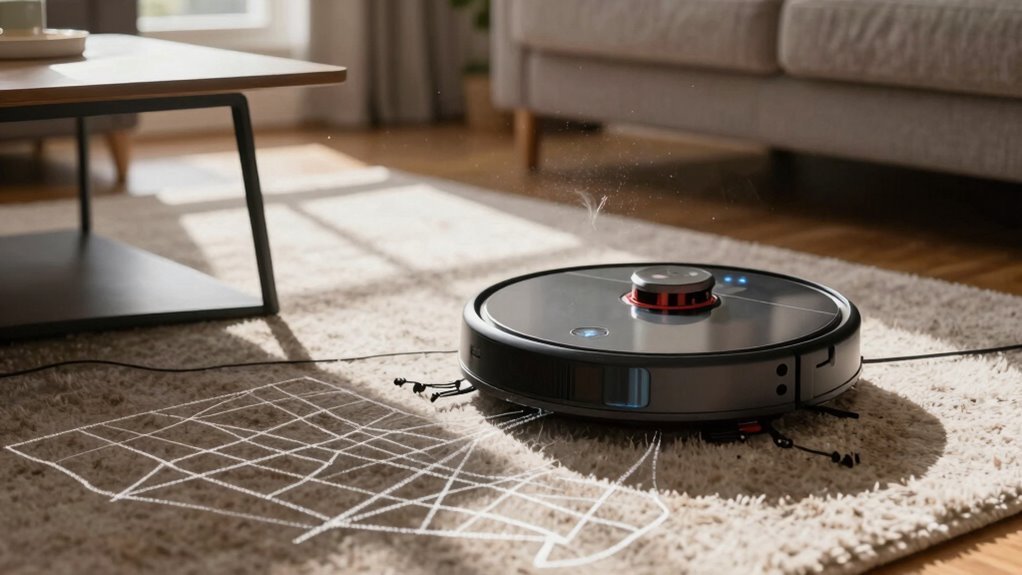
When your robot vacuum suddenly goes full amnesia and zips around like it’s lost in a maze, you’re not imagining things—it just forgot where it is.
Maybe a firmware update wiped its memory, or someone moved the charging dock by a few inches.
New rugs, shifted furniture, or even brighter lights can confuse its sensors, making hallways vanish or rooms misalign.
Dust on the lidar or a wonky Wi-Fi hiccup might’ve fragmented the map, leaving your bot baffled in familiar territory.
It’ll likely start mapping from scratch, bumping into walls like it’s redecorating blindfolded.
Some models keep room labels but turn your home into abstract art.
Restarting or clearing the app cache often helps—before you resort to naming it “Dory” and starting over.
How to Choose Navigation Based on Your Home Layout
If your robot vacuum keeps playing hide-and-seek under the couch or acts like it’s never seen the living room before, it mightn’t be broken—just mismatched to your home’s layout.
Pick the smarts that fit your space:
- Got a simple, single-level home? Go for gyro and sensor-based navigation—it’s budget-friendly and beats random bumping.
- Living in a multi-room maze with dim corners or clutter? Choose LiDAR or vSLAM for precise mapping, even in the dark or around toys.
- Tackling tight spaces or multiple floors? Slim dToF LiDAR models glide under furniture and remember each level without tripping up.
Match your vacuum’s brain to your home’s personality, and it’ll breeze through every room like it’s been there forever.
No more couch detours or mid-clean existential crises.
Frequently Asked Questions
How Long Do Robot Vacuum Maps Typically Last?
Your robot vacuum’s map usually lasts for months—or even years—unless you rearrange furniture or move it to a new home.
It learns your space over time and keeps improving, like a robo-roommate who finally stops bumping into the coffee table.
Maps stick around in its memory, so it knows exactly where it left off, even after naps (or charging breaks).
Just let it rescan if you’ve redecorated—because surprise couches confuse everyone.
Can Robot Vacuums Navigate During Power Outages?
Nope, robot vacuums can’t navigate during power outages—they shut down like sleepy toddlers at bedtime.
You’ll see them freeze mid-move, helpless without juice.
Most can’t find their dock or restart after blackout.
But hey, don’t panic!
High-end models, like the Dreame F9, laugh at low battery, lasting up to 150 minutes.
They’re the marathon runners of robot vacs—smart, sturdy, and almost magical!
Do Robot Vacuums Work in Homes With Pets?
Yeah, robot vacuums totally work in homes with pets—they’re like your secret weapon against fur tumbleweeds.
You’ll love how they dodge toys, avoid messes, and even skip pet accidents.
Models with rubber brushes won’t get clogged by long hair, and some even self-empty so you don’t have to play fur janitor.
Just pick one that’s smart, tangle-proof, and quiet—your pet might even start hiding from it!
Are Robot Vacuum Maps Shareable Between Devices?
Yes, you can share maps between some robot vacuums—iRobot’s compatible models like the J7 or i7 let you transfer maps if they both have iAdapt 3.0, which 78% of high-end Roombas support.
Just set up your new robot, and bam, no remapping needed!
But watch out—Braava m6 maps won’t cross over.
Roborock and Wyze? Not so much.
It’s like they’re playing hide-and-seek with your floor plan!
Can Robot Vacuums Clean Multiple Floors Automatically?
Nope, robot vacuums can’t clean multiple floors all by themselves—stairs are still a no-go!
You’ll need to carry them up or down.
But hey, that’s not all bad; lightweight champs like the DEEBOT X8 PRO OMNI make it easy at just under 12 pounds.
Once you move it, it’ll auto-pick the right map and get to work, so it’s sort of like magic… just with a little muscle required.
Conclusion
You’re not lost, but your old vacuum definitely is. Thankfully, today’s robot vacuums don’t just guess their way around like a squirrel on espresso. With LiDAR, vSLAM, and AI, they map your home like tiny cartographers in a tuxedo. They dodge Dark Floor of Doom and leap over dust bunnies like Olympic sprinters. Choose smart navigation, and watch your floor turn into a masterpiece of clean—no treasure map required.
References
- https://www.ecovacs.com/us/blog/different-navigation-types-in-robot-vacuum
- https://www.ecovacs.com/us/blog/lidar-vs-vslam-navigation-what-are-the-differences
- https://us.3itech.com/blogs/news/lds-vs-dtof-lidar-navigation-in-robot-vacuums
- https://us.narwal.com/blogs/robot-vacuum/lidar-vs-camera
- https://www.therobotreport.com/sensor-breakdown-how-robot-vacuums-navigate-and-clean/
- https://robotvacuums.com/blogs/blogs/a-complete-overview-of-robot-vacuum-navigation
- https://vacuumwars.com/best-robot-vacuums-with-obstacle-avoidance/
- https://www.youtube.com/watch?v=f8wdri2DpEY
- https://us.roborock.com/pages/robot-vacuum-cleaner-compare
- https://www.neuvition.com/lidar-robot-vacuum-neuvition/