Robot Vacuum vs Traditional Vacuum: Pros & Cons
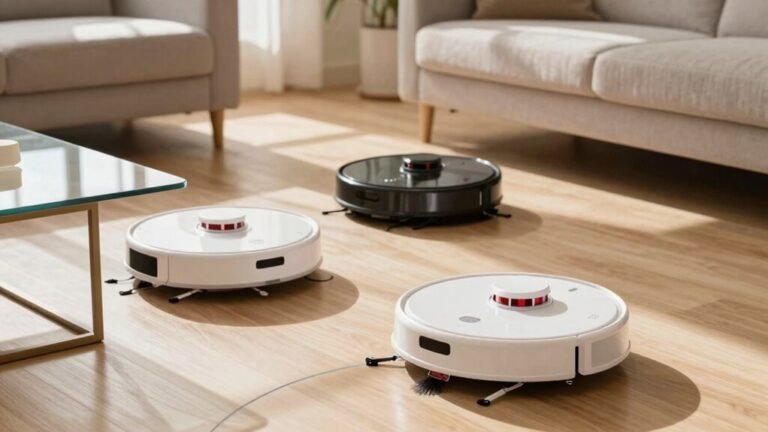
You’ve got a robot vacuum zipping around like a tiny Roomba ninja, handling daily crumbs and dust with ease—perfect for low-pile carpets and hands-off cleaning. Robot vacuum models excel at maintenance cleaning, automatically tackling debris on hard floors and light carpets when scheduled.
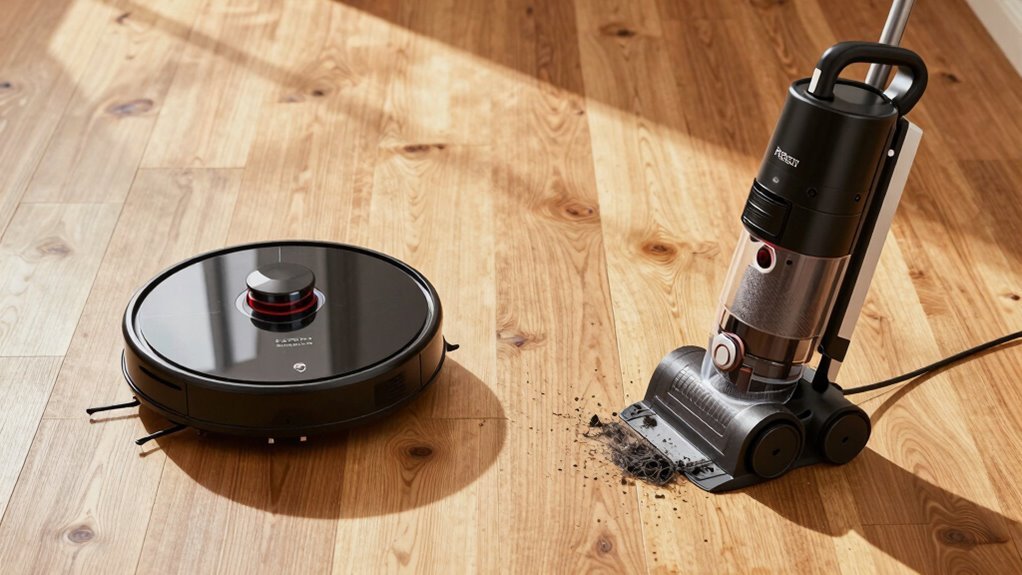
But when stubborn pet hair, thick rugs, or stair mess nab your attention, the traditional vacuum delivers with stronger suction and specialized attachments. These models handle deep-cleaning tasks more effectively, especially in high-traffic or carpeted areas.
Robots save time with scheduling and minimal effort, ideal for busy households seeking convenience. Meanwhile, traditional vacuums provide consistent, powerful performance without relying on sensors or apps that may glitch.
Think of it as set-it-and-forget-it versus power-on-demand—your home’s dirt drama decides the real winner. Each option has pros and cons, so understanding your cleaning needs is key.
How Robot Vacuums Handle Daily Cleaning
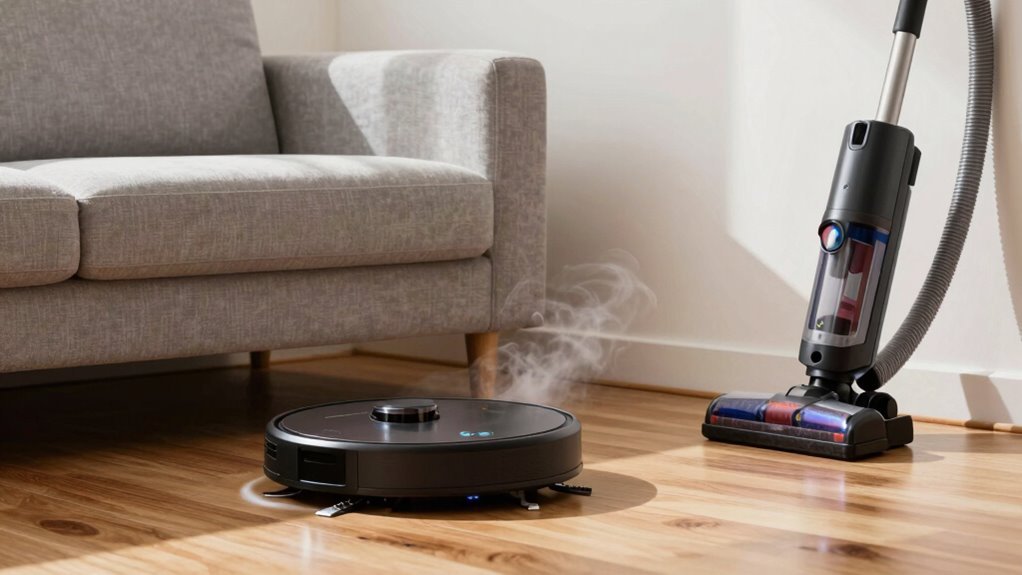
Most of the time, your robot vacuum’s got your back—like a tiny, tireless cleaning buddy that actually wants to do chores.
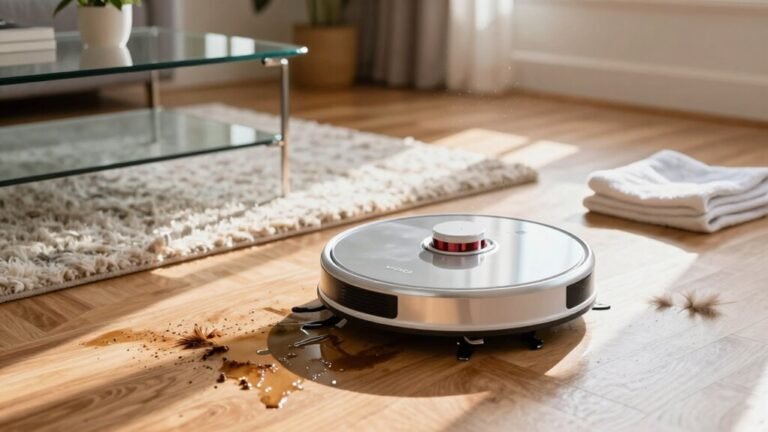
You set it loose, and it zips across hardwood, tile, or low-pile carpet, gobbling up dust, dirt, and even pet hair without breaking a sweat.
On hard floors, it’s a superstar, keeping things sparkling with just a few runs a week.
If you’ve got carpets, it’ll need to work a bit more often, but no big deal—scheduling cleanings is a breeze.
You can even automate sessions while you’re at work or binge-watching your favorite show.
Advanced models suck harder, mop better, and some empty themselves for months.
With smart mapping, it won’t miss spots or get stuck (most of the time—hey, nobody’s perfect).
It handles corners with edge brushes, avoids disasters with sensors, and keeps your home consistently fresh.
12,000 Pa suction helps tackle deeper debris, especially on thick carpets where standard models struggle.
Honestly, it’s like hiring a janitor who never asks for a raise.
Where Traditional Vacuums Outperform Robots
Let’s be real—while your robot vacuum is great at playing cleanup on autopilot, it’s no match for the muscle of a traditional vacuum when things get messy. You need that serious suction to yank out stubborn dirt, pet hair, and allergens hiding deep in carpets.
Those beefy motors power through thick rugs like a pro, while robots often tap out. Need to clean car seats, stairs, or dusty baseboards? No problem—just grab the right attachment and go.
With a wand, crevice tool, or upholstery brush, you’re ready for anything. Plus, bigger bins mean fewer trips to empty it, and corded models keep going without dying mid-clean.
You’re in control—no apps, no glitches, just instant cleanup whenever life gets messy. It’s your trusty superhero for deep cleans, spot treatments, and tasks robots can’t handle.
When you want it *done*, you know what to grab. Traditional vacuums offer superior suction and deep cleaning for embedded dirt and allergens that robots simply can’t reach.
Carpet, Stairs, and Corner Cleaning Compared
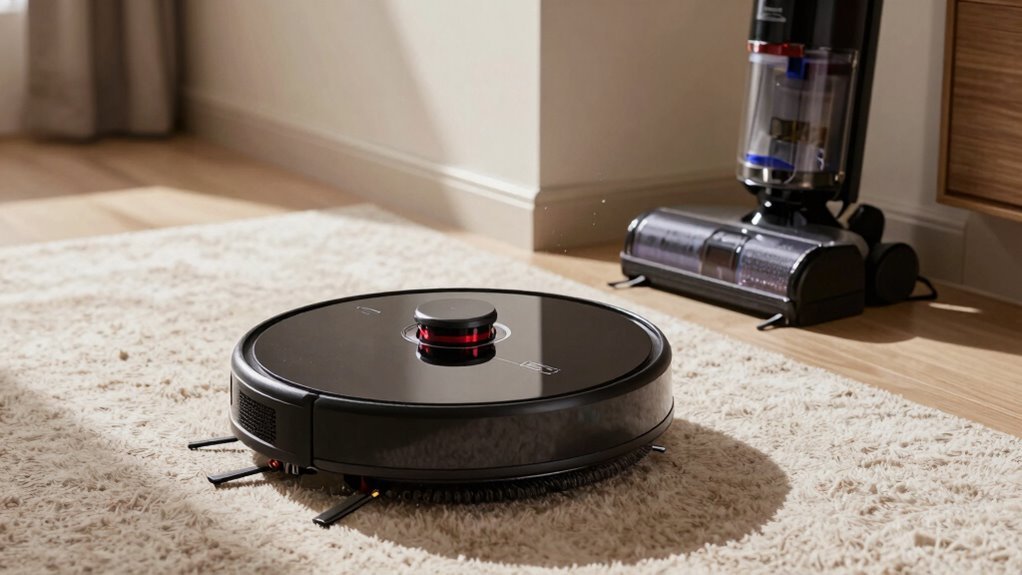
While your robot buddy zips around like a tiny cleanup ninja, it’s worth noting that when it comes to carpets, stairs, and corners, the old-school vacuum still brings the muscle.
You’ll love your robot on low-pile rugs—it handles daily dust and crumbs just fine—but for deep-down sand and pet hair?
Traditional vacuums yank out 98% of gunk, leaving carpets way cleaner.
Robots only get about three-quarters of that, and high-pile or shaggy carpets? They’re like kryptonite to most bots.
And stairs? Sorry, but robots can’t climb—ever.
You’ll still need to haul out your trusty canister or stick vacuum for those.
As for corners, robots do okay with edge brushes, but they often miss crumb hideouts.
With a crevice tool, your traditional vacuum nails every speck.
For real clean freaks, nothing beats hands-on power.
Robot Vs Traditional: Time and Power Trade-Offs
How does it feel to reclaim your time while your floors get spotless? With a robot vacuum, you spend just 5 minutes setting it up, then kick back while it cleans for 30–60 minutes—perfect for sneaking in a coffee or scrolling your phone.
It zips through small rooms in 15–25 minutes and can run daily on schedule, no effort needed. But when the battery dies, it pauses to charge, sometimes splitting big jobs over hours.
Traditional vacuums? You push them the whole time, but they blast through messes in one go—no waiting, no mid-clean timeouts. Corded ones never quit, and cordless models swap batteries fast.
Sure, robots save your energy, but they trade speed for convenience. Think of it like this: do you want a marathon runner or a diligent robot slowly winning the long race?
Maintenance Needs and Long-Term Costs
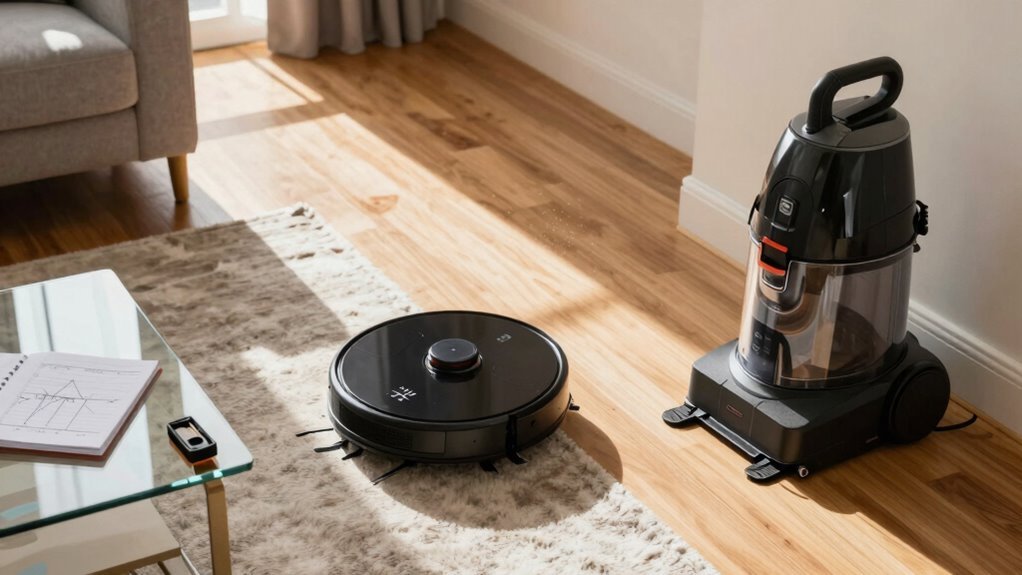
When it comes to keeping your cleaner running smoothly, robot vacuums dish out convenience with a side of upkeep—empty that dustbin after every run, or at least daily if you’re chasing crumbs like a detective on a snack trail. You’ll also need to:
- Clean brushes weekly to dodge hair tangles that’d make a barber cringe
- Rinse or replace filters every few months so your bot doesn’t gasp for air
- Swap out self-empty station bags every 2–3 months—no magic, just maintenance
- Keep an eye on app alerts, because yes, your vacuum will nag you like a tiny digital parent
Traditional vacuums ask less daily but want deeper cleanup—empty bins, check hoses, and swap belts or bags every few years. They’re simpler, cheaper over time, and won’t guilt-trip you with notifications. Robots save labor but cost more long-term, while traditional models let you fix issues fast without draining your wallet.
Which Vacuum Suits Your Home Best?
Ever wonder why your friend’s robot vacuum seems like the perfect roommate while yours keeps getting stuck on throw rugs? Well, your home’s layout plays a big role.
If you’ve got a cozy apartment with open spaces, a robot vacuum zips around like it owns the place—great for hard floors and light messes.
But if your place sprawls across multiple floors or has thick carpets, a traditional vacuum’s stronger suction and stair-climbing ease make life easier.
Got pets? Robots help daily, but traditional vacuums with HEPA filters tackle dander like pros.
Loud noise bugs you? Robots hum quietly, perfect for naps or Zoom calls.
Live a busy life? Let a robot handle daily runs while you kick back.
Ultimately, your home’s size, floors, and lifestyle decide the real MVP.
Sometimes, using both? That’s the power move.
Robot or Traditional: Which One Wins for You?
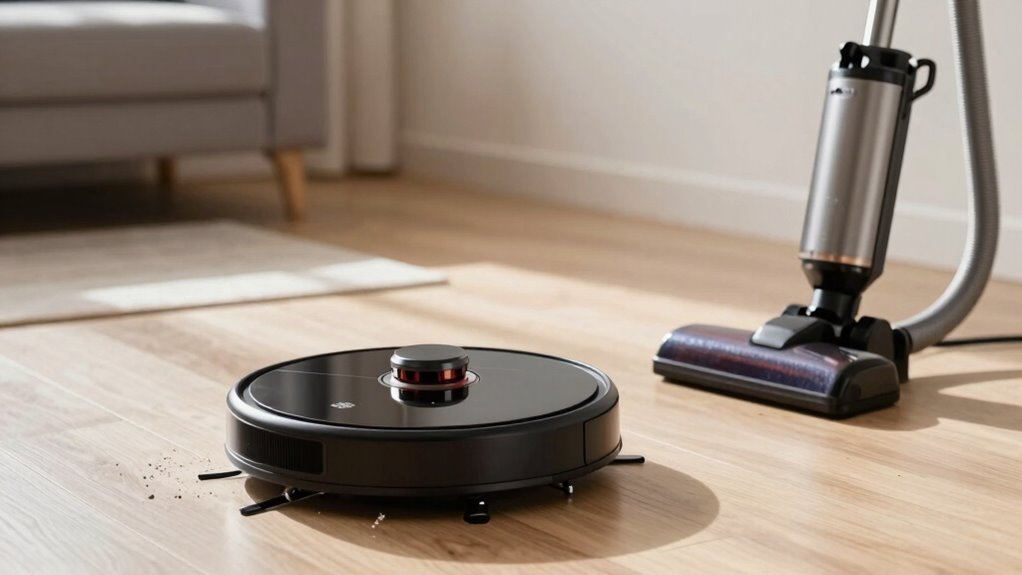
- If your life’s a blur of work and kids, a robot vacuum keeps things tidy without lifting a finger.
- Got shag rugs and stubborn pet messes? A traditional vacuum’s raw power won’t let you down.
- Hate vacuuming during dinner or movie night? Robots run quietly while you chill.
- Love being in control? Traditional gives you full command, no app needed.
Whether you want a cleaning sidekick or hands-on hero, the real win is matching your machine to your life—because hey, even dust deserves a game plan!
Frequently Asked Questions
Can Robot Vacuums Clean Pet Hair Effectively?
Yeah, robot vacuums can totally handle pet hair, especially on hard floors where they zip around like tiny vacuum superheroes.
They snag loose fur, dive into corners, and some even laugh at tangles.
Just don’t expect miracles on shag carpet—deeply embedded hair might need backup from your old-school vacuum.
Pick a model with rubber brushes and strong suction, and you’ll laugh less at fur tumbleweeds.
Do Traditional Vacuums Use More Electricity Than Robots?
Yeah, traditional vacuums guzzle way more juice than robots—think gas-guzzler versus electric scooter.
You’re using 500–1,500 watts with a regular vacuum, while robots sip power at 30–100 watts.
That’s like running a space heater versus a fan!
Are Robot Vacuums Safe Around Small Children?
Yes, robot vacuums are generally safe around small children, but you’ll still need to keep an eye on them.
They’ve got sensors to stop collisions and avoid stairs, plus soft edges and slow speeds to reduce risks.
But let’s be real—your toddler might see it as a ride-on toy!
Supervise closely at first, teach them it’s not a toy, and use no-go zones.
A little caution goes a long way in keeping everyone safe—and the vacuum intact!
Can I Use a Robot Vacuum on Hardwood Floors?
Yes, you can use a robot vacuum on hardwood floors—and it’ll zip around like a tiny racecar, leaving dust and crumbs in the dust.
It handles daily messes with ease, especially models with strong suction and edge-cleaning brushes.
Just remember, while it’s great at quick pickups, it mightn’t replace deep cleaning your floors once in a while.
Think of it as your floor’s best buddy, not its life coach.
Do Robot Vacuums Work in the Dark?
Yeah, robot vacuums totally work in the dark—no nightlight needed!
You won’t believe how they zip around using lasers, infrared, and smart cameras to map every inch.
They don’t trip over toys or miss spots, even under the couch.
Think of them as tiny, fearless ninjas cleaning while you sleep.
Just don’t expect them to vacuum the dog… unless he’s been napping on the floor!
Conclusion
You’re the captain of your clean crew, so pick your co-pilot wisely. Robot vacuums are like helpful little hamsters, tirelessly running their wheel to keep floors tidy between deep cleans. But when crumbs play hide-and-seek in carpets or stairs turn into snack graveyards, traditional vacuums flex their muscle like superheroes. Both save time and energy—just in different ways. So, what’s your home really craving? The effortless daily buddy, or the heavy-duty champ?
References
- https://us.narwal.com/blogs/product/robot-vacuum-clean-floors-effectively
- https://www.ecovacs.com/us/blog/how-often-should-i-run-my-robot-vacuum
- https://www.robotlab.com/cleaning-robots/blog/are-cleaning-robots-effective
- https://www.eufy.com/blogs/robovac/are-robot-vacuums-worth-it
- https://johnssweeperservice.com/blog/robot-vacuums-vs-traditional/
- https://vacuumwars.com/robot-vacuums-vs-upright-vacuums-which-is-right-for-your-home/
- https://jonrtech.com/blogs/robot-vacuum/robot-vacuum-vs-traditional-vacuum-which-one-is-better
- https://neakasa.com/blogs/all/robot-vacuums-vs-traditional-vacuum-cleaners-which-is-better
- https://www.ecovacs.com/us/blog/vacuum-robot-mop-vs-regular-vacuum
- https://us.3itech.com/blogs/news/robot-vacuum-vs-regular-vacuum-which-one-is-better-for-me