The Environmental Impact of Robot Vacuums
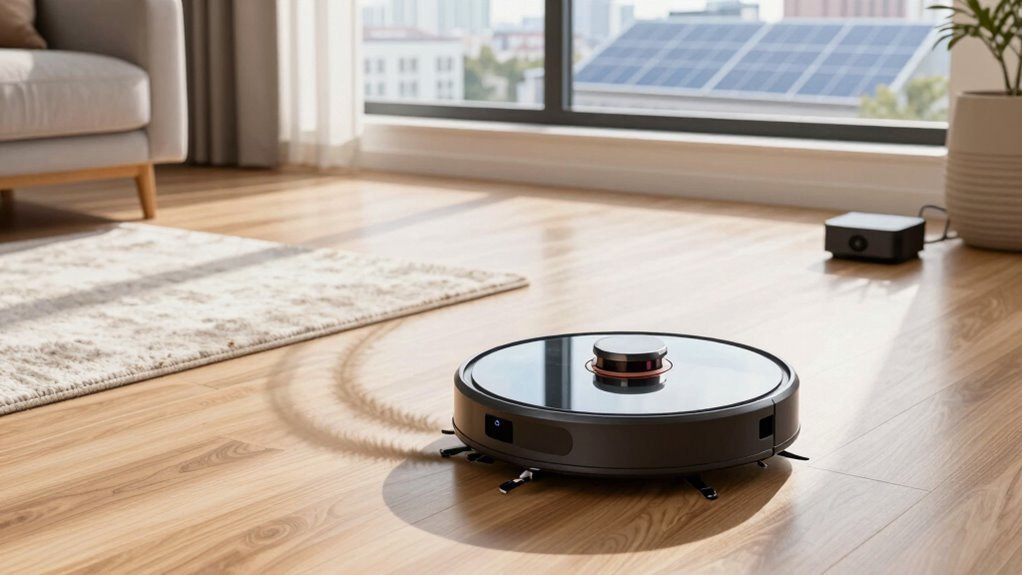
You’re saving energy every time you send your robot vacuum roving—those little cleaners use up to 60% less electricity than bulky uprights and cut carbon emissions just by keeping floors tidy daily. The environmental impact of robot vacuums is largely positive when it comes to energy efficiency and reduced emissions.
No more plastic bags or deep-clean marathons! These devices minimize the need for frequent, resource-heavy cleaning routines, further lowering your household’s ecological footprint.
But watch those lithium batteries; they don’t last forever and recycling’s a hassle. Still, with smart care, your robo-helper can stay green for years—and hey, there’s a trick or two you haven’t tried yet.
What’s the Environmental Impact of Robot Vacuums?
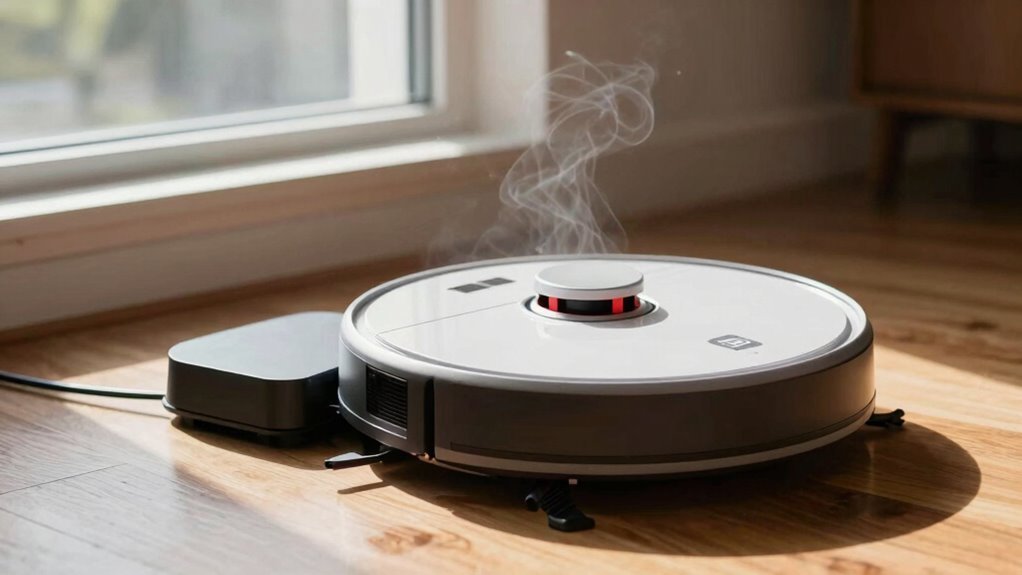
Ever wonder if your little robot vacuum is actually helping the planet?
Well, guess what—it kind of is!
These pint-sized cleaners use way less juice than bulky uprights, sipping just 60–100 watts versus their 1,500-watt cousins.
That means you’re zapping 60% less electricity for the same clean.
In London offices alone, switching to robots slashes 2,700 tons of carbon yearly—now that’s like pulling hundreds of cars off the road!
And since they clean regularly, you skip those exhausting, energy-hog deep cleans.
Plus, no more tossing disposable bags into landfills—talk about a win!
While they’re not perfect (nobody’s claiming they’re superheroes), their daily efficiency cuts CO2 big time.
So yeah, your robo-helper’s not just lazy-person’s magic—it’s quietly fighting climate change, one spin at a time.
Who knew tidiness could be this green?
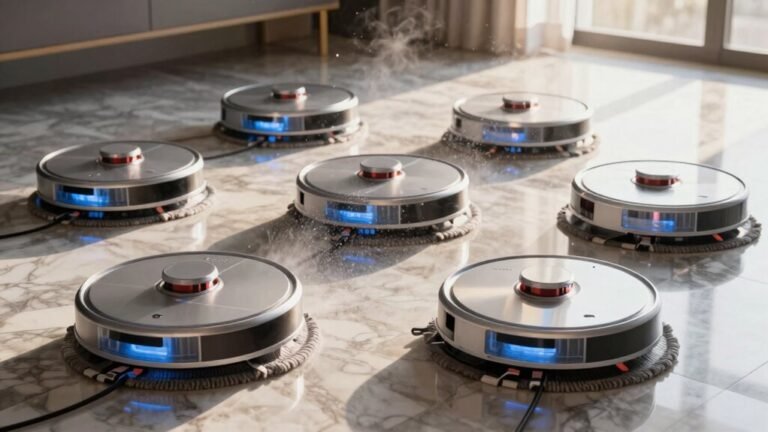
(Charging 10 robots uses just 0.54 kWh, compared to 1.44 kWh for a traditional vacuum—proof that energy efficiency starts small).
What’s the Real Cost of Robot Vacuum Batteries?
What’s really hiding behind that sleek, self-driving cleaner you love?
It’s not just convenience—it’s a battery with a hidden footprint.
You recharge it weekly, but deep down, its lithium was mined using toxic chemicals, hurting ecosystems and communities.
Your vacuum’s power pack loses juice fast—often dying in 1–3 years—thanks to cycle aging and daily charge leaks.
And when it fails? You’re not alone: most replacements happen often, piling up waste.
Recycling sounds like a fix, but only 38–60% gets recovered—far worse than lead-acid batteries.
Worse? The UK can’t recycle these batteries locally, so they ship abroad, burning more energy.
And if tossed in trash? They leak corrosive gunk, poison soil, or even catch fire.
Yep, your tidy little helper carries a messy truth—but hey, awareness is the first step to a cleaner clean!
Longer lifespan reduces how often batteries end up in landfills, and advancements like 2.3 times cycle life are making that lifespan even more sustainable.
Why Do Robot Vacuums Become E-Waste So Fast?
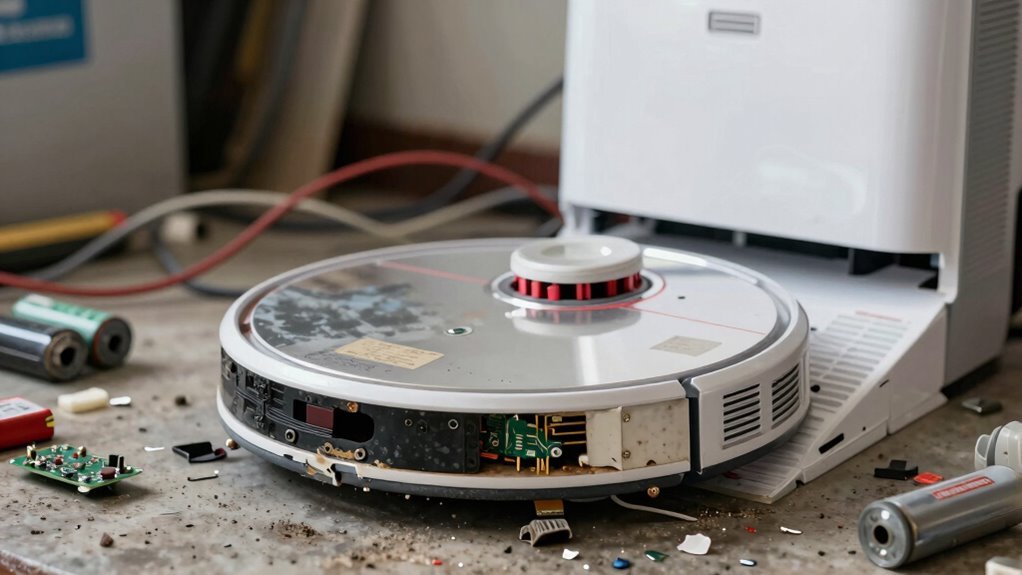
That little robot zipping under your couch might seem tough, but it’s not built to last forever—and a lot of them end up in landfills far sooner than you’d think. Cheap builds, worn-out batteries, and tricky repairs make replacement easier than fixing. Here’s why your robo-helper might retire early:
| Model Type | Avg Lifespan | Replacement Trigger |
|---|---|---|
| Budget | 1-2 years | Weak suction, dead battery |
| Basic | ~3 years | Brush wear, sensor errors |
| Mid-range | 4-5 years | Motor strain, updates fail |
| Premium | 5-7 years | Costly repairs, age decline |
| Well-maintained | Up to 7 years | Parts wear out, no fix option |
Even the best robots give up once parts fail or repairs cost too much—out with the old, in with the new, right? Too bad most aren’t recycled.
Are Robot Vacuums Environmentally Efficient?
While they mightn’t fetch your slippers or walk the dog, your robot vacuum is quietly slashing energy bills and shrinking carbon footprints with every spin.
Using just 60–100 watts, it sips energy compared to your bulky upright’s 1,500-watt gulp.
You’re also dodging tons of CO2—offices cut emissions by 60% using robots.
And since they’re bag-free, you’re keeping plastic out of landfills.
Sure, charging adds up, but overall, you’re winning the green race.
- Saves energy – Uses up to 60% less electricity than traditional vacuums.
- Cuts carbon – Prevents thousands of tons of greenhouse gases yearly.
- Reduces waste – No bags + recyclable parts = happier planet (and fewer junk drawer regrets).
Who knew clean floors could feel this eco-friendly?
Which Robot Vacuums Are Actually Sustainable?
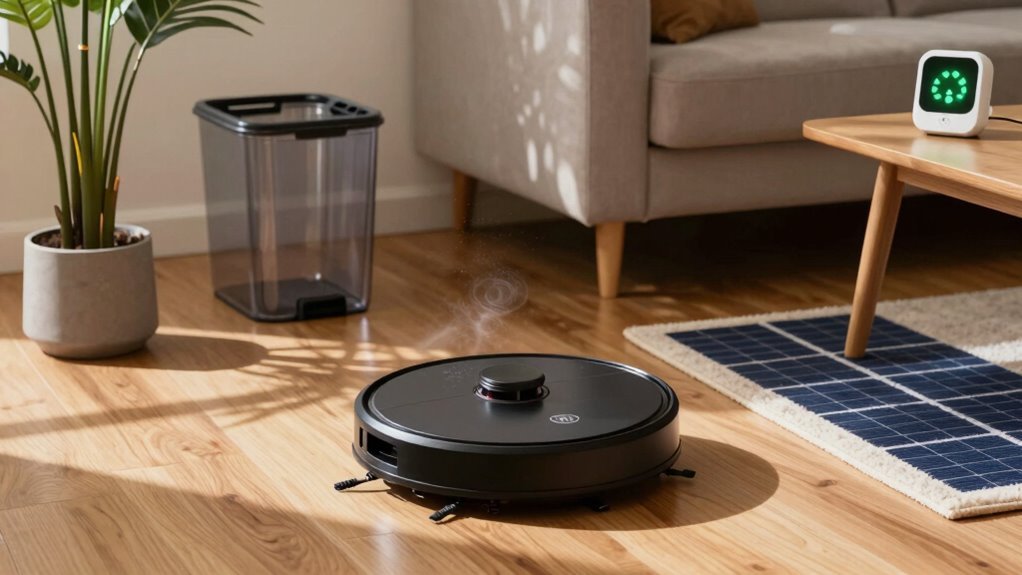
How do you spot a robot vacuum that’s truly walking the green walk?
You’ll want one that sips energy, not gulps it—like Roborock or Ecovacs models with smart navigation and off-peak charging.
Look for recycled plastics in wheels, brushes, or casing—Roborock S8 MaxV Ultra and Eufy don’t skimp here.
Spot bagless systems like the DEEBOT N20 Pro Plus; they cut down on junk piling up in landfills.
Models like Narwal Flow and Yeedi M14+ self-empty and handle hair like pros, so you’re not babysitting them.
Top green performers?
Roborock Qrevo Master’s a powerhouse, while Dreame L10S Ultra gives big value without waste.
These bots don’t just clean floors—they respect the planet, kind of like a tidy eco-warrior with a great sense of humor.
Make Your Robot Vacuum Last Longer
Here’s how to keep it rolling strong:
- Clean brushes and empty the bin weekly—tangles and full bins make it work harder than your cousin at a family BBQ.
- Charge smart and store cool—avoid extreme temps, don’t drain the battery, and never ghost your charger.
- Replace filters every few months and give sensors a quick wipe so it doesn’t wander like it’s lost (again).
With these, your vacuum could last 7+ years—fewer replacements, less e-waste, more high-fives from Mother Nature.
You’ve got this!
Frequently Asked Questions
How Are Robot Vacuum Manufacturing Emissions Measured?
You measure robot vacuum manufacturing emissions by tracking energy use, materials, and factory output during production.
Scientists use panel models with fixed effects to pin down carbon output, adjusting for industry size and profits.
They plug in data like export value and foreign investment to isolate the robot’s impact.
Drones and sensors even help spot emissions, making sure nothing sneaks by unnoticed—because who knew robots could be such eco-detectives while being eco-checked themselves?
Do Robot Vacuums Contribute to Indoor Air Pollution?
Yeah, robot vacuums can kick up dust and doodads, but don’t ditch your droid just yet!
They stir up particles, sure, but with a true HEPA filter, they actually help haul away allergens instead of just pushing them around.
Skip the cheap models—they’re like fog machines for filth.
Smart bots with sensors? They’re your sniffing sidekicks, slashing indoor pollution while you sip coffee and conquer chores stress-free.
Breathe easy, buddy!
Can Robot Vacuum Data Usage Affect Energy Consumption?
Yeah, your robot vacuum’s data usage does bump up energy a bit—Wi-Fi, mapping, and app updates aren’t free, energy-wise.
But hey, it’s not draining the planet—just sipping power like a tiny digital sipper.
Still, if it’s always listening for commands, that “awake” mode adds up.
Turn it off when not needed, and you’ll save more juice than skipping a phone scroll.
Smart tech? Yeah.
But outsmarting waste? That’s the real win.
Are Robot Vacuum Packaging Materials Eco-Friendly?
Yeah, robot vacuum packaging’s totally eco-friendly—you’re helping the planet just by unboxing!
Companies use recyclable materials, plant-based pouches, and boxes that break down easily.
Those cool vac-sealed bags? Made from corn or sugarcane, and they won’t haunt landfills.
Plus, lighter packaging means fewer emissions during shipping.
Sure, compostable bits need special facilities, but hey, you’re still crushing it for Mother Earth with every purchase!
What Happens to Robot Vacuum Software After Disposal?
Once you unplug your robot vacuum, its software goes to digital sleep—no more wake-up calls, updates, or secret dance parties in the cloud.
The firmware’s like a sleepy hamster in its wheel, frozen mid-spin.
No power, no function.
It can’t phone home, get hacked, or spill your Wi-Fi password.
Poof—your data’s gone, unless you forgot to wipe it.
Then it’s just a very quiet, slightly embarrassing paperweight.
Conclusion
You’re doing great keeping your floors clean and thinking about the planet! Here’s a fun fact: robot vacuums use up to 80% less energy than traditional vacuums—how cool is that? With proper care, your little robo-helper can last years, reducing waste and saving resources. Just clean the filter, update the software, and treat it kindly—no sock attacks, deal? Tiny robot, big impact!
References
- https://tplc.uk/press-release-commercial-cleaning-robots-could-save-11000-tons-of-greenhouse-gases-in-england-wales/
- https://engineering.purdue.edu/477grp14/Files/docs/A11 – Ethical and Environmental Analysis.docx
- https://pmc.ncbi.nlm.nih.gov/articles/PMC10679152/
- https://www.allerin.com/blog/the-negative-environmental-impact-of-robotics/
- https://www.einfochips.com/blog/whats-next-for-robotic-cleaning-predictions-based-on-current-rd-trend/
- https://www.ecovacs.com/us/blog/do-vacuum-robots-use-lots-of-electricity
- https://www.kenresearch.com/industry-reports/north-america-robot-vacuum-cleaners-market
- https://www.large-battery.com/blog/lithium-battery-for-robot-vacuum-performance/
- https://us.switch-bot.com/blogs/robot-vacuum/impact-robot-vacuums-indoor-air-quality
- https://supplier.bissell.com/MSDS_Domestic/EV675 and EV676 Robot Vacuum Lithium Ion Battery SDS.pdf