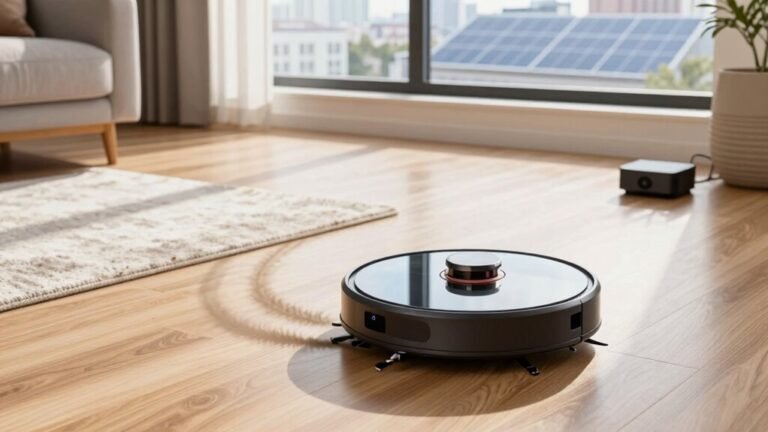
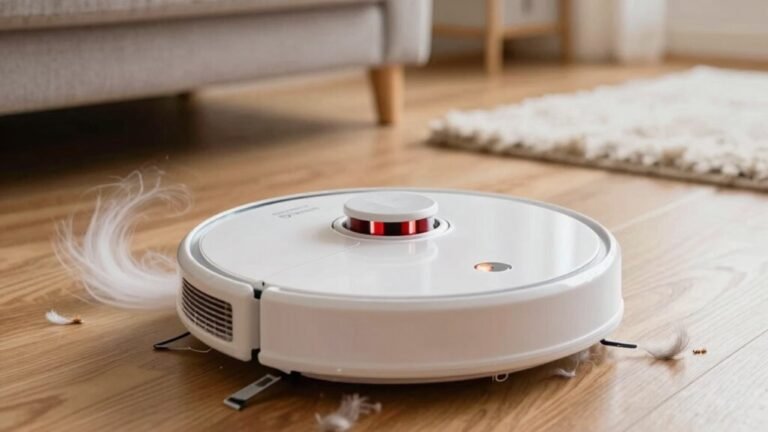
Robot Vacuums and Pet Accidents: How to Avoid a Mess
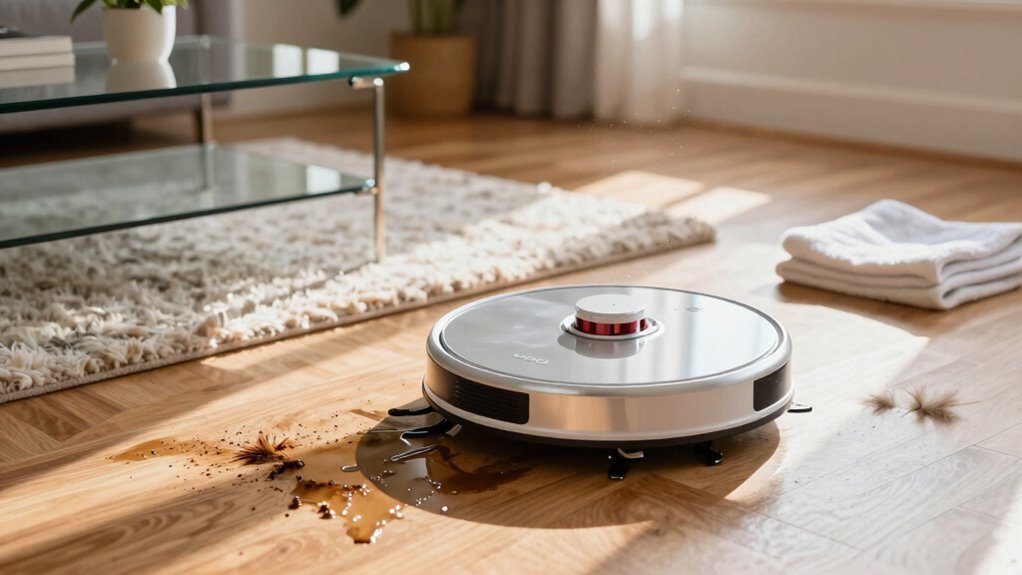
You’ve got this! Set no-go zones around litter boxes and puppy pads using smart sensors or magnetic strips to prevent robot vacuums from encountering pet accidents. These barriers help keep your device safe and effective in high-risk areas.
Schedule cleanups after walks or naps—timing is everything when managing pet messes. Pick a robot with AI smarts to spot trouble and steer clear of surprise landmines before they become a bigger problem.
Clean accidents first by blotting (don’t scrub!) to avoid spreading the mess. Then send in the robot vacuum to handle the rest, ensuring a cleaner, fresher floor without cross-contamination.
Empty the bin regularly and de-hair the brushes to maintain peak performance. Let suction control manage dry spots, but avoid letting robot vacuums handle wet messes directly.
Set No-Go Zones Around Pet Bathroom Areas
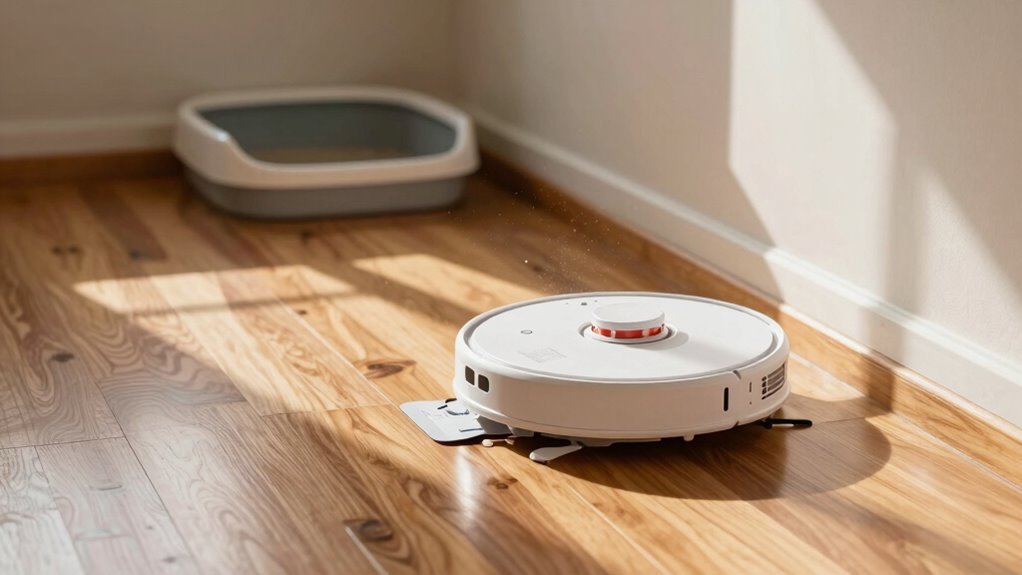
While your furry friend might think the litter box is their private kingdom, your robot vacuum doesn’t need to crash the party.
Set no-go zones via your app after mapping your home, drawing neat lines around litter boxes or puppy pads like invisible fences.
You can block off doorways or box in dog crates, adjusting zones if your pet’s habits shift—because, let’s face it, nothing stays the same with pets!
Smart sensors and LiDAR map your space so the vacuum steers clear of mess-prone spots, while AI eyes spot suspicious blobs and reroute fast.
Magnetic strips give a no-tech backup, great for training phases or clumsy pups.
Edit zones with a tap, shrinking or trashing them as needed.
Safe operation to prevent harm to vacuum parts helps avoid damage when navigating around unpredictable pet areas.
You’re in control, keeping your robot out of bathroom drama and your floors actually clean—without turning your vacuum into an accidental poop smearer.
Win-win!
Schedule Cleanings Outside of Pet Bathroom Times
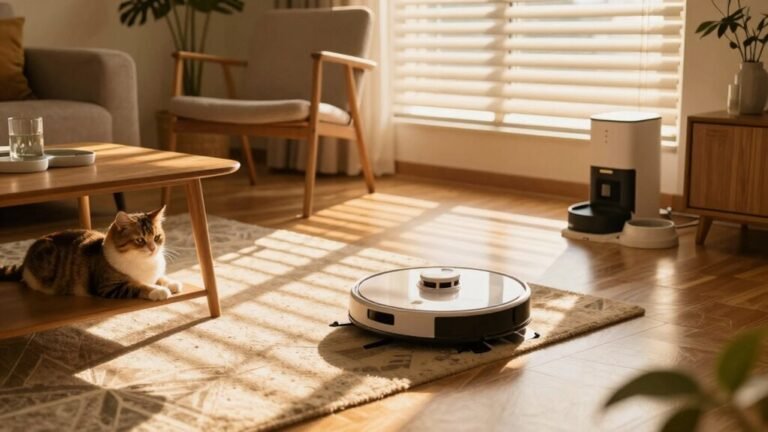
Right after your pup’s morning walk or when your cat’s curled up for a post-lunch nap, that’s the sweet spot to send your robot vacuum on its mission. You’ll dodge surprise messes and keep things running smoothly—because nobody wants a vacuum that doubles as a poop plow. Sync your bot’s schedule with your pet’s routine, and you’re golden. Robots without advanced AI obstacle recognition may blunder into accidents, turning a small spill into a smeared mess across multiple rooms.
| Pet Activity | Best Cleaning Time |
|---|---|
| Dog’s walk time | Launch right after returning home |
| Cat’s nap time | Midday glide while they dream of tuna |
| Feeding time | Clean right before meals, when bathroom breaks drop off |
| Evening zoomies | Skip it—wait till they’ve passed out from the sillies |
A little planning means a cleaner floor and a much happier robot.
Pick a Vacuum With Smart Mess Detection
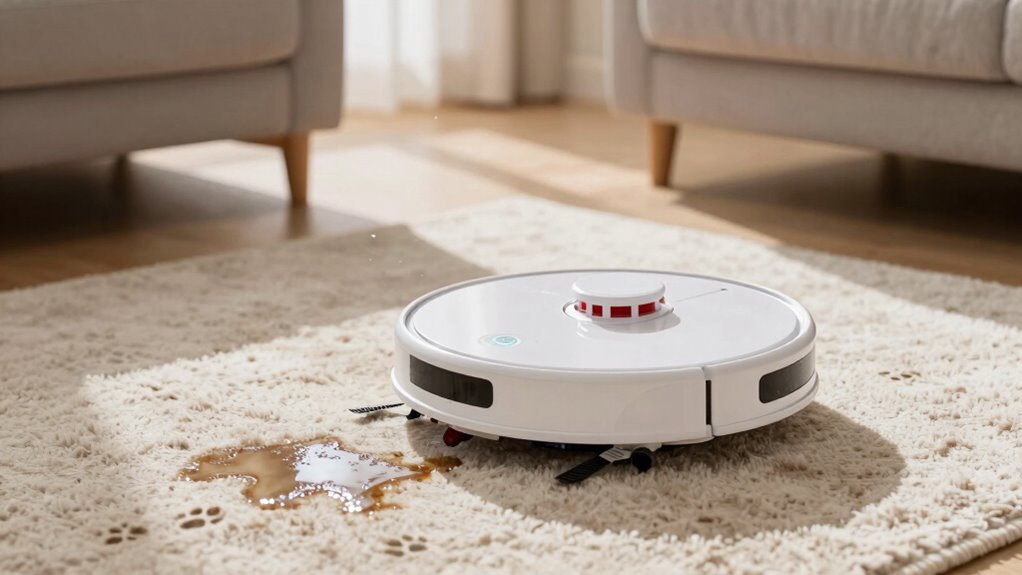
Ever wonder how your robot vacuum can dodge a stray dog treat but still miss something far less appetizing?
That’s where smart mess detection comes in.
Newer models use AI-powered cameras and sensors to actually *see* and avoid pet accidents—no, really!
With AI trained on thousands of poop pics (yep, that’s a thing), vacuums like the 3i P10 Ultra or Ecovacs DEEBOT spot messes using AIVI 3D and DirtScan tech.
They combine RGB cameras, infrared, and LiDAR to spot trouble in total darkness.
No dedicated “poop sensor,” but this high-tech mix works better.
The Saros Z70 even dodges objects just 2cm tall.
When it sees a stain, it reroutes—saving you from disaster and keeping your floors cleaner.
Picking a vacuum with this brainpower means fewer yucky surprises and more peace of mind.
Honestly, it’s like giving your floor a bodyguard.
Clean Up Pet Accidents Before You Start
Thinking ahead saves your carpet—and your nose.
When your pet has an accident, don’t grab the cleaner right away.
First, blot it!
Use paper towels or rags to soak up as much liquid as possible—no scrubbing, that just pushes it deeper.
For extra power, pile on paper towels, add newspaper, and even stand on them for a few seconds.
It’s like a carpet snack… and you’re the foot-powered press!
If you’ve got a wet/dry vacuum, now’s the time to whip it out.
Quick action keeps urine from seeping into the padding, where odors can hide and haunt you later.
Always remove the mess before any cleaning solution, or you’ll just be spreading a smelly soup.
Trust us, enzyme cleaners work way better when they’re not fighting a swamp.
A little prep now saves you from stink battles later—plus, your robot vacuum will thank you (in its quiet, beep-y way).
Empty the Bin and Clean Brushes After Every Use
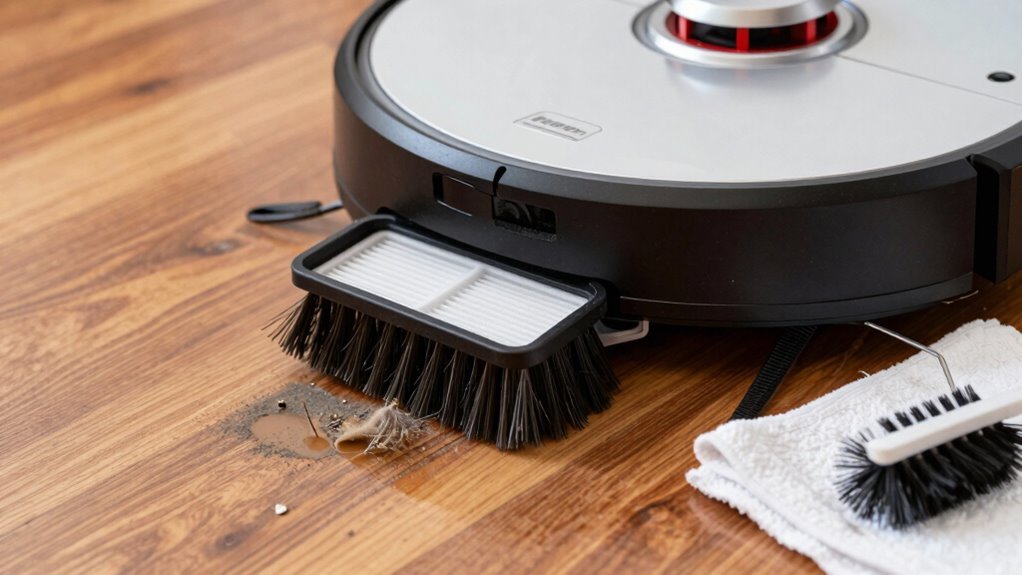
Keeping your robot vacuum ready for action starts the moment it finishes its job—so don’t let that bin stay full!
Empty it after every run, especially with pets shedding nonstop.
A packed bin kills suction, spreads yucky odors, and makes your bot wheeze like it’s running a marathon.
Grab that dustbin and give it a good shake outside—dump every last crumb and hairball.
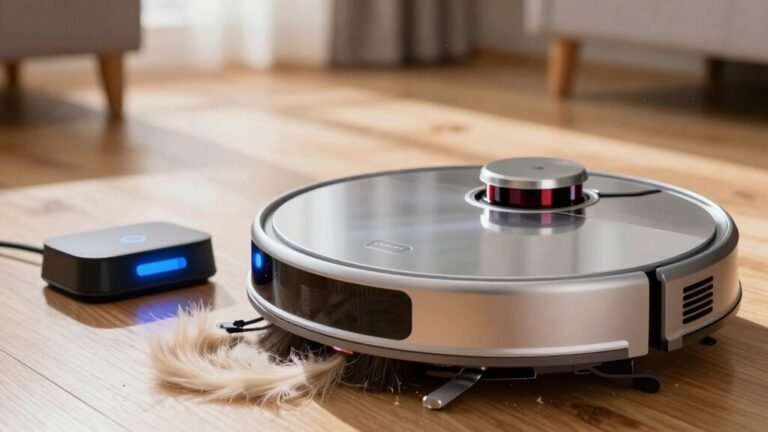
Then check the brushes, because pet hair loves to strangle the main roller like a tiny furry boa constrictor.
Use scissors or a toothpick to yank it out, and wipe down bristles with a rag.
Clean side brushes too—snip tangled hair so they spin freely.
It only takes a few minutes, and trust us, your robot will thank you by working way better, longer.
Plus, no one wants their vacuum playing “tangle roulette” every time it runs!
Use Suction Control to Avoid Spreading Wet Mess
Spotting a wet mess? Don’t hit start just yet!
Robot vacuums with smart suction control spring into action without turning your floor into a splash zone.
They automatically dial down suction when detecting liquids—no more spreading puddles like a clumsy mop.
High suction on wet spills just clogs things up, but gentle power lifts moisture while the mop scrubs clean.
Thanks to AI and sensors, models like Roborock Qrevo Curv 2 and Narwal Freo Z Ultra know when to switch modes, keeping pet accidents under control.
Carpet? The mop lifts, suction adjusts—no soggy rugs!
Even the HEPA-12 bag works overtime, using jellifying salts to trap wet waste.
With Mova Mobius 60’s 30,000Pa power or Shark’s PowerDetect, you’re not just cleaning—you’re upgrading peace of mind.
Sweet, techy revenge on messes!
Frequently Asked Questions
Can Robot Vacuums Clean up Liquid Spills Effectively?
You can’t just let any robot vacuum tackle liquid spills—most will struggle or get damaged.
But hey, newer models like the Eureka J15 Max Ultra use smart AI to actually spot clear liquids and switch to mopping mode, lifting brushes to avoid messes.
They handle small spills with ease, though big puddles? Still a no-go.
For light stains, they’re like little cleaning wizards—just don’t expect them to replace your wet-dry vac for major accidents!
Are Pet Hairs Harmful to Robot Vacuum Motors?
Yeah, pet hairs can sneak up on your vacuum like little fur ninjas, tangling around brush rollers and clogging suction paths, which makes your motor work overtime.
If you don’t clean it regularly, all that hair builds up and stresses the motor, kind of like chewing gum in a bike chain—annoying and risky.
But with anti-tangle brushes and quick maintenance, you’ll keep your robot humming happily, hair-free, and ready for action—no drama, just clean floors!
Do Robot Vacuums Work on All Floor Types With Pets?
You’re in luck—robot vacuums handle most floor types like a champ, especially with pets around.
They glide smoothly on hardwood, tile, and vinyl, and power through carpets when they’ve got strong suction.
Just make sure your model adjusts for different surfaces, so it doesn’t slip on changes or soak your wood floors.
With the right pick, your floors stay clean, your pet’s messes don’t stand a chance, and you get more nap time.
Win-win!
Can I Use Any Cleaning Solution With My Robot Vacuum?
No, you can’t just grab any cleaning solution for your robot vacuum—sorry, but your favorite lemon-scented wipe juice won’t cut it.
Stick to manufacturer-approved or robot-safe formulas, or you might wreck the tank or void the warranty.
You want low-foam, non-corrosive, and residue-free stuff—think gentle but effective, like a polite guest who cleans up after themselves.
Seriously, your robot’s got standards!
How Often Should I Replace Robot Vacuum Parts With Pets?
You should replace your robot vacuum’s filters every 2–3 months, or more often if your pet sheds heavily—you don’t want sneezy air or slacker suction.
Clean brushes weekly to ditch tangled fur, and inspect them after each run.
Empty the dustbin daily during shedding season.
Swap out disposable filters and give reusable ones a good wash monthly.
Check wheels and sensors every few weeks, because nobody likes a hairy wheel disaster!
Conclusion
You’ve got this, super-pet-parent! Think of your robot vacuum as your trusty sidekick, not a cleanup ninja for surprise puddles. With smart zones, timely schedules, and a little prep, you’ll dodge disasters like a pro. Keep it clean, keep it dry, and let the bots do the boring stuff—so you and your furry friend can just play, cuddle, and leave the mess to the machine!
References
- https://us.3itech.com/blogs/news/how-robot-vacuums-avoid-certain-areas
- https://au.narwal.com/blogs/product/avoid-pet-waste-robot-vacuum
- https://www.ecovacs.com/us/blog/best-robot-vacuum-with-no-go-zones
- https://www.youtube.com/watch?v=5z0jtITk420
- https://www.dreametech.com/blogs/blog/do-robot-vacuums-avoid-dog-poop
- https://intervacdesign.com/safety-hazards-associated-with-robot-vacuum-cleaners-a-detailed-review/
- https://www.irobot.com/en_US/pet-promise.html
- https://us.narwal.com/blogs/pet-friendly/robot-vacuum-tips-pet-owners
- https://www.eufy.com/blogs/robovac/robot-vacuum-dog-poop
- https://vacuumwars.com/best-robot-vacuums-with-obstacle-avoidance/