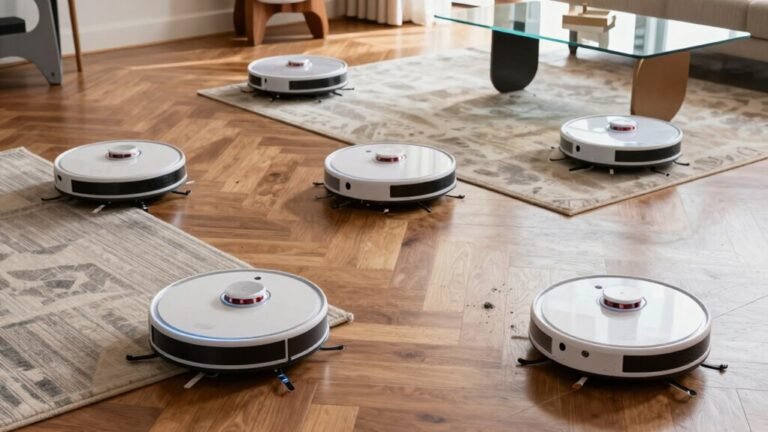
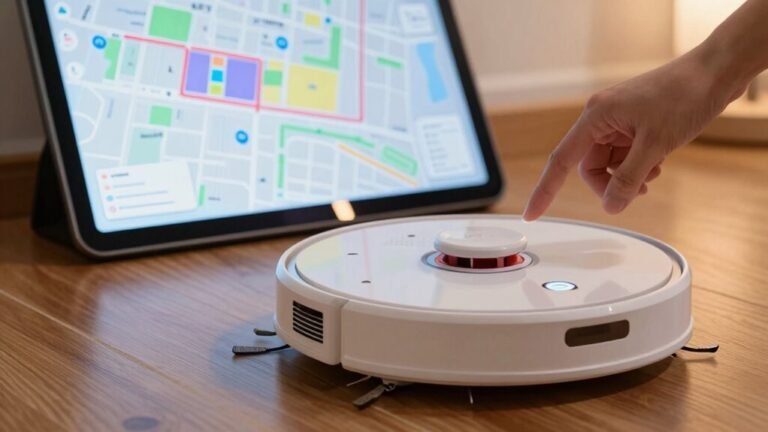
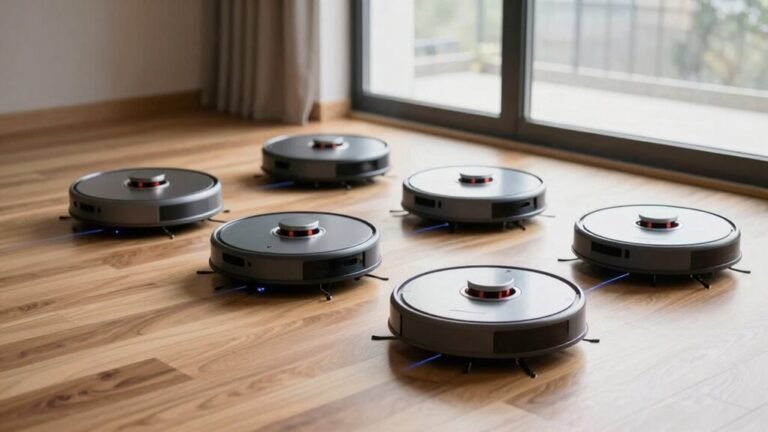
Why Does My Robot Vacuum Avoid Black Carpet?
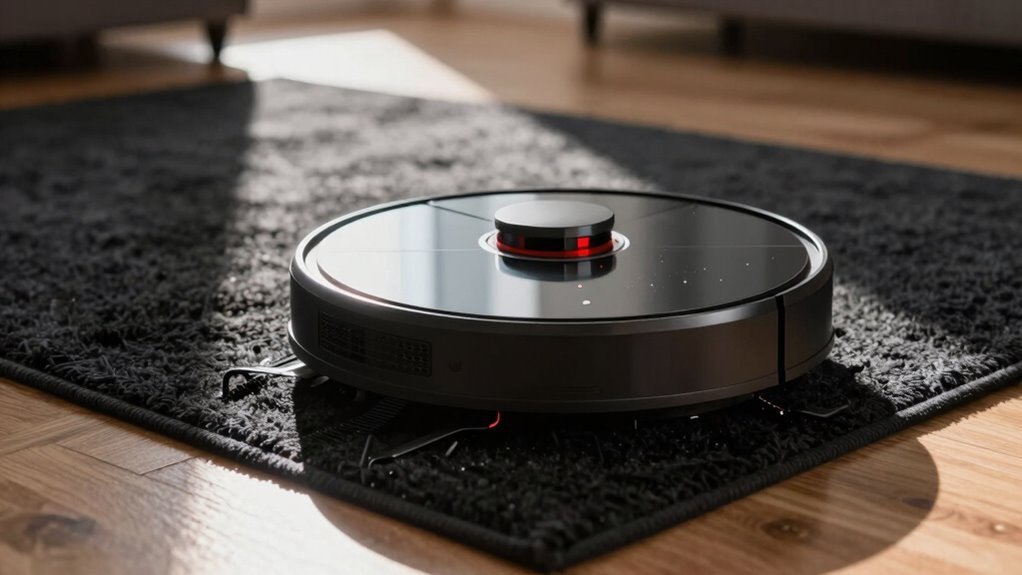
Your robot vacuum avoids black carpet because its cliff sensors get spooked—dark surfaces absorb infrared light, making the device think there’s a drop-off like a staircase. This is why your robot vacuum may steer clear of black carpet, treating it like a potential hazard.
It’s just being overly cautious, not sneaky! Even plush rugs or bold patterns can trigger this reaction, causing the vacuum to change direction unexpectedly.
But hey, newer models and smart tweaks can help it stop treating your floor like a cliff dive. Stick around, and you’ll discover how to keep your vacuum rolling smoothly—no cold feet required.
Why Robot Vacuums Avoid Black Carpet
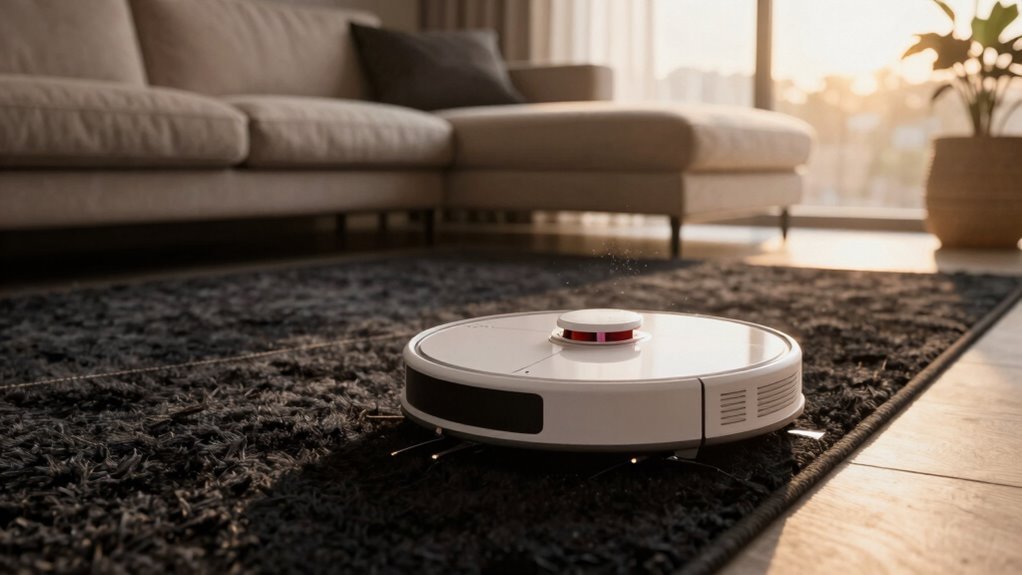
While your robot vacuum is smart, it sometimes gets a little spooked by black carpets—kind of like how you might hesitate stepping into a dark room.
That’s because its infrared sensors shoot out light to “see” the floor, but black carpets absorb that light instead of bouncing it back.
No reflection means the robot thinks it’s a cliff, like the edge of a staircase.
Even dark rugs or patterns can trick it, making your vacuum dance back and forth like it’s scared to commit.
This isn’t just one brand’s issue—eufy, Roborock, Roomba, and Wyze all struggle with deep blacks due to how infrared drop sensors interpret dark surfaces.
Neato’s Botvac is the cool kid that handles it fine.
So when your robot ghosts your black carpet, it’s not being stubborn—it’s just following its programming.
It wants to avoid falling down stairs, even if that means overdramatizing a fluffy rug.
How Cliff Sensors Mistake Dark Floors for Edges
When your robot vacuum zips across the floor and suddenly veers away from that sleek black carpet like it’s hot lava, it’s all thanks to its cliff sensors going into overdrive.
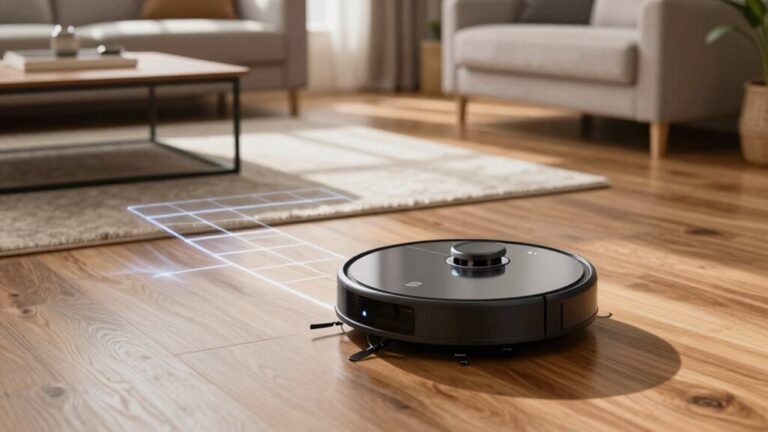
These smart little sensors shoot invisible infrared light down at the floor, expecting a bounce back to confirm solid ground.
But dark surfaces, especially black carpet, suck up that light like a sponge—no reflection means trouble.
Your bot thinks it’s about to tumble down a cliff, so it quickly backs off.
Even shadows, dark tiles, or rugs with black borders can trigger this panic.
It’s not picky—it just can’t tell the difference!
The design keeps it safe on stairs, but it also gets a little too cautious.
This false detection happens because the sensor relies on a 45-degree light bounce within its housing to detect reflections, which dark rugs and surfaces disrupt.
Do All Robot Vacuums Struggle With Black Carpet?
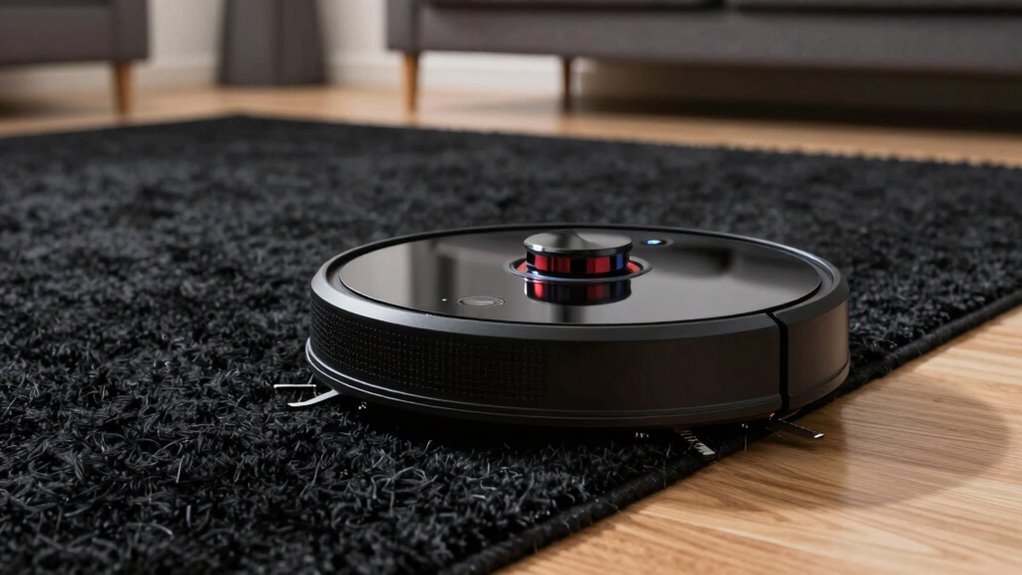
Ever wonder why your robot vacuum acts like it’s terrified of stepping on your black carpet?
You’re not alone—most models, from Roombas to Wyze and Roborock, see dark surfaces as potential drop-offs thanks to their cliff sensors.
These sensors rely on infrared light, which black absorbs instead of reflects, tricking your bot into thinking there’s a cliff ahead.
It doesn’t matter if it’s a sleek black rug, a bold pattern, or a dark border—your vacuum might bounce back, stall, or skip the area entirely.
Even high-end models like the Roomba 980 aren’t immune.
The issue spans brands and model years, making it a widespread quirk, not a flaw.
Thick piles, geometric designs, or black lines on hardwood can all cause hiccups.
While some workarounds exist, it’s safe to say no robot vacuum loves black carpet—yours is just doing its job, even if it’s a little overly cautious!
Which Robot Vacuums Handle Black Carpet Best?
Wondering which robot vacuums actually dare to brave your black carpet without flipping out? You’re in luck—several models laugh in the face of dark floors.
The MOVA Z60 Ultra Roller Complete, with 28,000Pa suction and its smart DuoBrush, devours pet hair and dust on thick carpets like it’s nothing.
If you want premium power without overspending, the MOVA V50 balances strength and value beautifully.
The iRobot Roomba Max 705 automatically boosts suction on carpet and navigates like a pro, while the Dreame X50 Ultra uses twin rubber brushes to agitate and clean with flair.
And don’t sleep on the Roborock Q5 Max+—under $400, it nails hair pickup and cleans fast.
These bots don’t fear black carpet; they conquer it, one confident pass at a time.
Can You Safely Trick Sensors on Black Carpet?
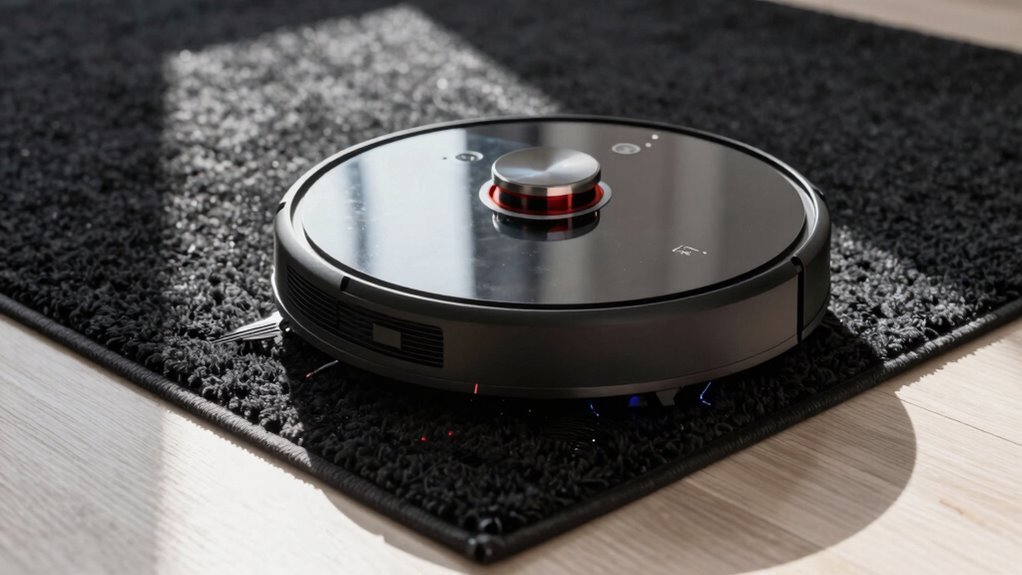
You’ve picked a robot vacuum that handles black carpet like a champ, but now it’s freezing up every time it hits your sleek dark flooring—talk about a buzzkill. The culprit? Cliff sensors that think your black carpet is a bottomless pit. Luckily, you can trick them—with a catch.
| Method | Materials Needed | Safety Tip |
|---|---|---|
| Aluminum Foil | Foil, scissors | Only use in single-floor homes |
| Glossy Paper | Tape, cardstock | Cover both sides for shine |
| Virtual Walls | App, beacon | Keep bots away from drops |
Wrap sensors with foil (shiny side in) or glossy taped paper to bounce infrared light back. It’s clever, easy, and kinda fun—but disables drop protection. So unless you want your vacuum doing a swan dive down the stairs, block off ledges with virtual walls. You’re the boss of your bot’s bravery.
What to Check Before Buying for Dark Floors
While your dream of spotless dark floors might sound like a scene from a sci-fi movie, it’s totally doable—if you know what to look for.
Skip the guesswork and avoid robot meltdowns on your sleek black hardwoods by checking a few key features first. Dark floors can trick sensors, but the right model won’t break a digital sweat.
- Pick LiDAR or dToF sensors – They laugh in the face of black carpet and map your home like pros, even in the dark.
- Choose models with AIVI 3D or TrueMapping 2.0 – These smart systems learn your space and dodge errors caused by dark surfaces.
- Look for Ultrasonic Carpet Detection – It finds rugs without needing light, so your vacuum won’t treat your floor like a bottomless pit.
Bonus tip: rubberized wheels keep your floors scratch-free—because nobody wants robot racetrack marks.
How Lighting Tricks Robot Vacuum Sensors
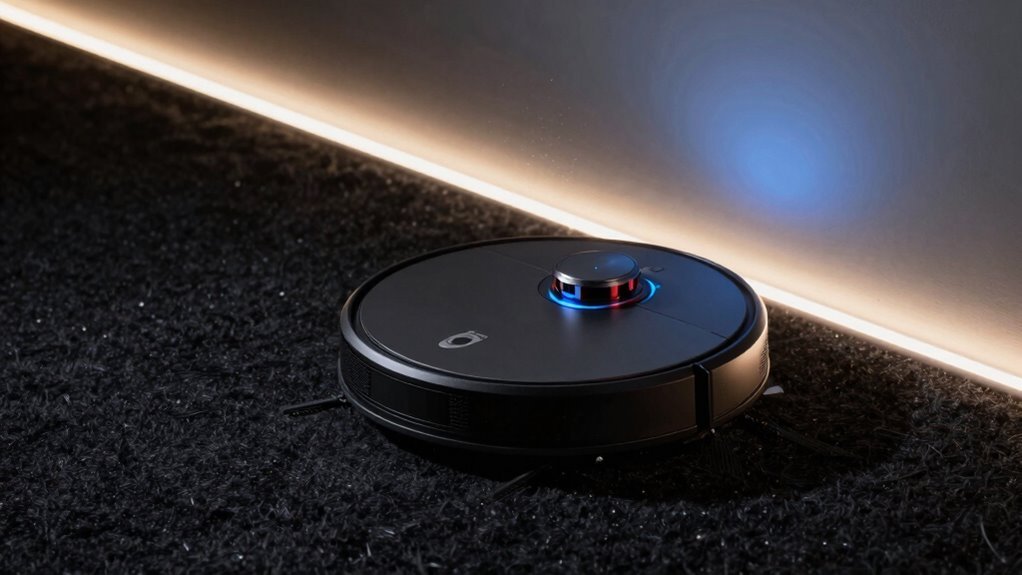
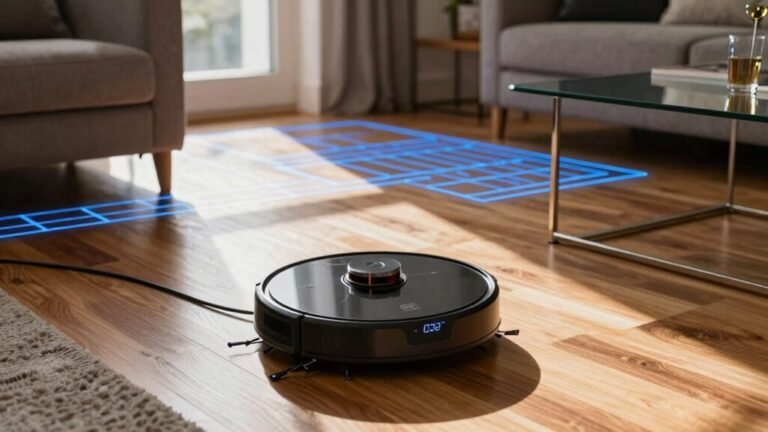
When your robot vacuum suddenly treats your plush black carpet like it’s staring into the void, it’s not being dramatic—it’s just working with what it’s got. Its cliff sensors shoot invisible infrared beams to detect drops, but dark carpets soak up that light like a sponge. Low light or matte textures make it worse, tricking the bot into thinking it’s near a stairway. Even your lamp or window can mess with its judgment—shadows and glare confuse its little brain. Here’s how lighting plays tricks:
| Lighting Condition | Effect on Sensor |
|---|---|
| Dim room | Looks like a cliff |
| Bright overhead | Creates false shadows |
| Direct sunlight | Causes disruptive glare |
| Furniture shadows | Mimics drop-off edges |
| Day-to-night shifts | Changes readings over time |
Poor guy’s just trying not to tumble down the stairs!
Do Dark Rugs or Patterns Fool Sensors?
Ever wonder why your robot vacuum treats that sleek black rug like it’s a bottomless pit?
It’s not being dramatic—its infrared sensors just can’t handle the dark!
Since black absorbs light instead of reflecting it, your vacuum thinks it’s about to plummet down a cliff.
Even bold patterns or dark borders on rugs can trick it into panic mode, especially on hardwood floors.
Here’s what you’re up against:
- Black carpets = invisible to IR sensors, making every step seem like a deadly drop.
- Geometric patterns with dark shapes confuse navigation, causing endless loop fails.
- Most brands, from Roomba to eufy, struggle with dark rugs—no shame, just science!
Your smart little helper isn’t broken; it’s just overly cautious.
And honestly, who hasn’t mistaken a shadow for something terrifying?
How to Fix False Cliff Detection Errors
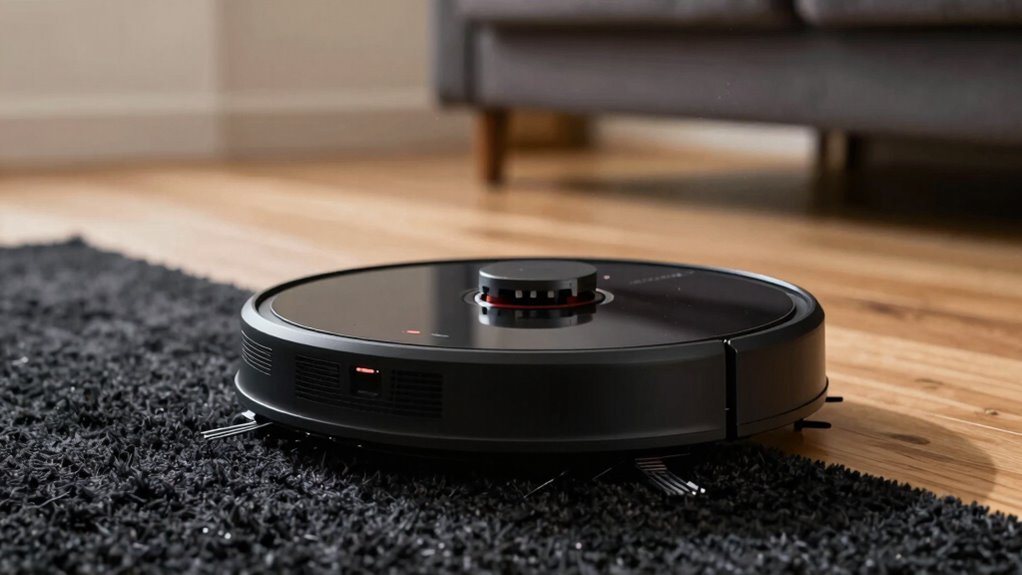
What if your robot vacuum’s fear of black carpets wasn’t a flaw—just a fixable hiccup?
You’ve got options!
First, clean those cliff sensors—dust sneaks in and tricks your bot into thinking it’s on a tightrope.
A quick wipe with a soft cloth often solves the mystery.
If that doesn’t work, try a firmware update; fresh software keeps its “brain” sharp and sensors smart.
You can even adjust sensor sensitivity so it doesn’t overreact to dark floors.
Got no stairs? Cover the sensors lightly with reflective tape—yes, really!—to stop false cliff alerts.
Just be sure to use physical barriers or safe zones in your map so it won’t take a tumble.
With a little tweak here and there, your vacuum won’t run from black carpets like they’re haunted.
Tips to Help Your Vacuum Accept Black Floors
So, your robot’s still treating that black rug like it’s the edge of a canyon?
Don’t worry — you’re not stuck with a vacuum that’s afraid of the dark. You’ve got options! Try these smart fixes to get your little helper rolling confidently over black floors:
- Cover the sensors carefully – Use white paper and tape over just the cliff sensors (not bumpers!) so it doesn’t误read dark carpets as drops.
- Tweak the app settings – Turn on “Carpet Mode,” set GO ZONES on black rugs, or draw no-go lines around real stairs instead.
- Choose the right model or upgrade – LIDAR-based vacuums, like Neato Botvacs, laugh at black carpets. No cliff-sensor panic, just clean floors.
A little hack goes a long way — soon, your robot won’t bat a sensor at that sleek black rug.
Frequently Asked Questions
Why Do Robot Vacuums Avoid Dark Areas Only at Night?
You see, your robot avoids dark spots at night ‘cause its sensors get spooked in the dark—like a cat scared of shadows!
Cliff detectors use infrared beams, but black floors suck up the light, making them look like deadly drops.
With less ambient light at night, the illusion’s stronger.
Can Black Carpet Cause My Robot Vacuum to Get Stuck?
Yeah, black carpet can totally trap your robot vacuum—no joke, it’s like a ninja obstacle course for bots.
The dark surface soaks up the infrared light it relies on, so your robo-cleaner thinks it’s about to plunge off a cliff.
It’ll spin, zigzag, or freeze up like it’s starring in a tiny robot soap opera.
Poor guy just wants to clean, not commit hara-kiri!
Do Colored Carpets Other Than Black Fool Robot Sensors?
Yeah, colored carpets besides black can totally trick your robot—funny coincidence, right?
Dark blues, browns, or maroons? They often mimic black to sensors, especially in low light.
Infrared gets fooled easily, but don’t sweat it—newer bots use ultrasonic or LiDAR tech that laughs at color.
They “listen” to floors or map with light, so red, navy, or charcoal?
No big deal.
Just keep sensors clean and upgrade smartly—your rug won’t ghost your robo-cleaner anymore!
Will Reflective Black Tiles Trick My Robot Vacuum Too?
Yeah, reflective black tiles can totally trick your robot vacuum—those slick surfaces bounce the laser signals all over, making it think there’s a bottomless pit or open floor.
It’s not scared of the color, but your vacuum’s getting pranked by reflections, just like a cat chasing a laser dot.
Some smarter models handle it better, but even they can get bamboozled when the light’s low and the floor’s shiny.
Can Software Updates Worsen Black Carpet Detection Issues?
Nope, software updates won’t fix, let alone worsen, black carpet issues—90% of users still report the same run-from-dark-rugs panic after updates!
You’re not imagining it; your robot’s just scared of black holes, not carpets.
Updates add cool tricks, but cliff sensors stay stuck in the dark—literally.
Stick to tape, foil, or app zones.
Silly? Maybe.
But hey, at least your vacuum’s dramatic exit adds excitement to cleaning!
Conclusion
You’re close, the black carpet lies ahead, and your robot hesitates—sensors buzzing like a nervous friend at a horror movie. It thinks it’s about to tumble into a void… but it’s just your favorite rug. With a little tweak, better lighting, or the right model, it’ll charge through like a tiny vacuum superhero. Spoiler: the floor’s safe, and so is your clean streak. Dark floors, no drama—game on!
References
- https://service.eufy.com/article-description/Why-Is-RoboVac-Not-Suitable-for-Black-Flooring-or-Carpet
- https://www.aitimejournal.com/can-robot-vacuums-go-over-rugs/31449/
- https://www.techtongbo.com/post/will-vacuum-robot-work-on-dark-carpet
- https://forum-us.roborock.com/discussion/1823/s5-max-avoid-black-long-hair-carpets
- https://www.youtube.com/watch?v=MJDTyNdmMRA
- https://forums.wyze.com/t/robot-vacuum-unable-to-transition-between-surfaces-cliff-sensor-issue/253925
- https://www.youtube.com/watch?v=h8fZLDuQbE4
- https://homesupport.irobot.com/s/article/646
- https://us.narwal.com/blogs/robot-vacuum/robot-vacuum-fall-down-stairs
- https://www.robotreviews.com/chat/viewtopic.php?t=19093