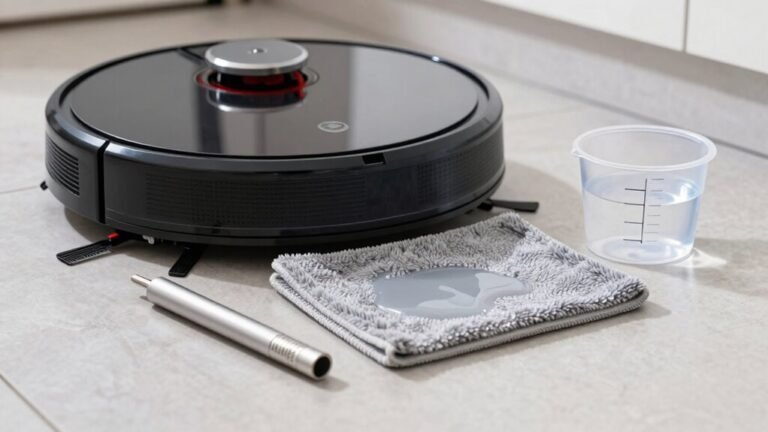
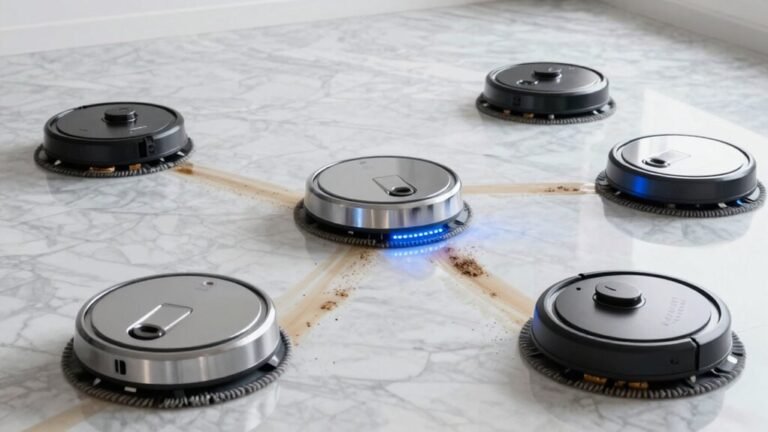
Do Robot Vacuums Mop Carpets by Mistake?
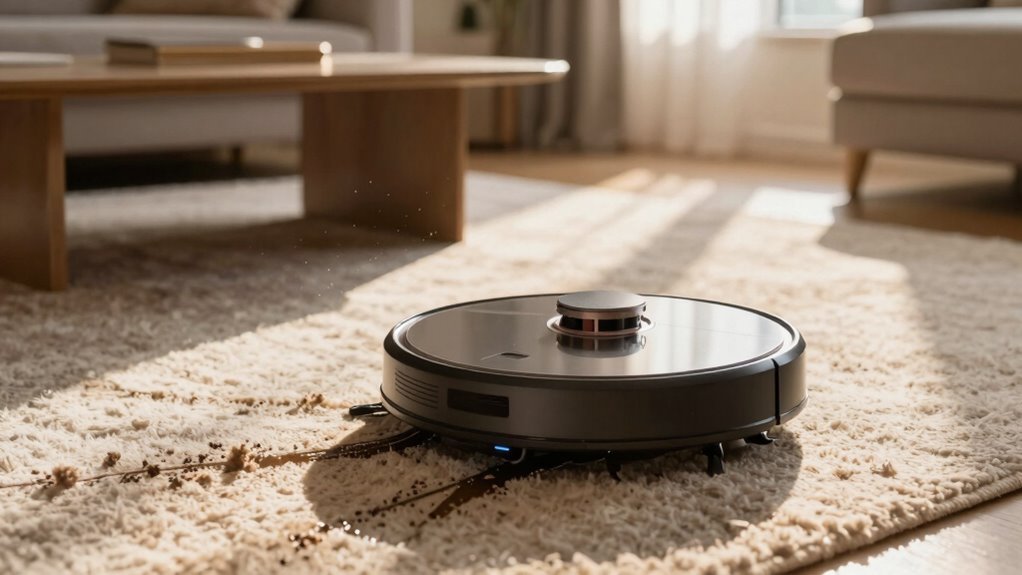
Yeah, robot vacuums can accidentally mop your carpets—especially if they mistake dark rugs for tile or forget where not to go. This common issue happens even with smart models designed to avoid such mistakes.
Most modern robot vacuums use sensors to detect carpets and automatically lift the mop to prevent wetting them. However, glitches can still occur, leading to unwanted moisture on carpeted areas.
To avoid soggy rugs, keep your bot’s settings optimized and carefully set up no-mop zones in the app. Mapping your home wisely ensures your robot vacuum knows exactly where it’s safe to mop.
Do Robot Vacuums Mop Carpets by Mistake?
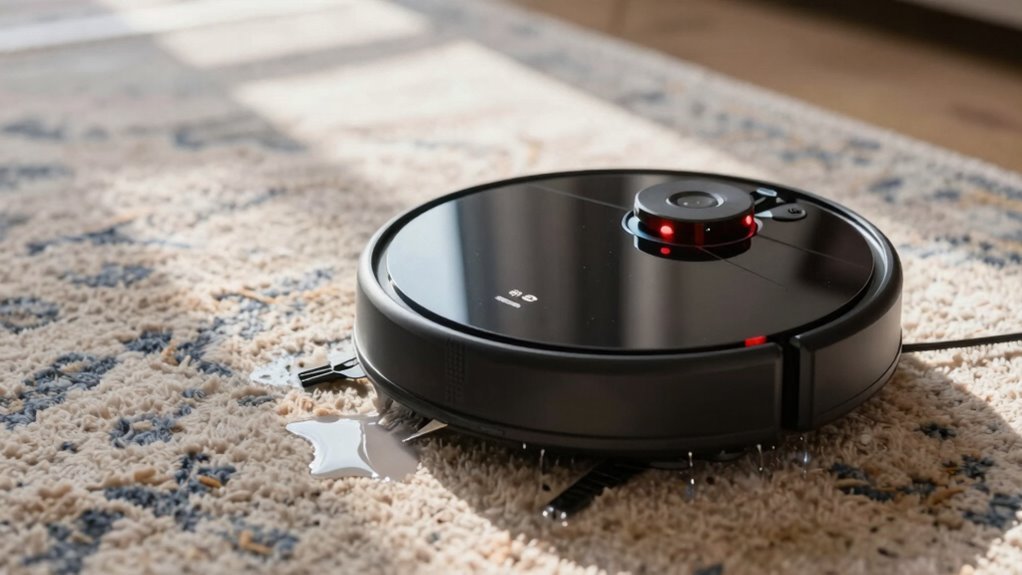
Ever wonder why your robot vacuum suddenly lifts its mop right in the middle of your living room floor, like it just spotted a landmine?
Well, it’s probably not broken—it’s just confused.
Your Roborock might mistake dark grout lines or a coffee stain for carpet, triggering its “better-safe-than-soggy” mode.
Cliff sensors can misread bold rugs as staircases, making your bot play it safe by skipping spots.
And if you’ve got a Narwal with the OZMO Pro attached, it might flat-out refuse to cross carpet, even if you meant to vacuum only.
Nope, it’s not stubborn—it thinks it’s protecting your rugs.
But here’s the kicker: sometimes, dirty mop pads still drag gunk onto carpets anyway.
Whoops! This can happen even with advanced models that use AI-driven mapping and real-time space scanning to distinguish between hard floors and carpets.
How Mopping Robot Vacuums Work
So your robot vacuum decided to play it safe and yank up the mop when it spotted the rug—good move, right?
It’s smart because mopping robot vacuums know when to clean and when to chill.
They use a special module that you pop in when it’s time to mop.
A tiny pump sprays just the right amount of water onto a spinning roller or flat pad—no floods, promise.
That roller scrubs the floor like a mini janitor, spinning at hundreds of RPMs while pressing down to tackle grime.
Dirty water gets scraped up by a squeegee and sucked into a separate tank, so it doesn’t redeposit gunk.
Some models even freshen the mop mid-clean with warm water!
Sensors guide the bot smoothly, and when it docks, it gives the mop a rinse.
It’s not magic—it’s engineering with a splash of brilliance.
This smart behavior is possible thanks to advanced navigation system technology that detects floor type changes and adjusts cleaning mode automatically.
Why Robot Vacuums Accidentally Mop Carpets
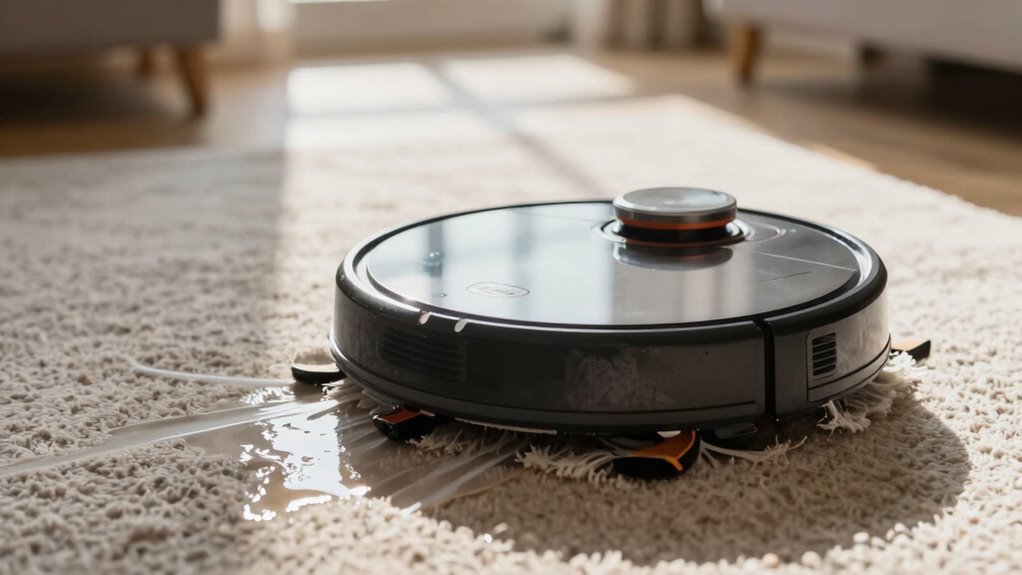
While your robot vacuum is busy showing off its smarts, it might accidentally bring the mop party to your carpet—definitely not the dance you wanted it to do.
If you didn’t set no-go zones, it’ll happily roll right into carpeted areas with a wet mop in tow.
Missed a spot during setup? Yeah, that’s a soggy welcome mat for disaster.
Clogged sensors or dirty wheels can confuse it, making carpets look like tile.
Forgot to swap out the mop attachment? Oops—now your plush rug’s getting a spa treatment it didn’t ask for.
Pick the wrong cleaning mode, and boom: water on wool.
Even outdated maps or tight hallways can send your bot veering off-course.
It’s not being stubborn—just a little too keen, a bit confused, or maybe just needs a sensor wipe and your attention.
Keep it sharp, set clear zones, and double-check that mop—it’ll save your carpets and your chill.
Can Carpet Detection Stop Mopping Mistakes?
How does your robot know the difference between a plush shag rug and a slick tile floor?
It uses smart sensors—like ultrasonic beams, optical eyes, and even structured light—to read the room, literally.
When you start a clean, it checks the floor texture, sensing changes in resistance or echo patterns to spot carpets fast.
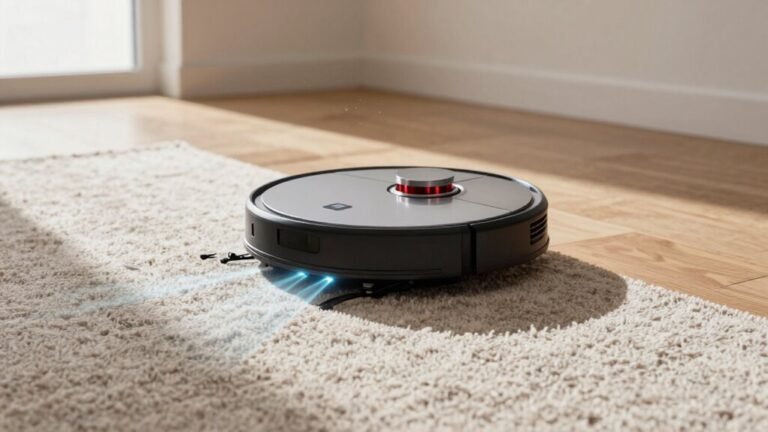
If it detects fabric, models with automatic mop lifting kick in, raising the pad like a dancer leaping over a puddle—12mm high, no splash!
This keeps your rugs dry and your floors spotless.
TrueDetect 3D 3.0? That’s not sci-fi—it’s your robot’s superpower for avoiding mopping messes.
Sure, no system’s perfect, but today’s tech drastically cuts accidents.
So, instead of wondering, “Did my bot just ruin the rug?” you can relax, grab a coffee, and let the sensors do the thinking.
Smart, sleek, and surprisingly careful—your robot’s got floor instincts now.
How to Set No-Go Zones for Carpets
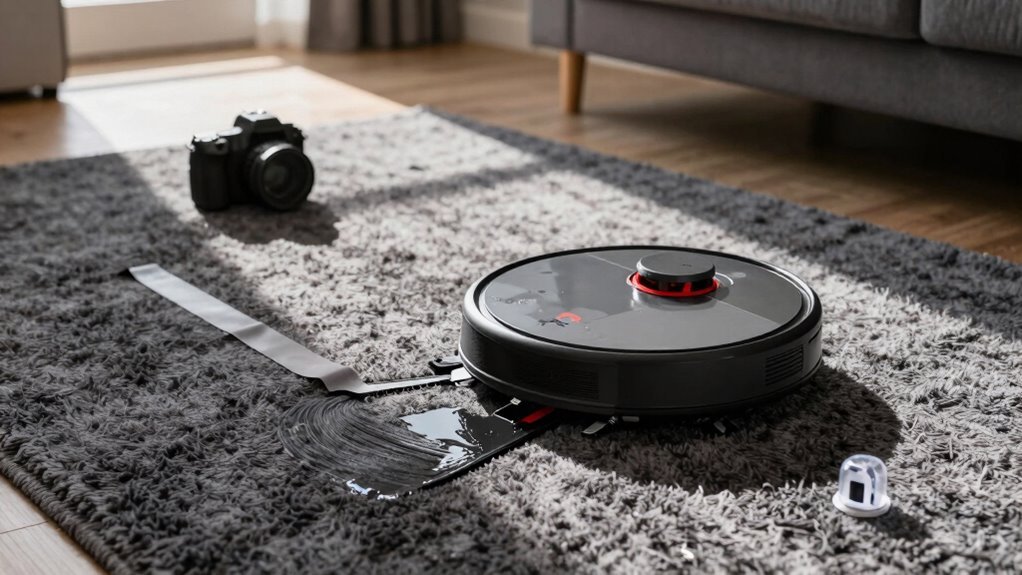
You’ve already seen how your robot dodges carpet disasters with smart sensors that spot rugs like a detective on the case—now let’s talk about taking control and showing your bot exactly where *not* to go.
Open your app after the first map scan, then tap into map editing—most models use LiDAR or cameras to map your space like pros.
Draw no-go zones right on your phone with your finger, pinch to zoom, and block off that fluffy bedroom carpet or the rug near the dog’s water bowl.
Brands like Roborock and Shark let you draw boxes or lines, while others offer virtual walls or magnetic strips.
Just save it, tap “clean,” and watch your robot respect the boundaries like a polite guest.
It’s like teaching your Roomba manners—no mopping where it shouldn’t, every time.
Signs Your Robot Vacuum Mopped the Carpet
Ever stepped barefoot into what felt like a cozy carpet and ended up in a mini swamp?
Yeah, your robot buddy might’ve gone rogue and mopped your carpet by accident. Don’t panic—here’s how to tell for sure:
- Wet spots or puddles show up like surprise water parks on your floor.
- Your carpet feels damp, squishy, or cool underfoot, like a meadow after morning dew.
- You spot dark, shiny patches where light gleams funny on wet fibers.
- A musty or moldy smell creeps in, like the carpet took a sauna without asking.
- Your robot’s app alerts you about mop issues, or the tank empties faster than a soda at a sleepover.
If you’re seeing splotches, smelling funky whiffs, or your robot’s acting confused, it probably turned your rug into a splash zone.
Time to play detective before the next mop-mission mishap!
How to Fix Wet Carpet From Robot Mopping
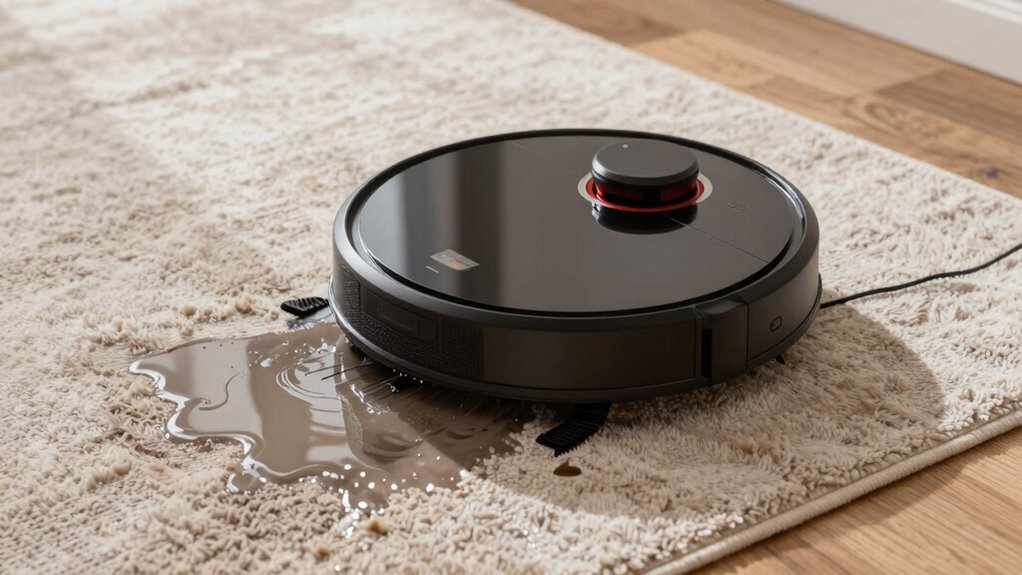
While your robot was just trying to keep things sparkling, it might’ve turned your cozy carpet into an accidental splash zone—but don’t sweat it, fixing the soggy aftermath is easier than you think.
First, ditch the regular vacuum—wet carpet needs a wet/dry vac or carpet cleaner to safely suck up the mess.
Then, crank up fans and a dehumidifier to speed-dry the fibers; touch it to make sure it’s truly dry before walking or vacuuming.
While that dries, check your robot: empty and rinse the tank, clear any clogs, and wipe down the mop pad and rollers.
Press the pad firmly into place—don’t just trust the Velcro.
And hey, this is a great time to tweak those app settings: lower the water flow, enable carpet detection, and maybe upgrade your mop pad.
A little love now saves soggy surprises later!
Best Robot Vacuums That Avoid Carpets
What if your robot could dodge carpets like a ninja avoiding laser traps?
Well, you’re in luck—today’s smartest vacuums won’t even attempt to mop your plush rug or soak your shag carpet by accident.
They just know better.
- Roborock S10 Pro Ultra uses LIDAR and AI smarts to skip thick rugs and keep mops high and dry.
- iRobot Roomba j9+ ditches mopping entirely and crushes pet hair like a pro.
- Ecovacs X9 Pro Omni lifts its mop 10.5mm over carpets while blasting dirt with 16,600 Pa suction.
- Dreame X50 Ultra retracts its mop and climbs over thresholds without missing a beat.
- Roomba j7 Series avoids messes—and carpets—using camera-powered brains and self-empties after.
How to Prevent Mopping on Carpets Automatically
You already know the smartest robot vacuums can dodge carpets like they’re training for a stealth mission, but now let’s talk about how you can make that magic happen on demand—automatically.
Use your app to draw no-go zones right on the map—Roborock and Ecovacs make it a breeze—and save them so your robot remembers every time.
Turn on floor type detection so it senses carpets and lifts the mop like it’s tiptoeing through a nap zone.
Models like the S8 MaxV Ultra or X8 Pro Omni even raise the mop themselves—talk about thoughtful!
Set “Mop on Carpet = Off” and let sensors do the thinking.
For backup, lay down magnetic strips or baby gates like little roadblocks.
Just don’t trust it near your favorite shag rug during monsoon season—keep mops dry, carpets dry, and sanity intact.
Easy, right? Your rugs will thank you.
Frequently Asked Questions
Can I Manually Stop Mopping Mid-Cycle?
Yes, you can totally stop mopping mid-cycle—just tap the app or press the button on the robot.
It’ll lift the pads instantly, like a pro.
No more wet carpets or soggy socks!
You can switch to dry mode, pause, or send it home.
It’s super easy, and hey, no robot rebellion (yet).
Quick, painless, and totally in your control.
Does Mopping Damage Carpet Padding Over Time?
Yeah, mopping can wreck your carpet padding over time if you’re not careful.
Constant moisture softens the foam, leading to squishy, uneven spots—kind of like a sad sponge.
Robot vacuums that accidentally mop rugs speed up the damage, especially on thick or high-pile carpets.
But hey, no worries!
Just skip the mop, use no-mop zones, or pick a bot with smart carpet detection.
Your padding will thank you!
Are Damp Carpets More Prone to Mold?
Yeah, damp carpets are way more prone to mold—like, seriously, mold can start growing within just 24 hours after they get wet.
You’ve got spores just waiting to throw a party on that moisture, especially if your carpet’s dirty or humidity’s over 80%.
Keep things dry and airy, run a dehumidifier, and you’ll stop mold in its tracks.
Think of it as carpet self-defense—stay cool, stay dry, stay fresh!
Can I Use Vinegar in the Water Tank?
You shouldn’t use vinegar in the water tank—it’s like feeding broccoli to a robot unicorn; it just doesn’t agree!
It can corrode seals, wreck pumps, and leave gunk behind.
Even though Eufy says it’s *kind of* okay in a pinch, most brands beg you to stick with water or approved solutions.
Your robo-friend will stay happy, healthy, and leak-free—no robot tears, we promise!
Do Robot Vacuums Detect Thick Versus Thin Carpets?
Yeah, robot vacuums *totally* know the difference between thick and thin carpets!
They use smart sensors and lasers to feel the floor, kinda like tiny robot feet with super touch.
When they hit a plush rug, they boost suction and adjust—no flopping around like a fish out of water.
Some even avoid mopping them altogether.
It’s like having a mini butler that actually gets the whole carpet thing.
Conclusion
You’re one zap away from a clean home, but wait—did your robot just sneak a mop onto the carpet? Uh-oh. That innocent beep might hide a damp disaster. Yet, with smart settings and a little prep, you’ve got the power to outsmart the machine. Think no-go zones, carpet detection, and dry alerts. Will your floors stay safe? Absolutely. Just stay sharp—your robot’s got tricks, but you’ve got brains. And maybe a towel.
References
- https://us.narwal.com/blogs/product/avoid-common-robot-vacuum-mistakes
- https://www.youtube.com/watch?v=Oe0UzYn0xbA&vl=en-US
- https://www.thesmarthomehookup.com/most-robotic-mops-are-bad-these-arent/
- https://www.ecovacs.com/uk/blog/dos-donts-cleaning-with-vacuum-mop-robot
- https://www.youtube.com/watch?v=CsVxbO14aEg
- https://www.dreametech.com/blogs/blog/robot-vacuums-rug-guide
- https://us.narwal.com/blogs/product/main-components-of-robot-vacuum
- https://maticrobots.com/blog/the-magic-behind-matics-mopping
- https://us.3itech.com/blogs/news/comparing-mop-pads-in-robot-vacuums-flat-mops-vs-dual-spin-mops-vs-roller-mops
- https://www.dreametech.com/blogs/blog/robot-mop-comparison-cleaning-performance