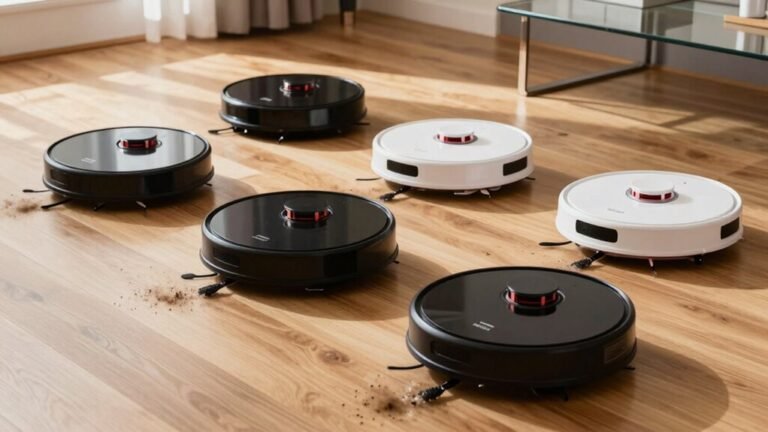
Do Robot Vacuums Fall Down Stairs?
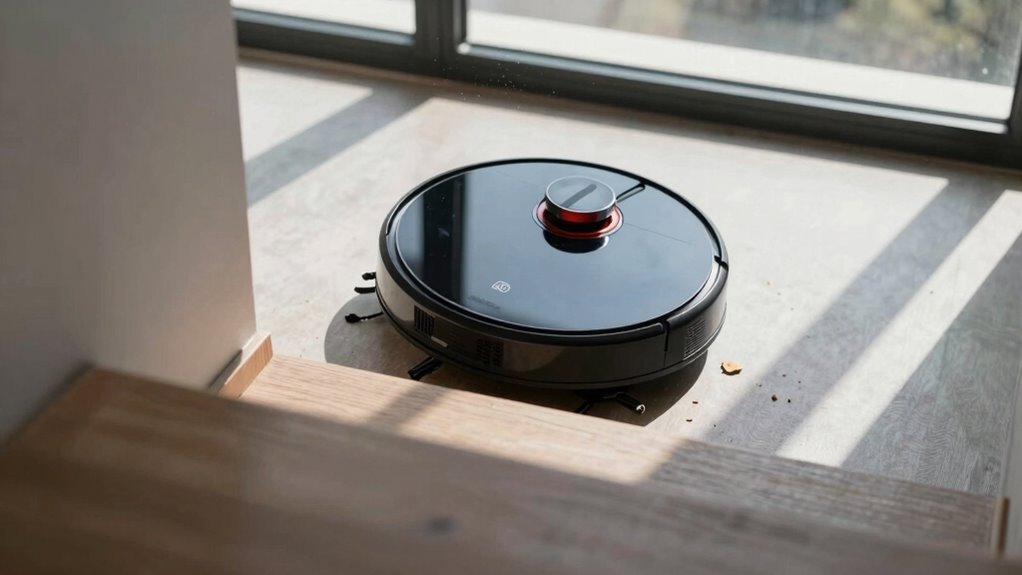
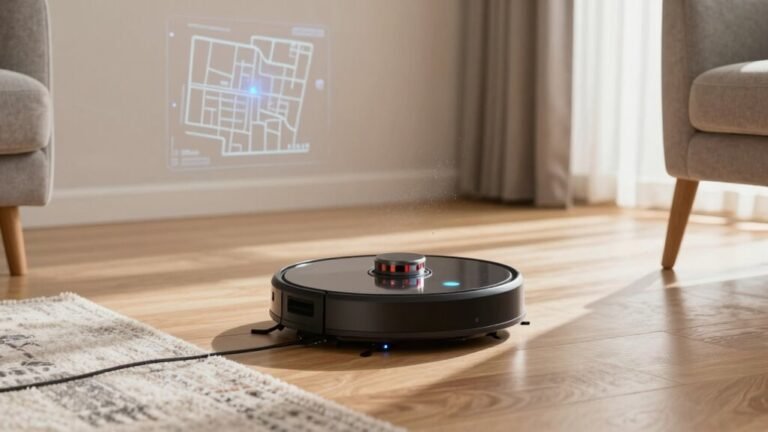
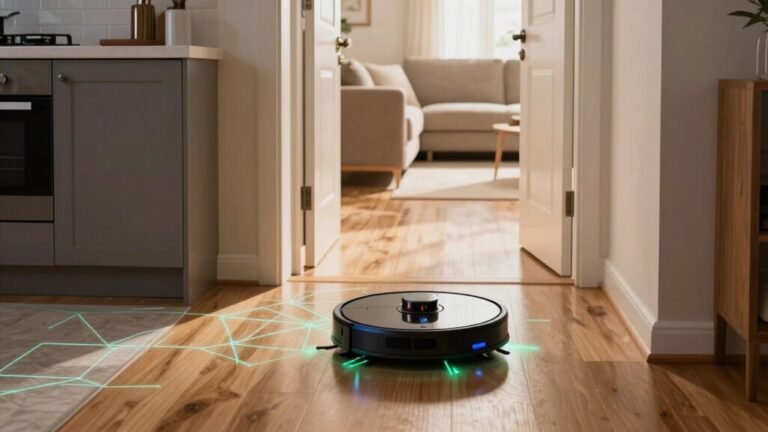
Do robot vacuums fall down stairs? No, they typically don’t, thanks to built-in cliff sensors that prevent accidents. These smart sensors emit invisible infrared beams, acting like tiny depth finders to detect edges and drops.
If the robot senses a gap, it smoothly reverses direction, avoiding stairs and protecting both your home and the device. Most models include multiple sensors for 360-degree detection, ensuring comprehensive coverage.
While dusty sensors or highly reflective floors can occasionally confuse the system, modern robot vacuums are designed to handle such challenges effectively. Regular cleaning of the sensors helps maintain optimal performance and safety.
How Robot Vacuums Avoid Stairs
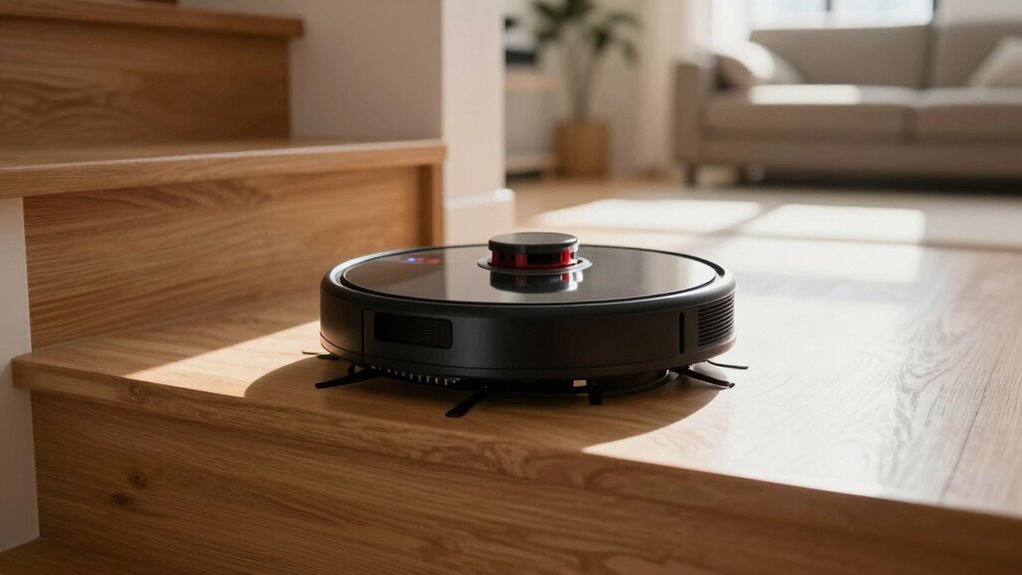
Ever wonder how your robot vacuum doesn’t take a tumble down the stairs every time it gets close? It’s not luck—it’s smart tech at work!
Your little cleaning buddy shoots invisible infrared signals down from its belly, checking the floor below. If the signal doesn’t bounce back, boom: it knows a cliff (yes, *cliff*) is near and stops instantly.
With multiple sensors scanning all around, it’s got eyes everywhere.
These sensors catch drops of 30mm or more—like stair edges—so you don’t end up with a vacuum pancake on the first floor.
Some models even use LiDAR and mapping magic to remember where stairs live, plotting safe paths like a robo-NASA engineer.
Virtual barriers in the app add extra “keep out” signs, just to be sure.
Advanced models feature smart navigation to map entire homes and recall stair locations for consistent, safe cleaning.
Why Robot Vacuums Might Still Fall
Even though your robot vacuum’s got ninja-like skills for dodging stairs, it’s not invincible—sometimes, it still takes a tumble. Dusty sensors, wonky software, or tricky floors can all lead to an oops moment. You might not realize how much your vacuum relies on clean sensors and good lighting until it suddenly doesn’t work. Robot vacuums use infrared signals from cliff sensors to detect drops, and when those signals don’t bounce back, the vacuum knows to stop—this is called cliff sensor technology. Let’s break down the usual suspects:
| Issue | Why It Happens | Quick Fix |
|---|---|---|
| Dirty sensors | Grime blocks drop detection | Wipe with a damp cloth |
| Black or shiny floors | Infrared gets confused | Mark no-go zones |
| Low light | Sensors can’t see well | Run during daylight |
| Old or basic model | Lacks smart sensors | Upgrade for safety |
Stay proactive, and your little robo-friend will stay upright!
How Cliff Sensors Prevent Falls
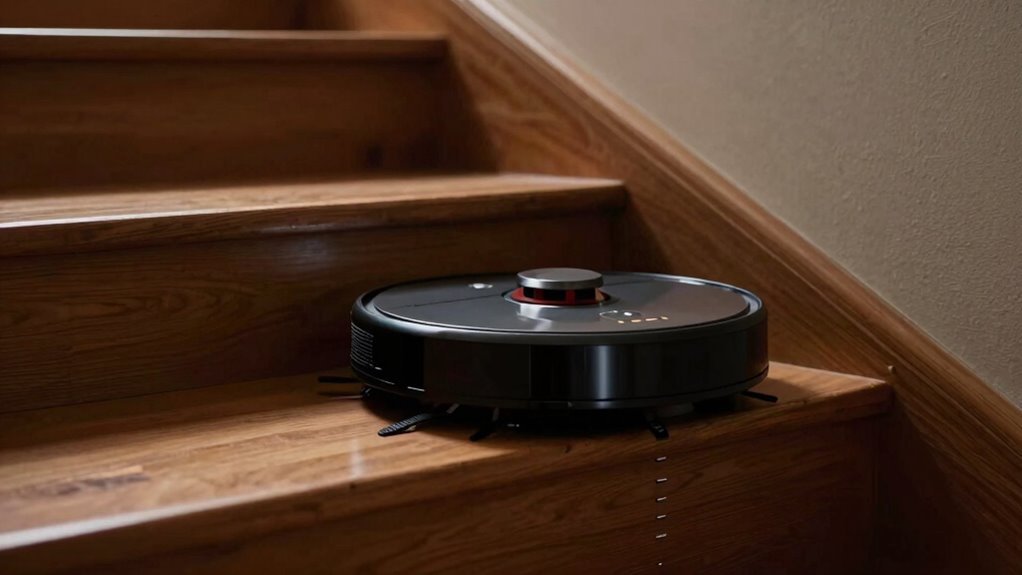
How do these little robo-vacs “see” the edge of a staircase without tumbling down like a clumsy cat? They use smart cliff sensors on their underside that shoot out invisible infrared light and watch how it bounces back.
Strong reflection? Solid floor — keep rolling. Weak return? That’s a cliff — stop fast!
Most models have three sensors in front and on the sides, giving them 360-degree awareness. Some even use ultrasonic time-of-flight tech for super-accurate drop detection, no matter the lighting.
When a drop’s spotted, the robot instantly reverses or turns away, thanks to quick-thinking navigation brains. It’s like having tiny radar eyes always watching the ground!
Just keep them clean — dust can fool them — and avoid super dark rugs, which sometimes trick the bot into seeing fake cliffs.
Sweet, right? Your robo-friend’s got this.
Best Robot Vacuums for Stair Safety
You’ve seen how those little cliff sensors keep your robo-vac from taking a gravity test down the stairs, but what if you want even smarter protection?
Meet the Roborock Saros 10R, your vacuum’s genius upgrade, using StarSight 2.0 to map every nook and avoid drop-offs like a pro.
With LiDAR, SLAM, and RGB cameras, it sees your home in stunning detail, building maps that respect stair edges.
You can even draw no-go zones in the app—perfect for tricky landings.
Multiple cliff sensors plus AI navigation mean double-duty safety, so it won’t flirt with ledges.
Models like the Qrevo Curv and Saros 10 handle obstacles smoothly while keeping clear of danger.
They’re not just cautious—they’re clever, spotting over 200 objects to dodge.
With these advanced features, your robot won’t just clean smarter—it’ll stay firmly on solid ground, not halfway down your stairs in a sad, beeping pile.
Tips to Prevent Stair Falls
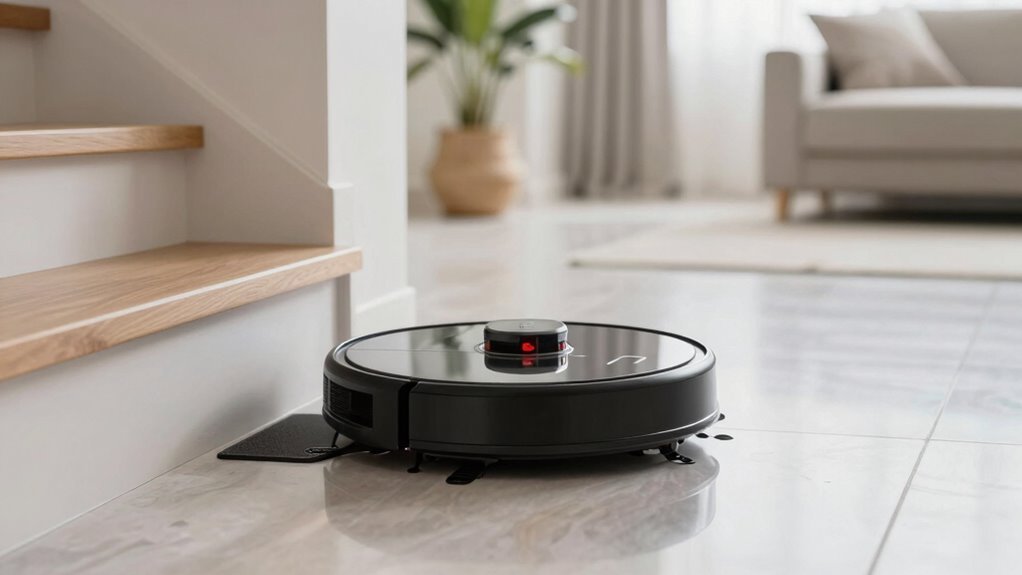
Ever wonder how your robot vacuum manages to dodge stairwells like an action hero avoiding traps?
That’s all thanks to smart cliff sensors that use infrared beams to detect drops.
You should wipe them with a soft, dry cloth before each clean—they spot height changes as small as 30mm!
If your floors are dusty or dimly lit, this step’s a must.
In the app, drag virtual barriers around staircases so your bot knows “no-go” zones.
Models with LiDAR 4.0 or AINA 2.0 make this extra reliable.
For backup, install baby gates or magnetic strips near edges.
Clear toys and wires nearby, and avoid wet floors—they can trick sensors.
Run it in daylight for best results, and set no-go zones on plush carpets or ledges.
With these tricks, your robo-vac becomes a stair-dodging ninja!
What to Do If It Falls Downstairs
So your robot vacuum took a tumble down the stairs—don’t panic, it happens to the best of them, even the ones with serious tech swagger.
First, turn it off right away to avoid more damage.
Check the body for cracks, inspect the wheels, and make sure nothing’s loose or bent.
Peek at those cliff sensors—they’re tiny but mighty, and a knock can throw them off.
Snap some photos of any damage, just in case.
Then, power it back on and see how it moves—does it roll straight?
Turn smoothly?
Respond to commands?
Test it near the stairs (supervised, please!) to check if it still “sees” the drop.
Wipe the sensors clean and realign if needed.
If it’s acting funky or making odd noises, contact the manufacturer.
Most will help—especially if you’ve got photos and a fun story about gravity winning.
Frequently Asked Questions
Can Robot Vacuums Handle Dark Carpet Edges Near Stairs?
Yeah, most robot vacuums can handle dark carpet edges near stairs, but sometimes they get a little confused.
The sensors usually work great, though dark fibers can trick them since they soak up light like a sponge.
Don’t sweat it—newer models use smart cameras, LiDAR, and AI to stay sharp.
Just toss up a virtual boundary or clean the sensors now and then.
They’ve got your back, no tumble jokes needed!
Do Stair Falls Void the Robot Vacuum’s Warranty?
Nope, stair falls don’t void your warranty—they’re actually a red flag the sensors might be broken, not you doing something wrong.
Think of it like a check-engine light: your Roomba’s crying for help, not punishment.
Just don’t poke around inside it yourself—no DIY tape fixes or foil hats—unless you wanna kill the warranty.
Call support first, play it cool, and let them fix their bot’s brain.
Are Robot Vacuums Safe Around Pets on Upper Floors?
Yes, robot vacuums are generally safe around pets on upper floors—if you take a few smart steps.
You’ll want to keep an eye on curious cats or clumsy pups, since tails and whiskers can sometimes get tangled.
Most models avoid drops and obstacles, but let’s be real: pets don’t always follow the rules!
Acclimate them slowly, clear the area, and you’ll all enjoy cleaner floors—without the drama.
Can I Disable Cliff Sensors for Specific Cleaning Tasks?
You *could* disable cliff sensors, sure—because nothing says “cleaning pro” like a vacuum taking a nosedive!
But seriously, you can tape over the sensors with white paper to stop false triggers on dark floors, just don’t forget to remove it afterward.
No software switch exists, so be careful.
And hey, unless your home’s stair-free, maybe let the robot keep its survival instincts intact, yeah?
Safety first, daredevil.
Do Falls Cause Long-Term Damage to the Battery?
No, falls usually don’t wreck your robot’s battery long-term.
You’ll likely dodge permanent damage, especially after a single tumble.
Though impacts can jostle the battery or misalign contacts, the real danger comes from repeated drops or bad landings.
Cracked casings? Rare.
Battery life fading fast? Probably not the fall’s fault.
Just check connections, keep it charged, and your little cleaner’ll bounce back—way more resilient than you’d think!
Conclusion
You’re sipping coffee, robot’s zipping across the floor—coincidentally, it stops just inches from the stairs. Phew! Cliff sensors work like magic, but sometimes dirt or bad angles trick them. Still, most top models dodge drops like pros. Keep sensors clean, guide with boundaries, and laugh it off if it takes a tumble—these little robo-acrobats usually survive. After all, staying upright is a team effort, and you’ve both got this!
References
- https://technori.com/2025/04/21965-robot-vacuum-can-now-climb-stairs/marcus/
- https://ca.narwal.com/blogs/robot-vacuum/robot-vacuum-fall-down-stairs
- https://www.ecovacs.com/us/blog/will-robot-vacuums-fall-down-stairs
- https://www.techtimes.com/articles/313856/20260108/ces-2026-roborock-saros-rover-robot-vacuum-conquers-stairs-obstacles-like-never-before.htm
- https://www.youtube.com/watch?v=b14Ic7t45lg
- https://vacuumwars.com/the-rise-of-the-stair-climbing-robot-vacuum-ifa-2025/
- https://www.youtube.com/watch?v=cgNPSMY6JOk&vl=en
- https://www.tapo.com/us/faq/254/
- https://www.vigi.com/cl/support/faq/3464/
- https://www.tp-link.com/us/support/faq/3464/