Are Self-Emptying Stations Worth It?
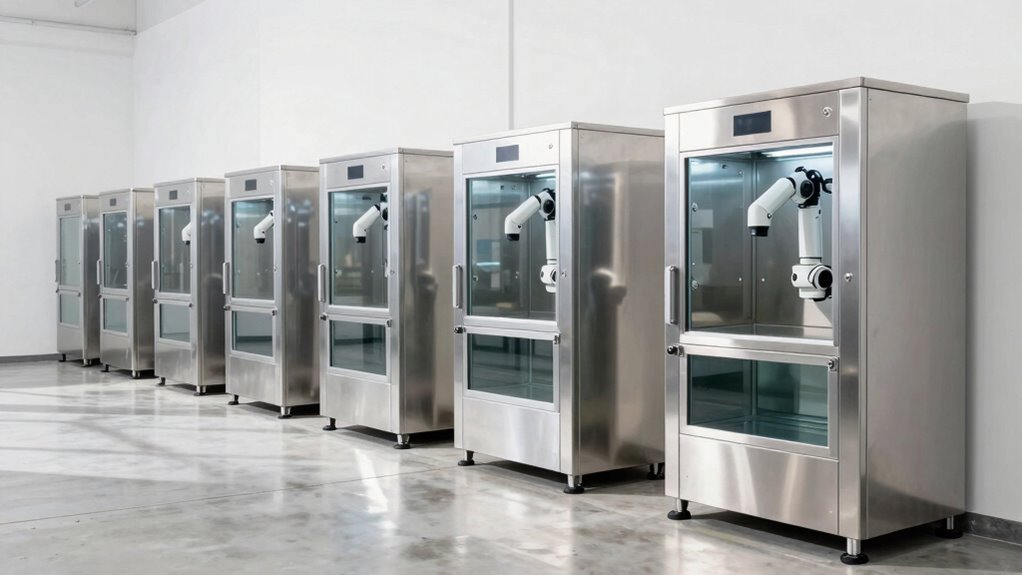
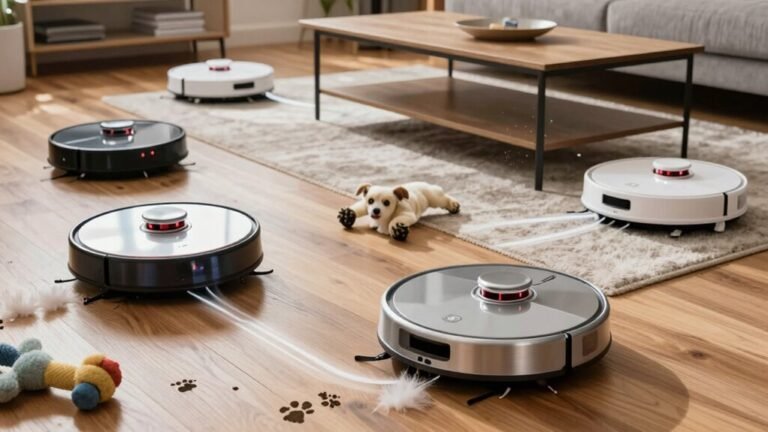
Self-emptying stations are a game-changer for robot vacuums. You can skip the dusty chore of emptying your robot’s bin every few days—just let it dock and *poof*, the base sucks debris into a sealed bag, no sneezing or mess.
It’s like magic for your floors, especially if you’ve got pets or hate weekly chores. The self-emptying station automatically handles the gunk, letting you go weeks without touching it.
Sure, the base costs more and needs space, but the convenience is unmatched. Think of the time and effort saved not dealing with dirty bins—sounds pretty sweet, right? There’s even more to love—keep going to hear the full scoop.
What Is a Self-Emptying Station?
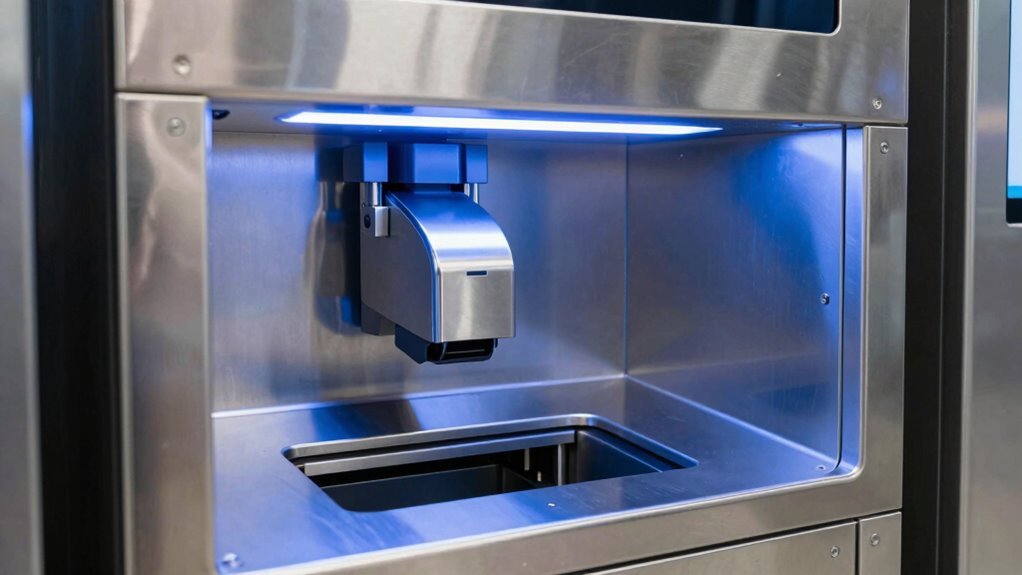
You’ve probably seen one without even realizing it—a sleek robot vacuum that not only cleans your floors but also dumps its own dirt.
That magic trick? It’s all thanks to the self-emptying station.
Think of it as a smart little home base where your robot empties its bin after every run.
You come home, and boom—no full dustbin to deal with.
Most stations use a powerful suction system to pull debris from the robot into a sealed bag that holds weeks’ worth of junk.
Seriously, you might forget it’s even there until the “hey, take me out” light comes on.
It’s like having a tiny, silent cleaning butler.
And no, it doesn’t judge your crumbs.
These stations cut down on mess and fuss, making robot vacuums way more convenient—especially if you’ve got pets, kids, or a love for zero-effort chores.
It’s not just smart; it’s lazily brilliant.
How Does the Self-Emptying Base Actually Work?
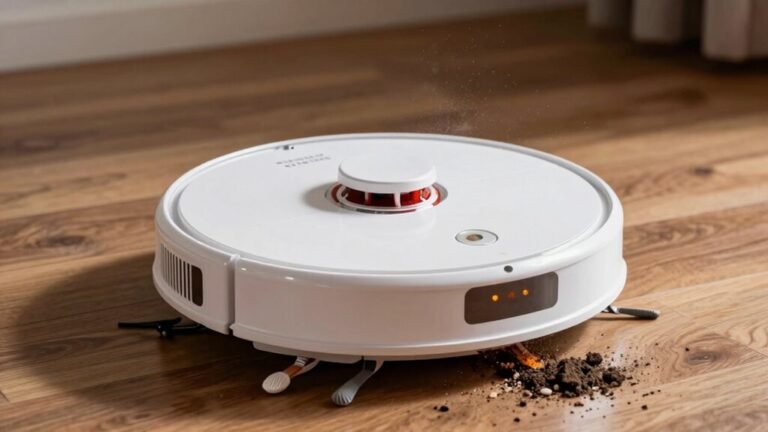
How does your robot vacuum pull off that neat trick of ditch penalizing dirt without lifting a finger? When it docks, a strong motor in the base kicks on, creating suction that blasts out dust and debris through a nozzle—like a tiny, high-powered sneeze.
Your vacuum’s bin aligns perfectly with the station’s seal, so nothing spills.
The dirt gets shoved into a large, sealed bag inside the base, holding weeks’ worth of grime.
That bag’s airtight, so dust mites and pet hair stay trapped—no mess, no smells.
It’s basically a trash chute for your robot, minus the space junk.
Each time your bot returns, it empties itself automatically—no touching grimy bins.
Think of it as magic, but better: it’s engineering, convenience, and a little robot pride all rolled into one.
You get clean floors and cleaner hands!
Less Emptying, More Convenience: Top Benefits
That little sneeze from your robot’s base? That’s you enjoying one less chore.
With a self-emptying station, you skip the daily dustbin dumps—no more scrambling to empty it before it overfills.
Just let your robot do its thing, and it quietly zips back, sneezes debris into the base, and you’re good for weeks.
Imagine going on vacation and not coming home to a full bin.
Or hosting guests without a last-minute cleanup panic.
It’s not magic, but it sure feels like it.
You save time, avoid dust clouds, and keep your floors cleaner with less effort.
Less hassle, more “ahhh.”
Plus, who doesn’t love a gadget that practically takes care of itself?
You’ve got enough on your plate—why not let your robot handle this one?
It’s convenience that actually earns its keep.
What Are the Downsides of Self-Emptying Bases?
| Cost | Space | Maintenance |
|---|---|---|
| High price tag | Bulky base unit | Empty dustbin every 60 days |
| Extra for replacement bags | Needs floor space near wall | Clean filters monthly |
| Ongoing bag refills | Can’t tuck under furniture | Wipe sensors regularly |
| Biggest investment | Not portable | Check for clogs weekly |
You trade cash and corner space for convenience. Worth it? Maybe—but know what you’re signing up for.
Best For Pet Owners and Busy Households
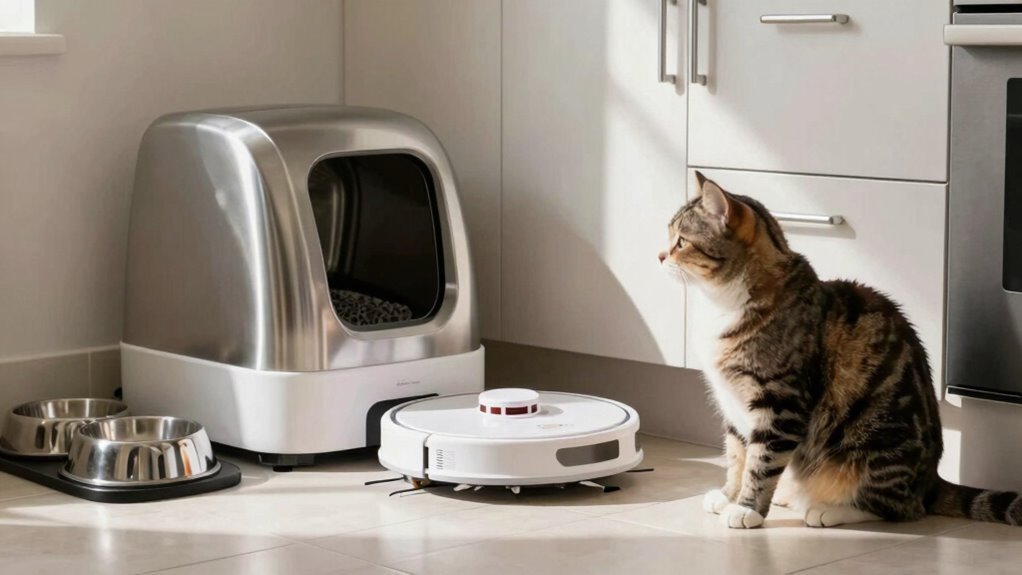
Ever wonder how some homes stay spotless even with pets zooming around and life moving at full speed? You’re juggling work, kids, and maybe a dog who sheds like it’s their job—yet your floors look magazine-ready.
Here’s the secret: self-emptying stations. They automatically suck dirt into a disposable bag, so you’re not constantly lugging the vacuum to the trash.
Say goodbye to stepping on kibble at midnight or finding cat hair tumbleweeds by the couch. These stations run daily, keeping messes under control without you lifting a finger.
They’re like having a tiny, silent roommate who actually cleans up after itself—no dishes, no drama. For pet owners, it means less dander and more snuggle time.
For busy households, it’s peace of mind. You stay free to focus on what matters—like why your dog barks at the vacuum but trusts this thing completely. Magic? Almost.
How Much Do Self-Emptying Stations Cost?
You’ll usually find self-emptying stations priced between $700 and $1,200, depending on the brand and features—yep, it’s a bit like buying a mini robot butler with a trust fund.
You’re not just paying for convenience; you’re upgrading your whole cleaning game.
These base stations automatically suck up dirt from your robot vac, holding it for weeks, so you don’t have to touch grimy dustbins.
Sounds fancy, right?
But brands like Roborock, iRobot, and Eufy offer models across that range, each with neat extras—some seal bags tightly, others boast sleek designs that blend into your home.
Yeah, it’s a chunk of change, but think of it as a long-term splurge that saves time and gross cleanups.
You’ll skip emptying bins weekly, which, honestly, is kind of a win.
It’s like having a tiny janitor who never complains—just quietly works while you binge your favorite show.
Are the Replacement Bags Costly?
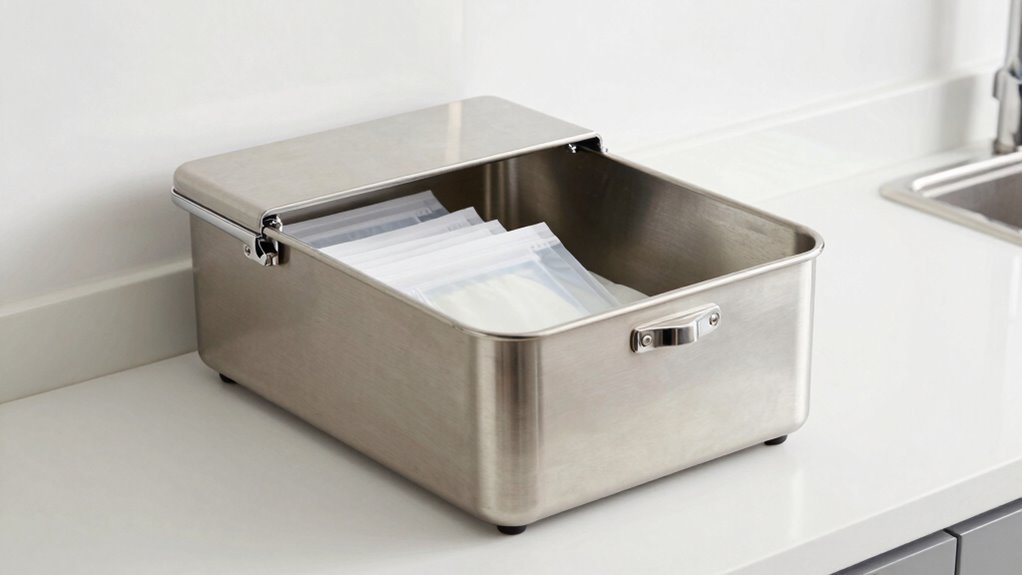
How much do those magic bags really cost once the honeymoon with your self-emptying station fades?
You’ll swap them out every few weeks, depending on how dusty your floors are—or how much your dog sheds.
Most brands sell packs of 5 to 10, and yep, they add up.
You’re looking at $20 to $40 per pack, lasting about 2 to 3 months.
That’s $100–$160 a year, sneaking up like a ninja in fuzzy slippers.
But hey, is it worth skipping the dustpan dance?
For many, absolutely.
Think of it as paying for peace of mind—and clean air.
Some bags even trap odors and allergens like tiny vacuum-powered superheroes.
Sure, they’re not free, but you’re not just buying bags, you’re buying time, convenience, and a little joy every time you say, “Nope, not touching that dirt.”
Worth it?
For you, maybe just enough.
Which Robot Vacuums Work With Self-Emptying Bases?
Alright, you’ve weighed the cost of those fancy self-emptying bags—now let’s talk about the star of the show: your robot vacuum.
You’ll love how models like the Roomba j7+, Roborock S8, and Ecovacs Deebot X2 sync perfectly with their self-emptying docks.
Just send them off to clean, and when they’re done, they hustle back to dump their dirt—no fuss, no mess.
Think of it like having a tiny janitor who also takes out the trash.
Most top-tier bots today support auto-empty bases, but always double-check compatibility before buying.
Don’t risk ending up with a robot that can’t empty itself—kind of defeats the purpose, right?
With the right match, your home stays cleaner and you stay free of dusty bin duty for weeks.
It’s like magic, minus the wand.
So pick your favorite, link it to the base, and enjoy the future of floor cleaning.
You’ve earned it.
How Do Self-Emptying Stations Perform Daily?
Ever wonder what happens after your robot vacuum zips back to its dock?
You kick back, but the real magic’s just getting started.
With a self-emptying station, your little cleaner dumps all that dust, hair, and mystery crumbs into a sealed bag—no mess, no fuss.
It’s like giving your vacuum its own trash can but way smarter.
- The base sucksdebris from the robot in seconds, using strong suction so you don’t have to.
- You only need to swap the bag every 30 days or so—set it and forget it.
- No more holding your breath while emptying a dusty bin. Phew!
Your floors stay cleaner, your hands stay clean, and your nose stays happy.
It’s the tiny daily win you didn’t know you needed—like a silent helper who never asks for pizza night.
Is a Self-Emptying Station Worth the Upgrade?
You’ve already seen how your robot vacuum teams up with its self-emptying station like a well-rehearsed cleanup crew, whisking dust and debris into a sealed bag without you lifting a finger. So, is it worth upgrading? If you’re tired of weekly dustbin dumps—or sneeze every time you empty it—then absolutely, yes. Think of it as a tiny upgrade with big-time convenience. Plus, your floors stay cleaner longer because the bot keeps going, no human breaks needed.
| Feature | Without Station | With Station |
|---|---|---|
| Emptying Frequency | Every 1–2 runs | Every 30–60 days |
| Allergen Exposure | High (direct contact) | Low (sealed bag) |
| Effort Required | Hands-on weekly | Set and forget |
| Upfront Cost | Lower | Higher, but pays off |
You’re not just buying tech—you’re buying freedom. And maybe more coffee time. Win-win.
Frequently Asked Questions
Can I Use Third-Party Bags With My Self-Emptying Station?
Yes, you can use third-party bags with your self-emptying station, but it’s a bit like feeding your pet goldfish gourmet sushi—fun to try, but not always ideal.
They might fit, but you risk leaks, jams, or the station throwing a silent tantrum.
Brands like iRobot design bags to fit just right, so while third-party options save cash now, they could cost you later—like buying discount umbrellas in a hurricane.
Stick with recommended ones for smooth sailing.
Do Self-Emptying Stations Work With Older Robot Vacuum Models?
Yes, you can connect older robot vacuums to self-emptying stations, but it’s like fitting a square peg in a round hole—frustrating and often futile.
Most docks are built for specific models, so check compatibility first.
Your vintage bot might shine solo, but pairing it with a modern station? Probably a no-go.
Don’t force it—unless you enjoy robot drama.
How Often Should I Clean the Self-Emptying Base?
You should clean the self-emptying base every two to three weeks, or whenever it starts looking full—don’t wait till it’s erupting like a dust volcano!
Empty the dustbin, wipe the chute with a dry cloth, and check the filter.
A quick once-over keeps suction strong and prevents clogs.
Think of it like brushing your robot’s teeth—gross if ignored, easy when routine!
Your vacuum will thank you with smoother, smarter cleanups every time.
Are Self-Emptying Bases Noisy When Emptying the Bin?
Yeah, the base gets a little noisy when it empties—think of it as your robot’s nightly roar, like a tiny vacuum dragon clearing its throat.
You’ll hear a whoosh and hum for about 20 seconds, then it’s done.
It’s not loud enough to wake you, but it’ll make its presence known.
Just don’t expect silent stealth—you *are* launching a mini dust tornado, after all!
Can I Turn off the Auto-Empty Feature Manually?
Yep, you can totally turn off the auto-empty feature anytime—you’ve got full control!
Just open the app, tweak the settings, and boom, your robot stays put until you say go.
It’s perfect for movie nights or when you just need some quiet.
Think of it like giving your robo-pal a coffee break.
Easy, flexible, and totally stress-free.
You’re the boss!
Conclusion
You’d be crazy not to weigh a self-emptying station if you hate chores, because it’s like setting your vacuum on autopilot and walking away. You save time, skip the dust drama, and keep your floors clean with almost zero effort. Sure, the bags add up, but isn’t freedom from scooping gunk every few days worth it? For pet owners and busy folks, this upgrade’s a total game-changer—call it laziness with benefits.