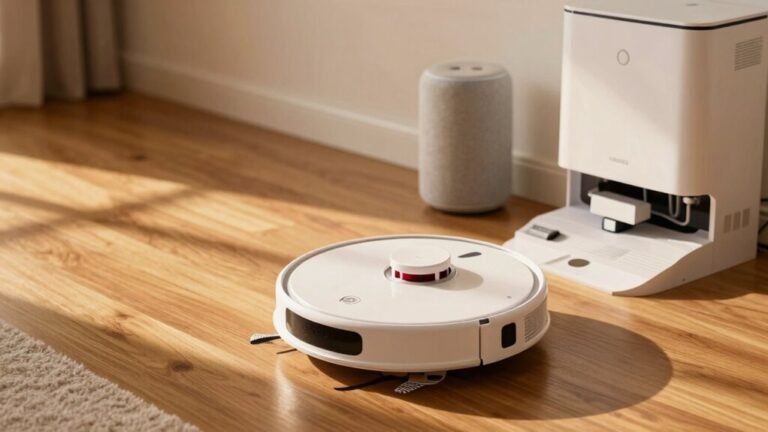
Smart Mapping vs Non-Mapping Robot Vacuums: Pros & Cons
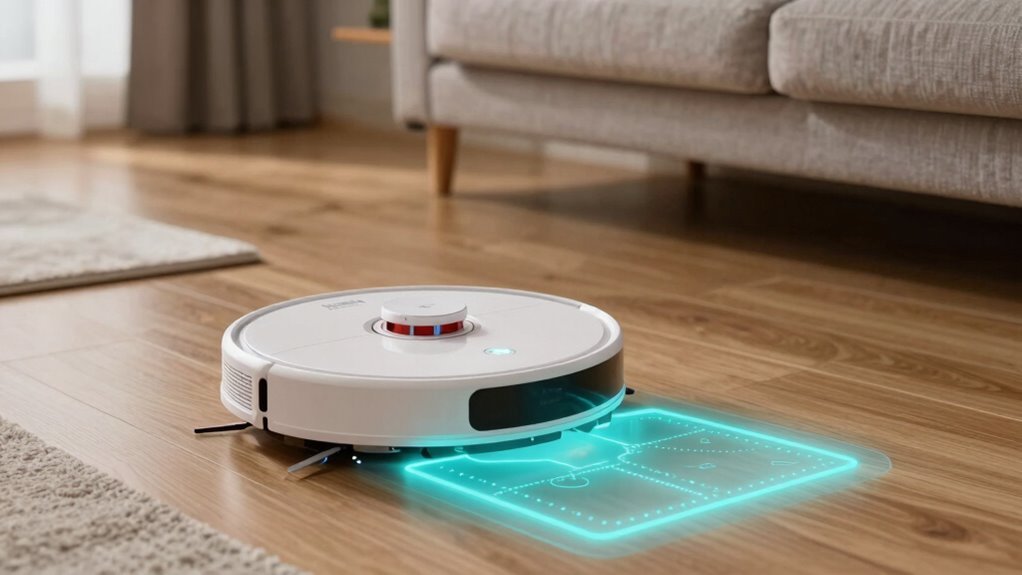
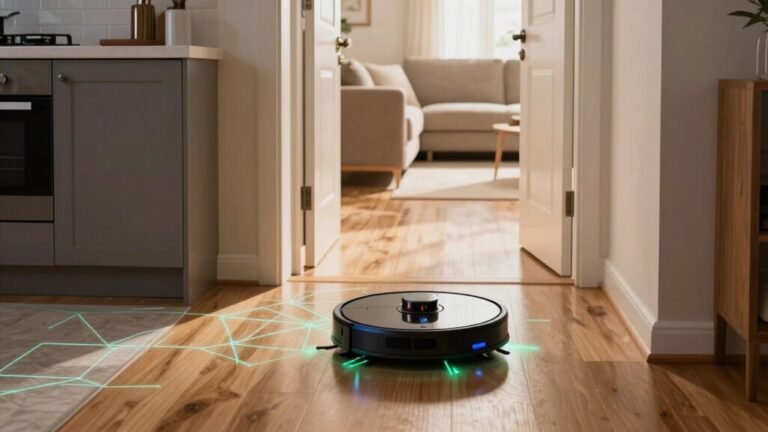
When choosing between smart mapping and non-mapping robot vacuums, it’s important to understand how each type operates. Smart mapping robot vacuums use lasers and cameras to scan their surroundings, create accurate maps, and plan efficient cleaning routes.
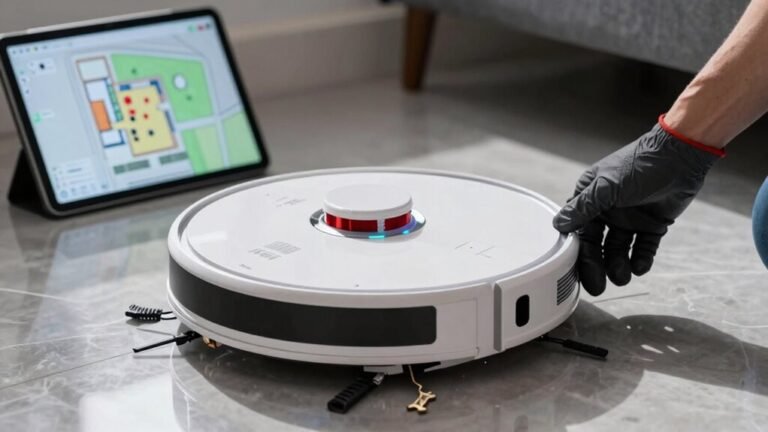
These models excel at avoiding obstacles like socks and cords, and they remember room layouts—ideal for large or complex floor plans. With smart mapping, you can set no-go zones, schedule cleanings by room, and enjoy consistent coverage.
Non-mapping robot vacuums, in contrast, move randomly around your space, bouncing off furniture like robo-pinballs. They’re simpler and more affordable, making them a solid choice for small, clutter-free apartments.
While they get the job done over time, they lack the precision and efficiency of a smart mapping robot vacuum. One is a strategic superstar, the other a budget buddy—your lifestyle and home layout will determine the best fit.
Mapping vs Non-Mapping: Which Robot Vacuum Is Right for You?
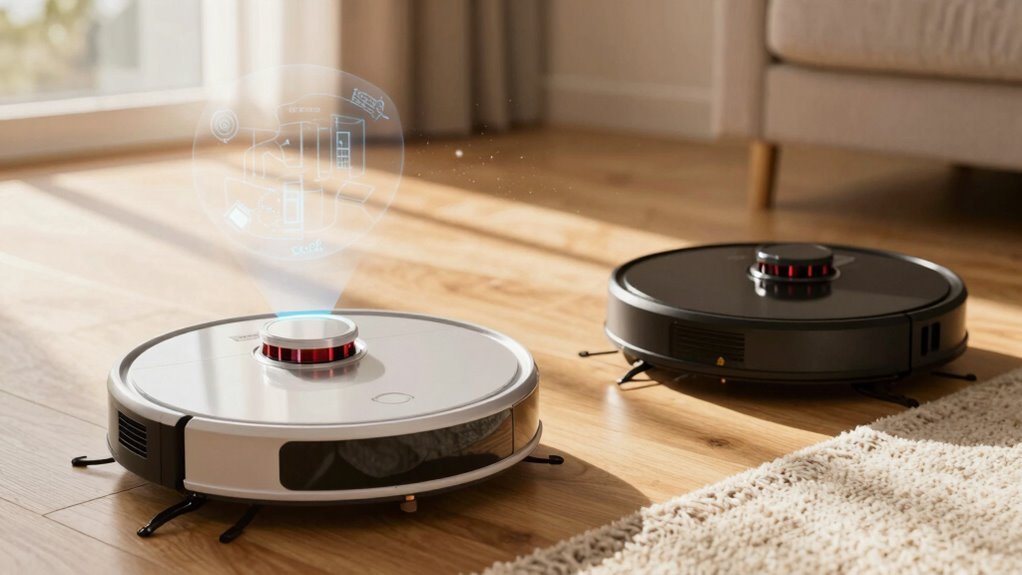
So, how do you choose the right robot vacuum when the options seem to multiply faster than your pile of laundry?
If your home’s a maze of furniture, toys, and pet bowls, mapping vacuums are your best friend—they map rooms, dodge obstacles, and clean efficiently without looping through the same spot five times.
They’re great for multi-floor homes and let you set no-go zones, so your robot won’t interrupt dinner by charging at the dog’s water bowl.
Sure, they cost more and need light to map, but they save time and battery.
If you’ve got a small, simple space and want something cheap and easy, non-mapping models work fine—just don’t expect precision.
They bounce around randomly, miss spots, and bump into tables, but hey, they still clean.
Choose based on your space, budget, and love of order—or chaos.
These advanced models use LIDAR mapping to create accurate floor plans and navigate with precision.
How Mapping Vacuums Map Your Home
Ever wonder how your robot vacuum suddenly became the Einstein of floor cleaners?
It’s not magic—it’s high-tech smarts!
Your bot uses clever sensors and brainy algorithms to map every nook and cranny like a tiny robot cartographer.
Here’s how it works:
- It scans with LiDAR or cameras, spinning 306 degrees to catch walls, furniture, and even your lost socks.
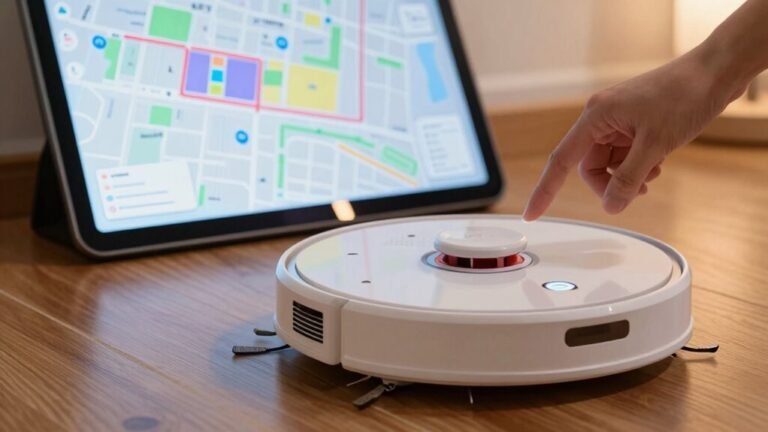
- It thinks fast, processing data in milliseconds to build a precise digital map of your home.
- It learns and remembers, saving layouts so it knows the living room from the kitchen—and resumes right where it left off.
- It adapts on the fly, dodging obstacles, adjusting paths, and avoiding stair drops like a pro.
With dToF lasers, infrared eyes, and AI know-how, your vacuum doesn’t just clean—it *understands*. Who knew your floor had a fan that smart?
This advanced navigation is powered by systems like AINA 2.0, which enables real-time path planning and smarter obstacle avoidance.
How Non-Mapping Vacuums Find Their Way
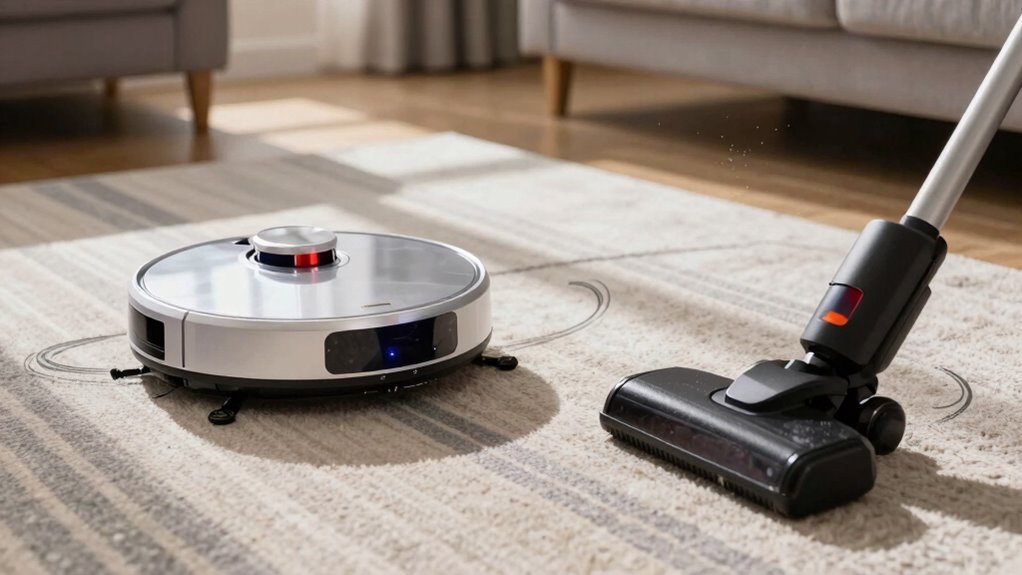
How does your robot vacuum zigzag across the room like a pinball with a cleaning obsession? Well, even without smart maps, it’s not just blindly bumping around—most non-mapping models rely on clever sensors and basic navigation tricks to get the job done. They use bump sensors, gyroscopes, infrared walls, and even ultrasonic tech to dodge obstacles and cover ground, sort of like a determined roach with direction issues.
Here’s how key systems stack up:
| Navigation Type | Key Sensors Involved | Smarts Level |
|---|---|---|
| Random Bounce | Bump, cliff | Low—luck-based path |
| Gyroscope & IMU | Gyro, accelerometer, wheel encoders | Medium—tracks turns |
| Wall Following | Infrared, bump | Medium—hugs edges |
| Ultrasonic ToF | Ultrasonic, cliff | High—sees objects |
| Sensor Fusion | Multiple, IMU, ToF | Moderate—teamwork! |
It’s not flawless, but hey—it’s trying.
Why Smart Mapping Works for Large or Multi-Room Homes
What if your robot vacuum could remember where the coffee table leg is—or better yet, stop treating your sock like a mysterious mountain to be avoided?
With smart mapping, your robot doesn’t just wander—it *knows* your space.
Perfect for large or multi-room homes, it tackles chaos with brains, not luck.
Here’s how:
- It plans efficient, neat rows across floors and rooms, so no corner gets forgotten.
- It adapts in real time, dodging obstacles and climbing thresholds like a pro explorer.
- You can schedule cleanups for specific rooms—say, “Hey Google, clean the living room”—and it obeys.
- It stores up to three unique maps, so your basement, main floor, and upstairs all get VIP treatment.
Plus, self-emptying bases and automatic mop washing mean less work for you. Smart mapping doesn’t just clean—it *learns*, making your big home feel effortlessly tidy.
Why Non-Mapping Vacuums Fit Small, Simple Spaces
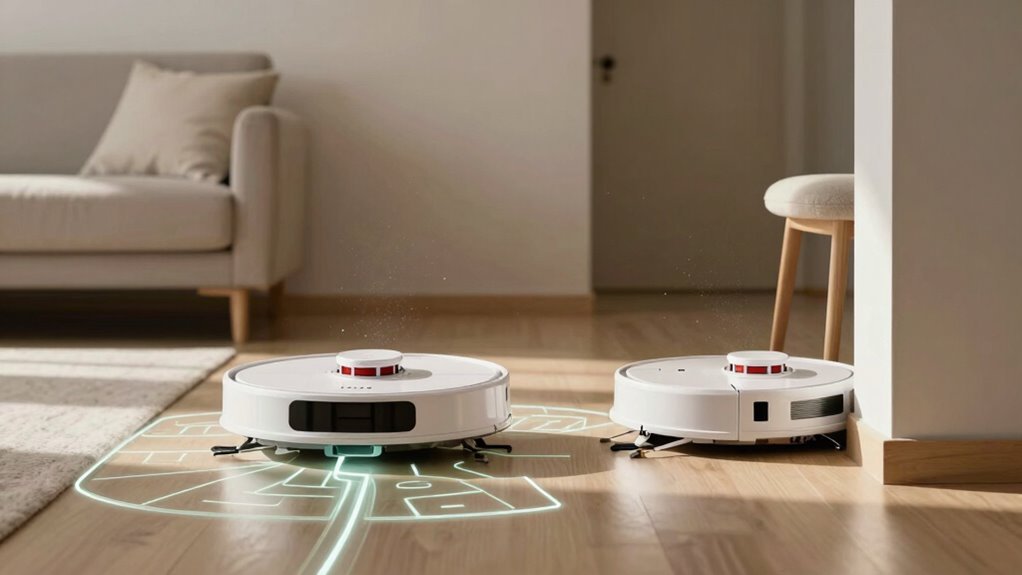
Even if your apartment is so small that your pet goldfish has a better view of the living room than you do, a non-mapping robot vacuum can still make cleaning a breeze.
You’ll love how its slim, round design zips under beds and sofas, squeezing into tight spots without a fuss.
There’s no setup stress—just hit start and go. It randomly navigates, but in your cozy space, that’s plenty.
Without pricey mapping tech, it’s affordable and perfect for basic messes like crumbs or pet hair.
You won’t need a base station cluttering your floor, and emptying the bin is quick.
Lightweight and low-maintenance, it’s ideal if you don’t have pets or deep-pile rugs.
It handles bare floors and low-pile rugs with ease, cutting down daily dust without extra cost or complexity.
For simple spaces, this little guy just works—no headaches, all hustle.
Are Mapping Vacuums Worth the Extra Cost?
Ever wonder if your robot vacuum should come with a GPS? Spoiler: it’s a game-changer.
Mapping vacuums aren’t just fancy—they’re smart little helpers that actually know where they’re going.
Here’s why the extra cost might be your home’s best upgrade:
- They zap around like vacuum ninjas, using LiDAR to map every inch and avoid your cat’s third water bowl of the day.
- Need the kitchen cleaned at 9 a.m. and the living room at 6 p.m.? Set room-specific schedules and let it handle the rest.
- Virtual walls keep it out of “no-go zones,” so it won’t drag crumbs through your clean dining area.
- With self-emptying bins and mopping combos, you’ll forget it’s even there—until your floors sparkle.
You’re not just buying a robot; you’re hiring a tiny, tireless cleaning assistant. Worth it? Absolutely.
Frequently Asked Questions
Can Robot Vacuums Work in the Dark?
Yes, you can totally run your robot vacuum in the dark—no nightlight needed!
It zips around using laser eyes, infrared tricks, and smart brains to map every nook.
Even pitch-black rooms won’t stop it, thanks to self-sent light pulses and clever algorithms.
Just hit start and let it ninja-clean your floors while you sleep.
Dark? No problem—it’s got this!
Do They Clean Under Furniture Effectively?
You’d think your robo-vac was a ninja, sneaking under furniture like it’s on a secret mission!
With slim bodies and smart navigation, it zips under couches and beds, sucking up dust bunnies you didn’t even know existed.
Retractable legs help it glide under tiny gaps, while powerful suction grabs every crumb.
Just move the toys and wires, and boom — clean floors from wall to wall, no area left behind!
How Often Do Filters Need Cleaning?
You should clean your robot vacuum’s filter every few cycles—usually every 5th run—to keep suction strong and dust out.
If you’ve got pets or long hair, you’ll want to check it weekly, maybe twice.
Rinse washable ones every month or two, let ‘em dry fully, and you’re golden.
Think of it like brushing your robot’s teeth—skimp on it, and things get stinky fast!
Are They Safe Around Pets and Kids?
Yeah, they’re totally safe around pets and kids!
You’ll love how they dodge toys, avoid little toes, and won’t startled your cat with surprise zoomies.
Soft edges and slow speeds mean no rough bumps, and smart models even lift mops to keep floors from getting slick.
Schedule cleanings when everyone’s napping, and voilà—clean floors without the circus!
Can They Detect Small Obstacles Like Socks?
You bet they can—some glide around socks like a ninja sneaking through a toy minefield!
If you’ve got a smart model, it’s using cameras, lasers, and brainy sensors to spot those stray socks and skip ‘em.
Even on carpet, high-end bots like the Saros Z70 or S8 Pro Ultra won’t get tripped up, while basic bots?
They’ll likely bulldoze right into your laundry.
Conclusion
You’ve got places to go, and so does your robot vacuum! Did you know mapping models clean 30% faster? That’s right—smarter routes mean less bumping and more zipping. If your home’s big or full of rooms, mapping’s your buddy. But hey, if you’re rocking a cozy studio, a non-mapping model might save cash *and* do the job. Either way, your floors win—no socks required.
References
- https://us.3itech.com/blogs/news/how-does-robot-vacuum-mapping-work
- https://au.narwal.com/blogs/product/mapping-vs-no-mapping
- https://techsalesonline.com.au/blogs/articles/understanding-your-robot-vacuums-intelligence-from-mapping-to-scheduling
- https://in.dreametech.com/blogs/tips-tricks/how-robot-vacuum-navigation-works-sensors-mapping-smart-cleaning-explained
- https://www.ecovacs.com/us/blog/different-navigation-types-in-robot-vacuum
- https://www.therobotreport.com/sensor-breakdown-how-robot-vacuums-navigate-and-clean/
- https://www.youtube.com/watch?v=f8wdri2DpEY
- https://www.ecovacs.com/us/blog/how-does-robot-vacuum-mapping-work
- https://uk.vactidy.com/blogs/news/how-smart-robot-vacuums-actually-navigate-your-home-mapping-tech-explained
- https://uk.ultenic.com/blogs/news/smart-home-robotic-vacuum-lidar-tech-navigation-guide