Do Robot Vacuums Scare Pets? How to Introduce Them
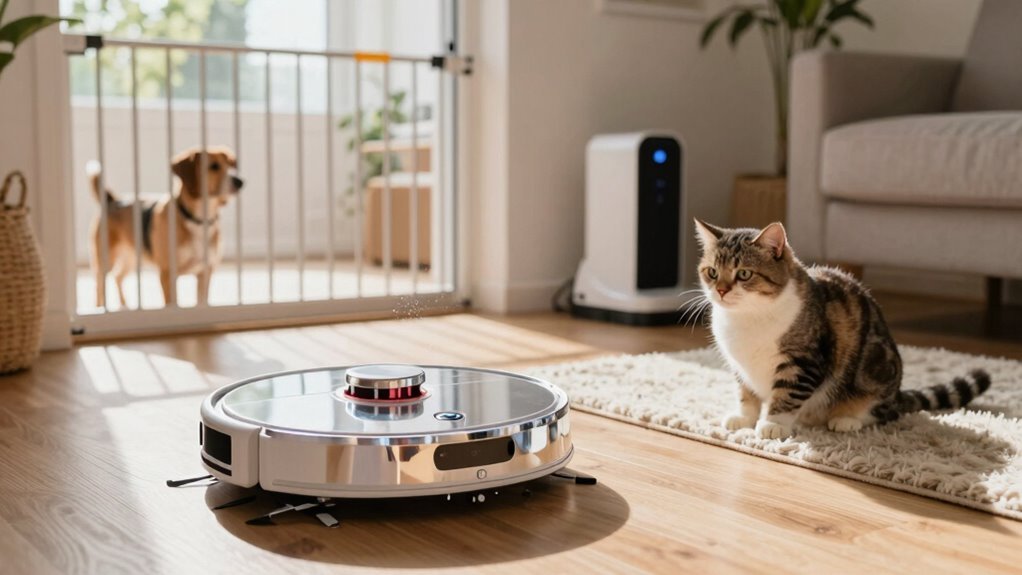
Yeah, robot vacuums can spook pets at first—your dog might bark at the “zombie toaster,” and your cat may leap like it’s dodging a tiny tank. This reaction is common, but with patience, most pets adjust well to the new device in their space.
Start by letting your pets sniff the robot vacuum when it’s turned off, allowing them to explore it at their own pace. Once they seem curious rather than fearful, turn it on and let it hum in place without moving.
Gradually introduce movement, keeping sessions short and rewarding calm behavior with treats. Using baby gates and choosing a quiet model under 60 dB can also reduce stress during the adjustment period.
Schedule cleanings when your pets are distracted or in another room to build positive associations. With consistent, positive exposure, your pets will likely stop reacting and may even ignore the robot vacuum altogether.
Know Why Pets Fear Robot Vacuums
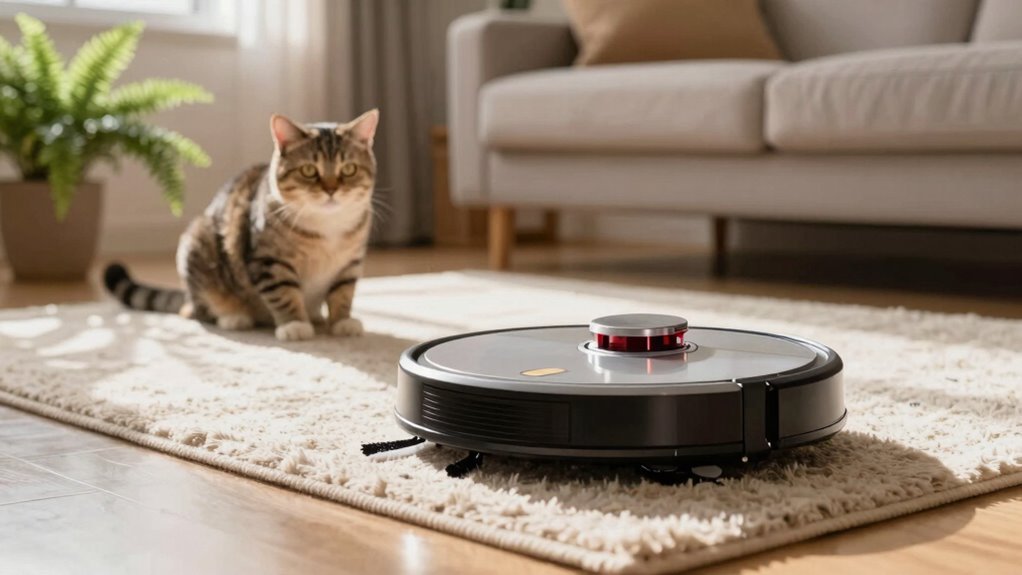
While it might seem like your pup or kitty is overreacting, there’s real science behind why robot vacuums send some pets into full-on panic mode—and it’s not just because they’re plotting world domination (though they do zip around like tiny robo-invaders).
Your dog’s ears pick up way more sound than yours, so that loud, sudden hum feels like a sonic attack.
Cats? They’re freaked out by low rumbles that seem threatening.
The jerky movements, random bumps, and weird vibrations through the floor make the vacuum feel alive—like a mysterious creature invading their space.
Suction blasts can yank their fur, hot air stinks up the room with dusty smells, and since these machines don’t follow patterns, there’s zero predictability.
If your pet didn’t meet a vacuum gently as a youngster, they’re probably never learned to trust it.
Little wonder they’d rather flee than befriend it!
See How Cats and Dogs React Differently
You’ve seen how robot vacuums can spook pets with their zippy moves and busy hums, but here’s the fun part—watching how cats and dogs react once the initial surprise wears off.
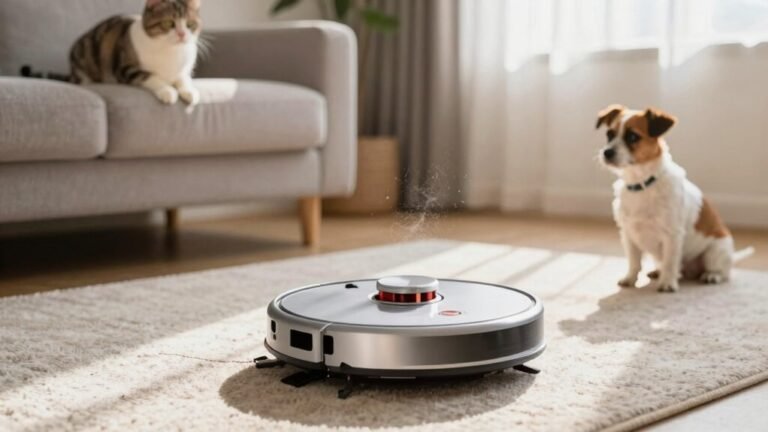
Cats usually go from curious to cool real quick, sniffing and pawing before deciding the vacuum’s just a weird hairless buddy.
They prefer to watch from the couch or a high perch, chilling like tiny overlords.
Dogs? Oh, they dive right in—barking, chasing, even trying to herd the little machine like it’s a sheep.
Some play guard dog, others treat it like a toy.
But don’t worry, they both adapt fast.
Cats zone out within days; dogs tone down the drama after a few runs.
Eighty percent of cats stay calm, and 70% of dogs want to play.
It’s like comedy night in your living room—quiet, quirky, and oddly sweet.
The vacuum operates without causing sudden disturbances, so pets relax as it moves without frightening cats.
Watch for Stress Around Robot Vacuums
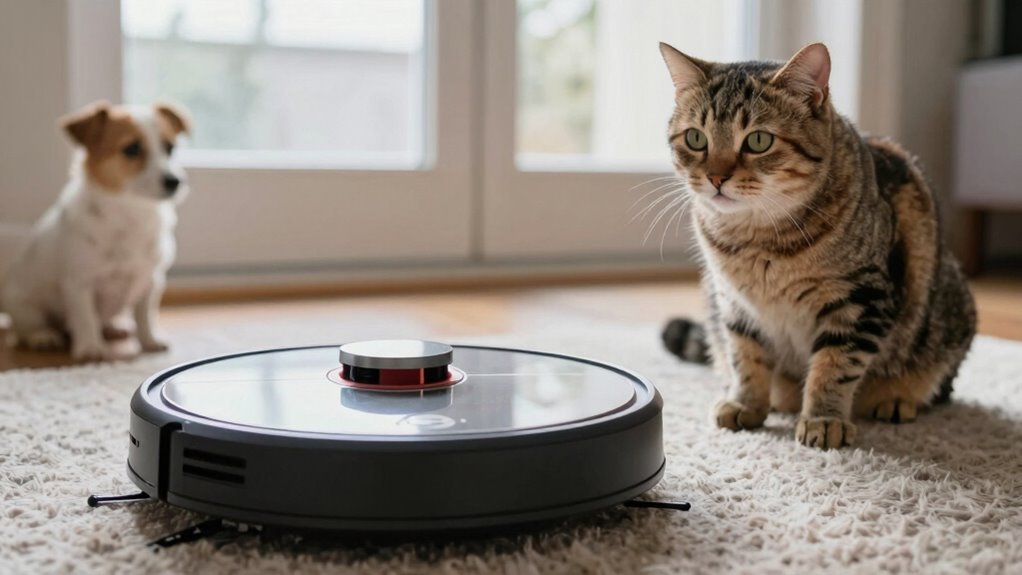
Ever wonder why your pup suddenly bolts for the hills when the robot vacuum whirs to life? That startled shake, frantic barking, or mad dash under the couch means your pet’s stressed.
Dogs hear high-pitched sounds we can’t—up to 45 kHz—so that 70–90 decibel hum might feel like fireworks.
Vibrations through their paws? That’s like a mini earthquake to them!
Look for tense bodies, dilated pupils, or fast panting; these are clear “I’m scared” signals. Cats might hiss, hide, or even pee in protest.
If your furry friend drools, freezes, or swats, it’s time to pause. Don’t ignore constant meowing or litter box skips—they’re crying out for calm.
Keep an eye out for ongoing hiding or aggression; chronic stress isn’t something to brush off.
Stay alert, stay kind, and remember: your cool new gadget is basically a tiny, noisy alien to them!
Let Your Pet Sniff the Robot First
What if your pet could meet the robot vacuum like it’s just another guest at the house—no drama, no sprinting under the couch? You can make this happen by letting your pet sniff the robot first. Place it in a familiar room, turned off, so your furry buddy can investigate at their own pace. Curiosity beats fear when they’re in charge. Offer treats and praise when they approach—it tells them, “Hey, this thing’s cool!” Here’s how to set it up right:
| Tip | Why It Helps |
|---|---|
| Keep the robot off | No surprises—just sniffing, no zipping! |
| Use high-value treats | Makes the vacuum way more interesting |
| Stay calm and patient | Your energy tells them it’s safe |
Pair this moment with play or snacks, and boom—you’re building a friendship, not a feud.
Let It Hum Without Moving
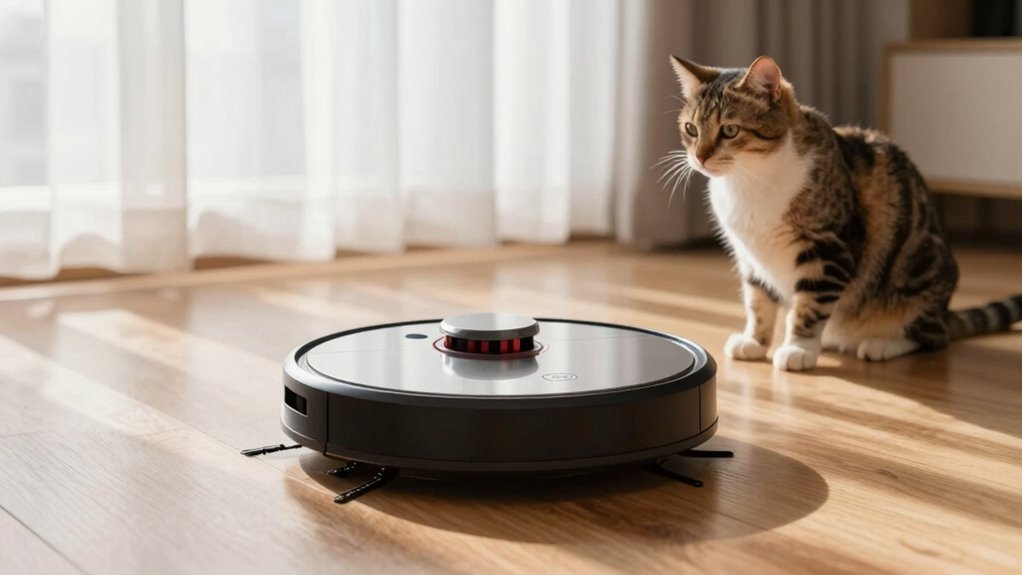
Sometimes, the quietest step makes the biggest difference—so don’t skip letting your robot hum without moving.
Your pet’s ears are way more sensitive than yours, so that gentle buzz might sound like a spaceship landing to them.
Start by turning it on in another room for just a few seconds—no rolling around, just humming.
Think of it as a chill concert where your pet’s the only guest.
Reward calm reactions with treats or praise; pizza for bravery, if you will.
Gradually bring the robot closer over days, always keeping things positive.
If your pet freaks out, no drama—just step back and try again later.
And hey, skip punishment; you’re not judging their taste in music.
Let the hum become background noise, like your off-key shower singing.
Soon, that low drone will feel totally normal—peaceful, even.
Well, peaceful for everyone but the dust bunnies.
Let It Move While You Supervise
Once you’ve aced the art of the hum, it’s time to let your robot roll—literally.
Start with short, supervised runs while your pet’s in another room, just to dip your toes in the robot pool.
Keep an eye out for wide eyes, tucked tails, or dramatic hiding—your dog might act like it’s facing a tiny, rolling monster.
Run 3–5 of these test cycles, watching closely, and only stick around if your pet stays chill.
Gradually let them see the mover-up close, but keep sessions brief at first.
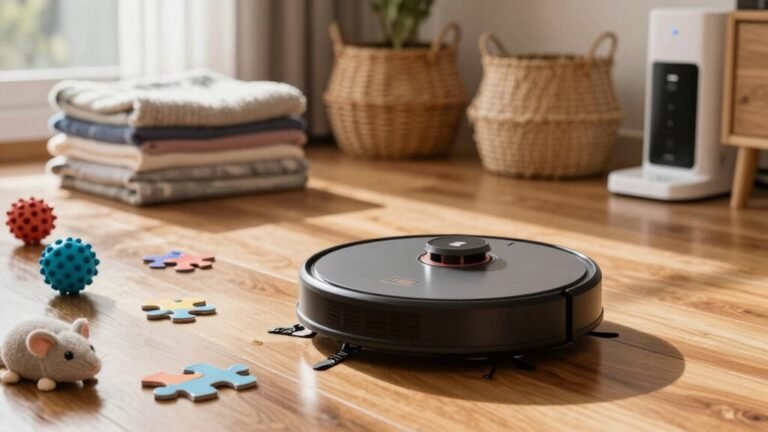
Clear the zone of toys and cords, block off escape routes with gates, and make sure food bowls are up high.
Think of it like a pet-friendly obstacle course—minus the robot crashing into your cat’s dignity.
If all goes smoothly, you’re golden.
If not? No worries, just slow down. You’ve got this.
Reward Calm Behavior Around the Robot Vacuum
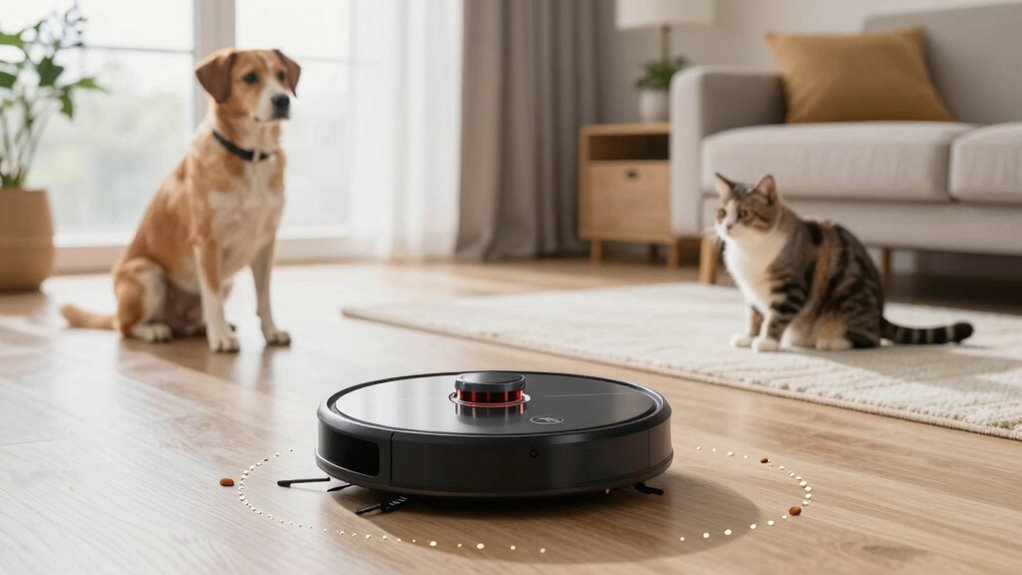
How do you turn a nervous side-eye into a happy tail wag when the robot vacuum kicks on?
Simple—reward calm behavior like a pro.
When your pet stays relaxed near the powered-on vacuum, toss a high-value treat or praise them warmly.
Let them earn goodies just for chilling out while it moves or hums nearby.
Use peanut butter on a lick mat to keep them happily distracted, or play vacuum sound videos at low volume while handing out snacks.
Never scold fear—just ignore anxious behavior and reward bravery.
Keep treats coming during cleaning sessions, even if your pet’s just ignoring the robot.
Stay patient, stay positive, and don’t rush.
Over time, your pet won’t just tolerate the vacuum—they might just throw a party for it.
Who knew cleaning could be this fun—for both of you?
Expand Cleaning Areas Gradually
Start small, and you’ll both win big—kick things off by letting the robot vacuum tackle just one quiet room where your pet isn’t hanging out.
Once your furry buddy seems chill, slowly open new zones like you’re hosting a slow-motion treasure hunt.
Think of it as “vacation time” for your vacuum—short trips, big wins.
Here’s how to expand like a pro:
- Stick to one 100–200 sq ft room at first—no marathon cleanings!
- Watch your pet closely—no hiding, no side-eye at the robot.
- Use daily 10-15 minute sessions, timed when your pet’s napping (genius, right?).
- Let the robot’s smart sensors dodge pet zones, toys, and dramatic fur piles.
With AI smarts and a little patience, your vacuum’ll go from shy guest to full-home hero—no pet panic required.
Win by inch, not mile!
What to Do When Fear Comes Back
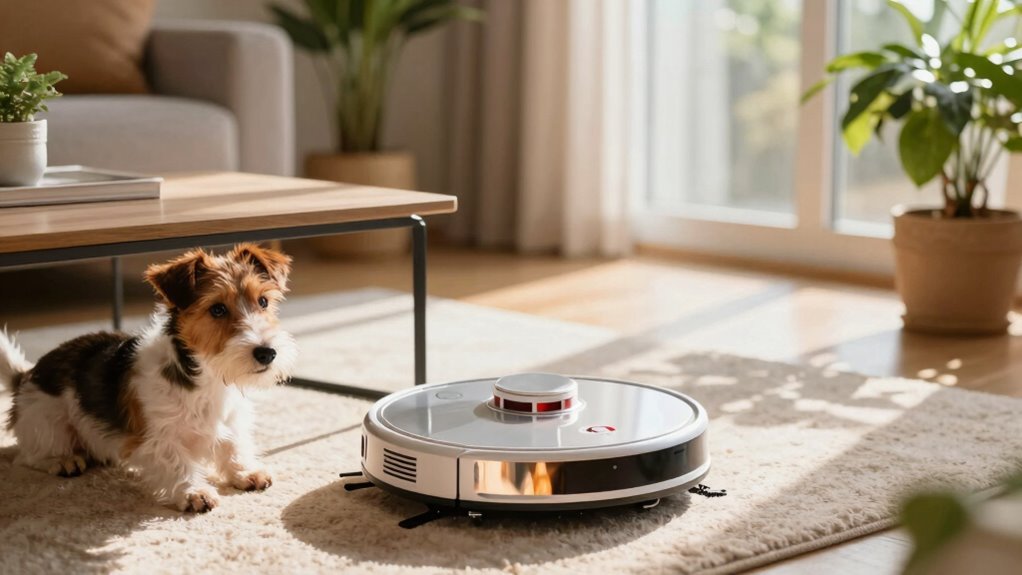
Even if your pet seemed totally cool with the robot vacuum last week, fear might sneak back like a ninja who forgot to pay rent.
Don’t panic—just go back to basics.
Set up a safe zone with their favorite blanket, toys, or a calming diffuser, and gently reintroduce the vacuum while it’s off, tossing in high-value treats and praise.
Never shout or punish nervous reactions; it only makes things worse.
Instead, stay calm and offer rewards when they stay cool.
Run the vacuum in another room first, pairing the sound with snacks or playtime.
Use baby gates or closed doors to manage access and keep them in a quiet space during cleaning.
If panic persists, talk to your vet or a pro trainer—they’ve got tricks up their sleeve.
Consistency, patience, and a few tasty bribes work wonders.
You’ve got this!
Choose a Quieter Robot Vacuum If Needed
If your pet still seems uneasy around the whirring little cleaning bot, even after going back to the basics, it mightn’t be them—it could be the noise.
Lucky for you, quieter robot vacuums exist, and picking one can make all the difference.
Think of it like swapping a rock concert for a cozy coffee shop playlist.
Here’s how to keep things peaceful:
- Look for models under 60 dB—like the Xiaomi Mi Robot (50 dB) or Eufy X10 Pro Omni.
- Check noise levels on both carpet and hard floors; some get louder on tile.
- Avoid self-emptying bases during quiet hours—they can get *surprisingly* rowdy.
- Use scheduling to clean when pets (and you) aren’t around.
Your kitty mightn’t throw a party for the new bot, but at least they’ll stop treating it like a robot monster from outer space.
Frequently Asked Questions
Can I Leave the Robot Vacuum on When I’M Not Home?
Yeah, you can leave your robot vacuum on when you’re not home—most modern ones are smart, safe, and built for solo missions.
Just set the schedule, and it’ll dodge obstacles, avoid spills, and quietly tidy up.
It’s like having a tiny, overachieving roommate who never eats your snacks.
With sensors and quiet smarts, it’ll handle the mess while you enjoy peace of mind—and extra couch time.
How Often Should I Run It With Pets Around?
Think of your robot vacuum as a fur-fighting superhero—it’s got to patrol regularly to save your floors from hairy disasters.
You should run it daily if you’ve got shed-happy dogs like Labradors, or every two to three days for lighter shedders.
During spring or fall, turn up the heat—let it zip around 3–5 times a week.
Just set the schedule, hit play, and let the tiny tornado tame the fluff chaos while you sip coffee.
No capes, but plenty of power!
Will My Pet Ever Stop Being Afraid of It?
Yes, your pet will likely stop being afraid—it just takes time and patience.
You’re already helping by staying calm and consistent.
Pair the vacuum with treats, play, or cuddles, and keep sessions low-pressure.
Most pets warm up within weeks, especially when you go slow and make it fun.
Think of it as a quirky dance partner they’ll eventually tolerate… or even enjoy!
Do Robot Vacuums Work Well on Pet Hair?
Yeah, robot vacuums work pretty well on pet hair, especially on hard floors where they zip through crumbs and fur like a champ.
You’ll love how they handle daily messes, but don’t toss your regular vacuum yet—carpets, especially shaggy ones, still give them a run for their money.
With strong suction and rubber brushes, they do a solid job, just expect to lend a hand now and then.
Should I Clean the Robot Vacuum After Each Use?
You don’t have to clean it after every use, but you should empty the bin daily if you’ve got pets—trust me, your vacuum will breathe easier!
Tackle filters weekly, wipe sensors, and de-tangle brushes to keep things running smooth.
Think of it like pet care: a little love goes a long way.
Skip the deep clean every time, but stay on top of it—your robot’s got your back, so return the favor!
Conclusion
You’ve got this! Picture your pet eyeing the robot like it’s a tiny alien, then slowly, tail wagging or paw tapping, they realize it’s just a quirky floor-licker. With patience, treats, and baby steps, your furry friend goes from hiding to napping nearby. It’s a win! And hey, maybe they even start riding it. (Okay, maybe not that last part—though that’d be something!)
References
- https://www.mentalfloss.com/article/649263/how-get-your-pet-stop-hating-your-robot-vacuum
- https://petwellbeing.com/blogs/news/this-is-why-pets-are-so-terrified-of-the-vacuum
- https://manypets.com/uk/articles/why-are-dogs-scared-of-vacuum-cleaners/
- https://us.narwal.com/blogs/robot-vacuum/cat-scared-of-vacuum
- https://www.eufy.com/blogs/vacuum/why-are-dogs-scared-of-vacuum
- https://www.hillspet.co.id/dog-care/behavior-appearance/why-are-dogs-scared-of-vacuums
- https://www.youtube.com/watch?v=nNUl-SEoiTI
- https://www.youtube.com/watch?v=WNlILZ_s22o
- https://www.youtube.com/shorts/8vg4aE0CE_I
- https://www.ecovacs.com/us/blog/why-do-dogs-hate-vacuums