Why Does My Robot Vacuum Get Clogged With Pet Hair?
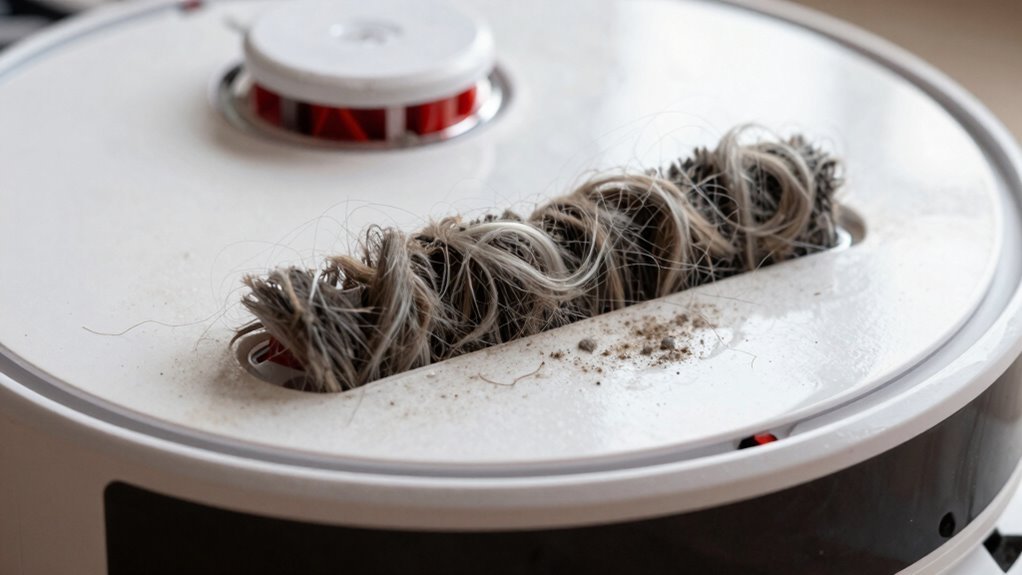
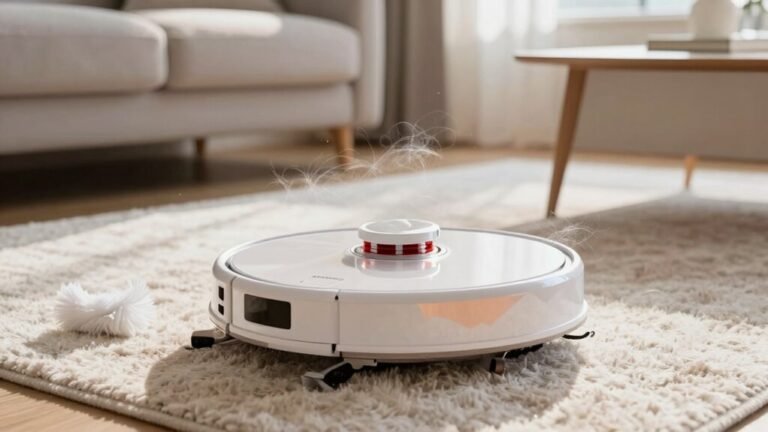
Your robot vacuum gets clogged because pet hair wraps around brushes like a furry boa, blocks filters, and jams wheels—turning your helper into a hapless furball hoarder. Hair tangles fast, bins fill quickly, and static makes stray strands cling like Velcro.
Most robot vacuums aren’t built to handle the constant influx of pet hair, which leads to frequent clogs and reduced performance. This fluff overload can turn your smart cleaning device into more of a maintenance chore than a convenience.
But with the right routine and accessories, you can prevent clogs and keep your robot vacuum running smoothly. Simple tricks like regular brush cleaning and filter maintenance go a long way in winning the war against pet hair.
Why Robot Vacuums Fail at Pet Hair
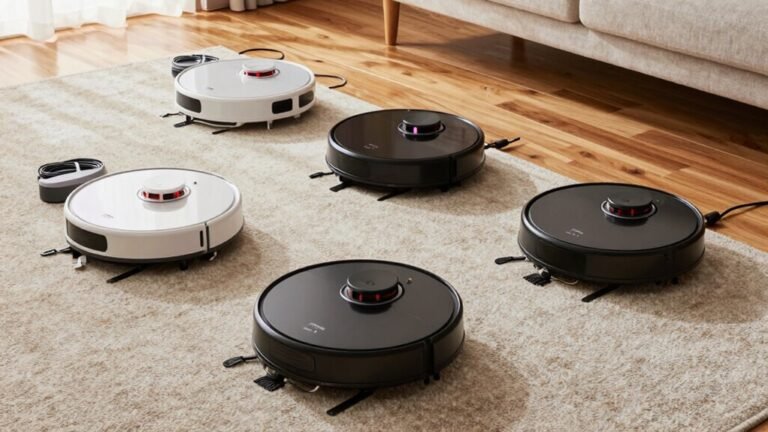
Ever wonder why your robot vacuum seems to battle your pet’s fur—and lose?
Well, it’s not you—many bots just aren’t built for the furry frontline.
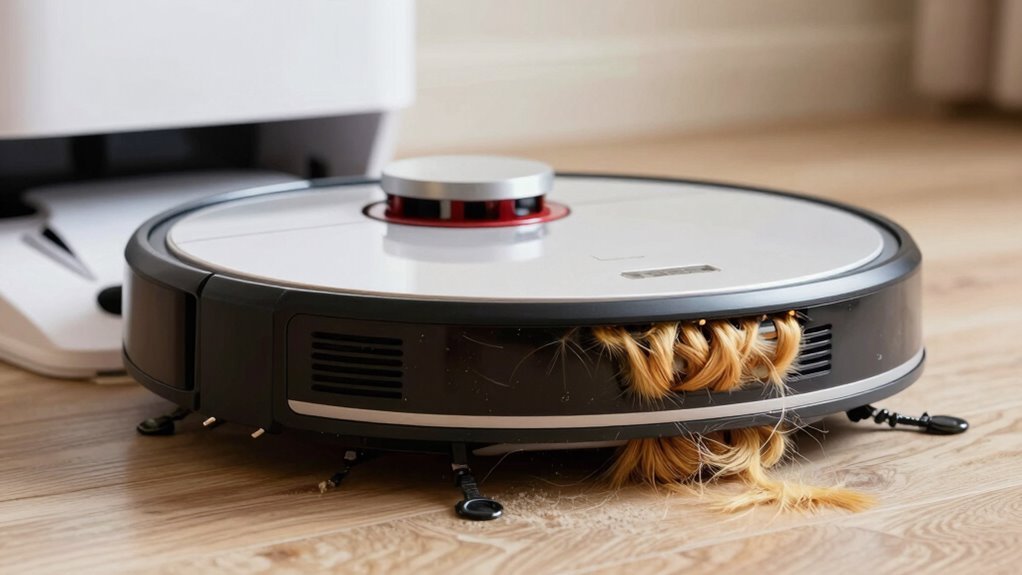
Their brushrolls grab long hair like Velcro, wrapping it tight and reducing cleaning power fast.
Tiny dustbins fill up after one run in a high-shedding home, killing suction and cutting sessions short.
Side brushes often flick fur away instead of grabbing it, leaving sneaky trails behind.
Most models lack the strong airflow needed to pull hair from thick carpets, where it hides deep.
And let’s be real—80% pickup sounds okay, but that still leaves a blanket’s worth of fur lounging on your floors.
Your robot’s doing its best, but with design limits and pet hair’s clingy personality, it’s basically bringing a spatula to a fur war.
Performance varies significantly depending on floor type, hair length/texture.
How Pet Hair Clogs Break Your Vacuum
So your robot vacuum keeps stalling, making weird noises, or giving you error messages after just a few minutes of cleaning? Yep, pet hair’s sneaky—and it’s slowly breaking your bot from the inside. It clogs the suction path, jams the brushes, and even overheats the motor. Hair wrap around the roller is one of the most common failures, especially in homes with long-haired pets like golden retrievers or huskies, where hair wraps tightly around the roller leading to frequent jams. Here’s how hair turns your smart little cleaner into a frustrated, spinning mess:
| Problem | Result |
|---|---|
| Hair balls in the intake | Weak suction, missed messes |
| Clogged filter | Overheating, early shutdowns |
| Brush roller wrapped in fur | “Brush blocked!” alerts |
| Dustbin full too fast | Constant interruptions |
| Hair in wheels & gears | Dragging, strange turns |
That innocent tumbleweed? It’s a ninja warrior against your vacuum. Keep an eye out—and a cleaning tool handy—because a little fur goes a long, destructive way.
Tangle-Free Brushes: Best Types for Fur
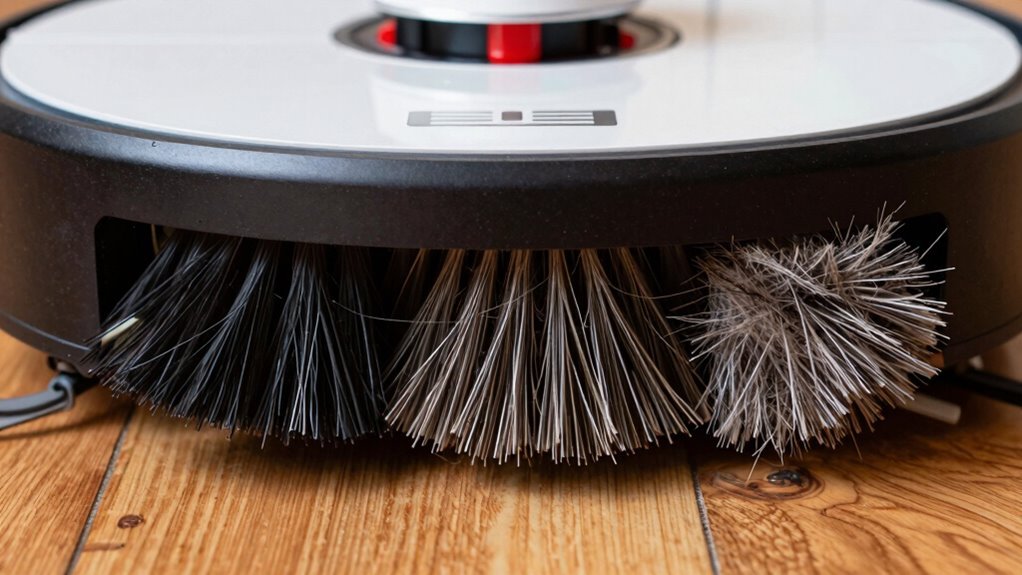
Grab your lint roller and breathe easy—your days of wrestling hair-wrapped brush rolls may finally be over.
Swap that bristly mess for tangle-free rubber brushes, and you’ll see the difference fast.
Pure rubber or dual rubber rollers, like iRobot’s or Roborock’s DuoRoller, fight fur with smooth, flexible strips that resist wrapping.
They’re slick, smart, and way less sticky on hair.
Love zero hassle? Try roller-free designs with strong suction—no brush, no tangle, just pull.
V-shaped or conical brushes, like Ecovacs ZeroTangle or Dreame’s 0-tangle, guide hair inward and reduce side buildup.
Some even come with mini combs that scrape gunk off as they spin—clever, right?
And don’t forget dual side brushes; they gather edge hair without knotting up.
For pet parents, these aren’t luxuries—they’re lifesavers.
Swap smart, clean easy, and laugh as your vacuum finally keeps up with your shedding sidekick.
Why Hair Sticks Like Glue (Thanks, Static)
Why does your pet’s hair cling to every surface like it’s glued down?
Because static electricity turns your home into a hair magnet zone!
When your pet zooms across the carpet, friction builds up an invisible charge on their fur—kind of like rubbing a balloon on your head.
In dry air (especially below 40% humidity), that charge sticks around instead of fading away.
Synthetic rugs, plastic vacuums, and even dustbrush bristles all get charged too, making hair leap onto them like tiny furry stickers.
The more your robot vac runs, the more sliding and rubbing happens, cranking up the static with every pass.
Opposite charges attract, so your vacuum’s plastic parts end up grabbing hair like a kid with sticky hands at a snack table.
It’s not magic—it’s science with drama!
And unfortunately, your robot’s hard at work collecting more than just dirt.
Prevent Clogs Before They Start
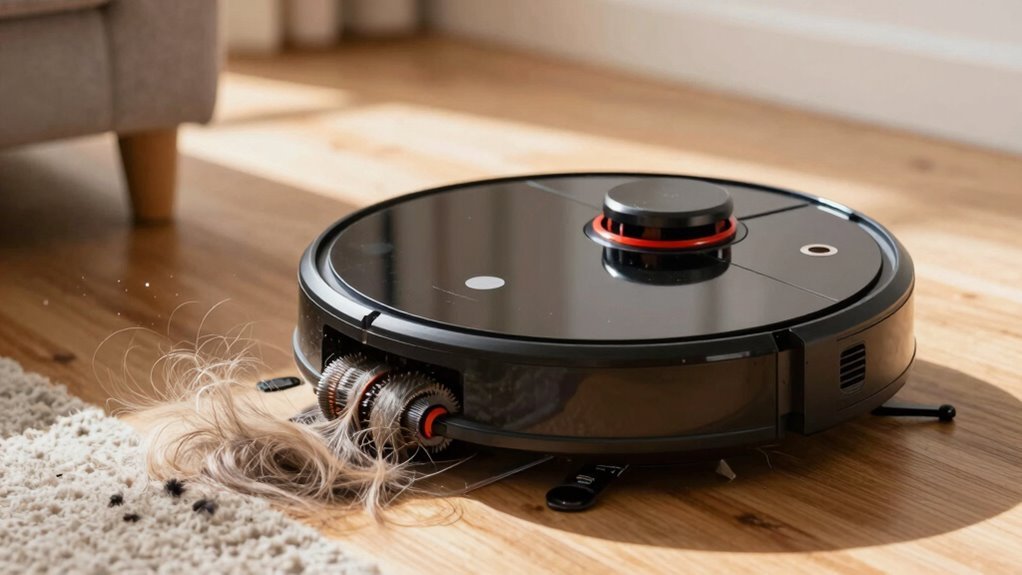
While your robot vacuum bravely battles the daily hair tumbleweeds, you can actually team up with it—think of yourself as its pit crew, keeping the track clear and the engine running smooth.
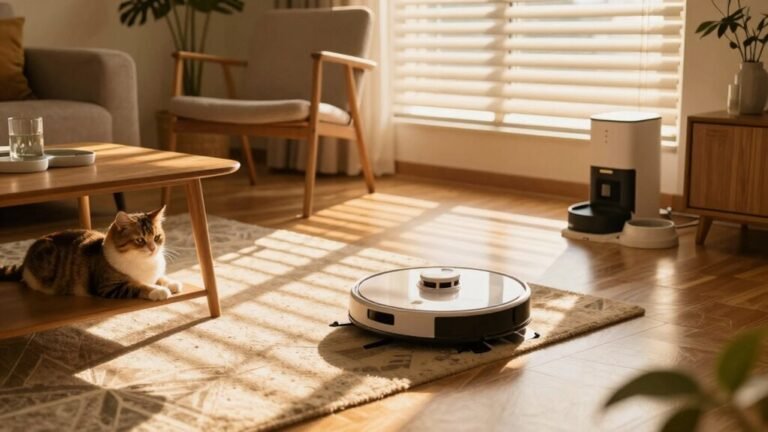
Brush your pet regularly and toss their bedding in the wash to cut down on loose hair.
Toss washable mats in high-shed zones—they’ll catch fur before it goes on a joyride through your home.
Pick a robot with rubber brushes and strong suction; those bristle rolls just love to hog hair.
Run it daily so fur doesn’t throw a block party in the brushes.
Clear cords, toys, and bowls before it rolls out—nobody likes a tangled snack.
Set virtual barriers around messy spots and keep filters clean.
A little prep means fewer hair-filled surprises.
You two make a great team—pit crew status achieved!
How to Unclog Your Vacuum in 5 Minutes
Pop that robot vacuum open like a tiny tech treasure chest, because it’s time to banish the dreaded hair jail.
Grab your dental pick and tweezers—those sneaky hair clumps in the brush roll and wheels don’t stand a chance.
Slide the pick into tight spots, lifting out tangled strands like you’re defusing a fluff bomb.
Use tweezers to yank stubborn hair from brush ends, where it loves to wrap like tiny burrs.
Flip off the brush cover to see the full mess, then brush bristles outward—say goodbye to trapped fur!
Clean sensors gently with a soft paintbrush so your bot doesn’t wander blind.
Finally, vacuum up the freed debris from inside.
It’s quick, satisfying, and takes less time than your coffee break.
Five minutes, and you’re golden—your robot’s back in action, ready to roll (literally).
Best Robot Vacuums for Pet Hair
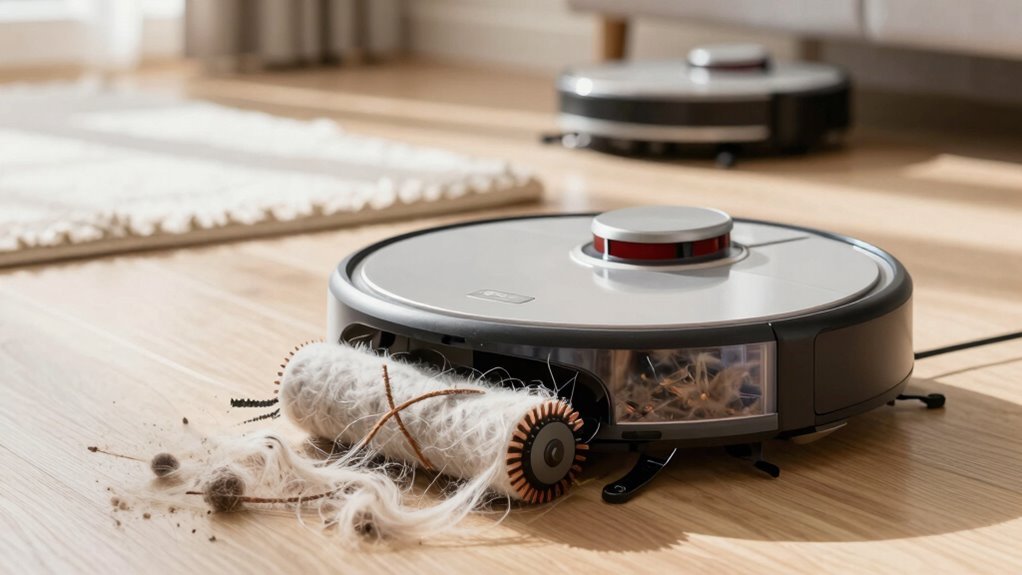
How do you keep your floors fur-free without spending your life battling hair tangles?
You grab a robot vacuum that’s built for the pet hair wars.
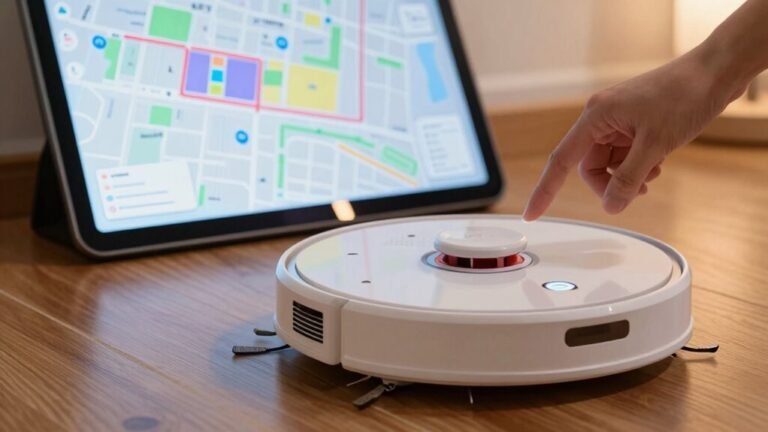
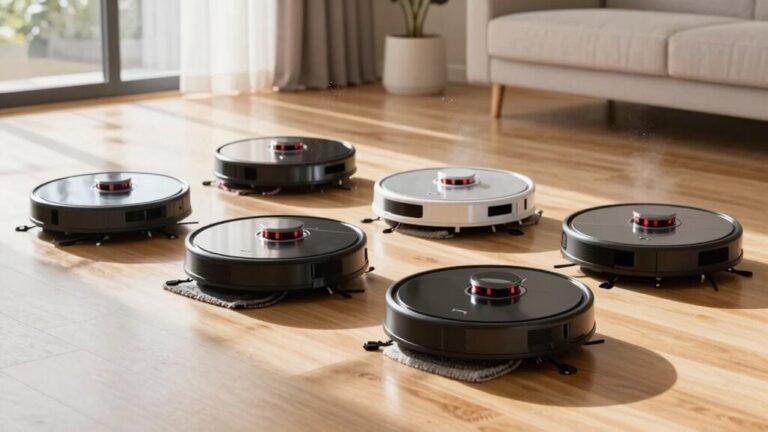
The Roborock S8 MaxV Ultra crushes it with dual rubber brushrolls that don’t snarl, while the S8 Pro Ultra packs 6,000 Pa of suction and an auto-empty dock—perfect for lazy (aka smart) pet parents.
Love carpet?
The Ecovacs X9 Pro Omni dominates with 16,600 Pa BLAST suction and self-cleaning rollers.
Dyson 360 Vis Nav and Eufy L60 tied for top carpet cleanup, proving small bots can haul big hair.
The Qrevo Curv’s DuoDivide brushes resist tangles like magic, and Narwal models go full lazy mode with 120-day emptying.
Rubber brushes beat bristles, auto-docks save sanity, and high suction? Non-negotiable.
Your pets shed, but you’ve got robot reinforcements—fur apocalypse, meet your match.
Frequently Asked Questions
Can I Use My Robot Vacuum on Wet Pet Hair?
No, you shouldn’t use your robot vacuum on wet pet hair—it’s a recipe for clogs and damage.
Wet hair clumps fast, gunking up brushes and filters like glue.
Plus, moisture can fry the motor or invite mold.
Even if your robo-vac seems tough, it’s not a fan of soggy messes.
Save it the drama—dry the area first, or grab towels like a pro.
Your vacuum will thank you with longer life and better clean-ups!
Will Pet Hair Damage My Vacuum’s Sensors?
No, pet hair won’t fry your vacuum’s sensors like a burger on a grill, but it can gum up their game.
You’ll see hair tangling around sensors, blinding them like a sock over your eyes.
This mess causes goofy navigation—think wall-hugging or carpet surfing.
Clean sensors weekly with a damp cloth, and you’ll keep your robo-pal sharp, happy, and doing the cha-cha, not face-planting into furniture.
How Often Should I Replace the Filter With Pets?
You should replace your robot vacuum’s filter every 2–3 months with pets, sometimes even monthly if you’ve got heavy shedders.
Pet hair and dander gunk up filters fast, so don’t skip it—your vacuum’s sucky mood isn’t drama, it’s a clogged filter!
Clean it weekly (yes, again), watch for odors or weak suction, and swap it out before your robot throws a full-on tantrum on the living room rug.
Is It Safe to Vacuum Hair Near Baseboards?
Yes, it’s totally safe to vacuum hair near baseboards—you’re not flirting with disaster, just dust bunnies!
Your robot’s soft brushes glide like a ninja along walls, snagging pet hair without scratching trim.
Just keep filters fresh and brushes clear, and you’ll keep your floors and baseboards looking sharp.
It’s like a spa day for your walls—minus the robes.
Can Pet Hair Cause My Vacuum to Overheat?
Yeah, pet hair can totally make your vacuum overheat—don’t let Fluffy fool you!
It sneaks into filters, hugs the brush roll, and clogs hoses, forcing your vacuum to work like it’s running a marathon.
That extra effort cranks up the heat, and boom—overheating.
But hey, a quick clean-out keeps it cool, calm, and collected.
Think of it as spa day for your vac.
You’ve got this!
Conclusion
You’ve battled the fur tumbleweeds, outsmarted the hair tornado, and your robot’s running smoother than a cat on a heated floor. But wait—there’s one last strand sneaking into the brushes tonight. Could it be fate? Or just your dog’s revenge? Don’t sweat it. With the right tools and a little grit, you’ve got this. Victory over pet hair isn’t just possible—it’s already yours. Now go celebrate. Just don’t spill that snack.
References
- https://extravistech.com/blogs/pet-hair/are-robot-vacuums-really-effective-against-pet-hair-a-deep-dive
- https://intervacdesign.com/safety-hazards-associated-with-robot-vacuum-cleaners-a-detailed-review/
- https://vacuumwars.com/how-vacuum-wars-tests-robot-vacuums/
- https://us.mova.tech/blogs/cleaning-tips/best-self-emptying-robot-vacuum-for-pet-hair-2026
- https://www.robotvacuumforpethair.xyz/robot-vacuum-getting-stuck-on-pet-hair-causes-fixes-best-models-for-pet-owners/
- https://www.ecovacs.com/us/blog/why-does-my-robot-vacuum-keep-stopping-troubleshooting
- https://www.dreametech.com/blogs/blog/ways-to-solve-common-vacuum-cleaner-problems
- https://www.youtube.com/watch?v=TaktQcHJwHA
- https://www.robotreviews.com/chat/viewtopic.php?t=9038
- https://honiture.com/blogs/home-cleaning/why-does-my-cordless-vacuum-say-its-blocked-what-should-i-do