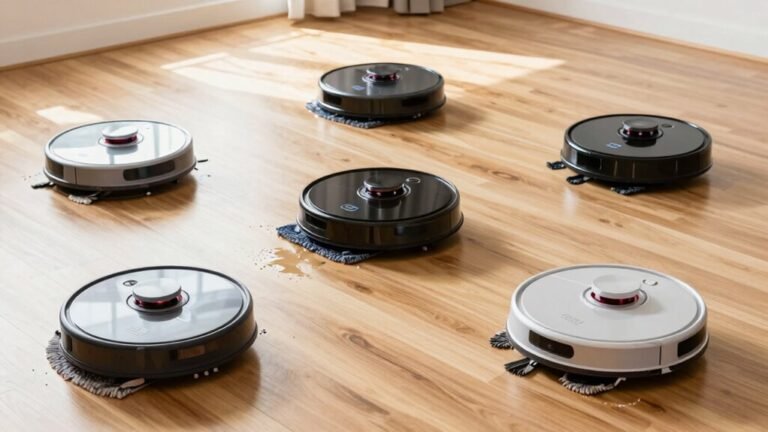
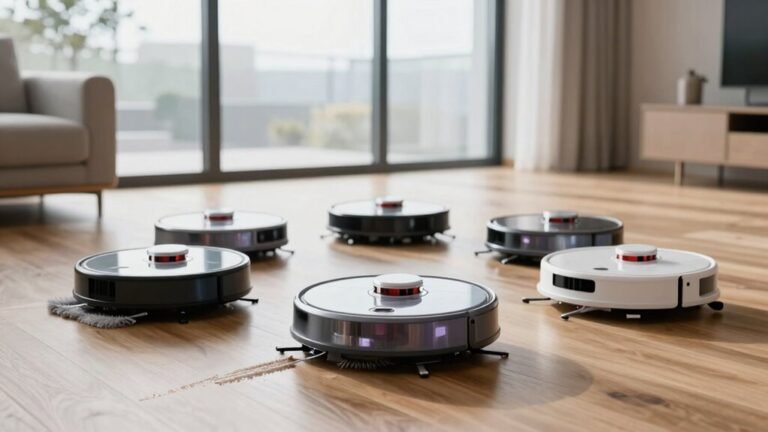
Robot Vacuum Mop vs Traditional Mop: Pros & Cons
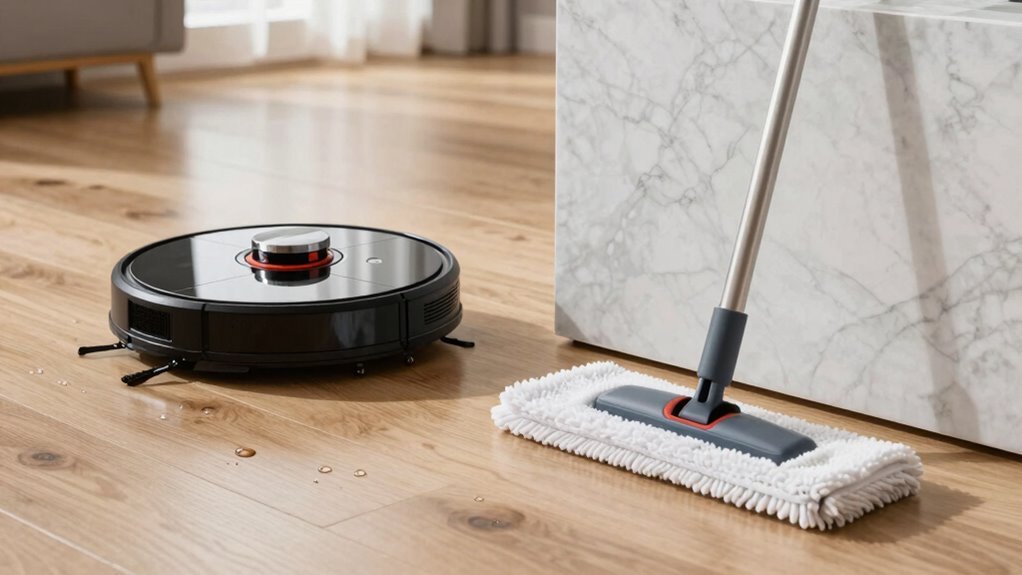
You’re skipping the bucket and backache with a robot vacuum mop, ideal for daily spills on tile or LVP while you kick back and relax. This smart device handles light messes effortlessly, making it a convenient choice for routine maintenance.
But when dried-on grime or sticky kitchen messes show up, old-school mopping still packs more punch. Traditional mops offer superior scrubbing power for tough stains and problem areas.
Robots save time and look cool doing it, yet need help with grout, carpets, and deep cleans. They’re great for hard floors but struggle with more demanding cleaning tasks.
You’ll want both a robot vacuum mop and a traditional mop for a truly clean home. There’s more to uncover about which one’s right for your floors and routine.
Can Robot Mops Replace Hand Mopping?
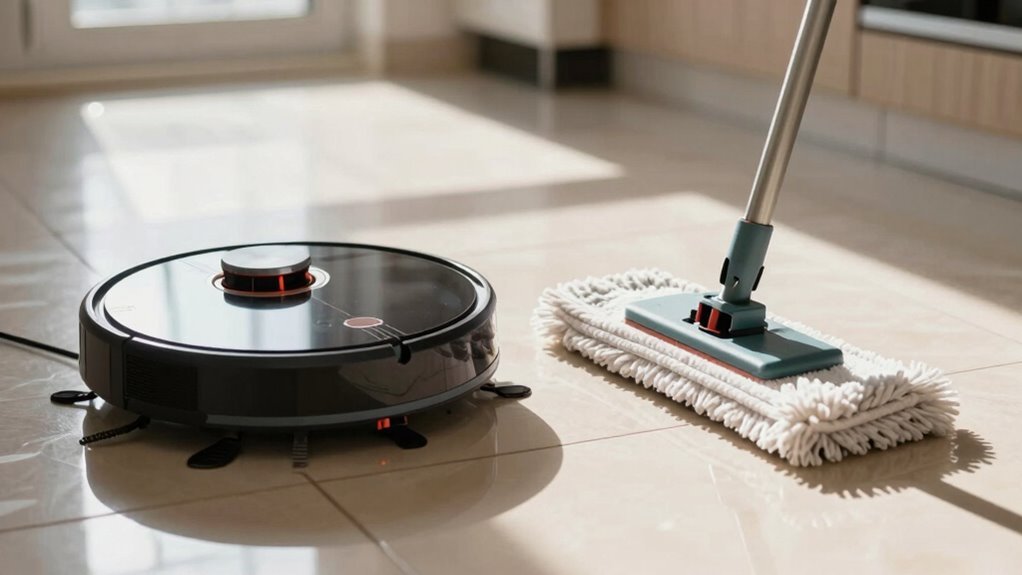
Ever wonder if your robot mop can finally convince you to ditch the bucket and wring out a pad for the last time?
You’ve got apps to schedule cleanings, voice commands to start them, and smart navigation that maps your whole floor—all while you sip coffee.
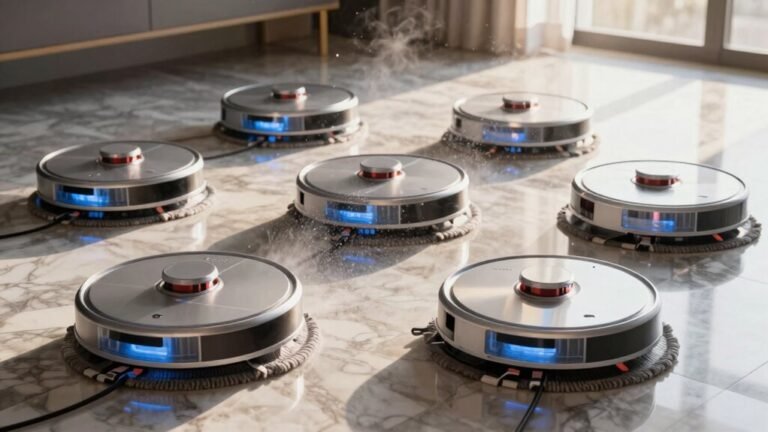
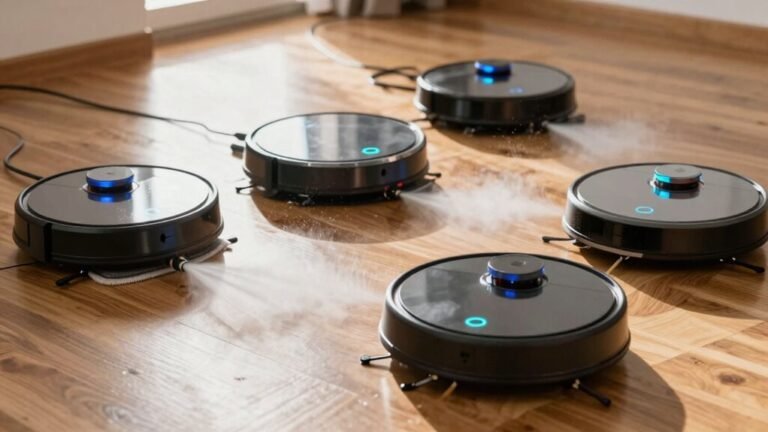
High-end models scrub with vibrating pads, dispense detergent, and even return to self-wash their mops.
They’re great for daily spills, light stains, and keeping tile or LVP fresh without lifting a finger.
Sure, they struggle with dried-on goo or muddy paw prints, but they handle routine messes like a pro.
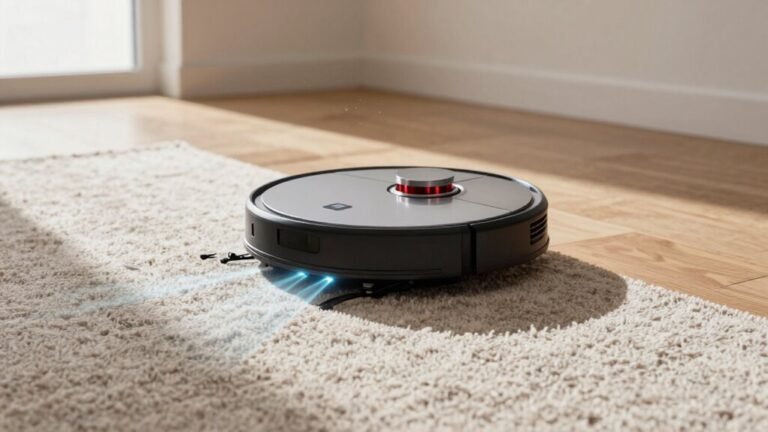
With suction up to 10,000 Pa and smart sensors to avoid carpets, they’re smarter and quieter than ever.
Think of them as your cleaning sidekick—perfect for maintenance, not heavy battles.
You’ll save hundreds of hours, though you might still need the old-school mop for tough jobs.
It’s not all-or-nothing—teamwork wins the floor!
Models like the iRobot Braava Jet M6 can scrub dried chocolate syrup in lab conditions, showing advanced cleaning potential.
Why Traditional Mops Still Clean Better
While your robot mop might handle everyday messes with ease, there’s still something satisfying about wielding a good old-fashioned mop when it’s time to tackle the real grime. You’ve got full control, elbow grease at the ready, and the right technique makes all the difference. Microfiber mops, in particular, are cleaning powerhouses—removing up to 96% of bacteria, way more than cotton string mops. Want proof? Check this out:
| Cleaning Factor | Microfiber Mop | Cotton Mop |
|---|---|---|
| Bacteria Removed | 95–96% | 68% |
| Needs Disinfectant? | No – works with water | Yes – needs help |
| Picks Up After Others? | Yes – grabs leftover dirt | No – spreads grime |
| ATP Levels Left Behind | Low | Higher |
You’re not just mopping—you’re *owning* the clean. And with a (24-inch microfiber mop frame with damp pad weighs just over 2 pounds), it’s easier on your body too.
Robot vs Traditional: Effort, Time, and Convenience
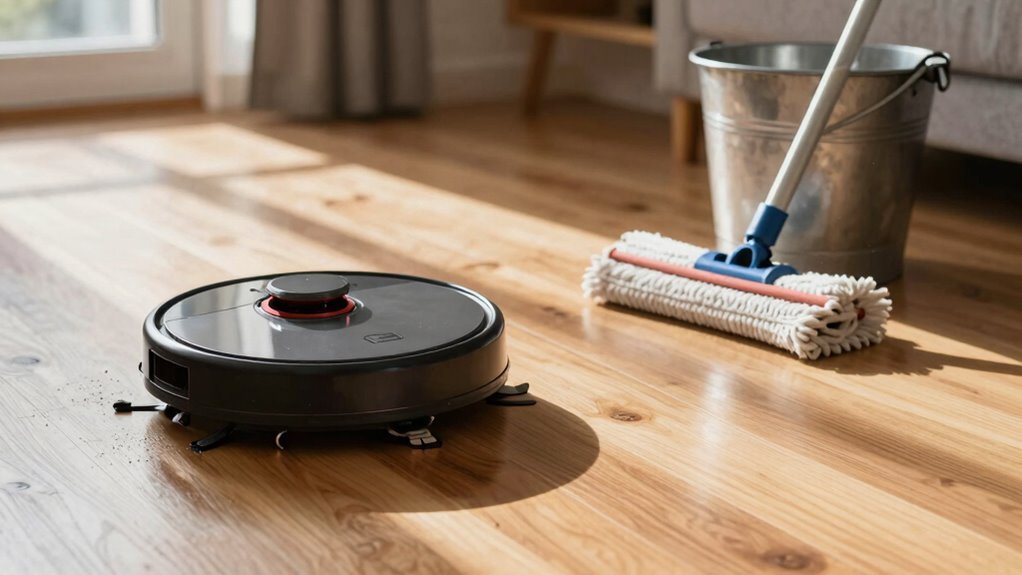
How does it feel to have your floor cleaned without lifting a finger? With a robot mop, you can relax while it glides around, mapping rooms and dodging furniture like a tiny, smart ninja.
You set a schedule via an app or voice command, and it cleans while you’re away—no bending, scrubbing, or wringing buckets.
Traditional mopping? That’s all you—kneeling, wiping, and sore arms included.
Robots save serious time, handling daily messes autonomously, while traditional methods eat up minutes you’ll never get back.
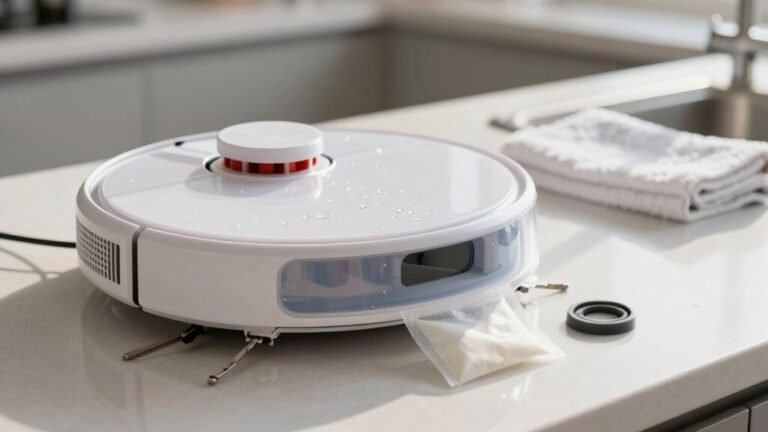
Plus, self-cleaning bases empty the bin and wash mop pads—no funk, no fuss.
Sure, wet-dry vacuums are handy, but they still demand your muscle.
Why drag a bucket around when a little bot can do the dance—and the dishes—on its own?
Laziness just got an upgrade.
Best Floors for Robot Mops (And Where They Fail)
What floors make a robot mop truly shine—without throwing a digital tantrum?
Tile floors are its happy place.
You’ll love how it glides over polished porcelain, nailing daily dust and spills with low-foam cleaners.
Just don’t expect magic on grout lines—those sneaky grooves often trick the bot into dodging the mess, leaving spots behind on the first go.
And if you’ve got carpet near tile, watch out: models like the Roborock S7 get confused and lift the mop pad too soon, skipping stains like a student avoiding homework.
Still, for smooth, sealed tile, your robot mop’s got serious game—efficient, consistent, and impressively hands-off.
It’s not perfect, but on the right surface, it’s like having a tiny, tireless janitor.
Just maybe keep the traditional mop handy for grout grime and robot meltdowns.
Maintenance: What You’ll Really Need to Clean
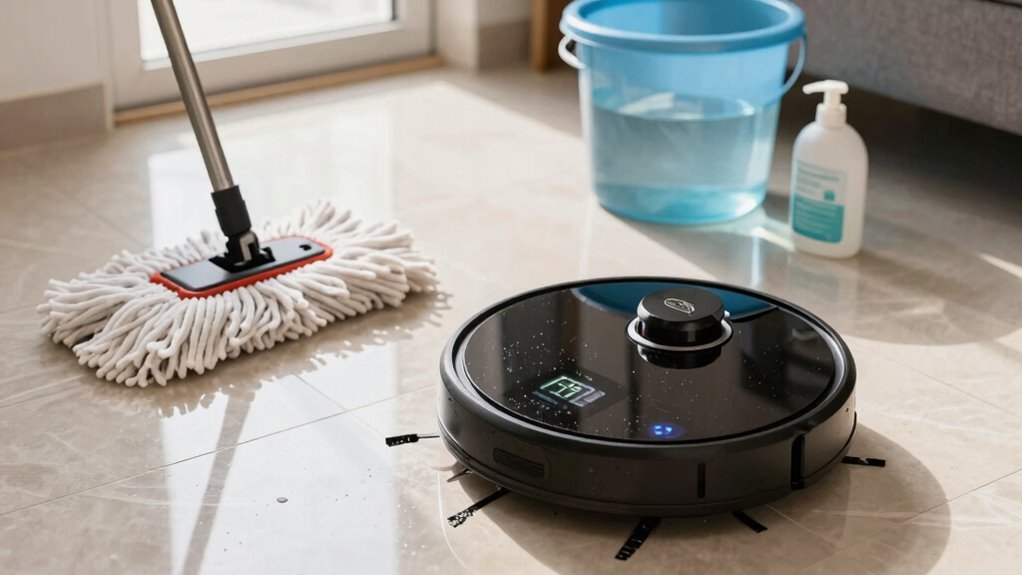
Since your robot mop works hard so you don’t have to, showing it a little love in return keeps it running like a champ. You’ve got to clean it regularly, but don’t worry—it’s way easier than scrubbing floors by hand! Just make a quick checklist and stick to it.
| Part to Clean | How Often | What to Do |
|---|---|---|
| Dustbin & filter | After each use | Empty bin, check filter |
| Mop pads | After every run | Rinse, wash, air dry |
| Brushes & wheels | Weekly | Remove hair, check for tangles |
| Sensors & contacts | Monthly | Wipe with microfiber, dry well |
A quick wipe here, a rinse there, and you’re golden. Think of it as spa time for your robo-helper—keep it fresh, and it’ll keep your floors fresher!
Cost Breakdown: Robot Mop vs Bucket and Mop
One look at the price tag on a high-end robot mop and you might do a double-take—some cost more than a new laptop—but here’s the twist: while that Roborock Saros 10R might set you back $1,599, it’s not just a one-time splurge, it’s a long-term cleaning partner that can save you time, effort, and even money over the years.
Yeah, traditional mops cost under $50—cheap upfront—but they wear out fast and need constant replacing.
Robot mops run $550 to $1,600, sure, but they sip water, guzzle way less energy than steam mops, and last longer with minimal refills.
You’ll swap pads and filters, but no heavy lifting or sore knees.
Think of it like buying a coffee machine: costly at first, but you save on lattes over time.
And unlike your old bucket, it won’t judge you for skipping leg day—because it mops while you binge TV.
Who Should Buy a Robot Mop (And Who Should Skip It)
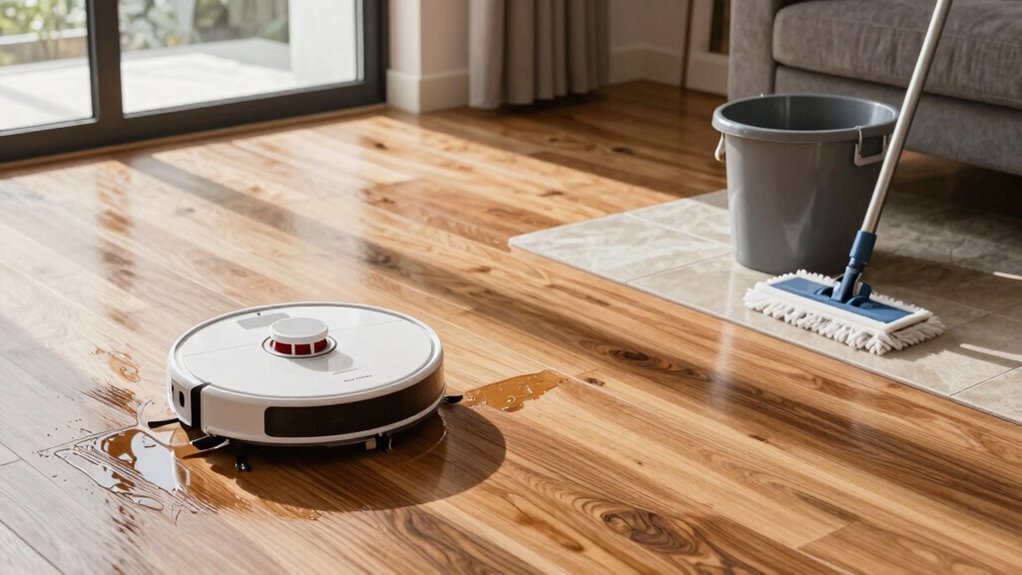
Who really needs a robot mop?
If you’re a busy professional, this gadget’s for you—it cleans while you work, thanks to remote control and quiet runs.
Allergy sufferers? You’ll love how HEPA filters trap dust and keep your air fresh daily.
Pet owners, rejoice: strong suction and anti-tangle brushes handle fur and messes like a champ, especially with self-emptying docks.
Large homes? No problem—long battery life and smart mapping cover big spaces solo.
Even compact living suits robot mops; they’re small, smart, and great on hard floors.
But if you’ve got lots of rugs, uneven floors, or hate tech hiccups, skip it.
And let’s be real—if you enjoy mopping (hey, no judgment!), stick with tradition.
For most, though, this little bot’s a game-changer that earns its keep.
Final Verdict: Which Mop Wins for Your Home
You’ve weighed the pros and cons, figured out your cleaning personality, and maybe even imagined coming home to a spotless floor without lifting a finger—so now let’s settle the big question: which mop actually wins for your home?
If you’ve got a busy life and floors that hate dust bunnies, a robot mop vacuum wins for daily ease—just schedule it and forget it.
It quietly handles pet hair, crumbs, and light spills on hard surfaces like a tiny, tireless ninja.
But if your carpets trap mud like quicksand or your kids treat the floor as a snack buffet, grab a traditional mop or wet-dry vac—its muscle power crushes deep messes.
Robots save time and backaches, though they cost more upfront.
Bottom line? Go robotic for routine tidy-ups on tile or hardwood, but keep a trusty traditional mop nearby for when things get messy.
Or hey, why not both?
Your floors will thank you—and so will your future lazy self.
Frequently Asked Questions
Can Robot Mops Handle Pet Accidents Effectively?
You bet, robot mops can handle pet accidents pretty well!
With smart sensors and cameras, they spot messes and steer clear in real time.
They vacuum up hair first, then mop floors clean—no cross-contamination.
Just don’t expect magic; they’ll avoid poop, not clean it.
Use pet-safe solutions, keep sensors clean, and you’ve got a hands-off helper that’s way more convenient than crawling around with a sponge.
Fun, right?
Do Traditional Mops Work on Uneven Tile Floors?
Yes, traditional mops tackle uneven tile like a champ—when you pick the right one.
String mops plunge into grout lines like tiny scrubbing ninjas, while sponge mops squish into crevices without scratching.
Flat mops? They’ll struggle, flat-out giving up on texture.
Spin mops wring out excess water, dodging soggy grout disasters.
Just don’t flood the floor—damp wins every time!
Are Robot Mops Safe Around Toddlers and Pets?
Yeah, robot mops are safe around toddlers and pets when you use them right.
You’ll supervise the little ones so they don’t treat it like a toy, and it’ll dodge pets with smart sensors.
Its quiet hum won’t scare the dog, and rounded edges mean fewer ouchies.
You block off risky spots with virtual walls, clear toys, and it gently cleans up spills—keeping floors safe, tidy, and adventure-ready for all your family, two- or four-legged!
How Often Should Mop Pads Be Replaced?
You’re basically a floor detective, swapping mop pads every few months—or sooner if they look battle-worn!
Spray mops? Toss pads every 3–6 months.
Robot users, you’ve got options: disposable ones get trashed after each spin (bye-bye, laziness tax), while reusable ones live their best life in the wash, lasting 3–6 months.
Pets? They’re pad assassins—replace faster!
Watch for fraying, smells, or sad, flat fibers.
Your nose knows!
Can I Use Vinegar With a Robot Mop?
No, you shouldn’t use vinegar in your robot mop—most brands say it’s a no-go.
It can wreck seals, clog pipes, and even void your warranty.
Sure, some folks sneak in a splash and get away with it, but why risk turning your smart mop into a sad mop?
Stick to water or approved solutions, and your robot will stay happy, healthy, and mopping hard for way longer.
Play it safe, not sorry!
Conclusion
So, you want spotless floors but hate mopping? The robot mop’s your lazy best friend—buzzy, cheerful, and great at dodging effort. But don’t toss your traditional mop yet; it still throws a better deep-cleaning party. Robot wins for convenience, hands down, but when grime throws a tantrum? Grandma’s bucket and mop still pack a punch. Choose wisely—your floors (and your laziness) will thank you.
References
- https://www.reviewed.com/robotvacuums/features/heres-difference-between-mop-types
- https://us.3itech.com/blogs/news/robot-vacuum-and-mop-vs-wet-dry-vacuum-which-suits-your-home
- https://oakvillemaids.ca/2024/08/03/robot-mops-vs-regular-mops-house-cleaning-oakville/
- https://vacuumwars.com/robot-mop-types-explained/
- https://www.ecovacs.com/us/blog/vacuum-robot-mop-vs-regular-vacuum
- https://www.thesmarthomehookup.com/most-robotic-mops-are-bad-these-arent/
- https://www.youtube.com/watch?v=TAcA-P9hPM4
- https://pmc.ncbi.nlm.nih.gov/articles/PMC9732774/
- https://usa.ungerglobal.com/blog/9-facts-about-floor-mopping/
- https://spice.unc.edu/wp-content/uploads/2022/04/Microbiologic-Evaluation-of-Microbiologic-Mops_Rutala.pdf