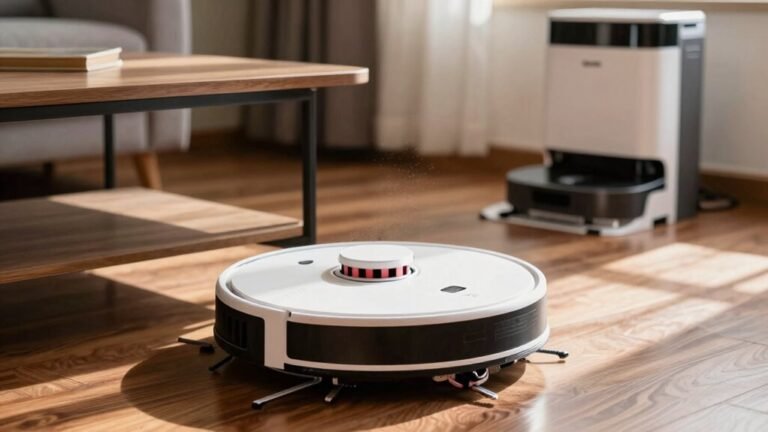
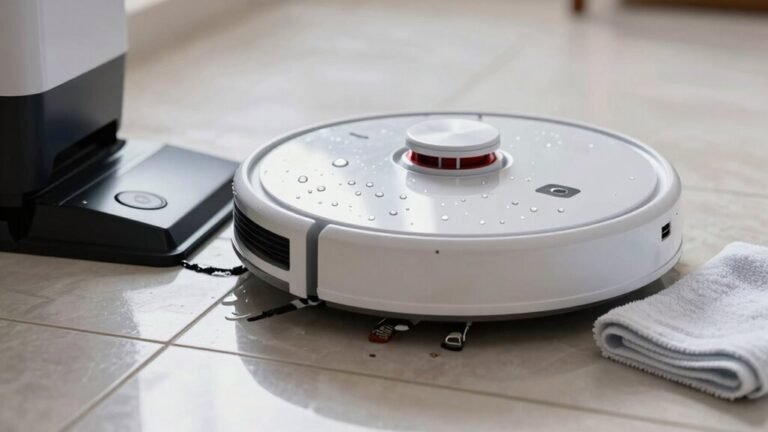
How to Clean Robot Vacuum Mop Pads
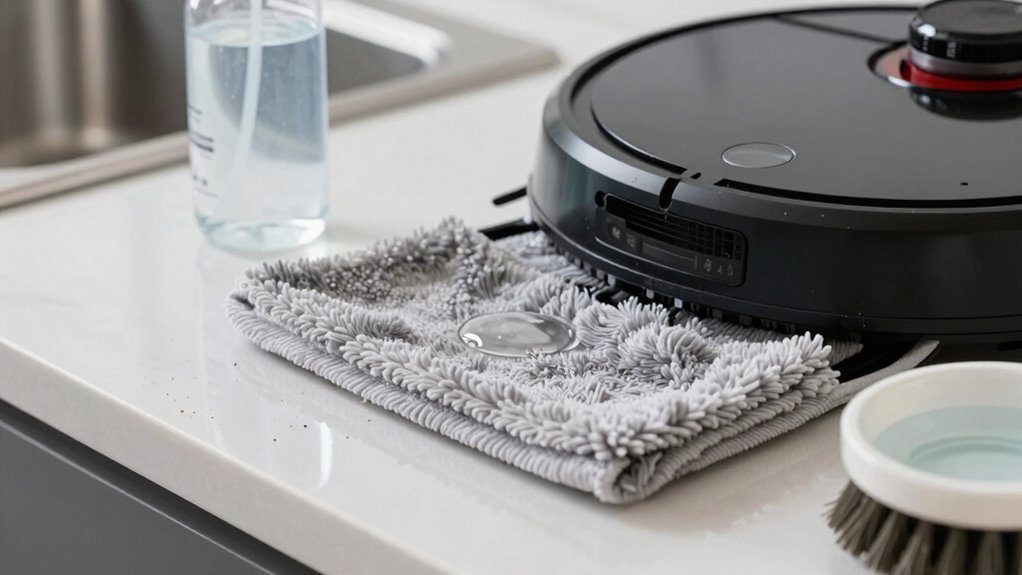
Rinse your robot vacuum mop pads after each use to prevent buildup and maintain cleaning efficiency. Don’t let them sit out like dirty dishrags—prompt rinsing keeps them in top condition.
If the pads are heavily soiled, soak them in warm, soapy water before washing. Use a mild detergent and avoid regular laundry products, as these can damage the fabric and reduce absorbency.
Wash the pads in a mesh bag on a gentle cycle to protect their structure. Always air dry the robot vacuum mop pads—never use a dryer or blow-dry them, as heat can warp or shrink the material.
Once fully dry and free of lint, reattach the clean pads to your device. Keeping them fresh ensures optimal performance with every cleaning cycle.
What Happens When Mop Pads Get Dirty?
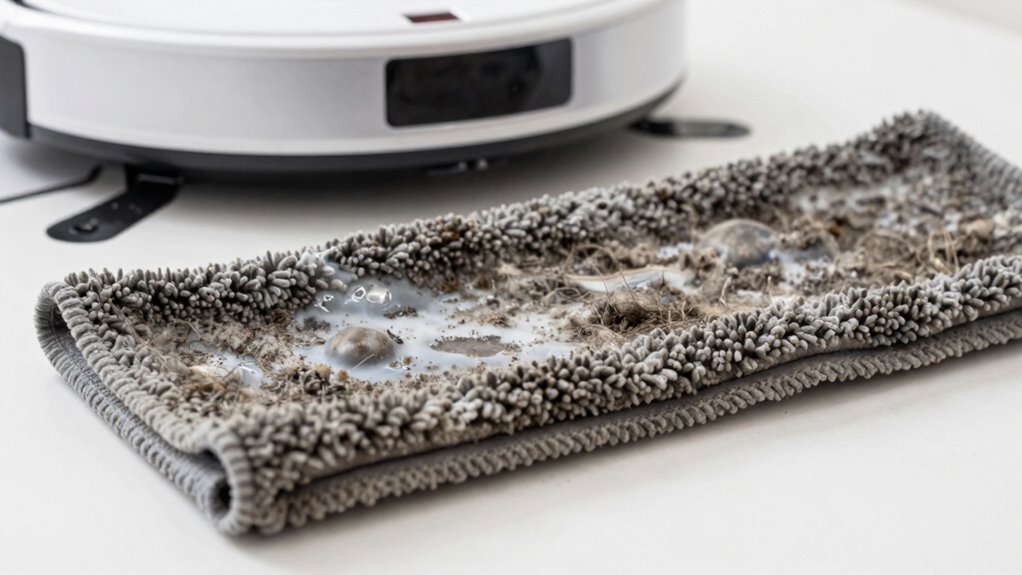
Ever wonder why your floors don’t quite shine like they used to, even after the robot sweeps through? Well, dirty mop pads are likely the sneaky culprits.
Instead of lifting dirt, they smear it around like a fuzzy paintbrush, turning your floor into a smudgy masterpiece.
Grime builds up in the fibers, slashing scrubbing power so stuck-on gunk just laughs at your robot.
Plus, soaked pads stop absorbing and start spreading yucky, dirty water—kind of like mopping with a muddy sponge.
And hello, streaks! That hazy film on your tile? That’s not a magic trick—it’s a dirty pad faking a clean.
Worst part? Your robot’s working overtime, sensors get gunked up, and suddenly, your “smart” mop feels kinda dumb.
It’s like sending a tired superhero into battle without a cape—everything’s just a little off.
Regular cleaning of microfibre is the most common mop pad material helps restore absorbency and maintain effective mopping performance.
How Often Should You Clean Mop Pads?
Keeping your mop pads fresh isn’t just a chore—it’s your secret weapon for floors that gleam like a freshly polished disco ball.
Clean pads mean streak-free shine, not smeared messes or funky smells.
How often should you clean them? Well, here’s the lowdown:
- Rinse after every mopping session—yes, every single time—to keep gunk from redepositing on your sparkly floors.
- Got pets or kids? You’re in a high-soil zone, so don’t even *think* about skipping washes.
- High-traffic areas or dusty homes demand more TLC; your pad’s working overtime, not lounging poolside.
- Even in tiny, low-traffic spaces, a quick rinse post-mop keeps things fresh and effective.
- If your model doesn’t have a mop-washing station, cleaning the pads manually is essential to avoid spreading dirt.
Stick to this rhythm, and your robot’ll stay happy, healthy, and ready to dance across your floors like nobody’s watching.
How to Wash Mop Pads in the Washing Machine
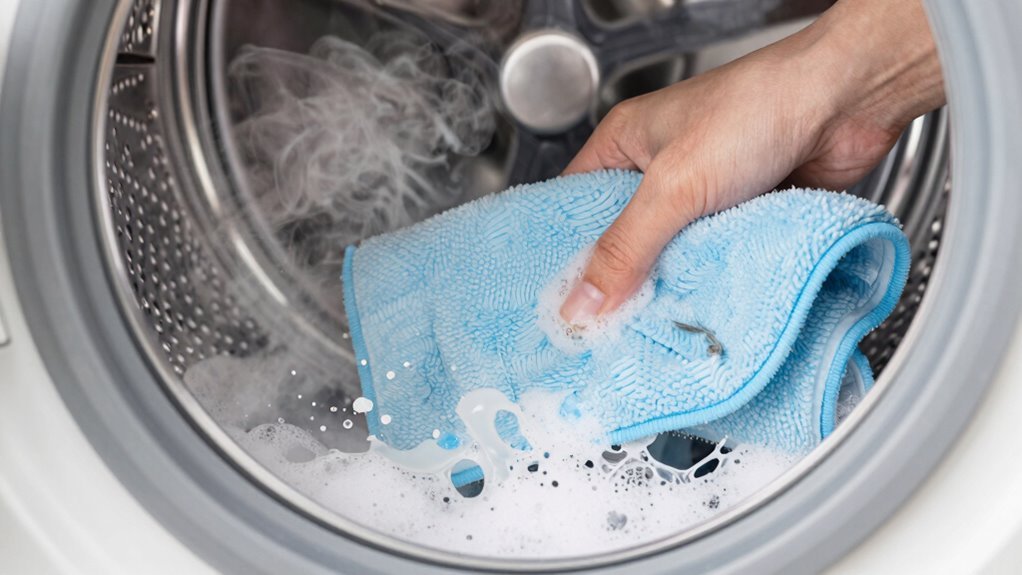
So, how do you keep your robot mop pads in tip-top shape without turning laundry day into a science experiment?
First, give them a quick rinse to knock off loose gunk, then soak them in warm water with a splash of mild, low-foam detergent—think of it as a mini spa day.
If they’re super dirty, let them lounge in the sink for up to a week (they deserve it).
Pop them into a protective mesh bag—zipped or pinned shut—so they don’t flip out during the spin cycle.
Wash on gentle with similar delicates, using only manufacturer-approved soap (no kitchen dish liquid dramas!). Never use regular laundry detergent—it’s basically foam party city, and that’s bad news.
After the cycle, air dry them—no heat, ever—just lay ‘em flat to dry completely. Skip the dryer, or you’ll risk melty microfiber mishaps. Once dry, they’re ready to stick, scrub, and shine like new.
Easy, right?
How to Hand Wash Mop Pads
How do you give your robot mop pads some tender, hands-on love without wrecking them? Hand washing keeps your pads fresh and working like new, especially if they’re delicate or marked “hand wash only.” Just follow these simple steps:
- Check the manual first—some pads hate warm water (looking at you, Roomba Essential!), and you don’t want to melt anything important.
- Rinse off loose dirt under cold water like you’re washing sandy hands after a beach day—nobody wants gritty soapy mush.
- Use a drop of mild detergent, gently scrub problem spots, and massage fibers like you’re giving a tiny spa treatment.
- Rinse well until the water runs clear—leftover soap means streaky floors, and nobody’s got time for that.
Seriously, it’s quick, gentle, and totally worth keeping your mop game strong.
How to Dry and Reinstall Mop Pads
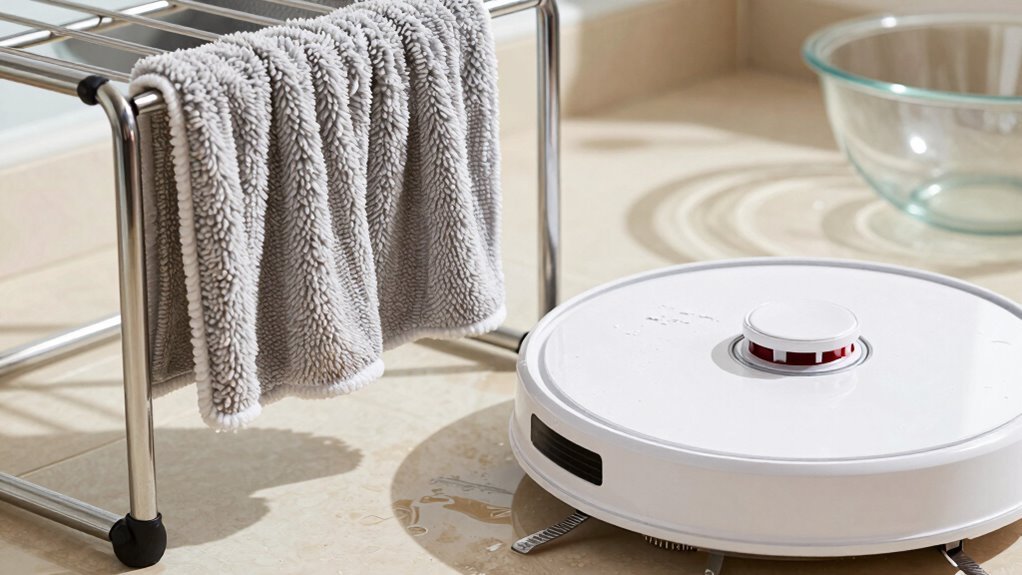
Give your freshly washed mop pads the perfect finish line with a proper air-dry—think of it as their cool-down stretch after a spa day.
Lay them flat or hang them on a rack in a breezy spot, away from direct sun or heat, so they dry evenly without warped backing or stiff fibers.
Most need 12 to 24 hours, but in humid weather, give ‘em a full day—better safe than smelly.
Never toss them in the dryer unless the manual says it’s cool, and skip the radiator stunt—your pads aren’t marshmallows!
When dry, do the touch test: no clammy spots, no funky odors, and fibers should spring back happily.
Check the hooks and edges too—no warping, no peeling.
Finally, flip your robot belly-up, align the pad just right, and snap or stick it on snug.
Boom—clean pads, ready to mop with pride!
Frequently Asked Questions
Can I Use Bleach to Clean Mop Pads?
No, you shouldn’t use bleach on your mop pads—it’ll wreck the fibers and could void your warranty.
Think of it like putting hot sauce on ice cream: harsh and unnecessary!
Stick to mild soap and water, maybe toss ‘em in the wash if the manual says it’s cool.
Your pads, floors, and robot will thank you with longer life and better clean.
Plus, no surprise fumes—yay!
Are Replacement Mop Pads Necessary Over Time?
Yes, you *definitely* need new mop pads over time—think of it like giving your robot a fresh pair of socks.
Worn pads turn into sad, matted rags that smear dirt, streak floors, and stink like old gym bags.
They lose their superpower to clean, so swapping them every few months keeps your floors shining and your robot happy.
It’s cheap insurance against grime chaos!
Can I Wash Mop Pads With Regular Laundry?
You can wash mop pads with regular laundry—if your brand allows it.
Just toss them in a mesh bag, use cold or warm water, and skip the fabric softener.
Think of it like doing a load of towels, but with a side of floor grit.
Keep them separate from your favorite shirts unless you want socks that smell like last week’s spills.
Play it safe, follow the rules, and your pads (and clothes)’ll stay fresh and ready to party.
Do Mop Pads Fit All Robot Vacuum Models?
No, mop pads don’t fit all robot vacuum models—wouldn’t that be neat?
But life’s a bit more complicated.
Each brand, and often each model, needs its own perfect match.
Think of it like socks: one size definitely doesn’t fit all.
Using the wrong pad might leave your robot lopsided—or worse, confused.
Always check your model number, because your Roomba or Shark isn’t into fashion—they need function!
How Do I Remove Stubborn Stains From Mop Pads?
You tackle stubborn stains by pre-soaking pads in warm, soapy water—think of it as a mini spa day for dirty mop heads!
Then, dab on an oxygen-based stain remover and let it work its magic.
Gently scrub with a soft brush, rinse well, and voilà, grime doesn’t stand a chance.
Your pads’ll bounce back fresh, clean, and ready to shine—because nobody likes a dingy mop sidekick!
Conclusion
You’ve finally mastered the art of cleaning your robot’s mop pads—ironic, isn’t it? You use a machine to avoid mopping, yet here you are, hand-washing tiny cloths like a pro. But hey, your floors sparkle, your robot glides smoothly, and honestly, it’s kind of satisfying. Just don’t let your friends catch you talking to a vacuum. Pop those pads back in, hit start, and enjoy your clean floors—hands-off (mostly).
References
- https://techsalesonline.com.au/blogs/articles/exploring-the-benefits-of-roborocks-robot-vacuum-mop-pads
- https://www.dreametech.com/blogs/blog/robot-mop-comparison-cleaning-performance
- https://us.narwal.com/blogs/product/robot-vacuum-clean-floors-effectively
- https://www.youtube.com/watch?v=h8D-rl7tSnQ
- https://www.ecovacs.com/uk/blog/dos-donts-cleaning-with-vacuum-mop-robot
- https://www.thesmarthomehookup.com/most-robotic-mops-are-bad-these-arent/
- https://vacuumwars.com/robot-vacuum-maintenance/
- https://us.narwal.com/blogs/cleaning-guide/robot-vacuum-daily-cleaning-routines
- https://us.3itech.com/blogs/news/robot-vacuum-maintenance-how-often-to-empty-and-keep-it-clean
- https://support.roborock.com/hc/en-us/articles/6568902359065-How-often-does-the-robot-go-back-to-wash-mop