5 Best Replacement Batteries for Roomba That Last Longer
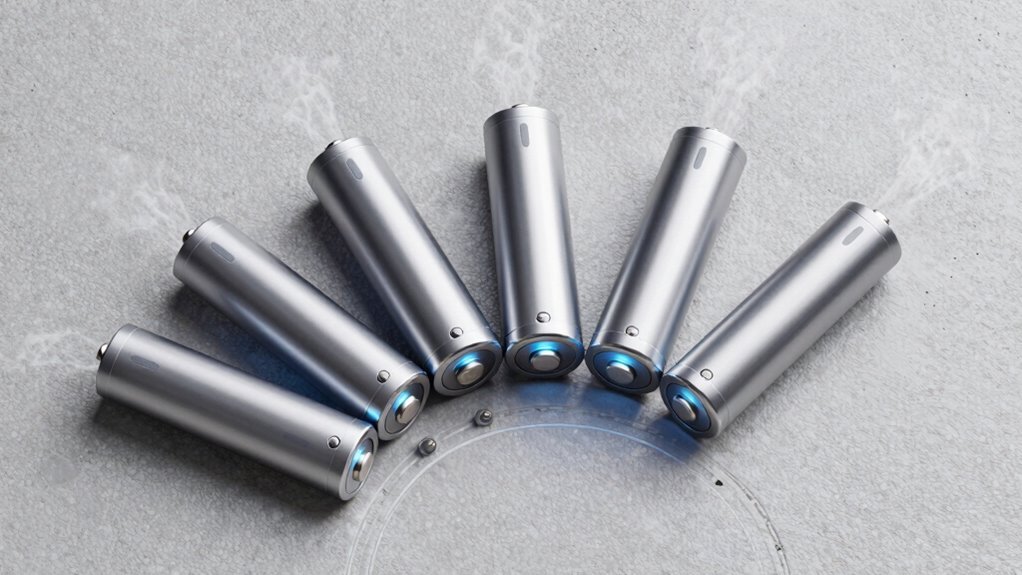
Let’s just say your Roomba’s original battery might not be winning any endurance awards anymore—good thing you’ve got options. Upgrading to a high-capacity Li-ion or Ni-MH replacement battery can stretch runtime by 30–50%, with some delivering up to 90 minutes of cleaning on a single charge.
Wondering which replacement battery actually balances longevity, compatibility, and cycle life without overpromising? The answer isn’t as straightforward as the marketing claims suggest.
| 14.4V 4.5Ah Roomba Replacement Battery with Brush | Longest Runtime | Voltage: 14.4V | Battery Type: Ni-MH | Capacity: 4500 mAh | VIEW LATEST PRICE | Read Our Analysis | |
| iRobot Li-ion Battery Replacement for Roomba Series | Premium Upgrade | Voltage: 14.8V | Battery Type: Li-ion | Capacity: 4400 mAh | VIEW LATEST PRICE | Read Our Analysis | |
| 3300mAh Replacement Battery for iRobot Roomba | Reliable Budget Pick | Voltage: 14.4V | Battery Type: Li-ion | Capacity: 3300 mAh | VIEW LATEST PRICE | Read Our Analysis | |
| Replacement Battery for iRobot Roomba e/i Series | Best for Newer Models | Voltage: 14.4V | Battery Type: Li-ion | Capacity: 2500 mAh | VIEW LATEST PRICE | Read Our Analysis | |
| Powerextra 5.0Ah 14.4V Roomba Replacement Battery | Highest Capacity | Voltage: 14.4V | Battery Type: Ni-MH | Capacity: 5000 mAh | VIEW LATEST PRICE | Read Our Analysis |
More Details on Our Top Picks
14.4V 4.5Ah Roomba Replacement Battery with Brush
If you’ve got a Roomba from the 500, 600, or 700 series—and let’s be honest, even the 800 or 900—you’ll find this 14.4V 4.5Ah Ni-MH replacement battery isn’t just a drop-in fix, it’s an upgrade that delivers 4,500 mAh of juice (yep, that’s 4.5Ah) to squeeze out longer cleaning cycles than the original OEM battery. It’s especially useful when your older model starts cutting sessions short.
This replacement battery is CE and ROHS certified and includes overcharge, over-discharge, and short-circuit protection for added safety. It comes with two side brushes (only for 500–700 series, so don’t get too excited if you’ve got a 980), a manual, and fits snugly at 6.1 x 2.7 x 2.5 inches.
Weighing just 1 lb, it’s lightweight yet durable. It’s ranked #17 in Vacuum Replacement Batteries, so clearly, people are voting with their carts.
- Voltage:14.4V
- Battery Type:Ni-MH
- Capacity:4500 mAh
- Safety Certifications:CE, ROHS
- Overcharge Protection:Yes
- Warranty Duration:Not specified (Manufacturer warranty available)
- Additional Feature:Upgraded 4500 mAh capacity
- Additional Feature:Includes 2 free side brushes
- Additional Feature:Longer runtime than OEM
iRobot Li-ion Battery Replacement for Roomba Series
You’ll get the most out of the iRobot Li-ion Battery Replacement if you own a Roomba 600, 800, or 900 series. It’s not just a drop-in swap—it’s a serious upgrade that boosts your robot’s juice from the original 1800mAh to a hearty 4400mAh.
This increased capacity translates to roughly double the runtime on a single charge, going from 26Wh to 65Wh. You’ll love the extended cleaning sessions, with no more mid-job panic thanks to the reliable performance.
The battery delivers a powerful 14.8V Li-ion output and supports fast charging for added convenience. It’s built to last, rated for over 1000 charge cycles, and includes safety features like over-charge and over-discharge protection.
Certified by UL, CE, FCC, and RoHS, this replacement battery meets rigorous safety and environmental standards. Just note: it’s not compatible with older Ni-MH models—this upgrade is designed specifically for compatible Roomba series.
Enjoy peace of mind with 60-day refunds, 90-day replacements, and 24-hour email support. With performance, safety, and service covered, it’s a smart investment for your robot vacuum.
- Voltage:14.8V
- Battery Type:Li-ion
- Capacity:4400 mAh
- Safety Certifications:UL, CE, FCC, RoHS
- Overcharge Protection:Yes
- Warranty Duration:90 days free replacement
- Additional Feature:1000+ charge cycles
- Additional Feature:Supports fast charging
- Additional Feature:UL certified safety
3300mAh Replacement Battery for iRobot Roomba
The 3300mAh replacement battery for iRobot Roomba isn’t just another off-brand swap. This is the upgrade that keeps your 900, 800, 700, 600, or even aging 500 series humming like new, especially if you’ve had enough of batteries that quit mid-swipe.
You’re getting genuine 3300mAh (48Wh) Li-ion cells—none of that inflated mAh nonsense. With 14.4V power, stable current, and a low 1% monthly self-discharge, it’s ready when you are.
It fits R3, 500–900 series models like the 960, 880, or 652, even the R3 Pet Series. Sure, it’s green—kinda flashy—but who cares if it lasts 500+ cycles, maintaining 80% capacity at 1,000?
CE/FCC/RoHS certified for safety, this battery comes with a 12-month warranty and 24/7 support. Reliable power and peace of mind, all in one sleek, long-lasting package.
- Voltage:14.4V
- Battery Type:Li-ion
- Capacity:3300 mAh
- Safety Certifications:CE, FCC, RoHS
- Overcharge Protection:Yes
- Warranty Duration:12 months
- Additional Feature:80% capacity after 1000 cycles
- Additional Feature:1% monthly self-discharge rate
- Additional Feature:Green-colored battery pack
Replacement Battery for iRobot Roomba e/i Series
Who wouldn’t want longer cleaning runs and faster recharge times from their Roomba? You’ll get exactly that with this 14.4V 36Wh Li-ion replacement—packing 2500mAh cells, it outperforms the original 26Wh 1800mAh battery, giving you about 30–40% more runtime.
Compatible with i3, i4, i7, i8, e5, e6, and j7 series (models like i7+, e5150, J7150, and more), it supports fast charging and lasts 1000+ cycles—thanks to built-in over-charge/discharge protection.
Certified by UL, CE, FCC, and RoHS, it’s safe and reliable. It’s backed by a 90-day replacement, 30-day refund, and 24-hour support.
- Voltage:14.4V
- Battery Type:Li-ion
- Capacity:2500 mAh
- Safety Certifications:UL, CE, FCC, RoHS
- Overcharge Protection:Yes
- Warranty Duration:90 days free replacement
- Additional Feature:Compatible with i7, i8, e5
- Additional Feature:Fits ABL-D1 & D2 models
- Additional Feature:Supports fast charging
Powerextra 5.0Ah 14.4V Roomba Replacement Battery
Looking for a Roomba battery that actually keeps up with your cleaning schedule without failing after a few months? The Powerextra 5.0Ah 14.4V Ni-MH replacement offers serious runtime—5,000mAh means deeper cleanings across larger areas.
It’s especially useful if you’re tired of your 400 series (which this doesn’t fit) dying mid-job. The battery clicks securely into 500–900 series models, from 510s to 870s.
Built-in safeguards protect against overcharge, short circuits, and voltage drops. It’s backed by CE, FCC, and ROHS certification for safety and reliability.
While it’s not an OEM battery, factory testing shows it performs like one. Plus, you get 24-hour support and a 12-month warranty in case anything goes wrong.
- Voltage:14.4V
- Battery Type:Ni-MH
- Capacity:5000 mAh
- Safety Certifications:CE, FCC, ROHS
- Overcharge Protection:Yes
- Warranty Duration:12 months
- Additional Feature:5000 mAh high capacity
- Additional Feature:No memory effect
- Additional Feature:Works as genuine part
Factors to Consider When Choosing Replacement Batteries for Roomba
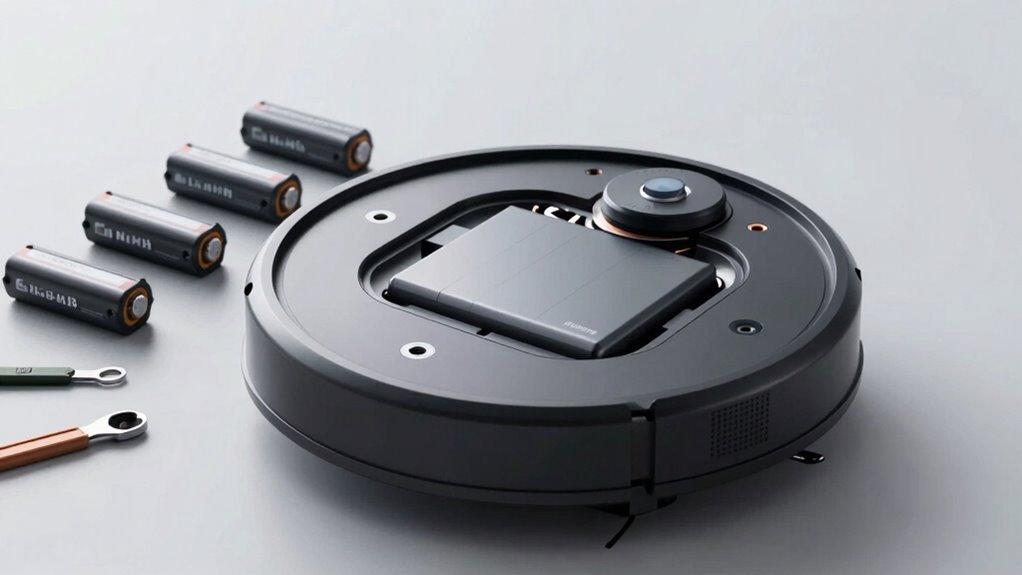
You’ll want to match the voltage and capacity—like 14.4V and 5.0Ah—exactly to avoid underpowering or overloading your Roomba, right? Consider the battery chemistry (NiMH vs. Li-ion), check compatibility with your specific model (e.g., 600, 960, j7+), and don’t skip safety certs like UL or CE, since no one wants a smoky surprise. And hey, while a longer cycle life (say, 500–800 charges) sounds great, is it worth it if the battery swells by month six?
Voltage And Capacity Match
When swapping out your Roomba’s battery, matching the voltage isn’t just a suggestion—it’s essential. Using anything other than the specified 14.4V or 14.8V (depending on your model) risks charging failures or long-term damage.
Some newer Li-ion replacements tout a slightly higher 14.8V output for improved runtime. Just make sure it’s listed as compatible with your series, because a mismatch there is like bringing a squirt gun to a fire hydrant: well-intentioned but ultimately futile.
You’ll also want to compare capacity, usually listed in mAh (like 3300mAh or 4500mAh) or Wh (say, 36Wh or 65Wh). Higher numbers mean longer runtimes—just don’t be surprised if that 4400mAh upgrade adds a bit of heft, potentially tipping the robot’s balance ever so slightly.
Think of it this way: more juice is great, but only if your Roomba can handle the baggage.
Battery Chemistry Type
Roomba’s voltage and capacity specs set the stage, but the real choice comes down to battery chemistry. You’re mostly choosing between Ni-MH and Li-ion, each with distinct trade-offs.
Ni-MH packs, commonly at 14.4V, offer steady performance with no memory effect and simple charging. They’re a solid pick if you prioritize reliability over speed.
Li-ion, running at 14.8V, delivers more runtime and faster recharging, with capacities up to 65Wh and 4400mAh. It supports 1000+ charge cycles, especially with built-in protections against overcharging and deep discharge.
Both battery types should include safety circuits and carry CE, FCC, or RoHS certifications—always check for these. Li-ion costs more, but if you’re tired of waiting or cutting cleanups short, the extra performance may be worth it.
Compatibility With Models
Ever wonder why some replacement batteries work flawlessly while others leave your Roomba dead in its tracks? It’s usually a compatibility issue you didn’t see coming.
You’ve gotta check that the voltage matches—most 500–900 series models need 14.4V, and even a small mismatch can cause performance issues or shutdowns. Don’t just assume “fits most” means yours; confirm your exact series (like 600 or 890) is listed.
Some batteries only work with specific groups, such as 614, 640, or R3 variants. If you’re eyeing a Li-ion upgrade, double-check it’s not labeled incompatible with older Ni-MH-based series like the 500–800 models.
For i, e, or j series robots—yes, that means your i7, e5, or J7—verify your submodel’s in the approved list. Manufacturers aren’t always generous with cross-compatibility.
Safety Certifications
A solid replacement battery doesn’t just fit—it’s backed by real safety credentials, and skipping that detail could mean risking your robot (or worse, your home). You want certifications like CE, FCC, and RoHS—these aren’t just alphabet soup; they prove compliance with health, safety, and environmental standards across regions.
Ever wonder why some batteries cost more? Look for UL certification: it means the battery passed rigorous, independent testing for fire, shock, and thermal runaway risks. These aren’t luxuries—they’re baseline protections your Roomba needs.
Most quality batteries also build in safeguards against over-charge, over-discharge, over-current, and short circuits—basically, the usual suspects behind battery failures. RoHS compliance, meanwhile, means fewer toxic materials inside—safer for you and easier on the planet when it’s time to recycle.
And here’s a pro tip: verified certifications often come with better manufacturer warranties and real customer support, not just empty promises tucked in the product page fine print.
Cycle Life Expectancy
How long before you’re swapping batteries again—months or years? It depends on cycle life, and with some Li-ion replacements boasting 1000+ charge cycles, you’re looking at years of solid performance—far longer than older Ni-MH packs that typically max out around 300–500 cycles.
One high-end option even promises ≥500 cycles with strong capacity retention, while others maintain about 80% of original capacity after 1000 full charges—pretty impressive for a vacuum battery. You’d think fast charging would hurt longevity, but several Li-ion models deliver both speed and endurance without compromise.
Think of it this way: if you charge weekly, 1000 cycles could last nearly 20 years—though real-world wear means five to seven is more realistic. Still, compared to the competition, that’s outstanding.
You’re not just buying power; you’re buying time—fewer replacements, less hassle, and more clean floors without constantly hunting for a new battery.
Warranty And Support
When your Roomba battery fails—whether weeks after purchase or years later—you’ll want reliable warranty and support. Without it, you’re left with frustration instead of solutions.
Most replacement batteries come with 30-day returns and a 12-month warranty, but some offer better terms. A few provide a 60-day refund window and a 90-day or longer replacement policy.
If the battery dies within 90 days, you’ll often receive a free replacement. Look for sellers that stand by their products with clear, accessible policies.
Choose sellers that offer 24/7 email support for help with compatibility or charging issues. Responsive customer service makes a big difference when problems arise.
You’re not just buying a battery—you’re buying peace of mind. Reputable listings clearly outline warranty terms so you know exactly what’s covered.
Always check the details before purchasing. Knowing the coverage helps ensure you’re not left guessing when things go wrong.
Included Accessories
While you’re focused on battery specs, don’t overlook what else might come in the box—some replacement kits throw in two side brushes, a small but smart bonus if you own a Roomba 500, 600, or 700 series, where they’re confirmed to fit like factory originals.
You’ll often get just the battery and a user manual, but check the listing carefully—some packs bundle all three: one battery, two brushes, and a printed guide. That little extra can save you a few bucks, though you’re not getting premium extras like charging docks or carrying cases.
Side brushes aren’t included across the board, and they’re usually tailored to older models—so if you own an 800 or i series, don’t expect them to fit. Digital support docs and warranty info? Those are typically online, not in the box.
Worth asking: why skip physical warranty cards when packaging’s already there? Still, for core functionality, most kits deliver what you actually need—and a surprise brush or two doesn’t hurt.
Frequently Asked Questions
How Long Does It Take to Fully Charge a Roomba Battery?
It takes you about 2 to 3 hours to fully charge your Roomba battery. You’ll see the battery light turn solid green when it’s done. Keep it charging overnight if needed, but most models reach full charge within that 3-hour window.
Can I Use Third-Party Batteries Without Voiding My Roomba Warranty?
You can use third-party batteries without voiding your Roomba’s warranty—truth be told, would a manufacturer really punish you for seeking more juice? Just guarantee compatibility and safety standards, and you’re golden.
Are Roomba Replacement Batteries Waterproof or Resistant to Spills?
You can’t submerge Roomba batteries—they’re not waterproof. But they handle minor spills fine since they’re splash-resistant. Just wipe them quickly. Avoid dousing the robot, and never clean it with water. Keep the battery dry to prevent damage and guarantee it keeps running smoothly.
What Is the Average Lifespan of a Roomba Lithium-Ion Battery?
You’ll typically get 2–3 years from your Roomba’s lithium-ion battery with regular use. It degrades over time, so you’ll notice shorter run times and less cleaning power. Charge it properly and avoid constant draining to get the most out of its lifespan.
Can I Recycle My Old Roomba Battery at an Electronics Store?
Yes, you can recycle your old Roomba battery at most electronics stores—they won’t turn you away, and it’s super easy. Just bring it in; they’ve got bins ready. You’re doing the planet a solid, so don’t hesitate. It only takes a minute.
Conclusion
You’ve seen the top picks—from the long-lasting 14.8V iRobot Li-ion with 1000+ cycles to the high-capacity Powerextra 5.0Ah Ni-MH—and now it’s time to choose. Remember, “the right tool for the job” isn’t just advice, it’s a rule: a 4400 mAh battery won’t help if your Roomba needs 14.4V, right? Balance voltage, capacity (like 36Wh or 5000 mAh), and cycle life—because longevity isn’t luck, it’s specs wisely matched.