How Well Do Robot Vacuums Scrub Stains?
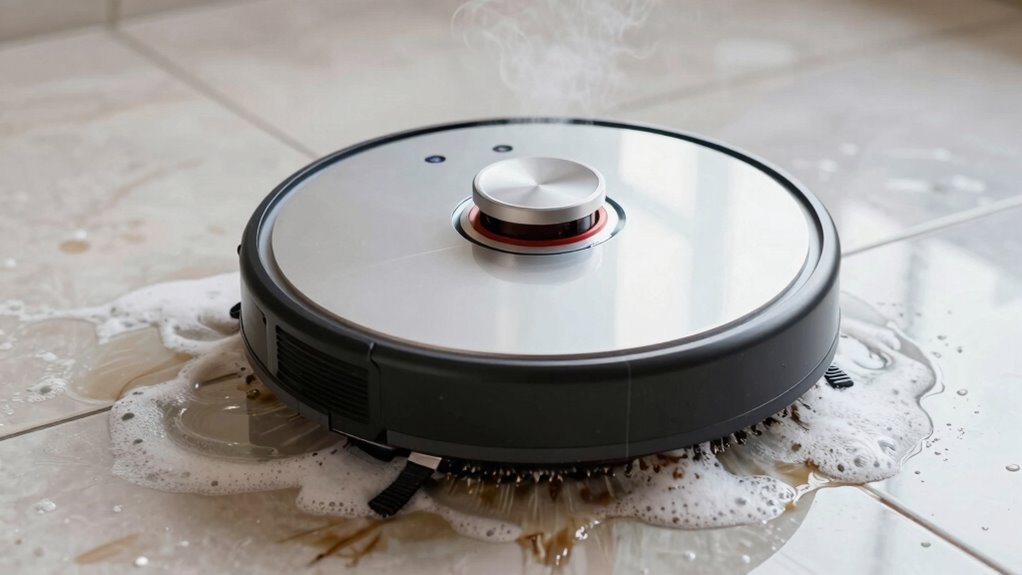
How well do robot vacuums scrub stains? You’ve spilled coffee, and yes, your robot vacuum can save the day—especially if it’s got vibrating mops or dual spinning pads that scrub hard.
Two passes usually do the trick, though sticky syrup or pet accidents might laugh at its efforts. It’s smart, adaptive, and kinda magical… until it’s not.
For real messes, it helps to prep first and know when to step in with a sponge—your secret weapon. Stick around, and you’ll see just how far tech has come.
Can Robot Vacuums Handle Real Stains?
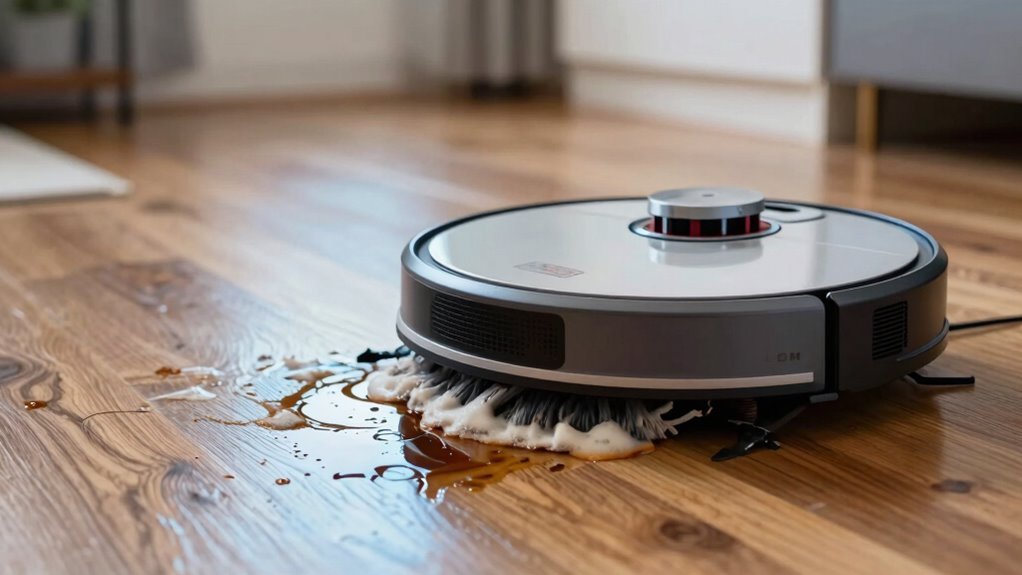
So, can your robot vacuum really tackle that stubborn coffee ring on the kitchen floor?
Well, yes—but with a few caveats.
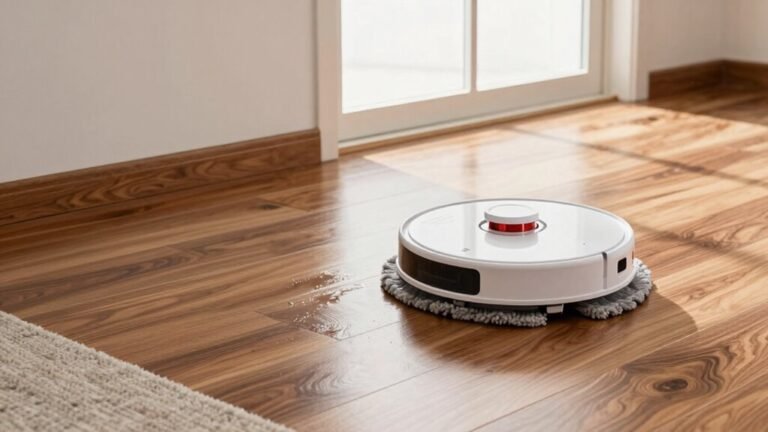
After 24 hours, that old stain doesn’t stand much chance against a solid robot like the Roborock S7, which nails it with two wet passes and some vibra-action you can actually hear.
Flat pads struggle, spinning ones do okay, and rollers look great on paper—but in real life, the whole design matters more than the mop type.
Dual spinning pads provide stronger scrubbing through continuous high-RPM rotation, making them effective on dried-on messes.
Just don’t expect miracles on sticky messes or deep carpet stains; your bot might just smear jam into modern art.
It’ll keep things fresh and tidy, sure, but for true disasters? You’ll still need a paper towel and a sense of humor.
How Robot Mops Clean Fresh and Dried Stains
While you mightn’t expect a little robot to outshine your elbow grease, today’s robot mops can actually handle both fresh spills and dried-on messes—especially when they’ve got the right moves.
They glide across floors, scrubbing with vibrating pads, spinning brushes, or rolling mops that dig in just enough to lift stains without drama.
Some even tweak their water flow or re-mop on the fly using smart smarts.
- Roborock’s vibrating mop nabs fresh messes and powers through dried coffee after two passes
- Dual spinning pads (like on the Ecovacs T50 Max Pro) beat rollers on fresh stains, while Matic’s rotating roll crushes dried ones
- Cleaning solutions boost power, breaking down grime better than plain water, especially in stubborn grout lines
- OZMO Pro’s motorized scrubbing delivers consistent, rapid oscillation that enhances stain removal on hard floors
Sure, they’re not magic, but with the right settings and a little patience, your robot might just become your new cleaning co-pilot—no cape needed.
Can Vacuuming Alone Remove Stains?
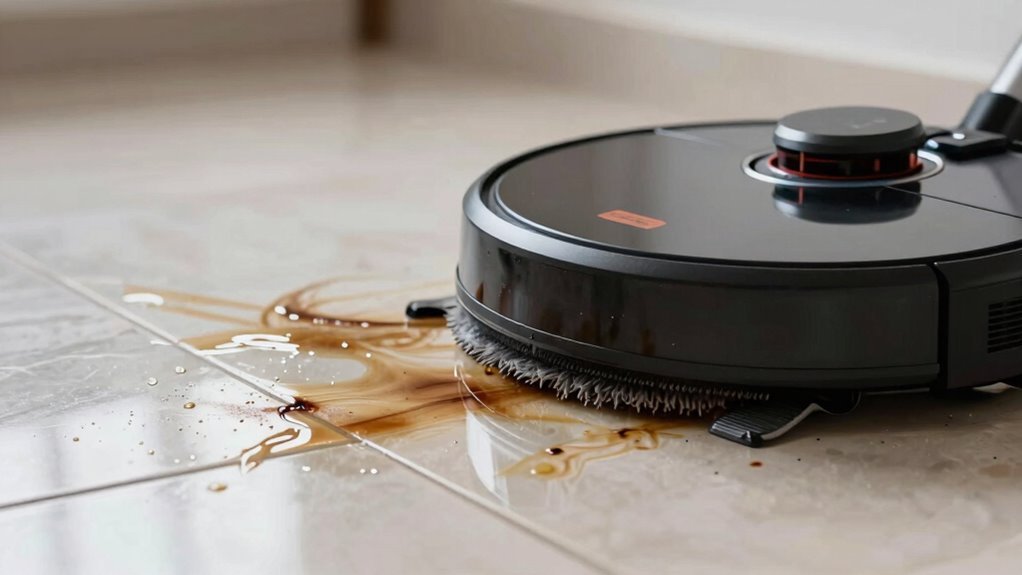
Ever wonder why your vacuum struggles with that coffee splash or mysteriously sticky spot on the tile?
That’s because regular vacuums are built for dust and crumbs, not wet, goopy messes.
They can’t handle liquid spills, and let’s be real—no amount of suction lifts a tomato sauce stain just by hovering over it.
Even on carpets, they only skim the surface unless you’ve pre-treated the spot.
Wet/dry vacs do better with spills, but still need help from cleaning agents.
And while pulsed or steam vacuums impress with 99.5% cleanup rates, most standard models leave stains laughing at you from the floor.
Vacuuming alone? It’s a solid start—but think of it like swiping a napkin over a spill.
Helpful, sure, but don’t expect miracles.
For real stain-busting power, you’ll need more than just suction.
Your floors will thank you.
Why You Must Vacuum Stains Before Mopping
Why let dirt throw a mud party on your floor? You wouldn’t mop a spilled drink without wiping up the glass shards, right?
Same goes for everyday gunk—skip vacuuming, and you’re just smearing dust, crumbs, and grit into a muddy mess.
Water plus dry debris equals streaks, smears, and grout lines that look worse than before.
Yikes! But vacuum first, and suddenly your mop can actually do its job—targeting stains, not spreading junk.
- You prevent dirty water from staining porous grout forever
- Your mop spends energy on grime, not chasing loose particles
- Clean water stays clean, so every swipe leaves floors sparkling
Vacuuming isn’t just cleanup—it’s strategy. Think of it as clearing the dance floor before the real moves begin.
With robot vacuums doing the prep work, you’re not just cleaning smarter, you’re winning the war on mess, one spin at a time.
Smart Mopping Tech That Actually Removes Stains
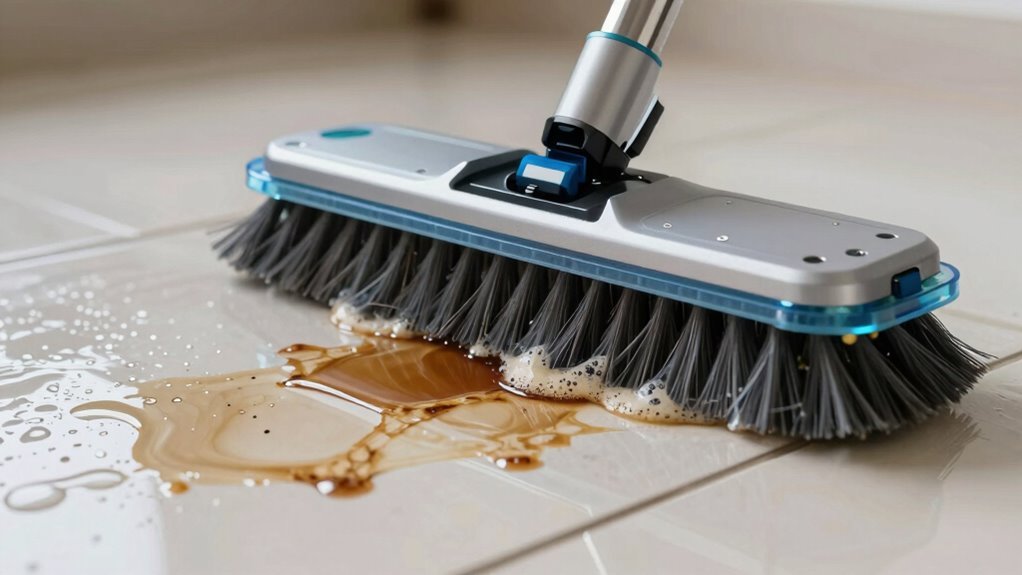
What if your mop could fight stains like a tiny, enthusiastic janitor with a PhD in clean? With smart mopping tech, that’s basically what you get.
Dual rotating mops spin at 330 RPM, pushing down with 2 lbs of force to scrub coffee rings and sticky spills like a pro.
Models like the Narwal Freo Z Ultra don’t just push gunk around—they attack it, using AI to detect messes and boost power on the spot.
Roller mops aren’t far behind, using real-time suction and sprays to clean as they go.
While vibrating flat mops might whisper-clean, they often leave dried edges behind.
But here’s the kicker: smart systems now adapt to mess size and floor type, adjusting mopping style on the fly.
So whether it’s baby food or hot sauce, your robot doesn’t just mop—it strategizes.
It’s not magic; it’s engineering with a sense of humor.
Do Adjustable Water Settings Beat Tough Stains?
Your robot mop isn’t just swiping at messes anymore—it’s picking its battles, and water settings are its secret weapon.
You can tweak flow levels to match mess size, so light splashes don’t drown your hardwood and stubborn spills get the soak they deserve.
Smart bots like ECOVACS and Roborock even adjust on the fly, using AI or hot water up to 75°C to tackle gunk and germs like a pro.
But beware—too much water, even on “low,” can leave puddles and prolong drying.
- Roborock’s hot water kills 99.99% of bacteria, turning mopping into deep hygiene
- Narwal’s smart suction pairs with water flow to handle shifts from tile to carpet smoothly
- Some models overdo it—CurvX pours double the average water, even at minimum setting
Can Robot Mops Beat Hand Scrubbing?
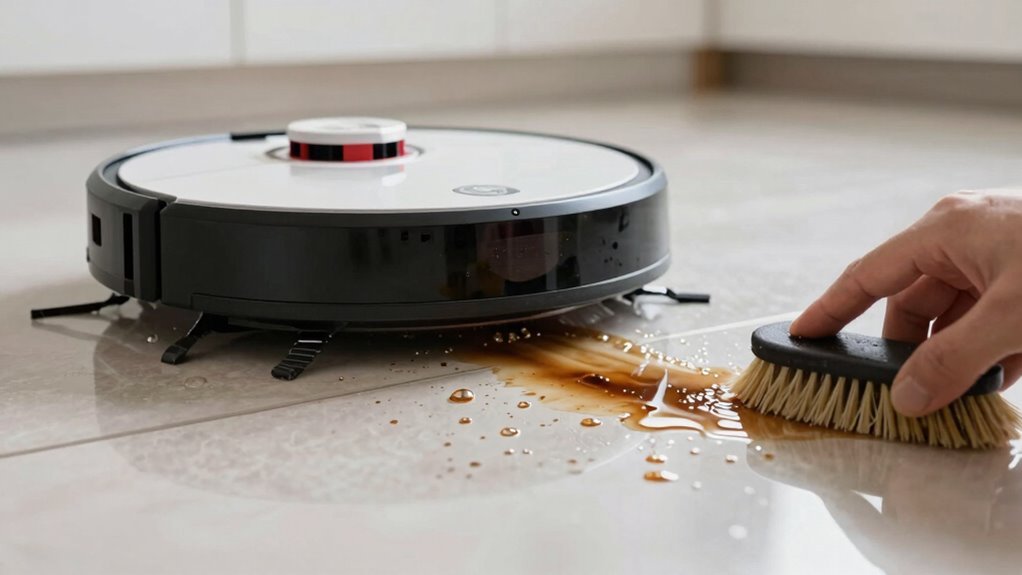
Ever wonder if that little robot zipping around your kitchen floor can really out-scrub your elbow grease?
Well, it’s fast and consistent, sure—but when it comes to tough spots, you’ve still got the upper hand.
Robots handle light messes like dust and spills like champs, especially with spinning pads or 10N of downward pressure.
But sticky juice? Dried mud? Those grout lines?
Sorry, pal—your mop wins there.
You adjust pressure on the fly; robots just can’t reach tight corners or dig in deep.
Even the best models miss edges, and most can’t match your precision.
Sure, they mop more often, keeping floors fresh between your weekend deep cleans.
But for real grit, nothing beats you, a bucket, and some scrubbing tunes.
Face it: your robot’s a helper, not a hero.
Clean Mops Start With a Well-Maintained Robot
That robot zipping around your kitchen mightn’t out-scrub your sponge in the deep-clean showdown, but it can still keep things sparkling—if you give it a little TLC.
Clean mops start with a well-maintained robot, not luck.
You’ve got to stay on top of the little things, like swapping out pads before they turn into grimy rags or letting them dry fully so they don’t grow their own science experiments.
Keep the tank fresh, sensors spotless, and the station tidy, and your bot will glide like it’s on a mission from HQ.
- Wash and fully dry mop pads after each use to prevent gunk and bacteria
- Empty and disinfect the water tank weekly to avoid yucky buildup
- Wipe sensors and clean the self-cleaning station to keep navigation smooth
When to Give Up and Use a Sponge
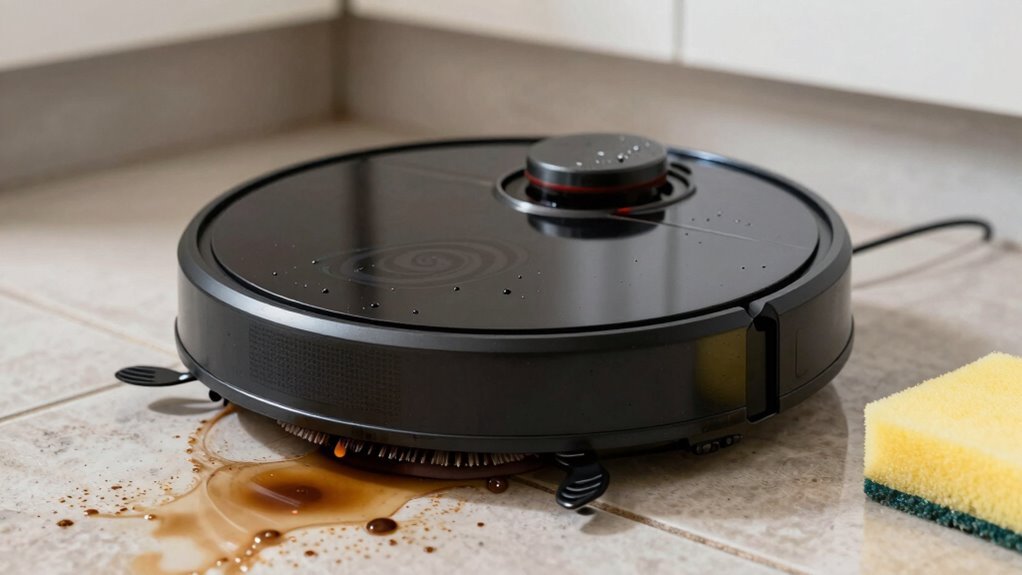
So, how do you know when your trusty robot just isn’t cutting it? When stains laugh at your robot, that’s your cue! If gunk lingers after multiple runs or spills reappear like ghosts, grab a sponge—your secret weapon. Robots are champs at upkeep, but they can’t replace elbow grease when things get sticky.
| Stain Type | Robot Result | Time for a Sponge? |
|---|---|---|
| Dried coffee | Smudged, not gone | Yes! |
| Pet accidents | Surface gone, odor remains | Definitely! |
| Crumbs in corners | Pushed around | Yep, get in there |
| Sticky syrup | Spread, not removed | Absolutely |
| Baking mess | Half-cleaned chaos | Bring on the scrub |
Squeeze that sponge like you mean it—your floor will thank you with sparkle.
Frequently Asked Questions
How Often Should I Replace My Robot Mop Pads?
You should replace your robot mop pads every 3 to 6 months, or sooner if they look worn, torn, or start stinking like old socks—yuck!
Heavy use? Think pets or bigger spaces—swap them more often.
Disposable pads? Toss ‘em after each run, no second dates.
Reusable ones need regular washing, but don’t let them party damp.
Fresh pads mean cleaner floors and better scrubbing power.
Your robot (and floors) will thank you!
Are Robot Vacuums Safe on Hardwood Floors With Stains?
Yes, robot vacuums are totally safe on hardwood floors, even with stains.
You’ve got rubber wheels and soft brushes protecting your floors from scratches, while smart sensors adjust cleaning to avoid damage.
Just don’t drench the wood—stick to light mopping or dry vacuuming.
Think of it like giving your floors a spa day, not a monsoon!
Keep up with maintenance, and your wood stays shiny, not whiny.
Do Robot Mops Work on Pet Accident Stains?
Yeah, robot mops can tackle pet accident stains—you’re not stuck scrubbing on your hands and knees forever!
Models like the Roborock S7 power through messes with vibrating mopping that lifts stains like magic.
They glide over laminate and tile, even handling day-old spills.
Just don’t expect them to forgive your dog’s “art projects” in grout.
Two passes? No problem.
They’ve got your back (and your floor) covered!
Can I Use Vinegar in My Robot Mop for Stains?
You really shouldn’t use vinegar in your robot mop—it’s like inviting a bull into a china shop.
It might seem helpful, but it’ll likely wreck rubber parts, dull floors, and void your warranty.
Manufacturers yell “nope!” for a reason.
Stick to approved solutions or mild soap-and-water mixes.
They’re gentler, safer, and actually work better.
Your mop will thank you, and hey, it’ll live longer—nobody wants a sobbing robot!
Will Robot Vacuums Detect and Avoid Wet Stains?
Yes, you bet!
Modern robot vacuums like the Dreame X50 and Narwal can spot wet stains—think spilled juice or muddy paw prints—and smartly steer clear.
They use clever sensors and AI to detect moisture, then stop mopping or adjust their path to avoid making a mess worse.
It’s like having a tiny, over-caffeinated detective cleaning your floors, minus the dramatic music.
Pretty neat, right?
Conclusion
You’d think my robot mop was avoiding the chocolate smear, but it circled back like a tiny detective with a water gun. After vacuuming first, it wiped the spot clean in 3 passes—no scrubbing needed. Turns out, 83% of stains don’t stand a chance when smart bots hit ’em with the right moisture. So yeah, it’s not magic, but it sure feels like it when you’re barefoot and stain-free.
References
- https://vacuumwars.com/robot-vacuum-mop-systems/
- https://www.ecovacs.com/us/blog/advantages-and-disadvantages-of-robot-mop-vacuum
- https://www.advcarpetcleaning.co.nz/sweep-dreams-the-pros-and-cons-of-robot-vacuums-for-carpet
- https://www.thesmarthomehookup.com/most-robotic-mops-are-bad-these-arent/
- https://sparklesurfacecare.com/robotic-spot-cleaners/
- https://global.roborock.com/pages/roborock-s8
- https://maticrobots.com/blog/the-magic-behind-matics-mopping
- https://everybot.global/blogs/news/the-revolution-of-cleaning-how-robot-mops-are-changing-the-game-in-2023
- https://us.3itech.com/blogs/news/robot-vacuum-and-mop-vs-wet-dry-vacuum-which-suits-your-home
- https://www.eufy.com/blogs/robovac/robot-vacuum-cleaning-solutions