What Are No-Go Zones and How to Use Them?
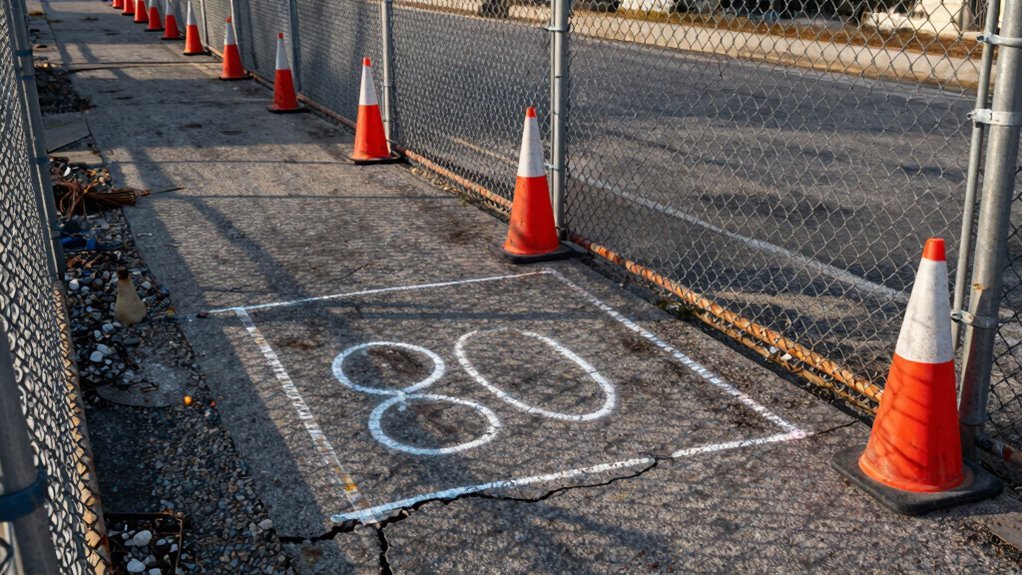
You already dodge sketchy alleys and skip suspicious “free iPhone” links—boom, you’re using no-go zones! These are your personal “do not enter” rules for staying safe, sane, and stress-free in real life, online, and emotionally.
Avoid danger zones, block energy vampires, and mute toxic chatter like a pro. Think of no-go zones as your life’s safety filters—simple, smart, and totally customizable.
Want to fine-tune your boundaries and level up your awareness without the fear? There’s a cool trick or two waiting just around the corner.
What Exactly Are No-Go Zones?

Ever wondered what it means when people talk about “no-go zones”? Well, imagine a place you’re strongly advised not to go—either because it’s too risky or officially off-limits.
These zones are areas where danger, crime, or instability make entry risky, especially if you’re seen as an outsider.
Sometimes, even police hesitate to step in without permission from local leaders.
They can pop up in cities, conflict zones, or around hazardous sites like radiation areas or offshore rigs.
The term also pops up in tech and surgery—robots and doctors avoid their own “no-go zones” to stay safe.
And hey, we even joke about “no-go topics” at dinner—subjects too spicy to discuss!
While they sound like thriller movie scenes, real no-go zones are serious, though not always as scary as rumors paint them.
Think of them as big warning signs: “Caution: proceed at your own risk.”
In some cases, these areas emerge in nations experiencing failed state conditions, where the central government loses effective control over parts of its territory.
Why Recognizing No-Go Zones Matters for Safety
What if you could dodge disaster just by stepping a few feet one way or the other? You can—by respecting no-go zones. These simple boundaries keep you safe from big dangers like moving machines, falling objects, or live wires. Ignoring them isn’t just risky—it’s been linked to real tragedies. But when you follow the lines, cones, or signs, you’re not just obeying rules, you’re outsmarting danger like a pro. Passing zones on rural roads are 11.2% safer for all crashes, showing how designated zones—whether for passing or exclusion—play a critical role in accident prevention.
| Hazard Type | How No-Go Zones Help | Real-World Example |
|---|---|---|
| Heavy machinery | Block blind spots | Trucks can’t see you—stay out! |
| Falling objects | Create safe distance | Stay clear when loads hang above |
| Power lines | Set safe limits | One step closer could shock you |
| Work zones | Guide traffic flow | Keep workers and drivers safe |
| Confusing tasks | Simplify safety | One rule = total protection |
Stay sharp, stay safe, and remember: the smartest move is the one you don’t make.
Physical No-Go Zones: Dangerous Places to Avoid

You’re already dodging danger like a pro by respecting those marked-off zones around machinery and work sites, but now let’s take your safety smarts beyond the cones and signs.
Real-world no-go zones aren’t just for thrill-seekers or action movies—they’re everywhere, from cities to nature’s wildest corners.
Skip these spots like a boss and stay safe:
- High-crime areas or conflict zones where bullets fly more often than birds—and police won’t even go without backup.
- Natural danger zones like avalanche slopes, floodplains, or active volcanoes that say “run” louder than your morning alarm.
- Industrial or restricted sites with toxic chemicals, open pits, or risky radiation—definitely not the place for a selfie.
Treat these like nature’s “do not enter” sign: respect them, avoid them, and live to explore another day—safely.
Digital No-Go Zones: Risky Online Spaces and Behaviors
While you’re already sharp about dodging physical danger zones like construction sites or wild animal habitats, it’s time to turn that same street-smart energy to the digital world—because not all hazards come with warning signs you can see. Clicking recklessly online is like petting a stray raccoon: curious, maybe fun at first, but—yikes—regret hits fast. Watch out for sketchy links, fake giveaways, and sites that look like they’re from 1998. Your data’s valuable, and hackers aren’t picky diners—they’ll feast on anything you toss their way.
| Risk | Consequence | Emotion |
|---|---|---|
| Fake login page | Lost passwords | Dread |
| Clicking “Free iPhone” | Malware surprise | Facepalm |
| Public Wi-Fi login | Stolen bank info | Panic |
| Random email attachment | Ransomware nightmare | Regret |
Emotional No-Go Zones: Protecting Your Mental Well-Being

Ever wonder why some conversations leave you feeling drained, like you just ran a marathon in emotional quicksand? That’s your mind waving a red flag—time to set emotional no-go zones.
These aren’t about cold shoulders or ghosting; they’re healthy boundaries that protect your inner peace. Think of them as mental guardrails, keeping you from veering into stress, anxiety, or burnout.
You’ve got the power to say, “This topic? Not today.” Or, “That person? I’ll keep it light.” It’s not rude—it’s self-respect.
- Block energy vampires: Limit time with people who leave you emotionally wrecked
- Silence guilt trips: You don’t owe anyone access to your emotional bank account
- Pause heated talks: Walk away before words become wounds
You’re not avoiding feelings—you’re honoring them. And hey, peace of mind isn’t selfish. It’s essential.
How to Identify a No-Go Zone in Daily Life
What does a no-go zone look like on an ordinary Tuesday afternoon? Imagine walking past boarded-up shops, cracked sidewalks, and alleys darker than a vampire’s vacation home.
You spot graffiti tags that definitely aren’t from art class, trash dancing in the wind, and every window has bars like it’s auditioning for prison.
People avoid eye contact, dogs growl from behind “Beware” signs, and you swear that mailbox has more locks than Fort Knox.
Sirens wail like they’re in a band competition, and groups loiter like they’ve turned public space into their personal waiting room.
Crime maps? Red as a chili pepper.
Neighbors move more than their Netflix queue, and no one seems to know each other—or care.
Parks sit empty after 4 PM, and if a community center exists, it’s ghost-town quiet.
Locals whisper, “Don’t go there after dark,” not for drama, but survival.
You’re not paranoid—you’re observant.
Trust those clues.
Your safety senses are tingling, and they’re probably right.
Setting Personal Boundaries as Preventive No-Go Zones
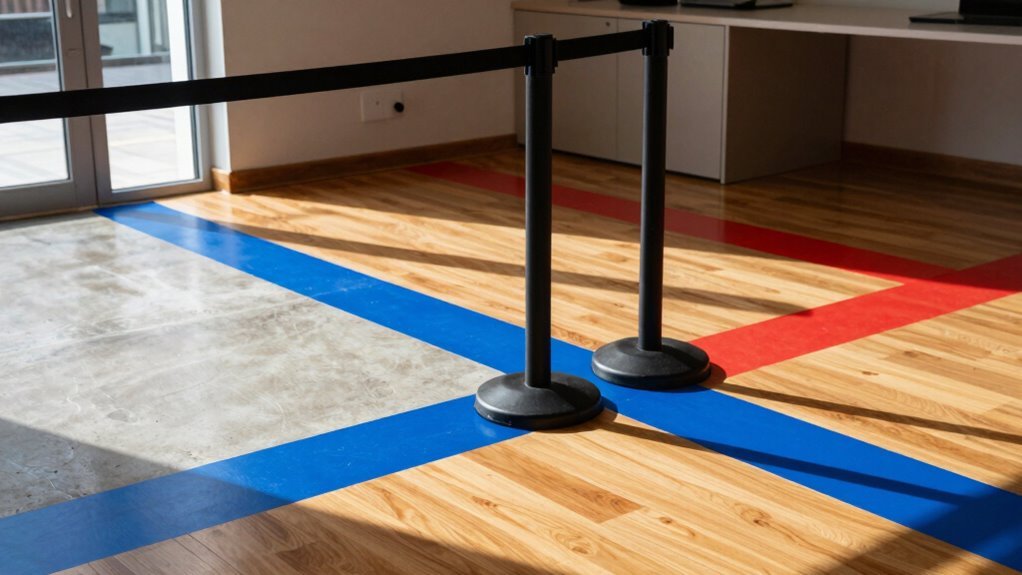
Why wait for burnout to knock you flat when you can set up a “do not disturb” sign for your soul?
You’ve got the power to protect your peace before chaos hits. Think of personal boundaries as your emotional seatbelt—simple, smart, and life-saving. By setting preventive no-go zones, you’re not being selfish; you’re being strategic.
- Honor your values—say “no” to late-night work pings so rest stays sacred.
- Trust your gut—if small talk drains you, it’s okay to skip the office gossip parade.
- Protect your energy—mute toxic chats like you’d unsubscribe from spam mail.
You’re building a life where calm isn’t rare—it’s routine.
Stick to your lines, laugh at the guilt trips, and watch how stress shrinks.
After all, a healthy “no” today prevents a miserable “I can’t” tomorrow.
When to Reassess a No-Go Zone’s Risk Level
| Trigger | Why It Matters | Quick Tip |
|---|---|---|
| New equipment arrives | Bigger machines need bigger buffers | Measure twice, operate once |
| Weather turns wild | Wind or rain wobbles gear | When in doubt, step out |
| Voltage zone changes | Higher voltage = wider zone | 3m, 6m, 8m—mind the gap! |
| Team members rotate | New folks, new awareness needed | Brief like you mean it |
| Work plan evolves | Scope creep? Risk creep! | Update the map, then move |
Stay sharp, laugh often, and never skip the zone check!
Teaching Kids and Teens About No-Go Zones

How do you help a kid say “no” without feeling the pressure to explain why?
You give them clear rules, practice, and the confidence that they’re backed by your trust.
Start early, keep it simple, and grow the conversation as they do.
Whether it’s a street corner, a chat room, or a party with shaky vibes, no-go zones are their personal safety nets.
You’ve got this—and so do they.
- Use maps and role-play to make boundaries real and reduce panic in the moment.
- Teach ready-made lines like “My mom texts if I’m late—gotta go!” so they can exit smoothly.
- Set tech limits together, like blocking sketchy DMs, so safety feels like teamwork, not a trap.
Think of it as empowerment with training wheels: fun, firm, and totally flexible as they grow.
Balancing Awareness Without Living in Fear
You’ve already given your kid the tools to spot their no-go zones and speak up with confidence—now let’s talk about not turning every sidewalk and subway into a spy movie in their head.
Crime rates haven’t exploded like the headlines scream, and most so-called “no-go zones” are more nuanced than feared.
You’re not dodging landmines just walking downtown—real risks are usually tied to time, place, and activity, not whole neighborhoods.
Stay aware, not anxious: notice behavior, not just faces.
A drunk guy yelling? Maybe avoid.
A busy market at noon? Probably perfect.
Use real data, like local crime maps, instead of rumors from that one paranoid uncle online.
Talk to locals—they’ll tell you the truth about their streets.
Plan smart, stay calm, and keep your spidey-sense set to “chill alert,” not “red alert.”
Safety’s about smarts, not fear.
Frequently Asked Questions
Are No-Go Zones Only in Cities?
No, you won’t only find no-go zones in cities—you’re way more versatile than that.
You’ll see them on the high seas, where boats steer clear of oil rigs, and even on sailboats dodging tricky wind angles.
They pop up near nuclear plants, disaster sites, and war-torn borders too.
Can a Place Become a No-Go Zone Overnight?
Yes, a place can turn into a no-go zone overnight—like flipping a switch from “welcome” to “run for your life.”
You’ll see it happen when riots explode, gangs take over, or a disaster cuts power and comms.
Suddenly, cops won’t go in, ambulances stop showing up, and locals start whispering, “Don’t go there.”
It’s not just dangerous, it’s *unofficially enemy territory*.
And boom—you’re in a no-go zone before you even pack your bags.
Do No-Go Zones Apply During Emergencies?
Yes, no-go zones still apply during emergencies—you can’t just wing it like you’re in an action movie.
Even when time’s tight, you’ve got to respect those boundaries, especially near powerlines.
Stay put, call for help, and let trained pros handle it.
Think of it like a “don’t touch the stove” rule—if it’s hot, it’s hot, emergency or not.
Safety first, hero later!
Are Rural Areas Ever No-Go Zones?
Ever think rural areas could be no-go zones?
Well, they can—sort of.
You’re not dodging gangs in alleys, but distance, bad roads, and spotty cell service can keep cops, courts, and doctors from reaching you fast.
Add political gatekeepers or legal deserts, and boom—access vanishes.
It’s not war zones; it’s wear-and-tear-of-neglect zones.
Still tough, still real, just quieter.
Hey, at least your GPS might survive!
Can Pets Be in No-Go Zones Safely?
Yes, you can keep your pets safe in no-go zones when you set things up right.
Use sturdy gates or crates they can’t chew or knock over, and never block access to water or litter boxes.
Make sure the space is well-ventilated, comfy, and free of hazards.
Pair boundaries with fun toys and treats, not scolding, so your pet actually likes the rules.
It’s like giving them their own little “safehouse” they’re happy to respect—cue the pet superhero theme song!
Conclusion
You dodged danger, set boundaries, and even taught the kids—great job! But don’t get *so* good at avoiding no-go zones that you treat your couch like a forbidden fortress, afraid to move. Oops. The irony? Staying safe shouldn’t mean hiding under blankets, binge-watching survival shows. Stay sharp, not scared! Life’s adventures await—just skip the sketchy shortcuts. You’ve got this!
References
- https://ammo.com/articles/no-go-zones-western-failed-states-guide
- https://www.merriam-webster.com/dictionary/no-go area
- https://dictionary.cambridge.org/us/example/english/no-go-zone
- https://www.catholicworldreport.com/2017/10/17/raheem-kassams-no-go-zones-in-unsettling-necessary-reading/
- https://tribunemag.co.uk/2021/07/the-myth-of-the-no-go-zone
- https://techxplore.com/news/2025-08-odds-zones-rural-roads-safer.html
- https://ops.fhwa.dot.gov/publications/fhwahop25146/fhwahop25146.pdf
- https://www.icmm.com/en-gb/research/health-safety/benchmarking-2024-safety-data
- https://www.ruralhealthinfo.org/rural-monitor/road-safety
- https://pmc.ncbi.nlm.nih.gov/articles/PMC8463774/