Robot Mopping on Tile vs Hardwood: Differences
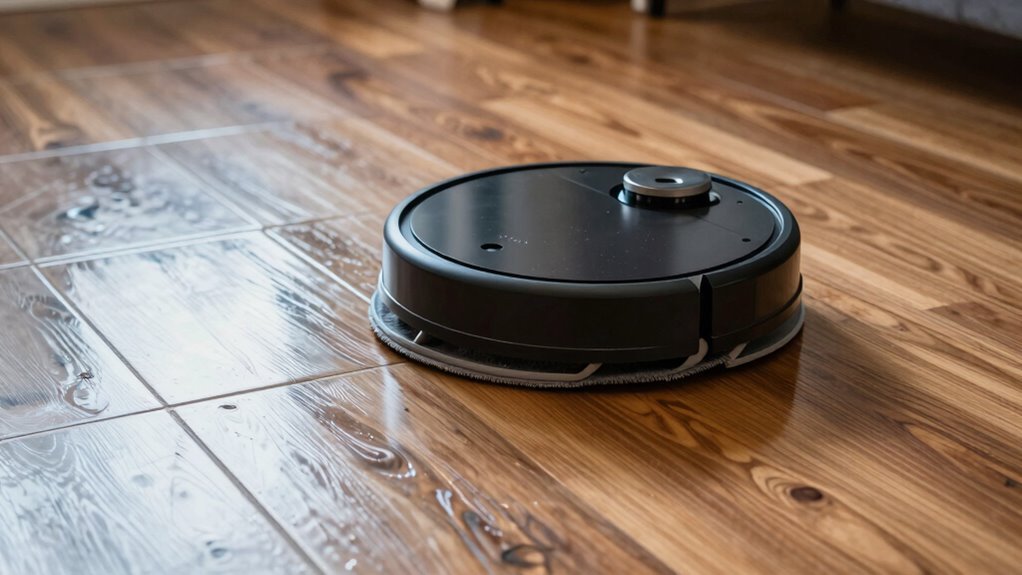
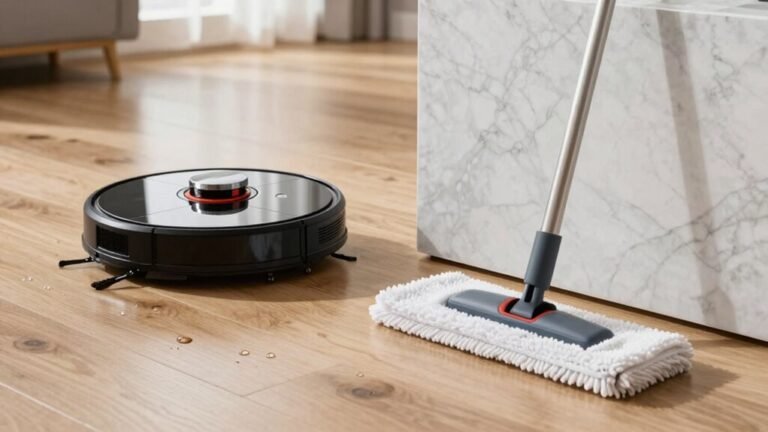
Robot mopping on tile vs hardwood requires different approaches for optimal results. Hardwood floors are more sensitive, so it’s essential to use low water settings and gentle microfiber pads to avoid warping or damage.
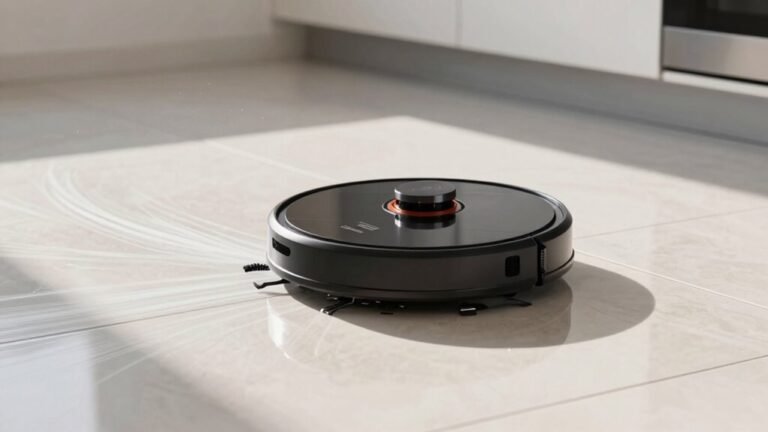
Tile floors are more durable, making them suitable for higher water flow and stronger scrubbing actions. With robot mopping on tile vs hardwood, you can target grime-filled grout lines without worry, while still protecting delicate wood surfaces.
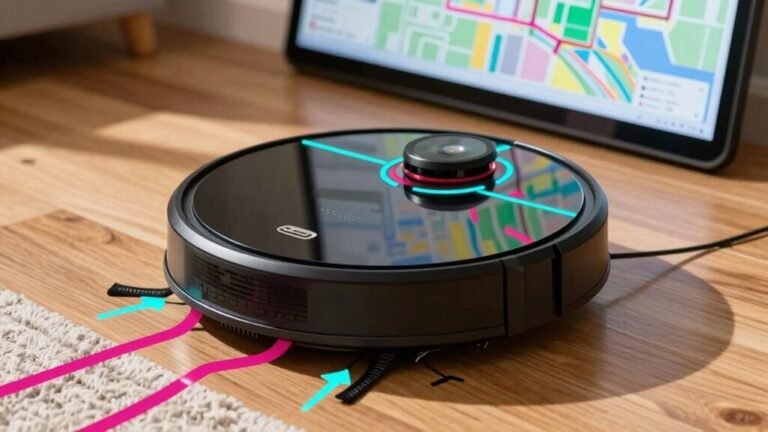
Smart mapping technology helps the robot adjust settings automatically between rooms. This ensures proper cleaning intensity and moisture levels for each floor type, keeping both tile and hardwood in top condition.
Why Hardwood and Tile Need Different Robot Mops
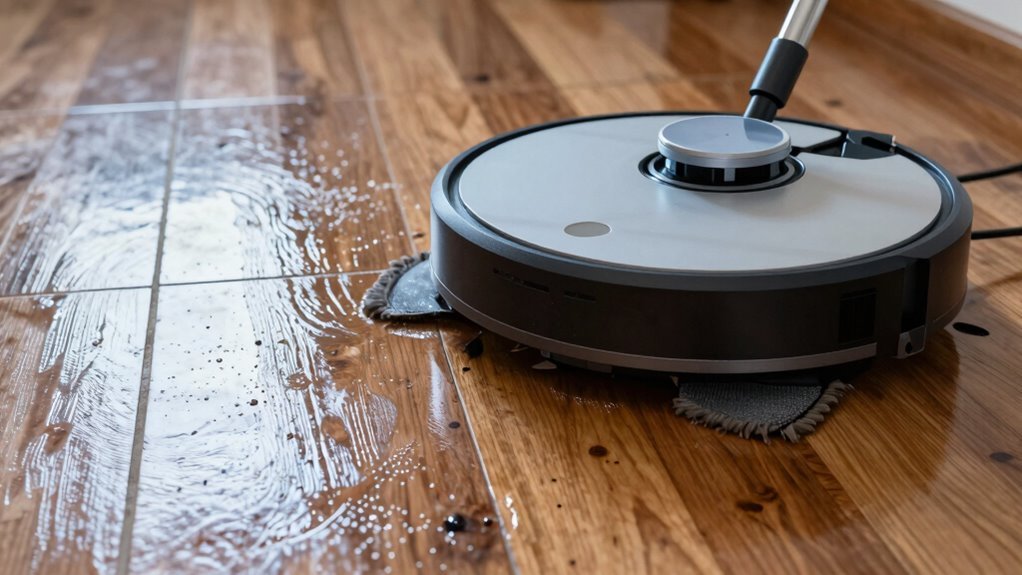
While you might think a floor’s a floor, your robot mop knows better—hardwood and tile might look similar under your feet, but they’re really as different as a cat and a cactus when it comes to cleaning.
You’ve got to treat them right, or you’ll end up with scratched floors or warped planks.
Hardwood’s soft and porous, so it needs gentle microfiber pads and rubber wheels—no stiff brushes allowed!
Tile, tough as nails, laughs off heavy scrubbing and loves higher suction.
It’s got grout lines playing hide-and-seek with dirt, so your bot needs smarts and power to win.
Hardwood prefers calm, dry wipes; tile can handle a splashy dance.
Use the wrong settings? Oops—welcome to swirl city or swollen seams.
Pick a robot built to respect these differences, and both floors will stay shiny, safe, and step-on-ready every time.
Robotic mops should only be used on sealed hardwood to prevent water damage, as moisture can cause swelling or warping in unsealed wood sealed hardwood required.
Water Settings: Protecting Hardwood While Cleaning Tile
You wouldn’t wash a silk scarf with a scrub brush, so why treat your floors like one-size-fits-all?
When mopping, your robot should know the difference between tough tile and tender hardwood.
Too much water ruins hardwood fast, but tile can take the splash!
Smart bots adjust on the fly, so you get clean without the risk.
- Use low or “dry” settings on hardwood to avoid warping and keep finishes looking fresh
- Crank up the flow for tile—those grout lines love a little extra moisture
- Set room-specific modes via app so your bot doesn’t flood the bedroom but deep-cleans the kitchen
With customizable water control, your floors stay happy, healthy, and hazard-free. It’s like a spa day—different treatments for different surfaces! Some models even feature floor-type detection to automate these adjustments seamlessly.
Scrubbing Strength: Matching Power to Floor Durability
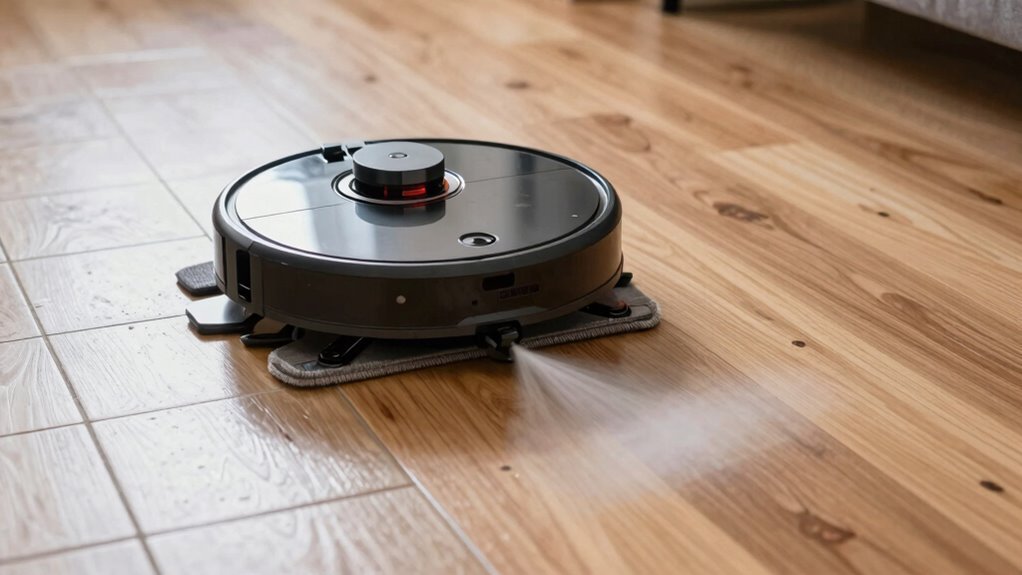
What’s the point of power if it leaves your floors worse for wear? You wouldn’t sandpaper your hardwood, so why scrub it like tile? Sealed hardwood’s delicate—too much pressure or fast-spinning pads can dull the finish fast, especially if gunk’s trapped in the mop.
But tile? Go ahead, activate those dual spinning pads at 200 rpm; grout’s tough and loves the extra scrub.
Flat pads are gentler, perfect for daily hardwood cleanups, while rollers and aggressive systems shine on big, durable tile floors.
Truth is, more force doesn’t always mean cleaner floors—sometimes it’s just overkill.
Match the machine’s muscle to your floor’s backbone: light and steady for wood, bold and brisk for tile.
Think of it like brushing your teeth—firm enough to clean, not so hard you damage the enamel.
Your floors will thank you with lasting shine.
Best Robot Mop Features for Hardwood and Tile Floors
When floors could talk, yours would probably complain about getting soaked or scratched by the wrong mop—so skip the drama and pick a robot that knows better.
You want a smart sidekick that treats your hardwood with care and tackles tile grime like a pro.
Here’s what to look for:
- Adjustable water flow and smart zone settings so your sealed hardwood stays safe while tile gets the deep clean it craves
- Dual spinning or vibrating mop pads with soft, washable microfiber—tough on dirt but gentle on finishes, plus they reach corners like a champ
- Precision mapping with no-mop zones and auto carpet detection so your robot dodges rugs and skips sensitive spots without a second thought
Pair that with strong navigation and leak-proof design, and you’ve got a floor-friendly tech buddy that mops without mishaps.
Your hardwood will thank you, and your tile? It’ll shine like it’s been hand-scrubbed (but you never lifted a finger).
How to Maintain Floors and Your Robot Mop
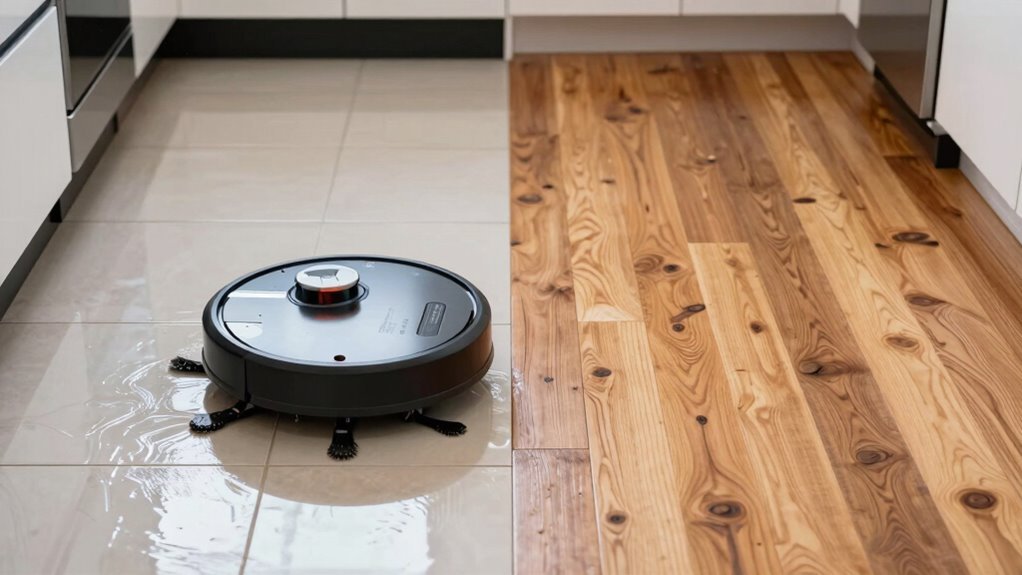
Ever wonder why your robot mop seems off-course or leaves streaks behind? A little prep and care go a long way! Clear clutter, lift rugs, and sweep first—your mop (and floors) will thank you. Keep pads fresh, tanks rinsed, and brushes free of hair to avoid smears and scratches. Use the right cleaner: gentle for hardwood, tough on tile grime. And don’t forget—dry pads before reuse, or you’ll invite mildew to the party (rude, right?).
| Task | Why It Matters | How Often? |
|---|---|---|
| Empty water tank & clean pad | Prevents mold and streaks | After every use |
| Wipe sensors | Keeps your bot from “losing its mind” | Weekly |
| Descale tank | Avoids clogs and weak sprays | Monthly |
| Clean wheels | Stops hair trails and drag marks | Every 1–2 months |
| Replace filters | Traps dust so it doesn’t scratch floors | Every 3–6 months |
Frequently Asked Questions
Can Robot Mops Clean Grout on Tile Floors?
Yeah, robot mops can clean grout on tile floors, but don’t expect miracles.
They’ll grab surface dirt and light stains, sure—but deep-down gunk? That’s a whole other battle.
You’ll see some improvement, especially with chamois mops and strong suction, but grout lines love to hide dirt like tiny bunkers.
For real clean? Roll in once in a while with a brush.
Think of it as flossing for your floors—robots help, but you still gotta do the gritty work.
Do Robot Mops Work on Waxed Hardwood Floors?
No, you shouldn’t use robot mops on waxed hardwood—they’re like kryptonite to wax!
Water can cloud or dull the finish, and soggy pads might smear or soften the wax.
Stick to dry vacuuming, which is totally safe.
If you *really* want to mop, check your floor’s seal and use the tiniest bit of water possible.
But honestly? Skip it and save your shine.
Your floor’ll thank you!
Are Robot Mops Safe for Sealed Hardwood?
Yes, robot mops are safe for sealed hardwood—you’re good to go!
Think of your floor like a knight in shining armor: the sealant’s the armor, and the mop’s just wiping off the dust, not breaking through.
Just keep water light, use wood-safe cleaner, and your floors stay shiny and scratch-free.
It’s like a spa day, not a storm—gentle, safe, and oh-so-sleek!
How Often Should I Replace Mop Pads?
You should replace your mop pads every few months, depending on how dirty your floors get and how often you clean.
If you’re mopping daily or tackling gritty kitchens and tile, swap them out sooner—maybe every 2 months.
Reusables usually last up to 6 months with good care, but if they’re frayed, stinky, or leaving streaks, chuck ‘em.
Your robot’s app might even nudge you when it’s time—think of it as your tiny robot’s way of saying, “Hey, I need a fresh pair of socks!”
Can Robot Mops Detect Floor Type Automatically?
You’re probably wondering, “Can my robot really know where to mop and where to skip?” Yes, it can! Many modern robot mops detect floor types automatically using smart sensors and maps. They’ll glide over tile, then smartly avoid carpets—no soggy rugs on your watch. Some even lift their mop pads like little dancers dodging puddles. Pretty neat, huh? You’re not just cleaning—you’re tech-ing!
Conclusion
You’ve got your robot sidekick ready—now imagine it’s a dancer, gliding across tile like it’s stomping on grapes for wine, then tiptoeing over hardwood like it’s sneaking past a sleeping dragon. Smart water control and gentle brushes keep your floors shining, not crying. Treat both floors right, and your robot won’t just clean—it’ll perform. Happy mopping, maestro!
References
- https://www.carpetzonellc.com/blogs/robot-vacuums-mops-which-flooring-types-play-best-with-your-cleaning-bots
- https://us.narwal.com/blogs/product/robot-vacuum-clean-floors-effectively
- https://us.narwal.com/blogs/product/robot-vacuum-floor-compatibility
- https://northerncoloradocarpets.com/how-well-do-robot-vacuums-work-on-different-floor-types/
- https://us.roborock.com/blogs/blog/5-tips-for-choosing-the-best-robotic-vacuum-for-tile-floors
- https://www.ecovacs.com/au/blog/mopping-vaccum-for-cleaning-floors
- https://homesupport.irobot.com/s/article/28510
- https://us.narwal.com/blogs/product/robot-vacuums-on-mixed-flooring
- https://www.youtube.com/watch?v=CsVxbO14aEg
- https://us.roborock.com/blogs/blog/the-smart-and-efficient-way-to-mop-floors