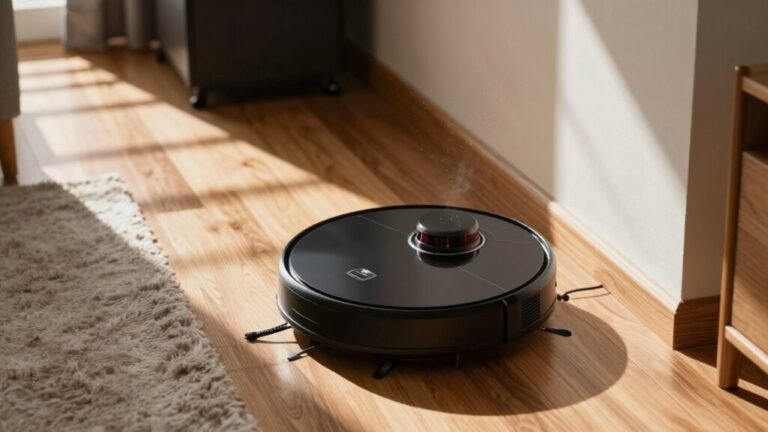
How to Choose the Right Robot Vacuum for Your Home
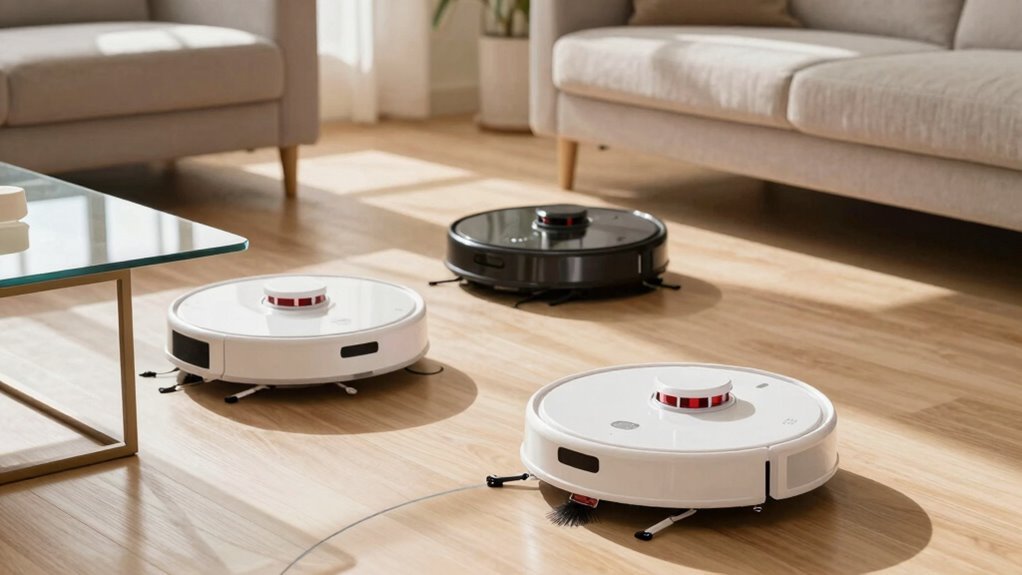
You’ve got floors, maybe pets, and definitely better things to do than vacuum. Choosing the right robot vacuum starts with matching it to your home’s floor type—whether that’s hardwood, tile, or carpet—so it cleans effectively without causing damage.
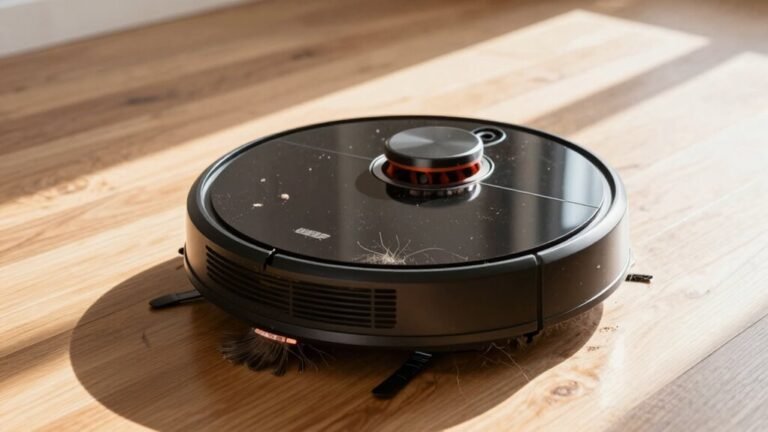
Look for a robot vacuum with tangle-free brushes if you have pets, as these handle fur and debris without constant maintenance. Strong suction and specialized cleaning patterns make a big difference in removing dirt from high-traffic areas.
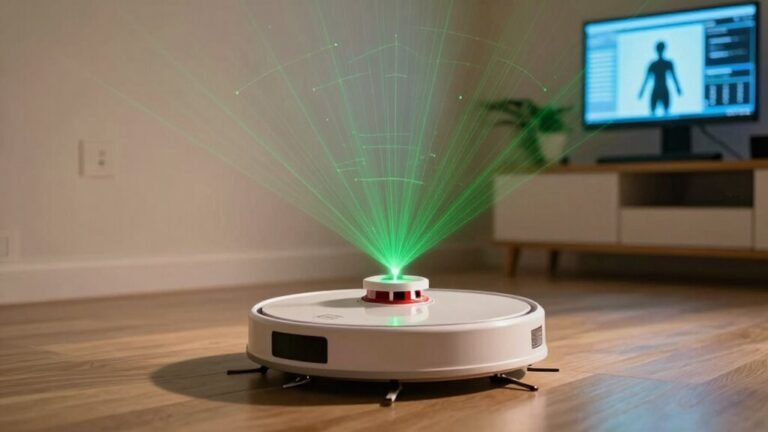
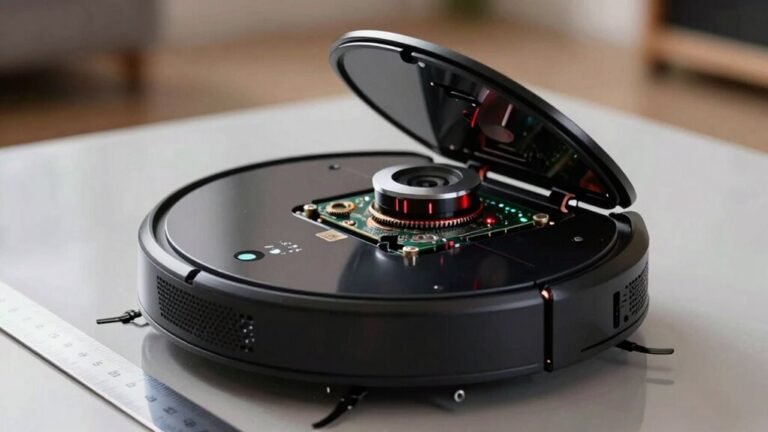
Smart navigation is essential so your robot vacuum maps your space efficiently and doesn’t bump around aimlessly. Advanced models use LiDAR or camera-based systems to avoid obstacles and cover every room thoroughly.
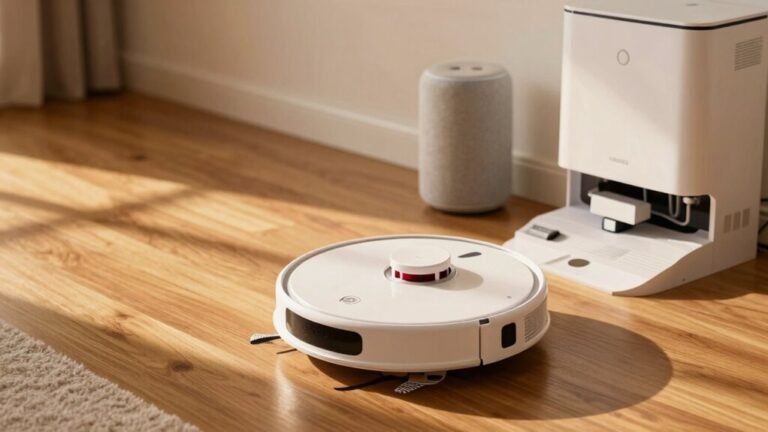
Consider extra features like self-emptying bins or mopping functions for a truly hands-off experience. Integration with Alexa or Google Assistant adds convenience, letting you schedule cleanings with voice commands.
Make sure the robot vacuum fits your budget and operates quietly enough to run during the day. Real user reviews are invaluable for spotting reliability issues and performance quirks before you buy.
Match Your Floor Type to the Right Robot Vacuum
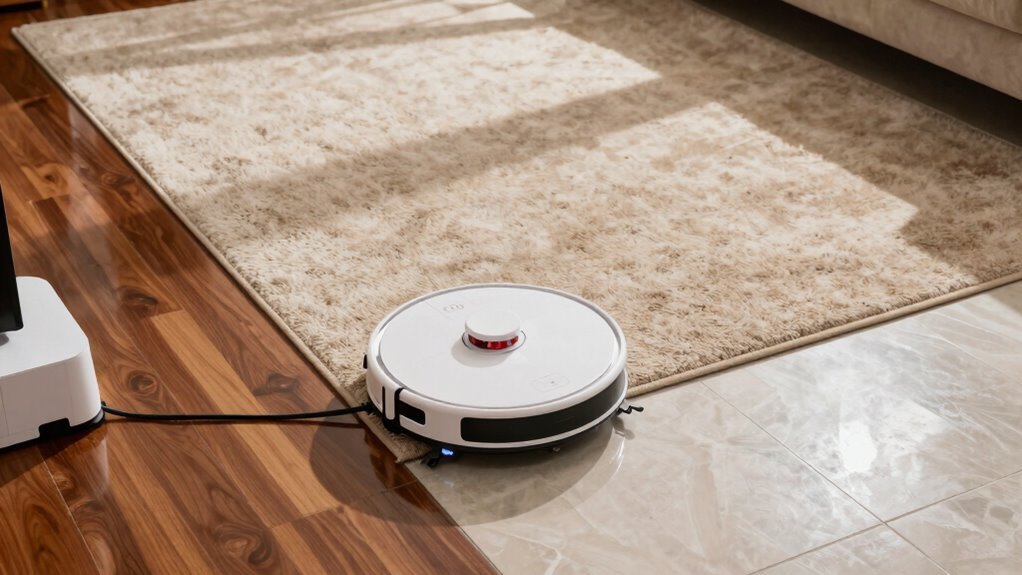
Wondering if your robot vacuum will actually *work* on that plush shag rug or会不会 just give up trying to climb onto your kitchen tiles?
Good news: on smooth floors like hardwood, laminate, vinyl, and tile, your bot will zip around like it owns the place, picking up most debris with ease.
Tile and vinyl even welcome mopping, as long as water control is smart.
But carpet? That’s where things get spicy.
Low- to medium-pile? No problem—just pick a model with strong suction and a hybrid brush roll.
High-pile or shag? Only high-end bots dare, and even then, they might struggle.
Look for tangle-resistant rollers, strong climbing power (60mm+), and automatic suction boosts.
And if your home’s a mix of surfaces, choose a robot with floor sensing and customizable per-room settings.
It’ll adapt like a pro—no tantrums at the rug’s edge.
Models with minimal moisture in mopping features help protect sensitive hardwood from water damage while still offering light mopping functionality.
Pick a Robot Vacuum That Handles Pet Hair and Debris
How do you keep your floors fur-free when your furry friends treat your home like their personal shedding studio?
You grab a robot vacuum built for the mess!
Look for dual rubber brushes—they grab pet hair without tangling, unlike bristly rollers.
Models like the Roborock S8 MaxV Ultra and Qrevo Curv nail this with tangle-free tech and serious suction, some hitting 22,000 Pa for deep-clean power.
Edge-sweeping brushes nab stray clumps along baseboards, while smart debris detection tells the bot to go back and finish the job.
If you want hands-off cleaning, pick one with a self-emptying dock that stores dust for weeks.
Even budget picks like the Eufy C10 T2292 handle fur like champs.
With the right model, you’ll laugh, not stress, when your pet sheds a blizzard indoors.
AI-powered mapping helps the robot learn your home layout and avoid obstacles while focusing on high-shedding areas.
Choose a Robot Vacuum With Smarter Navigation and Mapping
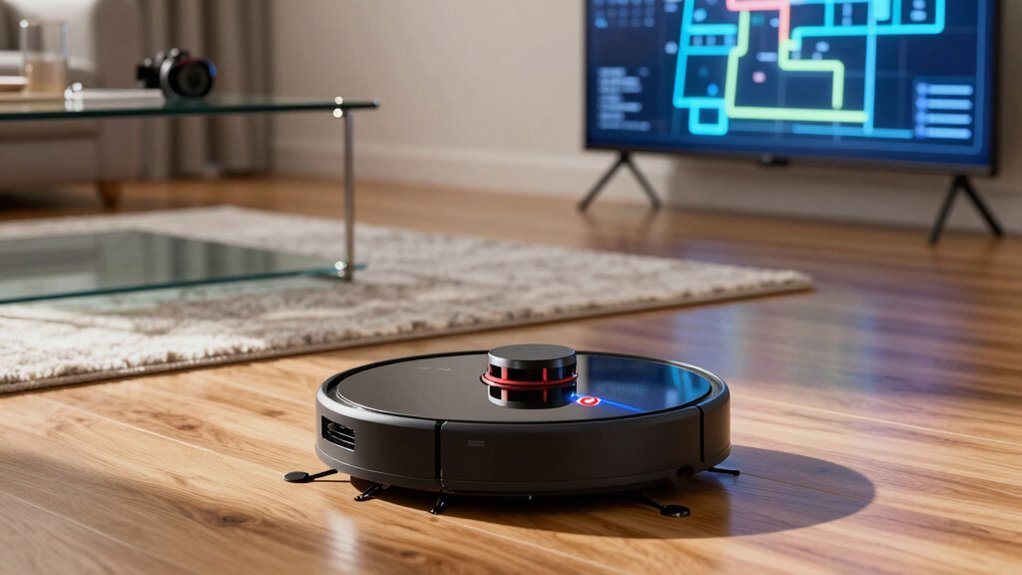
Even if your home looks like a maze to you, your robot vacuum shouldn’t have to guess its way around.
Opt for models with LiDAR navigation—it’s like giving your robot a laser-powered map, so it zips in straight lines and never misses a spot, even in the dark.
Camera-based systems work okay in bright rooms but can stumble in low light.
Smart mapping beats random bouncing every time: your robot builds a real floorplan, cleans room by room, and doesn’t retrace its steps like it’s lost.
Plus, no more frantic zigzags into furniture!
In the app, you can name rooms, set no-go zones, and even clean just the hallway—no full-home tour required.
Advanced sensors help it dodge toys, cords, and that rogue sock under the couch.
Think of it as a tiny, brilliant janitor with spatial awareness.
With smarter navigation, your floors get clean, your sanity stays intact, and your robot actually knows where the living room ends and the kitchen begins.
Decide on Self-Emptying or Mopping Features
Ready to ditch the daily dustbin dread or wipe away messes without lifting a mop?
If you’ve got pets, kids, or just hate touching dirt, a self-emptying base is a game-changer—it sucks debris into a larger bag every few days, so you only empty it monthly.
Great for allergies, and yes, it’s worth the extra cost if you value your time (and sanity).
Just mind the noise—it can be loud!
Prefer hands-on control? Skip it and save.
Now, about mopping: if you’ve got lots of hard floors and sticky spills, a robot that drags or scrubs with spinning pads can keep things fresh.
High-end models even wash and dry the pad themselves—talk about spoiled!
But if your home’s mostly carpet, mopping’s just extra baggage.
Choose what fits your life, not the fanciest box.
Verify Your Robot Vacuum Works With Alexa or Google
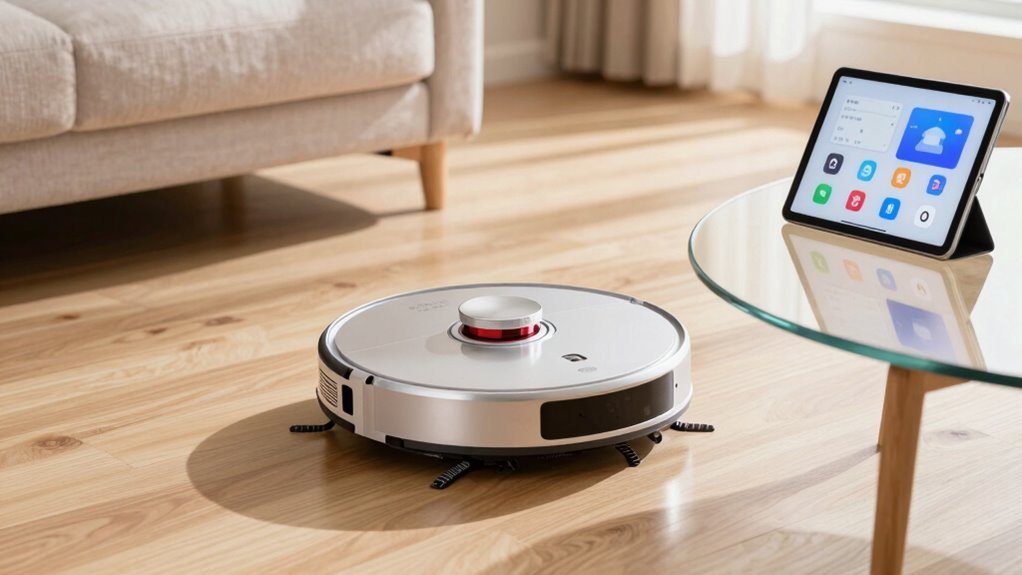
You’ve picked your dream robot vacuum—maybe it empties itself like a tiny, tireless butler or mops up spills like a mini maid—and now it’s time to make sure it plays well with your smart home crew.
Double-check that it actually works with Alexa or Google by looking for the official badge on the product page—don’t just assume.
Make sure your Wi-Fi runs on 2.4 GHz, because most smart vacuums need it.
Your router shouldn’t block guests or isolate devices, or your vacuum might throw a tech tantrum.
Confirm the app links smoothly with your assistant and supports commands like “start cleaning” or “go home.”
Bonus points if you can tell it to clean the kitchen by voice!
Name it something fun like “Dusty” so bossing it around feels natural.
And hey, if it gets lost, just ask, “Where’s Dusty?”—if that feature’s supported, you’re golden.
Set Your Robot Vacuum Budget Based on Key Features
If you’re ready to bring a robot vacuum into your home, setting a smart budget starts with knowing which features actually make a difference—because tossing money at the fanciest model won’t help if it’s overkill for your living room jungle.
You don’t need a robot that empties itself if you’ve got two cats and a dust bunny problem, but solid navigation? That’s gold.
- LiDAR mapping under $300? Grab it—your floors will get cleaned, not just bumped into.
- Skip extreme suction unless you’ve got shag rugs or a dog that sheds like a snowstorm.
- App control beats a clunky remote—schedule cleanings while you binge your favorite show.
- Auto-empty docks cost more, but hey, less trash duty? Yes, please.
- Value isn’t price—it’s performance per dollar. Sometimes cheaper actually cleans smarter.
Weigh Robot Vacuum Noise Levels for Daily Use
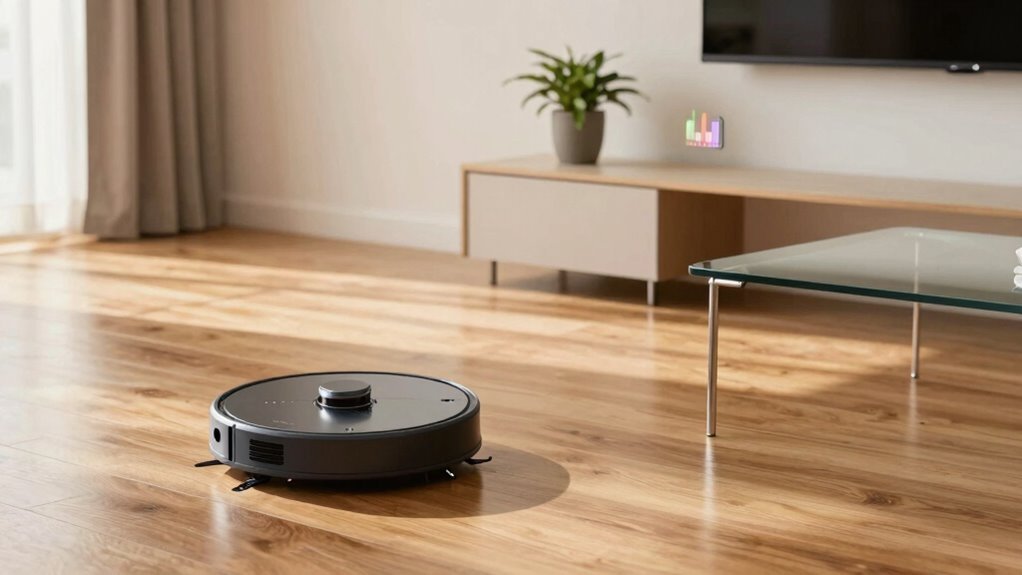
Ever wonder why some robot vacuums sound like a whisper and others roar like a hungry dinosaur?
Well, most run between 55–70 dB, but even small differences can make a big impact.
A 3–5 dB bump mightn’t sound like much, but thanks to the sneaky logarithmic scale, it can feel noticeably louder—especially during quiet nights or Zoom calls.
If you want truly peaceful cleaning, aim for models under 60 dB; they’re like a murmur in the background.
Open spaces? Hard floors? Sound bounces more, so go quieter.
And watch out—self-emptying docks can blast up to 80 dB, so schedule those for daytime.
But it’s not just volume: a smooth hum beats an annoying whine, even at the same level.
Look for acoustic insulation and optimized airflow—they keep suction strong without the racket.
Pick a model that’s not just quiet, but *pleasant* to live with every day.
Your ears (and pets) will thank you!
Use Real Reviews to Find the Best Robot Vacuum for Your Home
- Look for models with few one-star reviews—happy owners usually mean solid quality
- Spot patterns: if half the pet owners mention hair tangles, you’ll likely too
- Compare ratings distribution not just averages—lots of 1s and 5s? That’s a red flag
- Check recent reviews for firmware glitches or hardware slips no one’s talking about yet
- Match features to your life—cluttered space? Pet slobber? Reviews will tell you what specs can’t
Real talk beats shiny ads every time.
Frequently Asked Questions
How Long Do Robot Vacuum Batteries Typically Last?
Your robot vacuum’s battery usually lasts 2–3 years, with some lasting up to 5 if you treat it right.
Most handle 300–500 charge cycles before slowing down.
You’ll notice it’s aging when it can’t clean as long on a single charge—like calling it quits halfway through your living room!
Keep it docked, avoid extreme temps, and it’ll happily scoot around your home for years.
Think of it as a tiny, hardworking pet with a decent battery lifespan!
Can Robot Vacuums Get Stuck on Rugs or Cables?
Yeah, robot vacuums can totally get stuck on rugs and cables—about 60% of users report at least one jam per month!
Thick shag rugs snag wheels, dark patterns confuse sensors, and cords love to tangle like earbuds in a pocket. But don’t worry, modern bots dodge these traps better, and a quick tidy-up keeps your little robo-friend zipping smoothly, not spinning wildly like it’s doing the electric slide.
Do Robot Vacuums Work Well in Dark Rooms?
Yeah, robot vacuums work great in the dark—no need to leave the lights on!
If yours uses LiDAR or infrared, it zips around like a tiny night owl, mapping rooms and dodging obstacles without tripping.
Just avoid pitch-black spaces if it relies on cameras, though.
Think of it as your vacuum’s version of night vision—clever, quiet, and sneaky efficient while you sleep!
Are Replacement Parts Easy to Find and Affordable?
You’ll pull your hair out trying to find affordable, accessible parts—‘you can’t fix what you can’t get’ rings true here.
Manufacturers like Roborock and Samsung slam the door on spare components, making repairs feel impossible.
Even simple fixes turn into pricey replacements, and let’s be real—no one wants to buy a whole new robot because one wheel’s acting up.
It’s frustrating, but knowing this upfront helps you dodge future headaches.
Can I Schedule Cleanings When I’m Not Home?
You bet you can schedule cleanings when you’re not home—no babysitting required!
Just set it up through the app or on-board controls, and your robot gets to work while you’re out.
With cloud control, you can even start, pause, or check in remotely.
Smart scheduling, self-recharging, and no-go zones mean it cleans safely and solo.
It’s like having a tiny, enthusiastic roommate who actually does the chores!
Conclusion
You’ve got this! Did you know 8 out of 10 robot vacuums today learn your home layout in just one run? That’s like a tiny robo-genius mapping your living room while you sip coffee. Just match it to your floors, pets, and smart home, and boom—clean floors with zero effort. Think less chore, more chill. Go ahead, treat yourself to that sweet, sweet automation. Your future self (and your floors) will high-five you.
References
- https://us.narwal.com/blogs/product/robot-vacuum-floor-compatibility
- https://northerncoloradocarpets.com/how-well-do-robot-vacuums-work-on-different-floor-types/
- https://vacuumwars.com/vacuum-wars-best-robot-vacuums/
- http://www.thesmarthomehookup.com/ultimate-robot-vacuum-and-mop-comparison-2025/
- https://www.dreametech.com/pages/robot-vacuum-and-mop-comparison
- https://www.youtube.com/watch?v=Tz6U9QkXn5I
- https://www.irobot.com/en_US/comparison-chart.html
- https://us.narwal.com/blogs/pet-friendly/robot-vacuum-pet-hair-removal
- https://vacuumwars.com/best-robot-vacuum-for-pet-hair/
- https://www.consumerreports.org/appliances/vacuum-cleaners/best-robotic-vacuums-for-pet-hair-a6341573082/