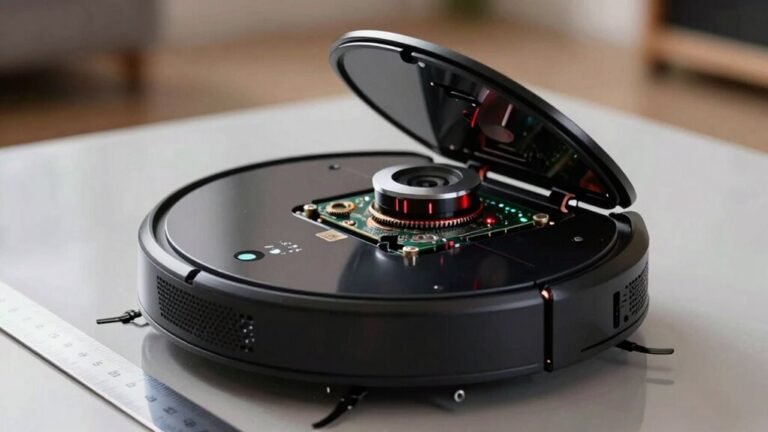
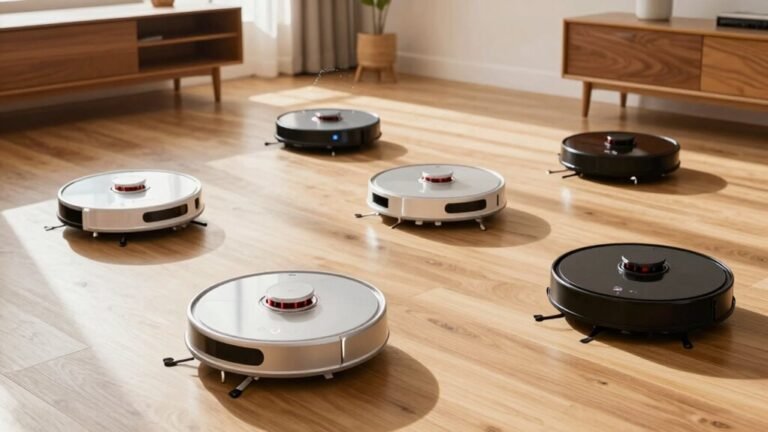
5 Best Robot Vacuums for Beginners (Easy to Use, Hard to Quit)
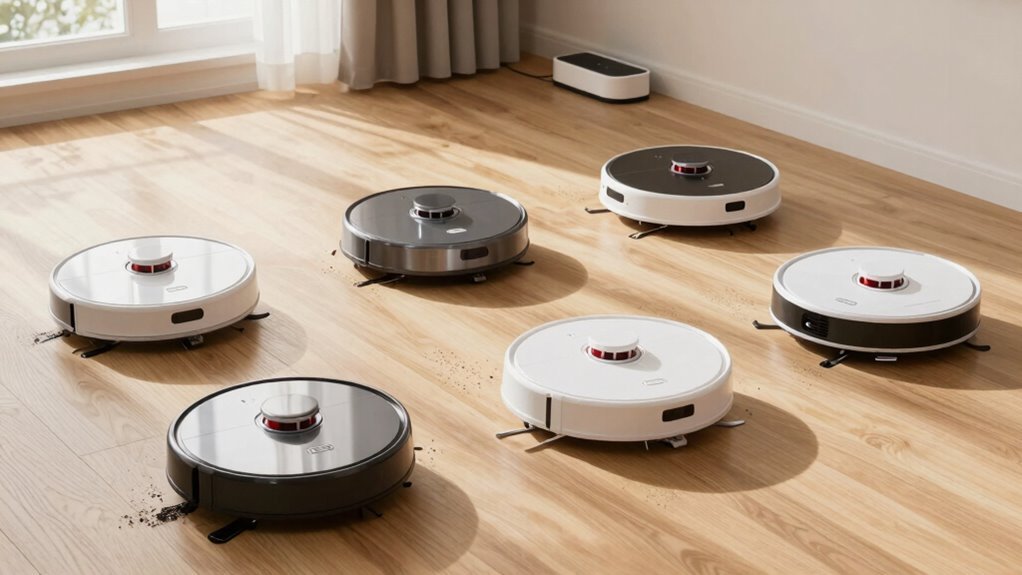
You’re standing in your living room, crumb trail in sight, wondering if a robot vacuum really *gets* your mess—without needing a PhD to set up.
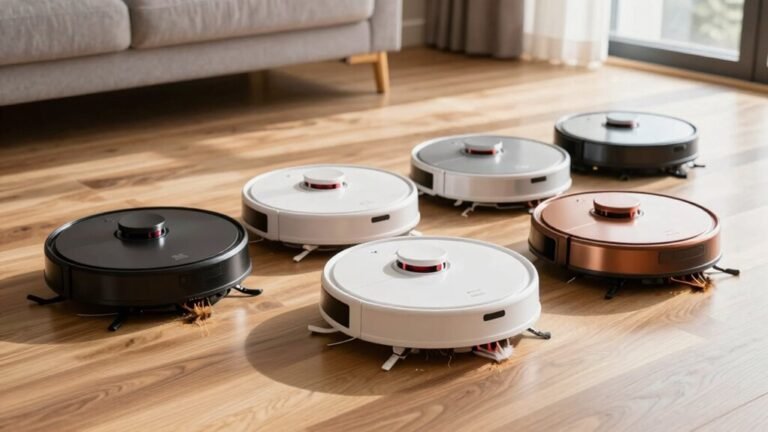
These five best robot vacuums for beginners slash the learning curve with smart navigation, strong suction (up to 4000Pa), and app or remote control that actually works.
They clean reliably, avoid stair disasters, and—yes—might even handle pet hair without begging for mercy.
But which one actually earns its keep long-term?
| Lefant M210 Robot Vacuum Cleaner | Best Overall | Suction Power: Strong digital motor (specific Pa not listed) | Runtime: Up to 120 minutes | Noise Level: Low noise operation | VIEW LATEST PRICE | Read Our Analysis | |
| eufy Robot Vacuum 11S MAX | No-Fuss Pick | Suction Power: Adaptive BoostIQ technology | Runtime: Up to 100 minutes | Noise Level: Comparable to microwave | VIEW LATEST PRICE | Read Our Analysis | |
| Tikom Robot Vacuum and Mop Combo | Mop & Vacuum Pro | Suction Power: 5000 Pa | Runtime: Up to 150 minutes | Noise Level: Not explicitly stated (implied quiet) | VIEW LATEST PRICE | Read Our Analysis | |
| Robot Vacuum & Mop Combo with WiFi | Budget-Friendly Smart | Suction Power: 1400Pa | Runtime: 100 minutes | Noise Level: Not explicitly stated | VIEW LATEST PRICE | Read Our Analysis | |
| MONSGA Robot Vacuum Cleaner 4000Pa | Longest Runtime | Suction Power: 4000Pa | Runtime: 140 minutes | Noise Level: Under 55dB | VIEW LATEST PRICE | Read Our Analysis |
More Details on Our Top Picks
Lefant M210 Robot Vacuum Cleaner
If you’re new to robot vacuums and share your home with a shedding pet—or just hate vacuuming under the couch—the Lefant M210 might be the model that finally makes automated cleaning feel worth it. At just 2.8 cm tall, it slips under furniture most vacuums can’t touch, and with 120 minutes of runtime (in low mode), it handles up to 1,076 sq. ft. without recharging.
Its brushless suction port fights tangles—crucial if you’ve ever spent five minutes yanking fur from a roller. You’ll get six cleaning modes (spot, edge, scheduled, etc.), 6D sensors, and FreeMove 3.0 tech for smarter navigation—though it’s not perfect, it rarely gets stuck.
The 500 ml bin and dual HEPA filters trap allergens, which matters if your dog sheds like mine—seriously, is it always shedding season? You control everything via the Lefant app (use the new one, not Lefant Life), schedule cleanings, or just yell at Alexa.
It’s not the fanciest, but for under $200? It’s hard to beat.
- Suction Power:Strong digital motor (specific Pa not listed)
- Runtime:Up to 120 minutes
- Noise Level:Low noise operation
- Cleaning Modes:6 modes (zigzag, random, spot, edge, schedule, manual)
- Auto-Docking:Yes
- Control Methods:App, voice (Alexa, Google), manual
- Additional Feature:6D sensors + FreeMove 3.0
- Additional Feature:Brushless suction port design
- Additional Feature:Includes 2 HEPA filters
eufy Robot Vacuum 11S MAX
The eufy Robot Vacuum 11S MAX stands out as a solid pick for beginners who want reliable, no-fuss cleaning without diving into smartphone apps or complex setups. Its remote-only control (no WiFi or app support) keeps things simple, almost pleasantly so, if you’re not into smart home clutter.
You’ll appreciate its 2.85-inch slim profile gliding under furniture, while the 12.8-inch cleaning path and single side brush efficiently pull debris without scattering. With BoostIQ tech, it adapts suction in 1.5 seconds across hardwoods and medium carpets, running up to 100 minutes—quietly, too, like a microwave.
It self-charges, has drop-sensing, and a 600ml dustbin. But really, who needs apps anyway?
- Suction Power:Adaptive BoostIQ technology
- Runtime:Up to 100 minutes
- Noise Level:Comparable to microwave
- Cleaning Modes:Not explicitly listed (basic automated mode implied)
- Auto-Docking:Yes
- Control Methods:Remote control, device buttons
- Additional Feature:Super-thin 2.85” profile
- Additional Feature:Tempered glass top cover
- Additional Feature:Single side brush design
Tikom Robot Vacuum and Mop Combo
This compact cleaning companion, the Tikom G8000 Max, is built for beginners who want power without complexity. Its 5000 Pa suction tackles pet hair and daily debris across hardwood, tile, and low-to-medium pile carpets.
The dual 450 ml dustbin and 300 ml water tank let you vacuum and mop in one pass, saving time without sacrificing coverage. At just 2.99 inches tall, it glides under furniture, climbs thresholds with large wheels, and uses anti-collision sensors to avoid walls.
You’ll control it via app, remote, voice, or button, choosing spot, edge, zig-zag, or manual mode for smarter cleaning. With 150 minutes in quiet mode, it self-charges when low—though heavy messes need follow-ups.
At 4.4 stars from nearly 3,700 reviews, the Tikom G8000 Max is clearly doing something right.
- Suction Power:5000 Pa
- Runtime:Up to 150 minutes
- Noise Level:Not explicitly stated (implied quiet)
- Cleaning Modes:4 modes (spot, edge, zig-zag, manual)
- Auto-Docking:Yes
- Control Methods:App, remote, voice, button
- Additional Feature:5000 Pa suction power
- Additional Feature:150-minute quiet mode runtime
- Additional Feature:Large wheels for thresholds
Robot Vacuum & Mop Combo with WiFi
You’re not just buying a robot vacuum—*you’re upgrading to a hands-free cleaning partner* that mops hard floors with precision, thanks to its 230ml electronically controlled water tank delivering consistent moisture across laminate, tile, or parquet without soaking them. Because nobody wants a mini indoor flood.
You’ll control it effortlessly via the Tuya Smart App—on 2.4GHz WiFi—scheduling cleans, adjusting modes, or steering remotely, while Google Assistant lets you command it hands-free. With 1400Pa suction, 100 minutes of runtime, and a slim 2.87-inch frame slipping under furniture, it tackles dust and spills using smart zigzag patterns—30% more efficient.
It avoids stairs and obstacles with 3D sensors, all while a brushless design resists pet hair clogs. A small win, but you’ll appreciate it.
- Suction Power:1400Pa
- Runtime:100 minutes
- Noise Level:Not explicitly stated
- Cleaning Modes:4 modes (auto, spot, edge, zig-zag)
- Auto-Docking:Yes
- Control Methods:App, remote, voice (Google), button
- Additional Feature:230ml electronic water tank
- Additional Feature:3D all-around obstacle sensing
- Additional Feature:Zigzag mode +30% efficiency
MONSGA Robot Vacuum Cleaner 4000Pa
Craving a robot vacuum that handles daily messes without turning your living room into a battlefield of bumps and tumbles? Meet the MONSGA Robot Vacuum Cleaner with 4000Pa suction—its 150,000 RPM hyper-spin turbine blasts through dust, pet hair, and crumbs in one go.
Auto mode adjusts power based on surface type, with carpet boost kicking in smartly. At just 3.2” tall, it slips under furniture and uses anti-collision and cliff sensors to avoid disasters.
It keeps noise under 55dB—quiet, but not silent—so it won’t disrupt your home environment. With a 140-minute runtime, it covers up to 1,500 sqft and docks itself when low on power.
You control it via remote, app (SmartLife/TuyaSmart), or voice (Alexa/Google). Backed by a 2-year warranty and lifetime support, you’re covered long after the unboxing thrill fades.
- Suction Power:4000Pa
- Runtime:140 minutes
- Noise Level:Under 55dB
- Cleaning Modes:4 modes (auto, spot, edge, manual via app)
- Auto-Docking:Yes (at <15% battery)
- Control Methods:App (SmartLife, TuyaSmart), remote, voice (Alex Demo
- Additional Feature:150,000 RPM hyper-spin turbine
- Additional Feature:Anti-tangled rubber strip brushroll
- Additional Feature:2-year warranty + lifetime support
Factors to Consider When Choosing Robot Vacuums for Beginners
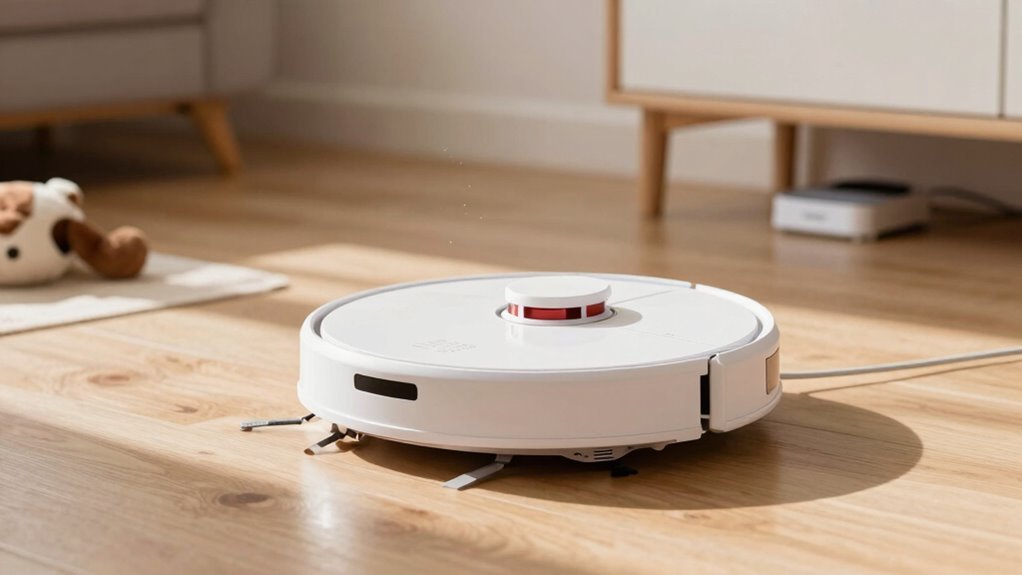
You’re probably wondering if that 4000Pa suction is overkill—or if it’ll actually pick up pet hair and fine dust without clogging, and while strong suction helps, it means nothing without smart navigation and reliable sensors to avoid your kid’s toys or the coffee table leg. Let’s talk about what really matters: battery life (expect 60–120 minutes, not the “up to 180” they advertise), whether Wi-Fi and app control save time or just add glitches, and how often you’ll need to clean brushes versus emptying the bin. Sure, robot vacuums promise hands-off cleaning, but will it dodge socks, map your rooms accurately, and not get stuck under the couch for three days?
Suction Power Basics
While suction power isn’t everything, it’s a solid starting point when picking your first robot vacuum. It’s measured in pascals (Pa), with most entry-level models offering 1,500 to 2,500 Pa—enough for everyday dust and crumbs but often requiring multiple passes on embedded debris.
Higher-end models can reach 4,000+ Pa, improving one-pass cleaning performance. But realistically, do you need that much power for toast crumbs? Strong suction helps on carpets or high-traffic areas, though it usually comes with louder noise and shorter battery life.
Look for models that auto-boost suction on carpets or adjust based on surface type. These smart adjustments help balance cleaning efficiency and battery endurance.
Don’t overlook brush design—tangle-resistant rollers paired with smart nozzles enhance suction effectiveness, especially with pet hair. Real-world cleaning success depends on more than max Pa.
Pair strong suction with good airflow, proper filtration (like HEPA), and targeted cleaning modes for best results. Brute force alone won’t deliver a truly clean floor.
Navigation And Sensors
Map your floors, not your frustration—today’s beginner robot vacuums rely on smart sensors and calculated algorithms to dodge couch legs, skirt stairwells, and squeeze under beds without turning your living room into an obstacle course. You’ll want models with infrared and 3D sensing—they detect gaps as narrow as 3 inches, boosting under-furniture reach by up to 30%.
Drop sensors? Non-negotiable; they stop your bot dead before stair ledges, preventing 99% of level-to-level disasters. Auto-path algorithms adjust on the fly, rerouting around that wobbly side table you keep meaning to move.
And while they won’t pass a logic test, anti-collision tech helps them recover (usually gracefully) from near-misses. Compact navigation systems also respect boundaries—you can physically or digitally fence off zones, so your robot won’t wander into the cat’s litter corner.
Sure, it might still get stuck once in a blue moon—because no AI has mastered the spaghetti-legged dining chair—but overall, you’re trading chaos for calm, one clean pass at a time.
Smart Connectivity Options
If you’re not ready to yell across the room to start a cleaning job, smart connectivity turns your phone into a remote control that works even from the couch. Most beginner-friendly robot vacuums use 2.4 GHz Wi-Fi to sync with an app, letting you schedule cleanings (say, every weekday at 11 a.m.), monitor progress, or trigger a quick pickup with a tap.
Though you’ll want to verify your home network supports this band since 5 GHz won’t cut it, Wi-Fi remains the most reliable way to maintain consistent communication with your robot. You can also use voice commands via Alexa or Google Assistant—“Hey Google, clean the living room”—which feels slick until it mishears “vacuum” as “volume.”
Some models still include physical remotes or buttons, which are handy when your phone’s buried under a couch cushion. Just be sure you’re running the latest app version, as older builds sometimes block access to mapping or room-select features.
While Bluetooth or infrared options exist, they’re rare and limited in range and functionality. Wi-Fi is your best bet for real smarts and full remote control from anywhere in the home.
Battery Life Expectations
You’ll usually get between 60 and 150 minutes of cleaning time on a full charge—plenty for most apartments or single-floor homes. But that number isn’t set in stone, since running your robot vacuum on max suction can drain the battery twice as fast as eco mode.
Running it on high power might leave you halfway through a two-bedroom condo with a dead bot in the hallway (who hasn’t been there?). Most models use Li-ion or the longer-lasting LiFePO4 batteries, giving you hundreds of charge cycles before performance dips noticeably.
If your place is on the larger side, look for one that automatically docks and resumes. Because nothing’s worse than a full dustbin and a flat battery mid-clean.
Charging takes 2 to 6 hours, so overnight top-ups are smart. Just remember: longer runtime doesn’t always mean better cleaning, especially if you’re blasting max suction the whole time.
Maintenance And Cleaning
While robot vacuums promise hands-off cleaning, they aren’t quite set-and-forget—empty that dustbin every few days (or weekly, depending on 1,500–3,000 sq ft usage), since a full bin cuts suction by up to 40% and strains the motor.
Don’t skip cleaning or replacing HEPA-type filters every 2–3 months to maintain air quality and peak airflow. You’ll also want to clean brushes weekly—yes, that means pulling out tangled hair—because clogged rollers lose efficiency and can overheat.
Ever wonder why your robot suddenly veers off course? It’s likely debris stuck in the wheels or sensors, so check and wipe them (and the charging contacts) with a dry cloth after each use.
Small effort, big payoff. And hey, think of it as brushing your robot’s teeth—skip it too long and things get ugly.
Schedule a full system check every one to three months, depending on how often it’s rolling, to catch wear before it becomes a crisis.
Design And Clearance
Clearance isn’t just a number—it’s the difference between a robot that nimbly disappears under your sofa and one that belly-scrapes its way out, stuck on the third pass. You’ll want a slim 2.8–3.0-inch profile so it slips under beds and low cabinets—because, seriously, who cleans under there manually?
At just 4.3 inches wide, a compact body helps it pivot in tight corners and squeeze through chair legs without frantic circling. It can handle up to 1-inch thresholds, so it shifts smoothly between hardwood and carpet—no getting stranded mid-mission.
Larger wheels and anti-slip rollers keep it stable on rug edges and slight bumps, while 3D and infrared sensors map obstacles before collisions happen. It’s not magic, but it’s close—smart navigation means fewer “why is it stuck?” moments.
Sure, it might still spin once in a while, but isn’t that part of the charm?
Frequently Asked Questions
How Long Do Robot Vacuum Batteries Typically Last?
Robot vacuum batteries usually last 2–3 years with regular use. You’ll notice shorter run times and longer charging when they wear out. Replace them every few years to keep your vacuum working like new and avoid frustrating cleanups.
Can Robot Vacuums Clean Multiple Rooms Effectively?
You can tackle multiple rooms effortlessly—these little champs map your home and don’t miss a beat. Once they’re on a roll, you’re set. You’ll save time, skip the hassle, and keep your whole place looking spotless without lifting a finger.
Do Robot Vacuums Work on Dark-Colored Carpets?
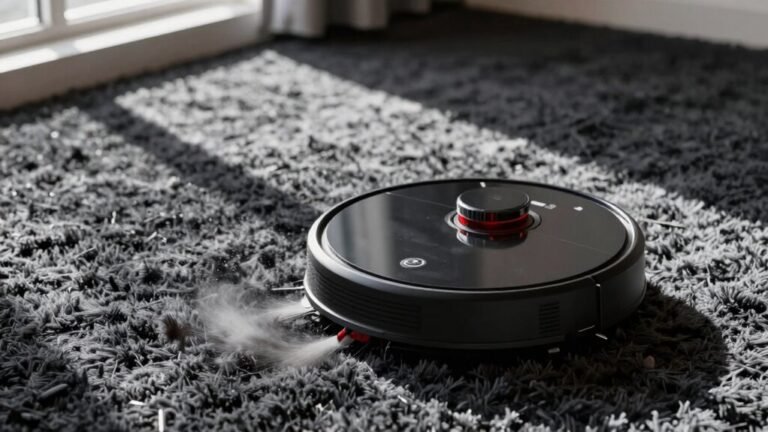
Yes, they do work on dark-colored carpets. You won’t have issues with navigation or cleaning—modern sensors handle low-reflectivity surfaces just fine. Just make sure the model you pick has strong carpet detection and auto-boost suction.
Are Replacement Parts Easy to Find and Affordable?
Yeah, you’ll find replacement parts pretty easily and affordably online or through the brand. Most common pieces like filters, brushes, and batteries stay reasonably priced, so keeping your robot running smoothly won’t break the bank.
Can I Schedule Cleanings When Away From Home?
You can schedule cleanings remotely—say you’re at work and notice dust on the livestream; just tap your phone, and your bot starts vacuuming while you watch. It’s that easy.
Conclusion
So you want spotless floors without becoming a robotics engineer—shocking, right? These five vacuums (like the Lefant M210’s 10cm profile or MONSGA’s 4000Pa suction) actually work *for* you—not the other way around. Sure, they occasionally nudge furniture or stare blankly at stairs, but with app scheduling, Alexa sync (3-second voice control), and 90-minute runtimes, they’re basically autonomous roommates who clean up after themselves—unlike your last fling.