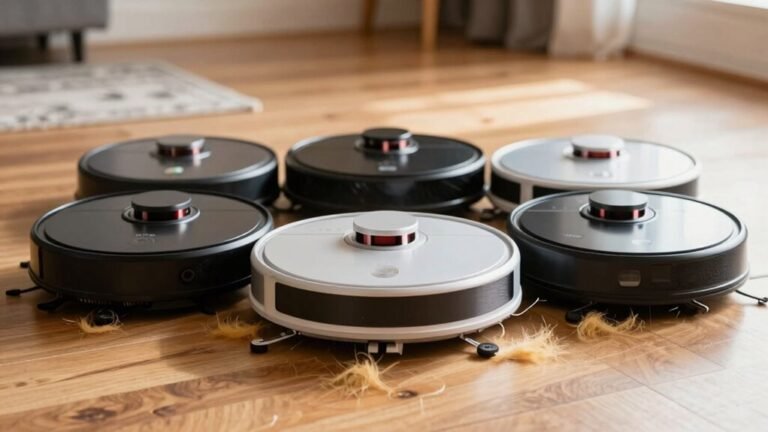
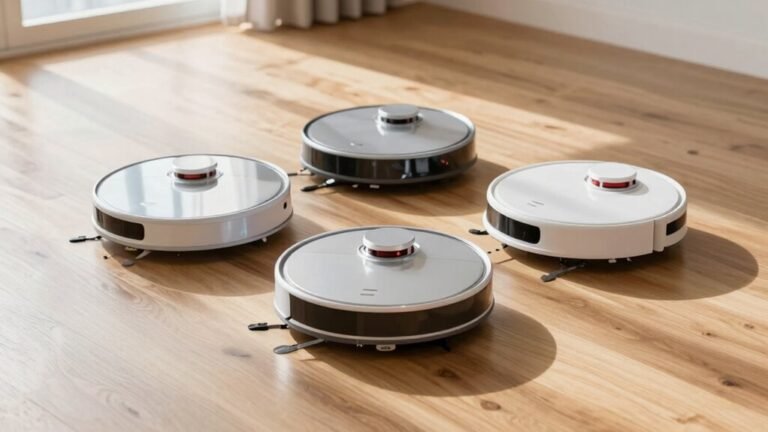
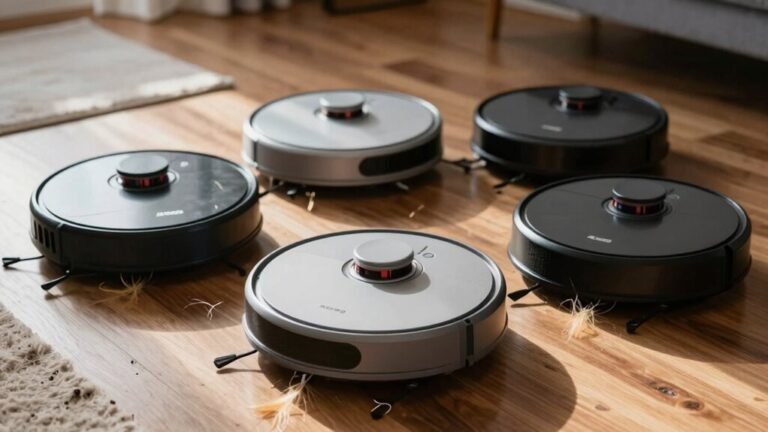
5 Best Robot Vacuums Under $500 That Clean Like Magic
Did you know the average person spends nearly 80 minutes a week vacuuming? With robot vacuums under $500 now offering up to 90 minutes of runtime, 5,000 Pa suction, and smart navigation, cleaning has never been easier.
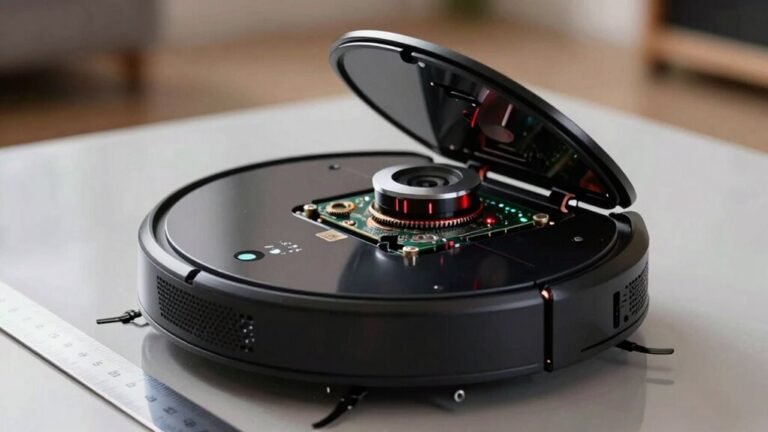
Many top models feature advanced tech like LiDAR or FreeMove sensors for precise movement and obstacle avoidance. These 5 best robot vacuums under $500 clean like magic, combining powerful performance with smart home integration.
Yet each model comes with trade-offs in noise, battery life, or app functionality. It’s important to weigh these factors before making your final choice.
| iRobot Roomba 105 Robot Vacuum | Best Overall | Suction Power: 70X power-lifting suction | Cleaning Modes: 3-stage cleaning (suction, multi-surface brush, edge-sweeping) | Battery Runtime: ~200 minutes | VIEW LATEST PRICE | Read Our Analysis | |
| Lefant Robot Vacuum Cleaner M210 | Best for Pet Hair | Suction Power: Strong digital motor | Cleaning Modes: 6 modes (zigzag, random, spot, edge, schedule, manual) | Battery Runtime: Up to 120 minutes | VIEW LATEST PRICE | Read Our Analysis | |
| ILIFE V2 Robot Vacuum Cleaner | Budget-Friendly Pick | Suction Power: Tangle-free suction port | Cleaning Modes: Auto, spot, edge | Battery Runtime: 120 minutes | VIEW LATEST PRICE | Read Our Analysis | |
| Tikom Robot Vacuum & Mop Combo (G8000 Max) | Best 2-in-1 | Suction Power: 5000 Pa | Cleaning Modes: Spot, Edge, Zig-zag, Manual | Battery Runtime: Up to 150 minutes | VIEW LATEST PRICE | Read Our Analysis | |
| Shark Matrix Plus Robot Vacuum and Mop | Editor’s Choice | Suction Power: Ultra-powerful suction | Cleaning Modes: Matrix Clean, Spot, Edge, Sonic Mop (via app) | Battery Runtime: Recharge & Resume (runtime not specified, supports resumption) | VIEW LATEST PRICE | Read Our Analysis |
More Details on Our Top Picks
iRobot Roomba 105 Robot Vacuum
If you’re after a robot vacuum that balances solid cleaning performance with smart navigation without breaking the bank, the iRobot Roomba 105 might just be your best bet—especially if you’ve got a mix of bare floors and low-pile rugs. You get 70x the suction power* of older models, a 3-stage cleaning system (suction, multi-surface brush, edge-sweeper), and bristle brushes that actually tackle pet hair and daily grime.
It maps your home using CLEARView LiDAR, avoids stairs, and—despite lacking advanced room recognition—still resumes cleaning after recharging its 200-minute battery. You can schedule cleans, adjust suction, or send it to spot-clean messes for up to 5 minutes, all via the Roomba Home app, voice commands (Alexa, Siri, Google), or the physical buttons.
Sure, it only connects to 2.4 GHz Wi-Fi, and the design’s simple—but at under $500, with a 4.2/5 rating from over 31,000 users, who’s really complaining?
- Suction Power:70X power-lifting suction
- Cleaning Modes:3-stage cleaning (suction, multi-surface brush, edge-sweeping)
- Battery Runtime:~200 minutes
- Auto-Docking:Self-charging, returns to dock, resumes cleaning
- Smart Control:App, voice (Alexa, Siri, Google), buttons
- Height:4.1 inches
- Additional Feature:70X power-lifting suction
- Additional Feature:Resumes cleaning after recharge
- Additional Feature:Keep-out zone customization
Lefant Robot Vacuum Cleaner M210
The Lefant Robot Vacuum Cleaner M210 is a solid pick if you’re tired of chasing pet hair across hardwood floors. Its brushless suction port, 2,000Pa of suction power, and 500 ml dustbin tackle daily messes without turning your living room into a detour course.
You’ll appreciate the 6 cleaning modes, especially edge and spot, while the 6D sensors and FreeMove 3.0 tech help it dodge chairs, stairs, and toys. Though it sometimes hesitates on dark rugs, its slim 2.8 cm height allows it to slip under sofas with ease.
With 120 minutes of runtime, it can cover up to 1,076 sq. ft. You can schedule cleaning via the Lefant app—use the new one—or simply say, “Alexa, clean the living room.”
- Suction Power:Strong digital motor
- Cleaning Modes:6 modes (zigzag, random, spot, edge, schedule, manual)
- Battery Runtime:Up to 120 minutes
- Auto-Docking:Auto-docking, automatic self-charging
- Smart Control:App (Lefant), voice (Alexa, Google), manual
- Height:2.8–2.99 cm (~1.1–1.18 inches)
- Additional Feature:Brushless suction port design
- Additional Feature:FreeMove 3.0 obstacle avoidance
- Additional Feature:Dual HEPA filter system
ILIFE V2 Robot Vacuum Cleaner
Looking for a robot vacuum that won’t bail when confronted with pet hair or tight spaces? The ILIFE V2’s 2.99-inch ultra-slim profile slips under sofas and beds—no awkward wedging—and its tangle-free suction port actually handles pet hair without constant clogs (a small miracle, right?).
You’ll get 120 minutes of runtime, more than enough for most single-level homes, and it automatically returns to self-charge—no stranded robot drama. With auto, spot, and edge modes, plus infrared sensors to prevent falls and collisions, it’s reliable, not reckless.
You control it via remote or one-touch start, schedule cleanings, and rest easy with a 12-month warranty and U.S. support—solid, simple, and surprisingly smart.
- Suction Power:Tangle-free suction port
- Cleaning Modes:Auto, spot, edge
- Battery Runtime:120 minutes
- Auto-Docking:Automatic return to charging dock
- Smart Control:Remote control, one-button start
- Height:2.99 inches
- Additional Feature:Tangle-free suction port
- Additional Feature:Ultra-slim 2.99-inch profile
- Additional Feature:Remote control included
Tikom Robot Vacuum & Mop Combo (G8000 Max)
Who wouldn’t want a robot that handles both vacuuming and mopping without stumbling over thresholds or getting stuck under the couch? The Tikom G8000 Max gets the job done with 5000 Pa of suction—strong enough for pet hair and debris on carpets or hard floors—while its 300 ml water tank and 450 ml dustbin let it vacuum and mop in one go.
At just 2.99 inches tall, it slips under furniture, uses zig-zag mode for full coverage, and climbs bumps with large wheels. You can control it via app, remote, voice, or button, and it’ll even self-charge—though, fair warning, “quiet mode” still hums a bit.
With a 4.4-star rating from nearly 3,700 users, it’s a solid pick—especially if you value smarts over silence.
- Suction Power:5000 Pa
- Cleaning Modes:Spot, Edge, Zig-zag, Manual
- Battery Runtime:Up to 150 minutes
- Auto-Docking:Self-charging when battery low
- Smart Control:App, Remote, Voice, Button
- Height:2.99 inches
- Additional Feature:Vacuum and mop combo
- Additional Feature:5000 Pa ultra-strong suction
- Additional Feature:Large wheels for thresholds
Shark Matrix Plus Robot Vacuum and Mop
You’re not just cleaning floors—you’re running a high-efficiency cleanup operation. If pet hair, stubborn stains, or dusty baseboards keep giving you grief, the Shark Matrix Plus Robot Vacuum and Mop might be your most tactical ally yet.
You’ll get ultra-powerful suction—30% better on carpets than the RV2610WD—plus sonic mopping that scrubs 100 times per minute. CleanEdge Detect blasts corners with air, delivering 50% better edge cleaning, no joke.
Its self-cleaning brushroll fights tangles, while True HEPA locks in 99.97% of allergens. That means cleaner air and fewer allergens circulating in your home.
It maps your space with 360° LiDAR, intelligently avoids obstacles, and empties itself for up to 30 days. No more swapping bags or stress-cleaning pet messes.
Recharge and resume? Yes. It picks up exactly where it left off, so you can let it run—or just forget it exists.
- Suction Power:Ultra-powerful suction
- Cleaning Modes:Matrix Clean, Spot, Edge, Sonic Mop (via app)
- Battery Runtime:Recharge & Resume (runtime not specified, supports resumption)
- Auto-Docking:Recharge & Resume, returns to base
- Smart Control:App with mapping, scheduling, targeted cleaning
- Height:Not explicitly stated but implied slim design for under-furniture access
- Additional Feature:Sonic mopping technology
- Additional Feature:Self-cleaning brushroll
- Additional Feature:True HEPA filtration system
Factors to Consider When Choosing Robot Vacuums Under $500
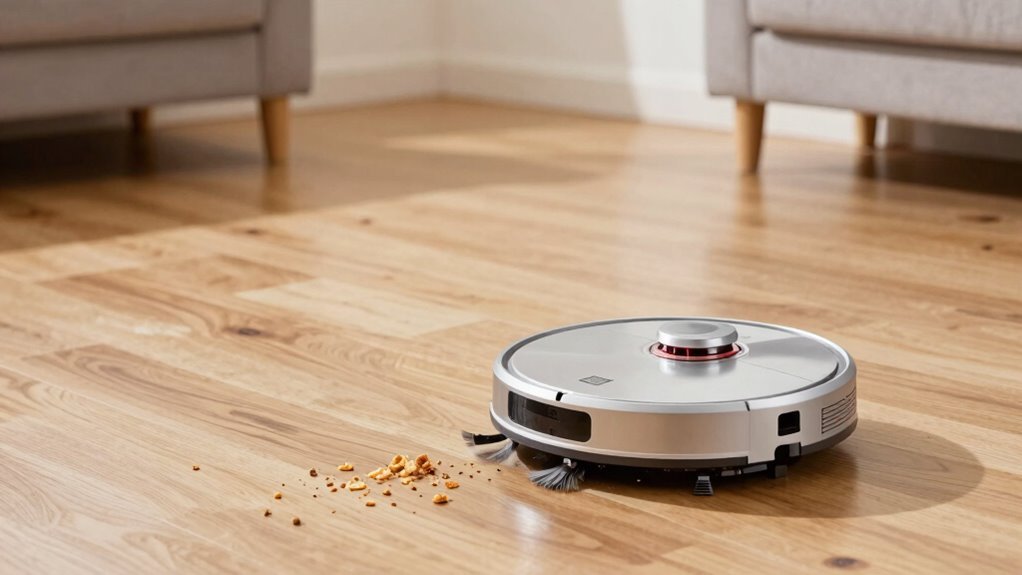
You’ll want to weigh suction power—look for at least 2,000 Pa—because stronger pull means quicker pickups, but is 30 minutes of extra battery life really worth weaker debris handling? Navigation and mapping tech matter just as much, since models with LiDAR or vSLAM can chart your rooms in under two scans, while smart connectivity (like app scheduling or voice commands) adds convenience without always boosting performance. And let’s be honest—how well it tackles pet hair (hello, tangle-free rollers) shouldn’t be the afterthought it often is.
Suction Power And Performance
Ever wonder how a robot vacuum under $500 can still pack enough suction to pull dust from deep in carpet fibers? Well, many deliver 4,000–5,000 Pa of suction—strong enough to handle both tile and medium-pile rugs—while offering multiple modes so you can switch between standard and max power when needed.
You’ll appreciate the balance: higher suction grabs more debris but drains the battery faster, sometimes cutting cleaning sessions short. Look for models with anti-tangle brushes and tangle-free suction ports—they keep performance consistent, especially if you’ve got pets.
And sure, raw power matters, but it’s how the vacuum uses that power that counts; smart patterns like zigzag or edge-hugging routes boost pickup efficiency without cranking the fan to max. Just don’t expect cordless stick-vacuum levels of deep clean—these robots excel at daily upkeep, not miracles.
Navigation And Mapping Tech
How does a robot vacuum under $500 map your home so precisely without getting lost—or stuck—every five minutes? It uses LiDAR or infrared sensors to scan rooms, building accurate floor maps in real time so it knows where it’s been—and where to go next.
Anti-collision sensors help it bump into obstacles less, while anti-fall sensors prevent it from tumbling down stairs—because, yes, that’s still a thing. With multi-sensor fusion (like 6D navigation), it adjusts paths on the fly, dodging your kid’s toys or that wobbly chair leg.
When the battery dips below 20%, it auto-docks, recharges, then resumes right where it left off—no help from you. Open your app, and you’ll see the map it made; set no-go zones or pick spots to clean, and it follows your rules like a polite, rolling butler.
Yeah, it’s not perfect—but for under $500, it’s impressively sharp.
Smart Connectivity Options
Why does your robot vacuum care about your Wi-Fi password? Because without it, you’re stuck using the basic buttons on top—no remote control from the couch or scheduling while you’re at work.
Most models under $500 connect via 2.4 GHz Wi-Fi (sorry, 5 GHz fans), linking to an app that lets you start, stop, or schedule cleanings with a tap—plus adjust suction or set no-go zones. You’ll want to check if your router supports dual bands, since some bots struggle during setup.
Many also work with Alexa or Google Assistant, so you can say, “Hey Google, vacuum the living room,” and actually mean it—though Siri support’s still hit or miss. While apps offer the full feature set, a few include remotes for simpler use, just in case your phone dies or the Wi-Fi drops out—we’ve all been there.
Battery Life And Charging
What if your robot vacuum could clean your entire home—then find its way back to recharge without you lifting a finger? With most models under $500 offering 120 to 200 minutes of runtime, you’re likely covered for medium to large spaces.
Assuming you don’t push suction to max, which drains power fast, the battery should last long enough for a full cleaning session. The real magic? Auto-docking and self-charging: when the battery dips, your robot heads back to the base on its own.
It recharges in about 2–3 hours and often resumes right where it left off—no wasted coverage. Some brands, like certain Lefant models, even use LiFePO4 batteries, which last longer and run cooler than standard lithium-ion.
These batteries add extra safety and endurance, especially during extended use. Just keep in mind: longer runtime doesn’t always mean better efficiency, especially if high-suction modes hog power.
Pick a model that balances battery life, recharge time, and smart return features—you’ll get cleaner floors with less babysitting.
Pet Hair And Debris Handling
Tackle pet hair chaos head-on with a robot vacuum that won’t choke on clumps of fur after five minutes of cleaning. You need tangle-free suction ports and brush systems—because, let’s be honest, who’s got time to pick hair off rollers every day?
Look for anti-hair-wrap tech like self-cleaning brushrolls or motorized brushes that actually do their job without turning into furry dreadlocks. Strong suction (think 2,000+ Pa) powers through embedded pet hair, especially along baseboards and tight corners where it loves to hide.
Pair that with solid edge-cleaning skills, and you’re covering the spots your dog skips—because they’re too busy shedding. Pet-specific modes target zones where fur piles up, while HEPA-style filtration traps 99.97% of dander and fine particles—good news if allergies are in your household.
It’s not magic, but it’s close, right? Just don’t expect it to clean up after a molting husky every single day without a little help.
Cleaning Modes And Automation
You just spent ten minutes untangling pet hair from your old vacuum’s brushroll—again—so it’s fair to expect your next robot vacuum actually clean *for* you, not just buzz around like a confused beetle. You want auto, spot, edge, and zig-zag modes that adapt—because why wouldn’t you?
Scheduling lets it clean daily without lifting a finger, while auto-docking and recharge-resume mean it’ll finish the whole house, even if it takes two cycles. Need more oomph on that jammed-in spot near the couch? Dirt-detection mode delivers repeated passes, almost like it *noticed*.
App or voice commands let you zone in, tweak suction, or rerun hallways—because “set it and forget it” only works if it’s smart enough to adjust. Sure, it might still miss crumbs in dim corners, but with targeted cleaning and programmable routes, it’s less chore, more quiet efficiency—like having a helper who actually listens.
Design And Obstacle Avoidance
How often does a robot vacuum actually navigate your living room without face-planting into the coffee table? More often than you’d think—if it’s got solid sensors.
Most models under $500 use LiDAR or infrared to map rooms, spot obstacles, and avoid smacking into walls. Their 2.9-inch slim profiles let them slide under sofas, while 360° mapping and smart algorithms plot efficient paths—cutting down missed spots and unnecessary bumps.
Anti-collision sensors detect furniture legs, and anti-fall sensors keep them from tumbling down stairs, which is reassuring. If it runs low, the robot uses those same sensors to locate its dock, recharge, then head right back to where it left off—no manual restart needed.
Sure, it might hesitate near dark rugs or tight corners, but overall, today’s budget-friendly bots handle homes with far less chaos than earlier models. You won’t get perfection, but you’ll get progress.
Filtration And Allergen Control
While your robot might not win a dance-off with the coffee table, it can still take your indoor air quality seriously—especially if allergens are part of your daily reality. You’ll want a model with true HEPA filtration, which captures 99.97% of particles as small as 0.3 microns—dust, pollen, and pet dander included.
The Lefant M210, for instance, includes two HEPA filters, helping reduce airborne irritants with each pass. Similarly, the Shark Matrix Plus boasts True HEPA with an anti-allergen seal, locking fine particles inside so they don’t escape back into your air.
Some budget models use HEPA-type filters—better than basic but not quite lab-certified. Sure, bagless bases make emptying easier, but they don’t boost filtration on their own.
Frequently Asked Questions
How Long Do Robot Vacuums Typically Last?
They usually last around 3 to 5 years with regular use. You’ll keep yours running smoothly by cleaning the brushes, replacing filters, and maintaining the battery. Over time, parts wear out, but good care can extend its life.
Can Robot Vacuums Clean Carpets Effectively?
Yes, you’ll blast through carpet grime like a tornado through tissue paper—modern robot vacuums dig deep into fibers, lifting dust and debris with ease, even on medium-pile carpets.
Do Robot Vacuums Work Without Wi-Fi?
Yes, you can use robot vacuums without Wi-Fi. They’ll still clean your floors, start on schedule, and return to charge. You’ll just miss app controls, voice commands, and remote monitoring until you reconnect them.
Are Replacement Parts Easy to Find?
Yes, you’ll find replacement parts easily—brands stock filters, brushes, and batteries online. You just order what you need and swap them out quickly. Most models use common parts, so you won’t struggle to keep your robot running smoothly and efficiently at home.
Can They Detect and Avoid Pet Waste?
You bet they avoid pet waste—these robots don’t step in it like a bull in a china shop. They use smart sensors to steer clear, so you won’t find messy surprises. Clean floors? That’s a no-brainer.
Conclusion
You’ve seen the magic—LiDAR guiding Roomba 105 through darkness like a quiet scout, or Tikom’s 5,000 Pa suction lifting dust you didn’t know lived there. Sure, $500 won’t buy a unicorn, but with FreeMove tech, HEPA filters, and self-emptying bases, who’s really counting? These bots aren’t flawless, but when one resumes cleaning after a snack break—*you* earned that pause.