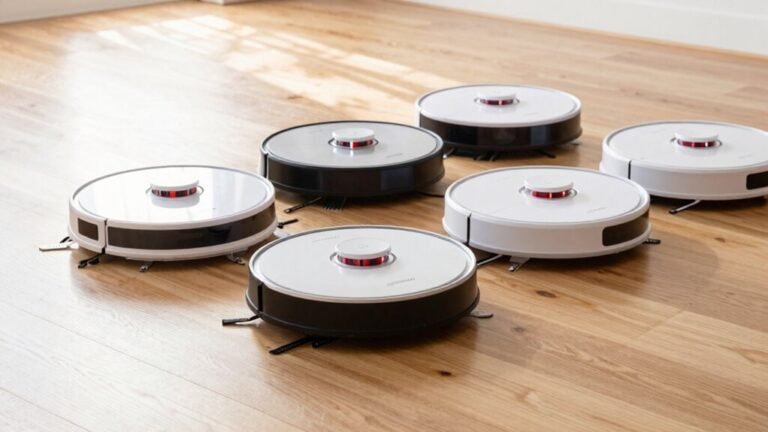
How Loud Are Robot Vacuums?
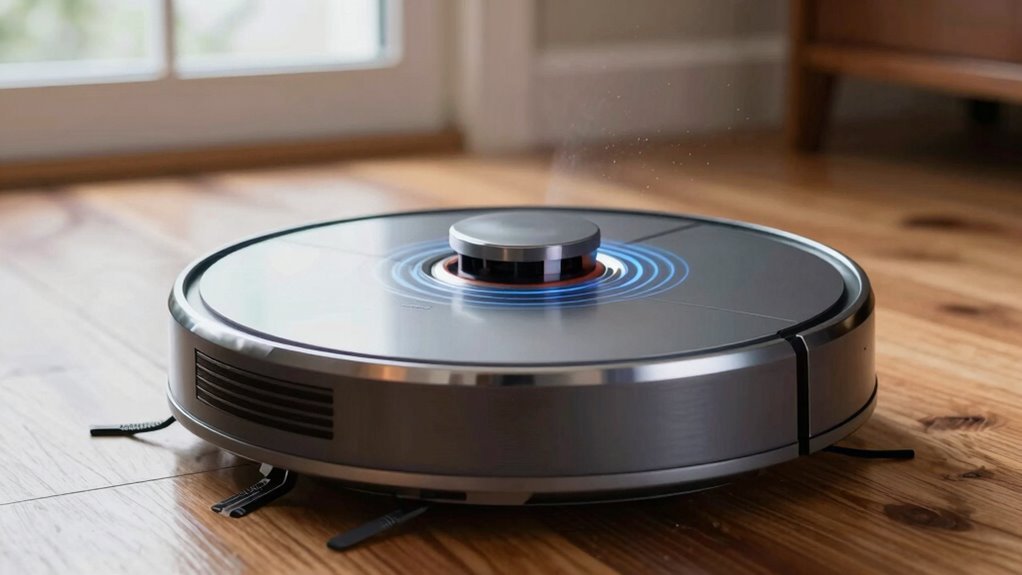
Robot vacuums usually hum between 55–70 dB—about as loud as your dinner chat, so they won’t wreck your movie night. This makes them relatively quiet for everyday use around the home.
Some models, like the Freo Z Ultra, dip to a whisper-quiet 53 dB, quieter than your fridge. Quiet modes can take it down to 50 dB, perfect for nap time or working from home.
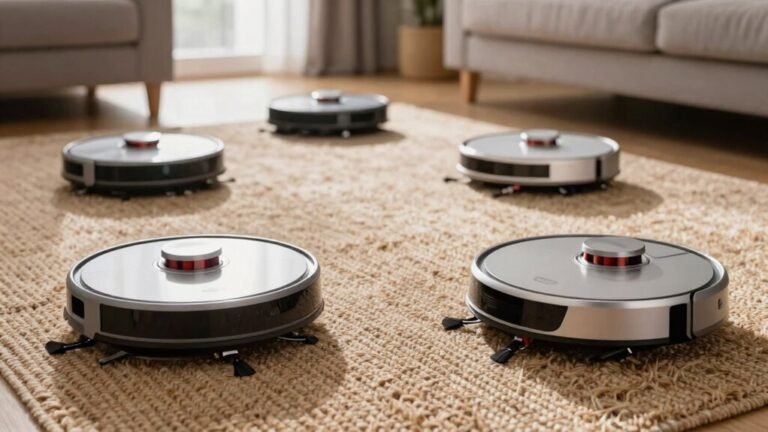
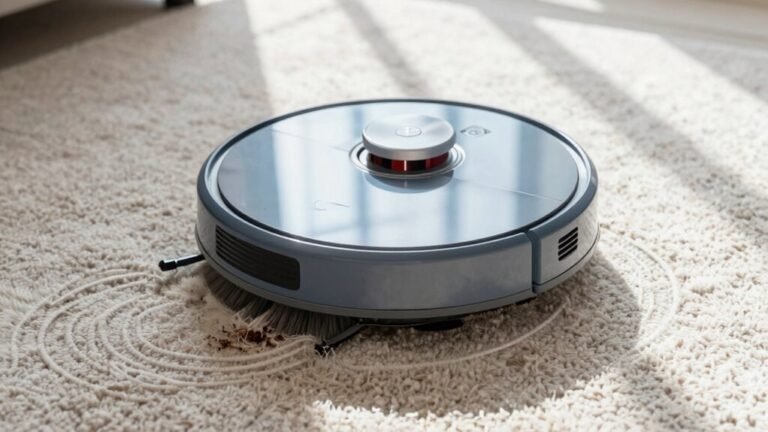
Boost to turbo and robot vacuums will crank up the noise, especially on hard floors that bounce sound. Carpets help muffle the sound, reducing overall loudness.
Stick to low settings or schedule cleanings while you’re out—they’ve got tricks to stay sneaky quiet. There’s even quieter magic hiding just ahead.
What’s the Average Noise Level of a Robot Vacuum?
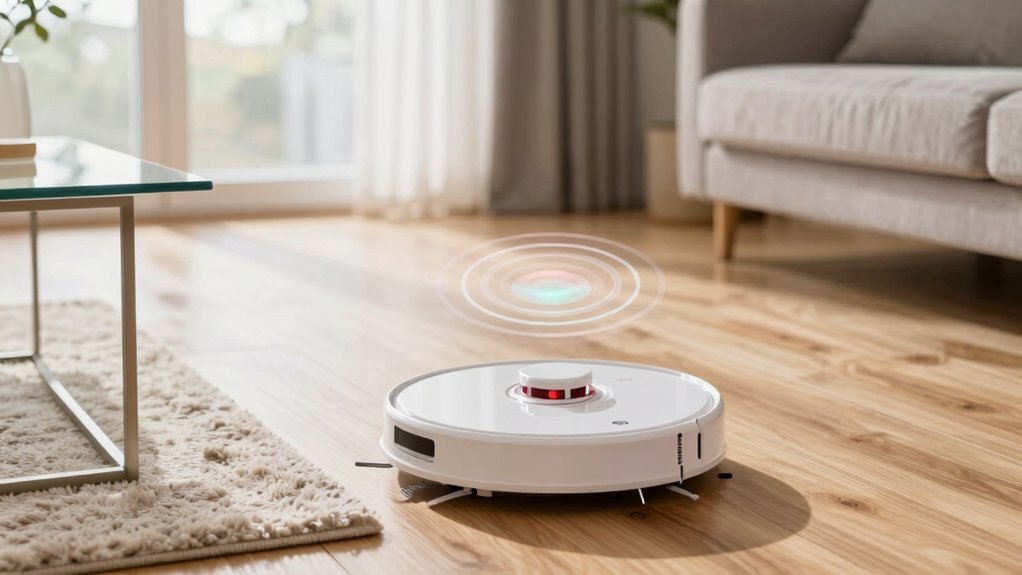
Ever wonder how quiet—or loud—your robot vacuum might be when it’s zipping around the living room?
Most models hum along between 55 and 70 dB, so they’re usually no louder than a chat at the dinner table.
If your bot clocks in under 60 dB, you’ve scored a whisper-quiet helper—perfect for apartments or naptime cleanups.
Brands like Euf游戏副本 and Narwal push quiet tech hard, with the X10 Pro dipping below 60 dB and the Freo Z Ultra mopping at just 53!
Even Roombas, typically 60–70 dB, tone it down on carpets.
Stronger suction cranks up the noise, but newer motors and smart airflow keep things hushed.
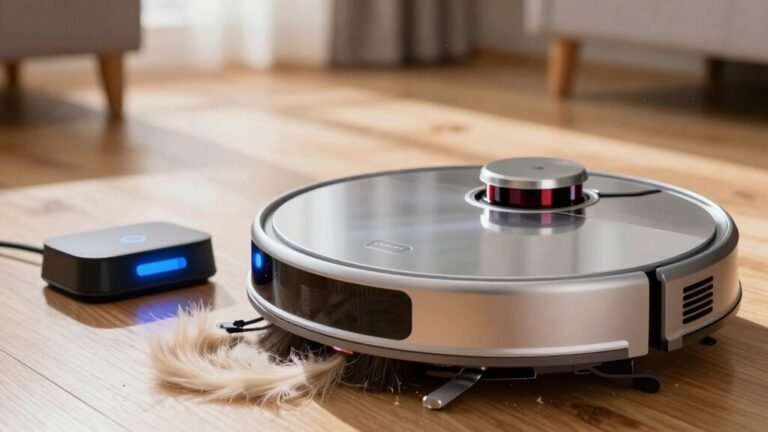
And hey, if your vacuum sounds like a rumbling coffee grinder, it might just need a little TLC—dirt and wear can make any bot noisy.
Damaged components such as worn brushes or misaligned wheels can significantly increase noise levels over time.
How Loud Is a Robot Vacuum Compared to Everyday Sounds?
How does your robot vacuum stack up against the everyday sounds around you?
Well, if you’re chatting in the living room, most models hum along at the same volume—55 to 70 dB—so quieter ones won’t crash your conversation.
But cross that 60 dB mark, and you might need to pause your chat.
Compared to a roaring upright vacuum (70–80 dB) or a hair dryer, your little robot’s practically whispering—some even run as soft as light rain.
On hard floors, sound can bounce, making it seem louder, but premium bots stay sneaky quiet.
At 55–60 dB, they blend in like background tunes.
Even self-emptying bases can get loud—up to 81 dB—but it’s quick.
Good news? No risk to your ears.
Your robot’s not a rock concert—just a polite houseguest with a cleaning habit.
Brushless motors help maintain low noise levels without sacrificing performance.
Do Different Cleaning Modes Affect Robot Vacuum Noise?
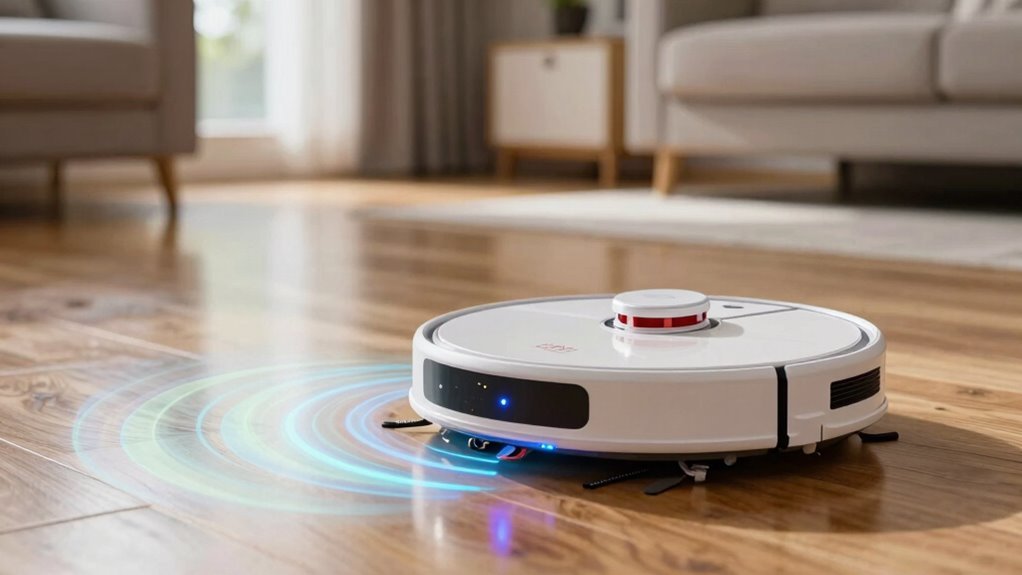
“What’s your robot vacuum whispering—or shouting—while it zips around the house?
Turns out, the mode you pick really changes the volume.
In quiet mode, it hums as low as 50 dB—perfect for late-night cleanups or when you’re working nearby.
But switch to turbo, and boom, it can spike to 75 dB or more, zapping crumbs with serious power.
Mopping mode? It’s a gentle 60–67 dB, like a quiet shower running.
Floors matter too—hard tiles echo more, while carpets hush the roar.
Even self-emptying bases get loud, hitting up to 81 dB.
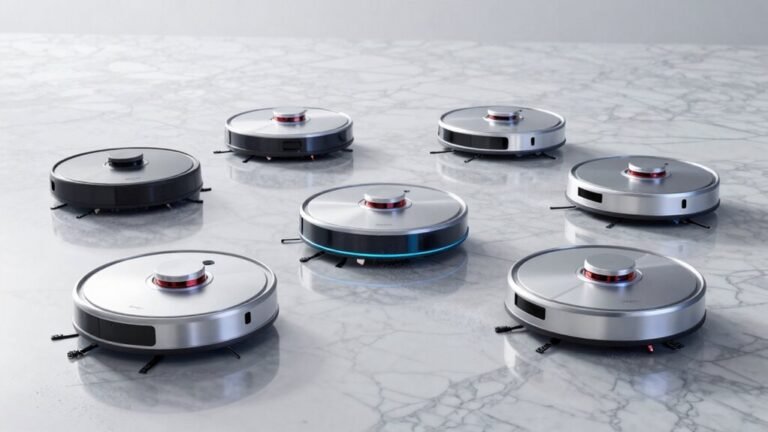
Which Robot Vacuums Are Quiet Enough for Homes?
Looking for a robot vacuum that cleans without the commotion? You’re in luck—some models are so quiet, you’ll forget they’re even running.
The MOVA V50 Ultra glides across hardwood, tile, or carpet with a hushed 24,000 Pa suction, thanks to dampened motors and retractable sensors that skip the annoying bumps.
If self-emptying is your thing, the Narwhal Freoz Ultra keeps things smooth at just 76.6 dB—yes, it’s *quieter* than your average conversation.
eufy’s Auto-Empty C10 and standard robot model hum along at a barely-there 51–52 dB, perfect for nap time or late-night cleanups.
The Roborock S7 MaxV Ultra whispers through rooms with reduced clunking, while the Dreame X50 Ultra uses shock absorbers and AI smarts to tiptoe over thresholds.
These aren’t just quiet machines—they’re stealthy little ninjas with a dustbin.
How to Reduce Robot Vacuum Noise
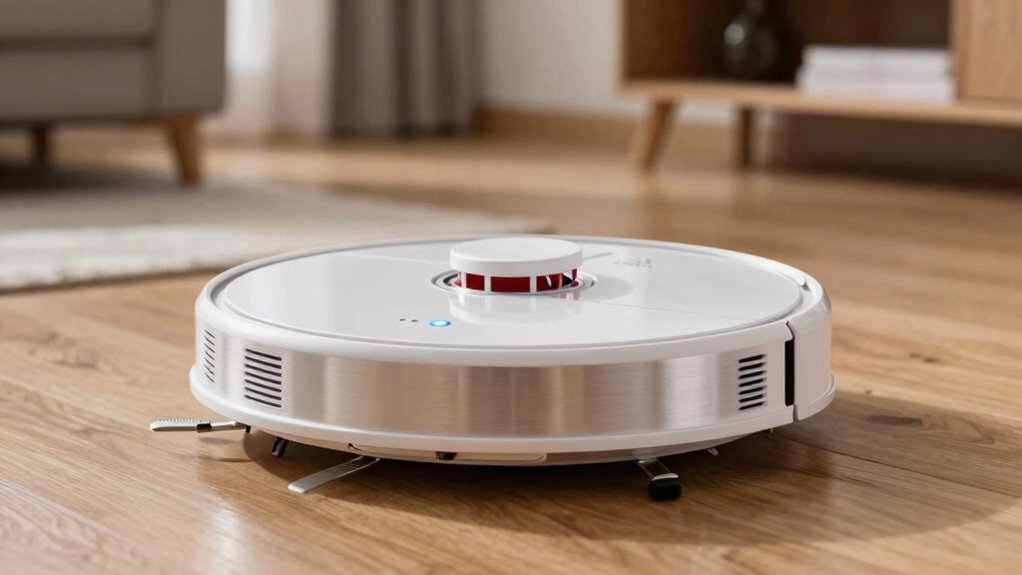
You’ve already found the quietest robot vacuums on the market—those sleek, whisper-quiet cleaners that tiptoe through your home like silent ninjas with a vendetta against dust.
But even the quietest bots can get chatty if they’re not pampered right.
Here’s how to keep the peace:
- Use lower power settings – Switch to quiet mode in the app; it hums at just 50–60 dB, like a calm chat over coffee.
- Schedule cleaning sessions – Let it deep-clean when you’re out, so loud carpet boost won’t scare the cat (or your Zoom meeting).
- Clean brushes and debris – Tug out tangled hair and check for pebbles—because no one likes a clogged ninja.
- Maintain filters and wheels – Rinse filters, wipe wheels, and let them dry; a happy vacuum is a quiet vacuum.
Treat it well, and it’ll shush while it works.
Frequently Asked Questions
Can Robot Vacuums Disturb Light Sleepers During Operation?
Yes, they can bug light sleepers, but only if they’re loud models above 60 dB.
Most robot vacuums hum quietly, like a whispery dishwasher, so you’ll hardly notice.
Pick one under 60 dB, like the Mamibot at 55 dB, and it’ll clean while you nap like a baby.
Schedule night runs and let it work its magic—just don’t expect it to tuck you in too!
Do Robot Vacuums Make Noise When Docked or Charging?
Nope, your robot stays quiet as a mouse when docked or charging—no buzzing, humming, or midnight serenades.
It’s like it’s napping, quietly sipping power for its next adventure.
While self-emptying models might briefly chime in post-clean, charging itself?
Silent as a ninja.
So rest easy, your peace isn’t traded for a full battery.
Just pure, peaceful juice time—no noise drama, promise!
Are Louder Robot Vacuums More Effective at Cleaning?
Yeah, louder robot vacuums usually clean better, especially on carpets or when tackling pet hair.
You’ll hear more noise when suction cranks up, but that extra oomph grabs stubborn dirt.
Quieter models work fine for light messes on hard floors, though.
Think of it like a whisper vs. a shout—sometimes you need volume for power!
Just don’t expect silent superhero moves when deep cleaning.
Does Robot Vacuum Noise Increase Over Time With Wear?
You won’t believe it, but your robot vacuum’s noise won’t turn into a jet engine over time—phew!
While it might creak or whir louder if dust jams the brush or wheels, regular cleaning keeps it humming smoothly.
Worn parts *can* get noisier, sure, but it’s not like your vacuum’s throwing a tantrum.
Stay on top of maintenance, and it’ll stay as quiet as a whispery sneeze.
Easy, right?
Can Pets Hear Robot Vacuums More Clearly Than Humans?
Yes, your pets totally hear robot vacuums more clearly than you do.
Their ears pick up higher pitches and fainter sounds, so that quiet hum?
To them, it’s like a mini spaceship whirring through the house.
While you barely notice it, your dog or cat might be hyper-aware, thanks to their super-sensitive hearing.
It’s no wonder they sometimes stare, hiss, or bolt—your cleaner’s noise is way more intense in their world!
Conclusion
You’d be amazed—most robot vacuums hum at just 60–65 decibels, about as loud as a normal conversation! That means you can chat, watch TV, or even nap while it zips around cleaning. Compared to loud vacuums that blast at 80+ decibels, these little guys are like ninjas—quiet, quick, and way less annoying. Who knew clean floors could come without the roar? Sweet, huh?
References
- https://www.ecovacs.com/us/blog/why-robot-vacuum-loud-how-to-fix
- https://www.ecovacs.com/us/blog/how-many-decibels-does-a-vacuum-cleaner-produce
- https://journeyplanner.myjourneysouthampton.com/are-roombas-loud-understanding-the-noise/25715526/
- https://service.eufy.com/article-description/Noise-Levels-of-the-X10-Pro-Omni
- https://community.robotshop.com/forum/t/anyone-own-a-quiet-robot-vacuum/57756
- https://uk.vactidy.com/blogs/news/are-robot-vacuums-worth-it-an-honest-review-practical-tips
- https://ca.narwal.com/blogs/product/quietest-robot-vacuum
- https://www.youtube.com/watch?v=Zan9-w_7Duo
- https://nextcurious.com/electronics/household/how-loud-are-robot-vacuums-really-comparing-noise-levels/
- https://blog.switch-bot.com/benefits-quiet-robot-vacuum/