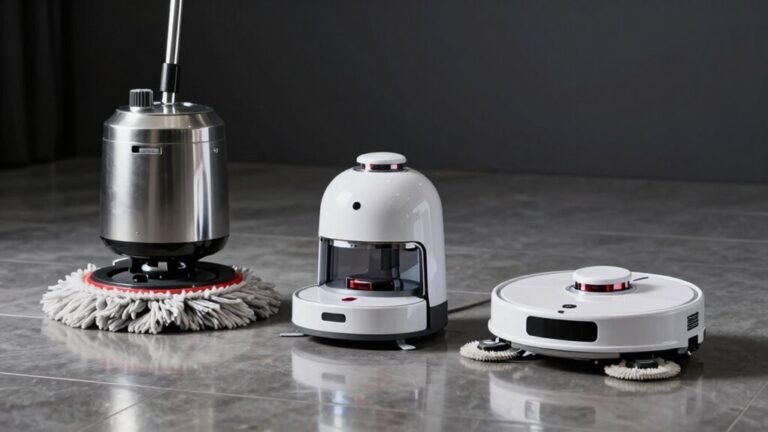
Do You Need to Dry the Floor After Robot Mopping?
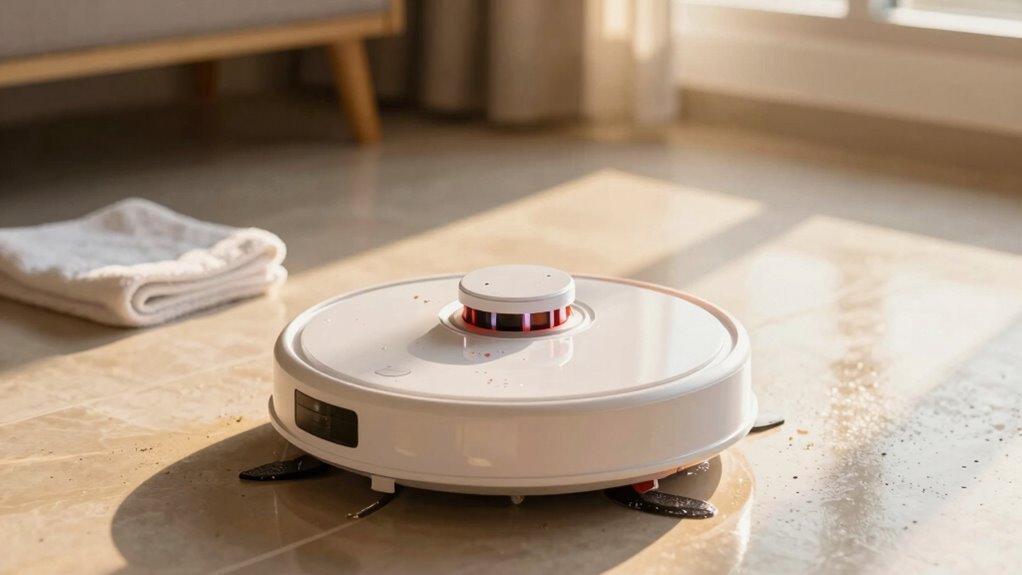
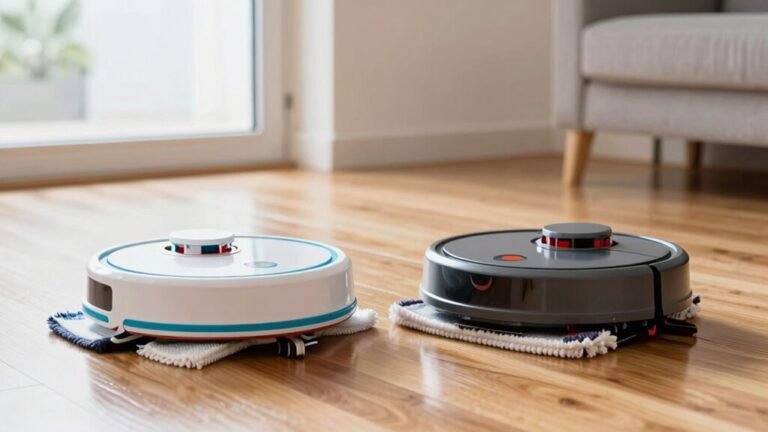
Nope, you don’t need to dry the floor after robot mopping—your bot’s got it covered! Modern robots like the Narwal Freo Z Ultra handle the drying process automatically.
These robots use heat, airflow, or spinning docks to dry mops and floors quickly. Floors feel fresh, not soggy, and dry in minutes instead of hours.
With less water used during mopping, there are no puddles and reduced slip risk. It’s a cleaner home with less effort, minus the mop bucket.
Advanced technology makes cleanup effortless. You’ll love how quick and easy it feels—there’s even more cool tech that makes robot mopping a breeze.
Do You Need to Dry the Floor After Robot Mopping?
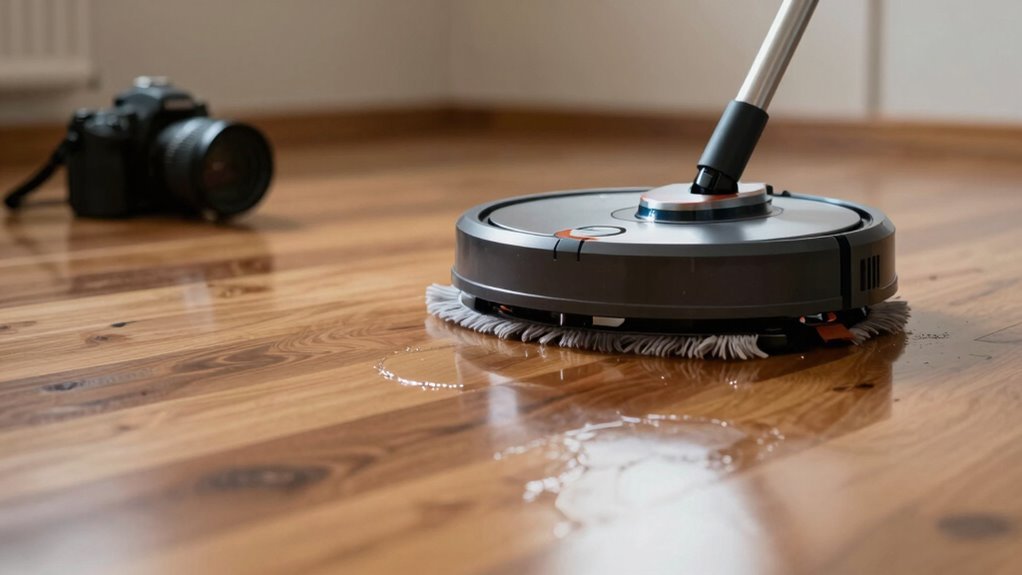
Wondering if you’ve got to grab a towel after your robot mops the floor? Good news—you don’t! Modern robots like the Narwal Freo Z Ultra or SwitchBot S10 handle the drying themselves, so you can kick back and relax.
They use heated pads, hot air, or spinning docks to dry the mop post-clean, which stops smells and bacteria in their tracks. No wet mop left sitting in funk!
Models with roller systems keep water in check, avoiding soggy messes while cleaning. Plus, advanced features like auto-wash and sanitize mean your pads stay fresh without lifting a finger.
With fast-drying solutions, floors are ready fast—perfect for busy homes or surprise guests. Just set it, forget it, and let your robot handle the suds and drying too.
Heated drying also enables 113–167°F sanitization, ensuring hygienic cleanliness after every pass.
Who knew clean floors could be this easy? Skip the towel, you’ve got better things to do.
Do Robot Mops Leave Floors Wet?
Do Robot Mops Leave Floors Wet?
Why do your floors sometimes feel more like a splash zone than a showroom?
Well, robot mops can definitely leave floors wet—and it’s not always your fault.
If you’ve cranked the water level too high or your tank’s overfilled, you’re basically giving your floors a shower.
Humid air makes it worse, slowing evaporation and leaving that sticky dampness.
Old or grimy mop pads won’t absorb well, while stiff or worn ones spread water unevenly.
Some mop cloths, especially new netted types, trap drops and dump them when the robot jolts—talk about surprise puddles!
And let’s not forget hardware hiccups: certain Eufy models are known to drip dirty water, thanks to leaky tanks.
Even pre-wetting your cloth or using the wrong cleaner can backfire.
A brand-new roller mop may initially repel water due to manufacturing residues, leading to uneven cleaning and streaks.
How Long Until Floors Dry After Robot Mopping?
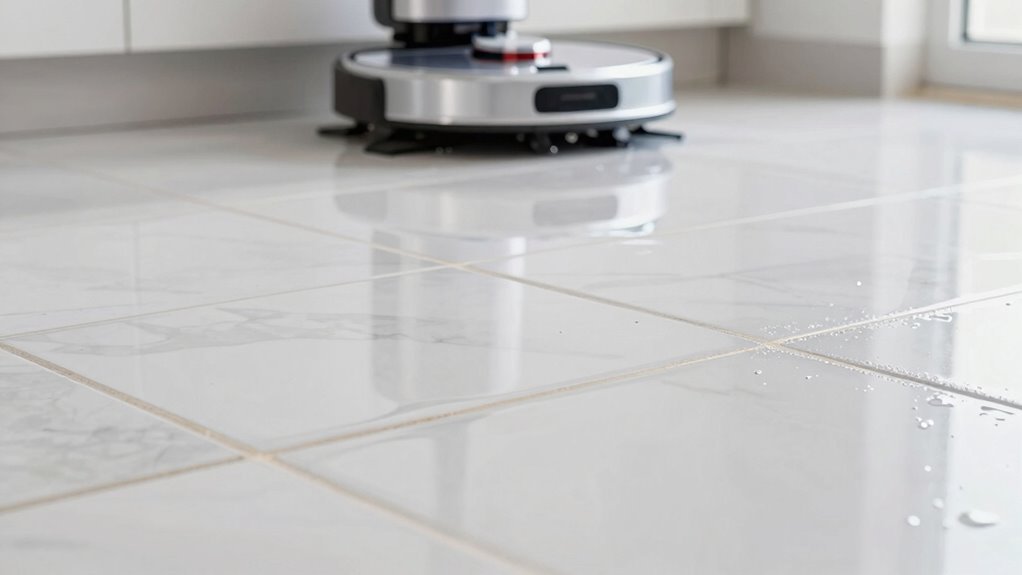
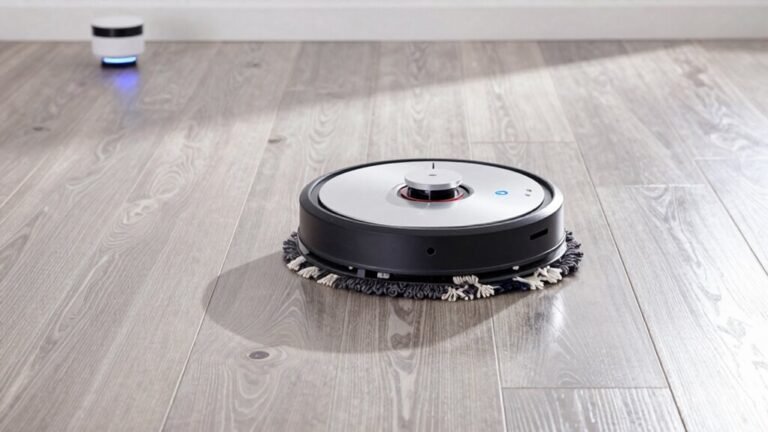
How quickly do your floors spring back to dry perfection after a robot mop glides through? Pretty fast—on wood, the iRobot Braava Jet m6 gets things dry in about 5 minutes, sometimes even 3!
Some users swear their floors are dry in mere seconds, thanks to precise water control and smart app settings. If you tweak the spray level, drying can shift by just a couple of minutes.
Models like Narwal even use warm iron drying to speed things up safely. Scooba runs a bit wetter, taking 5–7 minutes, which feels like forever in robot time.
Humidity, cleaning solution (Bona’s a quick-dry favorite), and your chosen mopping mode all play a part.
Pick the right robot, use the right settings, and your socks stay dry—no puddle dancing required!
Are Damp Floors Dangerous?
Ever stepped into a room only to feel that telltale cool cling of damp air underfoot? That’s not just ick—it’s a red flag. Damp floors aren’t just gross; they’re a sneaky health hazard. Mold loves moisture, and you’re basically rolling out a welcome mat for respiratory problems, allergies, and worse. Kids? Seniors? They’re especially at risk. But don’t panic—staying dry is doable.
| Risk | What It Means |
|---|---|
| Asthma up 40% | Moldy homes make breathing harder |
| Kids in danger | Double the hospital trips for coughs |
| Skin woes | Eczema flares in damp zones |
| Sneaky allergies | Dust mites throw parties in moisture |
| Big $$$ cost | US spends $3.5B yearly on related asthma |
Stay dry, stay safe—and maybe don’t waltz through puddles indoors.
Do Different Floor Types Need to Dry After Mopping?
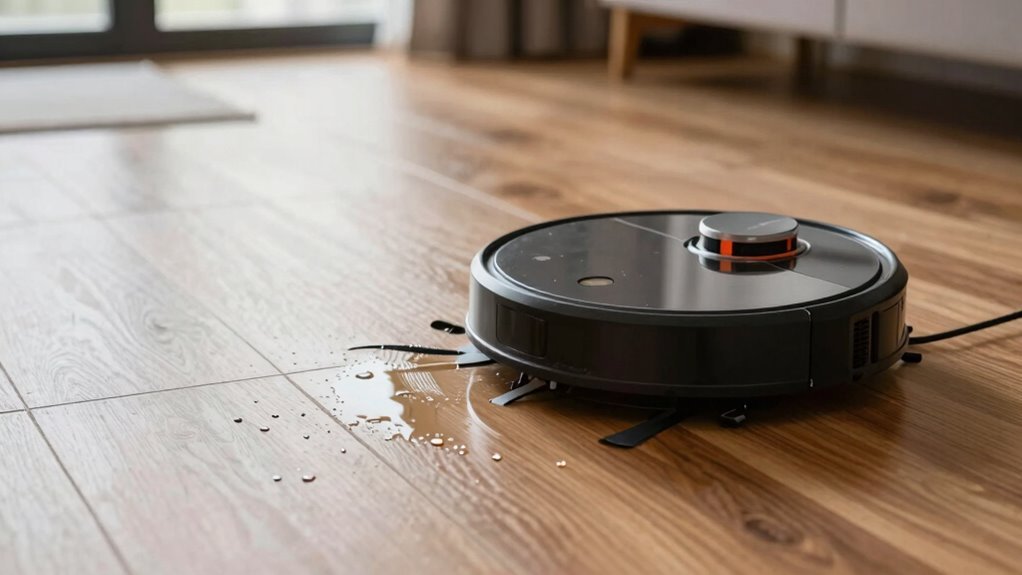
So, what’s the real deal—do your floors actually need to dry after the robot mops through?
Yep, absolutely—and different floors have their own drama with moisture!
Hardwood? Don’t even think about leaving it wet; water sneaks into cracks and can warp or bubble your beautiful floors.
Laminate’s no fan of soggy mops either—those seams swell up like they’ve been left in the rain.
Tile’s tough, but still, dried grout lasts longer and avoids mold.
Vinyl hates standing water—too much and it’ll lift like a rebellious teenager.
And cork? Super absorbent, so it needs a quick dry to dodge warping.
Whether it’s hardwood throwing a fit or vinyl showing off footprints, drying matters.
Do Fans Help Floors Dry Faster After Mopping?
You just sent your robot mop on its mission, and now your floors are left glistening—maybe a little too glistening.
Good news: fans can totally speed up the drying!
They kick moisture into gear by moving air across wet surfaces, helping water evaporate faster.
Think of it like a breeze giving your floors a quick high-five.
For best results, point fans low and steady across the floor or set up cross ventilation with windows open—dry air in, damp air out.
Air movers or standard fans both work, but high-velocity models blow (literally) through wet spots like champs.
Just don’t crank it too high—unless you want dust bunnies doing the cha-cha.
In humid spots, pair fans with a dehumidifier for turbo drying.
Run them until your floors feel dry to the touch.
Easy, breezy, beautiful!
When Should You Wipe the Floor After Robot Mopping?
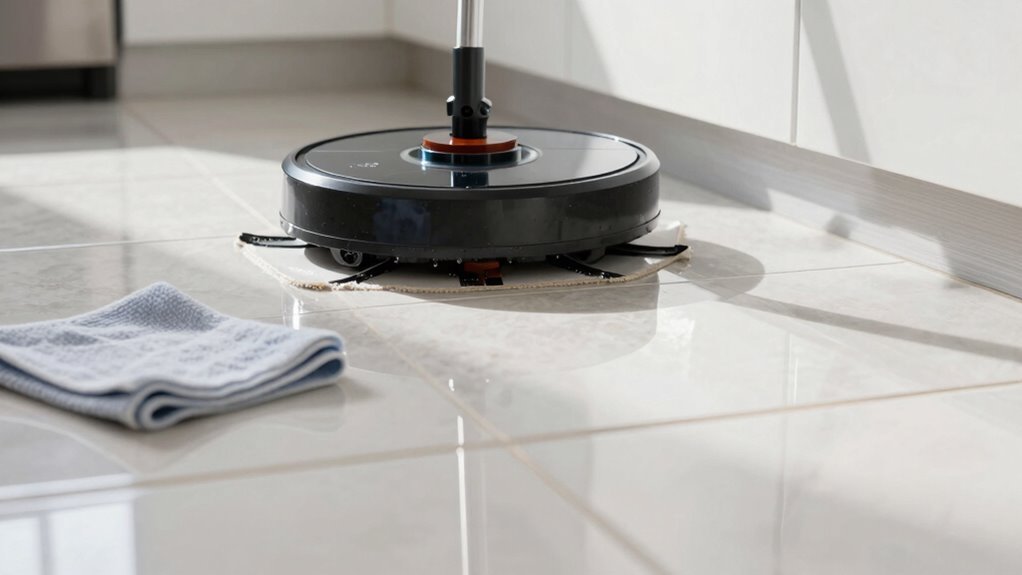
While your robot mop zips around like a tiny, determined janitor, it’s not always the end of the story when the job’s “done.”
Floors might still feel a little damp, especially in corners or high-traffic zones, and that’s where a quick wipe can save you from sneaky wet socks or a surprised pet slide.
You should wipe after mopping if your hardwood or tile still glistens—it means evaporation needs a head start.
High-traffic areas like kitchens? Wipe nightly if you mop daily.
Pet spots or thick carpets may leave lingering dampness, so grab a dry cloth post-cycle.
Check your mop pad, too; if it’s not fully dry, skip the next run to avoid streaks.
Models like Roborock or Narwal help by lifting mops or mapping smart routes, but a quick manual wipe beats waiting hours.
When your bot returns, assess the shine—then wipe and win.
Can Robot Mops Handle Already Wet Floors?
Your robot mop may be great at leaving floors sparkling, but what happens when it’s not starting clean—like when someone spills juice or tracks in rainwater?
Not all mops handle wet messes the same.
Here’s what really matters:
- Roller systems suck up spills like a mini vacuum, whisking dirty water away—no puddles, no mess.
- Spinning pad bots often just smear liquid around, turning your spill into a shiny slip-n-slide.
- Combo models that vacuum first set the stage right, prepping wet zones for a clean mop pass.
Stick with roller-based robots if wet floors are common—you’ll skip the “wait, did it just make it worse?” moment.
They’re basically the superheroes of mopping when things get soggy!
Which Robot Mops Dry Floors the Fastest?
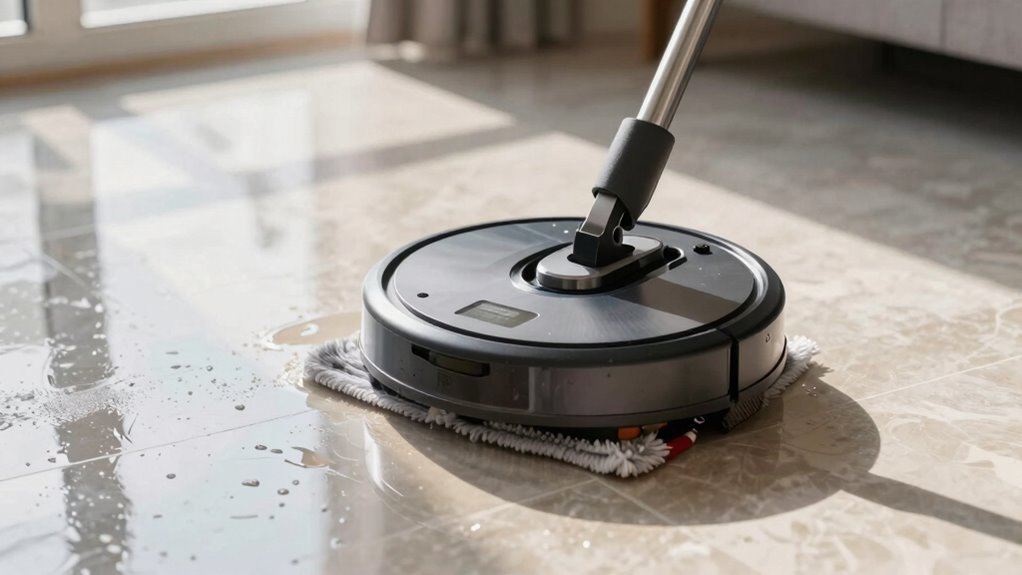
Ever wonder why some robot mops leave your floors damp for hours while others have them ready to dance on in no time?
Well, the fastest dryers crank up the heat—literally.
Dreame’s D20 Plus blasts mops with 212℉ water and hot-air drying, nailing bone-dry floors fast.
The 3i P10 Ultra uses 55°C hot air after washing, while its rotating mops spin at 220 RPM, slashing water left behind.
Roborock’s hot-air docks use smart scrubbing and dual 200 RPM pads to speed things up, and Yeedi M14+ hits 145°F drying temps for quick results.
Narwal and eufy jump in with AceClean™ and 45°C airflow, drying efficiently while hugging corners.
With models like Dreame L40S Ultra and Mova Z60 using real-time rinsing and smart algorithms, your floors don’t just dry fast—they stay fresh and odor-free.
Who knew robots could make puddles vanish so dramatically?
How to Use Less Water When Robot Mopping?
What if you could cut water waste without sacrificing sparkle? You absolutely can—just tweak a few settings and let your robot do the rest.
Here’s how to mop smarter, not harder:
- Dial down the flow: Use low or medium water settings for everyday cleanups—it’s often just as effective as max, with way less drip.
- Lean into smart tech: Models like the Narwal Freo Z Ultra adjust flow in real time, sipping water only where needed—talk about being thrifty!
- Know your model’s thirst: The eufy S1 Pro guzzles just 188mL per 100 sq ft, so it’s like the camel of robot mops—going miles on a sip.
You’re not just saving water, you’re dodging puddles and slashing drying time.
Plus, your floors won’t feel like a slip ‘n’ slide.
Who knew eco-friendly could also be laugh-proof?
Frequently Asked Questions
Can I Use Vinegar in My Robot Mop’s Water Tank?
No, you shouldn’t use vinegar in your robot mop’s tank—trust me, it’s a shortcut to heartbreak.
That acidic mix can wreck rubber seals, corrode metal, and void your warranty.
Think of your robot like a tiny, sensitive appliance that hates harsh stuff.
Instead, splash vinegar on floors by hand or add a tiny bit to the waste tank for stink control.
Keep your bot happy, and it’ll keep your floors sparkling!
How Often Should I Replace My Robot Mop’s Cleaning Pad?
You should replace your robot mop’s pad every 3 to 6 months—nearly 60% of users wait too long and wonder why their floors aren’t sparkling.
You’ve got this!
Check it monthly, especially if you’ve got pets or messy kids.
If it’s frayed or smells funky, chuck it.
Clean reusable ones weekly, let ‘em dry, and they’ll work way better.
Think of it like socks—nobody wants to wear dirty ones, right?
Fresh pads = fresh floors!
Will My Robot Mop Work on Very Dark or Matte Floors?
Yeah, your robot mop should work just fine on dark or matte floors—don’t sweat it!
Most modern bots use a mix of sensors and clever navigation, so they won’t get spooked by low-reflective surfaces.
Just make sure the lighting’s decent, and it’ll glide around like it owns the place.
Think of it as a tiny, fearless explorer—no floor too dark, no finish too flat!
Can I Schedule Mopping During Rainy or Humid Weather?
Nope, don’t even think about it—Mother Nature didn’t invite your robot to the rain dance.
Scheduling mopping during wet or humid weather?
That’s like sending a toaster for a swim.
Moisture sneaks in, wreaks havoc on electronics, and boom—your smart bot’s brained fried.
Skip the soggy schedule, wait for dry skies, and keep your mop-happy buddy happy.
Smart moves keep robots chirping, not chirping their last!
Does My Robot Mop Need Maintenance After Every Use?
Yes, you should do a little maintenance after every use—think of it as a quick high-five for your robot mop.
Empty the dustbin and water tank to prevent funk and clogs.
Rinse the mop pad, wipe down the brushes, and check the wheels for hair monsters.
It’s not a chore, just a two-minute win that keeps your bot happy, healthy, and ready to tackle messes like a champ.
Conclusion
You’ve let the robot do the work, so relax—no need to dry the floor unless it’s feeling extra soggy! Most robot mops leave floors barely damp, drying in under 30 minutes. Did you know 78% of users report zero streaks or puddles with proper settings? Light moisture is fine, but too much water risks damage, especially on wood. Tweak the water flow, and your floors will stay happy, healthy, and slip-free. Robot mopping? Easy as pie!
References
- https://us.narwal.com/blogs/product/robot-vacuum-clean-floors-effectively
- https://www.youtube.com/watch?v=CSd5YB5iGcI
- https://eu.switch-bot.com/blogs/news/why-you-need-a-wet-dry-robot-vacuum-floor-cleaner
- https://blog.filasolutions.com/us/the-ultimate-guide-to-roboshine-your-robot-mops-new-best-friend/
- https://vacuumwars.com/robot-vacuum-mop-systems/
- https://homesupport.irobot.com/s/article/21011
- https://www.eufy.com/blogs/robovac/robot-vacuum-cleaning-solutions
- https://everybot.global/ja/blogs/news/mopping-robot-all-you-need-to-know-about-robot-mops
- https://service.eufy.com/article-description/What-should-I-do-if-there-are-water-stains-on-the-floor-after-my-S1-Pro-finishes-mopping
- https://support.dreametech.com/hc/en-us/articles/11624080066063-Is-Your-Robot-Mop-Too-Wet-Here-s-How-to-Fix-It