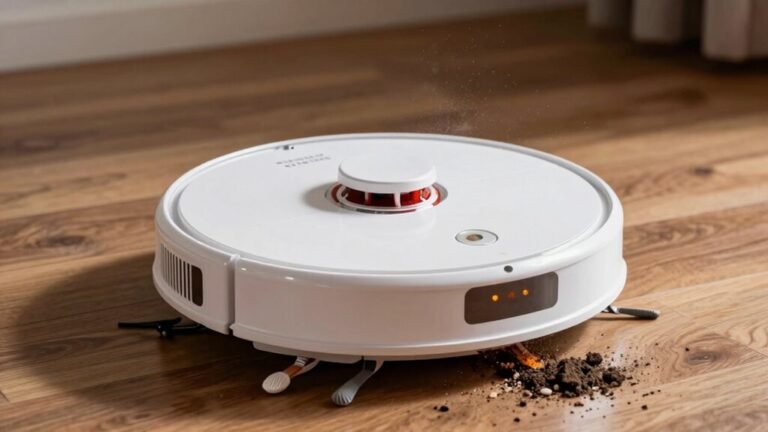
Does Pet Hair Affect Robot Vacuum Battery Life?
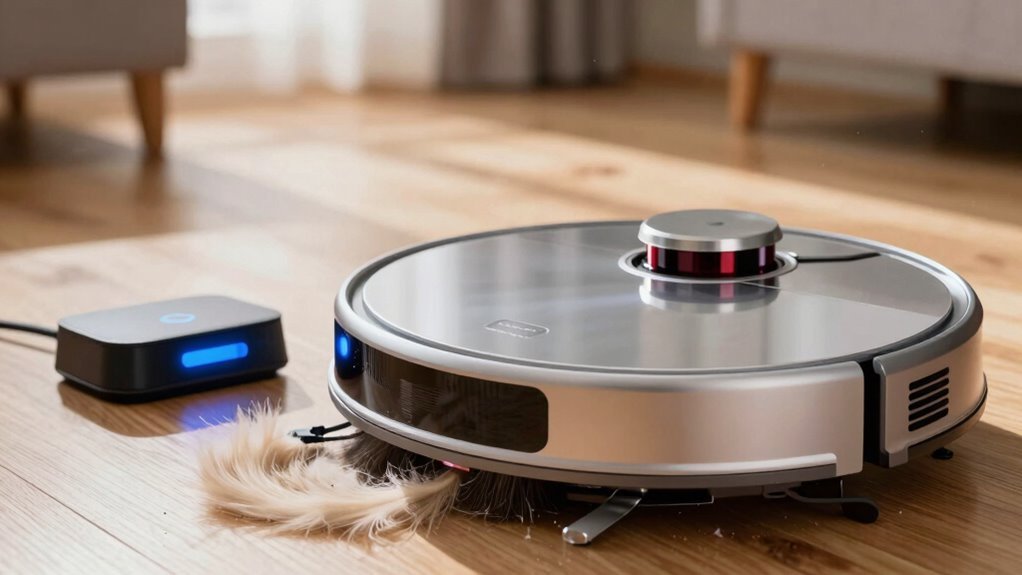
Yes, pet hair affects robot vacuum battery life. It clogs filters and tangles brushes, forcing the motor to work harder and consume more power.
Blocked sensors cause the vacuum to move inefficiently, increasing cleaning time. This extended operation drains the battery faster and leads to long-term wear.
Keeping your robot vacuum free of pet hair helps preserve battery life. Regular maintenance boosts runtime and ensures efficient cleaning performance.
Does Pet Hair Drain Robot Vacuum Battery?
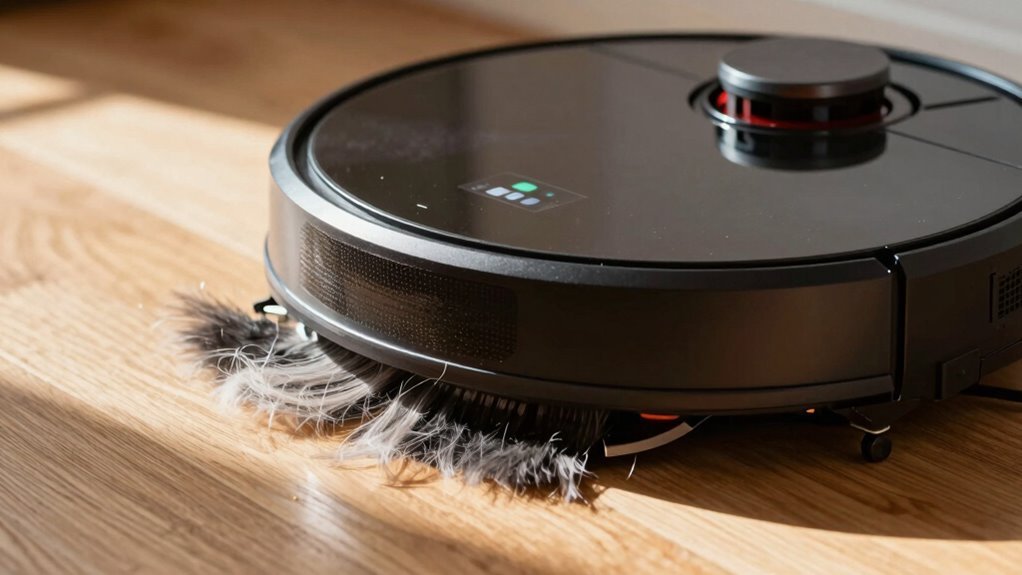
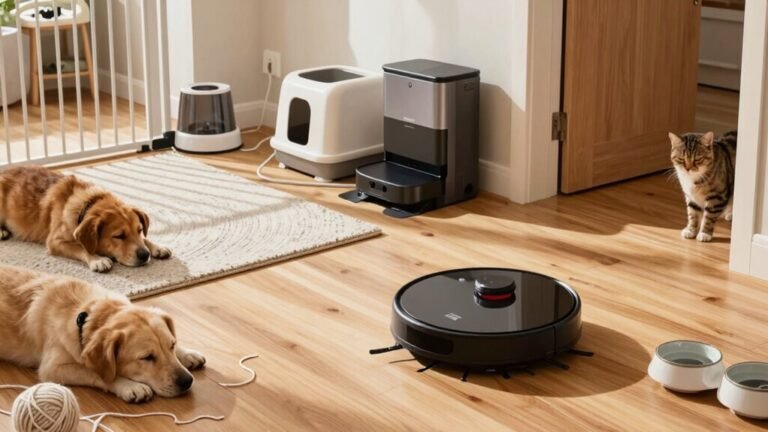
Think your robot vacuum’s battery is just tired of your pet’s drama? Well, kind of—it’s not personal, but all that fur and dander really do sneakily drain its juice.
Pet hair clogs filters and mucks up brushrolls, making airflow sluggish and forcing the motor to work overtime.
That means more power gets pulled from the battery, even if you don’t notice at first.
Plus, you’re probably running it daily (because, fur tumbleweeds), racking up charge cycles fast.
More runs = more wear on the battery over time.
Even manufacturers know this—they give pet models bigger batteries for a reason!
So yeah, that fluffy culprit on the floor? It’s not just gross; it’s slowly sapping your vacuum’s energy behind the scenes.
Models tested in our lab with strong suction handle these challenges better, maintaining efficiency even under heavy pet hair loads.
Keep those filters clean, friend, or Fluffy wins.
How Pet Hair Forces Your Vacuum to Work Harder
While your robot vacuum isn’t throwing shade at your furry best friend, it’s definitely feeling the strain every time it hits a fur-covered floor.
Hair acts like a mini brake, forcing motors to push through extra resistance.
Your vacuum’s not just sweeping—it’s weightlifting!
More drag means more power used, especially when hair clogs the wheels or piles up in carpets.
Suction has to kick into high gear to yank embedded fur free, and blocked airflow makes the fan motor scream overtime.
Even navigation gets messy, with the bot battling fur drifts like a tiny snowplow.
All this extra effort? It’s not lazy—it’s struggling.
And every joule it burns adds up, draining the battery faster than you’d think.
Who knew fur could be such a workout?
Performance varies significantly on carpets, especially thick or shag where pet hair embeds deeply and creates greater resistance.
When Sensors Get Blocked, Cleaning Takes Longer
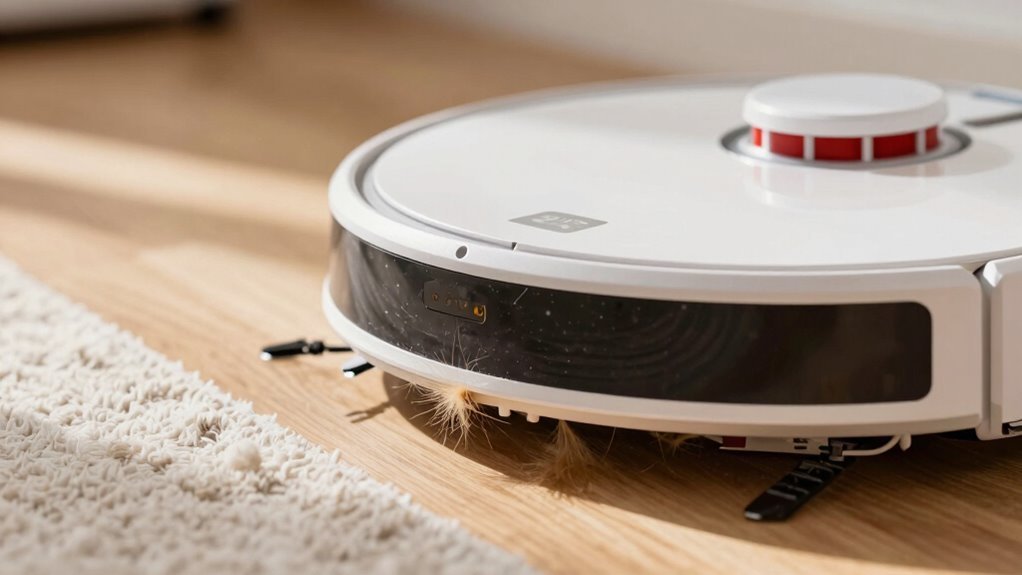
When your robot vacuum can’t see where it’s going, it starts acting like a confused tourist in a maze—spinning in circles, bumping into furniture, and somehow ending up in the same spot over and over.
That’s what happens when pet hair blocks its sensors.
Instead of smoothly mapping your home, it stumbles around, missing spots or cleaning the same area twice.
It’s not lazy—it’s just blind.
Without clear sensors, it can’t use smart navigation, so it takes longer, zigzagging like it’s playing pinball.
And every extra minute it runs drains the battery faster.
What should take 30 minutes might drag on for an hour.
The kicker? All this extra work isn’t even effective.
You end up with tired batteries and a floor that’s only sort of clean.
Keep those sensors wiped down—your vacuum (and your battery) will thank you!
Tangled Brushes Make the Motor Draw More Power
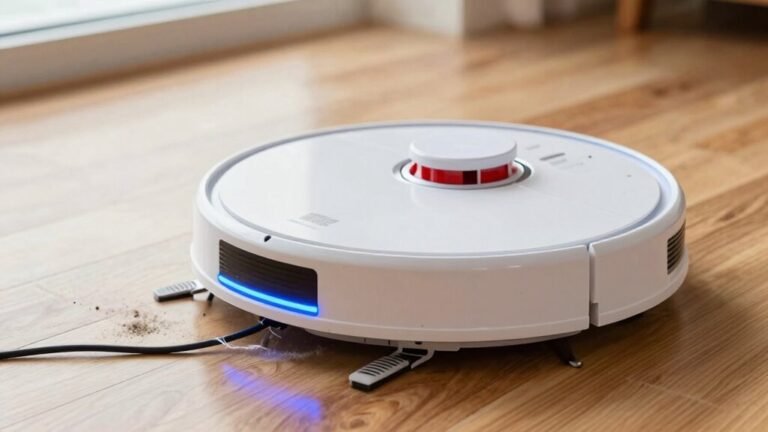
If your robot vacuum could talk, it’d probably be wheezing for help every time pet hair strangles its brush roll.
You see, all that fur wraps around the roller, making it harder to spin—like trying to jog through peanut butter.
That extra resistance forces the motor to work overtime, guzzling more power just to keep up.
It’s not just the brush: blocked airflow often triggers turbo mode, pushing suction into overdrive and draining your battery faster.
Even worse, the added heat from all this effort wastes energy and stresses the system.
What was supposed to be a quick clean turns into a power-hungry marathon, cutting your robot’s run time short.
So, while your furry friend lounges freely, their shedded coat’s turning your little helper into a frustrated, overheated tank.
A quick brush-down of the roller? That’s like giving your robot a cool glass of water—total game-changer.
Can a Struggling Motor Shorten Battery Life?
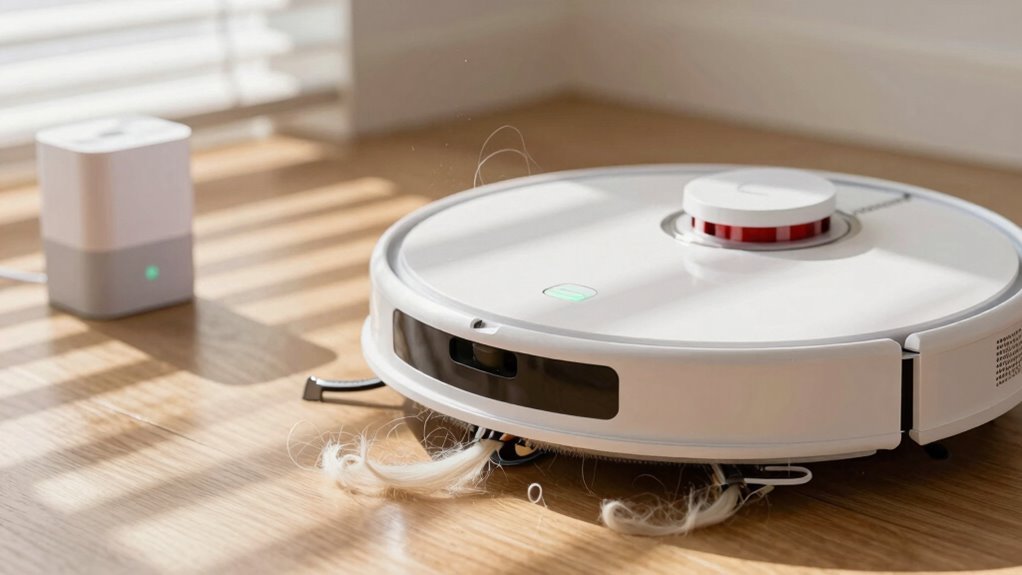
That wheezing sound your robot makes isn’t just dramatic flair—it’s a cry for help, and yeah, it might actually shorten your battery’s lifespan.
When pet hair clogs the works, your robot’s motors have to work way harder, pulling more current and generating extra heat.
That heat doesn’t just hang out—it sneaks into the battery, speeding up wear and tear.
Struggling suction and bogged-down wheels force the system to burn through power like it’s on a shopping spree, draining cycles you can’t get back.
Even worse, hair-jammed parts increase friction, making motors draw more juice for the same job.
Over time, all that stress adds up, degrading the battery faster than you’d think.
So, while your little bot’s fighting its way through fur, it’s not just tired—it’s aging.
Keep those motors happy, and your battery will thank you with every charge.
More Running Time = Faster Battery Drain
You might love how your robot vacuum tackles marathon cleaning sessions, but your battery probably doesn’t share the enthusiasm—longer runs mean more energy zapped per cycle, and that adds up faster than you’d think.
Every extra minute cleaning eats into your battery’s lifespan, especially if it’s always running on full power or tackling pet-heavy zones.
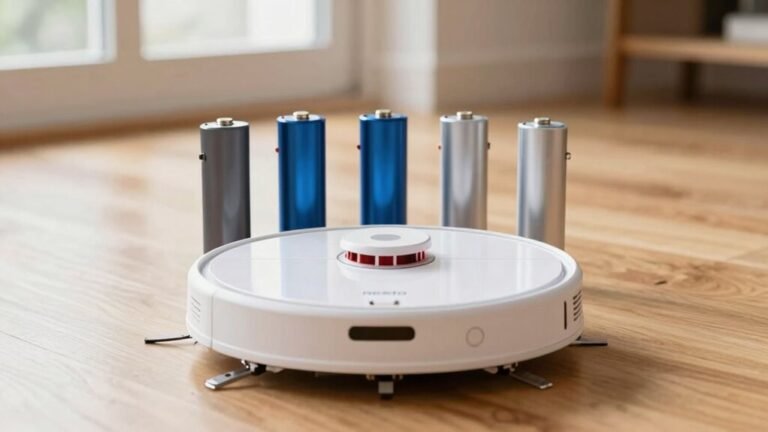
Li-ion batteries only handle so many deep drains before they start to fade, much like how your phone battery wears out after a few years of heavy use.
- Running 180+ minutes daily? That’s like making your battery run a daily marathon without a water break.
- High-pile carpet, max suction, and fur-covered floors push power draw to the max, draining juice fast.
- Long sessions ending in full shutdown stress the battery—think of it as pulling an all-nighter… weekly.
How Often to Clean Pet Hair to Save Battery
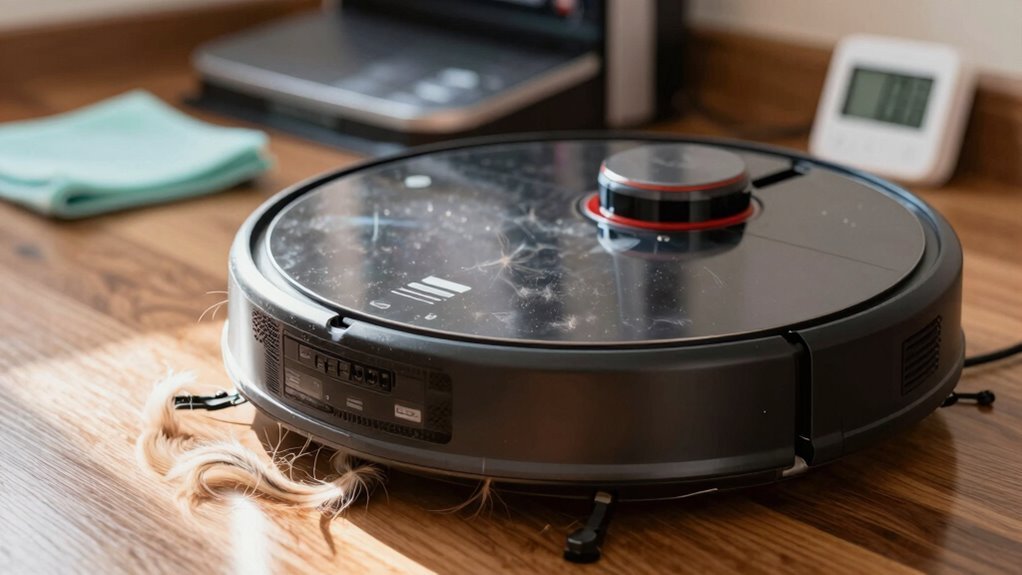
Long cleaning runs might make you feel like your robot is conquering the jungle of pet hair, but your battery’s just one marathon away from needing a nap bigger than your dog’s.
If you’ve got heavy shedders, run your robot daily or every other day—it’s way easier on the battery than tackling a fur fortress weekly.
For moderate shedding, 3–4 runs a week keep things light and efficient.
Even in low-shed homes, 1–2 quick cleans weekly prevent dustpan disasters.
Short, frequent runs mean your robot finishes with juice to spare, which helps the battery last 2–5 years.
Think of it like snacking instead of binging—your robot’s motor, wheels, and brain all stay cooler, happier, and ready for more rounds.
Skip the deep cleans unless needed, and let your little guy sip power instead of guzzling it.
Your battery will thank you!
Stop Hair Tangles Before They Drain Power
Tangling with pet hair isn’t just a brush’s worst nightmare—it’s a full-on battery drain you can’t afford to ignore.
When fur wraps around the roller, your robot works overtime, sucking power just to spin a clogged brush.
It’s like jogging with weights tied to your ankles—exhausting and inefficient.
But you’ve got the power to stop it before it starts.
Here’s how to keep your robot running smooth and smart:
- Unwrap hair from brushes weekly—a quick floss with scissors keeps things spinning freely.
- Clear gunk from wheels and axles—those fuzzy tumbleweeds add drag with every turn.
- Pick a robot with tangle-free tech, like rubber rollers that say “no thanks” to hair wraps.
A little upkeep means more clean floors and way more battery life—so your robot stays happy, hairy pets or not!
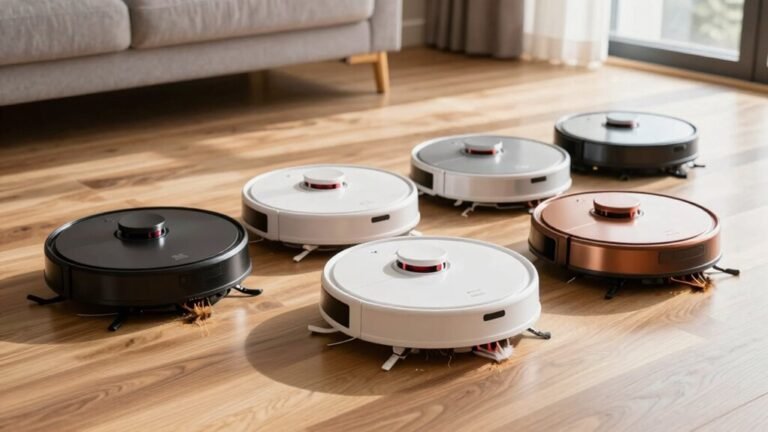
Best Robot Vacuums for Pet Hair and Battery Life
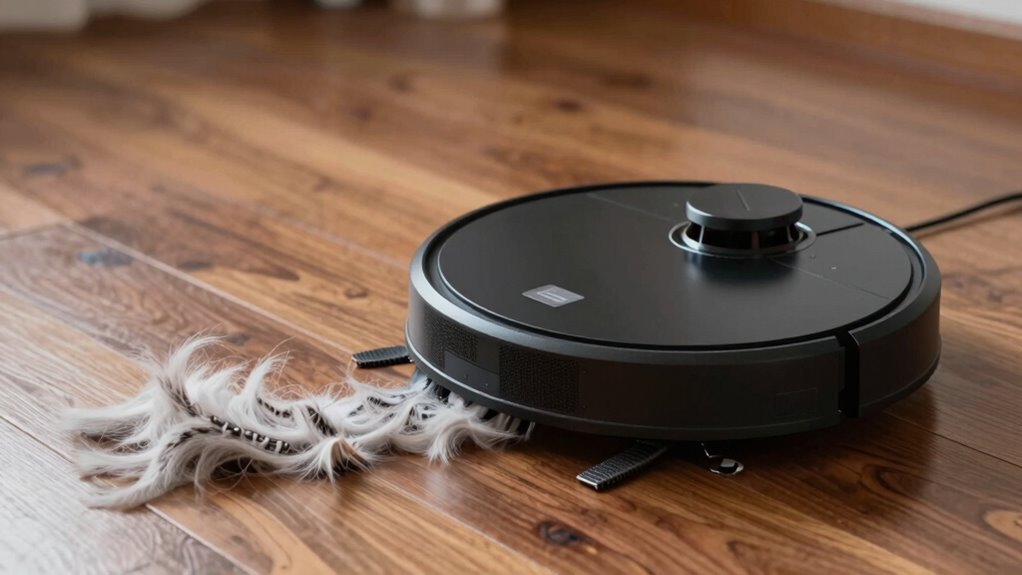
Ever wonder how some robot vacuums breeze through pet hair marathons without collapsing at the first sign of a dust bunny? They’ve got smart brains, tough suction, and batteries that last. The best picks balance power and runtime so your floors stay clean without constant charging breaks.
| Model | Runtime & Pet Hair Perks |
|---|---|
| Roborock S8 MaxV Ultra | 180 mins, twin rubber rollers, self-emptying, smart power use |
| Eufy C10 T2292 | 150 mins, tangle-free design, auto-empty station |
| Eureka NERE10SW | 120 mins, strong carpet cleaning, fast pet-hair pickup |
| Lefant Mione M211 | 140 mins, efficient navigation, low maintenance |
| iRobot j7+ | 100 mins, excellent obstacle avoidance, smart mapping |
You’ll love how they tackle fur seasons without frying the battery. Just set ‘em loose and let the magic happen—no drama, all clean.
When to Service Your Vacuum After Heavy Shedding
How often should you roll up your sleeves and give your robot vacuum a little TLC after Fido’s latest shedding spree?
Well, when the fur flies, you’ll want to step up your game—weekly checks just won’t cut it.
Heavy shedding means more hair jamming up the works, draining power, and making your little robot work overtime.
To keep things running smoothly, think of your vacuum like a pup in springtime—needs extra grooming!
Here’s how to stay on top of it:
- Empty the dustbin after every run—a full bin kills suction fast.
- Check brushes and wheels weekly—snip away tangled hair before it hogs the motor.
- Clean the filter and clear pathways—keeps air flowing and your bot zipping like new.
A few minutes of care means fewer charge cycles and happier cleanings!
Frequently Asked Questions
Does Pet Hair Damage the Battery Permanently?
No, pet hair doesn’t permanently damage your robot vacuum’s battery.
It can’t zap the cells or fry the tech inside—your battery’s tougher than that!
But all that fur makes the motor work harder, drains power faster, and means more charging cycles.
Over time, this *can* wear the battery down sooner.
Keep things clean, and you’ll keep your little robo-helper happy and zippy for way longer.
Think of it like flossing—annoying, but worth it!
Can Cleaning More Often Extend Battery Lifespan?
Yes, cleaning more often can genuinely extend your robot vacuum’s battery life—you’re basically giving it an easy win every time.
Lighter messes mean less strain, shorter runs, and shallower battery dips, which add up to more cycles and longer lifespan.
Think of it like snacks vs. marathons: small, frequent charges beat exhausting sprints.
Plus, your vacuum might just throw you a happy little beep for being so thoughtful!
Do Robot Vacuums Use More Power on Carpet With Pet Hair?
Yeah, you use more power when your robot vacuum tackles carpets with pet hair.
It’s pushing through thicker fibers and fighting tangles, which makes it work harder.
Think of it like hiking uphill with a backpack—more resistance means more energy.
Carpets alone bump up power use, and add hair into the mix?
Your bot’s really flexing, especially if it’s got a weak brush or clogged rollers.
Keep it clean, and you’ll save juice.
Is It Safe to Run Robot Vacuums Daily With Pets?
Yes, it’s totally safe to run your robot vacuum daily with pets—it’s like having a tiny, tireless superhero zipping around your home!
Just keep its filter clean and bin emptied, and it’ll happily handle fur tumbleweeds without breaking a sweat.
Use eco mode most days, save turbo for mess emergencies, and let it charge between rounds.
It knows when it’s full, so you can relax—your little robo-friend’s got this.
Does Pet Hair Affect Charging Speed?
Yeah, pet hair can totally slow down your robot’s charging speed.
Those little furballs leave behind fluff that gunk up the charging pins, making it harder for juice to flow.
Dirty contacts or clogged filters cause overheating, and your robot ends up charging like it’s sipping through a straw.
Clean the contacts and vents regularly—your robot’ll charge faster and won’t throw a tiny, beeping tantrum.
Conclusion
You’ve got this! Keep pet hair in check, and your robot vacuum will thank you with every zap of battery life. Did you know tangled brushes can make your vacuum use up to 30% more power? That’s like asking it to climb stairs in a fur coat! Clear the gunk weekly, free those brushes, and let your little bot zoom happy. Less hair, more zoom—your floor (and battery) will shine!
References
- https://vacuumwars.com/best-robot-vacuum-for-pet-hair/
- https://us.narwal.com/blogs/product/how-long-robot-vacuums-last
- https://www.listful.com/guides/article/10-best-robot-vacuums-for-pet-hair-2025
- https://www.ecovacs.com/us/blog/how-long-does-robotic-vacuum-cleaner-battery-last
- https://www.eufy.com/blogs/robovac/how-long-do-robot-vacuum-batteries-last
- https://us.air-robo.com/products/robot-vacuum-p20
- https://extravistech.com/blogs/pet-hair/are-robot-vacuums-really-effective-against-pet-hair-a-deep-dive
- https://us.narwal.com/blogs/pet-friendly/robot-vacuum-pet-hair-removal
- https://www.consumerreports.org/appliances/vacuum-cleaners/best-robotic-vacuums-for-pet-hair-a6341573082/
- https://us.3itech.com/blogs/news/best-robot-vacuum-for-pet-hair