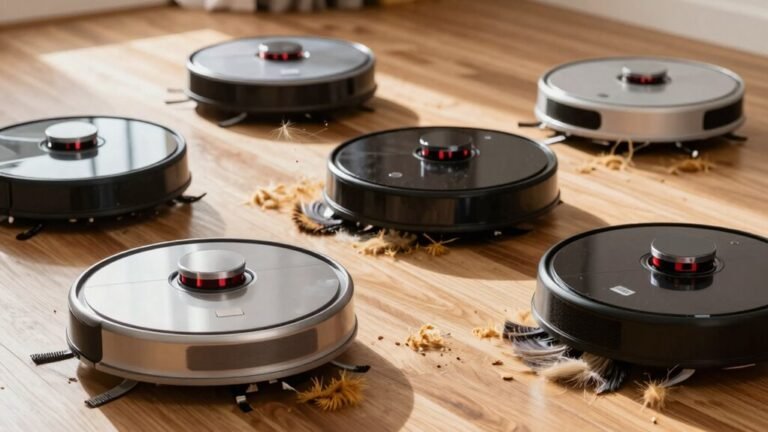
Tips for Using a Robot Vacuum in a Home With Pets
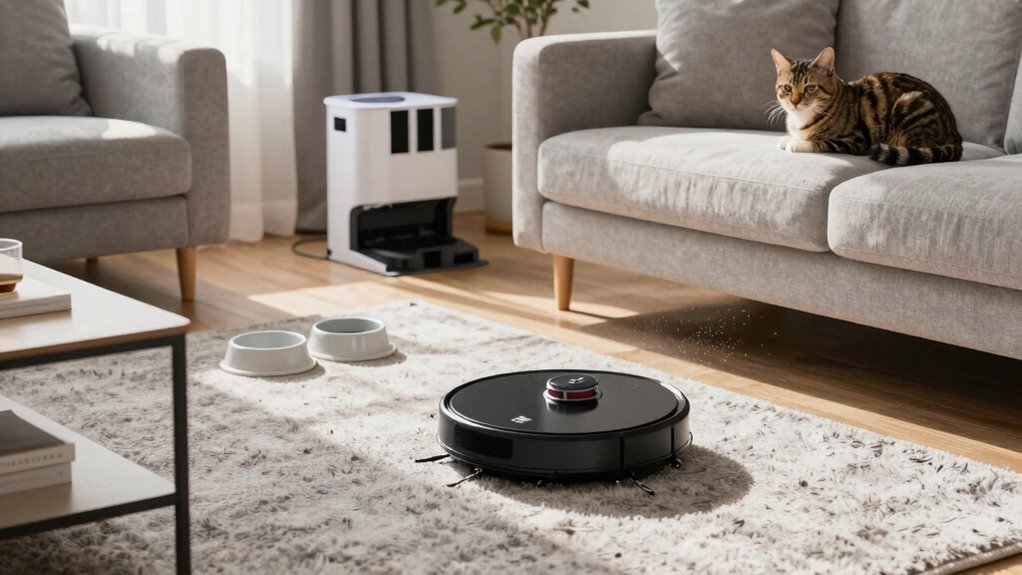
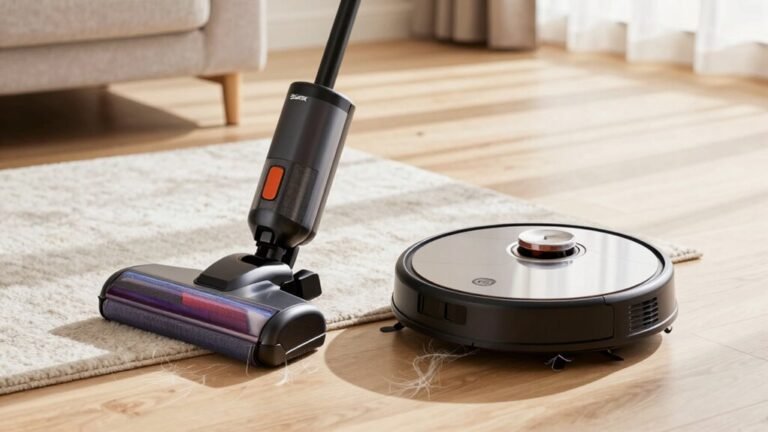
You’ve got this! Pick a robot vacuum with strong suction and tangle exp-free brushes to tackle pet hair like a pro. A robot vacuum in a home with pets needs to handle daily messes efficiently and avoid hair tangles.
Schedule cleanups after playtime or meals, and run it during naps so your furball stays chill. This keeps the floor fresh without spooking your pet.
Secure cords, set no-go zones around litter and food, and empty the bin regularly—no stinky surprises. These steps protect your pet and keep the robot vacuum running smoothly.
Clean brushes weekly and help your pet warm up with treats and patience. You’re already halfway to a cleaner home with a happy sidekick—there’s even more good stuff coming your way.
Choose a Robot Vacuum That Handles Pet Hair
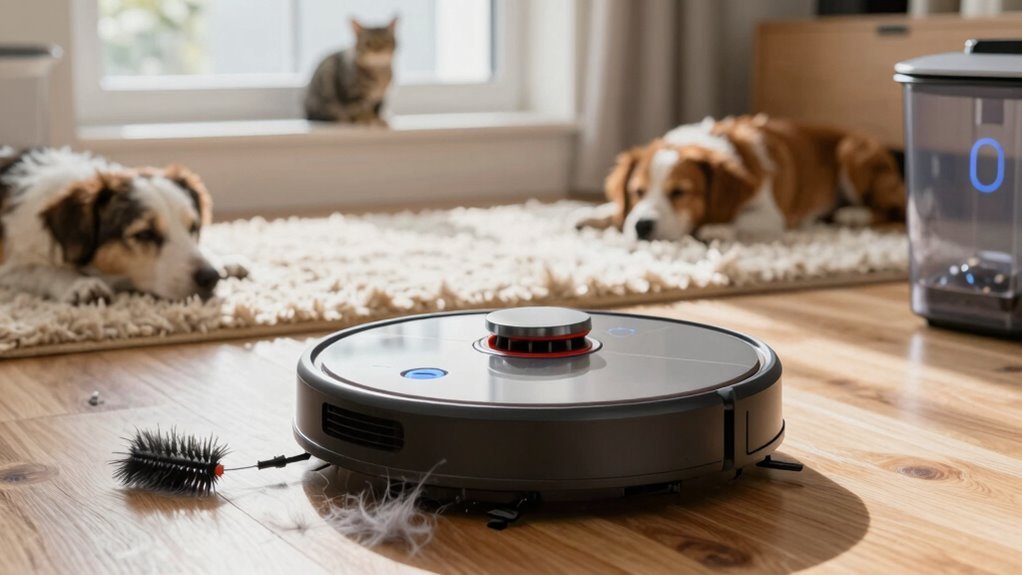
Ready to win the never-ending battle against pet hair?
You’ll want a robot vacuum that’s built to handle the hairy mess your furry friends leave behind.
Look for strong suction—3,000 to 4,000 Pa is solid, but some go up to 16,600 Pa, blasting stubborn fur off carpets and hard floors.
It’s like giving your floors a power shower!
Pair that with tangle-resistant rubber brush rolls, and hair won’t wrap around the brush like it’s auditioning for a fur scarf.
These smart brushes grab hair and send it straight to the bin, no knots, no fuss.
Bigger bins and self-emptying bases mean less chore time for you—because who wants to play janitor every other day?
And with HEPA filters, dander gets trapped, not tossed back into the air.
Choose a vacuum that loves pets as much as you do—without the shedding issues.
Some models even feature laser-based navigation for more efficient cleaning.
Schedule Cleanings Around Pet Activity
You’ve picked a robot vacuum that can handle all the fur tumbleweeds your pet leaves behind—now let’s make it work smarter, not harder, by syncing cleanings with your pet’s daily routine. Time your robot to run after playtime or meals when fur and litter are at their peak. Let it tackle carpets daily during heavy shedding seasons, and stick to 2–3 runs a week otherwise. Keep your pet calm by scheduling cleanings during naps or when they’re out. Consistency helps them realize the robot isn’t a monster—just a nosy cleaner with wheels. For optimal air quality, run the robot vacuum with a HEPA filter regularly to capture pet dander and allergens.
| Pet Activity | Best Clean Time |
|---|---|
| Morning play | 30 mins after |
| Meal or litter time | 15 mins after |
| Nap time | During, in quiet mode |
Secure Cords and Create Safe Zones
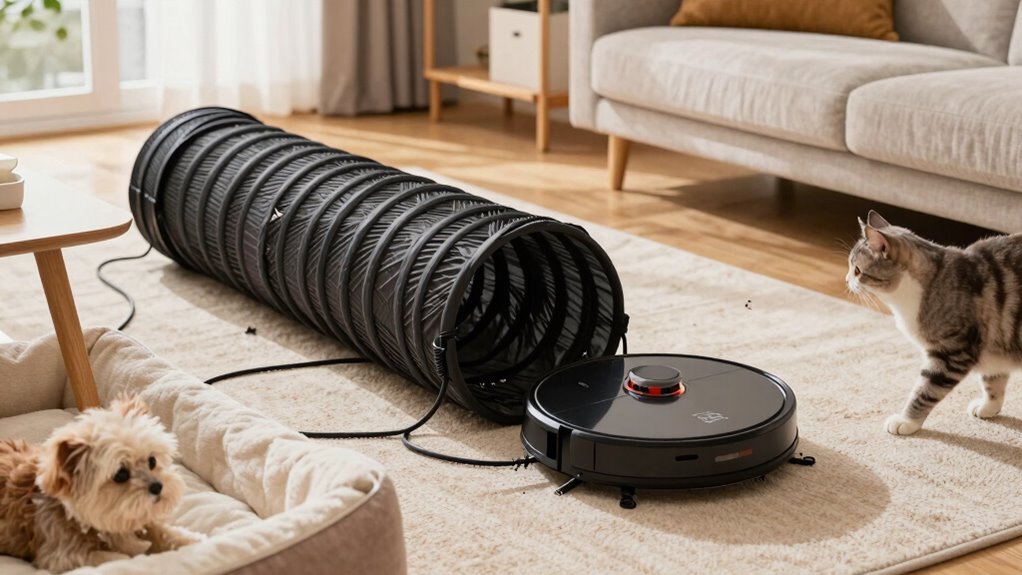
While your furry friend might treat cords like chew toys and robot vacuums like personal opponents in a motorized game of tag, a little smart prep keeps everyone safe—and your home clean—without turning your living room into an obstacle course.
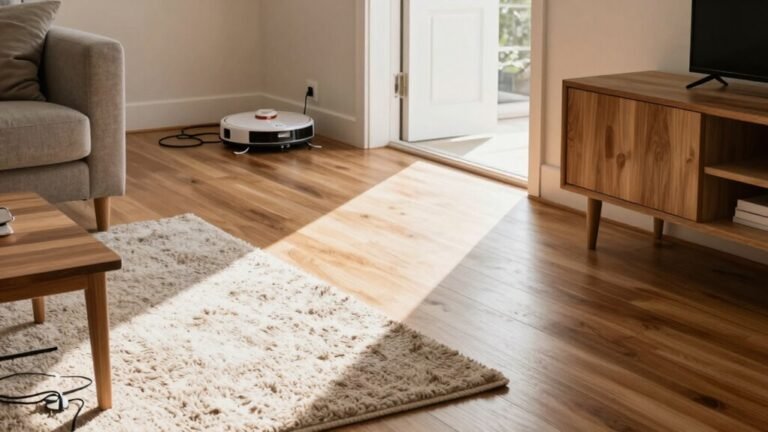
Run cords along walls or behind furniture using clips or raceways, and swap long cables for shorter ones to cut down on tangles.
Secure power strips and bundle loose wires with sleeves so your robot won’t yank them free.
Set up baby gates or closed doors to block off feeding spots and litter zones, giving your pet peace while the robot roams.
Use low door stoppers or furniture to block robot access without confining your pet.
Designate cord-free paths between their favorite spots, and keep high-traffic rest areas out of main cleaning routes.
It’s a win-win: your pup stays safe, your cables stay intact, and your robot keeps rolling—no drama, just clean floors.
Use No-Go Zones to Protect Pets
Now that you’ve tucked away cords and set up safe spots for your pet to eat and relax, let’s talk about giving your robot vacuum some boundaries—yes, just like you’d with a mischievous toddler, but with way fewer juice boxes involved.
Use your vacuum’s app to draw no-go zones around pet beds, food bowls, or litter areas, so your robo-cleaner skips those spots.
It’s perfect for avoiding accidents, protecting anxious pets, or keeping the bot from toppling a cat tree.
Think of it as a “do not enter” sign—for robots.
You can tweak zones anytime as your pet’s habits change, and pair them with quiet modes for extra calm.
Some models even spot messes on their own, but virtual barriers add backup protection.
Just draw, save, and let the robot do the rest—without the drama of a startled hamster or a startled vacuum.
Control Litter Box Debris Automatically
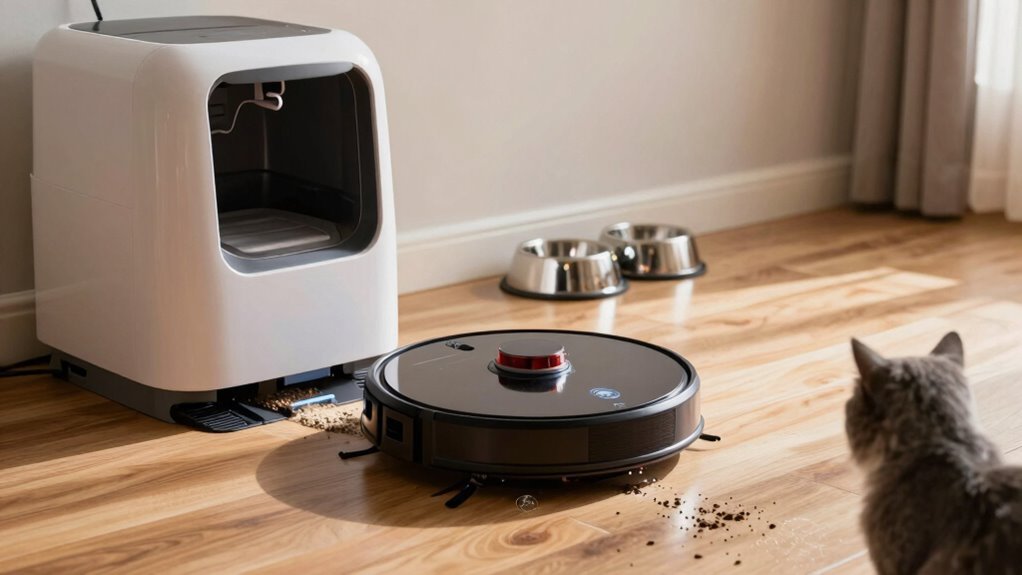
Keeping your home fresh when you have a cat isn’t just about scooping the box—it’s about outsmarting the litter that ends up everywhere else.
Start by using high-sided mats or tray-style boot mats to trap granules before they scatter.
Add adjustable guards by the entrance to keep litter spray in check, and place non-slip mats so your robot won’t get stuck.
Keep a 2–4 foot buffer zone so your vacuum can target that messy hotspot.
Turn on max suction and schedule cleanups right after your cat’s bathroom breaks—because nobody wants yesterday’s business tracked into the kitchen.
Use app-connected, self-cleaning boxes to cut down waste early, and pair them with low-dust, heavy-grain litter to reduce tracking.
Your robot’s not a superhero, but with the right setup, it’ll clean like one—without stepping in anything gross.
Empty the Dustbin Before It Stinks
You’ve got the litter box corner covered, your robot zipping around like a pro after every bathroom break—but don’t let victory distract you from what happens next: that little dustbin filling up fast and turning into a stinky science experiment.
Pet hair, dander, and gooey crumbs decompose in the warm, closed bin, cooking up smelly VOCs that’ll make your nose cringe.
Moist stuff like drool-damp fur or litter dust? That’s bacterial buffet time.
Empty the bin after every run—yes, really—to stop odors before they start.
A full bin kills suction, blocks airflow, and makes your robot sneeze mess back onto the floor.
Plus, packed gunk stresses the motor and mucks up filters and seals.
In pet-heavy homes, daily cleaning means daily emptying.
Your vacuum’s not a science fair project—keep it fresh, running strong, and smelling like nothing at all.
Win.
Remove Pet Hair From Brushes Weekly
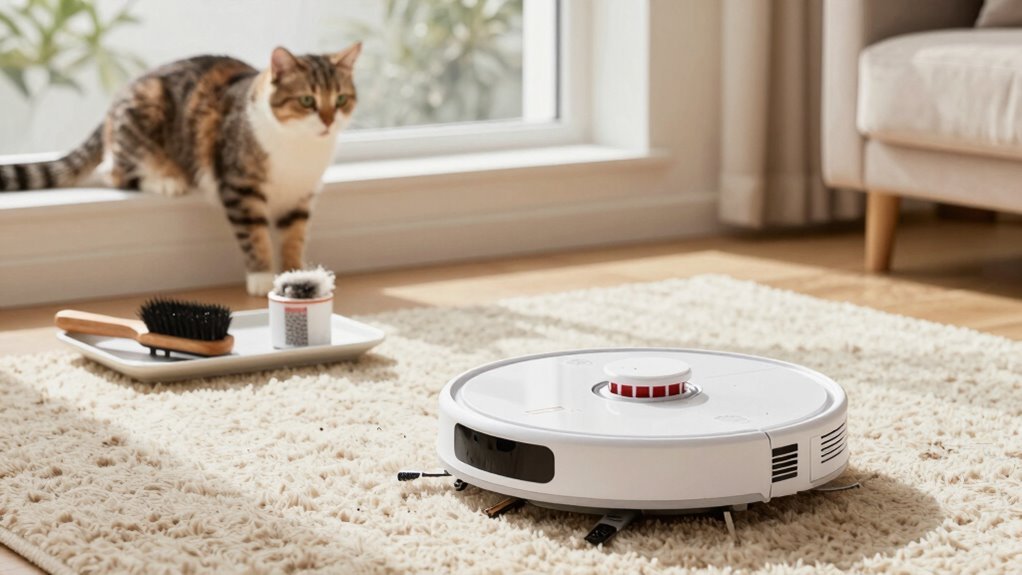
Tangling with furballs on your robot’s brushes?
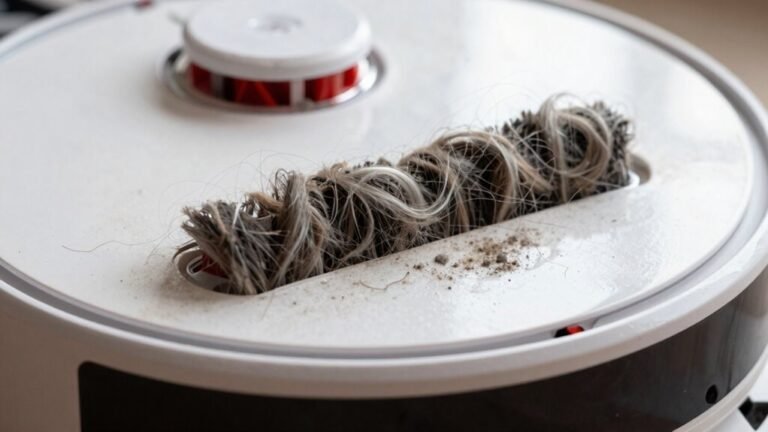
You’re not alone—pet hair loves to wrap around them, slowing rotation and cutting suction.
When gunk builds up, your vacuum works harder, drains faster, and might even overheat.
Plus, matted fur can scratch floors or spread mess instead of grabbing it.
Yikes!
Save your robot (and your sanity) by cleaning the brushes weekly.
Grab small scissors to slice through stubborn hair, then use tweezers or a cleaning comb to pull out the rest.
Remove the brushes first—protect those bearings!
Rubber rollers are easier to clean than bristly ones, and tangle-resistant designs are total lifesavers.
If you’ve got heavy shedders, clean every few cycles.
Trust us, a quick weekly fur check keeps your robot running strong, extends its life, and means fewer surprise hair monsters later.
Win-win!
Help Your Pet Accept the Robot Vacuum
Getting your furry friend on board with a zooming robot vacuum might sound like a sitcom waiting to happen—picture Fluffy hissing at a rolling disc or Fido barking at a beeping intruder.
Start easy: let your pet sniff the vacuum while it’s off, then gently roll it around without turning it on.
Play calm music or keep it far away at first, slowly turning it up or moving closer over days.
Reward brave, relaxed behavior with treats and happy praise—yes, good job for not attacking the robot!
Pair its hum with mealtime or kibble to build good vibes.
Puppies and kittens adapt faster, so start young if you can.
Keep sessions fun, short, and positive, ending with play.
If your pet’s still scared, don’t push it—call a pro trainer.
And hey, it’s okay to vacuum when they’re napping if peace is easier that way.
Frequently Asked Questions
Can Robot Vacuums Climb Over Pet Gates or Thresholds?
No, you can’t expect your robot vacuum to climb over pet gates—they’re way too tall!
But good news: most bots handle standard thresholds just fine, clearing up to 0.8 inches like champs.
Some even tackle 2-inch bumps thanks to smart wheels and lift systems.
Do They Work Well on Dark-Colored Carpets With Pet Stains?
Yeah, they tackle dark carpets just fine, but think of your robot like a cat—curious, smart, but not into messes.
It’ll zip across obsidian rugs, sucking up pet hair and crumbs, unless a wet accident’s around.
Then? It might bail or smear it.
So clean stains first, or you’ll have a mop-haired vacuum doing the cha-cha with gloop.
Spot-treat spills, and let the bot handle the dry fuzz.
How Loud Are They When Pets Are Sleeping Nearby?
They’re usually not too loud, ranging from 55–70 decibels—like a quiet chat or a hum from the kitchen.
If you’ve got a newer model on quiet mode, it’s often no louder than a running dishwasher, so your pup might just nap right through it.
Just keep it away from their cozy spot, and you’ll dodge any dramatic “intruder alert” barks.
Sweet, quiet cleanups? You’ve got this!
Can I Use Multiple Robot Vacuums in Different Rooms?
Yeah, you can totally run multiple robot vacuums in different rooms—it’s like having a cleaning squad!
Assign one per floor or area, and they’ll team up to beat the mess.
They won’t trip over each other if mapped right, and hey, your pets might even get used to their tiny robot roommates.
Just make sure your Wi-Fi’s strong, so they stay on the same page—and schedule.
Do They Detect Small Pet Toys or Chew Bones?
Yeah, most smart robot vacuums can spot your pet’s toys—especially the bigger, colorful ones—thanks to cameras and AI that recognize shapes and colors.
Chew bones are trickier, though; if they’re low, light-colored, or blend into the floor, your robo-friend might miss them.
Think of it like spotting socks vs. clear tape: one’s easy, the other’s a “wait, what was that?” moment.
Still, many models avoid both—most of the time—so you’re in good paws.
Conclusion
You’ve got this, future robot-overlord whisperer! With the right vacuum, smart schedules, and weekly brush cleanings, you’ll conquer pet hair like a 19th-century cowboy taming the wild west—on wheels. Set no-go zones, stash those cords, and let your pet adjust at their pace. Before you know it, your home stays clean, your pets stay safe, and you get more snuggle time. Win-win!
References
- https://us.keyirobot.com/blogs/buying-guide/in-depth-reviews-of-the-best-robot-vacuums-designed-for-pet-hair-removal
- https://vacuumwars.com/best-robot-vacuum-for-pet-hair/
- https://www.consumerreports.org/appliances/vacuum-cleaners/best-robotic-vacuums-for-pet-hair-a6341573082/
- https://kdfoundation.org/?k=276163716
- https://www.switch-bot.com/blogs/robot-vacuum/how-often-vacuum-your-home
- https://www.ecovacs.com/us/blog/how-often-should-you-vacuum-with-pets
- https://newsroom.roborock.com/us/news/roborock-s-pet-friendly-product-designs-bring-innovation-into-pet-care
- https://forums.wyze.com/t/deep-cleaning-robot-vacuum/204280
- https://www.youtube.com/shorts/OqJZCF0vZTI
- https://blog.housesitmatch.com/blog/robot-vacuum-cleaner/