Can Robot Vacuums Pick Up Cat Litter?
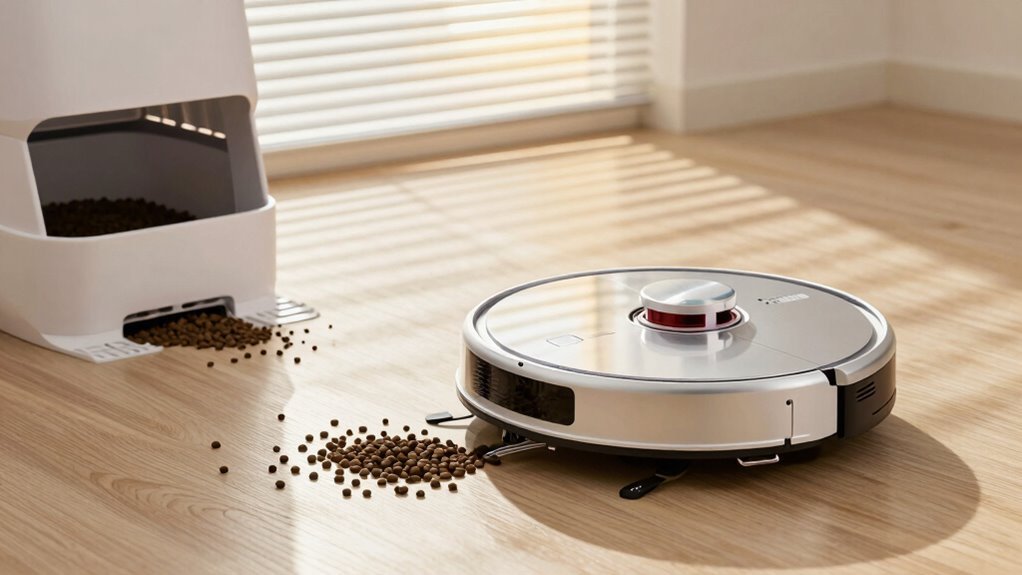
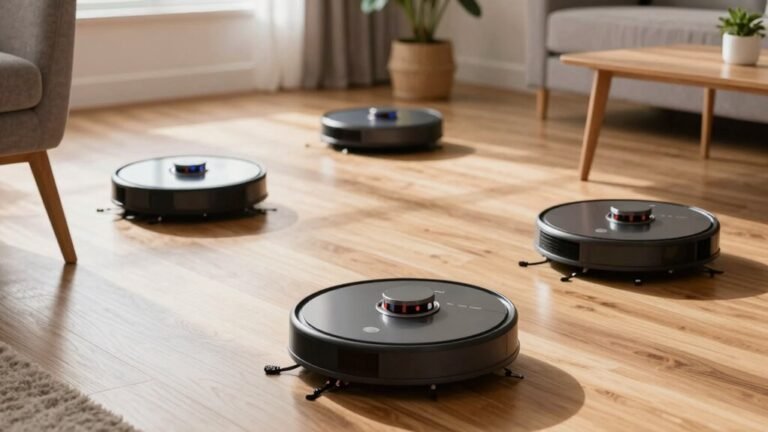
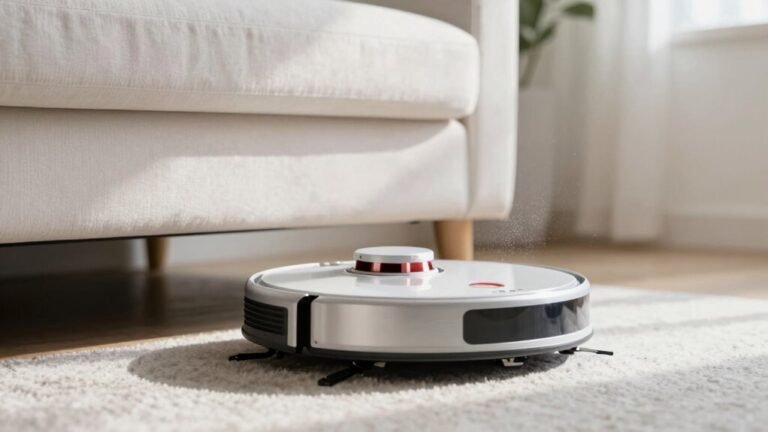
Yes, most robot vacuums can pick up cat litter, especially models designed for homes with pets. Equipped with strong suction and rubber brushes, they efficiently collect scattered litter from hard floors and low-pile rugs.
These vacuums handle small granules and even clumped litter with ease, reducing daily messes. However, performance may vary on thick carpets or with larger crystal litters that are harder to suck up.
Smart models detect debris levels and adjust suction automatically, avoiding dust clouds. With proper setup, your robot vacuum can manage cat litter cleanup effectively and stay in good working condition.
Can Robot Vacuums Handle Cat Litter?
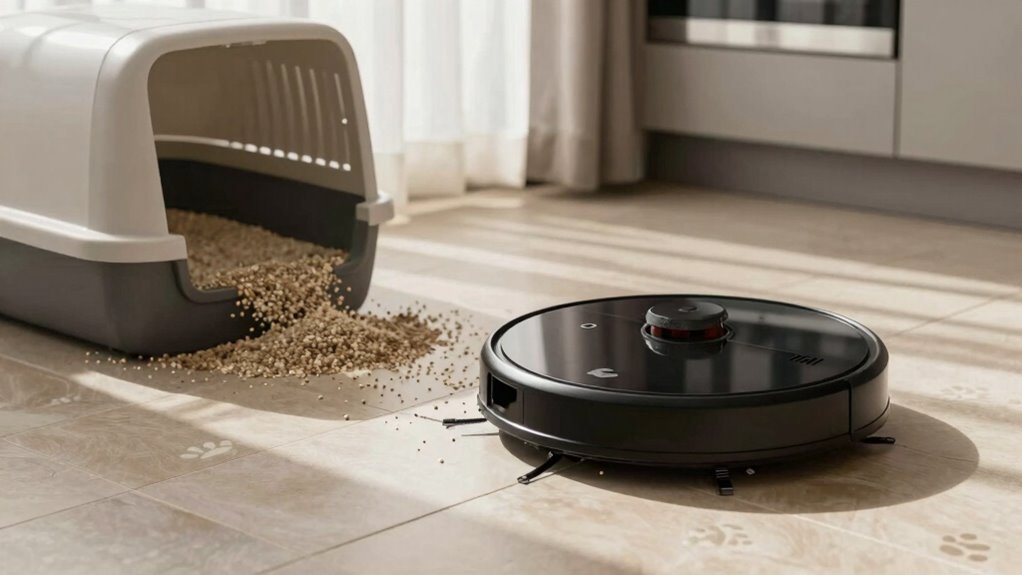
So, can your trusty robot vacuum actually handle cat litter, or is it in for a dusty surprise? Good news—you’re not doomed to a sandy floor disaster.
Many modern bots pick up cat litter just fine, especially if you’ve got a model built for pet homes.
Just don’t expect miracles on thick carpet or with those giant crystal pellets that roll away like tiny escape artists.
Small, dense granules? No problem—if your robot’s got strong suction and rubber brushes that won’t tangle in hair.
It’ll zip across hard floors and low-pile rugs, nabbing stray bits before they spread.
Set it to turbo mode, and it’ll power through clumping litter like a pro.
With daily runs, it even beats manual cleaning by constantly staying on top of messes.
Models with tangle-free technology are especially effective at avoiding clogs from litter and pet hair.
Why Cat Litter Damages Robot Vacuums?
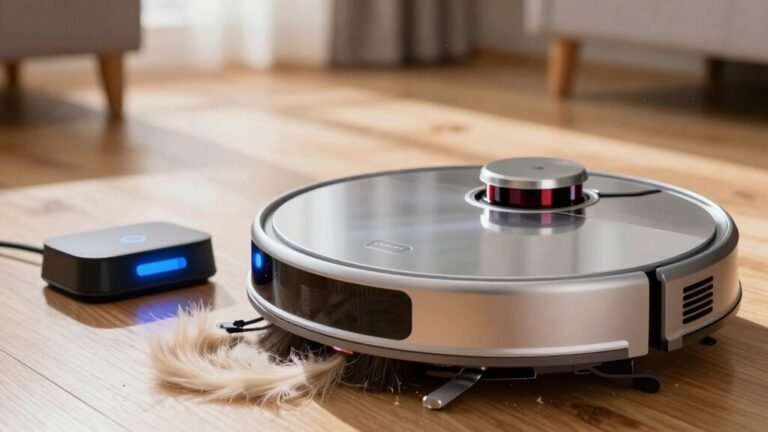
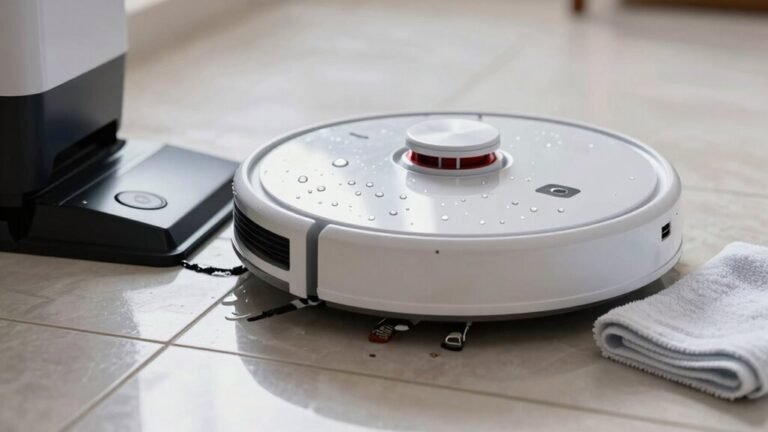
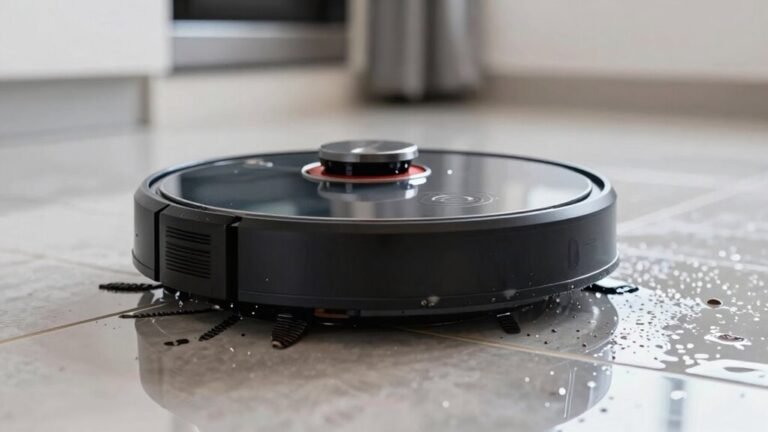
You’ve probably seen how smoothly your robot vacuum tackles stray litter on a daily run—zip, zoom, and it’s gone. But don’t be fooled—cat litter packs a sneaky punch. Those hard granules act like sandpaper, scratching insides and wearing down brushes, wheels, and motors over time. They jam rollers, clog airways, and turn into cement-like clumps when wet, gumming up suction paths.
Dust coats filters fast, forcing the motor to overwork and overheat—like running a marathon in a snowstorm. That same dust mucks up sensors and electronics, causing crashes, wrong turns, or missed docks.
Moisture from clumps invites mold and corrosion, while gunked-up seals let gunk sneak deeper. It’s like your robot is battling tiny landmines every time it cleans. Cute kitty, yes.
But that litter? Total chaos under the hood. Always vacuum only dry, non-clumping, scattered bits to avoid internal damage (vacuum dry litter only).
Which Robot Vacuums Clean Up Cat Litter Best?
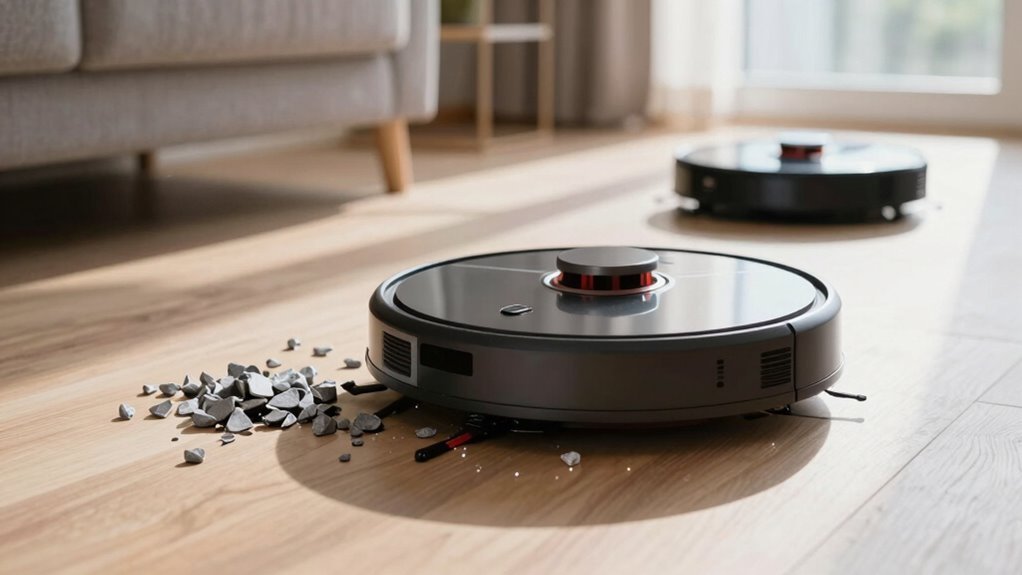
Ever wonder how to keep that trail of cat litter from turning your floors into a gritty mess?
You’re not alone—and luckily, some robot vacuums are built to handle the grind (literally).
These top performers don’t just push litter around;
they power through it with smarts and suction to match.
- Strong suction (10,000+ Pa) chomps up heavy granules, even on carpets, so no clump is left behind.
- Smart navigation and edge cleaning target those pesky trails along walls and under furniture where litter loves to hide.
- Self-emptying bins with HEPA filters mean less mess for you and fewer dusty sneezes—because nobody wants a litter explosion at 2 a.m.
With models like the Ecovacs DEEBOT X8 Pro OMNI or Roborock S8 MaxV Ultra, you’re not just cleaning—
you’re upgrading to peace of mind (and cleaner socks).
How to Set Up Your Home for Litter Cleanup?
Where should you start when designing a home setup that keeps cat litter where it belongs—off your floors and out of your socks?
Begin by placing the litter box in a quiet, hard-floor zone, away from carpets and corners.
Leave space around it so your robot vacuum can maneuver freely—no tight squeezes!
Lay down a textured, washable mat (or two!) extending a few feet from the box to catch stray granules.
Use low barriers to guide your cat in one direction, keeping litter on the mat where it’s easy to clean.
Avoid shag rugs and deep carpets nearby—they’re litter traps.
Pick a medium-grain, low-dust litter to reduce mess, and keep the area clutter-free so your robot can do its job without tripping over toys or cords.
Think of it as building a litter obstacle course—minus the obstacles!
How to Maintain Your Robot After Cat Litter?
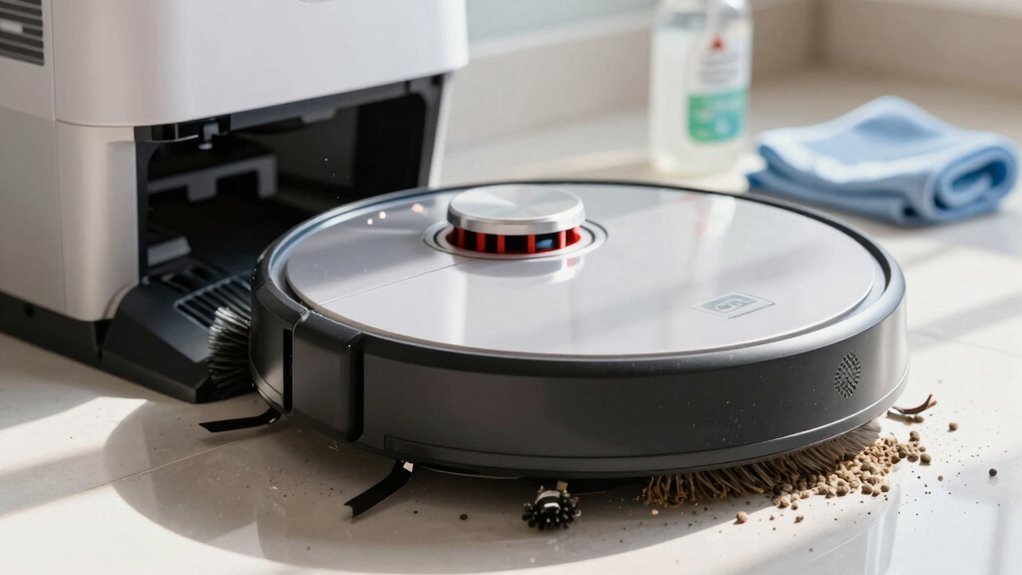
Now that your home’s set up like a litter-free fortress, it’s time to keep your robot vacuum running like a well-oiled meow-chine.
Litter’s sneaky, but your cleaning routine shouldn’t be.
Stay on top of maintenance with these quick, painless habits:
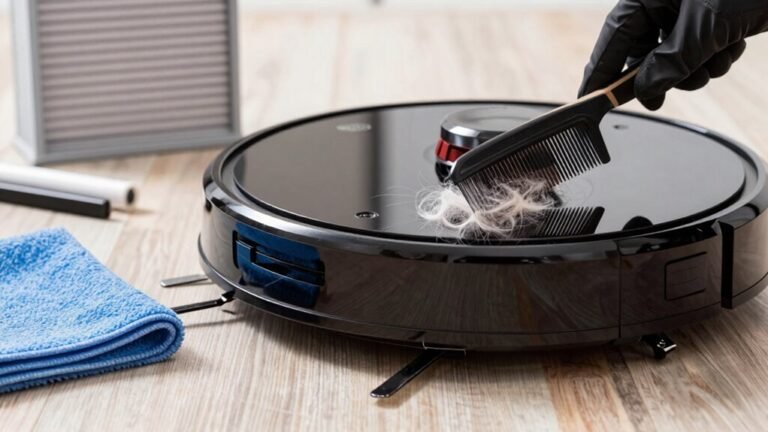
- Clear out brushes and wheels weekly—those tiny granules gunk up bristles and axles, slowing your bot down like a cat in a bath.
- Wipe sensors and charging contacts gently—dusty sensors confuse your robot, and gritty charging points mean less power, more naps.
- Empty the bin and care for filters—clay dust clogs filters fast, so tap them out or swap them often to keep suction strong and air clean.
A little love goes a long way—your robot’s got your back, but it can’t dodge every litter ambush alone.
Keep it clean, and it’ll keep your floors purr-fect.
Frequently Asked Questions
Can Robot Vacuums Detect and Avoid Litter Boxes?
Yes, you can count on most robot vacuums to detect and avoid litter boxes—especially if you help them out a bit.
They use smart sensors and mapping to spot obstacles, and with no-go zones or boundary strips, they’ll steer clear like pros.
Think of it as teaching your vacuum to dodge the “poop zone.”
Just set up virtual fences in the app, and voilà, your robot stays out of trouble while keeping your floors spotless.
Teamwork makes the dream work!
Do They Work Well on All Litter Box Surfaces?
Nope, they don’t ace every surface—let’s be real.
On hard floors, your robot zips around like it’s on a cleanup mission from heaven, sucking up litter like a pro.
But toss in rugs, especially thick, shaggy ones, and it might wrestle more than clean, looking like a tiny vacuum wrestler.
Low-pile? It’ll manage, maybe after a second try.
High-pile? Good luck, buddy—it’ll probably give up and nap instead.
Will Cat Litter Trigger False Full-Bin Alerts?
Yeah, cat litter can totally trick your robot vacuum into thinking the bin’s full when it’s not.
Those little granules pile up fast, block sensors, or clog the inlet, and dust clouds confuse the works.
You’ll get fake “empty me” alerts, especially with clumping or crystal litter.
It’s like your robo-vac’s crying wolf!
But don’t sweat—regular cleanings and smart placement cut down the false alarms.
Keep it tidy, and you’re golden.
Can Robot Vacuums Clean Litter Tracked on Rugs?
Think of your robot vacuum like a tiny, tireless ninja sweeping through rug fibers after your cat’s midnight strolls.
With 22,000Pa suction, it zips across, gobbling up stray granules like popcorn at a movie.
I once saw one pull out a week’s worth of litter from under the couch—no magic, just smart tech.
Just keep it dry, help it out occasionally, and voilà—clean rugs without lifting a finger.
Do They Disturb Cats While Cleaning?
Yeah, they can spook cats at first—sudden zooms and loud starts might send your feline dodging like it’s starring in a tiny horror movie.
But don’t sweat, most cats chill out once they get used to the routine.
Keep the vibes calm with quieter models, predictable schedules, and give your kitty some escape routes.
Soon enough, your robot’s just another odd roommate doing chores—no drama, just clean floors and curious sniff tests.
Conclusion
You’ve got this, and so does your robot! Did you know 60% of pet owners say their vacuums handle litter better after switching to low-tracking formulas? With the right model and a little prep, your robo-helper tackles litter like a pro. Just keep it well-maintained, and it’ll keep your floors spotless—no drama, just clean! Who knew cat mess could be this manageable?
References
- https://us.narwal.com/blogs/robot-vacuum/cat-litter-robot-vacuum
- https://www.ecovacs.com/us/blog/robot-vacuum-for-cat-litter
- https://www.whisker.com/litter-robot-evo
- https://cats.com/best-cat-litters-for-litter-robot
- https://www.whisker.com/litter-robot-comparison-chart
- https://thecatsite.com/threads/robotic-vacuum-cleaners-and-scattered-cat-litter.362906/
- https://www.ecovacs.com/us/blog/can-you-vacuum-cat-litter
- https://figopetinsurance.com/blog/dangerous-automatic-cat-litter-boxes-what-owners-need-know
- https://www.youtube.com/watch?v=vRb2kysMcYQ
- https://www.peta.org/living/animal-companions/the-scoop-on-self-cleaning-litter-boxes/