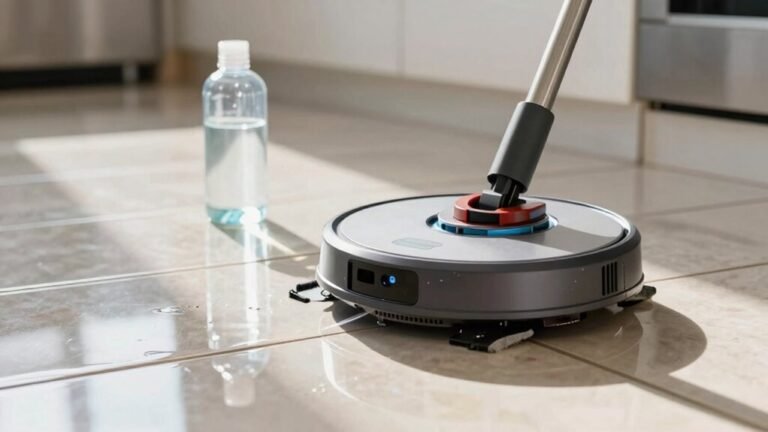
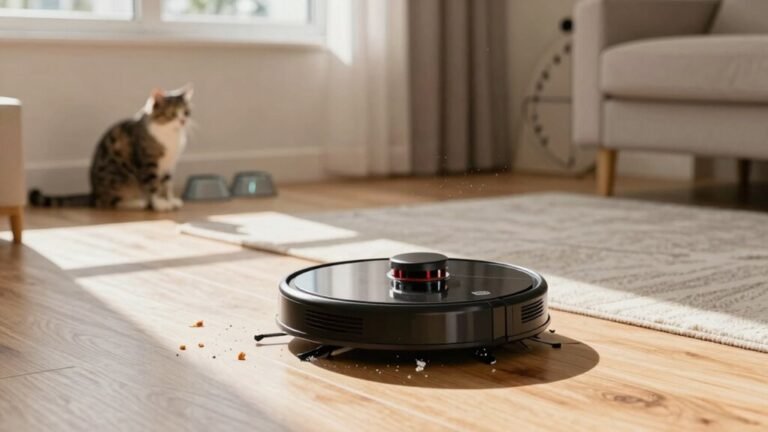
How Do Robot Vacuum Mops Work?
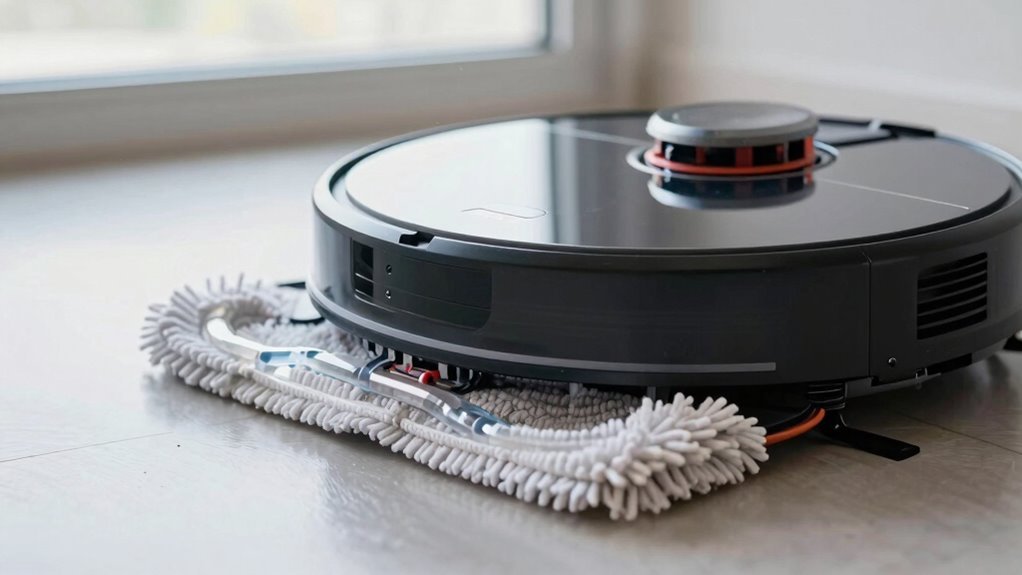
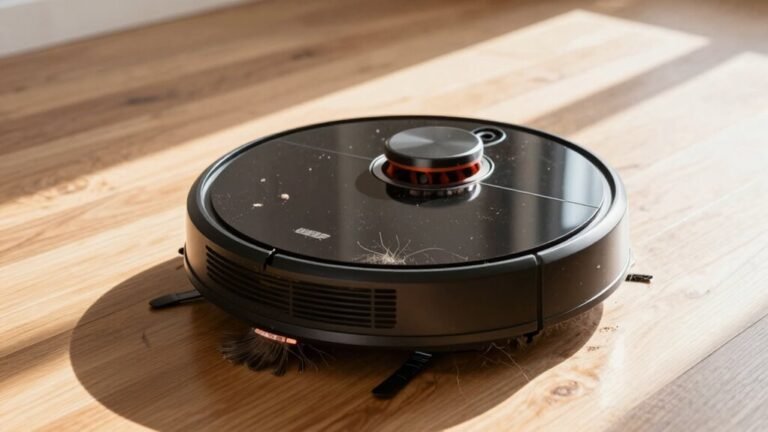
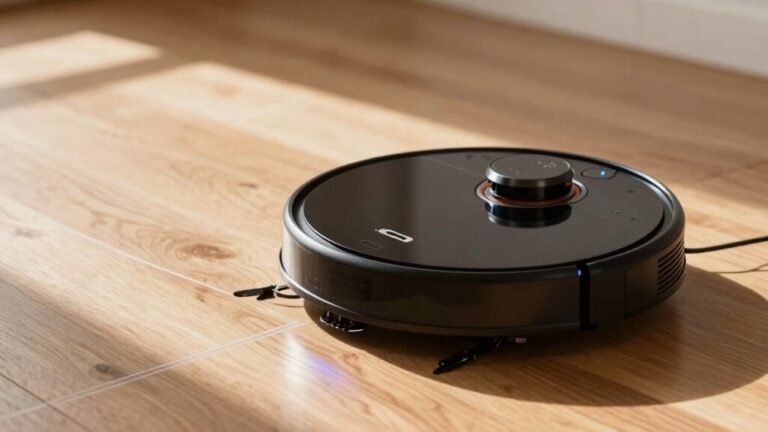
Robot vacuum mops work by combining vacuuming and mopping functions in one automated device. You send it out, and it zips around your home like a mini cleaning ninja—vacuuming first with spinning brushes and strong suction to grab crumbs.
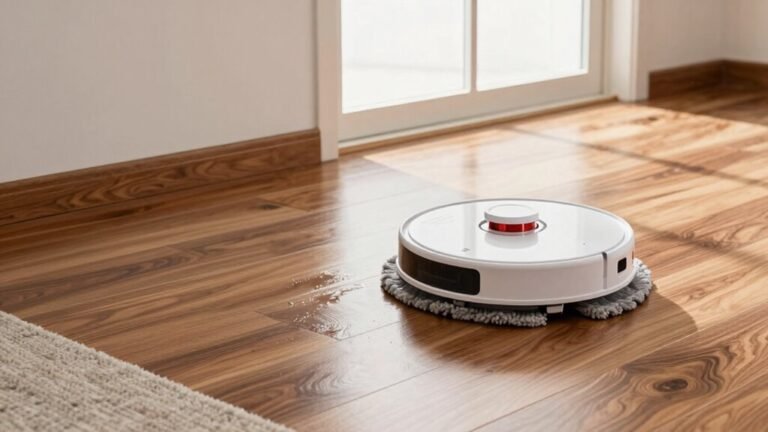
Then, it switches to mopping mode using a damp microfiber pad that wipes floors clean. The robot adjusts water flow depending on the floor type, whether hardwood or tile, for optimal cleaning.
Equipped with smart mapping and sensors, the robot vacuum mop remembers your home’s layout and avoids obstacles like socks and stairs. It detects trouble spots and navigates around them efficiently.
How Robot Vacuum Mops Clean Automatically
While you kick back with a cup of coffee, your robot vacuum mop’s got the floor covered—literically.
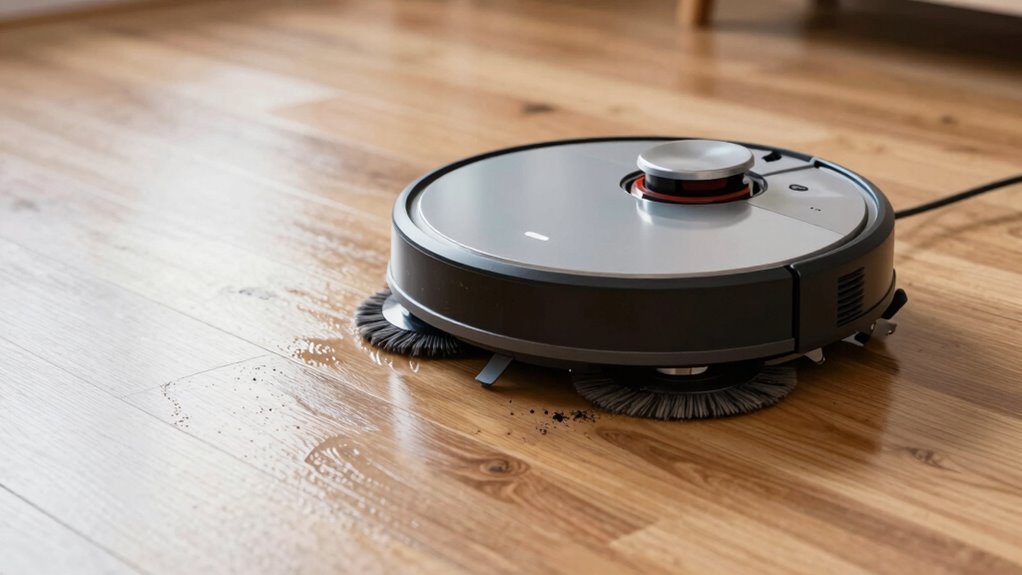
It zips around, sucking up dust with a powerful motor and a spinning main brush that kicks dirt loose from carpets and floors.
Side brushes sweep crumbs in from edges, while sealed airflow keeps suction strong and mess contained.
When it’s time to mop, it lowers a microfiber pad or spinning rollers with just the right pressure to scrub away scuffs.
Some even spray water smartly, so your floors aren’t soaked.
It switches modes automatically, boosting suction on dirty spots or skipping mops on carpets.
You don’t lift a finger—no mopping, no vacuuming, no stress.
It’s like having a tiny, overachieving janitor who never complains (and definitely doesn’t need coffee).
Just press start and let it do the dirty work while you enjoy your downtime.
It uses advanced mapping technology to navigate efficiently and avoid obstacles.
How Robots Navigate Around Furniture and Cliffs
You’re not imagining things—your robot vacuum mop really does seem to know where it’s going, zipping around coffee tables, ducking under chairs, and stopping just short of stairways like it’s got a sixth sense.
Here’s how it dodges disasters and charts its course:
- LiDAR and cameras scan the room, building a real-time map so it doesn’t bump into your favorite recliner.
- Infrared cliff sensors detect staircase drops, saving it from a tumble—and you from a rescue mission.
- Smart AI vision spots socks, shoes, and rogue banana peels, adjusting its path like a tiny, determined detective.
- Gyroscopes and accelerometers track every turn and tilt, keeping it steady even when the dog tries to ride it.
With all these tricks, your robot dances around furniture and edges like it’s got nerves of steel—and a serious fear of stairs. Some models even use vSLAM technology to navigate using visual landmarks instead of relying solely on laser mapping.
Vacuuming and Mopping in One Cleaning Cycle
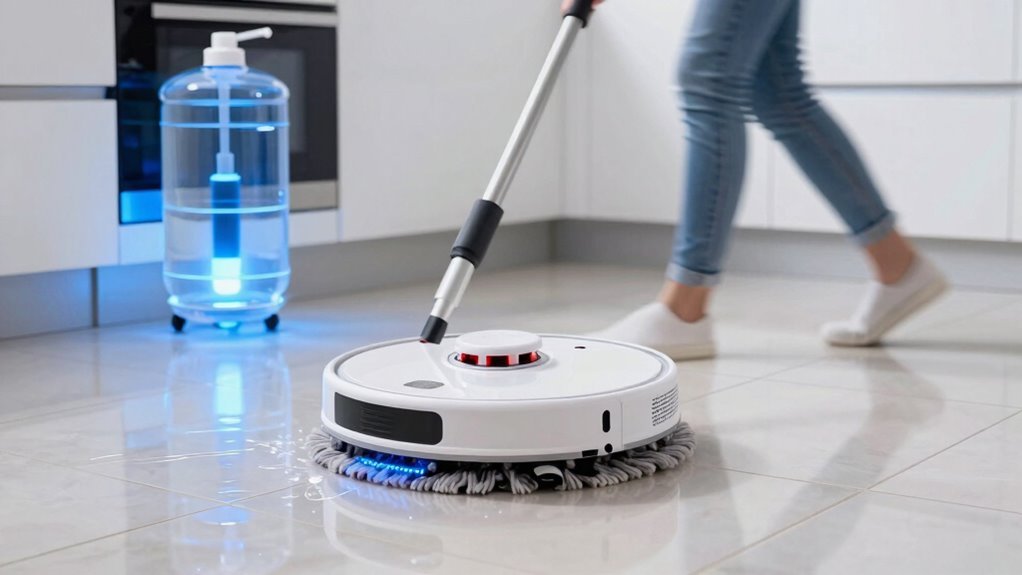
Now that your robot has mastered the art of dodging furniture and sidestepping stairwells like a tiny ninja, it’s ready to tackle something even cooler—cleaning your floors in one smooth, two-in-one move.
It vacuums first, sucking up crumbs and dust with full power, then mops right behind, so dirt doesn’t get smeared.
The mop pad, usually microfiber, drags behind on a clip or magnet, staying damp—not drenched—thanks to smart water control.
As the side brushes sweep gunk into the path, the rotating roller grabs debris while the mop tackles sticky spots.
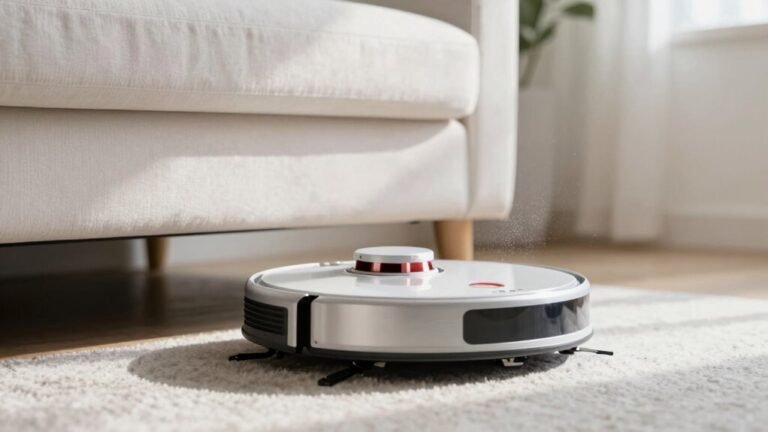
On hard floors, it vacs and mops together; on carpets, it usually just vacuums.
Some models even let you preset zones or run multi-stage cleanings.
It’s like sending in a cleanup crew that works in perfect sync—no mess, no fuss, just shiny floors with way less effort from you.
Pretty neat, huh?
Adjusting Water Flow for Hardwood, Tile, and More
Ever wonder how your robot mop knows not to flood your fancy hardwood floors but still tackles the spaghetti sauce splatter in the kitchen?
It’s all about smart water control! You can adjust the flow to match your floors, keeping things safe and spotless. Here’s how to nail it every time:
- Hardwood & laminate: Use low water—these floors hate soggy bottoms.
- Tile & stone: Crank it up a bit; grout needs that moisture to ditch dirt.
- Vinyl & LVP: Go low to medium—damp, not drenched, to avoid sneaky seepage.
- High-traffic zones: Boost flow in messy spots like kitchens, where sauce crimes occur.
Your robot uses pumps or smart valves to drip just enough water, so you’re not mopping with a mop bucket.
Think precision, not puddles—because nobody wants a indoor lake.
Scheduling Cleanings With App Control and Smart Features
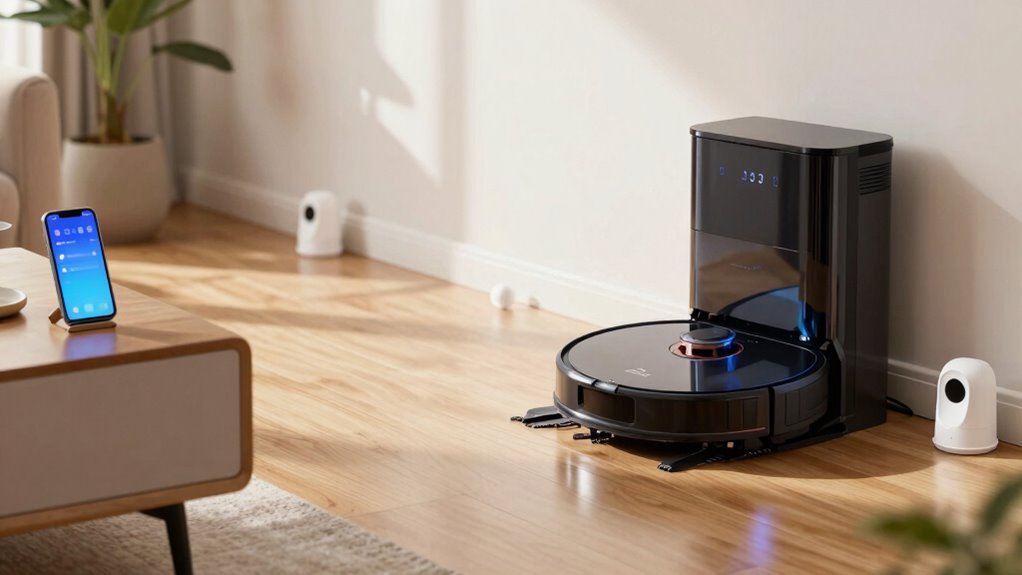
How does your robot vacuum know to dodge the dog’s water bowl at 9 a.m. and deep-clean the kitchen right after lunch?
Because you’ve got full control through the app, of course!
Scan the QR code during setup, connect it to Wi-Fi, and boom—scheduling magic begins.
You can set it to clean daily, weekly, or even hourly, targeting the kitchen after breakfast or skipping the living room during movie night.
With smart mapping, it learns your home’s layout, labels rooms, and remembers which floor it’s on.
Draw no-go zones to protect your cat’s litter zone or that delicate rug.
Want a quick spot clean?
Tap “Pin N Go” on the map.
Real-time tracking shows every inch it covers, and you can tweak plans remotely.
It’s like having a tiny, super-smart cleaning assistant who actually listens.
Frequently Asked Questions
Can Robot Vacuum Mops Clean Corners Effectively?
Yeah, they can clean corners pretty well, but it’s not perfect.
You’ll see them zip into tight spots, spinning side brushes grabbing dust from edges.
D-shaped ones fit better into 90-degree corners than round ones.
Some even stretch their mop pads out like yoga pros to reach further.
They “hug” walls tight, thanks to smart mapping, but ultra-sharp corners might still hide a speck or two.
Close enough for a stress-free home!
Do They Work on Dark-Colored Carpets?
Yeah, they work on dark-colored carpets—about 70% of modern robot vacuums handle them just fine!
You’ll want one with LiDAR or smart sensors, though, ’cause older models might freak out and treat black rugs like bottomless pits.
It’s like they’re scared of the dark!
But newer ones map the room like pros, glide over dark carpets, and clean without freaking out.
Just avoid the bargain-bin bots, and you’re golden.
Are Replacement Parts Easy to Find?
Yep, replacement parts are super easy to find—you’re all set!
Just hop online, grab the right model number, and bam: filters, brushes, and mop pads pop right up.
Brands like iRobot and Roborock make it a breeze, plus third-party options save you cash.
It’s like shopping for robot snacks—your robo-cleaner’ll thank you!
How Often Should I Clean the Sensors?
You should clean your robot’s sensors about once a month—it’s an easy habit that keeps it smart and steady.
If you’ve got pets or dusty floors, bump that up to weekly or every two weeks.
Just grab a soft microfiber cloth, give the lenses and sensors a quick wipe, and you’re done.
Think of it as a little spa moment for your robot—because even little bots need to stay sharp, dust-free, and ready to dodge your forgotten socks.
Can They Detect and Avoid Pet Waste?
Yeah, they can spot and dodge pet waste like a ninja avoiding laser traps—pretty impressive!
Using smart cameras and sensors, these bots see poop in real time, then steer clear so they don’t squish it.
They’re trained on thousands of poop pics (yes, really!) and adjust on the fly.
Just keep the lens clean, or they might slip up—literally.
Pet-safe? Absolutely.
Poop-proof? Almost!
Conclusion
You’re basically hiring a tiny, tireless ninja to keep your floors spotless—minus the dramatic music. It zips around, sucking up crumbs and wiping spills like it’s on a caffeine rush. With smart brains and steady hands (well, wheels and pads), it knows when to vacuum, mop, or just say “not today.” Schedule it, forget it, and come home to floors so fresh, they’ll blush. Who knew clean could be this easy—or this fun?
References
- https://www.ecovacs.com/us/blog/how-does-a-robot-vacuum-cleaner-work
- https://us.narwal.com/blogs/product/main-components-of-robot-vacuum
- https://vacuumwars.com/robot-vacuum-mop-systems/
- https://www.youtube.com/watch?v=h8D-rl7tSnQ
- https://www.youtube.com/watch?v=VPNQxulK4mE
- https://www.youtube.com/watch?v=CSd5YB5iGcI
- https://www.eufy.com/blogs/robovac/how-do-robot-vacuums-work
- https://www.techradar.com/home/robot-vacuums/how-do-robot-vacuums-navigate
- https://www.ecovacs.com/us/blog/different-navigation-types-in-robot-vacuum
- https://us.narwal.com/blogs/product/robot-vacuum-navigation-guide