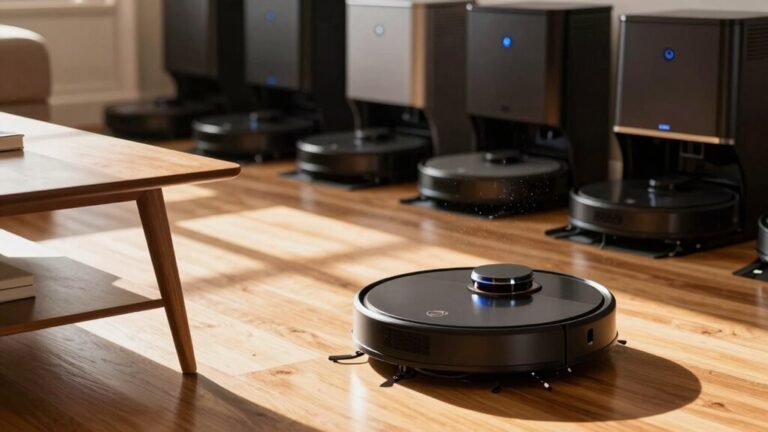
Robot Vs Traditional Vacuums: Which Is Better for Pet Hair?
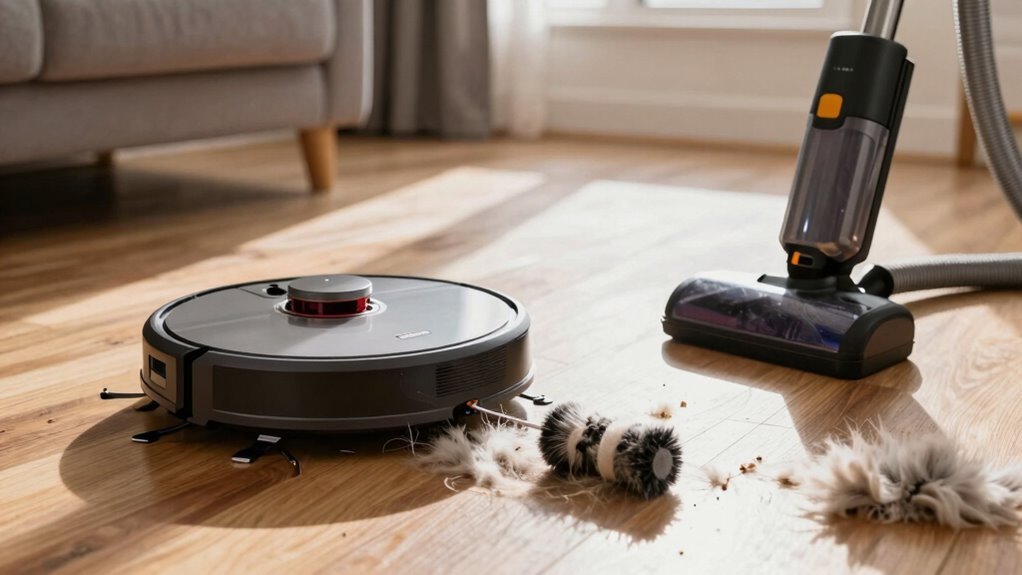
You’ve got pets, and you’ve got hair—lots of it. Robot vacuums handle daily hard floor messes like champs, with smart brushes and self-emptying bins to skip the chore.
But for deep carpet grime, uprights pull out what robots can’t, thanks to serious suction and spinning brushrolls. When it comes to robot vs traditional vacuums, both have strengths in tackling pet hair.
Think of it as tag-team cleaning: robots for surface fuzz, uprights for the hidden mess. You’ll want both if you’re serious about a fur-free home—and yes, it’s worth seeing what comes next.
Do Robot Vacuums Pick Up Pet Hair on Hard Floors?
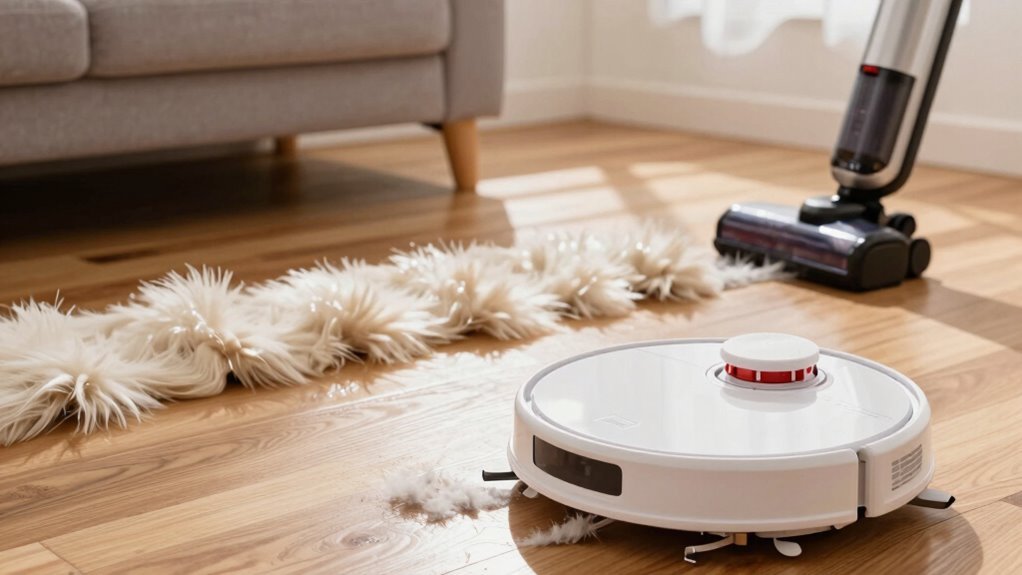
Ever wondered if your robot vacuum can really handle the pet hair tumbleweeds doing the cha-cha under your coffee table?
Good news: on hard floors like tile or hardwood, it absolutely can.
Since pet hair just sits on the surface, your robot doesn’t need monster suction to grab it—just steady, smart cleaning.
Models with edge-sweeping brushes and side arms nab hair hugging baseboards, while anti-tangle brushes keep things running smoothly.
Many even glide under furniture with 4.3 inches of clearance, vacuuming those “I’ll-get-it-later” zones you always miss.
Run it daily, and hair never clumps into chaos.
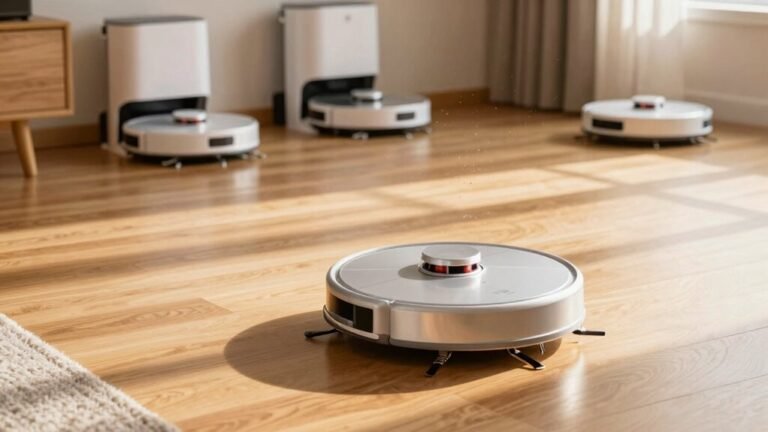
Self-emptying bins mean you’re not constantly playing janitor.
Sure, it’s not magic—some bots drag strands instead of sucking them—but top performers like the iRobot Roomba Max 705 clean bare floors like champs.
With little hands-on effort, your robot keeps pet hair under control, so you don’t have to battle tumbleweeds with a dustpan.
Independent testing notes confirm that performance varies among models, even on hard surfaces.
Why Uprights Remove More Embedded Pet Hair
Why does your carpet still look like a pet hair battlefield even after the robot’s made its rounds?
Because upright vacuums pack serious muscle where it counts.
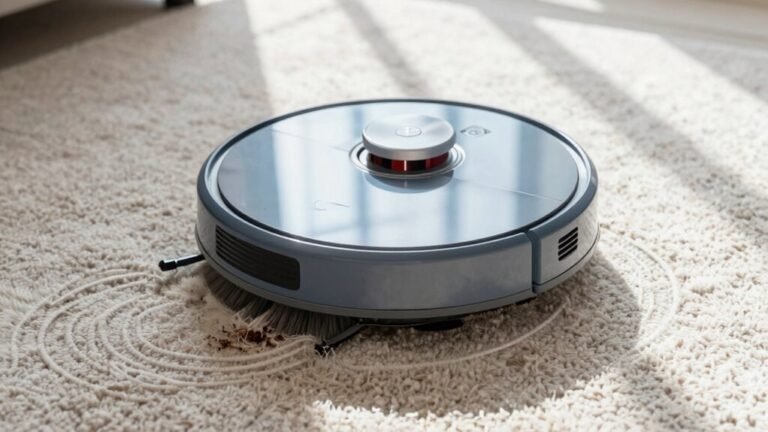
Their powerful suction and motorized brushrolls dive deep, yanking out hair woven into carpet fibers that robots just glide over.
Models like the Bissell Pet Hair Eraser and Shark Rotator use tangle-resistant PowerFins and dual-brushroll systems to agitate and lift fur with ease.
You’ll love how the FurFinder tool lights up hidden hair like a treasure map—95% gone in one pass!
With adjustable heights and hands-free spooling, these vacuums adapt to your carpet’s needs while keeping fur off your hands.
Unlike robots, they don’t skip spots or give up on stubborn tangles.
When it comes to embedded pet hair, uprights don’t just clean—they conquer.
Very good on carpets, Shark Stratos AZ3002 delivers the deep-cleaning power needed to extract even the most stubborn pet hair from low- to medium-pile carpets.
Your carpet’s fur problem? Totally outmatched.
Which Vacuum Has Stronger Suction for Pet Hair?
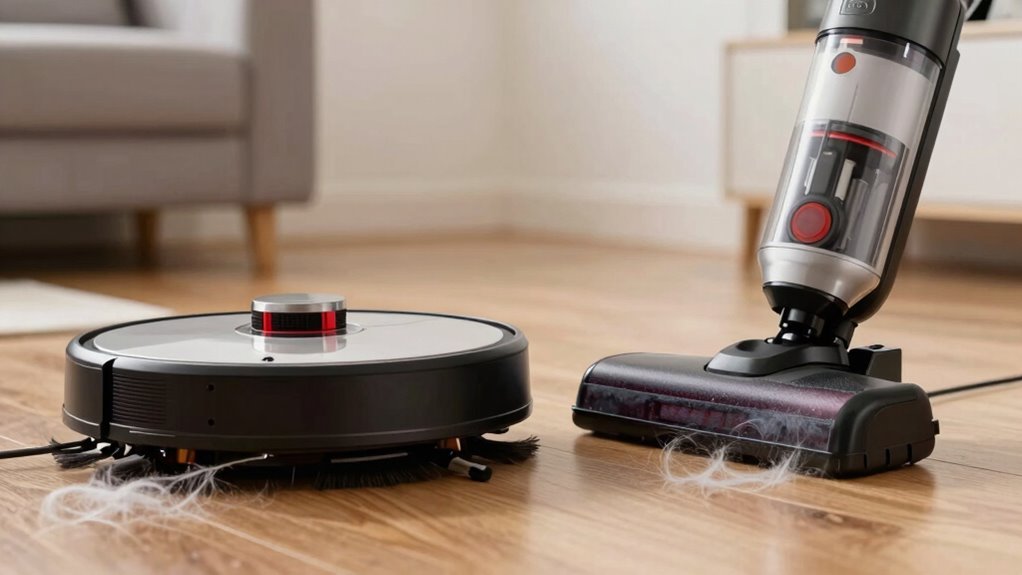
Think your robot’s got serious suction power? Well, some do—like the Mova Mobius 60 with 30,000Pa, which sounds crazy strong.
But here’s the twist: traditional uprights often suck harder when it counts, especially on stubborn pet hair buried in carpets.
While top robots boost up to 30,000Pa, lab tests show high-end uprights consistently outpull them, delivering deeper cleanups without flinching.
Robots like the iRobot Roomba Max 705 do great without tangles, but traditional vacuums don’t just rely on suction—they combine power with smart brush rolls that don’t clog.
Sure, your robot buzzes around like a tiny vacuum ninja, but when it comes to raw, no-nonsense muscle for lifting pet hair, old-school uprights still flex harder.
So if you want power that *really* means business, don’t underestimate the classic.
It’s not just nostalgia—it’s suction that means business.
Carpet vs Hard Floor: Where Does Pet Hair Stick Most?
While your carpet might seem like a soft, cozy haven for your pet, it’s also a sneaky hideout for all that shed fur. Those fluffy fibers? They’re not just hugging your toes—they’re trapping pet hair, dander, and dust deep down where you can’t see.
The tighter weave pulls hair in like tiny vacuum hands, making it a beast to remove without serious deep cleaning. Meanwhile, hard floors are way more honest—pet hair just chills on top, visible and ready to be swept.
No sneaky buildup here! Sure, light-colored hardwood like red oak shows every stray strand, but that’s a good thing—it keeps you on your toes. Hard surfaces don’t let fur hide, so cleaning’s a breeze with a quick swipe or mop.
Plus, fewer allergens stick around, which means happier lungs and less sniffles. So if you want less fur drama, hard floors are your low-maintenance BFF.
Do Vacuums Handle Furniture and Stairs Differently With Pet Hair?
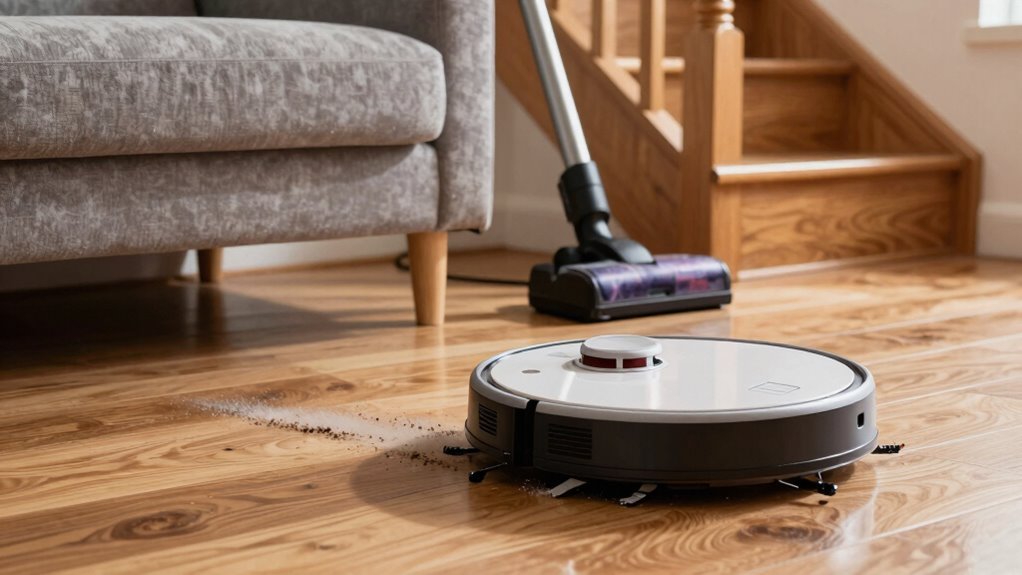
Ever wonder how your vacuum tackles pet hair around the living room jungle of couches, tables, and chairs—or better yet, up and down those staircases your dog insists on shedding on? Robots glide under furniture like ninjas, grabbing hidden hair with side sweepers, but they can’t climb stairs—ever. Traditional vacuums? They’ve got your back (and your couch, stairs, and dog bed) with powerful suction and handy attachments.
Here’s the scoop:
| Task | Best Choice |
|---|---|
| Under furniture | Robot vacuum |
| Upholstery | Traditional vacuum |
| Stairs | Traditional vacuum |
Robots dodge legs and avoid messes with smart sensors, but if you’ve got multiple floors, you’ll need to carry or pair devices. For total pet hair domination, use both: let the robot patrol downstairs daily, and bring out the upright for stairs and deep furniture cleanups. Your couch will thank you!
How Pet Hair Clogs Filters: Robot vs Traditional
Pet hair’s sneaky—like glitter, but fluffier—and it’s always plotting its next move, especially when it comes to clogging your vacuum’s filters.
With robot vacuums, hair piles up fast, gunking up bins and wrapping around rollers, even if they’re “tangle-free.”
Clogged filters kill suction, making your bot just push hair around like a snowplow.
Traditional vacuums aren’t safe either—hair tangles bristle brushes and jams filters, especially on thick carpets.
Both use HEPA filters that trap dander but clog quicker with heavy shedders.
Robots handle hard floors like champs, catching almost all hair before clogging, but traditional vacuums dig deeper into carpets.
The fix? Empty bins daily, clean brushes weekly, and swap filters regularly.
A self-emptying dock? Total game-changer.
Stay on top of maintenance, and you’ll keep the fluff beast at bay—without the daily drama.
Can Scheduling Help With Daily Pet Hair Control?
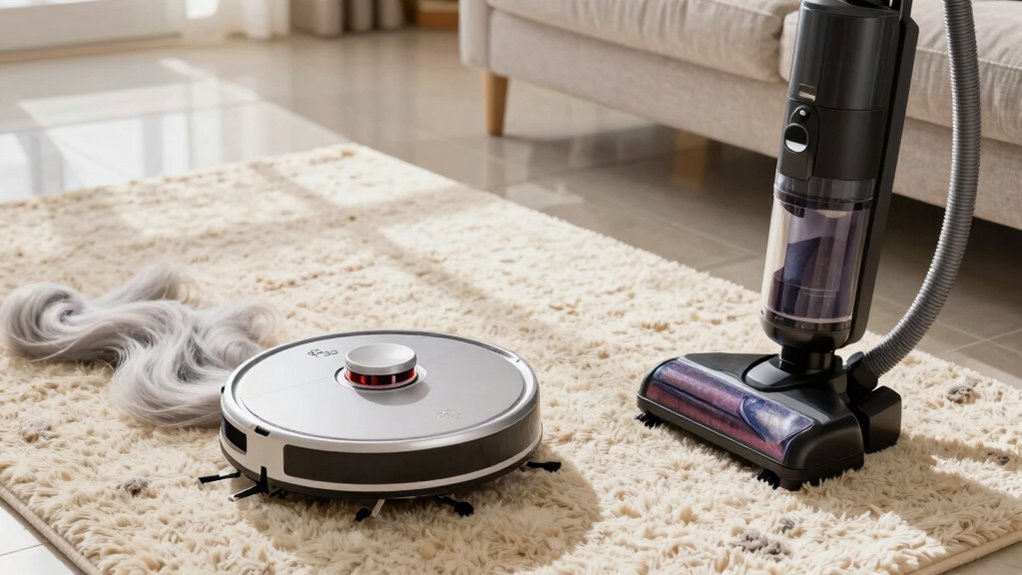
How do you keep pet hair from turning your home into a fuzz-covered kingdom? Schedule your robot vacuum to run daily and stay ahead of the fluff invasion.
You can set it to clean the living room after the dog sheds, or hit the kitchen post-meal when crumbs and paw dust appear.
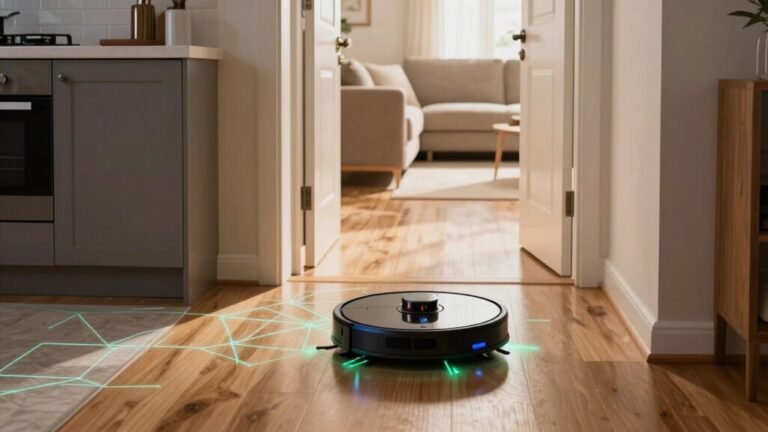
With apps and smart mapping, you can target high-traffic zones, skip pet beds, and even avoid rogue toys.
Daily runs mean hair never piles up, especially helpful if you’ve got two or three furry shedders.
Plus, features like 20,000Pa suction and tangle-free brushes grab hair fast, from carpets to tiles.
You’re not just cleaning—you’re staying in control, one scheduled sweep at a time.
It’s like having a tiny, tireless helper battling fur ninjas while you sip coffee.
And honestly, who wouldn’t want that?
Robot vs Traditional Vacuum Cost Over Time for Pet Owners
While you’re chasing after your dog with a lint roller, a robot vacuum might seem like a no-brainer—but the real cost kicks in over time.
Sure, you save minutes daily, but you’re also signing up for a pricier start and surprise bills down the road. Here’s what adds up:
- Upfront & Replacement Costs: Robots cost $500+, while solid traditional vacuums start at $150—and you’ll likely replace robot parts like brushes and filters more often.
- Maintenance Time & Effort: You’ll clean your robot weekly—emptying bins, unclogging brushes—despite its “set-it-and-forget-it” vibe.
- Energy & Usage Combo: Even though robots use less power per run, you’ll run both machines—robots daily, uprights monthly—boosting your bill.
You end up paying more *and* keeping two vacuums.
For pet owners, that’s not savings—it’s a full-time cleaning side hustle!
Frequently Asked Questions
Can Robot Vacuums Detect Pet Hair Density in Real Time?
Yeah, robot vacuums can totally spot pet hair density in real time—no magic, just smart tech!
Cameras, sensors, and AI team up to detect clumps of fur like furry landmines.
They see where hair piles up, then turbo-boost suction right there.
Some even avoid pet messes (because nobody wants *that* surprise).
Do Traditional Vacuums Require More Physical Effort for Pet Owners?
Yeah, traditional vacuums do take more effort—you’re pushing, steering, and lugging them around, which can get tiring fast.
Robot vacuums, though?
They zip around on their own while you kick back.
If you’ve got pets shedding everywhere, you’ll love letting a robot handle the daily mess.
It’s like having a tiny cleaning buddy who never complains—though it might get stuck under the couch.
Less work for you, more fur-free floors!
Are Robot Vacuums Safe Around Curious Pets?
Yes, robot vacuums are safe around curious pets—you’ve got nothing to worry about.
They’ve got soft edges, gentle moves, and smart sensors that spot pets and steer clear.
Most models glide quietly, avoiding scary loud noises that startle.
Sure, your pup might chase it at first—hilarious, but supervise just in case.
With a little time, your pet’s probably napping while it cleans.
You’re all good!
Can Both Vacuums Handle Long Human and Pet Hair Equally?
No, they don’t handle long hair the same—you’ll see that fast!
Traditional vacuums power through stubborn tangles and deep carpet knots like champs, especially with those handy pet tools.
Robots are slick and smart, but they can struggle and sometimes just drag hair around like furry flags.
Still, with anti-tangle brushes and strong suction, some, like the Freo X Ultra, come surprisingly close—almost cheating, really!
Do Pet Odors Affect Robot Vacuum Sensor Performance?
No, pet odors won’t mess with your robot vacuum’s sensors—those little geniuses are built to handle smelly situations!
The odors get trapped by HEPA filters and neutralizers, keeping the air fresh.
Sensors focus on navigation and obstacles, not sniffing around like a curious pup.
Just keep ‘em clean, and they’ll keep zipping around hassle-free, no matter how stinky things get.
Phew!
Conclusion
You want power? Grab a traditional vacuum—beastly suction, deep carpet cleans. But crave convenience? The robot zips around while you sip coffee, battling daily hair drifts. One’s a weekend warrior, the other, a stealthy sidekick. Together? Unstoppable. Pets shed, but with both in your corner, fur doesn’t stand a chance—hello, clean floors and more cuddle time!
References
- https://extravistech.com/blogs/pet-hair/are-robot-vacuums-really-effective-against-pet-hair-a-deep-dive
- https://us.narwal.com/blogs/pet-friendly/robot-vacuum-pet-hair-removal
- https://us.narwal.com/blogs/product/robot-vacuum-clean-floors-effectively
- https://www.homesandgardens.com/solved/shedding-season-eufy-robot-vacuum-game-changer-pet-hair
- https://www.consumerreports.org/appliances/vacuum-cleaners/best-robotic-vacuums-for-pet-hair-a6341573082/
- https://www.rtings.com/robot-vacuum/reviews/best/pet-hair
- https://www.bissell.com/en-us/blog/embedded-pet-fur-the-ultimate-vacuum-test/
- https://www.consumerreports.org/appliances/vacuum-cleaners/best-upright-vacuum-cleaners-consumer-reports-tests-a4196942563/
- https://www.goodhousekeeping.com/appliances/vacuum-cleaner-reviews/g22073192/best-vacuum-for-pet-hair/
- https://www.simplicityvac.com/ultimate-guide-to-cleaning-pet-hair