Can Robot Vacuums Pick Up Pet Food Spills?
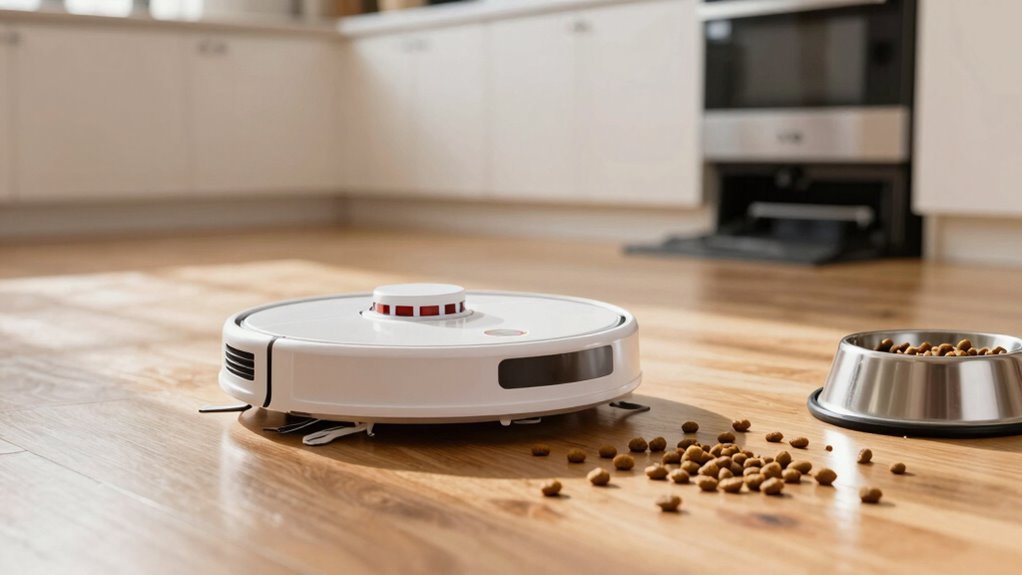
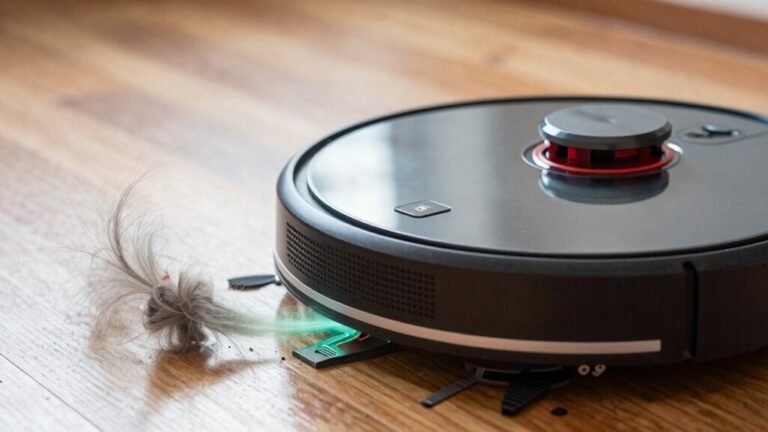
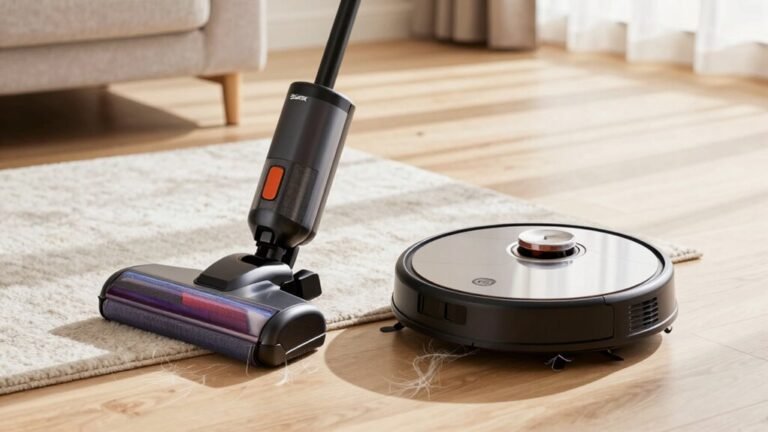
You bet your pup’s favorite treat—robot vacuums can pick up pet food spills efficiently, especially when designed for such messes. With strong suction and smart brushes, they navigate floors and capture stray kibble like pros.
Just be cautious with oversized chunks or sticky, goopy leftovers—they might overwhelm the robot’s system. Stick to models built specifically to handle pet food spills for the best results. Want to know which robots clean up best without missing a crumb?
Can Robot Vacuums Pick Up Pet Food Spills?
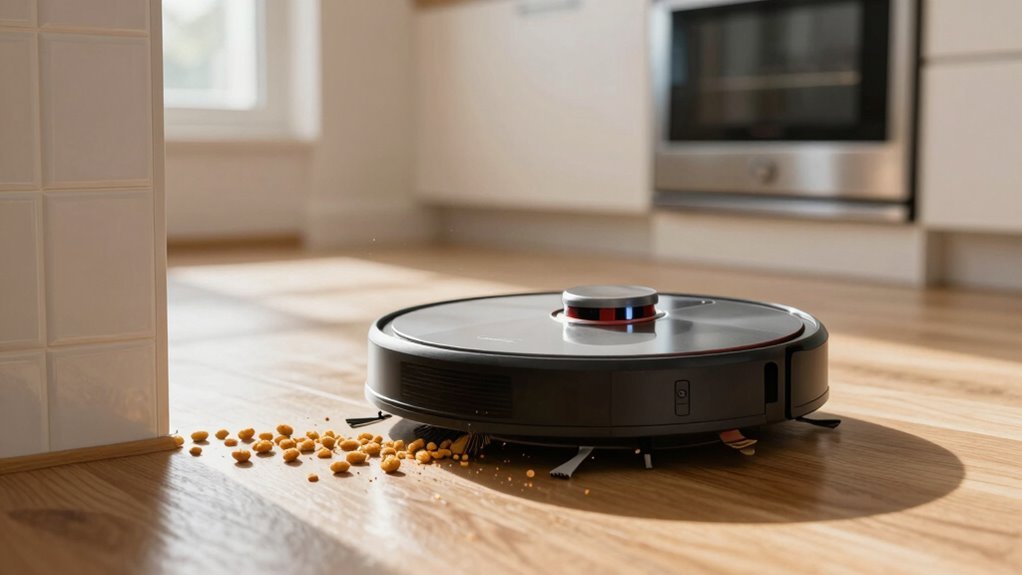
Ever wonder if your robot vacuum can handle the aftermath of dinner time in a house with furry eaters? Good news: it’s got your back for most dry spills!
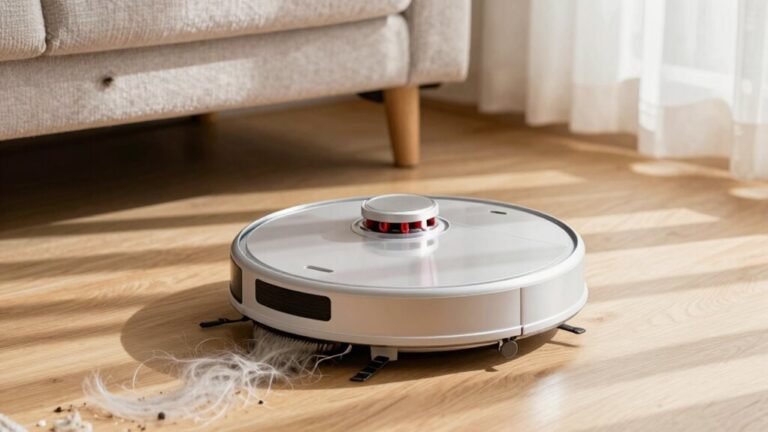
If your pup’s kibble is small and scattered on hardwood or tile, your robo-vac swoops it right up—especially with strong suction and smart brushes.
It tackles crumbs, dust, and even a mix of pet hair and food bits without skipping a beat. Spot-cleaning mode? Perfect for zeroing in on the messy feeding zone. For best results, start spot cleaning right after mealtime to prevent crumbs from spreading.
Just don’t expect miracles with giant chunks or goopy wet food—it might push those around like a confused waiter.
And please, keep broken dish pieces away; your vacuum’s no munching machine!
With the right setup, your bot keeps mealtimes tidy and your floors crumb-crunch-free. Who knew cleanup could be this hands-off—and kinda fun?
How Robot Vacuums Suck Up Kibble and Crumbs
What’s better than watching your robot vacuum slurp up kibble like it’s on a snack run?
You’re in luck—today’s robots aren’t just clever, they’re hungry for mess.
With strong suction and smart design, they tackle pet food like pros.
Here’s how:
- High-powered suction (up to 12,000Pa) creates a mini tornado that lifts kibble off floors, especially on hard surfaces where nothing’s holding crumbs back.
- Smart brushrolls with open channels scoop and guide food bits into the path of suction instead of shoving them around like a clumsy waiter.
- Precision sensors and mapping help your robo-vac find food zones near feeders, then hit them repeatedly—because second helpings aren’t just for pets.
Combined with cyclonic airflow and height-aware brushes, your robot doesn’t just wander—it hunts crumbs with purpose.
And let’s be real: nothing’s more satisfying than seeing your vacuum out-eat your dog.
Models like the Roborock Q5+ handle this with LiDAR-based mapping, ensuring no corner is overlooked during cleanup.
Why Kibble Jams Brushes and Clogs Suction Paths
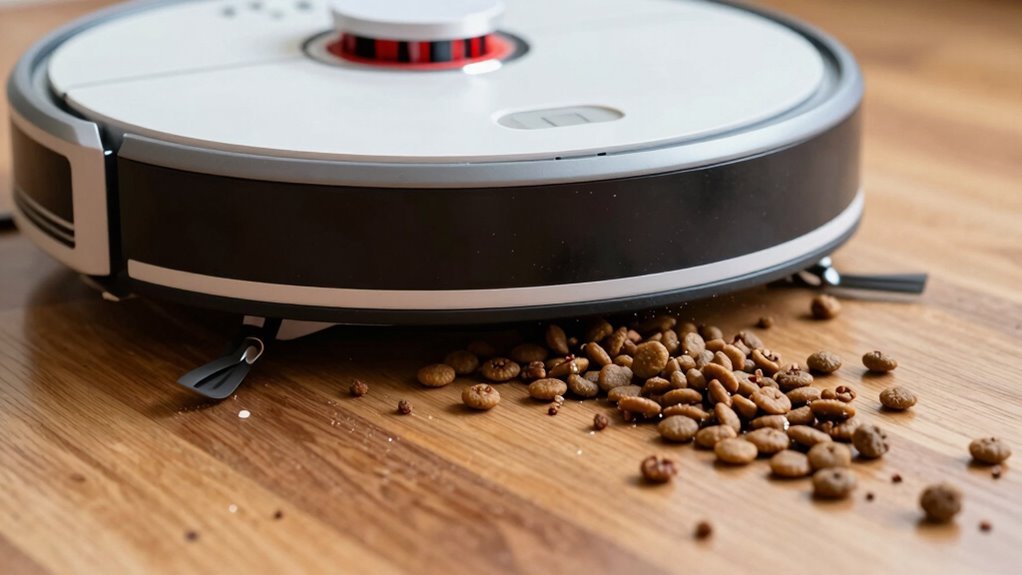
While your robot vacuum bravely dives into the battlefield of scattered kibble, it doesn’t always come out unscathed—those crunchy little morsels can sneak into tight spaces and throw a wrench in the works.
Larger kibble pieces tangle around spinning brushes, especially when mixed with pet hair, creating messy clumps that slow things down.
Over time, even tiny fragments pack into brush fibers, reducing suction and making your bot work harder.
And don’t forget the suction path—kibble loves to wedge itself in hoses, floor heads, and inlets, blocking airflow like a snack-sized roadblock.
When that happens, your vacuum’s motor strains, battery drains faster, and performance drops.
Irregular shapes and crumbling pieces make pet food sneaky offenders.
It’s like a junk food jail for your robot!
Regular cleanup keeps things running smoothly—your robo-helper will thank you.
Best Robot Vacuums for Messy Kibble Spills
You’ve seen how kibble can turn your robot vacuum’s mission into a crunchy obstacle course, jamming brushes and clogging suction paths like uninvited party crashers.
But don’t worry—some bots laugh in the face of messy spills.
These top performers handle kibble chaos with power, smarts, and self-cleaning flair:
- Narwal Freo Z10 – With up to 20,000Pa suction and dual tangle-free rollers, it gulps down kibble like a snack vacuum at a doggy diner.
- Eufy C10 T2292 – Its auto-empty station means you won’t touch food dust for weeks—perfect when kibble crumbs pile up daily.
- iRobot Roomba Max 705 – Smart navigation avoids food bowls, while anti-tangle brushes keep pet hair and kibble from becoming a floor salad.
These vacuums don’t just clean—they save your sanity, one crumb at a time. No more kibble avalanches ruining your clean floors!
Which Brush Types Handle Pet Food Best?
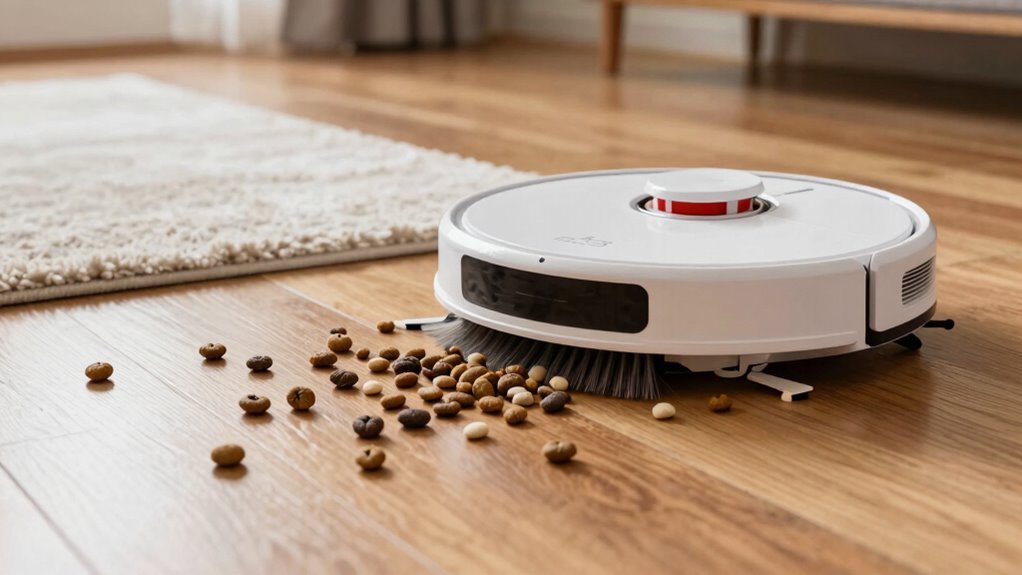
Ever wonder why your robot vacuum sometimes acts like it’s playing pinball with kibble instead of cleaning it up? The brush type makes all the difference. Bristle brushes often fling pellets across hard floors, while rubber rollers gently scoop them up. For mixed floors, hybrid brushes balance pickup and scatter, and brushless inlets avoid flicking altogether—great for hardwood.
| Brush Type | Best For |
|---|---|
| Rubber/Silicone | Hard floors, whole kibble, less clogging |
| Hybrid Combo | Low-pile rugs, light scatter |
| Brushless Inlet | Smooth floors, direct suction, no flicks |
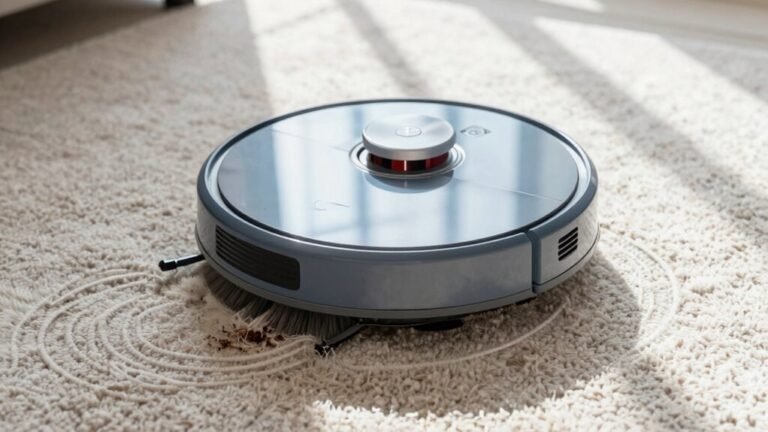
Shorter side brushes help too—they nudge kibble inward instead of sending it flying. Choose rubber fins for tile, or combo rollers if your pet munches on the rug. You’ll spend less time chasing stray bits and more time relaxing—mission success!
Do Robot Vacuums Detect Pet Food Spills?
How does your robot vacuum know the difference between a stray Cheerio and a dust bunny?
Thanks to smart sensors and AI, it’s not just guessing—it’s seeing, sensing, and deciding like a tiny detective on wheels.
Here’s how it spots those sneaky kibble spills:
- Cameras & AI – It uses eyes (yes, real cameras!) to identify shapes and colors, telling food from junk.
- Laser Mapping – LiDAR checks the height and pile size, so cornflake crumbs don’t fly under the radar.
- Smart Sensors – Vibration and infrared tech feel and “see” crumbs, boosting suction right when needed.
Your robot doesn’t just clean—it learns what’s worth chasing.
So next time Fido scatters dinner, relax.
That little vacuum’s already on the case, turning messes into achievements—one kibble at a time.
Who knew robots could be this snack-obsessed?
How to Stop Kibble From Clogging Your Robot Vacuum
Why do those tiny kibble pieces always seem to end up exactly where they’ll cause the most trouble?
Don’t worry—you’ve got tricks to outsmart them.
Start by using elevated feeding mats with raised edges to trap runaway pieces, and pair them with heavy, tip-proof bowls to cut down on spills.
Choose a robot with rubber brush rolls and strong suction (think 2000+ Pa) so kibble doesn’t gum up the works.
Make sure the intake is wide and low to the ground—less chance of jamming.
Set up no-go zones in your app around the feeding area, and schedule cleanups an hour after meals.
Empty the bin often, clean the brushes weekly, and keep filters fresh.
A little prep keeps your robot rolling smoothly—because nobody’s got time for crunchy clogs!
Use Spot-Cleaning for Fresh Kibble Spills
You’ve tucked your pet’s bowls on a raised mat, set up no-go zones, and kept your robot’s brushes clean—good move.
Now, when kibble goes flying, skip the full-home cleanup and go straight for spot-cleaning. It’s like sending your robot on a snack-sized mission—fast, focused, and totally on target.
- Tap “Spot Clean” in your app and let it spiral through the 1–2 m² kibble zone—it’s precision cleaning at its cutest.
- Clear toys and cords first, turn on turbo suction, and keep mopping pads dry—because soggy kibble trails are *not* the vibe.
- Let it do multiple passes; those hard pellets won’t vanish on the first loop, but they’ll on the third.
Quick, efficient, and mess-contained—your robot’s got this (and might even look proud doing it).
Clean Your Vacuum After Picking Up Kibble
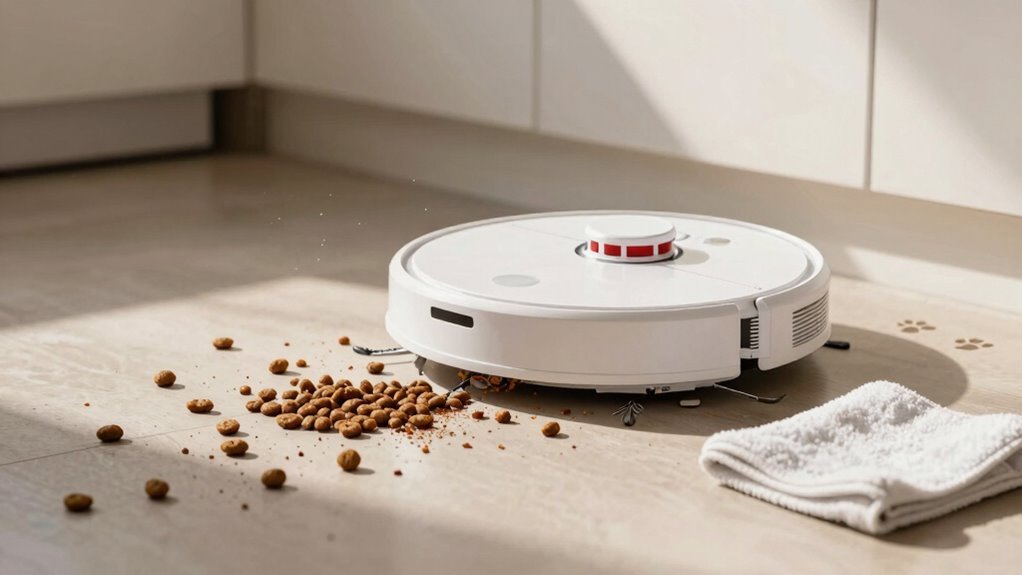
Keeping your robot vacuum happy after it’s gobbled up a kibble spill is simple—and kinda satisfying.
First, power it off and unplug it from the dock—safety first!
Put on disposable gloves (yep, kibble’s been licked) and pop it on a towel.
Empty the dustbin right away—don’t let those crumbs party all night.
Wash it with warm, soapy water, then let it dry completely.
Check the filter—tap out debris or rinse it if it’s washable.
Now, grab the main brush and yank out any jammed kibble or hair.
Wipe the intake, clear the wheels, and dust off sensors with a dry microfiber cloth.
Don’t forget the charging contacts!
If your bot has a mop, clean that too.
Finish with a quick wipe-down of the shell.
Voilà—your robot’s fresh, functional, and ready for its next snack attack.
Frequently Asked Questions
Can Robot Vacuums Pick up Wet Pet Food?
No, you shouldn’t let most robot vacuums tackle wet pet food—it’s a no-go for dry-only models.
That gunky stuff can clog filters, ruin brushes, and even fry electronics.
Think of it like sending a toaster swimming—yikes!
But if you’ve got a wet-dry hybrid robot, you’re in luck.
It can handle light, damp messes like a champ, just don’t go wild.
Always scoop up big splats first, okay?
Your robot will thank you.
Do They Work on Hardwood With Kibble Spills?
Yeah, they totally work on hardwood with kibble spills!
Just pick a model with strong suction and a smart brush design.
Most high-end robots grab those crunchy bits without a fuss, even near corners.
Avoid budget bots that might push kibble around like tiny soccer forwards.
With the right vacuum, your floor stays clean, and your pup’s snack attack stays contained—no more surprise crunch under your socks!
How Often Should I Empty the Dustbin After Kibble Pickup?
You’ll want to empty that dustbin after every kibble pickup—seriously, do it like you’re defusing a snack bomb before it explodes.
Even small spills team up with pet hair to fill bins fast.
Hard floors?
They sneak more kibble inside, packing it like tiny space-filling marshmallows.
Skip it, and your robot might choke, stink, or quit mid-mission.
Stay on top of it, and your little vacuum will keep zooming happily.
Are Robot Vacuums Safe Around Pets During Cleaning?
Yes, robot vacuums are generally safe around your pets.
They’re slow, smart, and built to avoid crashes with soft bumpers and sensors.
You’ll see them gently steer clear of napping cats or curious dogs.
Just watch for long fur near spinning brushes, and keep an eye on skittish pals.
Introduce it slowly, like a new toy, and you’ll both laugh at how they go from scared to “whatever” in no time.
Can Pet Food Damage Sensors Over Time?
Yeah, pet food can totally mess with your robot’s sensors over time.
Dry bits clog crevices, greasy crumbs smear lens windows, and sticky spills confuse edge detectors.
Before you know it, your bot’s bumping into things, missing spots, or even taking a tumble down the stairs.
It’s like giving it a brain fog! Keep it clean, dodge the kibble zone, and your little robo-friend’ll stay sharp, happy, and drama-free on its cleaning mission.
Conclusion
You’re mopping up another kibble catastrophe when—*uh-oh*—the robot whirs to life. Crunch. Gulp. Silence. Wait… did it survive? Peek inside—no clog, no drama, just clean. Phew! With the right model, those sneaky spills don’t stand a chance. Toss the mop, kick back, and let your robot brave the snack zone. After all, who knew a little robo-vac could be the ultimate pet parent sidekick? Kibble beware.
References
- https://us.narwal.com/blogs/cleaning-guide/use-robot-vacuum-spot-cleaning
- https://www.ecovacs.com/us/blog/robot-vacuum-avoid-poop
- https://roboltaofficial.com/blogs/news/safe-house-cleaning-robot-pets-kids
- https://us.air-robo.com/products/robot-vacuum-p20
- https://us.narwal.com/blogs/robot-vacuum/track-mop-vs-spinning-pads
- https://www.eufy.com/blogs/robovac/robot-vacuum-cleaning-solutions
- https://www.vetstreet.com/home-and-cleaning/pet-cleaning/roborock-pet-vacuum-review
- https://us.narwal.com/blogs/product/robot-vacuum-clean-floors-effectively
- https://www.consumerreports.org/appliances/vacuum-cleaners/can-a-robotic-vacuum-replace-your-canister-or-upright-a1557864633/
- https://www.homesandgardens.com/solved/shedding-season-eufy-robot-vacuum-game-changer-pet-hair