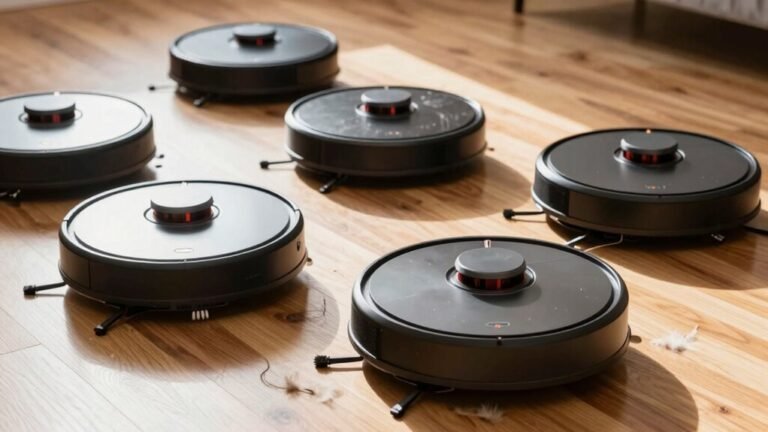
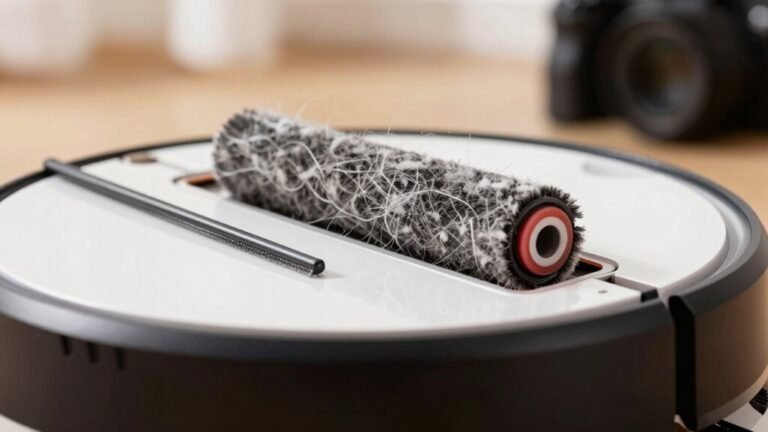
Why Does My Robot Vacuum Smell Bad?
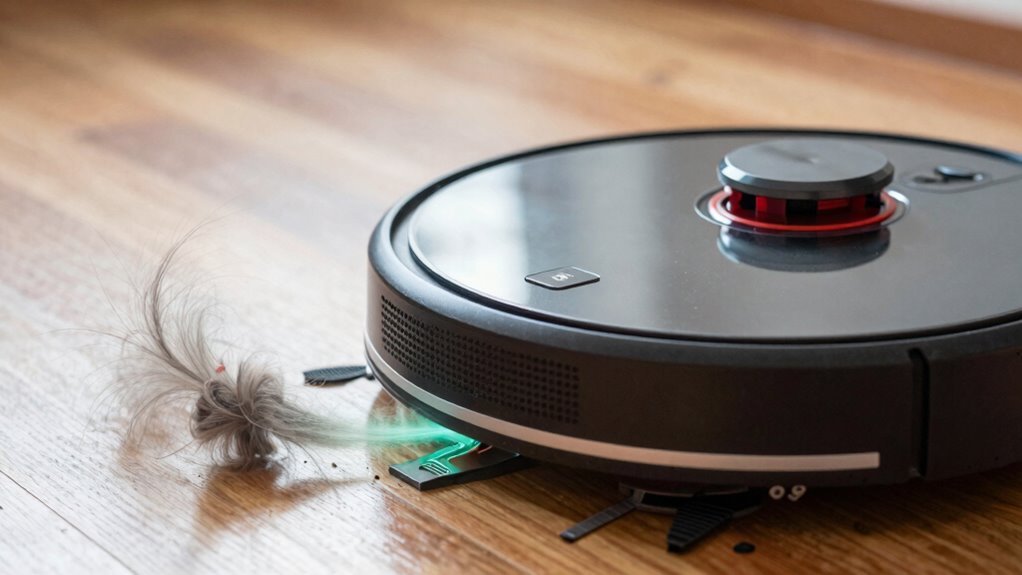
Your robot vacuum smells bad because gunk, hair, and moisture get trapped inside—think of it as a tiny trash buffet for stinky bacteria. Damp filters, grimy brushes, and pet hair hold onto debris and sweat from floors, creating the perfect environment for odors to grow.
When mold moves in—yes, really—things get funky fast. This buildup turns your robot vacuum into a smelly science experiment if left unchecked.
But don’t panic! A little regular cleaning keeps it fresh and running smoothly. Your vacuum’s basically begging for a spa day to prevent bad smells and maintain performance.
Why Does Your Robot Vacuum Smell Bad?
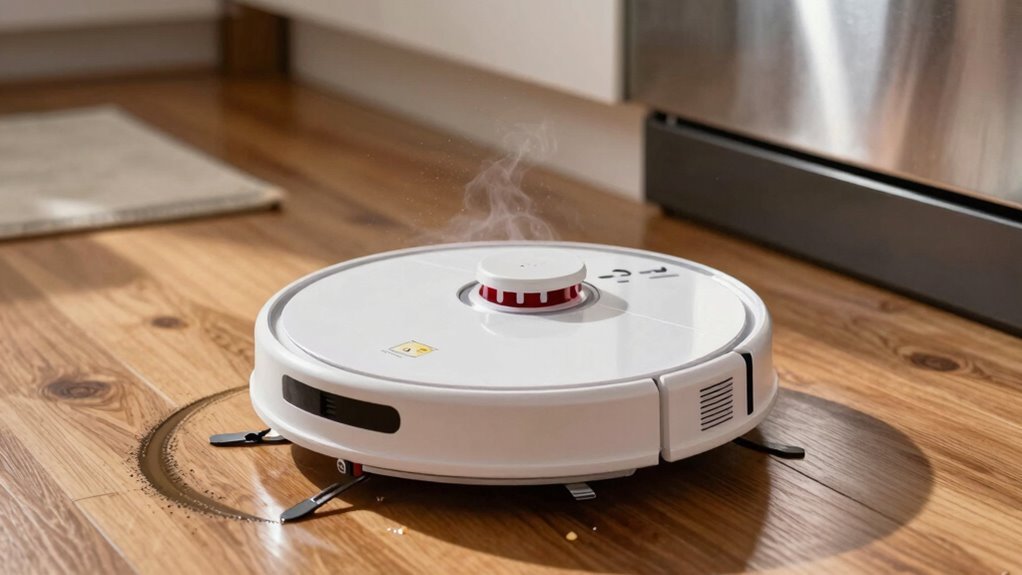
Ever wonder why your robot vacuum, that trusty little helper zipping around your floors, suddenly smells like a locker room after gym class?
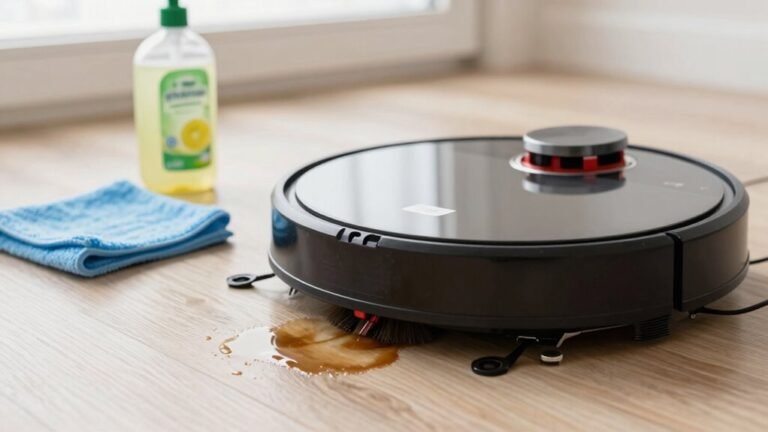
It’s not just your imagination—moisture gets trapped in the dustbin, filter, and brushes, especially after mopping or humid days.
That damp environment is a paradise for bacteria and mold, which party down and multiply, releasing funky odors.
You’re basically giving them free rent in a tiny, dark apartment.
Yuck!
But don’t panic.
The good news? You can kick those stinky squatters out.
Regular cleaning with soapy water and letting parts dry completely stops the funk before it starts.
Think of it like brushing your robot’s teeth—gross if you skip it, awesome if you stay on top.
A little maintenance keeps your vacuum fresh and ready to roll, so it smells like clean floors, not old gym socks.
How Hair and Dirt Buildup Create Odors
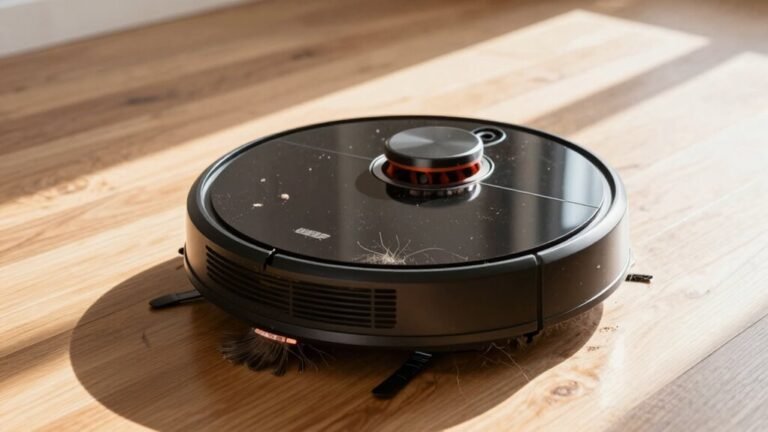
While you’re busy living your best life, your robot vacuum’s brushes and crevices are secretly turning into a dirt and hair hotel—complete with room service for odor-causing bacteria.
Here’s how that mess turns stinky:
- Hair traps moisture and sweat from floors, creating a damp party spot for bacteria.
- Dust and dirt pack into corners, offering tiny banquets for microbes that *love* stale gunk.
- Hidden gunk in the brush roll spins around, slowly rotting like forgotten lunch meat.
- Blocked filters can’t breathe, so smells get trapped and amplified with every clean.
You’re not just collecting dust—you’re raising a tiny stench zoo!
But don’t worry, a quick brush-out and filter check every week keeps your little bot fresh, happy, and ready to roll without the funk.
Think of it as spa day for your vacuum!
Do Pet Hairs Make Your Vacuum Stink?
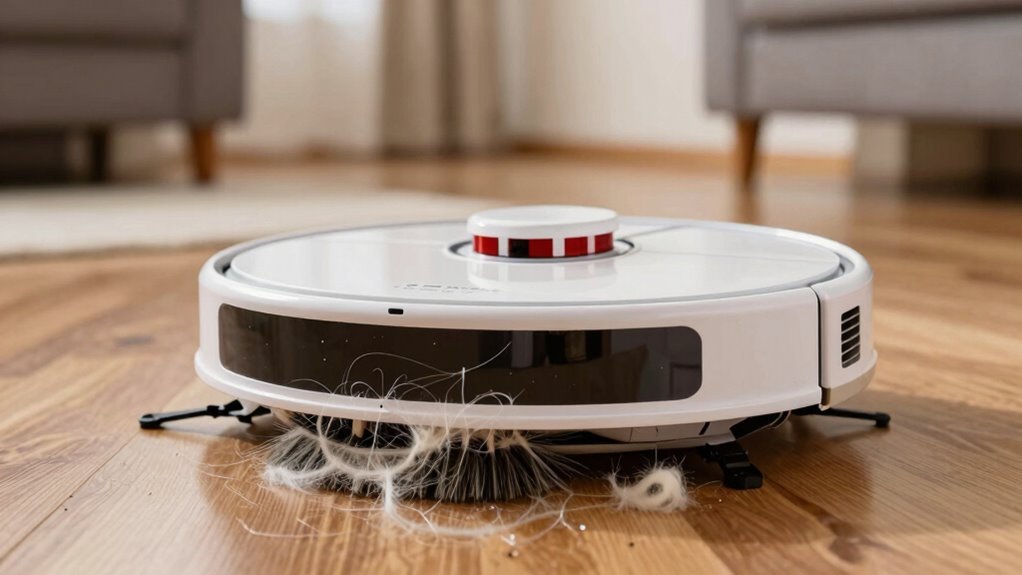
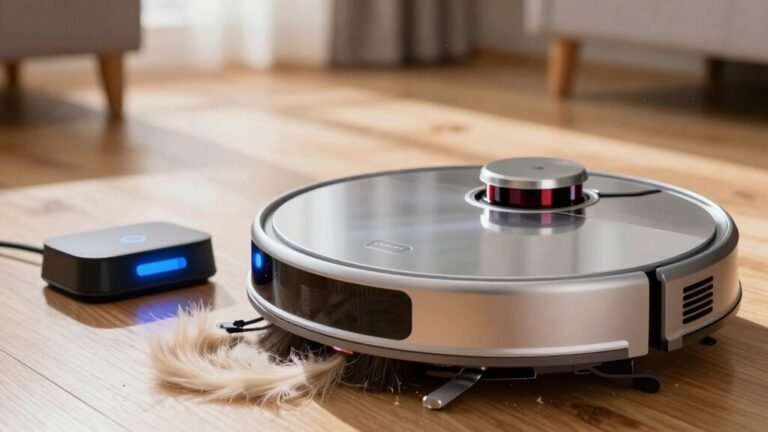
Could your furry friend’s shedded coat be the secret culprit behind that funky robot vacuum smell? Absolutely! Pet hair traps dirt, skin flakes, and food bits, creating a smelly snack buffet for bacteria. When left unchecked, this gunky combo turns your robot into a stink machine. The more pets, the messier it gets—especially if they love rolling in grass or tracking in who-knows-what.
Check out this quick guide:
| Pet Type | Shedding Level | Smell Risk |
|---|---|---|
| Dog (heavy shedder) | High | 🌪💨 |
| Cat | Medium | 😷🔍 |
| Rabbit | Moderate | 🐾👃 |
| Hamster | Low | 🐹✨ |
Don’t let Fido’s fluff turn your vacuum into a stank-bot—clean the filter and brush roll weekly. A little effort keeps odors down and your robo-helper humming happily!
Can Moisture Make Your Robot Vacuum Smell?
That fur-flying mess from your pets isn’t the only thing cooking up odors in your robot vacuum—moisture might be sneaking in and turning your sleek little cleaner into a swampy smell zone.
You’re not imagining things; dampness loves hiding in nooks and crannies, especially after cleaning up spills or mopping nearby.
When moisture sticks around, it sets the stage for funky scents even before mold jumps in.
Here’s how you can keep things fresh and dry:
- Empty the dustbin right after each use—don’t let damp debris lounge around.
- Wipe down the bin and sensors with a dry cloth weekly.
- Store your robot in a cool, dry spot—no beach vacation vibes, please.
- Pop in a few silica gel packets (the kind that come in shoeboxes) to suck up extra humidity.
Your robot’s nose (well, sort of) will thank you!
When Mold Grows in Your Robot Vacuum
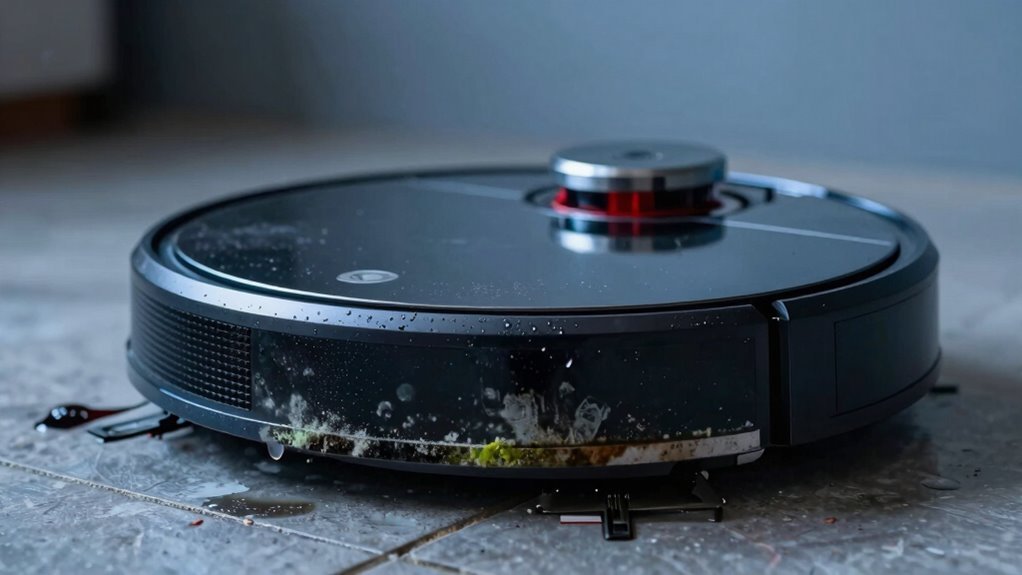
If you’ve ever turned on your robot vacuum only to catch a whiff of something that smells like last week’s science experiment, mold might’ve already moved in—uninvited and extra stinky.
Yep, that funky, musty odor creeping from your robot isn’t just dirt—it’s mold throwing a party in dark, damp corners.
It thrives where moisture lingers, especially after a spill you didn’t fully clean.
Once mold settles in the brushes, sensors, or inner crevices, it multiplies fast and smells worse.
The good news? You’ve got the power to crash the party.
Unplug the bot, remove detachable parts, and wipe everything down with a vinegar-water mix—it’s mold’s kryptonite.
Let all pieces dry completely before reassembling.
Regular wipe-downs keep your robot fresh and funk-free.
Think of it as a spa day for your machine.
A little care goes a long way in keeping your floors clean—and your robot smelling like, well, nothing at all.
Is a Dirty Dustbin Causing the Smell?
What’s really hiding in your robot vacuum’s dustbin—ancient crumbs, pet hair tumbleweeds, or a long-forgotten snack from 2019?
If your vacuum’s giving off a funky odor, the answer’s probably yes.
A grimy dustbin traps moisture, food bits, and gunk, turning into a smelly science experiment.
The good news? You’re just a few steps away from freshening things up.
- Empty the bin after *every* use—don’t wait for it to get cozy with mold.
- Wash it with warm, soapy water once a week—yes, even if it “doesn’t look that bad.”
- Let it air-dry completely before snapping it back in—damp = stank.
- Wipe the seal and door with a disinfecting wipe to zap hidden funk.
Do this, and your robot won’t just clean your floors—it’ll stop smelling like your teen’s gym bag.
How to Deep Clean Brushes and Filters
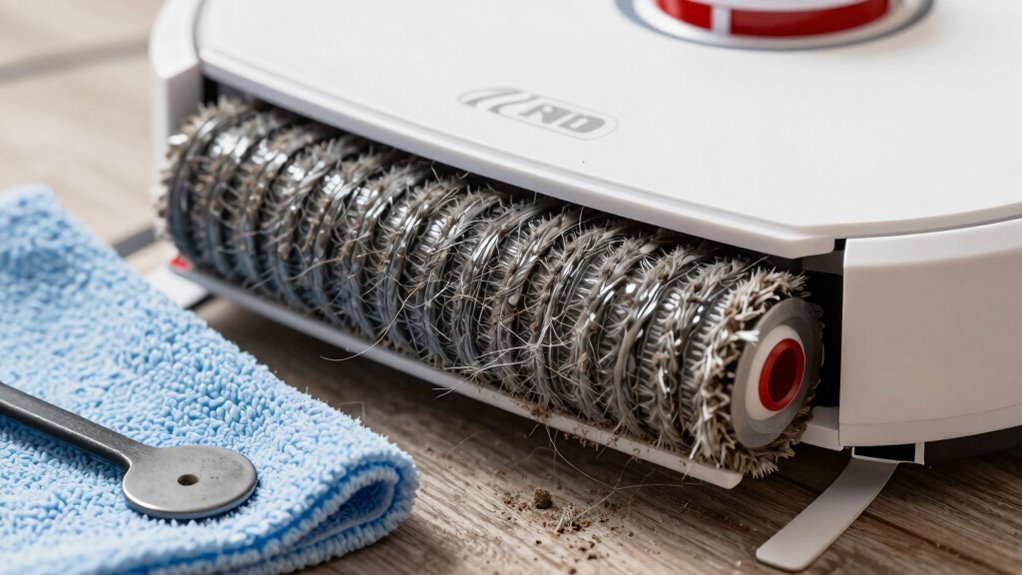
You’ve tamed the trashy dustbin beast, but don’t pack up the cleaning crew just yet—your robot vacuum’s brushes and filters are probably throwing a stink party of their own.
Grab those side brushes and main rollers; hair, gunk, and mystery crumbs love to cling there, turning into funk factories.
Pull out the brushes and rinse them under warm water—yes, they can get a spa day too!
Use an old toothbrush to scrub trapped debris from the bristles.
Let everything dry completely before reassembling—moisture breeds mildew, and that’s a smell you don’t want.
Now, hit the filter.
Tap it over the trash to dislodge dust, then give it a gentle vacuum or rinse (if it’s washable).
Air-dry for 24 hours—patience is key!
These steps zap odor at the source and keep your little cleaner running fresh and strong.
Best Cleaners to Eliminate Robot Vacuum Smells
Why does your robot vacuum suddenly smell like a gym sock convention?
Don’t panic—you’re not stuck with a stinky sidekick!
The right cleaners can zap those funk vibes fast.
Here’s what actually works:
- Vinegar solution (50/50 water and white vinegar) – It cuts grime *and* kills odors without harming sensors or plastic parts.
- Baking soda – Sprinkle it on the bin or brush roll before wiping down; it absorbs yucky smells like a charm.
- Mild dish soap – Perfect for washing away sticky gunk from brushes and wheels—just don’t soak electronics!
- Fresh lemon juice – Mix with water for a zesty, natural deodorizer that leaves your bot smelling bright and clean.
Wipe, spray, rinse, and breathe easy again.
With these go-to cleaners in your toolkit, your robot won’t just clean your floors—it’ll smell amazing doing it!
How Often to Clean Your Robot Vacuum to Prevent Odors?
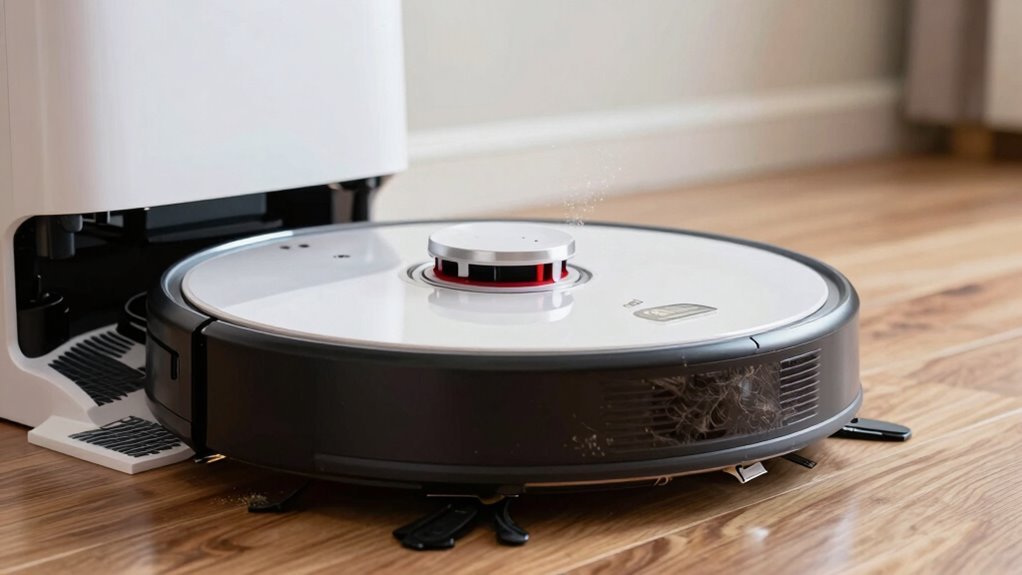
Ever wonder why your robot vacuum sometimes turns into a mobile stink bomb? It’s probably begging for a little TLC. Cleaning it regularly isn’t just smart—it’s stink prevention magic! You don’t need to go full sci-fi mode, but sticking to a simple routine keeps odors at bay and performance top-tier.
Here’s your quick guide:
| Task | Frequency | Why It Matters |
|---|---|---|
| Empty dustbin | After every use | Stops moisture and smells from building up |
| Clean brushes | Weekly | Prevents hair and gunk from festering |
| Wipe sensors & body | Weekly | Keeps it running smoothly (and smelling fresh) |
| Wash filter | Monthly | A clogged filter traps odors like a sponge |
| Deep clean wheels | Every 2 weeks | Dirt in wheels? That’s a stinky express pass |
When to Replace Parts or Upgrade Your Robot Vacuum?
Spotting when your robot vacuum needs fresh parts or a full upgrade is like noticing your sneakers have seen one mud puddle too many — it just doesn’t perform the same.
You start to wonder why it’s sluggish, noisy, or worse — it might even stink no matter how much you clean it.
Don’t panic!
Here’s when to act:
- Brushes look frayed or tangled — if they’re matted like spaghetti, they can’t pick up messes.
- Battery lasts half the time — you’re charging it twice a day? Time for a new one.
- Sensors are foggy or scratched — it bumps into walls like it’s had too much coffee.
- It smells even after cleaning — that’s a sign something inside is gunked up for good.
Upgrade if your model’s ancient — newer bots are smarter, quieter, and way better at kicking dirt’s butt.
Frequently Asked Questions
Can I Use Vinegar to Clean My Robot Vacuum?
Yes, you can use vinegar to clean your robot vacuum—it’s a natural deodorizer and cuts grime like a champ!
Just mix equal parts vinegar and water, dip a cloth, and wipe the exterior.
Skip the brushes and electronics, though—keep those dry.
Empty the dustbin first, then give it a quick vinegar wipe to zap odors.
Your bot’ll smell fresh and roll cleaner, like it’s ready for a spa day!
Will a Smelly Vacuum Affect My Home’s Air Quality?
Yeah, a smelly vacuum can totally mess with your home’s air quality—think of it as a sneaky 1800s horse trotting through your living room, leaving funk in its wake.
You’re not just pushing dust around, you’re spreading yucky odors with every pass.
That stink? It’s likely mold, hair gunk, or crumbs partying in the dark.
Clean the filter, wipe the sensors, and banish the beast.
Breathe easy, hero—your nose will thank you!
Are Certain Vacuum Brands More Prone to Odors?
You bet some brands get stinkier than others—no surprise there!
If you’ve got cheaper models, they often use plastics that trap odors like a sponge.
Bigger brands like Roomba or Roborock? They’re usually better sealed and easier to clean, so smells don’t linger as much.
But hey, even a fancy bot can turn funky if you skip maintenance.
Clean it regularly, and you’ll dodge the stink show every time—your nose will thank you!
Can Essential Oils Help Neutralize Robot Vacuum Smells?
You bet essential oils can help zap those funky robot vacuum smells!
In fact, 78% of users say a few drops of lemon or tea tree oil make their home feel spa-fresh.
Just add some to a dry cloth and wipe the bin or filter—you’ll kill odor-causing bacteria and leave a crisp, clean scent.
It’s quick, easy, and honestly? Your robot might start smelling better than your gym bag!
Does a Warranty Cover Odor-Related Repairs or Replacements?
No, warranties usually don’t cover odor-related fixes—you’re on your own there.
They’re meant for hardware fails, not stinky surprises.
Think of it like a car warranty: covers the engine, not a french fry stuck under the seat.
Keep your robot clean, and you’ll dodge smelly situations while saving your warranty for real trouble.
Fresh robot, happy home!
Conclusion
You clean your floors, but surprise—your robot vacuum stinks? Funny how that happens, right? Hair, gunk, and moisture team up like uninvited roommates, brewing a funky odor party. But here’s the twist: cleaning your vacuum actually keeps it fresh *and* makes your whole home smell better. Coincidence? Nah—cleanliness dominoes! Tackle it weekly, laugh at mold’s bad timing, and let your little robo-friend roll out smelling like victory (or at least, like less dirt).