Robot Vacuum Filters: HEPA vs Standard
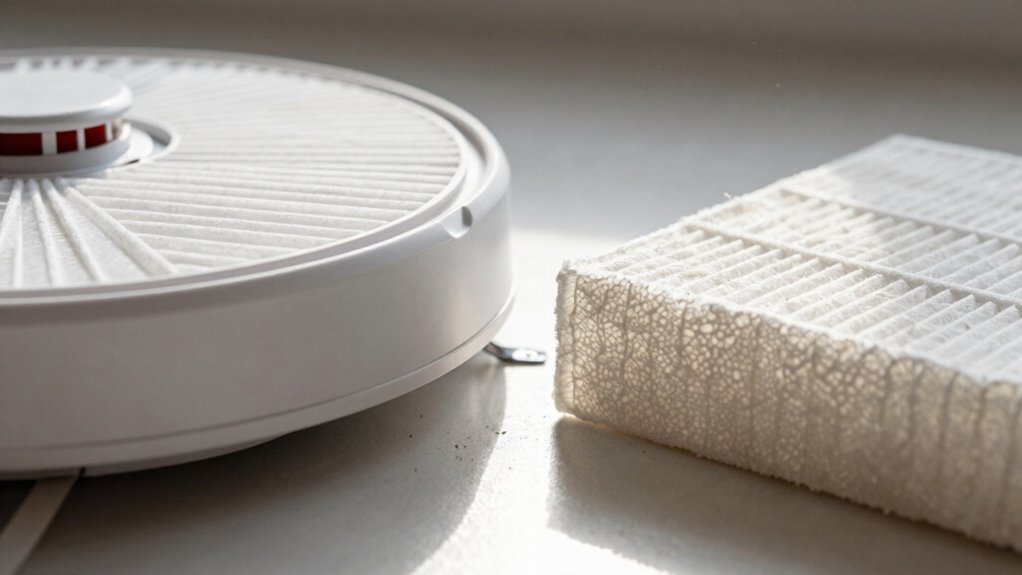
You’re not just vacuuming—you’re trapping 99.97% of dust, pollen, and pet gunk with a HEPA filter, like a mini air fortress in your robot. HEPA filters are designed to capture the tiniest allergens, making them ideal for those dealing with sensitivities.
Standard filters catch most crud too, but let more allergens sneak back into the air. They’re a budget-friendly option for lighter cleaning needs and homes with fewer airborne irritants.
When comparing robot vacuum filters, HEPA vs standard comes down to air quality priorities. If clean air’s your goal, HEPA’s superior filtration delivers a noticeable difference.
What Is a HEPA Filter in Robot Vacuums?
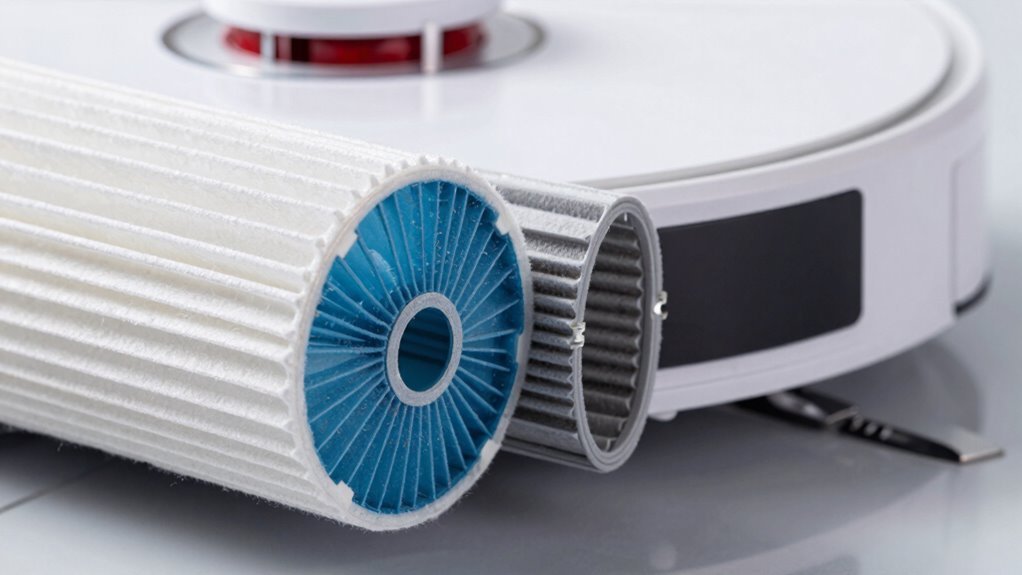
Ever wonder how your robot vacuum keeps the air clean while it zips around the house? It’s likely thanks to a HEPA filter working hard behind the scenes.
HEPA, or High-Efficiency Particulate Air, filters trap 99.97% of tiny particles—yes, even stuff as small as 0.3 microns!
Think dust, pollen, pet dander, and sneaky mold spores.
They use a super-dense web of fibers that snag gunk through interception, impaction, and diffusion—fancy terms for “sticking,” “smashing,” and “bumping around.”
You don’t need a science degree to appreciate cleaner air, especially if allergies bug you.
These filters are so good, hospitals use them!
In your robot vacuum, the HEPA filter locks away dirt and keeps it from flying back into your breath.
Just imagine: your little robot is basically a ninja bodyguard for your lungs.
Pretty neat for something that can’t even climb stairs!
This level of filtration is especially effective for allergy sufferers, as HEPA filters are invaluable for allergies or asthma.
How Do Standard Filters Compare to HEPA?
You already know how that little HEPA filter in your robot vacuum works like a silent guardian, trapping dust, pollen, and even microscopic nasties with ninja-like precision.
Now picture a standard filter—the reliable sidekick, not quite as flashy.
It catches about 80–85% of particles at 0.3 microns, which sounds good until you see HEPA bagging 99.97% or more.
That means way fewer escapees, especially tiny irritants.
Standard filters breathe easier, clog slower, and are cheaper to maintain—perfect for basic cleanups.
But if you’re serious about clean air, HEPA wins by a landslide.
Sure, it needs more attention and costs a bit more, but it’s like upgrading from a screen door to a fortress.
Your vacuum’s still doing the work, but now, it’s got a superhero cape.
HEPA H14 achieved 99.995% removal for 0.3-micron particles in Vac 6, Vac 9B, Vac 30.
Why Air Quality Matters With Robot Vacuum Filters
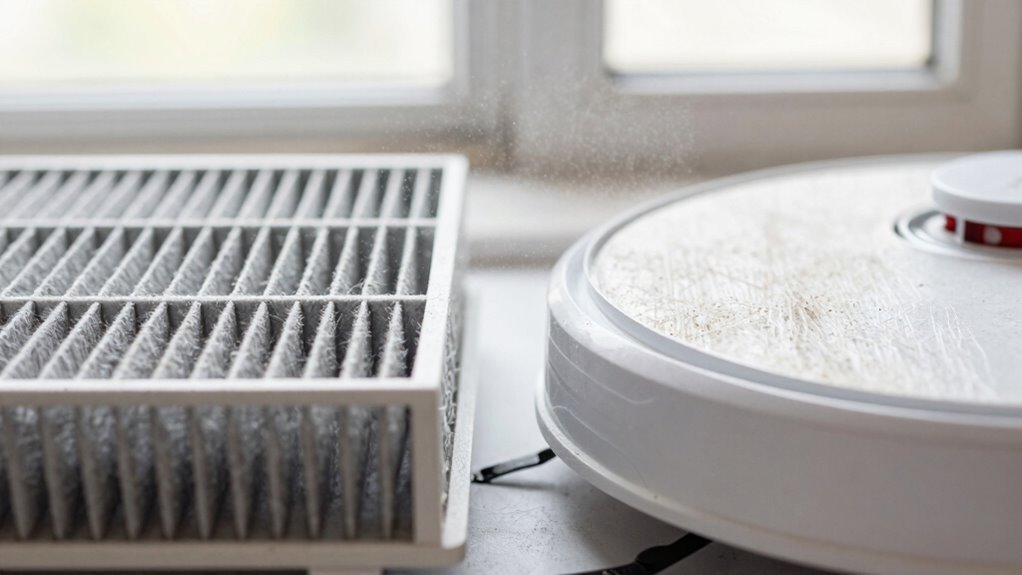
What if your robot vacuum could do more than just dodge coffee tables and suck up crumbs? Well, it kind of already does—especially when it comes to your air quality.
You spend 80% to 90% of your time indoors, and indoor pollution is a silent troublemaker, linked to millions of deaths yearly.
When you run your robot vacuum, it kicks up dust, PM2.5, VOCs, and even pesticides—tiny things you don’t want floating around.
But here’s the cool part: modern robot vacuums don’t just clean; they monitor. With smart sensors, they track air quality in real time and alert you—no internet needed.
That’s like having a tiny air detective zooming around your living room.
Poor air doesn’t just make you cough; it zaps energy, focus, and comfort.
Do HEPA Filters Reduce Allergy and Asthma Triggers?
Could your robot vacuum be the unsung hero of your allergy season?
Absolutely!
With a true HEPA filter, it captures 99.7% of tiny triggers like pollen, dust mites, and pet dander—yes, even the stuff you can’t see.
Studies show it reduces airborne particles by up to 70% in your bedroom, where you spend half your life (and all your sneezy nights).
You’ll likely breathe easier, sleep better, and maybe even cut back on allergy meds.
It’s not magic—it’s physics.
HEPA filters trap allergens before they slip into your lungs, helping tame both allergic rhinitis and allergy-triggered asthma.
Kids with asthma? They feel it too—fewer wheezes, fewer flare-ups.
Just don’t expect miracles on its own; pair it with less carpet, drier air, and regular cleaning.
And skip the “HEPA-like” fakes—they’re basically filters in costume.
Your robot mightn’t wear a cape, but it’s definitely working overtime for your health.
Is H13 as Effective as True HEPA for Robot Vacuums?
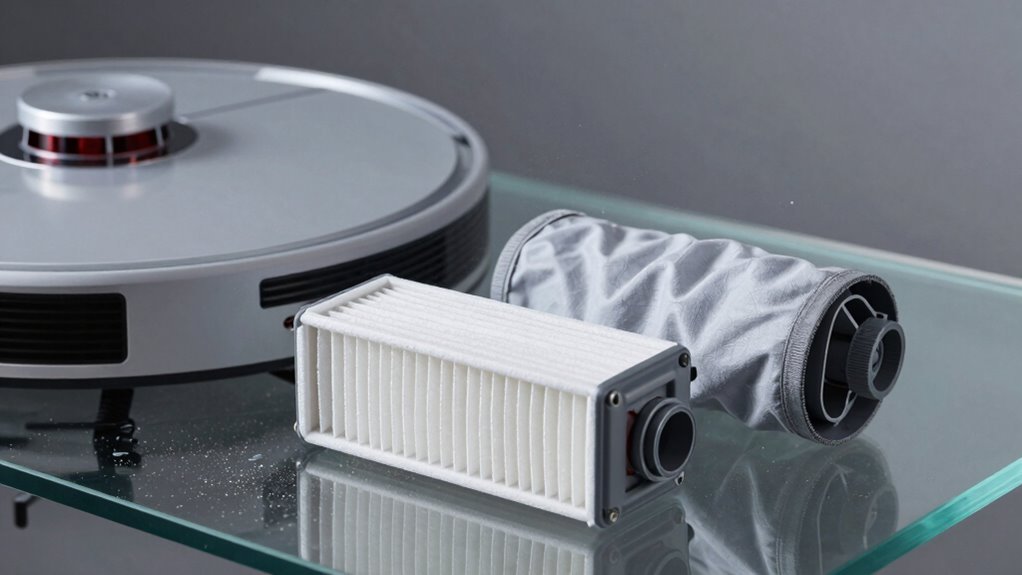
H13 isn’t just a random letter-number combo that sounds like a sci-fi robot—it’s a filtration powerhouse that might actually outshine the classic “true HEPA” you thought was the gold standard.
You’re probably wondering: is it really better?
Well, yes and no.
While true HEPA grabs 99.97% of 0.3-micron particles, H13 traps 99.95% at 0.1 microns—snagging even tinier, trickier allergens.
In fact, H13 often outperforms HEPA on ultrafine particles, like viruses and smoke.
Think of it as HEPA’s sharper, European cousin who studied in cleanrooms.
Sure, H13 filters cost more and need stronger fans (hello, louder vacs), but in a compact robot vacuum, that extra power can mean cleaner air in your home.
And hey, if your robot’s system is sealed right, H13 might just be the overachiever you didn’t know you needed.
It’s like giving your floors a hospital-grade hug—minus the awkwardness.
Can Filters Prevent Dust From Escaping Back Into Air?
Ever wonder why your robot vacuum sometimes kicks up a tiny dust storm instead of banishing it?
That’s because not all filters actually trap the tiniest particles—many just let them sneak back out.
Standard cloth filters catch big debris, sure, but fine dust and allergens? They slip right through the exhaust.
Yuck.
But with a true HEPA filter, you’re capturing 99.97% of particles as small as 0.3 microns—think dust mites, pollen, and even some germs.
And if your vacuum has a sealed system, none of that junk escapes before it even reaches the filter.
Brands like ECOVACS stack sponge, filter nets, and HEPA together to really lock it in.
Without proper sealing or genuine HEPA, you’re basically stirring up dirt more than removing it.
HEPA vs Standard: Maintenance Differences Explained
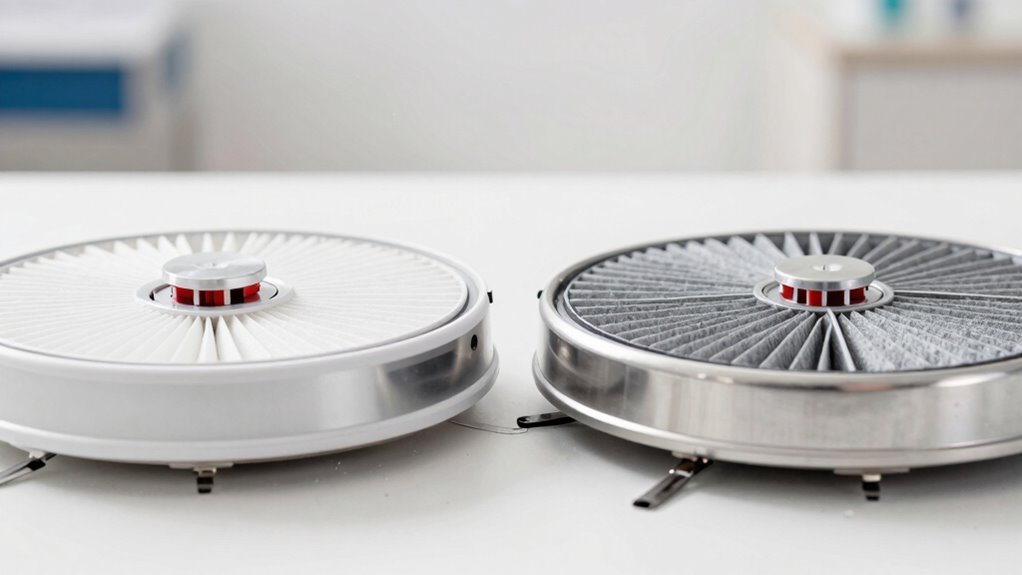
Why does your robot vacuum seem to hate you when it stops sucking properly?
Well, it’s probably yelling for filter attention!
HEPA and standard filters need different care, so don’t treat them the same.
Here’s what you’ve gotta do:
- Check every two weeks—robot vacs work hard and clog faster.
- Tap then rinse washable HEPA filters—use water every two weeks and let them dry in sunlight (yes, sunbathing is a thing for filters!).
- Squeeze and dry foam filters weekly—no dampness allowed, or mold throws a party.
- Never wash non-washable HEPA filters—use a soft vacuum or compressed air instead.
Skip steps, and you’ll face weak suction, stinky air, or worse—moldy motors.
Keep up the routine, and your vacuum stays happy, healthy, and ready to conquer dust bunnies like a champ!
Which Filter Lasts Longer and Saves Money Over Time?
So, which filter really wins the long game—your wallet or your robot’s lifespan?
If you’re chasing savings, standard filters might be your best buddy.
They’re often washable, last 6–12 months, and cost less over time.
Sure, HEPA filters trap more dust and allergens, but they usually need replacing every 3–6 months—ouch, that adds up!
Replace HEPA filters too often and your budget might cry.
But skip changes, and your vacuum’s lifespan nosedives to just 2–3 years.
Yikes.
Stick with standard filters, clean them regularly, and you could stretch your robot’s life to 7 years.
That’s like getting a bonus vacuum for free!
While HEPA’s great for clean air, standard filters win on longevity and low cost.
Who knew the cheaper part could actually save you more?
Talk about a cleaning win-win!
Top 2024 Robot Vacuums With Best HEPA Filtration
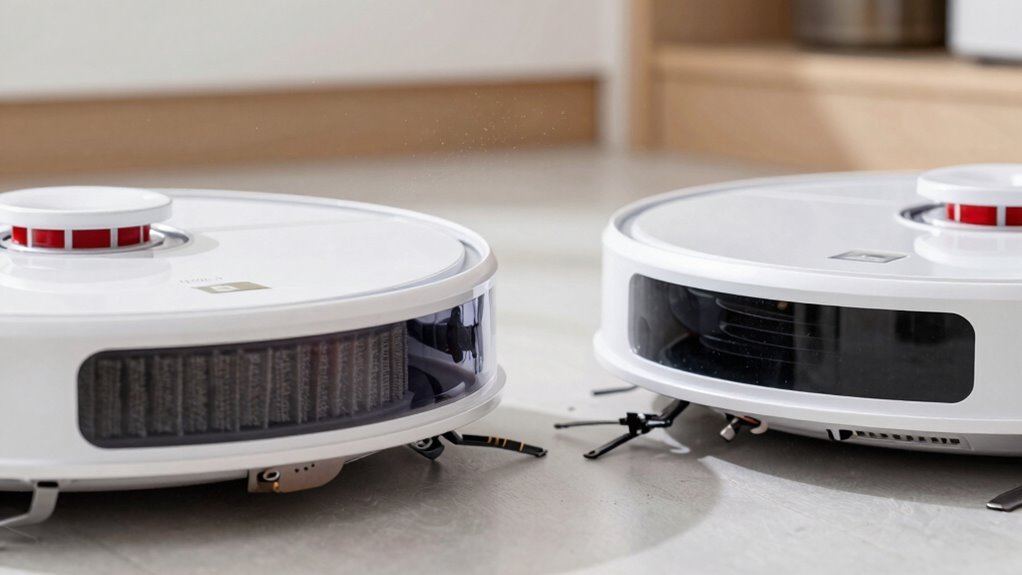
You’ll love how today’s top robot vacuums combine smarts, suction, and serious allergen protection—all while cleaning your floors on autopilot.
If you’re chasing dust, pet hair, or sneeze-inducing dander, these 2024 HEPA champs have your back—no cape required (though they’re basically superheroes).
Here are the standouts:
- Roborock Saros 10R – Flagship power with slick obstacle smarts and allergen-trapping HEPA-level filtration.
- Dreame L50 Ultra – A pet parent’s dream, lifting, washing, and vacuuming with HEPA-compatible air cleaning.
- Roborock Qrevo CurvX – Dual brushes crush pet hair, and HEPA support keeps your air fresh.
- Mova P10 Pro Ultra – Budget-friendly but brainy, with solid HEPA options and self-cleaning ease.
They don’t just clean floors—they *protect* your breath. And honestly, isn’t that a load off your chest? (Cue the deep, allergy-free inhale.)
When Is a Standard Filter the Smarter Choice?
Ever wonder when simpler really means smarter?
If you’re not battling allergies or pet dander daily, a standard filter might be your best buddy.
They’re way cheaper than HEPA, especially since they’re made of basic foam, cloth, or paper—no fancy materials here.
Plus, many are washable, so you just rinse and reuse, saving cash and hassle.
They handle dust, hair, and crumbs like champs, keeping your vacuum running smoothly without clogging fast.
Since they only trap the big stuff, cleaning them boosts suction in a snap.
No need for high-end filtration if your home’s fairly low on dust and allergens.
They’re perfect for basic robot vacuums too, matching their simple design and airflow.
You keep your floors clean, your machine happy, and your wallet full—now that’s a win-win.
Who knew low-tech could feel so smart?
Frequently Asked Questions
Can I Wash My Robot Vacuum’s HEPA Filter?
You can wash your robot vacuum’s HEPA filter, but only if it’s labeled washable—don’t risk it otherwise.
When in doubt, check the manual—seriously, it’s like the filter’s birth certificate.
If it’s safe, rinse it gently under cold water, never hot.
Let it air-dry for at least 24 hours—patience saves motors and molds your sanity.
Are Third-Party Filters as Good as Brand-Name Ones?
Nope, third-party filters aren’t usually as good, though they’re cheaper and easier to find.
You might save a few bucks, but many don’t really trap the tiniest dust and allergens like they claim.
Some even fall apart fast or let gunk sneak through.
If you’ve got allergies or just want peace of mind, sticking with brand-name means you’re really getting the clean air you paid for—no sneaky dust bunnies allowed!
Do Robot Vacuums With HEPA Emit Less Noise?
Back in the future, you’d think HEPA vacuums whisper like librarians, but nope—they don’t run quieter.
You’ll notice the noise comes from the motor’s oomph and spinning brushes, not the filter.
HEPA or not, loudness depends on suction power.
So if your bot sounds like a jet engine, blame the motor, not the filter.
Who knew clean air didn’t mean quiet neighbors?
How Often Should I Replace My Standard Filter?
You should replace your standard filter every 2 to 6 months, depending on how much you use it.
If you’ve got pets or run it daily, swap it every 3–6 weeks—you’ll keep suction strong and odors away.
Clean it weekly by tapping out dust; it’ll last longer.
Don’t wait until it’s black and crumbly, unless you want your vacuum sounding like a asthmatic robot.
Fresh filter = happy floors!
Can a Clogged Filter Damage My Robot Vacuum?
Yeah, a clogged filter can totally damage your robot vacuum.
It forces the motor to overwork, which causes overheating and wears things down fast—like running a race with a stuffy nose!
You might hear weird noises or notice it quitting mid-clean.
Keep that filter clean, and your little robot buddy will stay happy, healthy, and hardworking—no burnout allowed!
Conclusion
You’re not imagining things—30% of homes still circulate dust *because* their vacuums don’t trap it! With HEPA, you’re not just sweeping; you’re actually cleaning the air. Sure, standard filters work fine for toast crumbs and cat hair, but if you want sneeze-free days, go for HEPA. It’s like giving your home a superhero cape—minus the dramatic music (but still pretty cool).
References
- https://www.robotspecialist.com.au/blogs/news/what-are-hepa-robot-vacuums
- https://www.ecovacs.com/us/blog/hepa-filter-vacuum
- https://edisonvacuums.com/what-is-hepa-filtration-how-important-is-it-in-a-vacuum/
- https://us.narwal.com/blogs/robot-vacuum/what-vacuum-filter-do
- https://www.oreateai.com/blog/the-power-of-clean-exploring-hepa-filter-vacuums/a526ad7ba5960e4d64f9464537ca3e6c
- https://honiture.com/blogs/home-cleaning/do-i-need-to-choose-a-vacuum-with-a-hepa-filter
- https://www.ecovacs.com/us/blog/what-is-hepa-filter
- https://www.eufy.com/blogs/robovac/robot-vacuum-hepa-filter
- https://en.wikipedia.org/wiki/HEPA
- https://i-teamanz.com/media-and-insights/insights/different-vacuum-filtration-options-standard-vs-hepa-vs-ulpa