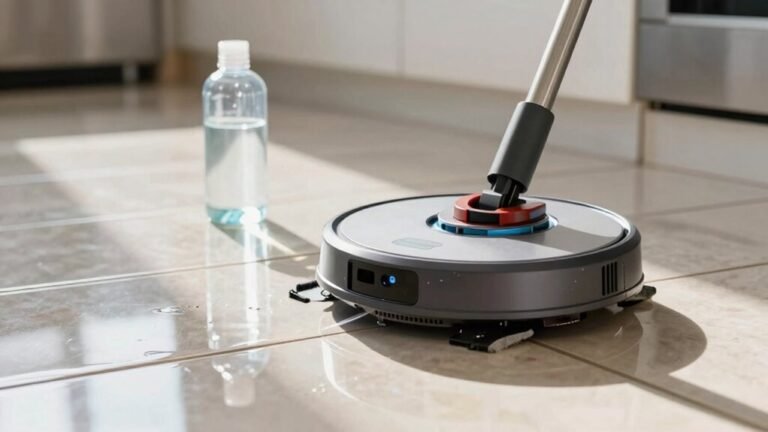
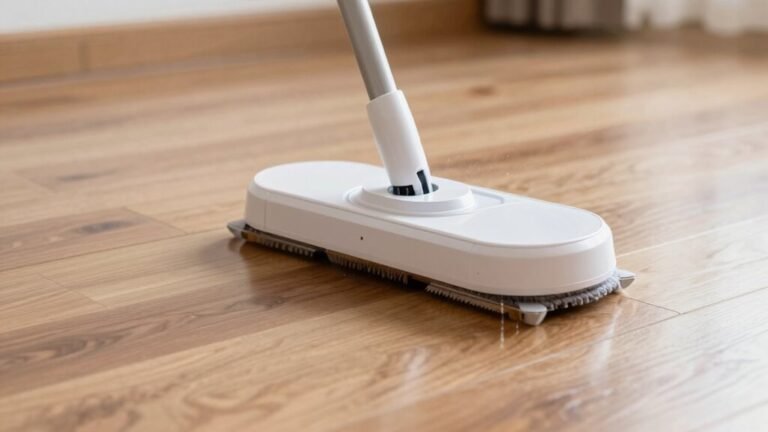
How Often Should You Wash Robot Mop Pads?
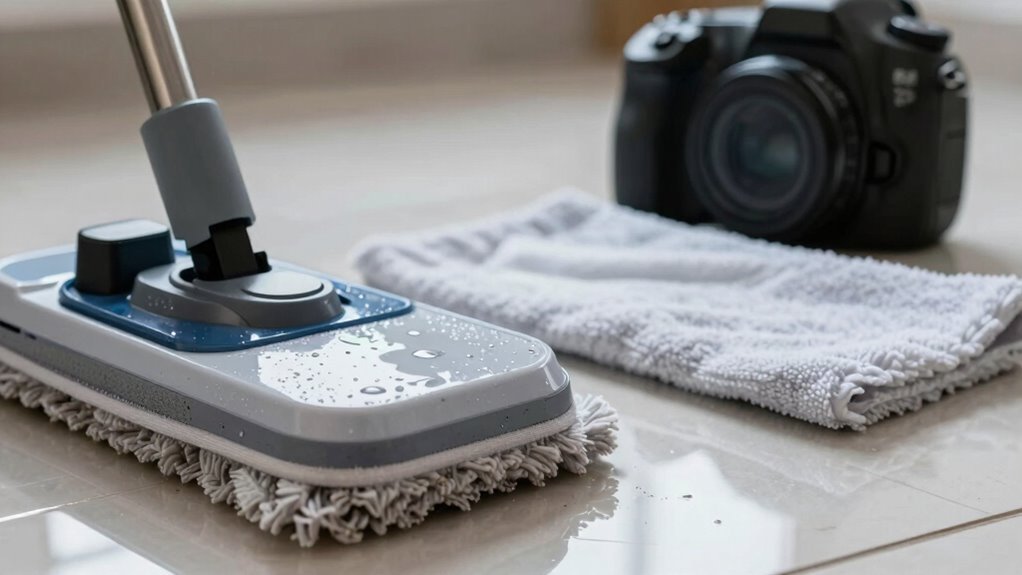
Wash your robot mop pads after every 1–2 uses to maintain cleanliness and optimal performance. This simple routine ensures they don’t spread dirt or grime across your floors like a muddy trail of shame.
If you have pets or deal with frequent spills, you may need to wash robot mop pads more often. A quick rinse between washes helps prevent buildup and keeps them ready for their next job.
Always wash reusable pads in the machine, but never put them in the dryer—heat can ruin them faster than a toddler with scissors. Air-dry only to extend the life of the pads and ensure streak-free cleaning every time.
Wash Reusable Pads After Every 1–2 Uses
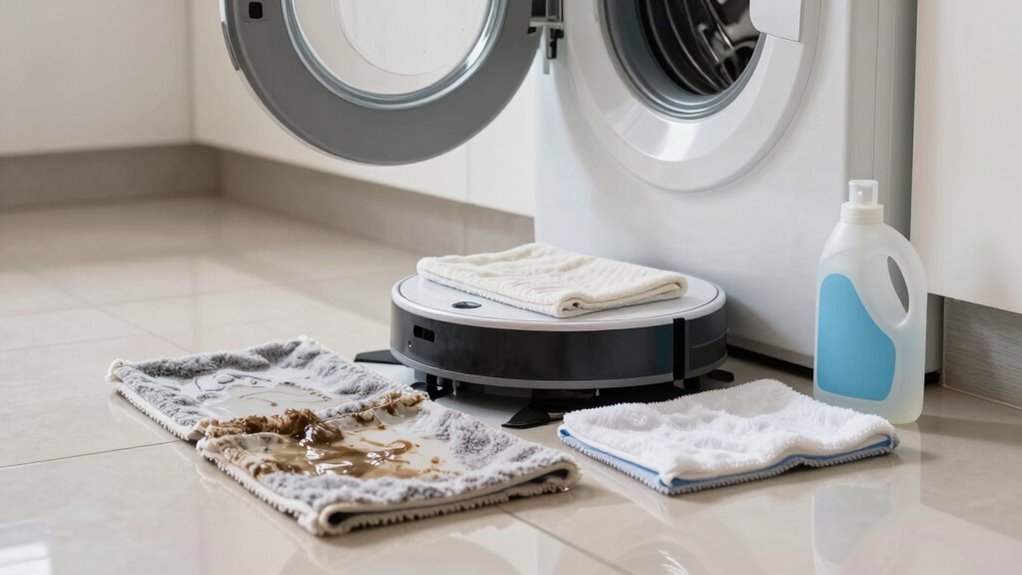
While your robot mop does the hard work, don’t let dirty pads ruin the shine—wash those reusable ones after every 1–2 uses to keep your floors truly clean.
You wouldn’t wear muddy socks twice, so why give your mop a grime-coated pad?
Toss them in the washing machine or give them a quick rinse in the sink—your floors will thank you.
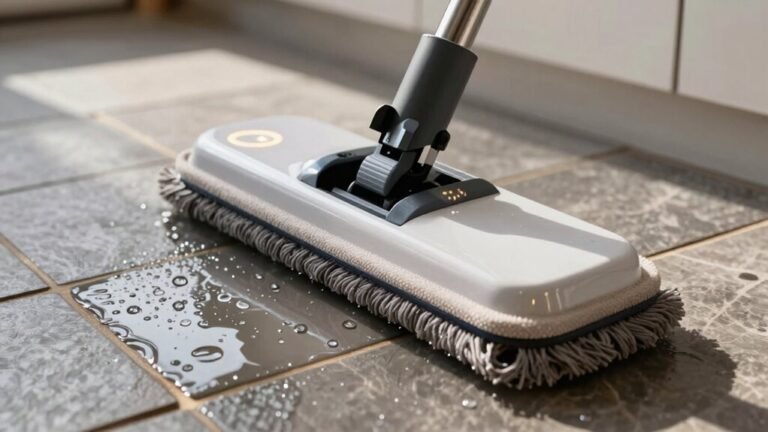
If you’ve got tile, they might survive a few rounds, but wood floors show every trace of leftover gunk.
Pet hair? Spills? That’s a one-and-done deal.
Most washable pads last months with proper care, but only if you actually wash them.
Air dry them—no heat, no drama—and they’ll stay fresh and ready.
Think of it like laundry for your robot: skip it, and things get *real* messy, *real* fast.
Clean pads mean cleaner floors, every time—no magic, just common sense.
Even with washing, pads aren’t 100% clean after rinsing, so residue can build up over time.
Replace Disposable Pads After Heavy Use
You’ve been keeping your reusable pads fresh with regular washes, and that’s awesome—now let’s talk about when to let go of the ones that don’t belong in the laundry.
Disposable pads? Yep, they’re one-and-done champs.
Manufacturers like iRobot and Ecovacs say toss ’em after each run—no second dates.
But if you’re tackling heavy messes or big spaces, swap them even sooner.
Think of it like socks: once they’re grimy, frayed, or can’t scrub worth a darn, it’s goodbye.
Heavy use means fibers get saturated fast, leaving streaks or funk behind.
Some apps even nudge you when it’s time—fancy, right?
A 30-pack might last 6–12 months, but go through them quicker if you’re mopping daily.
Floors stay sparkly, your robot works smarter, and hey, you avoid the “mystery swamp smell.”
Win-win. Toss that tired pad—you’ve earned a clean victory.
The number of uses for disposable pads depends on the amount of dirt on the surface.
When Pets Mean More Washes
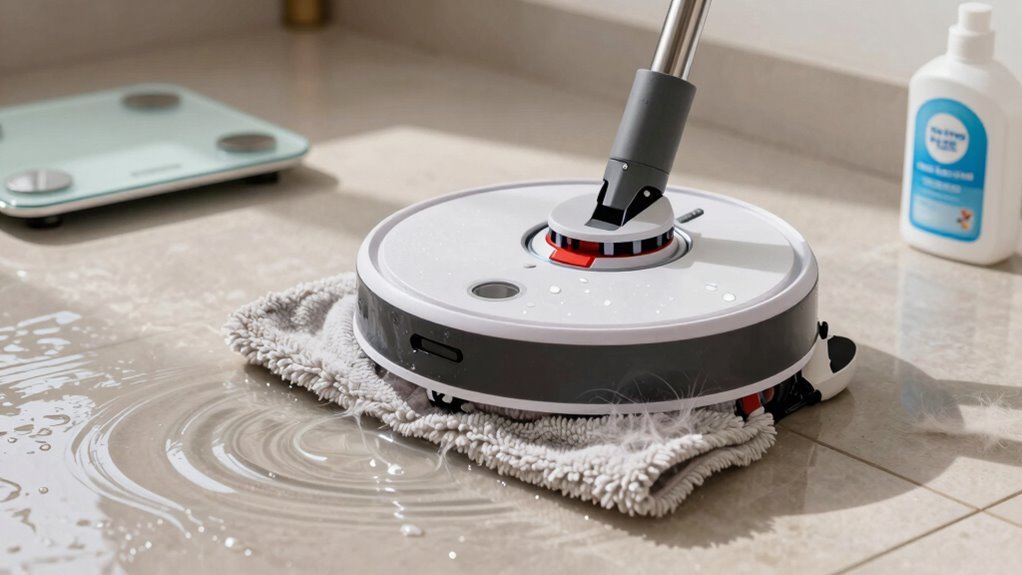
Ever wonder why your robot mop seems to work overtime when you’ve got pets underfoot?
Well, those wagging tails and cozy naps come with a price—more fur, dirt, and the occasional sneaky spill.
Your mop pads pick up the mess every time, so they get dirtier faster.
Lucky for you, all-in-one stations automatically wash and dry the pads after each run, so you’re not stuck doing extra chores.
With heavy shedders like Labradors or German Shepherds, daily cleanings are normal—especially in shedding season—and self-cleaning bases keep things fresh without lifting a finger.
The hot drying function even stops yucky smells and bacteria from moving in.
And thanks to auto-refill tech, your mop never runs dry during back-to-back cleanings.
Basically, your robot’s got your back (and your floors) when pets turn your home into a furry jungle.
Just sit back and let it handle the mess!
Spot-Clean Pads Between Uses
How do you keep your robot mop pads fresh when tackling messes on the fly?
Spot-cleaning between full washes is your secret weapon.
After every quick clean, especially in kitchens or pet zones, give those pads a fast rinse to avoid spreading gunk.
Think of it like washing your hands—don’t want to carry yesterday’s mess into today’s job!
It only takes a minute and keeps your floors actually clean, not just damp with old dirt.
- Rinse with warm, soapy water like you’re prepping a dish sponge
- Wring it out until no murky water squirts out—gross, but satisfying
- Hang to dry near a window or fan, flapping slightly like a tiny victory flag
- Reinstall only when crisp and dry—mold hates a good airflow party
Deep Clean Mop Pads Monthly
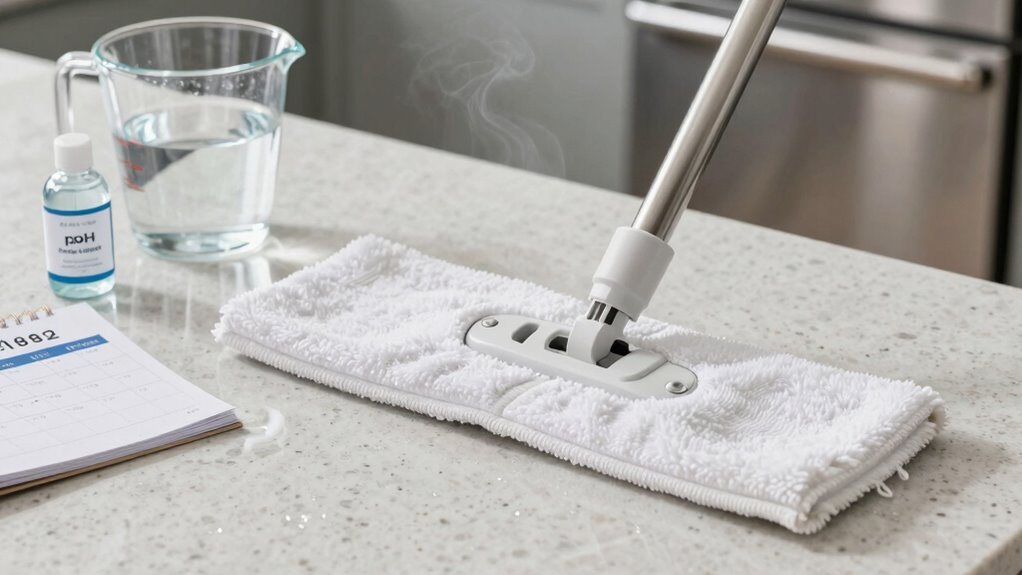
Keeping your robot mop pads fresh between uses with quick rinses is a great start, but don’t stop there—once a month, it’s time to roll up your sleeves for a proper deep clean.
You’ll wash them thoroughly, making sure all that grime hiding in the fibers is gone for good.
Don’t forget to let them dry completely before slapping them back on—mold’s a mood killer.
While you’re at it, tackle brushes, sensors, and filters; it all fits neatly into under 30 minutes.
Even if your Narwal or Ecovacs boasts self-cleaning, trust us, they still crave that monthly spa day.
Pets or high-traffic areas? You might even bump it up.
Your robot will thank you with better performance and a longer life—plus, no funky smells crashing your clean vibe.
It’s like a tune-up for your little cleaning buddy, just way more satisfying.
And hey, keep a spare pad handy—because nobody likes waiting around for laundry!
Hand-Wash Mop Pads in 4 Steps
While your robot mop does the hard work on the floor, giving those pads a little hands-on TLC every now and then keeps things fresh and functioning flawlessly.
Washing them by hand isn’t a chore—it’s a quick, satisfying ritual that boosts your bot’s performance.
Just follow these four simple steps:
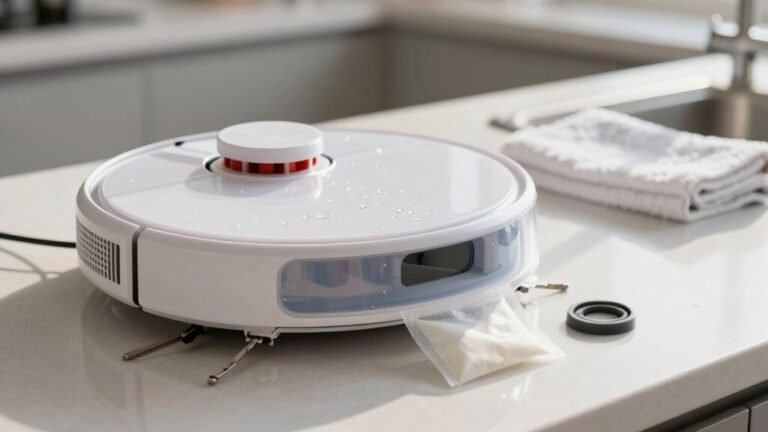
- Flip your robot over gently onto a soft mat, turn the pad plates outward, and yank them off with a confident pull—feel like a robot doctor!
- Peel the mop pad from the holder and toss the fabric into the sink, leaving the plate behind.
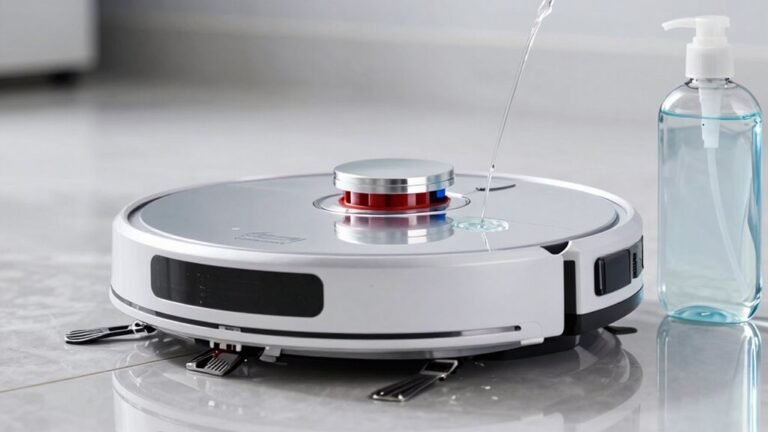
- Wash it by hand with warm, soapy water—scrub lightly, rinse well, and skip the harsh cleaners.
- Air-dry completely before popping it back on—patience here avoids musty messes later.
Easy, right? Your bot (and floors) will thank you!
Safely Machine-Wash Mop Pads
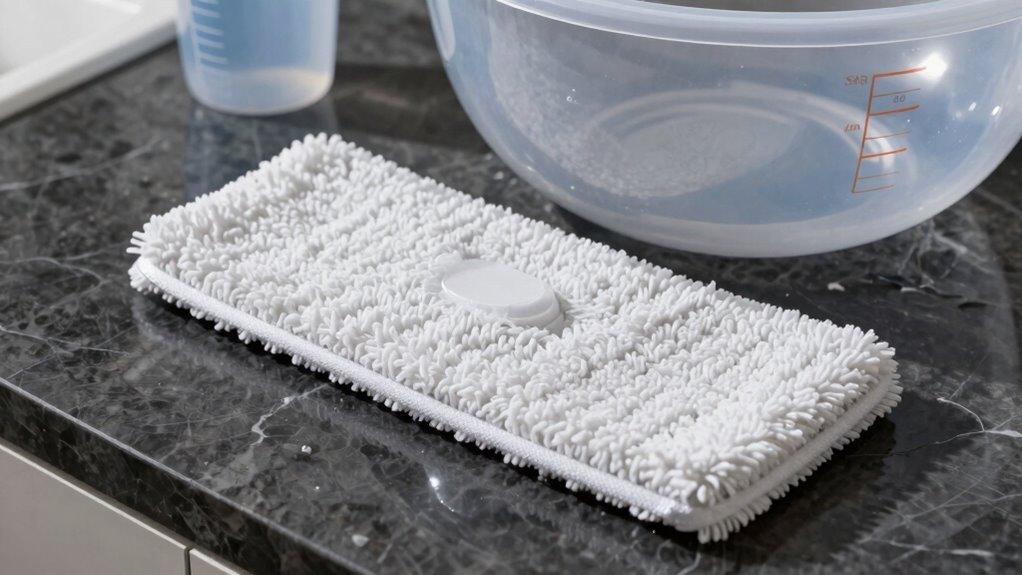
When your robot mop’s pads start looking a little worse for wear, don’t panic—tossing them in the washing machine might just be the refresh they (and your floors) need, as long as you do it right. Not all pads love the spin cycle, so check the label first! Here’s a quick cheat sheet:
| Model | Machine-Wash Safe? |
|---|---|
| Dreame X30 Ultra | Yes, Velcro pads are laundry-ready! |
| Samsung Jetbot (green/gray) | Yep, but use mild detergent. |
| Roomba 100/1000 | Nope—keep those out of the washer! |
Pop off pads after docking, skip the bleach, and use cold or warm water with a gentle detergent. Overwashing won’t turn them into magic cloths, but regular cleaning keeps your robot doing the happy dance across your floors. Just don’t toss in a Roomba pad—unless you enjoy hand-washing regrets later!
Air-Dry Pads to Prevent Damage
Letting your mop pads air-dry is like giving them a spa day—minus the cucumber slices, but with way more germ-fighting perks. You’re not just removing moisture—you’re shutting down bacterial hangouts and keeping mildew from crashing the party. Air-drying is gentle, smart, and totally hands-off with self-cleaning docks doing the work for you. Best of all, you’re protecting your pads from warping, shrinking, or fraying that heat can cause.
Imagine warm air swirling around your pad, zapping germs like a mini sunbeam sauna
Picture your robot buddy returning to base, tired but proud, as the dock washes and dries its “feet” automatically
Visualize fresh, fluffy pads ready to mop—no musty smells, no gunk, just clean
See two pad sets rotating smoothly, one working, one air-drying, like a well-choreographed cleaning dance
Avoid Heat: Never Use the Dryer
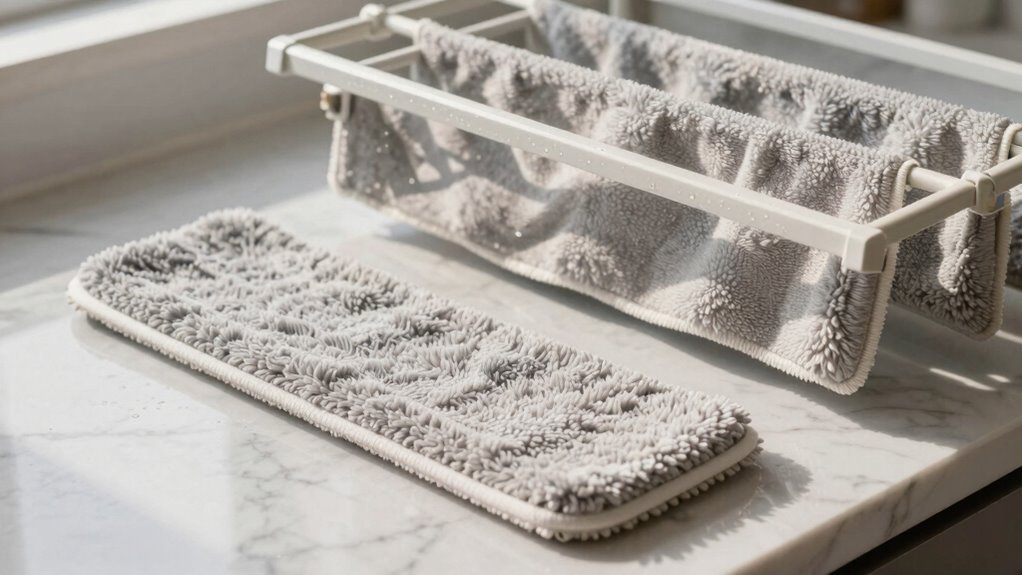
Ever wonder why your robot mop’s pads seem to wear out faster than expected?
It might be because you’re tossing them in the dryer.
Heat breaks down synthetic fibers, shrinks fabric, and weakens adhesives—turning your high-performance pad into a sad, shrunken rag.
Dryers make pads brittle, prone to shedding, and bad at absorbing water, so they spread grime instead of lifting it.
Yuck!
Plus, warped pads won’t sit right in your robot, leaving streaks and missed spots.
Most manufacturers scream (okay, not literally) “air dry only!” for a reason.
Skip the dryer and let pads dry naturally or use a self-drying dock with safe, controlled heat.
Your floors—and wallet—will thank you.
After all, who wants to buy new pads every two weeks?
Keep it cool, stay air-drying, and let your mop do the hard work—not your laundry.
Frequently Asked Questions
Can I Use Bleach to Clean Mop Pads?
No, you shouldn’t use bleach on your mop pads—it’ll wreck the fibers and leave streaks on your floors.
Stick to mild dish soap and warm water instead; it’s way gentler and actually gets the job done.
Think of it like washing delicates—bleach is the enemy!
Rinse well, let ‘em air dry, and your robot (and floors) will thank you with every pass.
Are Robot Mop Pads Safe for Hardwood Floors?
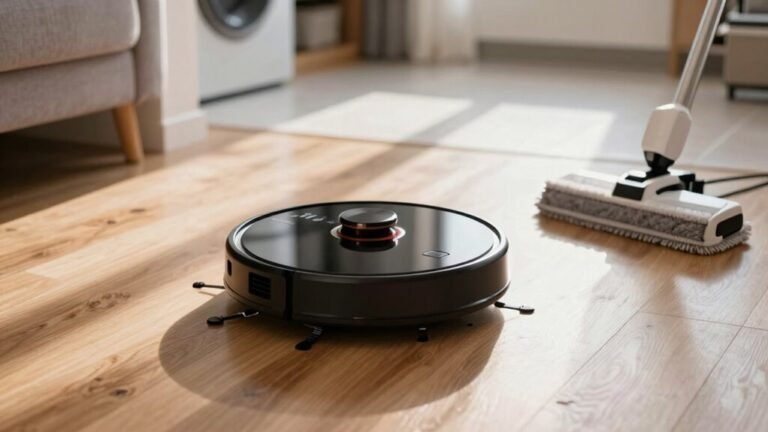
Yes, robot mop pads are safe for hardwood floors—you’re good to go!
They use soft microfiber that won’t scratch, and smart tech keeps extra water away.
The mop lifts automatically over rugs, and gentle brushes do the work without harsh scrubbing.
Just avoid harsh cleaners, and your floors stay shiny and scratch-free.
It’s like giving your floors a spa day—every time!
How Do I Remove Stubborn Odors From Mop Pads?
You tackle stubborn odors by soaking your pads in a vinegar solution—half water, half white vinegar—for 30 minutes, then rinse.
If they still stink, try hydrogen peroxide (diluted!) or a baking soda paste.
You’ll love how fresh they’ll smell!
Don’t skip rinsing well and air drying—mold hates that.
And hey, your pads aren’t socks, so no hoarding smelly ones!
Can I Use Fabric Softener When Washing Pads?
Nope, you shouldn’t use fabric softener when washing your robot mop pads—it can leave a waxy build-up that reduces absorbency and gunk up your robot.
Stick to mild detergent, and your pads’ll stay fresh and functional.
Think of it like washing a superhero’s cape; you want it clean and strong, not fluffy and weak!
Rinse well, air dry, and they’ll be ready for their next floor-fighting mission.
What’s the Best Way to Store Clean Mop Pads?
Back in the floppy disk era, we stored data poorly—but you’re smarter, so stash your clean mop pads like a pro.
You keep them in a dry, breathable spot, right?
Use the manufacturer’s storage or a clean container, never tossing them loose in a drawer.
You let them air dry fully first, avoid damp stacks, and hey—no pet beds nearby.
Think tidy, think fresh, think ready for their next dance across the floor.
Conclusion
You’ve cleaned your floors, but what about your mop pads? Don’t let lurking grime sneak back—washing them keeps your bot in top shape. Think cozy bacteria parties you never invited. Yikes. Now, armed with these tips, you’re ready to outsmart dirt—one fresh pad at a time. So, will you check that pad tonight? You *might* be shocked. Or… maybe you’ll just grab the laundry basket and win. Your move, champ.
References
- https://www.bestbuy.com/site/questions/irobot-braava-jet-240-robot-mop-white/4870803/question/61f3b8c3-6c2b-3220-ad45-1d9b5dfaa0aa
- https://www.bestbuy.com/site/questions/irobot-braava-jet-m6-wi-fi-connected-robot-mop-white/6344889/question/b6f66566-424a-3cdb-a3e0-3684461a79c7
- https://support.roborock.com/hc/en-us/articles/6568902359065-How-often-does-the-robot-go-back-to-wash-mop
- https://us.narwal.com/blogs/product/how-maintain-robot-vacuum
- https://www.eufy.com/blogs/robovac/how-to-clean-steam-mop-pads
- https://homesupport.irobot.com/s/article/28385
- https://www.ecovacs.com/us/blog/how-to-clean-robot-vacuum-cleaner
- https://vacuumwars.com/robot-vacuum-maintenance/
- https://sudrecruiting.com/itm/IRobot-Braava-Jet-M6-Mop-Pads-30-Pack-Disposable-Compatible/1065858
- https://www.youtube.com/watch?v=fFb2lVA6fWw