How to Add Cleaning Solution to Your Robot Vacuum Mop
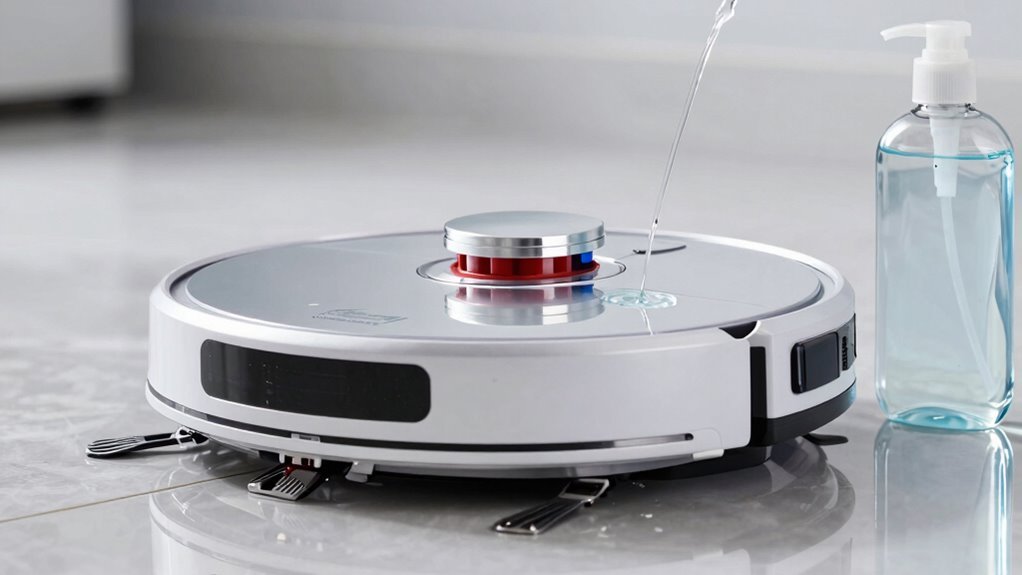
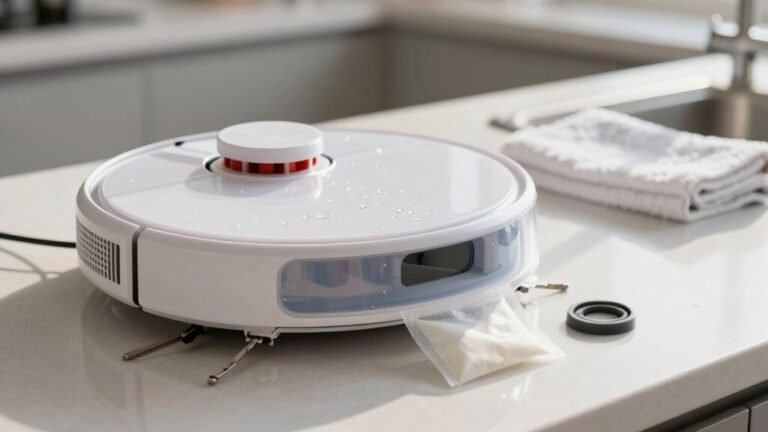
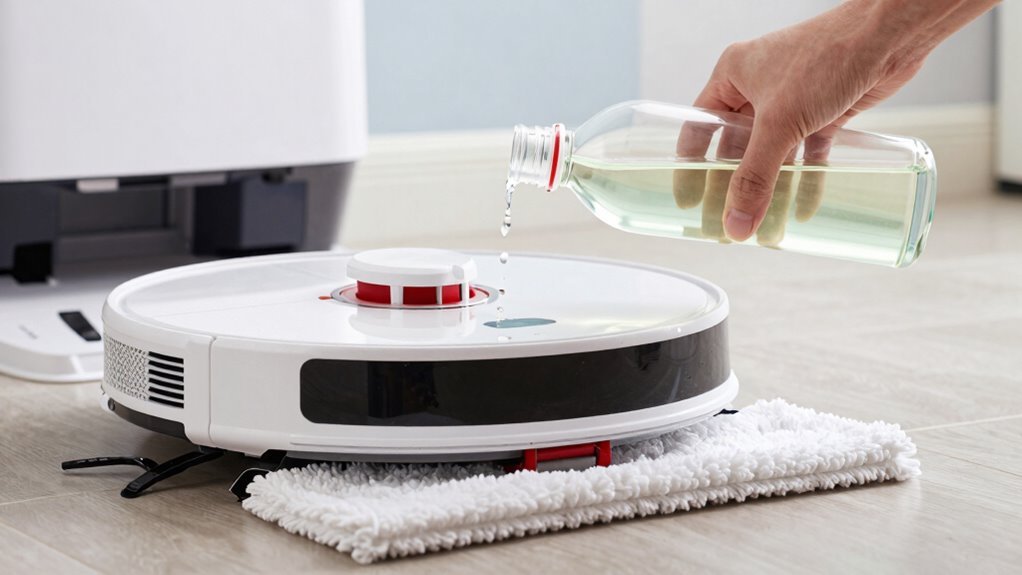
Grab your robot-safe cleaning solution and pour a capful into the tank—skip the dish soap, it’s a foam party you don’t want. Add cold water to the max line, seal it up, and let your little floor butler get to work.
The magic’s in the details when you add cleaning solution to your robot vacuum mop. There’s a slick trick or two that’ll make your bot even happier to clean.
Choose the Right Cleaning Solution
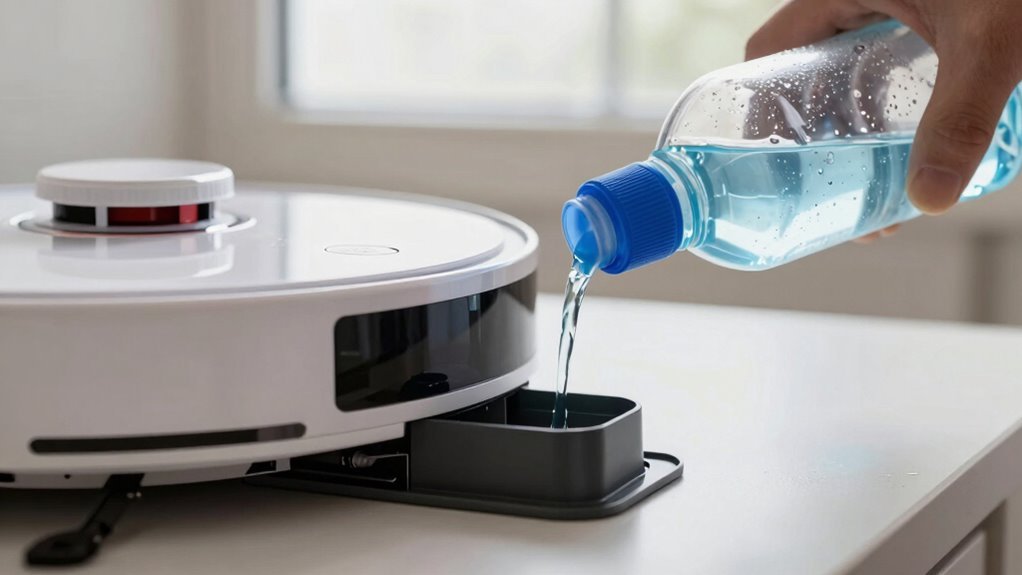
Ever wonder why your robot mop suddenly acts up after a cleaning session? It’s probably because you’re using the wrong cleaning solution.
Stick to the stuff made for your robot—manufacturer-approved brands keep things running smoothly and protect your warranty.
Avoid tossing in regular floor cleaner or bleach; those can gunk up pipes or wreck sensors faster than you can say “uh-oh.”
You’ll want low-foam, no-residue formulas that won’t leave sticky films or attract more dirt.
If you’ve got pets or kids, go for plant-based or hypoallergenic options—gentle yet tough on messes.
And hey, your floors matter too: pick solutions safe for your floor type, whether it’s tile, laminate, or sealed hardwood.
Skip the vinegar stunts and wax-heavy picks.
Choose smart, clean right, and your bot will thank you—maybe not literally, but it won’t leave puddles or stink up the joint, and that counts!
Always check compatibility with your specific model, as using manufacturer-recommended solutions ensures optimal performance and prevents damage.
Find Your Robot’s Solution Reservoir
Where on earth is your robot’s cleaning solution hiding? Don’t worry—you’re not crazy, it’s just really good at playing hide-and-seek. Depending on your model, it could be perched on top, tucked in the back, or even chilling inside the mop pad! Most robots make it kinda fun to find, with bright blue caps or handy labels like “Water” or “Mop Tank” winking at you. Some models even have an onboard concentrate tank for effortless mixing.
Look for these clues:
- Bright icons or symbols like droplets or mop visuals near the fill area
- Color-coded parts, especially blue lids or handles that scream “I hold liquid!”
- Separate access points from the dustbin—your solution won’t hang out with dirt!
Just follow the visual breadcrumbs, and you’ll uncover it in no time. It’s not a treasure chest, but hey, clean floors feel like gold, right?
Fill the Cleaning Solution Tank
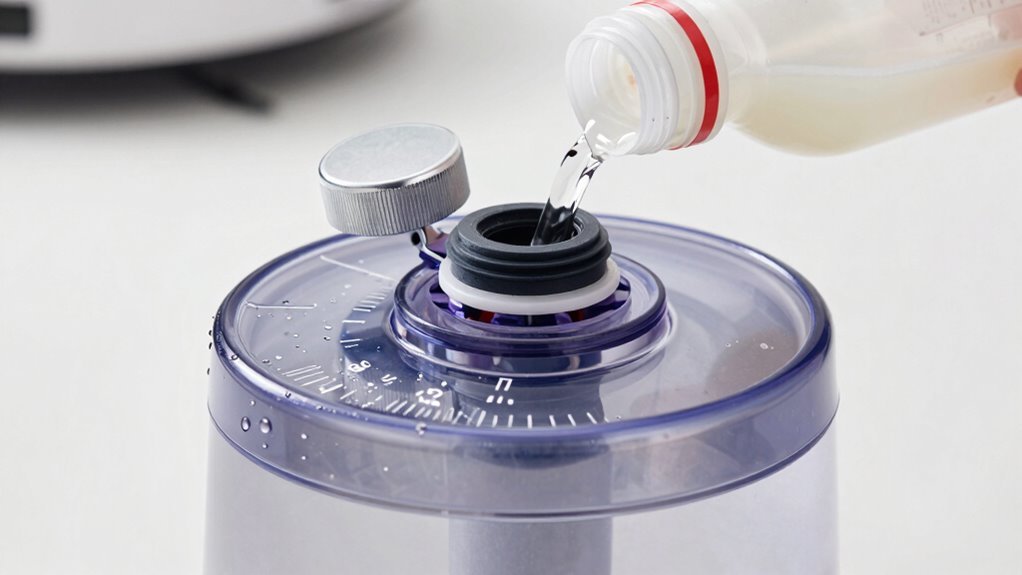
Once you’ve tracked down your robot’s solution reservoir—congrats, detective!—it’s time to fill it up the right way.
First, make sure the tank’s empty and clean—no mystery gunk allowed.
Now, grab your robot-safe solution and add it first, like pouring syrup before milk in a cereal bowl.
Most need just a cap or two—like Eufy’s 10 ml per 2 L—or follow your model’s exact mix, since too much can cause foam fights or sticky floors.
Pour in fresh, cold water next, up to the max line, never over (we’re not doing robot Niagara Falls).
Then, give it a gentle shake or tilt—think cocktail hour—for an even blend.
Some bots even have separate tanks that auto-mix, fancy, right?
Just stick to the rules, and your mop’s ready to glidify your floors with sparkling precision—no puddles, no drama, just clean.
Avoid These 5 Mistakes
Skipping the rulebook with your robot mop’s cleaning solution might seem like a time-saver.
But it’s a one-way ticket to breakdown city.
Avoid these common mistakes and keep your little cleaning buddy happy and working hard.
- Mixing random cleaners? That’s like putting diesel in a gasoline car—voided warranties, clogs, and nasty fumes aren’t worth the risk.
- Ditch the dish soap! Those suds look fun in the sink, but inside your mop, they cause foam explosions, sensor meltdowns, and sticky messes.
- Leaving solution sitting? Nope—residue builds up, smells turn sour, and your robot might just quit on you mid-clean (awkward!).
Stick to approved fluids, rinse after use, and treat your mop like the smart little teammate it is.
A little care goes a long way—your floors (and robot) will thank you with streak-free shine and smooth sailing every time.
Skip Regular Floor Cleaners
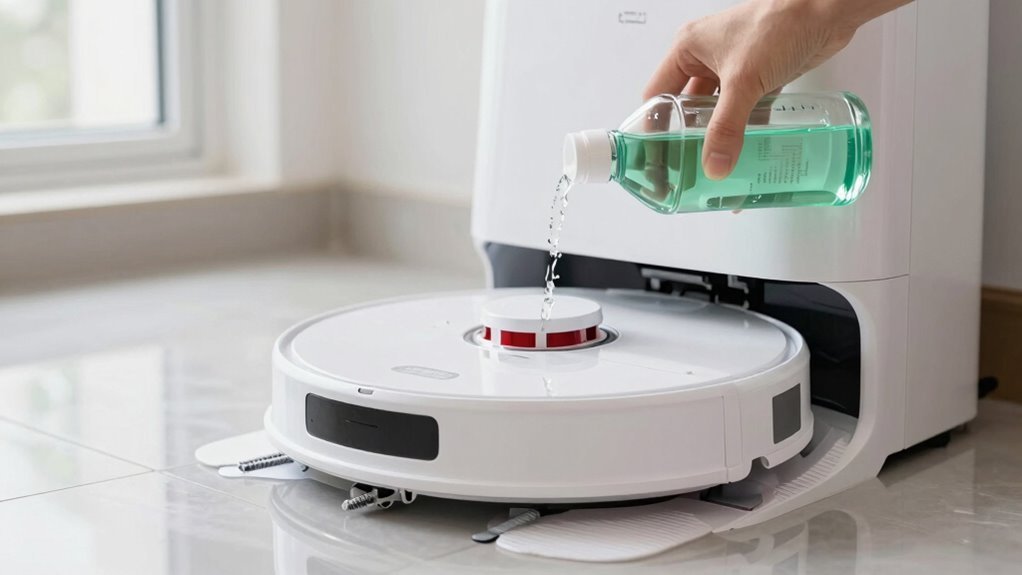
You might be tempted to grab whatever cleaner’s within reach, but tossing regular floor soap into your robot mop’s tank is like giving a goldfish a steak dinner—it just wasn’t built for that. Stick to solutions made for robots to protect your machine, warranty, and floors. Harsh chemicals can wreck seals, clog spray lines, or leave behind sticky messes that mess with traction and sensors.
| Risk | What Happens | Why It Matters |
|---|---|---|
| Bleach or ammonia | Erodes seals & hoses | Leads to leaks and part failure |
| Sudsy cleaners | Foam floods electronics | Can fry motors or sensors |
| Glossy residues | Builds up on wheels & pads | Causes slipping and poor cleaning |
Play it safe—your robot’s not a janitor with a bucket, it’s a tiny tech wizard that deserves the right fuel!
When to Refill the Solution
Your robot mop may be smart, but it can’t magically make cleaning solution appear when the tank runs dry—so knowing when to refill keeps the good vibes (and the clean floors) rolling.
You’ve got better things to do than guess when it’s time—just check these key signals:
- Your app pings you with a “Hey, I’m thirsty!” alert—don’t ignore your robo-mop’s cry for a solution top-up.
- High-traffic zones (looking at you, muddy paws and cereal spills) mean you’ll refill every 1–2 days—consider it part of the pet/kid tax.
- Low floors, low drama: small or lightly used spaces? You might only refill every few mops, especially if you mix in water-only runs.
Stay ahead of the game by checking the tank before each scheduled clean.
Your floors will stay sparkling, and your robot won’t end up dry-mopping like a sad sponge.
Fix Poor Cleaning Results
When your robot mop leaves streaks, misses spots, or seems to just give up mid-clean, don’t jump to blaming its tiny robot pride—chances are, the real culprit is hiding in the cleaning solution tank.
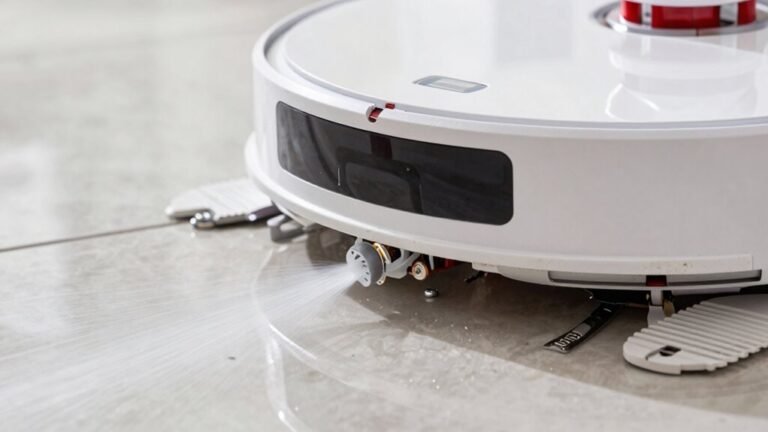
You might be using the wrong stuff—non-approved cleaners or foamy formulas can leave residue, clog spray paths, and make your floor look worse than before.
Skip the vinegar, oils, or dish soap; they’re not built for this bot.
Stick to low-foam, manufacturer-approved solutions so every drop sprays right and rinses clean.
Use the correct dilution too—too strong means streaks, too weak means grime stays.
Match the solution to your floor type and soil level; tile needs aren’t vinyl’s needs.
Keep things compatible, and your robot won’t just go through the motions—it’ll actually *clean*.
Clean the Tank After Use
Flush that tank like you’re wringing out a soggy mop—and do it right after every clean.
Leaving dirty water sitting around is like letting pizza crusts rot in your fridge: smelly, gross, and begging for mold.
Empty both tanks if you’ve got a dual system, then rinse with fresh water to zap leftover suds and gunk.
It’s quick, easy, and keeps your bot running smoothly.
- 🧼 Toss in an Efferdent tablet once a month to nuke odor and bacteria like a mini science experiment
- 🚿 Use warm, soapy water (a squirt of Dawn works wonders) to scrub the tank walls and banish grime ghosts
- 🔥 Rinse thoroughly before switching cleaning solutions—mixing formulas is a no-go, like cologne on top of tacos
Stay on top of this, and your robot won’t turn into a stinky science fair project.
Frequently Asked Questions
Can I Use Bleach in My Robot Vacuum Mop?
No, you can’t use bleach in your robot vacuum mop—it’s a no-go.
It’ll damage seals, tanks, and pumps fast, and boom, your warranty’s void.
Bleach is harsh, corrosive, and way too foamy for delicate insides.
Plus, it can wreck your floors and leave funky fumes.
Skip the drama and stick to water or a robot-safe solution.
Your mop’s happy, your floors stay safe, and life’s just easier.
Win-win!
Is It Safe to Mix Cleaning Solutions?
Nope, you shouldn’t mix cleaning solutions—trust me, your robot’s not a chemistry lab!
Combining liquids can cause gunk, stink, or even damage.
Think foamy volcanoes inside your mop or sticky floors that attract dirt like a magnet.
Stick to one robot-safe formula at a time, follow the bottle’s lead, and keep things simple.
Your floors will shine, your robot will thank you, and you’ll avoid a messy science fair disaster at home!
What if My Model Has No Solution Tank?
If your model has no solution tank, you’re sticking with water—plain and simple.
No fancy mixtures, no DIY hacks, and definitely no dish soap suds making a science fair out of your floor.
Just use clean water, maybe distilled, and let your robot do its thing.
Think of it as a mini spa day for your tiles—refreshing, relaxing, and totally foam-free.
Save the heavy-duty cleaning for the mop bucket!
Can I Use Vinegar as a Cleaning Solution?
Think of your robot mop like a picky eater—it’ll gag on vinegar.
You can’t use it as a cleaning solution, ’cause that stinky stuff can wreck seals, clog tubes, and void your warranty fast.
Skip the DIY mixer madness; plain water or the brand’s approved juice keeps things safe, smooth, and squeaky-clean.
Your robot’s not a science experiment—treat it right, and it’ll dance across your floors for years!
Do I Need Solution for Dry Vacuuming Modes?
Nope, you don’t need solution for dry vacuuming—save it for mopping!
Your robot’s suction does all the work on dust and crumbs, no liquid required.
Adding solution here’s like bringing a mop to a dust battle—it just doesn’t help and might cause messes.
Keep it dry, let the brushes spin, and save the cleaning juice for when floors need a wipe.
Smart, simple, and totally drip-free!
Conclusion
You’ve added the solution, avoided the pitfalls, and kept your robot happy. Now, hit start and step back. What happens next? Floors so clean you’ll swear they’re glowing. Just don’t spill your coffee trying to touch them. Remember, a well-filled tank means more mopping, less fuss. Your robot’s ready—quiet, efficient, and maybe a little proud. Go ahead. Let it work its magic. You’ve got this.
References
- https://www.ecovacs.com/us/blog/can-you-put-cleaning-solution-in-robot-mop
- https://us.narwal.com/blogs/product/cleaning-solutions-in-robot-mop
- https://www.dreametech.com/blogs/blog/robot-mop-cleaning-solution-guide
- https://www.youtube.com/watch?v=jqbV_48qrWw
- https://www.robotspecialist.com.au/collections/cleaning-solution
- https://homesupport.irobot.com/s/article/roomba-combo-cleanser
- https://us.roborock.com/products/roborock-official-floor-cleaning-solution-for-robot-vacuums
- https://www.youtube.com/watch?v=yWHRtnlqxdI
- https://www.youtube.com/watch?v=Jk-HoHoScr8
- https://www.youtube.com/watch?v=LUdMh8Bi3j0