5 Best Robot Vacuum Accessory Kits for a Spotless Home Every Time
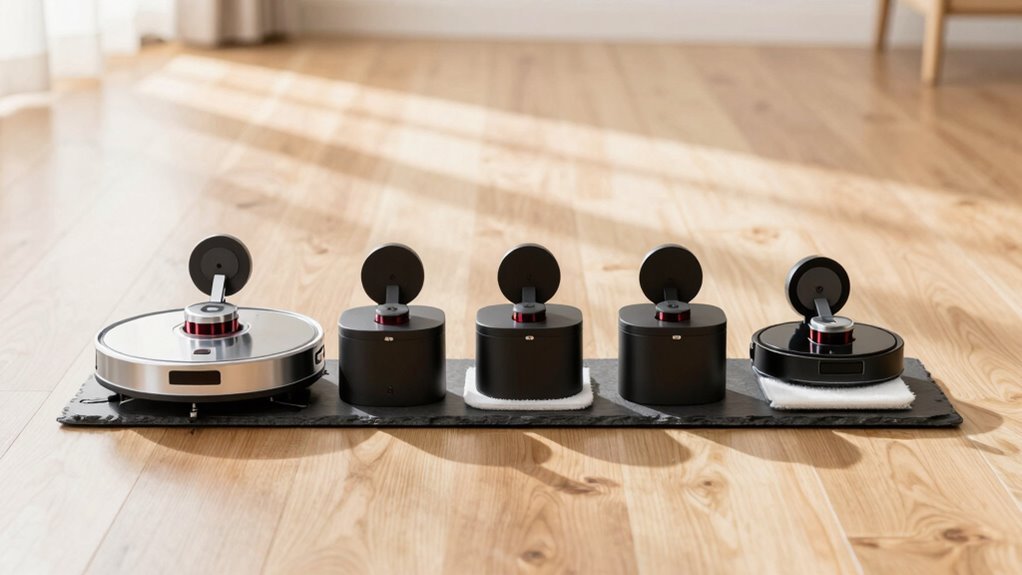
You’re already using a robot vacuum—so why still find dust bunnies doing yoga in the corners?
Most robot vacuum accessory kits don’t just swap brushes every 3–6 months; they upgrade airflow with true H13 filtration (99.97% efficient at 0.3 microns).
These top kits feature precision-sealed edges to stop leaks and maximize suction efficiency.
But compatibility is key—universal clamps often wobble, while OEM-matched parts click into place perfectly.
What if one robot vacuum accessory kit could cut your maintenance time in half—and actually last longer?
The right blend of durability, fit, and filtration can make all the difference.
| Roborock Qrevo Replacement Parts Kit | Best Overall | Compatible Models: Roborock Qrevo S / Qrevo Plus / Qrevo Pro / Qrevo MaxV | Main Brush Count: 2 | Side Brush Count: 6 | VIEW LATEST PRICE | Read Our Analysis | |
| VIEWALL Q7M5 Replacement Kit for Roborock | Best Value | Compatible Models: Roborock Q7 M5+ / Q7 M5 / Q7 L5 / Q7 L5+ | Main Brush Count: 1 | Side Brush Count: 4 | VIEW LATEST PRICE | Read Our Analysis | |
| Shark AI Robot Vacuum Replacement Parts Kit | Premium Performance | Compatible Models: Shark AI AV2511AE, AV2501S, AV2610WA, and others listed | Main Brush Count: 1 | Side Brush Count: 8 | VIEW LATEST PRICE | Read Our Analysis | |
| WVCR200S Replacement Parts Kit (17PCS) | Budget-Friendly Pick | Compatible Models: WYZE Robotic Vacuum WVCR200S | Main Brush Count: 2 | Side Brush Count: 8 | VIEW LATEST PRICE | Read Our Analysis | |
| Shark Robot Vacuum Replacement Parts Kit | Editor’s Choice | Compatible Models: Shark AI AV2511AE, AV2501S, AV2610WA, and others listed | Main Brush Count: 2 | Side Brush Count: 10 | VIEW LATEST PRICE | Read Our Analysis |
More Details on Our Top Picks
Roborock Qrevo Replacement Parts Kit
Ever wonder why a robot vacuum owner might dread the moment their Qrevo starts leaving dust bunnies behind? It’s probably because worn brushes or clogged filters—easily overlooked—are slashing cleaning efficiency.
With your Roborock Qrevo S, Plus, Pro, or MaxV, this kit keeps performance sharp: you get 2 tangle-resistant ABS rubber main rollers, 6 side brushes, and 4 H13 filters (each trapping 99.97% of fine debris). Add 4 dust bags—each holding up to 7 weeks of pet hair and dust (2.7L total).
Plus, enjoy 4 absorbent, lint-free mops and tools you’ll actually use, like a cleaning brush and screwdriver. This complete replacement parts kit ensures your Qrevo stays reliable and efficient over time.
- Compatible Models:Roborock Qrevo S / Qrevo Plus / Qrevo Pro / Qrevo MaxV
- Main Brush Count:2
- Side Brush Count:6
- Filter Count:4
- Mop Pad Count:4
- Replacement Interval:Every 2–4 months
- Additional Feature:H13 grade filters included
- Additional Feature:2.7L dust bags with 7-week capacity
- Additional Feature:Includes screwdriver and cleaning brush
VIEWALL Q7M5 Replacement Kit for Roborock
If you own a Roborock Q7 M5+, Q7 M5, Q7 L5, or Q7 L5+—and actually want your robot to keep performing like it did out of the box—this VIEWALL Q7M5 Replacement Kit is the no-nonsense way to restore peak cleaning efficiency. You’re getting a full refresh: one durable ABS rubber main brush (removable, tangle-resistant), four side brushes (for edge grime), four washable HEPA filters (maintain suction, no airflow loss), and four microfiber mop pads (absorbent, ideal for sealed floors—wood, laminate, tile).
Everything installs fast—no tools fuss, though you do get a tiny screwdriver just in case. These parts aren’t just copies; they’re precision-fit, so wobbling or weak seals won’t sabotage your cleanup.
The mop pads handle footprints and spills without shedding, and yes—believe it or not—they actually stay put during runtime. Are they lifelong? Nope—but at this price, replacing them every few months feels reasonable, not ruthless.
You’ll stretch your vacuum’s life, cut down on manual touch-ups, and maybe—just maybe—stop yelling at it when it misses the corner (again).
- Compatible Models:Roborock Q7 M5+ / Q7 M5 / Q7 L5 / Q7 L5+
- Main Brush Count:1
- Side Brush Count:4
- Filter Count:4
- Mop Pad Count:4
- Replacement Interval:Not specified
- Additional Feature:Washable HEPA filter included
- Additional Feature:Precision fit for Q7 series
- Additional Feature:Microfiber mop cloths for sealed floors
Shark AI Robot Vacuum Replacement Parts Kit
The Shark AI Robot Vacuum Replacement Parts Kit is ideal for owners of compatible AV or RV series models—such as the AV2511AE, RV2610WA, or UR250BEOUS—who want to maintain optimal cleaning performance. It eliminates the hassle of sourcing parts individually, providing everything you need in one convenient package.
You get a full set of high-quality replacement parts, including one main roller brush and eight side brushes. All components are made from durable, premium materials designed to meet OEM specifications.
The kit also includes a complete filter suite: four pre-motor HEPA filters, two foam filters, two felt filters, plus a post-motor HEPA and foam filter. These filters are crafted with FSC-certified paper, ensuring both quality and environmental responsibility.
For best performance, replace filters every 2–3 months depending on usage. Installation is completely tool-free, making maintenance quick and simple—unless you enjoy vacuuming with reduced suction power.
- Compatible Models:Shark AI AV2511AE, AV2501S, AV2610WA, and others listed
- Main Brush Count:1
- Side Brush Count:8
- Filter Count:9 (including HEPA, pre-motor, foam, felt)
- Mop Pad Count:Not included
- Replacement Interval:Every 2–3 months
- Additional Feature:FSC-Certified paper filters
- Additional Feature:Includes pre- and post-motor filters
- Additional Feature:8 side brushes for extended use
WVCR200S Replacement Parts Kit (17PCS)
Keep your WYZE Robotic Vacuum WVCR200S running like new with the 17-piece replacement kit—your all-in-one fix for avoiding the hassle of tracking down parts one by one. You get 2 main roller brushes, 8 side brushes, 6 sealed-edge filters, and a cleaning tool—everything you need, really.
The sealed-edge filters boost filtration efficiency by trapping more dust (hello, cleaner air), while the high-quality brushes maintain strong cleaning performance over time. These durable components are designed to handle regular use without degrading quickly.
You’ll spend less money long-term since you’re replacing parts before they fail. Regular maintenance helps avoid costly repairs or premature replacement of the entire unit.
Recommended every three months, these replacements reduce strain on the motor and extend the vacuum’s lifespan. Consistent part swaps mean reliable performance and a home that actually stays clean.
- Compatible Models:WYZE Robotic Vacuum WVCR200S
- Main Brush Count:2
- Side Brush Count:8
- Filter Count:6
- Mop Pad Count:Not included
- Replacement Interval:Every 3 months
- Additional Feature:17-piece full replacement kit
- Additional Feature:Sealed-edge filters prevent leakage
- Additional Feature:Optimized for WYZE WVCR200S only
Shark Robot Vacuum Replacement Parts Kit
You’ve got a Shark AI-powered robot vacuum—probably one of those sleek models like the AV2511AE or RV2610WA—and you’re not about to let clogged filters or worn-out brushes slow it down, right? This replacement kit’s got your back: 2 main roller brushes, 10 side brushes, and a full set of 5 HEPA, 2 pre-filters, plus foam and felt base filters—everything you need (and then some).
It fits nearly all Shark AI models—check your number, though, since EZ900 or IQ1000 owners are out of luck. You’ll swap parts every 2–3 months—depending on pets, floors, and how much you vacuum—to keep suction strong and avoid that “why is it so loud?” moment.
The FSC-certified filters and durable brushes are built to last, and honestly, installation’s a no-tool breeze. Just unwind tangled hair now and then, and you’re golden.
- Compatible Models:Shark AI AV2511AE, AV2501S, AV2610WA, and others listed
- Main Brush Count:2
- Side Brush Count:10
- Filter Count:14 (including HEPA, pre-motor, foam, felt)
- Mop Pad Count:Not included
- Replacement Interval:Every 2–3 months
- Additional Feature:Includes brush cover for protection
- Additional Feature:10 side brushes included
- Additional Feature:FSC-Certified and high-strength materials
Factors to Consider When Choosing Robot Vacuum Accessory Kits
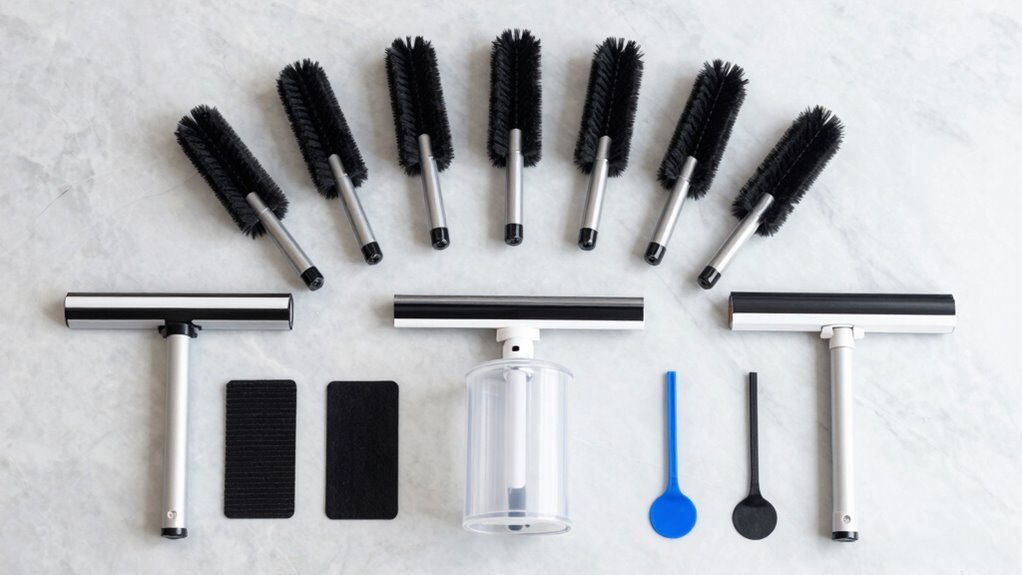
You’ll want to double-check compatibility first—nobody wants to order a kit only to find it doesn’t fit your Neato D7 or Roomba j7+. Think about how often you’re replacing parts, since high-traffic homes might burn through brushes and filters every 3–6 months, especially with pets. And honestly, why skimp on material quality or filter efficiency when a decent HEPA filter traps 99.97% of particles as small as 0.3 microns?
Compatibility Check
While some robot vacuum accessory kits claim broad compatibility, you’ll save time and frustration by double-checking whether the kit actually supports your specific model. Even small variations in naming—like Q7 M5 vs. Q7 M5+—can mean mismatched parts.
You’re not just buying brushes or filters; you’re investing in seamless integration. Always review the kit’s compatibility list for exact models supported—and excluded.
Some kits specify support by series—e.g., Q7 M5, Q7 L5, and their + variants—not just the brand. A “universal” label can be misleading.
Watch for explicit “Not compatible” notes—models like EZ 900, IQ 1000, or UR1000 series often fall through the cracks. If your vacuum belongs to the Qrevo S, Pro, or MaxV family, verify accordingly.
When in doubt, reach out to the seller or double-check your unit’s label. Why guess when 30 seconds of confirmation can save a return?
Core Components
A well-stocked accessory kit keeps your robot vacuum running like a tuned engine. The core components—main roller brushes, side brushes, filters, mop pads, and dust bags—form the backbone of consistent performance.
You’ll want main rollers made of ABS rubber since they handle hair tangles better and boost dust pickup. Trust me, after weeks of pet hair battles, you’ll appreciate the difference.
High-quality filters, especially H13 or HEPA-grade, capture up to 99.95% of fine particles. This matters if you’re tackling allergens or just want cleaner air.
Mop pads should be absorbent and lint-free—nobody’s got time for streaks. Most kits include extra side brushes and dust bags, so you’re not caught off guard mid-clean.
And hey, what’s better than swapping parts without hunting for tools? Many kits come with a tiny screwdriver or cleaning brush—because who keeps a hex key in their junk drawer? Planning helps, right?
Material Quality
High-quality materials make all the difference when your robot vacuum faces the daily grind—literally. You want main brushes crafted from durable ABS rubber, right? They resist tangling and wear far better than flimsy alternatives, especially after months of sweeping across grit and debris.
Look for kits built with high-strength materials throughout—since you’re replacing parts anyway, why not pick ones that actually last? Skip the cheap feel; go for solid construction that maintains performance over time.
And while we’re on sustainability, check if the filters use FSC-certified paper—it’s a small detail, sure, but it guarantees safe, eco-conscious filtration. Mop cloths? Stick with microfiber; it soaks up spills like a champ and leaves zero lint on sealed hard floors.
Honestly, is it too much to ask for a kit that cleans well *and* stands up to real use? With these material choices, your robot won’t just glide—it’ll dominate.
Filter Efficiency
You’re only getting the full cleaning potential from your robot vacuum if the filter’s up to snuff—specifically, an H13-grade one that traps 99.97% of dust, pollen, and microscopic debris with every pass. Think about it: what’s the point of suction power if the air leaks out dirty?
Sealed-edge filters stop that sneaky dust from escaping, keeping performance consistent. Plus, washable pre-motor filters with airtight seals aren’t just convenient—they actually preserve suction by reducing air pressure loss over time.
And let’s be real, who wants a flimsy filter that falls apart after two months? Look for premium kits with FSC-certified paper or reinforced frames; they’re built to last and maintain efficiency.
You’re not just buying a filter—you’re investing in cleaner air and smarter performance. Sure, it’s not the flashiest upgrade, but isn’t breathing easier kind of the whole point?
Replacement Frequency
Honestly, you’re probably replacing parts more often than you’d like—but that’s not always a bad thing if you’re doing it right. You should swap out your main brush every 2–4 months, especially if you’ve got pets or long hair clogging the roller.
Because let’s be real, nobody enjoys unraveling fur knots weekly. Side brushes follow the same 2–4 month timeline, though you should inspect them monthly.
Missing or bent bristles mean reduced edge cleaning, and no, your robot can’t magically compensate. Filters need replacing every 2–3 months to maintain peak suction and air quality.
Even if you rinse them, reuse has limits—hey, maintenance helps, but it’s not forever. Regular cleaning extends part life, but skipping replacements leads to weaker performance.
Think of it this way: consistent swaps keep your robot running like new, without surprises. Like expecting a clogged vacuum to sprint—eventually, it just won’t.
Included Tools
Keeping up with regular part swaps—like changing brushes and filters every few months—means your robot stays sharp. But don’t overlook the small stuff: the tools that help you do the job right.
Many kits include a tiny cleaning brush (about 3–4 inches long) to pry pet hair and string from rollers—because, let’s be honest, your fingers just won’t cut it. Some even bundle a mini screwdriver (usually Phillips #1) for models needing a quick screw adjustment.
Oddly, not all kits include these tools, which makes you wonder: who thought that was optional? A few premium sets list a dedicated cleaning tool right in the specs, setting them apart from bare-bones packs.
But here’s the catch—not every kit includes tools, so double-check before buying. Especially if you’re not keen on rummaging through your toolbox just to maintain a 3-pound robot.
Having the right tool in the box saves time, frustration, and way more hair-pulling. Trust us, it’s worth the check.
Installation Ease
While some manufacturers promise tool-free swaps in under two minutes, the reality often depends on whether your kit actually matches your model. Nothing slows you down faster than realizing halfway through that your Q7 M5+ needs a star-shaped screwdriver not included in the “universal” pack you bought.
You’ll save time when kits list exact model compatibility—like Qrevo S or WVCR200S—right on the label, so you’re not guessing. Many premium sets include a mini screwdriver or cleaning tool, turning what could be a five-minute hassle into a smooth, no-fuss change.
Some even bundle brushes, filters, and mop pads so you’re not swapping parts every few weeks. Sure, “universal” sounds convenient—but how universal is it, really, if it doesn’t fit your vacuum’s clamp mechanism or side brush threading?
Look for kits that cut the fluff and give you precision-matched parts. Because true ease isn’t just about fewer tools, it’s about fewer headaches.
Value Assessment
You just swapped out your robot vacuum’s brushroll in under two minutes—congratulations, that’s a win. Yet the real win might not be speed, but sustainability.
Are you really saving time and money if you’re reordering parts every few months? High-value kits pack in extras: multiple brushes, H13-grade filters (trapping 99.95% of particles), FSC-certified materials, and even mop pads—cutting down both clutter and recurring costs.
Look for kits covering several model variants; they slash the risk of wrong buys and let you share parts across devices. A good kit also includes a cleaning tool, screwdriver, or mini brush, making upkeep smoother and cutting future expenses.
Sure, the upfront price might sting—say, $45 versus $28—but if it lasts six months (with filters replaced every 3 months), the per-use cost drops fast. Is convenience worth it? Only if it’s built to last.
Frequently Asked Questions
How Often Should I Replace Robot Vacuum Filters?
You should replace robot vacuum filters every 1–3 months. If you’ve got pets or allergies, swap them every month. Dirty filters reduce suction, so check them often and clean or replace them quickly to keep your vacuum working well.
Can I Use Third-Party Accessories on My Robot Vacuum?
You can use third-party accessories on your robot vacuum, but they might not fit perfectly or work as well. They could even void your warranty, so check compatibility and reviews before buying to avoid damaging your device or reducing its cleaning performance over time.
Do Accessory Kits Include Cleaning Brushes for Pet Hair?
Yes, they do. You’ll find specialized cleaning brushes in most kits that grab pet hair fast. They attach easily and boost your vacuum’s power, so you’re not constantly battling fur. Just swap them in and let them work—messes don’t stand a chance.
Are Replacement Parts Covered Under Warranty?
Yes, most manufacturers cover replacement parts under warranty—you’re golden if something breaks early. Just don’t push your luck with misuse; warranties aren’t magic shields, and neglect voids them faster than a blink.
Can I Buy Individual Parts Instead of Full Kits?
Yes, you can buy individual parts instead of full kits. You’ll save money and only replace what’s needed. Check the manufacturer’s site or authorized retailers—they often sell filters, brushes, and batteries separately. Just match your model number to get the right part.
Conclusion
You’re the captain of a tiny, tireless fleet—each brush stroke, filter swap, or screw tightened a ripple in the tide of dust. These kits? Your ship’s supply line: H13 filters at 99.97% efficiency, seals that *actually* seal, brushes due for replacement every 90 days (not a day too soon). You’ve got the specs, the compatibility charts, even the mini screwdriver—so why’s that side brush still wobbling? Maybe perfection’s not the goal—just cleaner floors, fewer headaches, and one less chore mastered.