Robot Vacuum Navigation: Random vs Systematic Cleaning
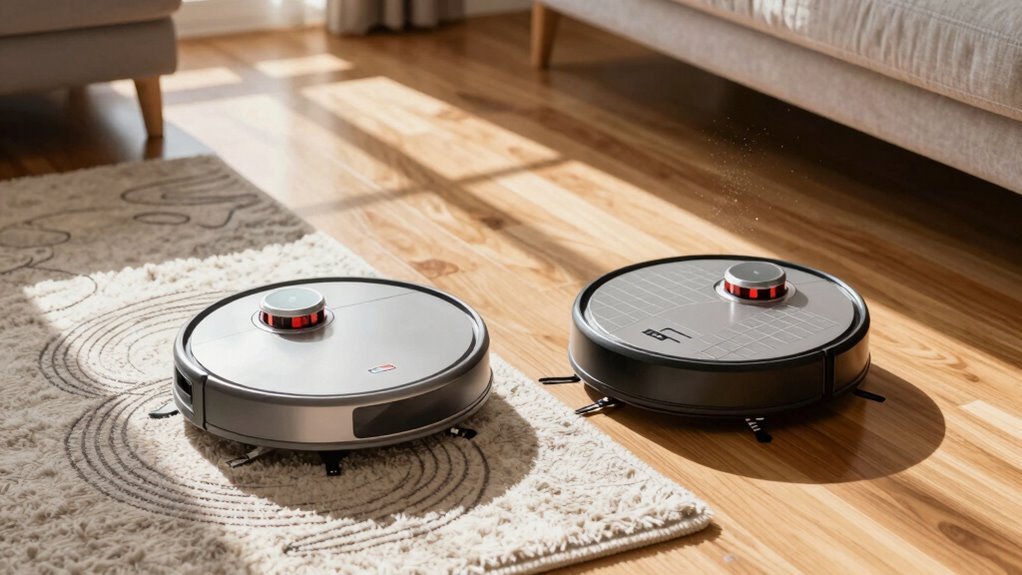
You’re tired of your robot vacuum acting like a confused tourist, bumping around aimlessly, right? Smart, systematic cleaning swaps chaos for order—mapping your home and mowing in neat rows like a tiny, diligent farmer.
No more missed corners or endless loops. It’s faster, saves battery, and actually finishes the job. Robot vacuum navigation with systematic cleaning ensures complete coverage.
Random might work for small spaces, but if you want the whole floor done right, you’ll love what comes next.
How Robot Vacuum Navigation Affects Cleaning
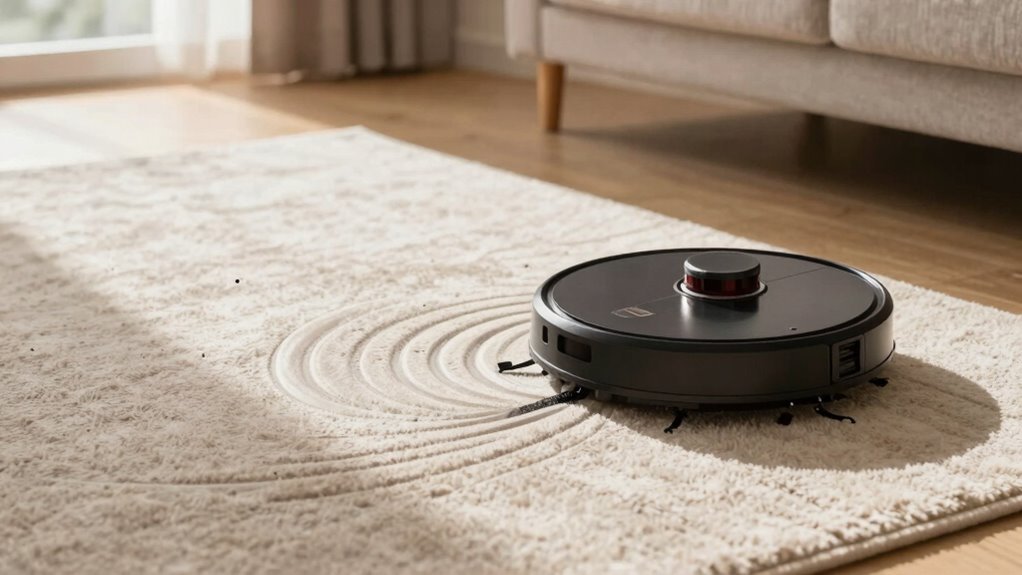
When it comes to cleaning your home, not all robot vacuums are created equal—and the secret sauce? Smarter navigation.
You’re not just buying a gadget; you’re hiring a tiny, tireless janitor who actually knows where the bathroom is.
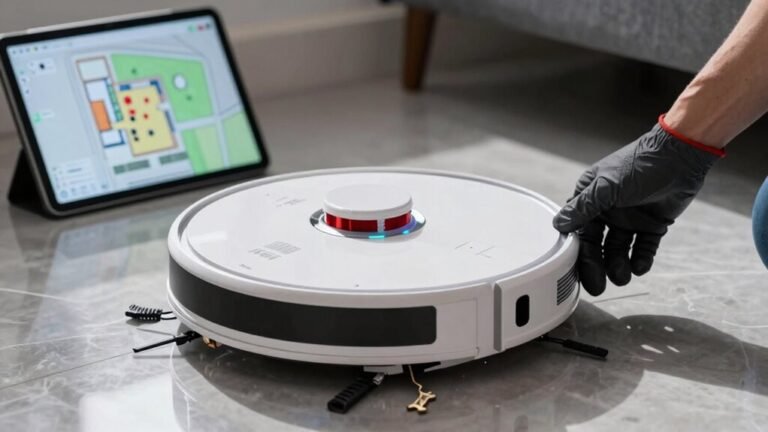
Mapping robots use LiDAR or cameras to scan your space, creating a mental blueprint so they don’t wander like they’re lost at a maze party.
They zip through rooms in neat lines, skipping the clumsy bump-and-grind routine of older models.
You’ll see them dodging toys, slipping under the couch, and even adjusting suction on carpet versus tile—all without face-planting into the coffee table.
With room-by-room precision, they cover more ground faster, save battery, and know exactly when they’re done.
It’s like upgrading from a toddler with a broom to a ninja with GPS.
Seriously, once you go mapped, you’ll wonder how you ever lived without one.
This systematic approach is powered by advanced sensors, and depending on the model, it may rely on LiDAR for precise mapping.
Why Random Bounce Patterns Miss Spots
That ninja with GPS?
Nope, your random-bounce robot’s more like a confused pinball—zipping off walls and furniture, changing direction only when it crashes.
You’d think it covers everything, but it doesn’t.
It misses spots, plain and simple.
While it hogs corners and table legs, your open floor?
Often skimmed or skipped.
Without a map, it can’t learn or improve—same chaos every time.
Big rooms?
Cluttered spaces?
Even worse.
It zigs, it zags, but large areas and tight nooks get ignored.
You’re left with uneven cleaning—some spots done five times, others not once.
And since it burns battery replaying the same scatterbrained route, it might quit before finishing.
So yeah, it’s “cleaning,” but mostly guessing.
And sadly, your floors deserve better than a game of chance.
Original Roombas rely on a random-bounce cleaning pattern combined with wall-following to navigate.
How Smart Mapping Enables Full-Coverage Cleaning
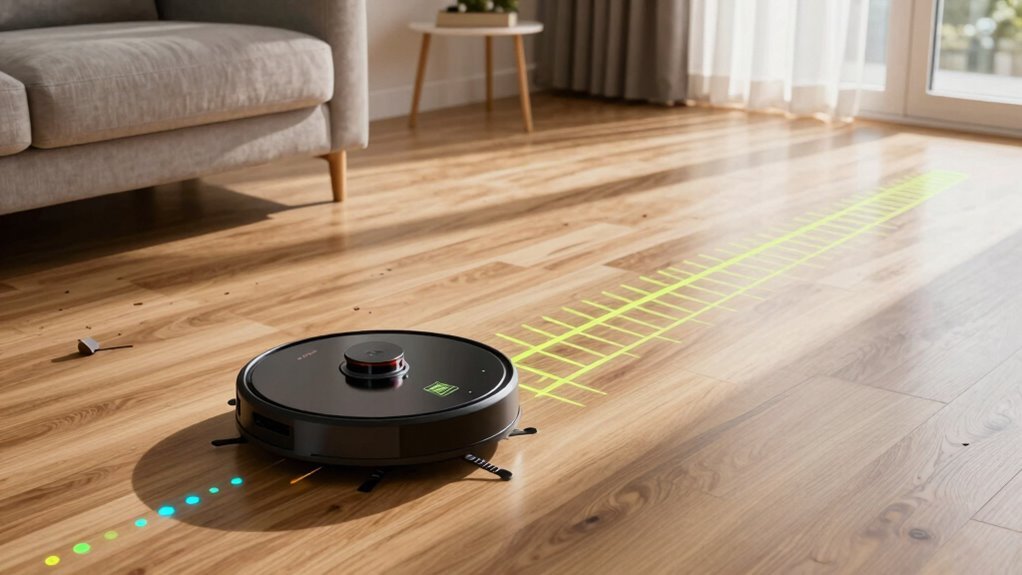
Ever wonder how your robot suddenly stopped acting like a lost tourist and started cleaning like a pro?
That’s smart mapping at work.
Using sensors like LiDAR and cameras, it builds a digital map of your home, remembering where the couch, walls, and coffee table live.
No more random bounces—just smooth, grid-like paths that cover every inch like a lawnmower pro.
It tracks cleaned spots, avoids repeats, and even resumes after recharging.
Missed the hallway? Nope.
It knows exactly where it left off.
You can even block off zones or tell it to focus on high-traffic areas.
Whether it’s slipping through doorways or hugging baseboards, your robot now navigates like it’s got GPS for grime.
It’s not wandering—it’s winning.
Does Navigation Style Save Battery Life?
Who knew your robot’s sense of direction could be such a big deal for its battery life?
When your robot cleans smart, it zips through rooms in straight lines and neat patterns, wrapping up fast with less energy.
Models like the Roborock finish a full floor in 48 minutes using just 39% battery—efficiency at its finest!
But if your bot just bumps around randomly, like the Roomba 692, it can take 90 minutes or more, sucking up extra power just by going in circles.
More time running means more battery wear, plus annoying recharge breaks mid-clean.
Smart navigation means fewer laps, less motor strain, and way fewer full discharges—great news for battery lifespan.
It’s like comparing a pro athlete to someone napping on the couch between sprints.
With better routes, your robot works less, lasts longer, and still beats the dust.
Now *that’s* working smarter, not harder!
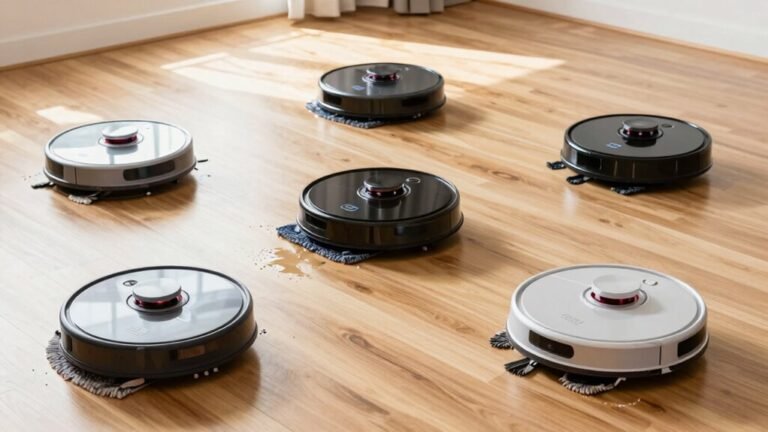
Key Differences: Random Vs Systematic Paths
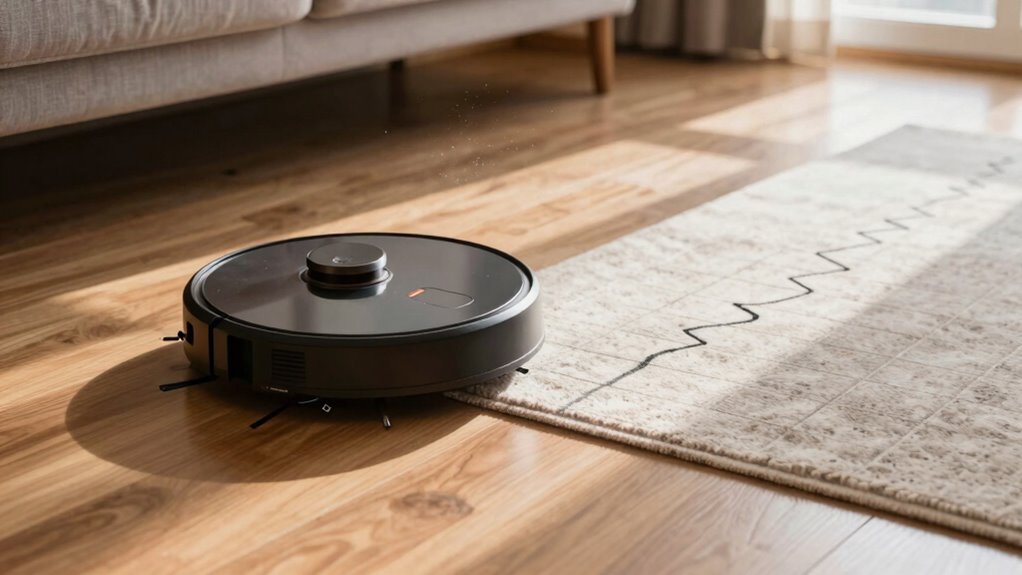
How does your robot decide where to go—like a lost tourist or a GPS-guided pro? If it’s using random pathing, it bounces around your rooms, relying on bump sensors and luck—kind of like a roomba on a caffeine rush.
You’ll often see missed spots, especially in big or tricky spaces, and it might clean the same patch five times while ignoring the corner by the couch.
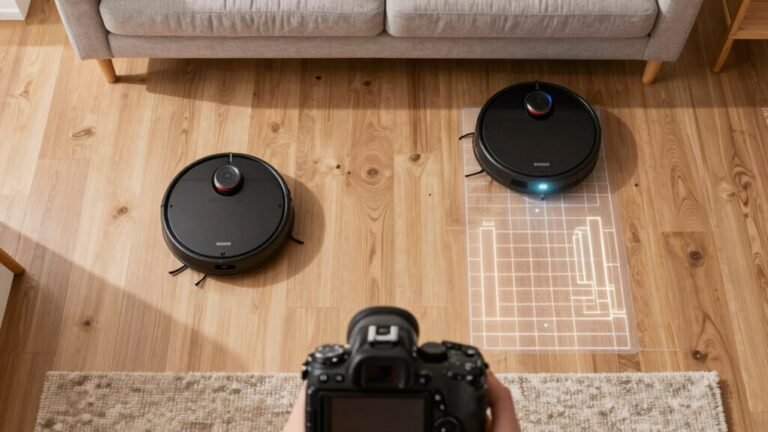
But with systematic navigation, your robot maps the room using LiDAR or cameras, then mows in neat, orderly rows—no spot escapes its watchful sensors.
It remembers where it’s been, avoids duplicates, and even adjusts when the cat crosses its path.
No more guessing games.
It’s like comparing a dartboard to a chess master.
Systematic bots clean smarter, not harder, giving you full coverage without the chaos.
Who knew cleaning could look so *organized*?
Which Navigation Type Is Right for Your Home?
Now that you’ve seen how random wanderers and precision-guided robots take wildly different approaches to cleaning, let’s figure out which one actually fits your home life.
– Got a cozy apartment with clear floors?
A random robot might bounce around well enough—just don’t blink, or it’ll finish before you notice!
– Living in a sprawling house with pets, kids, or zigzagging hallways?
A systematic robot maps it all, zipping room to room like a cleaning pro with GPS.
– Hate chaos but love convenience?
Smart mapping bots adapt to schedules, avoid socks (mostly), and even skip mopping your kitchen if you tell them to.
If your home’s messy, multi-level, or full of fur-covered foot traffic, go systematic. But if you’re in a small space and just want dust *gone*, a random model could be your set-it-and-forget-it buddy. Either way, you win!
Frequently Asked Questions
Can Robot Vacuums Clean Multiple Rooms Effectively?
Yes, you can absolutely rely on robot vacuums to clean multiple rooms effectively—especially if you pick a smart one.
These clever little bots zip around your whole home, mapping each space, dodging furniture, and even recharging themselves to finish the job.
They remember where they’ve been, so no spot gets missed.
Sure, basic models might wander like they’re lost, but with a good one, you’ll laugh as it effortlessly tackles every room—like a tiny, tireless cleaning ninja on a mission!
Do They Work Well on Dark or Patterned Floors?
Yeah, most robot vacuums handle dark or patterned floors just fine—especially if they’ve got LiDAR, like Ecovacs models, which nail 96% pickup rates on hardwood.
But watch out: some cheaper bots think black rugs are bottomless pits!
If your vacuum acts scared of the dark (literally), it might need smarter sensors.
You don’t want it ghosting your living room like it’s haunted.
Luckily, many modern bots laugh at shadows and keep cleaning.
How Often Should I Empty the Dustbin?
You should empty your dustbin after every run if you’ve got pets or lots of dirt, or every 2–3 uses for lighter messes.
Don’t let it overflow—clogs and stinky air aren’t cute.
If your model’s smart but tiny (like the X8 Pro), toss it out after each clean.
Check it like you’d peek in your fridge: better safe than *yuck*.
Self-emptying? Lucky you—just handle the base weekly and keep things fresh!
Can They Detect and Avoid Pet Waste?
Yes, they can spot and dodge pet waste—think of your robot like a cautious hiker sidestepping trail puddles!
Using smart cameras and AI, it identifies poop, stops fast, and reroutes.
It’s not perfect, especially in dim light or with flattened messes, but it’s impressively careful.
Just keep the lens clean, and you’ll laugh less at cleanup duty.
Do They Require Wi-Fi to Navigate?
No, you don’t need Wi-Fi to navigate—your robot uses sensors, lasers, and smarts built right in to zip around furniture and avoid socks.
It’ll clean just fine even if your internet’s on the fritz.
Think of it like a tiny, determined explorer with a built-in compass, not a smartphone.
Wi-Fi’s handy for maps and apps, sure, but it’s not a must.
Your bot’s got this—all by itself!
Conclusion
You’re not just cleaning, you’re smartening up your space! With systematic navigation, your robot doesn’t play hide-and-seek with dust bunnies—it maps, plans, and conquers. Remember, “measure twice, cut once”? Well, map once, clean right! Random bots bounce like confused pinballs, while smart ones glide like pros. You get full coverage, saved battery, and fewer “oops, I missed that” moments. Choose wisely, laugh freely, and let your floors shine!
References
- https://www.ecovacs.com/us/blog/lidar-vs-vslam-navigation-what-are-the-differences
- https://ca.narwal.com/blogs/product/robot-vacuum-mapping-test
- https://us.3itech.com/blogs/news/lds-vs-dtof-lidar-navigation-in-robot-vacuums
- https://vacuumwars.com/vacuum-wars-best-robot-vacuums/
- http://www.thesmarthomehookup.com/mid-2025-ultimate-robot-vacuum-and-mop-comparison/
- https://www.rtings.com/robot-vacuum/reviews/best/robot
- https://www.youtube.com/watch?v=8WxFAQmXhfs
- https://www.explainthatstuff.com/how-roomba-works.html
- https://www.rtings.com/vacuum/tests/automation
- https://us.narwal.com/blogs/robot-vacuum/mapping-vs-no-mapping