How Do Robot Vacuums Detect Carpets to Avoid Mopping?
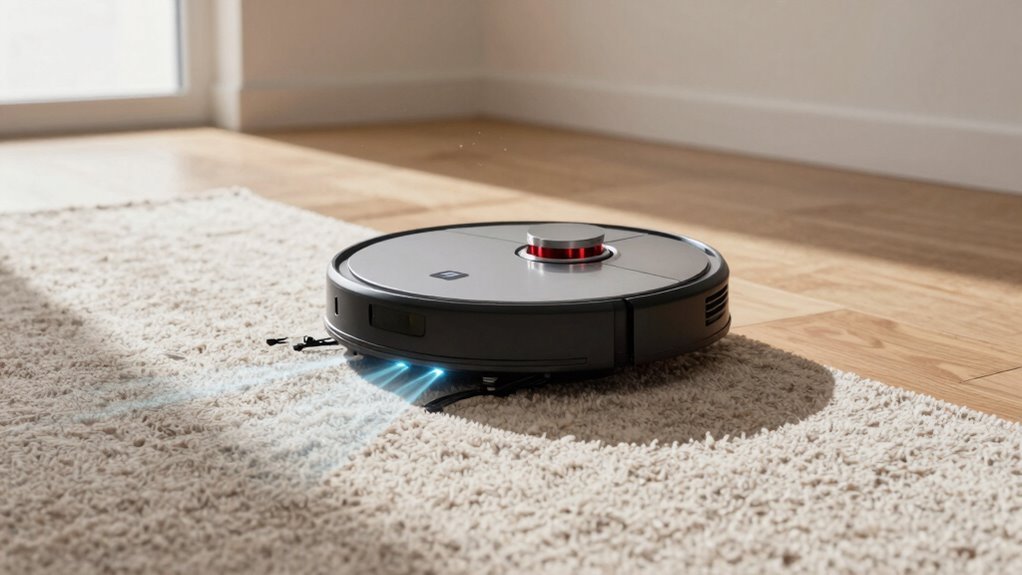
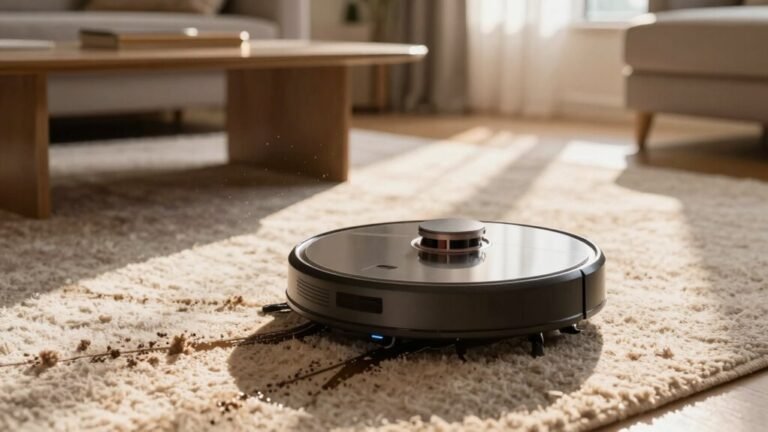
Robot vacuums detect carpets using a combination of sensors and intelligent programming to avoid mopping on fabric surfaces. They rely on tiny wheels that sense resistance, infrared sensors that detect texture changes, and advanced floor recognition technology.
When the robot vacuum identifies a carpeted area, it automatically lifts the mop pad to prevent wetting the carpet. It simultaneously increases suction power to handle the deeper dirt often found in rugs and adjusts its movement for optimal cleaning.
Over time, smart robot vacuums learn the layout of your home, remembering where carpets are located. This memory allows them to proactively avoid mopping in those zones on future cleaning runs.
How Robot Vacuums Detect Carpets
Ever wonder how your robot vacuum knows it’s rolled onto a shaggy carpet instead of a slick hardwood floor?
Well, it’s not guessing—your little cleaner’s got tricks up its chassis!
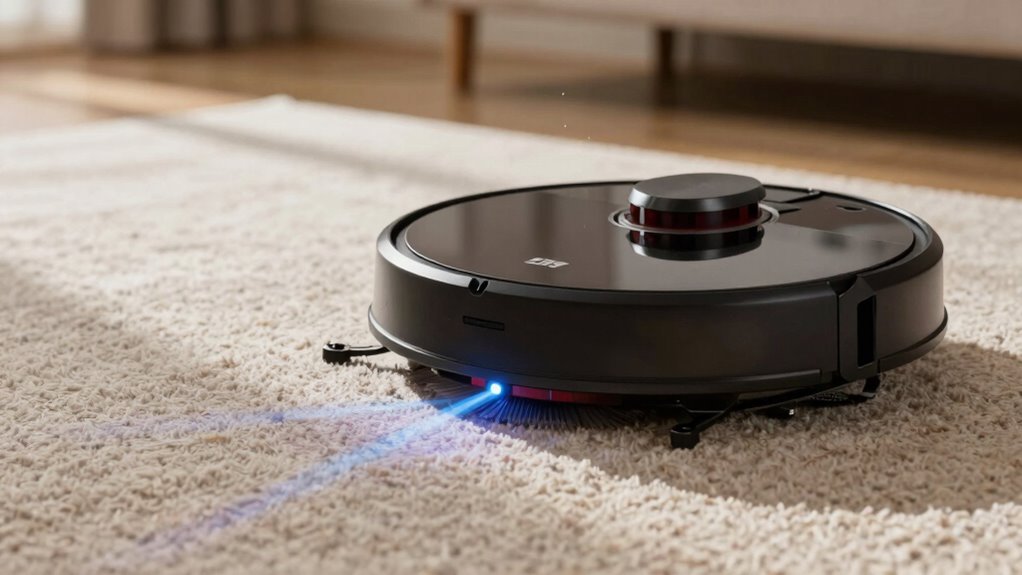
When you roll onto carpet, tiny wheels sink slightly, lowering a contact part that triggers detection.
A roller spins when it hits carpet, and sensors track that motion—no spin, no carpet.
Some models use infrared eyes (up to 14 of them!) to spot surface changes, while pressure sensors feel the bouncy give of plush fibers.
Ultrasonic sensors even listen to how sound bounces back, because carpets muffle like a bad karaoke singer.
And thanks to smart encoders, your vacuum can guess how big the carpet is—talk about overachieving!
This detection helps activate deeper cleaning modes automatically, thanks to carpet sensors identify carpeted areas for cleaning adjustments.
So relax, it won’t drown your rug in mop water.
Your robot’s basically a floor detective, and carpet’s its favorite clue.
How Sensors Spot Carpet Edges
Your robot vacuum doesn’t just stumble onto carpet edges by accident—it’s got a whole toolkit of smart sensors working like a mini tech superhero to catch every tiny change in the floor.
It blasts out ultrasonic waves or invisible infrared light, listening and watching for how they bounce back—carpets absorb more, so the signal changes.
Structured-light scanners and LiDAR map the terrain in 3D, spotting even a 1cm lip.
Cameras team up with AI brainpower, recognizing textures like a pro.
When the signals shift just right, it knows: “Edge ahead!”
Dry Edge Detect even puffs air to confirm—no wet mops on fluff!
All this happens dozens of times per second, so your robot dodges carpets like Neo in The Matrix—smooth, fast, and never soggy.
This precision helps maintain cleaning efficiency by preventing unnecessary mopping on absorbent surfaces.
How Wheels ‘Feel’ the Floor Change
While you’re busy sipping coffee, those clever wheels on your robot vacuum are quietly feeling the floor like tiny detectives with a mission.
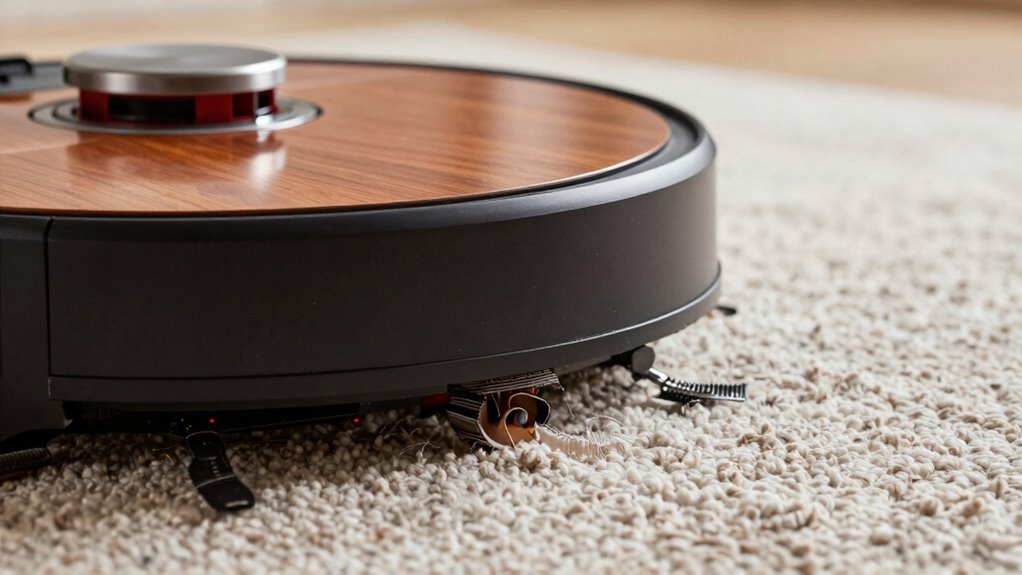
They’ve got built-in springs that squish when they hit the ground and bounce back if lifted—like little bouncers testing for floor access.
Sensors, either microswitches or Hall-effect types, notice every tiny change and tell the brain when something’s off.
When you pick it up, wheels stop spinning—no wild air-spinning chaos.
On the move, they feel resistance too; carpets fight back, hardwood gives way.
Motors slow or push harder based on what the wheels report.
Even slope or height changes? Nope, not a surprise.
Advanced wheels adjust like mini-robot legs, staying steady.
How Robot Vacuums Remember Carpets
How do your robot vacuum’s high-tech senses make sure it never forgets where the plush rugs begin and the tile ends?
Well, it’s like your vacuum has a photographic memory—if cameras, lasers, and gyroscopes counted as eyes and ears.
It uses LiDAR and structured light to map your home in 3D, instantly spotting carpets even in the dark—no mistaking your dark rug for a bottomless pit!
Its brain, packed with AI, stores these carpet spots in digital memory via apps like MyDyson, so it remembers every layout.
It’s not just smart once—it learns and adapts, processing thousands of data points every second.
Even after a nap (or a week-long charging break), it wakes up knowing exactly where Grandma’s shag carpet starts.
Think of it as your forgetful pet, but with a perfect memory—and zero excuses for missing a spot.
What Happens When Carpet Is Detected?
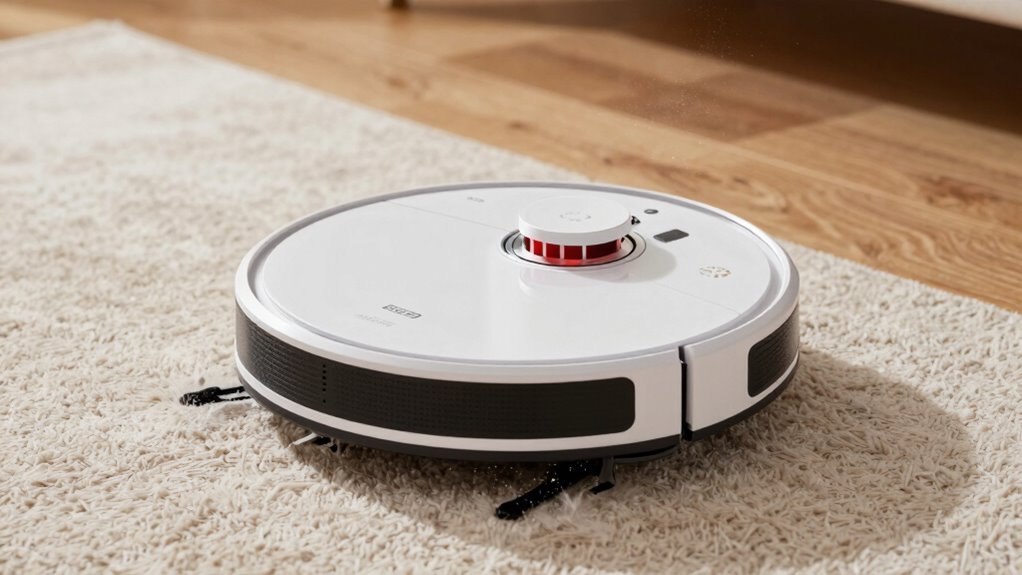
Now that your robot vacuum’s mapped out every nook and remembers where the shag rug lives like it’s part of the family, let’s see what it actually *does* when it rolls up to that cozy carpet edge.
It instantly lifts its mop to keep your carpet dry, thanks to automatic sensors that shout, “Carpet ahead!”
Suction kicks into high gear, digging deep into fibers like it’s on a treasure hunt for crumbs.
The brushes spin faster, the vacuum seals tightly, and it might even take a second pass—because one pass is never enough for that sneaky pet hair.
It slows down slightly on thick piles, adjusts its cleaning head, and carefully climbs the edge without tripping.
Spinning mops stop, protective shields drop, and every system shifts to vacuum-only mode.
Basically, your bot goes full carpet ninja—smart, focused, and totally mopping-averse.
When Detection Fails
Even the smartest robot vacuums can have a clumsy moment or two, especially when their fancy sensors misread the room and leave your bot stranded at the edge of a rug like it’s afraid to take the plunge.
Dirt on optical sensors or smudged lenses can fool it into thinking there’s no carpet—wipe them clean!
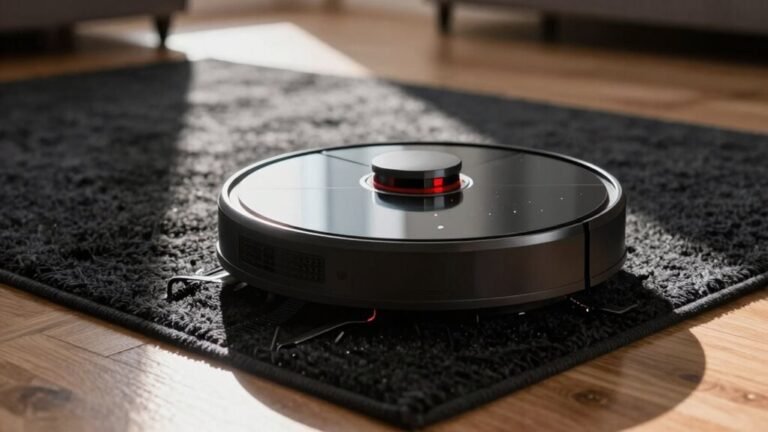
Dark rugs often trick cliff sensors, making your Roomba think it’s walking off a ledge.
Try reflective tape to trick it back on track.
Meanwhile, ultrasonic sensors might glitch, causing your Deebot to reverse for no reason.
A faulty mop module could fake a mopping attachment, blocking carpet access.
Thick piles or overheating can stall climbs, and outdated firmware?
That’s a recipe for confusion.
Test in another room, update the software, or restart—sometimes a fresh start is all your bot needs!
Frequently Asked Questions
Can Robot Vacuums Detect Rugs With Tassels?
Yes, robot vacuums can totally detect rugs with tassels—no more tripping on fringe like it’s a tiny obstacle course!
They use smart sensors, cameras, and even lasers to spot those fluffy tassels and adjust on the fly.
Some use AI to learn what tassels look like, while others rely on height and texture.
You’re good to go, no socks lost in the fray!
Do Dark Carpets Confuse Robot Vacuums?
Dark carpets don’t daunt your robot, darling!
They detect depth, not darkness, dodging doom like tiny tech-savvy ninjas.
Cliff sensors might spook at deep shades, mistaking them for drops, but newer models use smart lasers and sensors that see beyond color.
So, your bot won’t bail on black berber—it bravely vacuums, avoids faux falls, and keeps your floors fabulous.
Phew, no carpet calamity!
Will Thick Carpets Stop the Robot From Climbing?
Yeah, thick carpets can stop your robot from climbing—especially if they’re over 1.5cm high.
Most robots handle small thresholds and medium pile, but fluffier rugs?
They’re like mini mountains.
Your bot’s sensors scan the surface, and if it’s too plush, it’ll play it safe and turn back.
It’s cautious, not lazy!
Luckily, it learns over time, so it won’t keep trying (and failing) the impossible hills.
Can Robot Vacuums Identify Carpet Types Automatically?
Yeah, your robot’s smarter than it looks—it *can* tell carpets apart, no magic involved.
Using cameras, lasers, and clever sensors, it sees textures and adjusts on the fly.
Thick plush?
Fluffy shag?
It knows the difference, boosts suction, lifts mops, and dives in like it’s got a PhD in floorology.
Who knew your living room rug had such a fan club?
Do Robot Mops Avoid All Carpets by Default?
No, they don’t all avoid carpets by default—some might boldly mop their way onto your rug like they’re at a party uninvited.
But most modern robot mops smartly dodge carpets using sensors and smarts.
You’ll love how they switch to vacuum-only mode or lift their mops, keeping your carpets dry.
Just check your model—fancier bots usually handle it automatically, while simpler ones might need a little help from you.
Conclusion
So, your robot knows when to skip the mop, thanks to smart sensors and clever wheels that feel the floor change. It maps out carpets like a pro, avoiding sopping messes every time. But hey, imagine a robot tiptoeing around your living room rug—cute, right? With memory and precision, it keeps cleaning smooth and safe. Isn’t that just the kind of helper you wanted?
References
- https://patents.google.com/patent/US8346389B2/en
- https://robotvacuums.com/blogs/blogs/a-complete-overview-of-robot-vacuum-navigation
- https://www.therobotreport.com/sensor-breakdown-how-robot-vacuums-navigate-and-clean/
- https://us.3itech.com/blogs/news/how-robot-vacuums-avoid-certain-areas
- https://techsalesonline.com.au/blogs/articles/best-robot-vacuum-settings-for-high-pile-carpets-and-the-models-that-nail-it
- https://www.dreametech.com/blogs/blog/how-do-robot-vacuums-navigate
- https://www.ecovacs.com/us/blog/how-to-vacuum-a-carpet
- https://www.youtube.com/watch?v=fAbxoNBjmGY
- https://vacuumwars.com/best-robot-vacuums-with-obstacle-avoidance/
- https://noesisrobotics.com