Do Robot Vacuums Improve Indoor Air Quality?
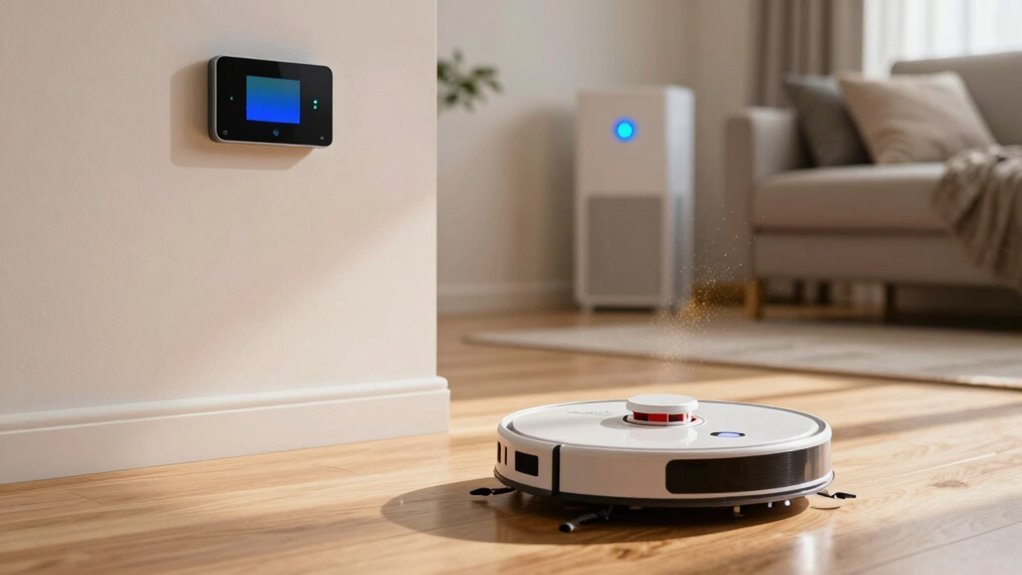
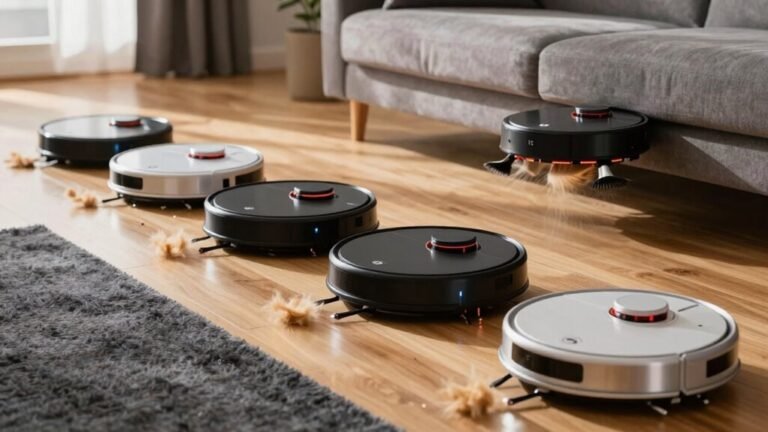
Do robot vacuums improve indoor air quality? While they aren’t air purifiers, robot vacuums do help enhance indoor air quality by regularly removing dust, pet dander, and allergens from floors and hard-to-reach areas.
A robot vacuum equipped with a true HEPA filter can capture 99.97% of particles as small as 0.3 microns. Sealed filtration systems further prevent trapped pollutants from escaping back into the air.
However, a robot vacuum with a clogged filter or full dustbin can stir up dust instead of removing it. For best results and improved indoor air quality, maintain the device properly and choose models designed for effective allergen capture.
Do Robot Vacuums Actually Clean the Air?
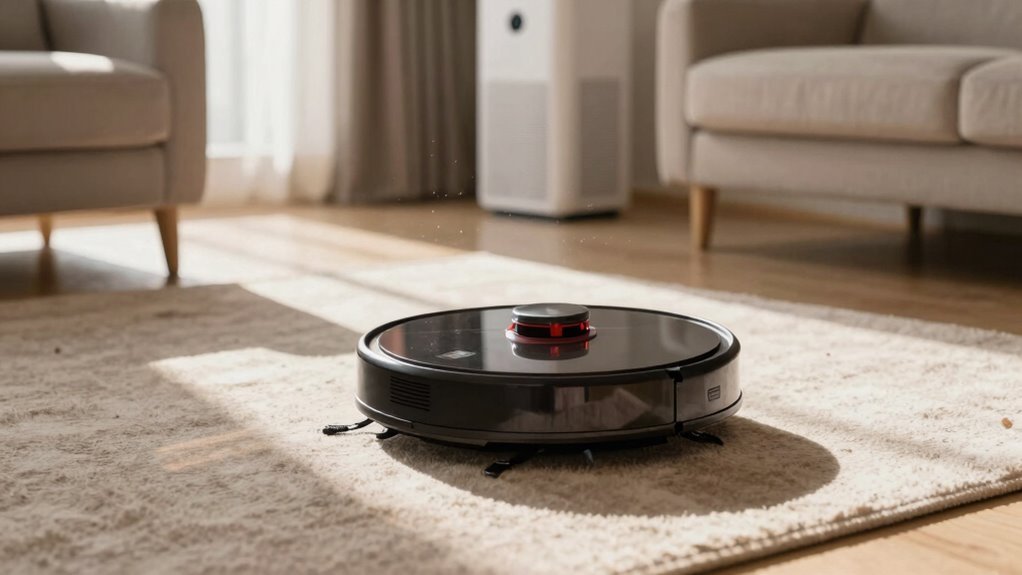
So, do robot vacuums actually clean the air, or are they just floor fans with a fancy job title?
Well, most standard models focus on crumbs and dust bunnies, not airborne junk.
They suck up settled gunk and trap it with filters, so tiny particles don’t puff back out—neat, right?
But they’re not zipping around clearing the whole room’s air like a real air pur irrator.
No CADR rating, no whole-room air swap.
Think of them as cleanup crew, not air knights.
That said, some smart new bots *do* purify, combining vacuuming with true HEPA air filtering.
These multitaskers actually slash indoor pollutants and even tackle smog.
So while your average robo-vac isn’t breathing for you—yet—some are stepping up, turning from floor jockeys into full-on air helpers.
Pretty cool upgrade, huh?
Recent studies show portable air cleaners with HEPA filters can reduce PM2.5 by up to 78.8% in primary rooms.
How Robot Vacuums Capture Dust and Allergens
You mightn’t think your pint-sized robot buddy does much for the air you breathe, but here’s the kicker—it’s quietly tackling the dust and allergens that *do* float into it.
With its low-slung body, it dives under furniture like a ninja, snatching up dust bunnies and pet dander you’d miss for weeks.
Spinning brushes sweep gunk from corners, while the main roller stirs up hidden junk from carpets so suction drags it away.
Powerful airflow keeps things moving through sealed paths straight into the bin—no escape!
Smart sensors help it double down on dirty spots, and daily runs stop dust from staging a comeback.
Even better, automatic emptying means less mess when you toss the bin.
It’s not magic, but it’s close—your robot’s basically a tiny, unstoppable cleanup crew, making your air a bit fresher one pass at a time.
Many models use HEPA filtration to trap fine particles and prevent them from recirculating back into the air.
The Role of HEPA Filters in Air Quality
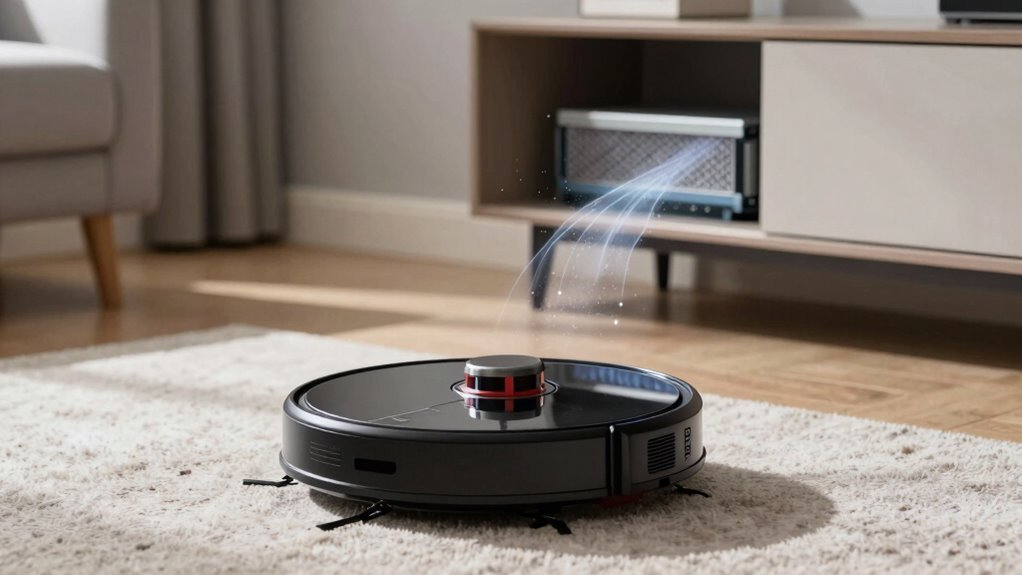
Ever wonder how a little robot zipping around your living room manages to make the air feel so much fresher? It’s all thanks to HEPA filters—the tiny but mighty heroes sucking up dust, pollen, and even some viruses. These filters trap 99.97% of particles as small as 0.3 microns, using clever tricks like interception and diffusion. You’re not just cleaning floors—you’re fighting allergens and breathing easier, especially if you’ve got pets or seasonal sniffles.
| Particle Type | Captured? | Benefit to You |
|---|---|---|
| Pollen | Yes | Fewer allergy attacks |
| Pet dander | Yes | Sneezing? Not today! |
| Mold spores | Yes | Healthier, mold-free air |
| PM2.5 pollution | Yes | Cleaner lungs, better sleep |
| Bacteria & viruses | Mostly | Lower sickness risk at home |
With a HEPA-powered robot, you’re not just tidy—you’re *truly* fresh.
When Robot Vacuums Spread Dust Instead
While your robot vacuum is busy zipping around like a tiny dust detective, it might actually be kicking up more mess than it catches—especially if it’s working with dirty brushes or a clogged filter.
Those spinning brushes? They’re great at loosening grime, but they can also send dust flying like a mini tornado.
And if the filter’s worn out or doesn’t fit right, yep—dirt sneaks right back into the air you breathe.
Even the way it zigs and zags can stir up settled particles, turning your clean floor into a dusty dance party.
Emptying the bin? That little puff of dust? That’s you inhaling yesterday’s allergens.
Side brushes, rapid turns, weak seals—so many sneaky ways your helper bot might be making things worse.
Comparing Filter Types: What Really Traps Pollutants
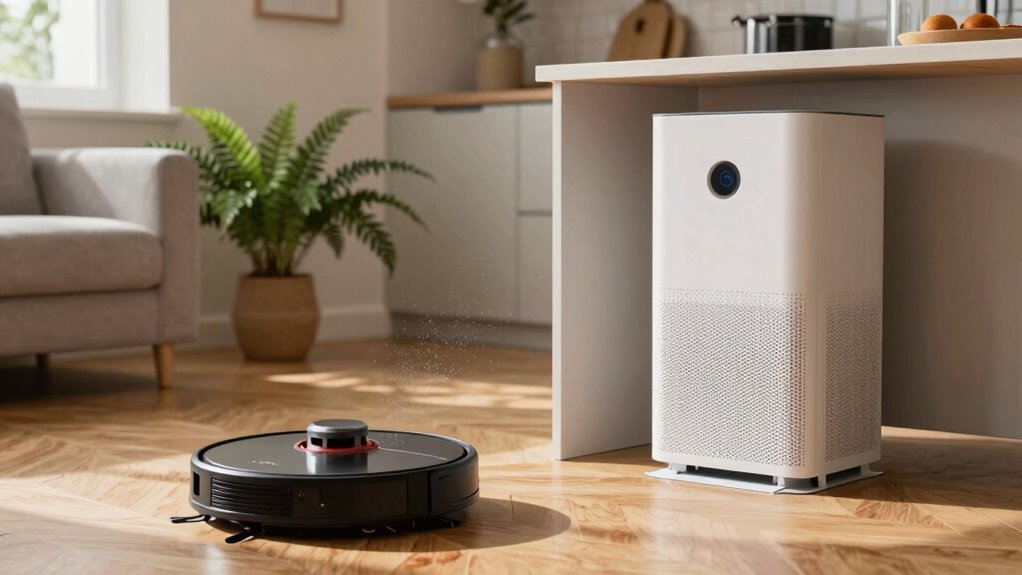
Though not all robot vacuums are built alike, the real magic happens in the filter—where dust and allergens meet their match.
If you’re eyeing a “HEPA-style” model, don’t be fooled—many only *look* the part.
Real HEPA filters (H13 or higher) trap 99.95% of tiny 0.3-micron particles, like pollen and smoke.
Standard filters? They catch only about 80%, leaving your air kinda fuzzy.
Micro-filters do better but still miss ultrafine gunk.
ULPA and S-class filters go even further, but they’re rare in robots—mostly overkill for your living room.
The key isn’t just the label, but build: thick, tightly pleated filters with legit grades keep dust locked in, not blowing back out.
Think of it like a bouncer at a club—only the best filters say “nope” to the tiniest troublemakers.
Maintenance Mistakes That Harm Air Quality
- Overfill the dust bin – it leaks mess back into your air and makes your bot work overtime.
- Forget filter care – a dirty filter blows more gunk out than it traps, yikes!
- Ignore tangled brushes and seals – they fling dust like confetti and let allergens sneak past.
- Run it in closed, stale rooms – no ventilation means you’re just stirring up a dust storm.
Fix these slip-ups and your robot will clean *for* you—not against you.
Can Robot Vacuums Help Allergy Sufferers?
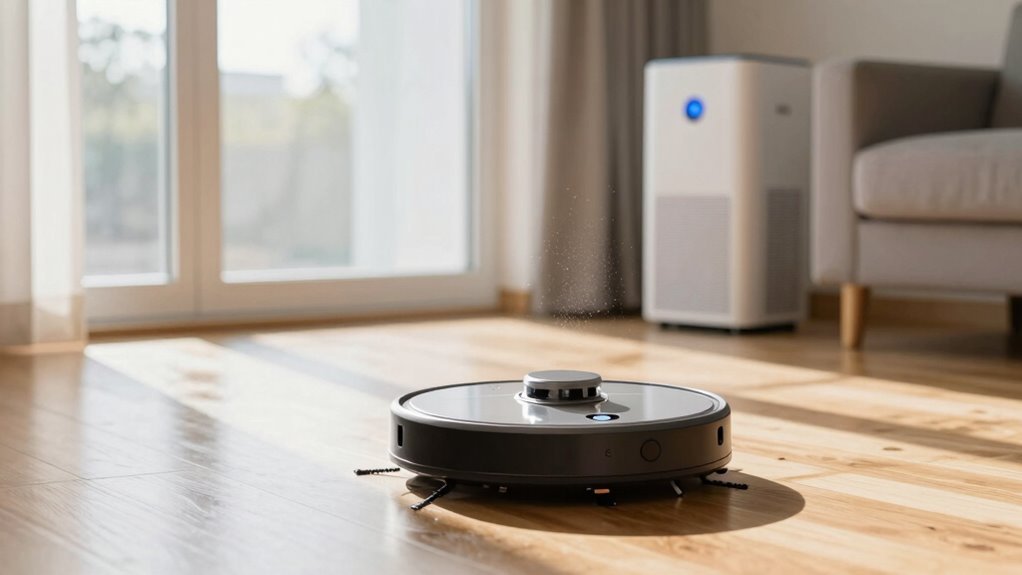
Ever wonder how something that zips around your living room like a tiny vacuum-powered racecar could actually help you breathe easier?
Well, it can!
Robot vacuums tackle dust mites, pet dander, and pollen—stuff that sneaks into carpets and under furniture where you can’t easily reach.
With strong suction and smart navigation, they clean high-traffic zones daily, slashing allergen buildup.
Models with HEPA filters trap 99.97% of tiny particles, so you’re not just moving dust around—you’re removing it.
Sealed systems and self-emptying bins?
Even better, since you won’t stir up dust clouds when emptying.
Daily cleaning means fewer allergens in your air, which translates to less sneezing, wheezing, and midnight sniffles.
Think of your robot as a 24/7 allergy ally—quiet, consistent, and weirdly dedicated to your comfort.
Who knew clean floors could feel this effortless?
How Often Should You Run Them for Cleaner Air?
How often should you send your robot vacuum on its next mission for cleaner air? Let’s get real—your little robo-helper isn’t just keeping floors tidy, it’s actually cutting down on dust and allergens that float around and mess with your breathing.
For most homes, running it 3–4 times a week does the trick.
But hey, if you’ve got pets shedding like it’s their job or kids tracking in crumbs from every adventure, you’ll want to bump that up—maybe even go daily.
- Run it 3–4 times weekly for high-traffic areas like kitchens and living rooms.
- Switch to daily if you’ve got pets, allergies, or live near dusty streets.
- Stick to 2 times a week for low-drama spaces—small apartments, no pets, minimal mess.
- Schedule cleanings when rooms are empty—like during work or sleep—to trap dust before it flies everywhere.
Your air will thank you!
Choosing a Model That Truly Improves Indoor Air
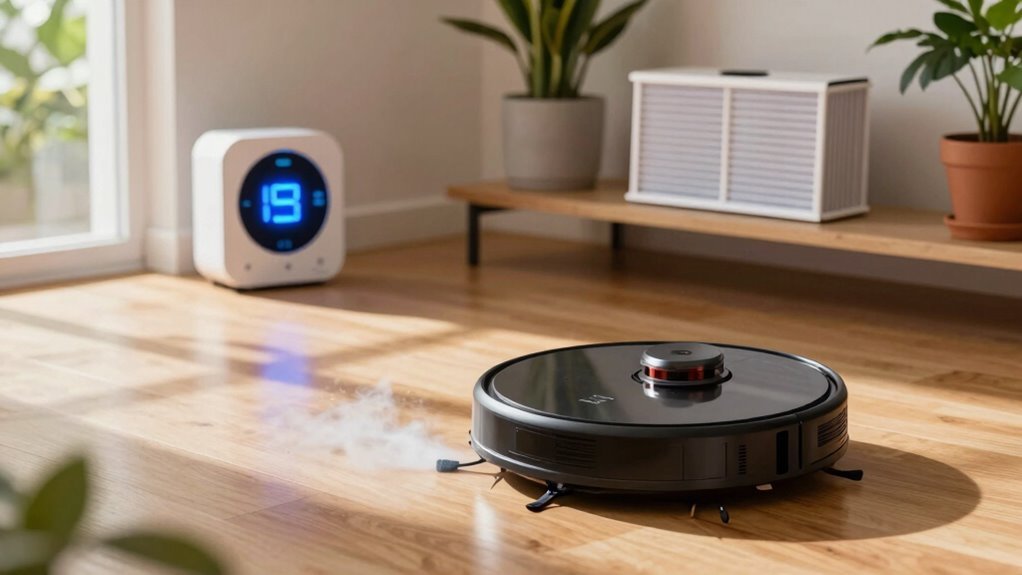
You’ve got your cleaning schedule down—running your robot vacuum a few times a week or even daily depending on how chaotic life gets—so now let’s make sure that hardworking little buddy is actually up to the job of cleaning *smart*, not just busy.
Look for models with strong suction (think 10,000+ Pa) so it can actually grab dust instead of just pushing it around like a lazy mailroom clerk.
A good HEPA-style filter is a must—it traps allergens, not just dust bunnies and forgotten crumbs.
If you’ve got pets, pick one that tackles long hair like a pro; nobody wants a hairy vacuum meltdown.
And don’t skip the auto-empty dock—it’s like a trash chute for your floors, keeping dust out of the air.
Models with smart mapping won’t ghost half your rooms, ensuring every corner gets love.
Pick right, and your vacuum won’t just spin in circles—it’ll actually help you breathe easier.
Frequently Asked Questions
Do Robot Vacuums Work on Carpets?
Yeah, robot vacuums work on carpets, especially low- to medium-pile ones.
They boost suction when they hit carpet, grab dust and pet hair, and glide over smooth surfaces like champs.
Just don’t toss them onto shag rugs—they’ll freak out and get stuck.
Think of them as your carpet’s daily buddy, not its deep-cleaning therapy.
They’re smart, tidy, and kinda adorable when they don’t give up!
Can They Clean Under Furniture?
You bet they can clean under furniture—those sneaky little robots slip under beds and sofas like ninjas!
With heights under 8 cm, they dodge dust bunnies hiding where you can’t even reach.
Retractable sensors let them duck under tight spots, then pop up to keep rolling.
Who knew your floor had secrets?
They vacuum crumbs, pet hair, and mystery fuzz so you don’t have to army-crawl with a flashlight.
Tiny heroes, big clean!
Are They Noisy During Operation?
Yeah, they’re pretty quiet—way quieter than your old clunky vacuum.
Most hum along at 55–65 dB, like a murmuring chat or soft TV, so you can talk, watch, or work without yelling over it.
Some even whisper at 60 dB, sneaky-quiet for naptime or Zoom calls.
Sure, they crank up the noise on max mode, but hey, no robot’s perfect.
At least it’s not singing opera at 80 dB like grandpa’s vacuum!
Do They Need Wi-Fi to Function?
You don’t need Wi-Fi for your robot vacuum to clean—honest!
It’ll still start, stop, and scoot around the room without it.
But skip the Wi-Fi, and you’ll miss cool extras like remote control, scheduling, or telling it to avoid the dog’s chew toy.
Think of Wi-Fi as the cherry on top, not the sundae.
No net? No problem—your robot’s got basic moves covered!
How Long Do Their Batteries Last?
Your robot vacuum’s battery typically lasts 2–5 years, or about 300–500 charges, before it’s tired of life and needs replacing.
You’ll get 60–90 minutes of cleaning per charge, with top models going longer.
Keep it charged between 20% and 80%, avoid full drains, and it’ll stay strong.
Treat it right, and it’ll keep your floors fancy and free of fuzz for years!
Conclusion
You’re right on track when you run your robot vacuum regularly—it really does help clean the air, especially with a HEPA filter onboard. Just remember, a dirty bot spreads dust, so empty it often. Think of it like watering a plant: consistency matters! You wouldn’t skip it and expect blooms, would you? Keep your robo-helper in tip-top shape, and you’ll breathe easier—clever little machine, huh?
References
- https://pmc.ncbi.nlm.nih.gov/articles/PMC8530773/
- https://aaqr.org/articles/aaqr-23-08-oa-0202
- https://www.irjet.net/archives/V8/i10/IRJET-V8I1089.pdf
- https://www.skyquestt.com/report/robotic-air-purifier-market
- https://www.einfochips.com/blog/whats-next-for-robotic-cleaning-predictions-based-on-current-rd-trend/
- https://arxiv.org/pdf/2508.02947
- https://dl.acm.org/doi/10.1145/2814940.2815003
- https://www.technavio.com/report/robotic-air-purifier-market-industry-analysis
- https://ca.narwal.com/blogs/product/how-robot-vacuums-reduce-allergens
- https://www.ecovacs.com/uk/blog/dusting-robots-versus-traditional-dusting-methods-against-allergy