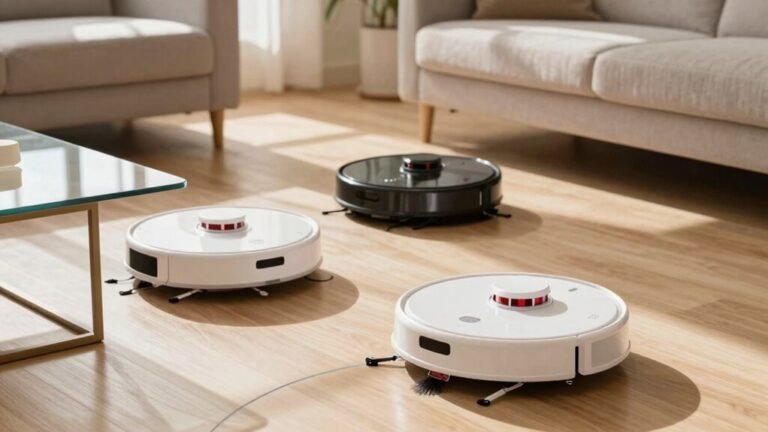
Do Robot Vacuums Use a Lot of Electricity?
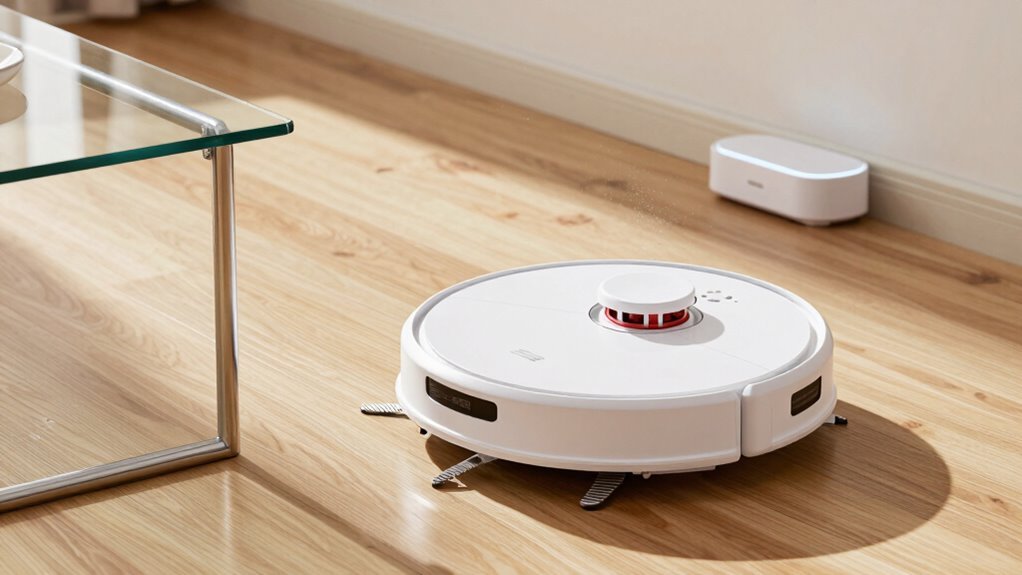
Robot vacuums use very little electricity, typically consuming between 30–100 watts—comparable to a coffee maker on standby. This low energy use means they won’t significantly impact your electric bill.
Running a robot vacuum daily costs just pennies, making it far more efficient than traditional vacuums or appliances like your fridge. They’re designed to be smart and energy-efficient, often returning to charge and resuming only when needed.
With features like eco mode and scheduled cleaning, robot vacuums maximize efficiency. Proper maintenance also ensures they clean effectively without wasting power, optimizing both performance and energy use.
Do Robot Vacuums Use a Lot of Electricity?
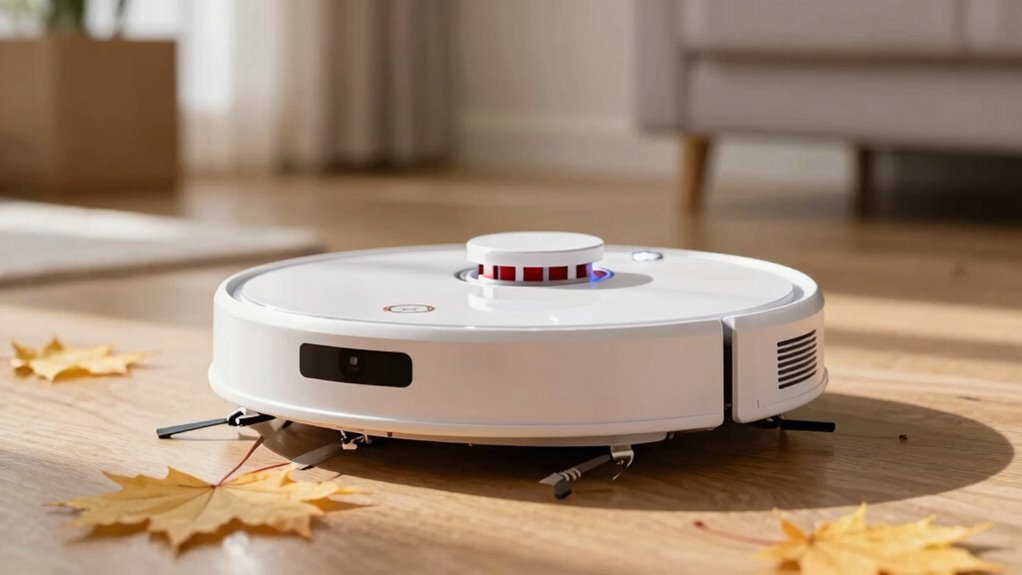
Ever wonder if your robot vacuum is secretly inflating your electric bill? Good news—it’s not.
You’re looking at just 15–50 kWh per year, a tiny blip compared to your fridge’s 600 kWh or the thousands your AC might gulp down.
Even if you run it daily, we’re talking a few dollars annually, not a fortune.
It’s like leaving a light bulb on—hardly a power hog.
Compared to traditional vacuums, which guzzle 5 to 25 times more energy, your little robo-helper is a total efficiency champ.
Sure, cranking up max mode or cleaning a maze-like home adds some juice, but overall, it’s a minor player in your home’s energy scene.
Utilities barely notice it, and neither should you.
So relax—your robot isn’t draining your wallet, just your dust bunnies.
Who knew clean floors could be this guilt-free?
Some models, like the Narwal Freo X Ultra, use as little as 65W maximum output power, maintaining strong performance while staying energy-efficient.
How Much Power Does a Robot Vacuum Use?
How much juice does your little cleaning sidekick actually sip while zipping around the living room? Not much!
Most robot vacuums use between 30–100 watts while cleaning, with many snugly running at 60–100 watts—think of it as less than a bright lightbulb.
If yours runs for an hour, it’ll gulp about 0.06 kWh, costing just pennies.
At 2 hours a day, you’re looking at roughly 48 kWh a year—still way under a single room’s AC unit.
Eco mode sips even less, around 40–50 watts, while turbo mode might guzzle a bit more.
Fancy sensors and mapping add a whisper of extra draw, but nothing wild.
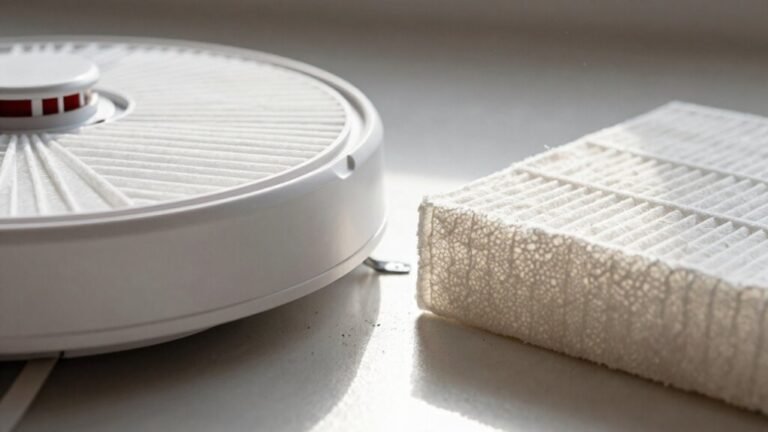
And don’t forget: cleaning its filter keeps it running efficiently, so it doesn’t waste energy wheezing like a tired turtle.
Charge it daily? No sweat—most batteries are only about 50 Wh.
Bottom line: your robo-cleaner’s power habit? Cute, not crazy.
Battery capacity directly impacts how long it can clean before recharging, with larger battery capacity models requiring more energy over time.
How Does a Robot Vacuum Compare to a Traditional Vacuum?
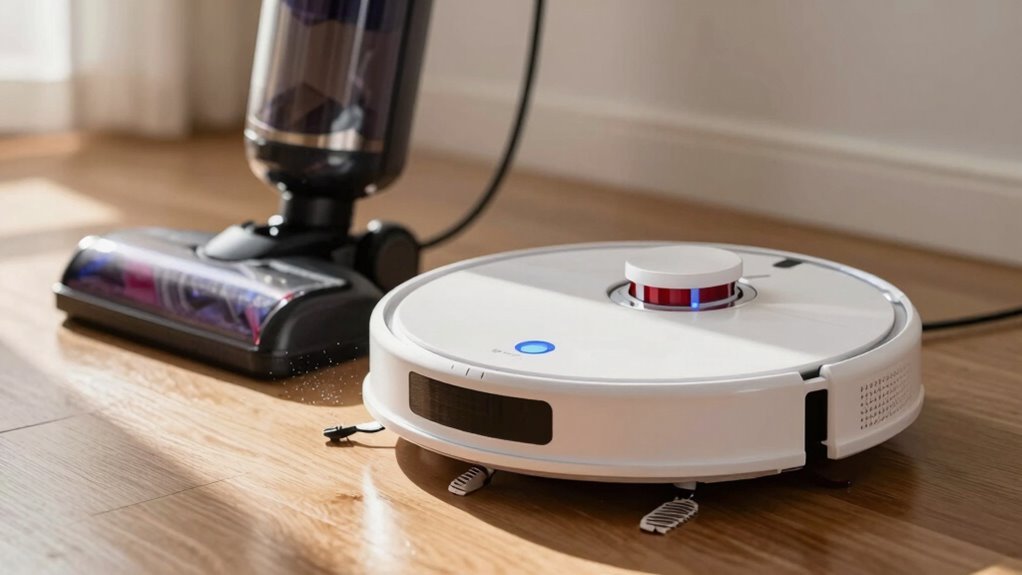
You’ve seen how little electricity your robot vacuum actually chugs while doing laps around the living room — barely more than a lamp — so now let’s stack it up against the ol’ muscle-bound vacuum in the closet.
Sure, that upright packs way more suction and tackles deep carpet grime like a champ, but it guzzles 5 to 25 times more power per hour.
Your robot sips energy, runs autonomously, and keeps floors tidy daily with zero effort from you — plus it sneaks under furniture like a tiny cleaning ninja.
It won’t replace deep cleaning, though — most people still use both.
The robot handles crumbs and dust between manual sessions, saving you time and keeping things consistently clean.
While it might nudge total energy use up slightly if you keep both, the convenience? Totally worth it.
Think of it as your cleaning sidekick, not the full cleanup crew.
How Long Do Robot Vacuums Run on a Single Charge?
What’s the magic number when it comes to how long your robot vacuum can party on a single charge? Most run 60 to 120 minutes, with mid-range models hitting that sweet spot of 90–150 minutes. Fancy models like the Narwal Freo X Plus can go nonstop for up to 254 minutes—yes, over four hours!
But don’t forget, real-world action shortens the clock. Thick carpets, turbo suction, or a maze of furniture makes your bot work harder and drain faster.
A clean filter and well-maintained brushes help it glide longer, while aging batteries lose steam over time.
On a full charge, many bots tackle small to medium homes in one go. Bigger spaces? Some cleverly dock, recharge, then jump back to finish the job.
Do Charging Habits Affect Electricity Use?
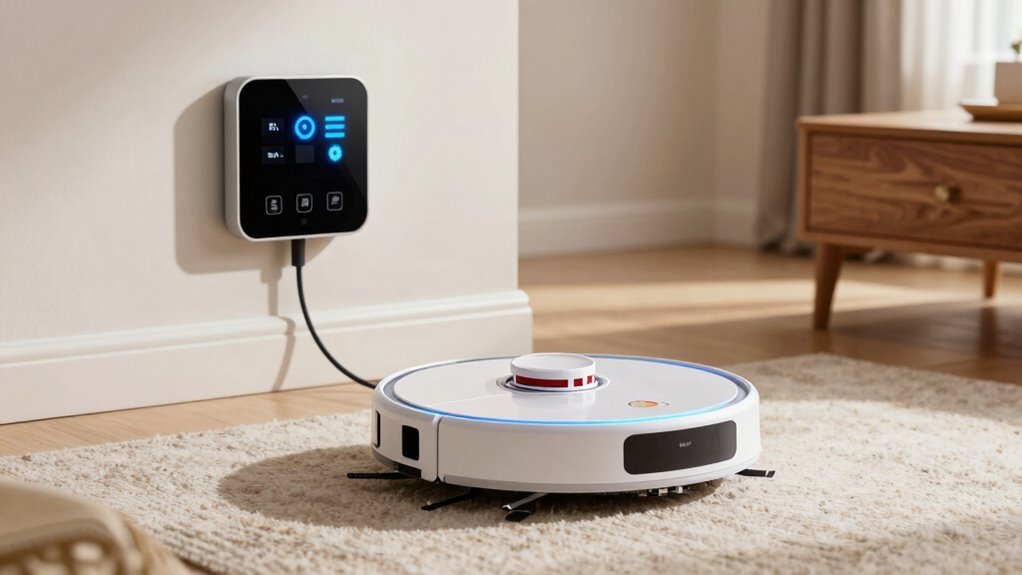
Ever wonder if your robot vacuum’s充电 habits are secretly hiking your electric bill? They might!
Charging it daily adds up—even small top-ups use energy, and more cycles mean more juice over time.
Running multiple short cleanings means more docking, more charging, and a bit more cost.
Letting it run until it’s totally drained? That leads to deeper recharges and more power used.
And if it’s always plugged in, the dock might still sip power, even when idle.
But here’s the good news: smart charging stops when full, and unplugging the dock now and then saves energy without skipping a beat.
Keeping your bot’s battery healthy also helps it clean longer with less power.
Think of it like a morning coffee—better to top off than drain and crash!
Tiny habits make a bright difference.
Do Energy Star Ratings Save Power on Robot Vacuums?
Robot vacuums sip electricity instead of gulping it, and that’s where Energy Star ratings start to matter.
You’ll love how these smart little cleaners use only 30–100 watts—way less than your old-school vacuum’s 1,400-watt gulp.
While Energy Star doesn’t yet have a specific label for robot vacuums, the same efficiency rules apply: smarter motors, sleeker airflow, and less wasted power. They zip around with brushless efficiency, tweak suction on hard floors, and avoid messy reruns thanks to clever navigation.
You’re not just saving energy—you’re dodging dust bunnies with tech that works smarter, not harder. Plus, eco modes and auto-shutoffs keep things lean. Think of it like upgrading from a gas-guzzler to a hybrid, but for your floors.
How Much Does It Cost to Run a Robot Vacuum?
How much are you really spending to keep your floors spotless with a robot vacuum?
Not much—probably less than your morning coffee.
Most models use just 60–100 watts, similar to a light bulb, and cost only about $0.01 per cleaning run.
If you run it daily, you’re looking at roughly $2.75 to $8.33 a year, depending on the model.
Even fancy bots with auto-empty docks sip electricity, staying under $1 a month.
Charging and standby power add a tiny bit, but nothing wild.
Compared to a 1,200-watt upright vacuum, your robot’s a total energy lightweight—using 5 to 25 times less power.
Think of it this way: you’d spend way more leaving a ceiling fan on all day.
So go ahead, let it roam.
Your wallet won’t even notice.
Clean floors *and* low costs? Now that’s smart.
Can Scheduling Save Energy and Money?
You’re already saving dough just by using a robot vacuum instead of lugging out the old upright, but here’s the fun part—you can trim that energy bill even more with a little smart scheduling. Hit clean right after dinner or the kids’ playtime, and your bot won’t waste time (or watts) on repeat passes. Focus on high-traffic zones, skip daily whole-house sweeps, and let eco mode handle light days—your floors stay fresh, and your energy use drops.
| Strategy | Energy Saved | Extra Perk |
|---|---|---|
| Off-peak runs | ~20% per session | Cheaper kWh rates |
| Room-by-room | ~30% weekly | Less runtime |
| Eco mode scheduling | ~15% per clean | Quieter operation |
Schedule smart, clean smarter—and laugh all the way to the lower bill.
How Does Battery Life Affect Long-Term Energy Use?
Ever wonder why your robot vacuum seems to plug in more often than it used to? As its battery ages, it holds less charge—runtime drops from 100 minutes to maybe 45, so it needs more top-ups to finish the same job.
That means more charging cycles and slightly higher electricity use over time. A fresh, high-capacity battery powers longer cleanings with fewer interruptions, cutting energy wasted on repeated starts and docks.
Smart navigation helps too, reducing overlap so you get more floor done per kWh. But as the battery degrades, energy per square meter creeps up—those short runs still use power for startup and scanning.
Poor charging habits, like always draining it fully, speed up wear. Treat your vac’s battery right—partial charges and regular maintenance keep it efficient, saving energy (and your sanity) in the long run. Think of it as keeping your tiny robo-rover in peak racing form!
How Can You Reduce Your Robot Vacuum’s Energy Use?
What if your robot vacuum could do its job using less power—without cutting corners on clean? You can make it happen!
Schedule cleanings every other day instead of daily, and let it focus on messy zones instead of the whole house.
Use eco mode—your floors aren’t always a disaster, right?
Keep brushes and filters clean so it doesn’t work like it’s running a marathon.
Empty the bin regularly, and clear cords and clutter to avoid awkward robot tumbles and endless loop-driving.
Place the dock in the open, not wedged behind the couch, so it can find its way home without drama.
Set up no-go zones for spots it doesn’t need to haunt.
And hey, let it nap in between jobs—constant cleaning isn’t a flex.
With a few smart tweaks, you’ll save energy, extend the battery life, and still enjoy a crumb-free floor.
Win-win!
Frequently Asked Questions
Do Robot Vacuums Work on Dark Carpets?
Yes, they do work on dark carpets, and you don’t need to panic every time Fluffy sheds on the black rug.
Most robot vacuums handle dark surfaces just fine now, thanks to improved sensors that don’t freak out over low light reflection.
Sure, older models might’ve thought every dark carpet was a cliff, but today’s smart bots know the difference.
Just keep the wheels clean and let your robo-pal do its job—no drama, no falling off the edge (literally).
Can Robot Vacuums Clean Pet Hair Effectively?
Robot vacuums tackle pet hair like tiny cleaning ninjas, especially on hard floors where hair can’t hide.
On carpets, they’re pretty good—some even grab embedded fur without tangling.
Models with rubber brushes and boost mode? Superstars.
Just don’t expect magic on shag rugs.
Think of them as your fur-fighting sidekick, not a superhero.
They’ll keep things *mostly* fur-free—without chasing the vacuum.
Are Robot Vacuums Safe Around Small Children?
Yes, robot vacuums are generally safe around small children—you’ve got more to worry about from rogue LEGOs than your robo-cleaner!
They’ve got bump sensors, soft edges, and stop before causing harm.
Sure, little toes might get nipped, and curious fingers near brushes should be watched, but overall, they’re gentle.
Just supervise tummy-time meetups, keep cords tidy, and you’ll all get along just fine—honestly, the dog’s probably more annoyed.
Do Robot Vacuums Detect Stairs and Avoid Falls?
Yes, your robot vacuum’s got smarts—it won’t take a nosedive down the stairs!
Tiny cliff sensors on the bottom shoot out invisible beams, and when they don’t bounce back, the robot knows there’s a drop.
It stops, backs up, and zips off in another direction.
It’s like a mini explorer dodging robot-sized cliffs, keeping your floors clean without the drama of a tumble.
Clever, right?
Can Robot Vacuums Clean Multiple Rooms Automatically?
Yes, you can totally set your robot vacuum to clean multiple rooms automatically—it’s like sending a tiny, enthusiastic helper on a cleaning adventure!
Once it maps your space, it zips between rooms, remembers where everything is, and won’t miss spots (unless you leave a sock mountain).
With smart navigation and auto-resume, it even recharges itself and picks up right where it left off.
Just keep doors open and thresholds low, and let the little guy do his thing!
Conclusion
You’d be surprised—running your robot vacuum is like leaving a lightbulb on for 30 minutes. My buddy once forgot his Roomba charging overnight, only to realize it used less power than brewing two cups of coffee! These little helpers sip electricity, not gulp it. So go ahead, schedule that daily clean—your bill won’t blink, and your floors will shine like a disco ball at a tiny dance party.
References
- https://us.narwal.com/blogs/product/robot-vacuum-consume-power
- https://www.ecoflow.com/us/blog/how-much-electricity-does-robot-vacuum-consume
- https://www.ecovacs.com/us/blog/do-vacuum-robots-use-lots-of-electricity
- https://www.hoover-home.com/en_GB/blogs/news/how-much-electricity-does-a-robot-vacuum-use-1
- https://www.electricireland.ie/residential/news/detail/how-much-electricity-does-your-robot-vacuum-consume
- https://www.aceee.org/files/proceedings/2017/data/polopoly_fs/1.3687904.1501159084!/fileserver/file/790278/filename/0036_0053_000029.pdf
- https://www.tpcdb.com/list.php?type=41
- https://us.3itech.com/blogs/news/how-much-power-does-a-robot-vacuum-use
- https://www.jackery.com/blogs/knowledge/how-many-watts-does-a-vacuum-use
- https://blog.constellation.com/2020/09/15/roomba-upright-vacuum-energy-usage/