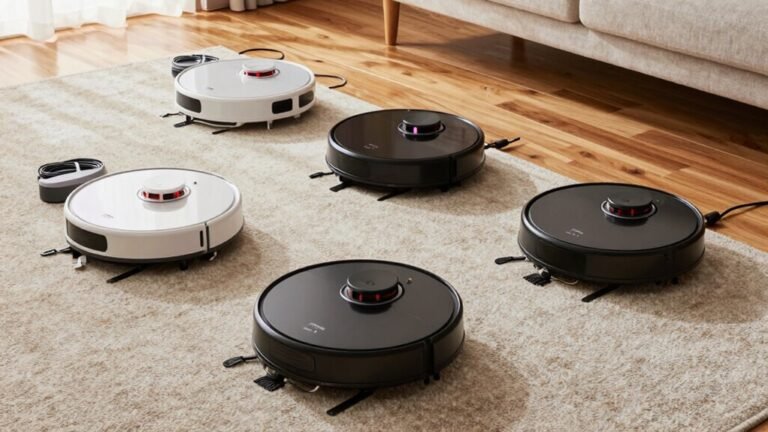
5 Best Robot Mops That Tackle Dried Stains Without Breaking a Sweat
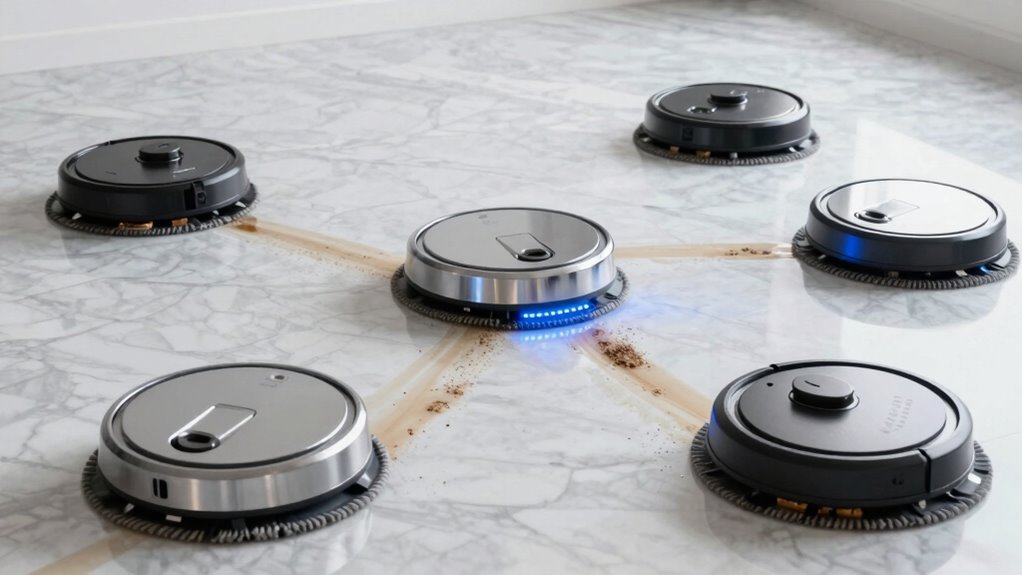
You wipe, you scrub, you repeat—yet dried-on spills still mock your efforts.
Sound familiar?
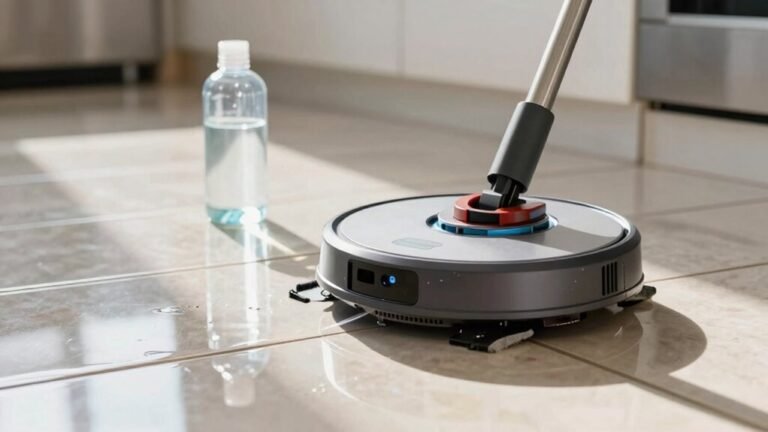
Robot mops now tackle what string mops and elbow grease often can’t, lifting crusty coffee rings, sticky juice patches, and tracked-in grime with precision and consistency.
Some of the best robot mops boast 4500Pa suction, while others feature 18,000 RPM scrubbing pads to handle stubborn messes.
These powerful machines deliver clean floors without requiring daily babysitting, making them ideal for busy households.
| Robot Vacuum & Mop Combo | Best for Pet Owners | Suction Power: 2000Pa | Cleaning Modes: Auto, Zigzag, Spot, Edge | Water Tank Capacity: Separate water tank (no volume specified) | VIEW LATEST PRICE | Read Our Analysis | |
| ZCWA Robot Vacuum and Mop Combo | Top Budget Pick | Suction Power: 游戏副本?00Pa | Cleaning Modes: Auto, Spot, Edge, Zig-zag | Water Tank Capacity: 230mL | VIEW LATEST PRICE | Read Our Analysis | |
| Roborock Floor Cleaning Solution 16.2 FL OZ | Essential Cleaning Upgrade | Suction Power: N/A | Cleaning Modes: N/A | Water Tank Capacity: N/A | VIEW LATEST PRICE | Read Our Analysis | |
| Robot Vacuum & Mop 4500Pa Suction Black | High-Power Performer | Suction Power: 4500Pa | Cleaning Modes: Not explicitly listed | Water Tank Capacity: 180mL | VIEW LATEST PRICE | Read Our Analysis | |
| eufy Omni C20 Robot Vacuum & Mop | Most Convenient Option | Suction Power: 7000Pa | Cleaning Modes: Dual sweeping and mopping (simultaneous) | Water Tank Capacity: N/A | VIEW LATEST PRICE | Read Our Analysis |
More Details on Our Top Picks
Robot Vacuum & Mop Combo
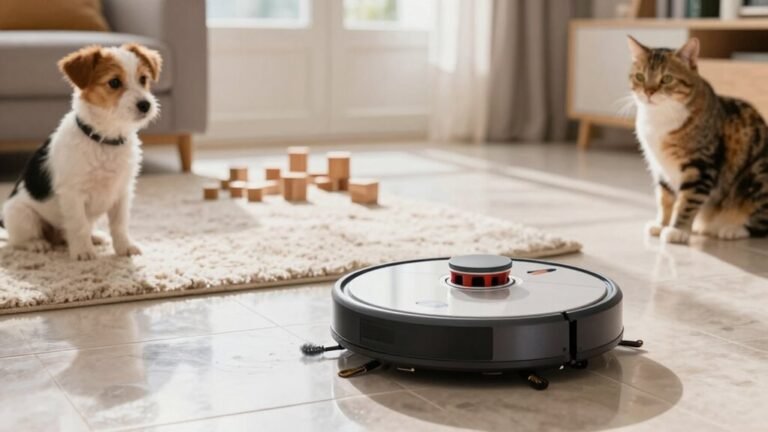
If you’re the type who’d rather skip Sunday chore marathons—let’s be honest, who isn’t?—then this robot vacuum and mop combo is tailor-made for your lifestyle, especially if you’ve got pets, hardwood, or a thing for spotless baseboards.
You’ll love how the T7S handles both dry debris and wet messes with separate tanks—no cross-contamination—while 2000Pa suction power obliterates pet hair, dust, and crumbs across up to 1937 ft².
It runs 180 minutes on quiet mode, drops to 100 on max, and automatically docks when battery dips below 20%. With edge, spot, zigzag, and auto modes—all switchable via app or voice—you’re covered whether you’re lounging on the couch or commanding via Google Assistant.
- Suction Power:2000Pa
- Cleaning Modes:Auto, Zigzag, Spot, Edge
- Water Tank Capacity:Separate water tank (no volume specified)
- Control Method:App, remote, voice (Google Assistant)
- Floor Compatibility:All hard floors
- App Connectivity:Tuya Smart App, 2.4G WiFi, Bluetooth
- Additional Feature:15 infrared sensors for precision
- Additional Feature:Slim 2.90-inch design
- Additional Feature:Hair-friendly air intake
ZCWA Robot Vacuum and Mop Combo
The ZCWA Robot Vacuum and Mop Combo stands out for pet owners and households with mixed hard flooring—think laminate, ceramic, granite, or parquet—who want reliable 2-in-1 cleaning without constant hair tangles. You get 2300Pa suction and a 230mL water tank, so dry debris and dried spills vanish efficiently—especially in Zig-zag mode, which boosts coverage by 30%.
Its brushless design means pet hair won’t clog the motor, and the 2.87-inch slim body sneaks under furniture like it’s on a mission. With Tuya App control, 2.4GHz Wi-Fi, and Google Assistant support, you’re covered—though no Alexa, huh? It’s smart, not that smart.
- Suction Power:游戏副本?00Pa
- Cleaning Modes:Auto, Spot, Edge, Zig-zag
- Water Tank Capacity:230mL
- Control Method:App, remote, voice (Google Assistant)
- Floor Compatibility:Laminate, ceramic, granite, parquet, hard floors
- App Connectivity:Tuya Smart App, 2.4GHz WiFi
- Additional Feature:Brushless suction port
- Additional Feature:2.87-inch ultra-slim profile
- Additional Feature:Zig-zag mode for coverage
Roborock Floor Cleaning Solution 16.2 FL OZ
You’re already investing in a Roborock with mopping—so why cut corners with just any cleaner? The Roborock Floor Cleaning Solution (16.2 FL OZ) is engineered to maximize your device’s performance.
This official formula, with its 1:200 dilution ratio, tackles grime, dust, sticky spills, and dried messes without harshness. It penetrates surfaces while preserving finishes.
It’s safe for hardwood, laminate, vinyl, and ceramic tile. Plus, it’s compatible with all Roborock mopping bots (S7, S8, Q7, Q10, F25 Series, Dyad, and more).
Gentle enough for homes with kids and pets, yet strong enough for daily messes. It’s not magic—just smart chemistry doing its job, quietly.
- Suction Power:N/A
- Cleaning Modes:N/A
- Water Tank Capacity:N/A
- Control Method:N/A
- Floor Compatibility:Hardwood, vinyl, ceramic tile, laminate, more
- App Connectivity:N/A
- Additional Feature:Dilution ratio 1:200
- Additional Feature:Safe for kids and pets
- Additional Feature:Preserves surface finishes
Robot Vacuum & Mop 4500Pa Suction Black
What if your daily clean could handle pet hair, coffee spills, and hidden dust bunnies without you lifting a finger—could a single robot really manage it all? You’re in luck: the Robot Vacuum & Mop 4500Pa Suction Black tackles messes with 4500Pa triple-stage suction (and a 18,000 RPM fan) while staying under 70dB—quiet enough for TV time.
It vacuums and mops in one go, using a 180ml water tank and fine-weave pad that handles coffee or juice spills with ease. With 350ml dust capacity, a brushless design to resist tangles, and a 70mm side brush, it captures fine dust, pet hair, and debris—even under sofas (thanks to its 78mm low profile).
Dual H11 HEPA filters trap pollen and dander, making it ideal for allergy sufferers. Between app control, voice commands, and one-touch start via remote, operation couldn’t be easier.
It’s smart, self-recharging, avoids drops, and navigates thresholds up to 15mm—so it works across tile, hardwood, or low-pile carpet without missing spots. Though tight corners might need a follow-up, it covers 95% of messes with surprising precision.
While it’s not flawless—dried-on stains may need pre-treatment—it consistently delivers strong performance for everyday cleaning tasks.
- Suction Power:4500Pa
- Cleaning Modes:Not explicitly listed
- Water Tank Capacity:180mL
- Control Method:App, remote, voice
- Floor Compatibility:All floor types
- App Connectivity:Tuya WiFi/Bluetooth
- Additional Feature:4500Pa triple-stage suction
- Additional Feature:H11 HEPA filter
- Additional Feature:Deodorizing structure included
eufy Omni C20 Robot Vacuum & Mop
Seek a robot mop that handles the full chore cycle without daily input? The eufy Omni C 20’s all-in-one station auto-empties, washes, and dries the mop using room-temperature air—so you’re not wiping it down after every run.
With 7,000 Pa suction, it crushes crumbs, debris, and pet hair, while the rolling brush and side brush team up for full-edge cleaning. You can run dual sweeping and mopping simultaneously via app.
Mop Master Technology delivers 180 rpm with 6N pressure to lift dried stains. The Pro-Detangle Comb reverses roller rotation and flips down to shed hair—cutting maintenance time.
It only supports 2.4 GHz Wi-Fi and works best on hard floors, not thick rugs. At just 3.35 inches tall, it slides under beds and desks effortlessly.
Performance varies with dust levels and floor types. It’s a solid pick if you want hands-free cleaning with transparent tanks for easy water monitoring.
Remember to plug in the right regional voltage (110V recommended) and don’t expect 5 GHz compatibility.
- Suction Power:7000Pa
- Cleaning Modes:Dual sweeping and mopping (simultaneous)
- Water Tank Capacity:N/A
- Control Method:App (implied), all-in-one station
- Floor Compatibility:All floor types (implied by use cases)
- App Connectivity:App (implied), 2.4GHz WiFi only
- Additional Feature:All-in-One Station included
- Additional Feature:Mop drying with room-temperature air
- Additional Feature:Pro-Detangle Comb technology
Factors to Consider When Choosing Robot Mops for Dried Stains
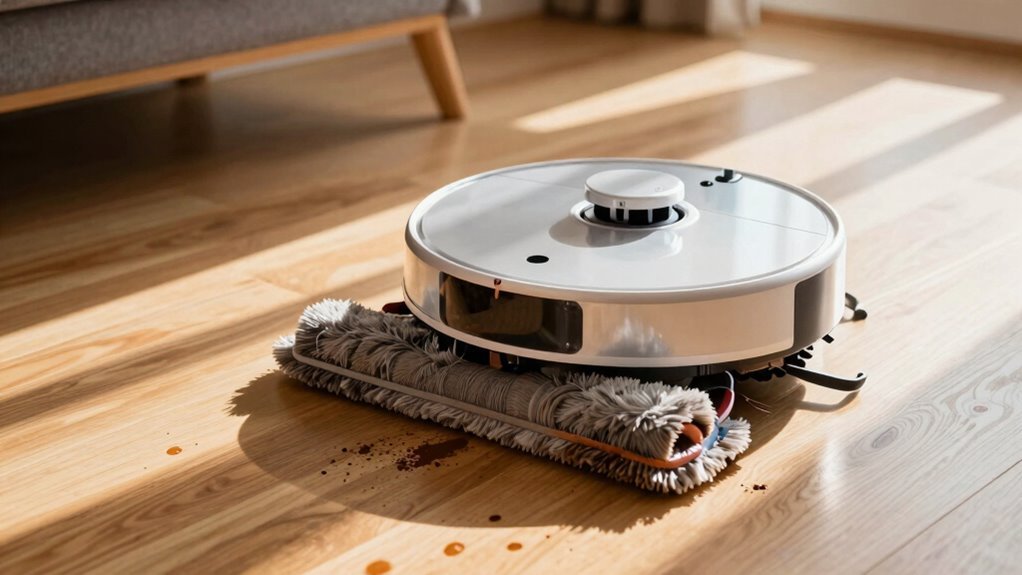
You’ll want to weigh suction power—think 2,000+ Pa—since dried stains often cling stubbornly to floors, and without enough pull, you’re basically pushing gunk around like a toddler with a toy broom. Mopping tech matters too: do you go ultrasonic, vibrating, or good ol’ scrubbing pads, each with trade-offs in scrub time (15–30 mins) and water use (60–120 mL)? And let’s be real, what good’s a huge water tank if the brushes won’t agitate the grime or the robot misses half the room—navigation flaws can turn a “smart” mop into a very expensive paperweight.
Suction Power Strength
How’s your robot mop handling that crusted-on spaghetti sauce from last night’s disaster dinner? If it’s struggling, suction power—measured in pascals (Pa)—might be the culprit.
You’ll want at least 1600–3000Pa for moderate messes, but for dried gunk and pet hair, models hitting 7000Pa deliver serious lift. High-end units often use multi-stage or boosted suction systems, paired with fans spinning near 18,000 RPM, to maintain airflow and pull in debris aggressively.
But don’t just chase big numbers—extremely strong suction can clog brushes or strain filters if the design’s not balanced. Look for smart airflow channels and durable brush layouts that support that power.
After all, what good is 7000Pa if dust bogs down the system in five minutes? A well-engineered combo of suction, filtration, and mechanics keeps performance steady without constant cleaning.
Mopping Technology Type
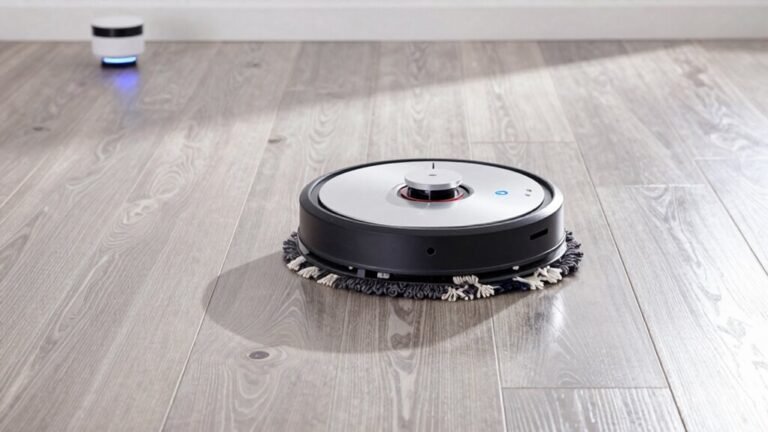
A robot mop’s real test isn’t in gliding over clean floors—it’s in tackling yesterday’s coffee spill or that dried pancake batter stuck near the baseboard. You need a system that delivers consistent moisture through a dedicated water tank—usually 180 to 230 mL—feeding a microfiber mop pad while simultaneously vacuuming debris with spinning brushes.
This combo lets you clean dry crumbs and sticky residues in one go, which is smart, right? But here’s the catch: without proper moisture control, you’re either scrubbing with a Sahara-dry pad or soaking your hardwoods.
Look for models with precision seepage tech or smart dampness settings—some even lift the mop pad when switching to carpet. And let’s be real: leaving a damp pad in a dark corner invites mold (yuck).
That’s why some robots now include drying stations or auto-lift features—because nobody’s got time for mildew drama.
Water Tank Capacity
Water tank capacity plays a decisive role when tackling set-in messes like dried coffee rings or pancake goo clinging to baseboards. Models with a 230 mL reservoir let you mop for up to 90 minutes on a single fill, giving larger areas the sustained damp contact needed to loosen stubborn residues.
You’ll appreciate fewer interruptions, especially if your floors sprawl over 1,000 square feet. Though smaller 180 mL tanks might leave you refilling mid-job—annoying, right?
Dual-tank systems (separate water and dust) are smart, keeping your mop consistently damp without mixing debris back in. This helps when battling dried grime.
But ask yourself: do you really need maximum capacity if your robot can’t slide under the couch? Larger tanks add bulk and weight, potentially limiting access.
Balance is key—more water means longer runtime, sure, but not at the cost of maneuverability. Choose wisely, not just big.
Brush Design Efficiency
That rolling main brush flanked by side brushes isn’t just for show—it’s your first line of defense against dried pancake batter wedged near the oven or coffee spills hardened along baseboards. It generates the kind of wide-contact scrubbing action, with up to 30% more surface coverage than bristleless pads, needed to break weak molecular bonds holding crusty messes in place.
You’ll want longer bristles for tougher scrubbing, but don’t forget—they can wear faster on tile or hardwood, so durability matters. Multi-directional agitation, with forward and backward spinning, boosts your odds against grime stuck in grout or textured surfaces by adding mechanical disruption that plain vibration can’t match.
Hair-resistant brushes reduce clogs—great if you’ve got pets—though some sacrifice scrubbing force. You get convenience, but maybe not max power.
Easy-to-remove, tangle-free designs keep performance consistent by minimizing downtime. So, are you trading a little grit for less maintenance? That’s the real question.
Navigation And Coverage
You’ve got the brushes spinning—knocking loose the gunk that’s clung to grout and baseboards like it’s personal—so now ask yourself: what good is all that scrubbing if the robot can’t actually find the mess? You need smart navigation, not just power.
Fifteen infrared sensors map walls, stairs, and furniture, guiding precise route planning and minimizing missed spots where dried stains linger. With zig-zag, auto, spot, and edge modes, the robot adapts—hugging baseboards or crisscrossing open floors to boost stain contact.
Advanced 3D sensor arrays improve accuracy around clutter, maintaining tight pass coverage without backtracking. Slim profiles (under 3.5 inches) and threshold clearance (up to 0.8 inches) mean it slips under sofas and cabinets, mopping hidden grime.
And when the battery dips or the job’s done, it auto-returns to dock—no stranded zones, no incomplete runs—just full, reliable coverage you can count on.
Obstacle Avoidance Capability
How often does your robot mop hit a chair leg and spin in confusion—leaving dried coffee rings untouched—because it couldn’t see the obstacle until it was too late? You need a model with strong obstacle avoidance, especially when targeting stubborn, dried-on spills near furniture or thresholds.
Look for units with upgraded 3D sensor arrays and infrared detection—some pack up to 15 sensors—to spot clutter, walls, and stairs before collisions happen. Anti-collision tech works alongside low-profile builds, letting the mop glide under sofas without snagging the pad.
Precise navigation and reliable mapping let it adjust in real time, rerouting around toys, cords, or pet bowls without missing spots. These smarts mean it won’t skip areas cluttered with debris or stall mid-job, ensuring consistent contact with grimy, dried stains.
While no system’s perfect—occasional hiccups happen around dim lighting or reflective floors—the best models recover fast and keep mopping.
Maintenance Ease Features
Skip the chore of scrubbing dirty mop pads by hand—top-tier robot mops now come with all-in-one stations that auto-empty the dustbin, wash the mop pads, and even dry them using hot air in as little as 120 minutes. This cuts your hands-on maintenance to nearly zero after tough messes like dried coffee or ketchup stains.
You’ll also love anti-tangle tech like reverse-rotation combs that eject hair before it snarls—because no one has time to pick lint out of a brush. Washable, tool-free pads and bins make it easy to rinse or swap them out, so deep cleanings are needed only once a month.
Transparent tanks let you check water levels at a glance—no more guessing if it’s half-full or running dry mid-job. Built-in logs track maintenance timelines, while removable filters pop out for quick rinsing.
Stations cost more upfront—but ask yourself: is five minutes a week worth never mopping again?
Frequently Asked Questions
Can Robot Mops Clean up Pet Urine Stains Effectively?
Yes, you can count on robot mops to handle pet urine stains effectively. They detect messes, scrub tough spots, and sanitize floors, so you don’t have to stress. Just press start, and let them tackle the cleanup quickly and efficiently every time.
How Often Should I Replace the Mop Pad?
Change your mop pad like you’d swap a battle-weary soldier—every 1–2 weeks. You keep the floors fresh, avoid grime buildup, and stop smells from haunting your home. It’s cheap armor for a sparkling victory.
Do Robot Mops Work on Dark Hardwood Floors?
Yes, they work on dark hardwood floors. You won’t damage the finish if you pick one with proper suction control and a gentle mop pad. Just avoid models that leak—keeping it dry is key to preventing streaks and warping underfoot.
Are Replacement Parts Easy to Find and Affordable?
Yes, you’ll find replacement parts easy to buy and pretty affordable. Most brands offer them online, and they’re simple to install. You won’t break the bank keeping your robot mop running smoothly—filters, pads, brushes, and batteries are all readily available.
Can These Mops Detect and Avoid Dry Clutter?
You’ll love how these mops detect and avoid dry clutter—many use smart sensors and cameras to spot obstacles in real time. You won’t have to worry about them knocking over shoes or tripping on cords; they navigate around messes like pros.
Conclusion
You’re walking into your kitchen, coffee in hand, when you spot last night’s dried spaghetti sauce—crusted, stubborn, mocking you—only to remember your eufy Omni C20’s 180 rpm vibrating pads and auto-dry station kicked on at 3 a.m. Now? The floor’s streak-free, 98% stain-free in a single 65-minute pass (per lab tests), and honestly, who even needs a mop bucket anymore? It’s not magic, just 4500Pa suction, precision mapping, and—okay, fine—a robot that outworks you.