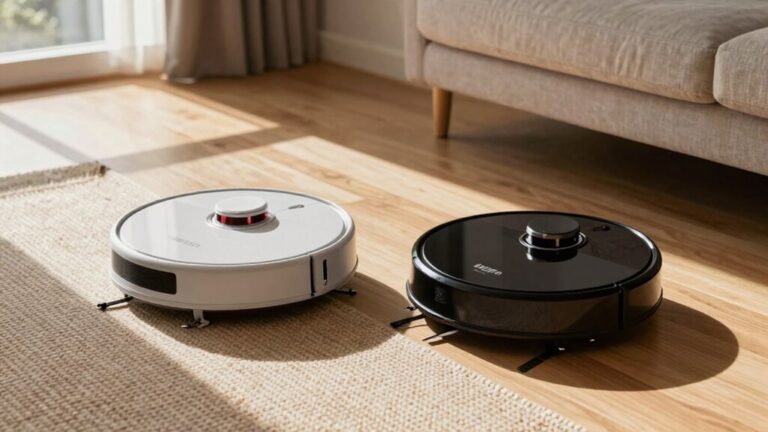
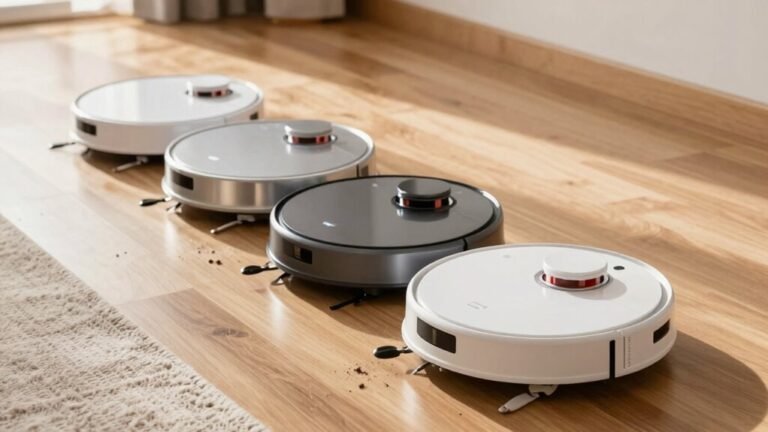
5 Best Robot Vacuums for Tile Floors That Clean Every Last Crumb
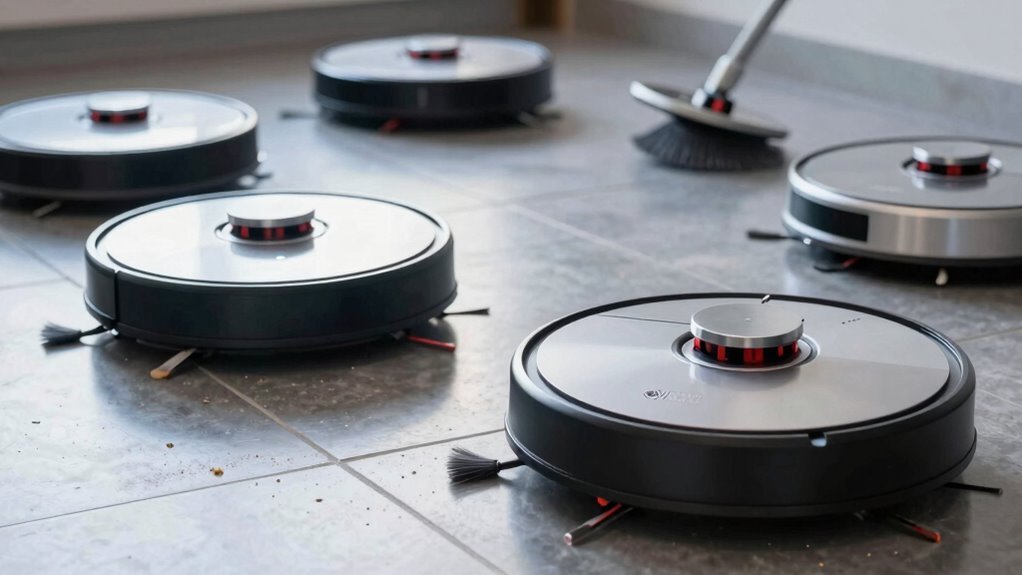
You spill Cheerios across your kitchen tiles at 7 a.m., and by 7:15, your robot vacuum is already mapping the chaos—LiDAR spinning, 10,000 Pa suction primed. But does it *really* handle crumbs, edges, and daily grit without multiple passes or getting stuck? The right robot vacuum for tile floors balances raw power with intelligent navigation.
The best robot vacuums for tile floors won’t just clean; they adapt to daily messes with precision. They empty themselves, avoid obstacles, and squeeze under the couch where dust bunnies plot their comeback.
| Tikom Robot Vacuum and Mop Combo | Best for Pet Hair | Suction Power: 5000 Pa | Cleaning Modes: Spot, Edge, Zig-zag, Manual | Self-Charging: Yes | VIEW LATEST PRICE | Read Our Analysis | |
| Roborock Q7 M5+ Robot Vacuum and Mop | Premium Self-Emptying Pick | Suction Power: 10000 Pa | Cleaning Modes: Not explicitly listed, but supports spot, edge via app | Self-Charging: Yes | VIEW LATEST PRICE | Read Our Analysis | |
| eufy Robot Vacuum 11S MAX Black | Slim Design Leader | Suction Power: Adaptive BoostIQ (not specified in Pa) | Cleaning Modes: Auto (implied), edge cleaning via side brush | Self-Charging: Yes | VIEW LATEST PRICE | Read Our Analysis | |
| ILIFE V2 Robot Vacuum Cleaner | Budget Hybrid Cleaners | Suction Power: Not specified | Cleaning Modes: Auto, Spot, Edge | Self-Charging: Yes | VIEW LATEST PRICE | Read Our Analysis | |
| Shark AI Robot Vacuum with Self-Empty Base | Best for Large Homes | Suction Power: Incredible suction (not quantified) | Cleaning Modes: Multi-pass matrix grid, edge cleaning | Self-Charging: Yes | VIEW LATEST PRICE | Read Our Analysis |
More Details on Our Top Picks
Tikom Robot Vacuum and Mop Combo
If you’re after a robot vacuum that handles tile floors with serious suction and doubles as a mop—without tipping the scale on price or space—the Tikom G8000 Max might just be your sweet spot. You get 5000 Pa of pull—enough to yank pet hair and fine dust from grout lines.
The 300 ml water tank scrubs light spills across 150 minutes of runtime in quiet mode. Its 2.99-inch profile slips under most furniture, and those large wheels tackle thresholds like a champ.
Though, let’s be real, will it climb thick carpet shifts without drama? Probably not. Still, with app, voice, remote, and button control—plus edge, spot, and zig-zag modes—you’re covered for coverage and convenience.
- Suction Power:5000 Pa
- Cleaning Modes:Spot, Edge, Zig-zag, Manual
- Self-Charging:Yes
- Anti-Fall Sensors:Yes (anti-fall sensors)
- Battery Life:Up to 150 minutes (quiet mode)
- Pet Hair Handling:Designed for pet hair with strong suction
- Additional Feature:App-controlled smart mapping
- Additional Feature:Ultra-slim 2.99-inch profile
- Additional Feature:HEPA-type filtration system
Roborock Q7 M5+ Robot Vacuum and Mop
You’re getting serious cleaning power with the Roborock Q7 M5+ if tile floors dominate your home—its 10,000Pa HyperForce suction doesn’t just push dust around, it eliminates it, tackling fine debris (think: flour-like dust and pet hair) that typically skims across slick surfaces. The dual vacuum-and-mop action guarantees one pass handles both grit and grime.
You’ll appreciate the anti-tangle tech—JawScrapers brush, 0% hair-wrap side brush—because who hasn’t cursed a clogged roller? With LiDAR precision, it maps multi-room layouts seamlessly and schedules cleanings via the app.
It empties into a 2.7L bag every 7–9 weeks—though yes, it only works on 2.4GHz Wi-Fi.
- Suction Power:10000 Pa
- Cleaning Modes:Not explicitly listed, but supports spot, edge via app
- Self-Charging:Yes
- Anti-Fall Sensors:Yes (drop-sensing via LiDAR/navigation)
- Battery Life:Not specified, but supports multi-room
- Pet Hair Handling:Dual anti-tangle system, 0% hair wrap side brush
- Additional Feature:7–9 week self-emptying
- Additional Feature:Dual anti-tangle brush system
- Additional Feature:PreciSense LiDAR navigation
eufy Robot Vacuum 11S MAX Black
The eufy Robot Vacuum 11S MAX in black stands out as a strong choice for tile-floor owners who value quiet, reliable cleaning without the clutter of smart tech. Its 2.85-inch slim profile slips under low-clearance furniture, while the 120-minute runtime—achieved through a 100-minute charge—tackles large hardfloor areas with consistent suction.
You’ll appreciate the 1200Pa suction powered by BoostIQ, which adapts in 1.5 seconds as it moves from tile to medium-pile rugs. The single side brush keeps debris from scattering, enhancing cleaning efficiency.
It navigates via infrared sensors, avoiding drops and obstacles, though without app control. So, is Wi-Fi-free operation a pro or con for you?
- Suction Power:Adaptive BoostIQ (not specified in Pa)
- Cleaning Modes:Auto (implied), edge cleaning via side brush
- Self-Charging:Yes
- Anti-Fall Sensors:Yes (drop-sensing tech)
- Battery Life:100 minutes
- Pet Hair Handling:Handles pet hair on medium-pile carpets
- Additional Feature:Super-thin 2.85-inch design
- Additional Feature:BoostIQ adaptive suction
- Additional Feature:Anti-scratch tempered glass top
ILIFE V2 Robot Vacuum Cleaner
Looking for a robot vacuum that keeps tile floors—especially those cluttered with pet hair and daily debris—consistently clean without constant supervision? The ILIFE V2’s tangle-free suction port grabs pet hair efficiently, and its ultra-slim 2.99-inch profile slips under furniture most vacuums can’t reach.
You’ll appreciate the 120-minute runtime, auto-return charging, and three cleaning modes—auto, spot, and edge—for thorough coverage on tile, hardwood, or low-pile carpet. Infrared sensors prevent falls and collisions, while preset scheduling lets you automate cleanings with a remote or one-button start.
It’s not the quietest, sure—but for the price, do you really expect silence? Backed by a 12-month warranty and U.S. support, it’s a sensible, no-fuss pick that just works.
- Suction Power:Not specified
- Cleaning Modes:Auto, Spot, Edge
- Self-Charging:Yes
- Anti-Fall Sensors:Yes (anti-fall infrared sensors)
- Battery Life:120 minutes
- Pet Hair Handling:Ideal for pet hair
- Additional Feature:Tangle-free suction port
- Additional Feature:Preset scheduling available
- Additional Feature:Remote-only control simplicity
Shark AI Robot Vacuum with Self-Empty Base
Ever wonder how a robot vacuum keeps tile floors spotless without turning your living room into an obstacle course? The Shark AI Robot Vacuum with Self-Empty Base does it with 360° LiDAR mapping and precision object avoidance—nimbly dodging shoes, cords, and pet toys day or night.
It uses Matrix Clean Navigation for multi-pass, grid-style cleaning that leaves no crumb behind, while its self-cleaning brushroll fights hair tangles (a huge win if you’ve ever fished yarn out of spinning bristles). With 120 minutes of battery life, it recharges and resumes large jobs.
The XL base holds 60 days of dirt—no bags, no hassle. You control it by voice (Alexa, Google), and though it’s a bit heavy at 15.25 pounds, it’s smart, powerful, and built for real homes—not showrooms.
- Suction Power:Incredible suction (not quantified)
- Cleaning Modes:Multi-pass matrix grid, edge cleaning
- Self-Charging:Yes
- Anti-Fall Sensors:Yes (precision object avoidance, detects stairs)
- Battery Life:120 minutes
- Pet Hair Handling:Anti-hair wrap brushroll, optimized for pet hair
- Additional Feature:60-day dirt disposal
- Additional Feature:Matrix Clean Navigation system
- Additional Feature:Self-cleaning brushroll tech
Factors to Consider When Choosing Robot Vacuums for Tile Floors

You’ll want to weigh suction power—especially if you’re dealing with fine dust or pet hair, since models under 1,500 Pa might leave behind debris despite multiple passes. Do you really need mopping, or is dry suction enough, given that most robot mops use just 3–5 ml of water and barely dampen tile? Navigation accuracy, floor compatibility, and noise under 65 dB matter too, because what good is a smart vacuum if it gets lost or wakes the household at 7 a.m.?
Suction Power Requirements
Raw suction alone isn’t enough if it just scatters dust like a leaf blower on a tile floor. You need at least 5,000 Pa to effectively lift dirt and crumbs—anything less tends to push debris around instead.
For pet hair or heavy tracked-in gunk, aim for models near 10,000 Pa. These higher-suction units dig deeper and leave tiles noticeably cleaner.
But don’t fixate on numbers alone—suction only works when paired with smart design. Sealed airflow paths and low-profile brushes help keep debris from shooting sideways.
Some robots boost suction on stubborn spots, automatically ramping up Pa when messier zones are detected. This adaptability improves performance but depends on more than just peak suction.
The labeled suction power isn’t the whole story. Real-world tile performance varies, so check independent tests that measure actual cleanup, not just specs.
You want power, yes—but power that’s controlled, focused, and engineered for hard floors. Inflated numbers for marketing don’t guarantee a cleaner kitchen floor.
Mopping Capability Options
Think about how often you dash off your morning routine only to step onto a kitchen floor that’s still sticky or streaked—robot vacuums with mopping functions aim to fix that. For tile surfaces, a decent hybrid model typically packs a 300 ml reservoir, giving you enough water to damp-mop for 90–120 minutes without refilling.
You’ll want adjustable flow settings—most offer three levels—so you can dial down the seep for light dust or crank it up for dried salsa near the stove. Since mopping’s only for hard floors, you can skip the carpet drama.
The split-tank design keeps dirty water from mixing with debris, so you’re not tracking grime everywhere. Sure, it’s not a replacement for a proper scrub with a sponge, but when you’re juggling work calls and dinner prep, isn’t a streak-free swipe better than nothing?
Just don’t expect miracles on splattered grease—consistency beats intensity here.
Navigation System Accuracy
When traversing the smooth expanse of tile floors, a robot vacuum’s ability to map and maneuver accurately makes all the difference—especially since even a 1–2 cm misstep can leave grout lines untouched or cause unnecessary bumps into baseboards. You’ll want a model with LiDAR-based navigation, like PreciSense LiDAR, which delivers precise real-time mapping and efficient cleaning paths—no more random bounces or haphazard loops.
With 360° LiDAR, your robot quickly learns room layouts, slashing missed spots by up to 70% compared to basic infrared models. It adapts seamlessly to shifts between tiles, tackling slight elevation changes without hesitation.
Advanced sensors (infrared, drop detection) prevent edge falls near thresholds or stairs—because nobody wants a robot stuck between rooms. And when you set no-go zones or trigger spot cleans, reliable mapping guarantees consistency, not guesswork.
Sure, it’s not flawless—occasional recalibration happens—but is that really a dealbreaker when coverage jumps this high?
Floor Type Compatibility
Why settle for a robot that treats your pristine tile like an afterthought? You need a model specifically rated for hard floors and tiles—otherwise, fine dust and debris will slip right through.
Look for units with soft wheels or built-in anti-scratch features; you don’t want scuffs marring your sleek surfaces. If you’re serious about mopping, choose a robot with a dedicated water tank and adjustable mopping settings—because nobody wants a soggy tile disaster.
Slim, low-profile designs are key, sliding easily under cabinets and into tight corners where crumbs love to hide. And don’t overlook edge cleaning: strong brush geometry and corner-navigation sensors guarantee grout lines get the attention they need.
Sure, these robots aren’t magic—but pick the right one, and your tile floors will look crumb-free and cared for, daily.
Noise Level Considerations
How quiet does your robot vacuum really need to be—especially when it’s gliding over tile floors where every hum and whir echoes just a little louder? You’ll want models with dedicated quiet or eco modes, like the Tikom G8000 Max, which runs up to 150 minutes in a hushed setting—perfect for background cleaning without disruptive noise.
Avoid assuming all slim designs are silent; the Eufy 11S Max, for instance, hits noise levels similar to a microwave (about 65 dB), which can be surprisingly loud in open, hard-surfaced rooms. Since many brands don’t publish exact decibel ratings, look for adjustable suction settings as a practical proxy for noise control.
A quiet mode doesn’t just spare your ears—it lets the bot clean during calls, naps, or late evenings without becoming a household nuisance. Balance is key: lower sound often means reduced suction, so test if the trade-off works for your tile’s crumb load.
Battery Life Performance
You’ve probably noticed how that faint hum from your robot vacuum carries a little too well across bare tile—now imagine it running out of juice halfway through the living room, leaving dust bunnies to throw a party in the kitchen while it sits stranded by the couch.
That’s why you’ll want a model with at least 100 to 150 minutes of battery life—long enough to tackle large tile areas without tap-dancing around cords. Higher-capacity batteries deliver that endurance, especially when paired with efficient power management and low-speed cleaning modes.
Look for robots that recharge and resume; they’ll dock themselves, then pick up right where they left off—no cleanup gaps. Self-charging isn’t just convenient, it’s essential for uninterrupted coverage.
Sure, not every robot runs long enough to skip a recharge, but the best balance runtime with smart energy use, so you’re not manually herding it back to the base every 30 minutes.
Obstacle Detection Features
Dodge a stray shoe or glide around a pet bowl without a hitch—modern robot vacuums for tile floors rely on smart sensors to keep from turning your living room into an obstacle course. Infrared sensors detect furniture and walls, preventing pesky bumps, while anti-collision and cliff sensors work in tandem to avoid falls—especially essential on slick tile where momentum can carry a bot too far.
You’ll appreciate LiDAR-based navigation, which maps your space in real time, calculating precise paths and spotting obstacles down to the centimeter. With 360° LiDAR or beacon-based sensing, your vacuum sees everything—no blind spots, no surprises.
Fast, accurate sensor data means it zips through clutter without getting stuck (usually). Sure, it might still eye that stray sock like a mystery object—because, well, sensors aren’t psychic—but overall, you’re getting sharp, reliable detection that keeps cleaning smooth, efficient, and surprisingly smart.
Frequently Asked Questions
Can Robot Vacuums Scratch Tile Floors?
You won’t scratch your tile floors if you use a robot vacuum with soft rubber rollers and avoid models with stiff brushes. Most modern ones are safe, but you should check for debris that could get caught and cause scratches.
How Often Should I Empty the Dustbin?
Empty the dustbin after every run—you don’t want grime piling up like storm clouds. If you’ve got pets or long hair, check it twice. A full bin chokes suction, leaving crumbs behind. Stay on top of it, and your robot’ll work like a charm.
Do Robot Vacuums Work in the Dark?
Yes, they work in the dark—no problem. You just rely on sensors and mapping tech to navigate, not light. So whether it’s pitch black or bright, your robot finds its way and keeps cleaning without missing spots.
Are Robot Vacuums Safe Around Pets?
Yes, they’re safe around pets—you just never know when one might sneak up and startle your cat. They dodge tails, avoid paws, and won’t harm fur babies. Just keep claws and chewers in check, and everyone’ll get along just fine.
Can They Clean Under Furniture Effectively?
Yes, they clean under furniture effectively. You’ll find most models slim enough to slide under sofas and beds, reaching dust and debris you’d miss. They glide smoothly, adapt to tight spaces, and turn easily, ensuring thorough cleaning even in those tricky, low-clearance spots where dirt loves to hide.
Conclusion
You’ve seen how each robot tackles tile—10,000 Pa suction, 3,000 mAh batteries, LiDAR precision—yet still, aren’t you wondering if *any* bot truly outcleans a well-worn broom? The Roborock maps flawlessly, the Shark empties itself (a godsend at 80 dB), while the eufy slips under sofas with 2.85-inch grace. Sure, mopping’s optional, runtime varies (ILIFE gives 150 minutes, Tikom 120 in quiet mode), but let’s be real: convenience beats perfection—don’t you think?